
 Leo Waterman is one of my favorite fictional detectives. Lucky me, I scored this eleventh in the series free courtesy of Net Galley and Thomas and Mercer in exchange for this honest review.
Leo has changed, and yet he hasn’t. He came into his old man’s ill-gotten fortune awhile back, so he doesn’t have to work anymore, and since his knees are going, it’s just as well. But an old family friend comes calling on behalf of a grieving parent who wants to know how her boy, Matthew, turned into a mass shooter. Matthew died too, so nobody can ask him. Waterman goes to the funeral, where hysterical gun law advocates start a ruckus, and somehow Leo finds himself in the middle of it. From there, it’s all downhill.
Waterman runs afoul of some serious thugs, and they nearly kill him. He wakes up in the hospital and learns that his assailants have carved a symbol into his chest, one associated with white supremacy.
At first the plot seemed, once we were past the hospital portion, a little too familiar. Waterman always seems to find himself opposing right-wing nut jobs, and in chasing a resolution, he always ends up leaving Seattle in pursuit of reactionary criminals in some hinterland headquarters or bunker. But upon reflection, I decided I’m good with that, since it matches my own worldview. There are some bad apples in every city, every town, but the most progressive parts of society gravitate toward major population centers. Even an elitist place like Seattle contains more laudable elements than the teeny rightwing enclaves that are established in various rural outposts.
It doesn’t hurt that the Waterman series makes me laugh out loud at least once every single time.
I have read too many mysteries in which the sleuth is shot, stabbed, or whatevered, and when they wake up in the hospital, the first thing they do is rip out their IV, hobble into their clothes, and scoot out the door against doctor’s orders, material reality be damned. This inclination is inching its way onto my hot-button list of stupid plot points I never want to see again, and so I am greatly cheered by the way Ford writes this portion of the book. Leo’s in the hospital for a good long while, because he’s hurt. He’s really hurt. At the outset, he’s in a wheelchair, and then he needs additional surgeries and physical therapy. He leaves when he’s discharged. I’m pretty sure I hollered my thanks at least once here.
Ford’s corrupt cop characters are among the best written anywhere. I also love the intrepid desk clerk named Dylan who uses what little power he possesses for the forces of good.
This story is a page turner, and it’s hilarious in places. Last I looked, the Kindle version was only six bucks. If you love the genre and lean left, you should get it and read it. Your weekend will thank you for it.
 Clifford Simak was a prolific writer of short stories, mostly science fiction starting in the 1930s when the genre was new, and initially the stories were sold individually to magazines. They have been curated and released digitally by his friend, David W. Wixon, who provides a forward and brief, interesting notes before each one. My thanks go to Open Road Media and Net Galley for the DRC, which I received in 2016 in exchange for this very tardy but honest review.
 Markley’s thunderous debut is not to be missed. My thanks go to Simon and Schuster and Net Galley for the review copy, which I read free and early, but this is one of the rare times I can say that if I’d paid full hardcover price, it would have been worth it. This is the summer’s best fiction, and it’s available to the public August 21, 2018.
 Ed Scott Junior was one of the first Black catfish growers in the USA, a “Delta titan,” and he was the very first to own a catfish processing plant. My thanks go to Net Galley and the University of Georgia Press for the review copy. It’s inspirational, well written, and well sourced. The book will be available to the public tomorrow, July 10, 2018.
 Huh. Go figure.
 4.5 rounded up. What a way to make a debut! Ripley’s creepy new thriller will have you locking your windows and looking under the bed at night. Thanks go to Atria Books for the review copy, which I received free of charge. I didn’t ask for it, didn’t expect it, but once I flipped it open and began reading, there was no question that I would finish it. You’ll feel the same.
 3.5 stars, rounded upward.
 Nelson Mandela’s hundredth birthday approaches. His grandson Ndaba, whom Mandela raised following his release from prison, talks about growing up with the titan that led the movement against Apartheid in South Africa. He reflects on Xhosa culture and the role that it played in the struggle and in his own development, and it is within this framework that he talks about his grandfather, and about the future of his people.
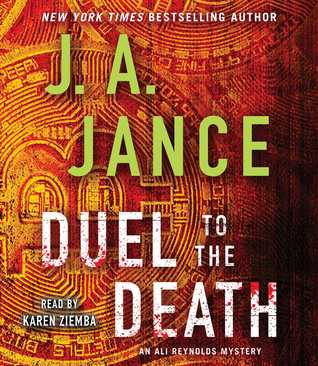 Jance is one of my favorite hometown writers, author of the J.P. Beaumont series and other books, and so I was pleased to see this title offered on Net Galley. Thanks go to that site and Touchstone for the free review copy. It’s for sale now.
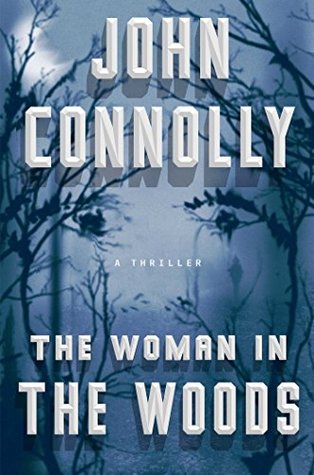 Connolly is one of a handful of writers whose names I search when I go to Net Galley. He’s consistently brilliant, and so I am grateful to Atria Books and Net Galley for the review copy. This book is for sale now.
 Seattle Book Mama