Mother May I, by Joshilyn Jackson*****

Joshilyn Jackson is one of my favorite authors, and so I was delighted to see that she has another novel coming out this spring. My heartfelt thanks go to Net Galley, Harper Audio, and William Morrow for the review copies. This book is for sale now.

One of the things I love about Jackson is that she recognizes and includes social class as a large factor in the lives of her characters. I am initially sorry to see that her protagonist, Bree Cabbat, is married to a wealthy man, but once the story unfolds, it becomes obvious that the story won’t work any other way. Although Bree is rolling in it now, she grew up poor, the child of a single parent that took her back-to-school shopping at a Goodwill two towns over from their tiny Georgia town, carefully making sure that Bree’s classmates not recognize their own castoffs when Bree wore them. Later, theater classes helped Bree refine her accent to make her more employable; acting lessons helped her project the carefree confidence that is common to young adults whose families have money.

Now she is married to Trey, a man “who’d grown up with Scooters and Biffs and Muffys.” As the story progresses, there are frequent subtle reminders of this; Trey has a gun safe; Trey has a bottle of whiskey, a gift, that cost over two thousand dollars; their daughters are in an upscale school with a nice theatre program, and their daughters are enrolled in extracurricular activities like Quiz Bowl and Robotics. Yes, our Bree has come up in the world, alrighty. And so when their baby is kidnapped out from under her very nose, naturally Bree’s assumption is that there will be a ransom, and that she and Trey will pay it.

But this time, she is oh so wrong.

When the call comes, it turns out to be a very elderly woman bent on exacting revenge against Trey’s business partner, who is also his cousin. Bree must do exactly as she says, because if she sees any sign of police, “I’ll break his flimsy neck…I’ll twist his little head right around backward.”

Dear God.

 This story grabbed me by the hair and didn’t let me go till I was done with it. I was initially approved for the audio version, and by the time I was given access to the print version, I had finished the first galley. Ordinarily, when something like this happens, I write my review, submit it to both places, and figure my work is done here. But for Jackson I do due diligence and more, and it’s a pleasure to read her book twice, so I did. And while both versions are excellent, I give a slight edge to the audio version. Print is a desirable medium anytime one is reading any mystery, because sometimes we want to flip back to check a detail or two. But Jackson always records her own audio books, and so I know the interpretation of the reader is always completely consistent with the writer’s intention. And in this case, the key side character—Marshall, an ex-cop that was married to Bree’s best friend, now dead—has a distinctive voice that comes through somewhat in the printed version, but much more plainly in the audio. I love the way she voices him, and although Marshall isn’t the protagonist, his role in this story is critical. The narrative shifts between Bree, who speaks to us from the first person limited, and Marshall, who comes to us in the third person.

The story carries an added social justice component: it’s MeToo on steroids. The things we learn about the men in the story add complexity, and though there’s a trigger or two here, I suspect most female readers will find the denouement deeply satisfying. I do.

The ending would ordinarily be deemed over-the-top, but because I believe the characters and story so completely by the time we get there, I also believe the resolution.

The one thing I would change here, if I wanted to be picky, would be to find a way to inject some of the epic laugh-out-loud humor I have enjoyed in Jackson’s earlier books. But that’s a tall order, given the intensity of this one.

One way or the other, this book is guaranteed to be one of the year’s very best. Don’t let yourself be left out. I strongly recommend this book to you, even at full cover price.

On the Plain of Snakes, by Paul Theroux****-*****

Paul Theroux has been a successful travel writer for a very long time, but he is new to me. Lucky me, I read this free, thanks to Net Galley and Houghton Mifflin Harcourt. It’s for sale now.

The first thing that took my notice was that this is a gutsy writer. Though he’s in his late seventies, he hops in his personal vehicle and motors south to Mexico, and then all over that nation independently, venturing into out-of-the-way spaces, mostly eschewing the usual tourist haunts that draw the spring break crowd from the US and other parts. Over and over again, locals explain to him that this road, or that, or the other is very dangerous right now; sometimes he revises his route; sometimes he takes the route but at a different time; and sometimes he goes anyway, but takes somebody with him. What he doesn’t do is go home early, or store his car somewhere and follow a tour guide around. I stand in awe.

Theroux approaches his journey as a researcher, rather than as a tourist advisor. He interviews countless individuals, even learning a little of one of the indigenous languages—in addition to Spanish– in order to communicate. I gave up trying to trace his route, instead just going with the narrative as it unspools.

I have to tell you, this is a tome. I might never have finished it had I relied exclusively on my review copy. I recognized it would be a hefty commitment to get through all of it, so once again, I turned to Seattle Bibliocommons for the audio version. I found it went much faster once I was able to do something else with my hands as I listened. Joseph Balderrama is a wonderful reader, and I quickly found myself absorbed into the journey, as if I were an unseen passenger.

Theroux takes us through the ordeal at the US/Mexico border, which was a nightmare during the time this was written, during the Trump administration. (If you have a MAGA cap in your closet, you may not enjoy this book.) He listens to Mexican citizens that live near enough to the border that they can actually see it from their homes, or from their workplaces. Some of them have lived in Mexico but worked in Texas for a long time, and the hardship they experience once the rules are changed is dreadful. And the insight I gain from listening to his interviews with people there about immigration to the US is most enlightening.

The most amazing thing to me is the way the cartels and the Mexican police force overlap, and in a number of places are exactly the same people! He describes multiple shakedowns by traffic cops while he is driving. It seems that the state pays its cops next to nothing, and so in order for them to support themselves, (particularly, we assume, those not being paid by cartels also,) they are permitted to stop anyone they believe has some money, and essentially intimidate them into a bribe. But it’s not complete chaos: once a driver has been shaken down, they are entitled to a receipt for the money they have had to forfeit so that another cop up the road cannot do the same thing.

The one tourist area Theroux passes through is Puerto Vallarta, which also happens to be the only place in Mexico that I have visited. About ten years lapsed between my visit—a very pleasant one—and Theroux’s, and I was saddened to learn how unsafe it has become, and how badly the locals, who were mostly middle class when I was there, have it now.

There are a number of fascinating passages, and I learned a lot. One village is awash with what sounds like a new sort of trans woman, (new to an American from Seattle, at least,) and another where the handmade sandals are finished with a jaw dropping method. There’s one very poor village where earthquakes occur so frequently that most of the homes are no longer standing, but many people won’t sleep indoors anyway for fear of being crushed to death. No aid from the Mexican government or any international body has ever reached them. Those people are on their own, and they are suffering.

Perhaps the sweetest parts have to do with the friendships that the writer forms with the people he meets there. I especially enjoyed reading the interviews with his new author and artist friends.

For those like myself that approach this with general interest, I’d call this a four star book. My stamina is greater than most, yet as much as I enjoyed it, it did feel a little bit lengthy. For those with a particular interest in the socioeconomic, cultural, and political realities of Mexico, it’s five stars, hands down.

Recommended to those with an interest in this field.

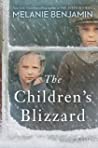
The Children’s Blizzard, by Melanie Benjamin****

My thanks go to Net Galley and Random House Ballantine for the review copy, and to Seattle Bibliocommons for the audio version when I realized I was running behind. This book is for sale now.

I wanted to read this novel because it is different from everything else in my queue. I have a history degree and have taught American history, but I’d never heard of the Children’s Blizzard, which was real. The story is set mostly in and around “Godforsaken Omaha,” and I seldom see fiction set in Nebraska, so that is also interesting.

But once I had the book, I had second thoughts. Here we were, in the midst of this miserable, frightening pandemic, and for the first time ever, I wasn’t able to host my family for Christmas; I couldn’t see my grown children or tiny grandchildren in person…and I was going to read a book where small children froze to death in the snow? What exactly had I been thinking of, to request such a book? And so I shuffled it onto the back burner.

Then I saw that my online friends had liked it, and so with a deep breath, I pulled out my review copy, turned on the audio copy and began. And my friends were right; this is a good story.

The thing that makes the difference is that the blizzard is done before the story is even halfway over! I had envisioned slow, agonizing deaths that would take up the whole novel, and that isn’t what Benjamin does at all. While the deaths are indeed sad, she doesn’t draw them out gratuitously—and not everybody dies. Instead, the story is primarily about the aftermath, the way that these Scandinavian settlers respond to what has occurred, and the role of the ambitious reporter that covers the tragedy.

Benjamin does a fine job developing the characters, primarily the women involved, and I especially appreciate her unsentimental approach. Friends, if you ever find yourself feeling starry-eyed about the distant past, wishing things were simpler and done as they were long ago, this book will snap you out of it quickly. Believe it.

I recommend The Children’s Blizzard to those that enjoy historical fiction, and I especially recommend the audio book to you. The reader does a nice job of incorporating a Scandinavian accent without overdoing it, and it makes it easier to relate to the characters. I enjoyed it, and would happily read Benjamin’s work in the future.

Sin Eater, by Megan Campisi**-***

Sin Eater is a one-of-a-kind work of historical fiction, and I was invited to read and review it by Atria Books and Net Galley. Though other reviewers seem to appreciate it, I have a difficult time bonding with any part of it, and so eventually abandon it. I check out a copy of the audio version from Seattle Bibliocommons, but sadly, I find I don’t want to listen to it, either.

When I read historical fiction, I expect to learn something. The best of the genre are those that convey an event that actually occurred, and that are presented as fiction so that the author can add dialogue and an inner narrative. Historical fiction that is a bit looser, perhaps telling a story of an actual place, person, and time but adding elements that are fictional, perhaps because of gaps in what is documented, or even because the author just plain feels like it, are sometimes excellent if the characters are compelling and immediate, and the writing particularly strong.

When I accept the review copy of this novel, I do so partly because of this cover (though others have also been used,) but mostly because I am intrigued by the notion of a sin eater, and I want to learn more. However, the author’s notes tell me that there’s no information available about it, save for the phrase that popped up somewhere; what a disappointment.

Then there’s the plot, one that starts grim, then becomes grimmer, followed by a brief (very brief) flicker of hope, followed by persecution, death, and misery, misery, misery.

Campisi is a competent wordsmith, but the characters never gel for me, and maybe that’s just as well, since they are doomed. I am a passionate feminist, and the promise of that element is an additional lure, but in the end, I see no message that hasn’t been done elsewhere better.

If you consider yourself to be the sort of reader that might like this story, based on the promotional description, you may be right; but as a reviewer, all I can offer is my own take on it, and I cannot tell anyone that I am impressed, because I am not.

The Drowning Kind, by Jennifer McMahon****

“’There was someone there, in the water.’ Her hand trembled as she held her teacup. ‘Ethel, if I tell you what I saw, you mustn’t think me mad.’”

You bring the hot dogs and marshmallows; I’ll bring the matches and a real good story. It’s time to head for the campfire, and—hey, look! It’s getting dark already. Do you scare easily?

My thanks go to Net Galley and Gallery Press for the invitation to read and review. This is a fun one! I was able to access both the print and audio versions, and I moved back and forth between them.  I would give a slight edge to the print version here, but the audio isn’t bad, either.

Our story takes place in Vermont, mostly, and the time period and point of view alternate. We begin and end with the present day; our protagonist is Lexie, a social worker. Jax grew up very close to her older sister, Lexie. As they grew older, however, bipolar disorder gripped her elder sister, and Jax has been forced to set boundaries with regard to her sister’s obsessions, lest she be pulled under herself. And so, when she finds nine missed calls on her voice mail, all from Lexie, Jax figures she’s off her meds again, and she chooses not to respond. She has work to do. But the next call comes to tell her that Jax is dead. She drowned in her backyard pool.

Our alternate protagonist is Ethel Monroe, and the year is 1929. Ethel is nearly too old to conceive; she and her husband desperately want a baby. The doctors are stumped; then she hears of a resort whose springs are said to have healing powers. With nothing to lose, she and her spouse hop in the car and make their way to the magic waters. In time, they are told that the water should be avoided. Whenever it grants a wish, it takes something else back for itself, often something that devastates those it has aided. But Ethel is pregnant now, and there is nothing, nothing, nothing more important than her baby.

Of course, there are all kinds of connections between Lexie and Ethel; after all, they are using the same waters, nearly 100 years apart from one another.

McMahon has a well established writing career, but the first time I read her work was when the last book, The Invited, was published. Both stories have certain elements in common, and perhaps because of this, I enjoyed the last one a wee bit more than this one, because it was completely new to me then. Both stories take a sensible, modern-day female character that doesn’t believe in spooks at the outset, and then spin them around every which way until they do. And in both, I see classic elements that include urban legends, but the story McMahon tells is fleshier, updated, and original.

In listening to the audio version, I was at first taken aback, because when the reader shifts from Jax’s story to Ethel’s, no mention is made that we are changing protagonists. The print version captions the new chapter, and since I had both versions, I grabbed the print version once I became confused and saw what had happened. However, it would have taken me longer if I had simply purchased the audio book and been forced to figure it out. The two characters are voiced (in the first person), and Ethel is given a very distinctive speaking style; I found the style to be annoying at first, a bit contrived, but once I got used to it, I was all in. Ethel’s odd speaking style does make it easier to tell when we have switched characters, and perhaps that’s why the reader chose to do it this way.

The pacing never flags. I believe Jax from the first page, and eventually I believe Ethel as well. I successfully predicted the ending, but we are eighty percent of the way in by the time I make my prediction, so I am not disappointed.

For those looking for a deliciously creepy tale, look no farther. This book becomes available to the public Tuesday, April 6, 2021.

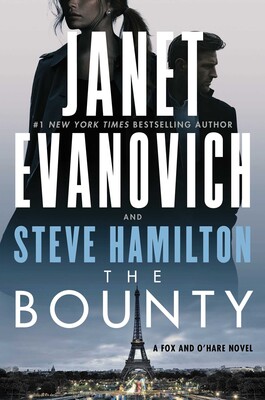
The Bounty, by Janet Evanovich and Steve Hamilton**

This book is the seventh in the Fox and O’Hare series. Our protagonists are Kate O’Hare, who is an FBI agent, and Nick Fox, a conman. My thanks go to Atria Books and Net Galley for the invitation to read and review. While this book isn’t my cuppa, there will be readers that enjoy it. One way or the other, it goes up for sale on Tuesday, March 23.

The first six books of this series were cowritten by Evanovich and Lee Goldberg. There’s no explanation for why Goldberg is out and Hamilton is in, but the switch may account for some of the inconsistencies between the earlier books and this one. An example: Kate and Nick were tight in the earlier stories, and yet somehow, they can’t stand each other now. There’s no reason given for the change, so I have to assume it’s an authorial quirk; I have to say, not an original one.

The premise is that the pair are hot on the trail of a massive cache of Nazi gold; also pursuing this treasure is criminal organization known as The Brotherhood. Kate and Nick are charged with finding the gold and bringing The Brotherhood to its knees.

Before they are even off the plane, I have questions. For example, since when does the FBI have authority to do this sort of thing abroad? In cases of terrorist attacks on American citizens, sure. But treasure hunting on foreign soil? And since when does any law enforcement body send two officers to bring down an entire organization? You can see my point.

But this is the sort of story that one can only appreciate by suspending disbelief and buying the premise. The whole thing has something of a James Bondian flavor to it, consisting of large amounts of chasing, hiding, climbing, leaping, and in between, dialogue, dialogue, dialogue. There’s a fair amount of derring- do; there’s a parachute, a grappling hook, lock picks; you name it. The element that distinguishes it from other such books is that both Fox’s and O’Hare’s fathers get involved.

For me to enjoy a novel from this genre, I need either a well-crafted story with literary merit, including character development, (i.e., James Lee Burke, Sue Grafton, John Connolly,) or else some form of well-executed humor. There are a fair number of wonderful satires out there, and of course, there’s the series that made Evanovich famous, the Stephanie Plum numbered series, which have hit more than they’ve missed and almost always make me laugh out loud more than once. In reading The Bounty, I don’t find these things.

However, not every reader has the same preferences that I do. This is a fast read with accessible vocabulary—my inner snark popped out at one point, and my galley has a note when the word “independence” is used: “Wow, four syllables!”—a linear story line, and an easily followed plot. I could see hauling something like this to the hospital when you’re going to have surgery and your attention span won’t be up to par. And then there’s the consideration of interest. Some want to read action, action, action, and if the story were more realistic, we’d probably be reading about paperwork, reports, and endless months cultivating a contact that proves to be useless. Not entertaining.

Even so, I can’t recommend this book for general audiences, or even for those that like the series.

The Sweet Taste of Muscadines, by Pamela Terry*****

Pamela Terry’s debut novel, The Sweet Taste of Muscadines, had me at hello. My great thanks go to Net Galley and Random House Ballantine for the review copy. You can buy it now.

Lila Bruce Breedlove (I even love the characters’ names) hasn’t gone home to Georgia in a good long while, and it’s not accidental, either. Her home in Maine with her dogs and fond memories of her late husband are the furthest thing from her mama’s censorious gaze and the smallminded thinking of the people of Wesleyan, Georgia. But now Mama has been found facedown in the Muscadine arbor, and Lila knows there’s nothing else to do. She packs her bag, gets a friend to look after the dogs, and buys a ticket. Her brother Henry, who has also made a permanent home up north, does the same, but he advises his life partner, Andrew, to stay put. Their sister, Abigail, is the lone family member that didn’t flee. She and Mama were best friends, as they told everyone  constantly, including Lila and Henry. Still,  duty calls. It wouldn’t be fair to leave Abigail to do this on her own.

The whole story is told by Lila in the first person limited. I find this refreshing. The tone is intimate, confidential at times, and downright conspiratorial at others. Lila lets us know that “Growing up in the South is not for the faint of heart…When you’re the slightest bit different, you stand out like a monkey in a chorus line.”

Before they’ve even touched down, Lila and Henry have questions. For example, why was Mama in the Muscadines at all? The arbor is nowhere near the house, and she never chose to visit it when she was a younger woman. It had been Lila’s special place. Once they arrive in Georgia, they confront more questions, and though not all of them are answered, a plethora of surprises greet them, some of them hilarious, others shocking. Lila tells us that

Secrets are spilled at southern funerals. Death, particularly when its inevitability has been ignored for generations, possesses a power to snap diffidence and dignity right in two, causing those left behind to be overcome with the need to unburden their consciences before they themselves are found sleeping in a slick, shiny coffin in their best Sunday suit.

The first surprise, it turns out, is that Geneva Bruce left an advance directive specifying no funeral at all upon her demise, which she had known to be imminent. For the widow of a Southern Baptist Georgia preacher to bail from her own funeral is unheard of! However, the lack of a proper funeral does not, cannot prevent family secrets from unspooling, and some of them are bombshells, too.

Terry is a gifted wordsmith, and her figurative language is original and at times, drop dead funny. The pacing never flags, and the transitions that take us from raucous levity, to bittersweet reflection, to aching sorrow, and then back again are buttery smooth. It was like hearing from my best friend. I generally read several books at a time, but this one proved to be the one I read when I would not be interrupted, and I was sorry to see it end.

It was only at about the eighty percent mark that I realized that one of my least favorite elements was included here, that of the Bad Mama. This is a trend right now, and I’m ready to be done with it. Novelists far and wide have enjoyed crafting stories centered around unworthy mothers, and when I see one coming in advance, I consider it a deal-breaker. But almost any device, character, or plot point can be forgiven when a novel is of exceptional quality, and that is what I see here.

Highly recommended.

Forget Me Not, by Alexandra Oliva****

Oliva made her debut in 2016 with The Last One, a genre-defying story in which technology fails with disastrous consequences for reality show contestants. I was delighted when I received the invitation to check out her current novel; big thanks go to Ballantine Books and Net Galley for the review copy. This book is for sale now.

Linda Russell lives alone. She has had a traumatic past, and she is naïve in some ways about the world around her, having been kept apart from it for so many years. Money isn’t a problem, though; she has inherited a pile of it. Yet we cannot envy her, because the unspeakable horrors she has seen outweigh the benefit of her wealth.

When we meet Linda, she is in her nest chair surfing the internet. Her sheath provides her with information, but we have to figure out what a sheath and nest chair actually are by examining context, which takes a little while. And this is a key part of the suspense, giving us some information about the time period, the place, the technology and the characters, but also withholding quite a lot, doling it out to us in small portions so that we can follow along, without ever getting a firm grip on the situation till we are far into the story. And for me, there were moments when I became confused enough that I wanted a little more information in order to follow events as they unfolded, but most of the time the narrative was paced effectively. I began to have a solid enough grip on the basic facts to follow the story well at about the 36% mark.

Linda is a clone, and her story went big several years ago, when she was found emaciated and filthy, having been more or less feral inside a walled property where her mother abandoned her. The part of her past that weighs on her mind most heavily is the fate of her twin. Lorelei, whom she must not call “Mother,” loved Emmer, but not Linda. Both of them were created in an effort to duplicate Lorelei’s deceased daughter, Madeleine, and Emmer resembled Madeleine more. Of course, everyone knows that eye witnesses are notoriously unreliable, and so it is with Linda’s memories, but she knows this for certain: after a particular point in time, Linda never saw either Emmer or Lorelei again.

Meanwhile, a cult of sorts has sprung up around Linda, whom social media has dubbed “clone girl.” Rumors are spread; even the tiniest hint as to her possible whereabouts is greedily devoured by those following her story. And so, Linda hides, and she talks to no one; that is, until her new neighbor, Anvi, pushes her way into Linda’s life. Anvi is new in these parts, and she wants a friend.

To say that this story is a thriller or a mystery is unfair, and will lead the reader to a dissatisfying end. The focus of the book is not on unraveling a crime, and the hair-on-fire pacing that marks a thriller isn’t present here. I keep turning the pages, not because my heart is slamming in my chest, but because I am curious. The story really is about our character. Likewise, although the story is technically science fiction, my interest isn’t captured and held by complicated new technology, but by Linda herself, wanting to see her unharmed and able to lead something resembling a normal life. So I urge interested parties to come to this novel with an eye for character, because that’s the anchor here.

At the climax—and I’m being fairly vague here so as not to spoil the ending—there’s a moment when Linda behaves fairly stupidly when she is faced with an urgent problem, and I feel let down, but then she rallies and pulls herself together, and I let my breath out and smile. Go, girl, go.

When I learn what is really in back of the personal mysteries Linda faces, I’m inclined at first to regard it as far-fetched, but then the sci fi aspect kicks in, and let’s face it: science fiction and fantasy both permit and even require far-fetched material. What needs to be credible and consistent is Linda, and Oliva does a fine job developing her protagonist. I believe Linda at the outset, and as she changes over the course of the story, I believe her every step of the way.

I enjoyed this story a great deal, and I look forward to seeing what Oliva comes up with next. I recommend this book to anyone that enjoys good fiction that is character driven.

The Autobiography of Mother Jones, by Mary Harris Jones*****

Note: I wrote this review before I began this blog, and I was shocked when I found I had somehow not included it here. There’s no disclosure regarding a review copy, because I didn’t get one. I bought this book and paid full cover price, and I will keep it until it is pried from my cold, dead hands.

Mother Jones has been called “the most dangerous woman in America”. Some refer to her as an anarchist, but in her autobiography, she denounces anarchism, though allows that these folks have their hearts in the right place. She has been called a syndicalist (which is probably closer to the truth), but the fact is that she was motivated by what she saw right there on the ground in front of her. When the Russian Revolution unfolded, she was by her own account past 90, and by the account of another biographer, in her mid-80’s, so either way, she was very, very elderly, yet she championed its achievement at the Pan-American labor conference held in Mexico:

“…a new day, a day when workers of the world would know no other boundaries than those between the exploiter and the exploited. Soviet Russia, I said, had dared to challenge the old order, had handed the earth over to those who toiled upon it, and the capitalists were quaking in their scab-made shoes.”

Jones’ career as a political organizer began shortly after she turned 30. She was a married woman, her husband an iron worker, and she stayed home with their four small children. “Yellow fever” (which I think is malaria) came and killed her whole family, and then as if that wasn’t enough, the great Chicago fire swept away her home and all her possessions.

Some would have turned to suicide. Some would have gone looking for an elderly widower to marry. Some would have gone off to find distant relatives and live with them as little more than domestic servants.

Jones reinvented herself and gave the next fifty-plus years of her life to making the world a better place.

Still clad in a widow’s black garments, she put her hair up in a chaste bun and left Mary Harris Jones behind. From this time forward, she would be “Mother Jones”. Think of it! The cinders from the American Civil War were barely cold, and women had no position in American political life, including the labor unions. Yet by becoming a mother to workers everywhere, including the women and small children laboring in mines and textile mills, she became a force to be reckoned with. It was a brilliant piece of theater, entirely sincere in its intention and in many cases successful. She was one of the most ardent champions of the 8 hour day:

“The person who believed in an eight-hour working day was an enemy of his country,a traitor, an anarchist…Feeling was bitter. The city [Chicago] was divided into two angry camps. The working people on one side–hungry, cold, jobless, fighting gunmen and policemen with their bare hands. On the other side the employers, knowing neither hunger or cold, supported by the newspapers, by the police, by all the power of the great state itself.”

When Mother speaks, people feel they should listen, and if she speaks in their better interests, they listen harder. And in the early days, at least, the boss’s goons and the local law thought twice about putting a hand on Mother. It wasn’t nice!

Later, as her impact on their wallets hardened their resolve, they would deal with her less gently. She didn’t care. She spent nights in jail when she could have left town instead. Sometimes she traveled into a coal mining enclave where every bit of property besides the public roads was owned by the mine owners. Even homes that had been rented to miners were closed to her, as was made clear enough to break almost anyone’s heart. She describes a mining family that held a union meeting at which she was present in the coal fields of Arnot, Pennsylvania. The following day the company fires and evicts the family, and “they gathered up all their earthly belongings, which weren’t much…and the sight of that wagon with the holy pictures and the sticks of furniture and the children” made the local miners so angry that they decided to strike and refuse to go back to work till their union was recognized.

The quote most well known that shows up on tee shirts, posters, and coffee mugs among the liberal and radical milieu today is knocked clean out of context, in my view. “Pray for the dead and fight like hell for the living” was delivered in order to get working men out of the local church, where the priest was trying to cool down the heat and persuade the coal miners to wait for a reward in heaven. “Your organization is not a praying institution,” she reminded them, “It’s a fighting institution!” She tells them to leave the church and meet in the local school, which their own tax dollars had bought. And she later tells other miners that striking is done to provide “a little bit of heaven before you die.”

From Chicago to the coal fields of West Virginia, from New Mexico to Pennsylvania, she was found among railroad men and their families, machinists, textile workers, and above all, miners. She had no use at all for union officialdom, and though she occasionally praised a senator or governor who saw the light of day and called off the hounds of vengeance so that unions could be organized and the workers represented, more often than not she saw them as perfidious and untrustworthy.

When Eugene Debs became a candidate for U.S. president, she embraced his campaign, though she stayed among the workers, which I think was the correct thing to do. But when Debs comes to speak to coal miners and the union officialdom wants to meet his train quietly with a few representatives, Jones proposes all the union members go to greet him. They stampede down to the train, leap over the railings, and lift Debs onto their shoulders, she says, shouting, “Debs is here! Debs is here!”

I could have been finished with this slender volume quite quickly if I hadn’t been making notes (most of which, as usual, I cannot fit into my review, but then I should leave you some choice tidbits to find for yourself, and there are still many of them!) The chapters are brief, and so the book can be read just a few minutes at a time. And the introduction is written by one no less auspicious than Clarence Darrow himself.

You may look at the price and wonder whether you should pay that price for this slender little volume. The answer is, oh hell yes. Please remember that the words of the woman herself are worth twice as many from some armchair hack who wants to pick it apart and wonder whether she was really 83 or 85 at such-and-such moment? Spare yourself the blather and go straight to the primary source. It’s worth double the cover price!

Celebrate Women’s History Month With This Terrific New Release

I reviewed this excellent novel in January, based on a true story of American women that travel to France to help civilians during World War I. If you haven’t checked it out, have a look by clicking the link below the picture.