Black-Eyed Susans Giveaway; My Very First!

I am pumped about this! I was contacted by a rep from Net Galley and offered a copy of Ballantine’s hot new mystery for a blog giveaway, which I have not done before. I hope a lot of people will enter. If you’d like to be included in the drawing, which will occur at the end of this week in a totally random manner, please go down to the bottom of the page where it says “Leave a Reply”. Type in your name (or a pseudonym for now if you prefer) and an e-mail address where I can reach you. If you win, I will send a message to your e-mail, and at that point you need to give me a real name and snail mail address, which will be released only to the Net Galley rep.

I promise not to use your e-mail address for anything else. Actually, I don’t have an e-mail list to sell, and I don’t have anyone to sell it to. But if someone pops up and offers me great riches, I will turn them down…I promise!

This page will dominate my blog for the whole week. As a refresher, here’s the review again, and the attention-getting cover:

BlackEyedSusansTessa is the sole survivor of a group of young women who were left for dead in a mass grave, which was then planted with flowers. The Black-Eyed Susans became a metaphor for the trauma she experienced. This thriller, Heaberlin’s first following a highly respected career in journalism, is a great read with a few problems, most of which have to do with trying to cram too many details into a single novel. It was looking like 3.5 stars to me until it passed the halfway mark; then it hit its stride. Ultimately, the eloquent manner in which issues surrounding the death penalty were braided into the narrative won the final .5 star from this reviewer. And at this point, I have an obligation to tell you I read the book free, and to say thank you to Net Galley and Random House Ballantine for the DRC. The book will be available to the public August 11.

Tessa is an adult, a single parent, and it’s been twenty years since her abduction and attempted murder. There are memories she tries to bury, and there are other niggling details that she can’t make sense of. In a writing style somewhat reminiscent of Jodi Picoult, Heaberlin flashes us back and forth from Tessa’s adolescent memories to the present, a life in which her sole objective at first is to protect her own teenage daughter, Charlie, whom she is afraid may pay the ultimate price. Because Tessa’s stalker has been planting Black-Eyed Susans in her yard and various other places, and she is scared half to death.
Strange, threatening packages appear in the mail. And her best friend Lydia disappeared mysteriously not long after the trial. There are so many shadows, so many possible threats out there that her inclination is to retreat into her artist’s studio, and into her home. Don’t rock the boat.

The problem is that an innocent man is about to become one more victim of Texas’s capital punishment. Her supposed attacker, the supposed killer of the other Susans, waits on death row…and the clock is ticking. She knows he didn’t do it, and she’s been holding out. Once she decides to testify to his innocence, will she be believed? Can she get there in time?

A tremendous amount of research went into teenage trauma and its possible affects, and the capital punishment process (and the process of its defense) in Texas. Heaberlin has done her homework; if anything, she may have done a little too much, or tried to incorporate too much of her work into one novel. Somewhere around the 37 percent mark, I found myself not mystified, but confused. What were all these references to the OJ Simpson trial doing here? Who the hell is Jo? Is Lydia dead, moved away, or what? The suspense fell away while I stopped reading in irritation to go back over the book and try to discern what I had missed or forgotten.

However, just before the halfway mark, the author found her stride and everything came together. From that point till ninety percent, I was riveted. Portions of the text approached the level of literary fiction. I found myself questioning my earlier complaints, and went back and reread the passages I had marked earlier to see whether I had just been distracted, or in a snarky frame of mind. But no, the inconsistency is really there.

The supernatural bits about the other Susans being in her head, talking beyond the grave, may have turned up in the author’s research as a possible outcome of trauma, but they felt extraneous to me, as if they had been shoe-horned into the text. If I had been her editor, I would have cut them.

I was not entirely happy with the ending, which felt a bit contrived, but I was so deeply satisfied by what I had read up to that point that I didn’t feel let down.

My advice to the reader is this: if you are opposed to the death penalty and love a good thriller, get a copy of this novel. I think you’ll find it as satisfying as I did. You may want to flag pages where you have questions with sticky notes, or mark it digitally if you read it that way; later on it will all make sense.

And whatever you do, remember: there are no millionaires on death row. Not in Texas, and not in any other state that has capital punishment in the USA.

The President and the Apprentice: Eisenhower and Nixon, 1952-1961, by Irwin F. Gellman***

thepresidentandtheapprenticeGellman’s biography covers Nixon’s tenure as Vice President of the USA under President Dwight Eisenhower; he covers the election campaign beforehand as well as the famous “Checkers Speech”. Thank you to Net Galley and Yale University Press for the DRC, which I took in exchange for an honest review.

It is a little bit hard to be sure about this work, because the galley I got was so rough that it was difficult to judge its fluency. I settled on 3 stars rather than 4 stars because I saw some issues with organization, small tidbits that only marginally bore mentioning showed up in multiple chapters.

That said, it’s a good resource for anyone looking to study the Eisenhower administration or Nixon’s early years in government. I learned some things I didn’t know, and I have read my share (and maybe your share too!) of Nixon-related literature. Gellman has done a great job with research, and even offers pictures of primary documents, such as Ike’s notes during Nixon’s famous speech, at the end of the book.

I learned that the USA of that time period was a much more innocent one than that which we live in now. The Checkers Speech is one good example: now it is regarding laughingly as a mawkish bit of theater, but what is not widely publicized anymore is that the American public was asked to respond as to whether he should stay on the ticket, and they flooded the Republican headquarters and media centers with letters that supported him 350 to 1.

Now that it is known that he used public dollars for personal gain as president, I had rather assumed he had done the same during the funding crisis in question, but actually, back then he was guilty of nothing. The donations that were made were a travel fund, because the Nixons didn’t have the money to travel around the country campaigning. Donors pitched in for their air fare, cab fare, and hotels. There was no law regarding campaign spending limits back then; no law was violated.

As vice president, Nixon had more responsibilities, and occupied a position of greater trust, than most who occupied the same position. He was sent overseas, not only as a good will ambassador or ribbon cutter, but to do unpleasant, tricky things, like talking down the heads of state in South Korea and Taiwan. In addition, Ike never cared to do his own dirty work domestically, and so if someone needed to be officially taken apart, there was a good chance Nixon would be tapped for the job. He had an unstoppable work ethic and was unflinchingly loyal.

If Nixon’s vice presidency is of interest to you, get a copy of Gellman’s book. It goes up for sale in late November, so you can also consider it as a holiday gift if someone you know would appreciate it.

Peaceful Neighbor: Discovering the Countercultural Mister Rogers, by Michael G. Long ***-****

peaceful neighborI confess I was intrigued by the title and description of this biography. Mr. Rogers came on television when I was entering adolescence, and so I didn’t watch it for myself. When I had children of my own, I tried to limit their time spent in front of TV, and so I tended to watch Sesame Street with them and then reach for the off button. But my son wanted to see Mr. Rogers, and I confess that although the magic escaped me—who wanted to watch this dull man with the puppet on his hand, seriously?—my son, who was three years old, thought differently. I watched the little smile play on his lips as Mister Rogers spoke to him, face straight into the camera. It made my kid feel better. And so I decided to plunge into this biography and see if I could figure out what made the show so appealing to little kids. I went all the way through a Master’s degree in education and came out still clueless, so why not? Thank you to Net Galley and Westminster John Knox Press for the DRC. The title was published in March and is available for purchase.

On the whole, I never did find the magic, but from an analytical standpoint, I could see where the work done by Fred Rogers was effective. He treated small people with respect. He was an expert in the psychology of very young children, and his show was crafted around gently, reassuringly addressing some issues that parents might not know how to talk to their children about. This is not to say that he had a superior attitude or spoke down to parents, when he acknowledged our presence, but I was a mom who had spent my entire pregnancy unemployed, sitting around the house reading books about pregnancy, childbirth, and the raising of young children, and I had no idea that my son had been afraid he might go down the drain after the bath was over. And I watched his little face light up when Mr. Rogers sat at the piano and sang, “You can never go down, never go down, never go down the drain!”

The first twenty percent or so of this biography deals with Rogers’ religious beliefs, and I nearly had to stick myself with a pin to stay awake through it. The guy was a pacifist, and so although he was ordained as a Presbyterian minister, his belief system and his quiet, subdued manner was largely that of the Friends, or Quakers. So for those who have a strong interest in examining the intricate details of faith as it relates to war and children, this will be more absorbing than it was for me.

Just at about the point at which I had decided that grabbing the galley had been a mistake—seriously, 176 pages and I had only read twenty percent? It felt like forever—and gave myself permission to skim and review this thing, it became more interesting. And although I think the author very much overstates his case in calling Rogers “subversive”, I agree that he openly, if subtly and carefully, disagreed with Presidents Reagan and HW Bush about the wars in the Middle East, and before that, with the Vietnam War. He never carried a sign, our writer points out several times, but chose to work behind the scenes and to use his television show as a platform for peace.

“War isn’t nice.”

He was no radical; during the Civil Rights movement, rather than encourage integration, he held fundraisers to buy supplies for the African-American schools that were separate and entirely unequal, to try to level things out a little bit, one school district at a time. Good luck with that.

But the real gift that he gave to small children was that of absolute acceptance. Children were valuable no matter what they looked like. He acknowledged that we feel mad sometimes, and talked about ways to work out the mad without hurting anyone. He recognized that sometimes girls want to play with machines, and sometimes boys might like to hold a doll, to dress it and pretend to feed it. His was a gentle persona, and he let everyone know that men can also be nurturers. And when a company presumed to use his likeness on a tee shirt with a gun in his hand, he took their ass to court and made them not only stop selling those shirts, but destroy every last one they still had in their possession or for sale.

He also had blind spots. He was raised in a wealthy family—Mr. McFeely, the neighborhood postal character in the Make Believe neighborhood where Mr. Rogers filmed, was also the name of his grandfather, who built the family fortune. And at Christmas time, the staff of Mr. Rogers’s TV show each got a nice card with a note saying he had made a gift in their name to a charity; but one of the staffers pointed out to the author that some of them were paid very low salaries, and sure could have used the holiday bonus instead.

A documentary that was filmed about Fred Rogers was made with the understanding that the cameras must not show “the tasteful opulence of my home”.

Ahem.

The writer does a fine job of analyzing where Fred Rogers stood on all of the key issues of the day before his rather sudden death due to stomach cancer. If this man was important to you, or if you have an interest in the connection between social justice and religion, or children’s television shows, this might be a great book for you. If you are not interested in religion, you may want to skim through the first chapters and get to the meatier parts.

Either way, Fred would’ve liked you exactly as you are now.

X, by Sue Grafton *****

xBefore I review this title, I have a plea: can we just make the alphabet a teensy bit longer? Because I don’t think I am ready for this series to end, and it’s getting perilously close. But meanwhile, thank you to Net Galley and Putnam-Penguin Publishers for the free DRC, an unexpected treat, especially since it was such a clean galley. The title goes up for sale August 25, but you can order it in advance, too.

As often happens, our story isn’t just about one mystery. There’s an official investigation that goes bad; an unofficial investigation that goes worse; and then there’s a big pile of trouble that drops itself into the neighborhood where Kinsey and Henry (who is ten percent Kinsey’s landlord and ninety percent her surrogate father) live. As always, taut suspense is intermingled brilliantly with silly, naughty, impulsive things that Kinsey Millhone, our intrepid but mischievous detective, dreams up.

This past year saw Grafton inducted as a Grand Master by her fellow mystery writers, and it really should have happened sooner. The level of writing she practices spills over the standard detective story genre and at times approaches literary fiction.

In this story, Kinsey is concerned about the drought in California, and the issue is deftly interwoven into the plot without ever becoming preachy or slowing the pace. Like everything else Grafton writes, it’s well executed.

And here’s my own confession: I love this book so hard that I deliberately slowed down how much of it I read each day. I could have had this review to you last week, but every time I noted that I’d gone 10 or 15 percent further in, I took it away from myself and forced myself to go read a different galley for awhile, sort of like Mary Ingalls making her Christmas candy last as long as possible. But now it’s finished, and the only thing left to do is tell you that it’s every bit as good as what you have come to expect. And if you are new to the series…well okay, I guess if you are new to the series, you are either really young, or you’ve been in a coma for the last twenty years. Welcome to the world of the living; here is your book. And although it can stand on its own just fine if you read it without reading the A-W mysteries, it’s even better if you read them in order.

I can remember my first Kinsey Millhone story. I found C is for Corpse in a train station shop, and soon afterward found myself in bed, recovering from whiplash. (People really do get whiplash; mine was from a car wreck, not a train wreck.) I was mostly okay as long as I kept my head on the pillow and did not try to move my neck—so ideal for reading a paperback. Once I was up and at ‘em, I hunted down the A and B titles, and from then forward, I read the series in order. And over the years and many installments, Kinsey has evolved from the super-hardboiled detective she was in the first book (which was already really strong) to a more developed character. Because when you have a longstanding series, you really can’t have one episode after another in which your protagonist gets whacked over the head or grabbed from behind, hogtied and tossed into the trunk of a car. People start to roll their eyes if you do too much of that shit, but then you have to find another way to maintain their interest level. Grafton does this by combining some really tricky, interesting problems (and yes, some danger) with a lot of character development.

I don’t know about you, but I tend to assign faces of people I know or have seen to characters in books. It helps me run the book as a mental movie if they have a face and a voice. Since Grafton has said in interviews that she sees Kinsey as a sort of younger, skinnier alter ego, I have created an imaginary Kinsey who looks like a cross between younger-Grafton and Stephanie Zimbalist (actor who played a TV detective many years ago). But when she opens her mouth to crack wise, I hear the voice of Roseanne Barr. So go figure!

So here we are. I am more than twenty years older than when I first met Kinsey; since then, I’ve gone back to school, had a career, had another child and raised her, adopted another child and raised him, and retired from teaching. Through it all, Kinsey has remained a wonderful constant, perhaps the adult version of having Grandma come to visit. Oh boy, she’s here! Or, oh boy, she’s coming back! And frankly, I am just not ready to let go. If you’ve been following the series for a long time too, you may feel the same.

The good news is the present. Right now, there’s this wonderful detective novel that you can order up, and you can float away to Santa Teresa. What an awesome vacation read. Even if it rains wherever you are going, you could have a terrific time curled up on a bed just reading this. In fact, you don’t really even have to go anywhere. Turn your phone off; get your favorite beverage and maybe some munchies; and reserve a time to just wallow and enjoy. Because when it comes to a riveting novel that is also, at times, laugh-out-loud funny, I just don’t see where you will find anything better.

The O. Henry Prize Stories 2015, by Laura Fuhrman, editor*****

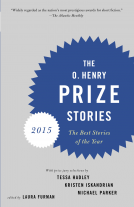
theohenryprizeshort2015Well of course it’s a five-star book; these stories are the winners! And having just read them, and changed my mind over and over as to which was my real favorite, rather like being at a banquet and being served all of one’s favorite foods, I was at something of a loss to find one that rose above the others…until the very end, and if I had to choose one of them, that would be it. That one, or Russell Banks’s “A Permanent Member of the Family”, a poignant, terrible, magnificent story that I had actually already read and reviewed about a year ago in a collection by that author. So, it goes without saying that Banks is a giant, and I just sort of set him aside with the knowledge that he was untouchable, and then read and compared the rest. But why take my word for it? Don’t just listen to me! Look here at how I’ve rambled on forever without mentioning that I got this book scot free (lucky me) from Net Galley and Knopf Doubleday Publishers in exchange for an honest review. This outstanding collection will be available for purchase September 15. I don’t know how you can bear to wait that long!

Okay, let’s try this again. See, it’s almost impossible to compare them, but here are some things I can say about the collection as a whole: first, that it is a multicultural collection, but it doesn’t appear to me as if anybody laid out special rules that said anyone had to vote for this, that, the other culture. They’re all really strong. There was never a moment where something went thud and I wondered how the hell that story got in here. I obsessively made notes on my kindle whenever I came to something that was funny, interesting, or—oh especially this!—when I found incredibly effective, purposeful figurative language. If I still taught (well okay, if I still taught, I wouldn’t have time to read galleys), but if I still taught, I would get a good hard copy of this book to slide under the projector in order to illuminate what the various types of figurative language look like when they’ve been used well. If I still taught and had an actual book buying budget, I would get an entire class set so that students could go through and find the passages for themselves, which is actually a much more powerful way to teach, and then I’d have them write their own stories and be gob-smacked by how much they had improved over the course of a week or so, just from reading a few choice, selected stories.

But I don’t teach anymore, and I do read a lot of books and write a lot of reviews, and I am telling you, this is better than what I generally read, and I’ve been reading good stuff, too. The last story in the collection, “Birdsong from the Radio”, by Elizabeth McCracken, is not only outstanding, but it’s chilling, horrifying, and absolutely fabulous read-aloud material for the month of October.

But if, like me, you no longer have anyone except other adults surrounding you now, you should get this collection for yourself. Read it on the beach; in a chilly, air-conditioned motel room; or snug by the fire this fall. Because this is what excellence looks like. It’s gluttony for the voracious reader, and extremely tempting, I should think, for the reluctant one.

The Murderer’s Daughter, by Jonathan Kellerman *****

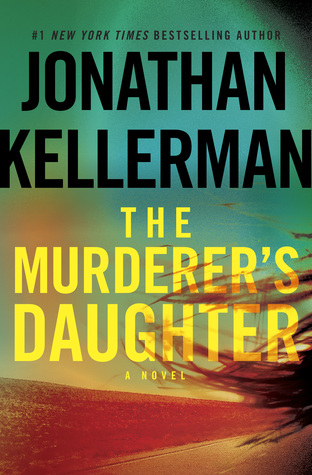
kell__jkt_all_r1.inddGrace Blades is a psychologist helping victims of violent trauma, those she mentally refers to as “The Haunted”. And she should know; as a small child, she watched her mother murder her father, and then more or less eviscerate herself before Grace’s own tiny eyes. So yes, she knows. But a client has come to her with a concern that is more than it appears to be, and it dovetails with a harrowing part of Grace’s past. In fact, she has reason now to believe she may be in danger, and it’s up to her to sort out the pieces and save her own life. This riveting DRC came to me free from Net Galley and Random House-Ballantine Publishers; thanks go to both. The book is for sale August 18.

Fans of Kellerman’s have likely bonded with his Alex Delaware series. Although Delaware’s name is coyly inserted into the background text a time or two, this book isn’t about him, it’s a stand alone. It’s a strong story, and Kellerman’s initial career as a child psychologist makes Grace wholly believable. Someone that has gone through the multiple traumas her childhood has visited upon her would probably have trouble bonding with others, and indeed, Grace goes through life neither wanting nor having real friends her own age. She trusts one social worker, as well as the psychologist who together with his wife ultimately adopts her. And even with them, she has to force herself to smile, to show affection; these are never spontaneous behaviors, but ones learned by observation.

Readers of my blog know that I generally don’t review books about wealthy people. I don’t relate to the rich, and it generally seems like a coward’s way out on the part of the author, because they can excuse their protagonist from the daily financial obstacles that most people have to deal with. But Grace has gone through so many hells by the time she reaches her wealth that this book is different; then too, Jonathan Kellerman is such a crazy-good writer that it would be hard to leave a galley of his by the wayside in any case.

In addition, I appreciated the strength and intelligence of this protagonist. Although the sexual (and sexually violent) content makes the book unsuitable for younger teens, it’s still great to have a strong female character that doesn’t need to be saved by men. And thank you, thank you Mr. Kellerman for avoiding the nearly-obligatory kidnapping scene as part of the climax. I have often wondered why exactly so many sleuths, particularly female ones, end up bound, gagged, and in the trunk of a car at some point near the story’s crescendo, and I was heartily glad not to find it here.

In short, fans of Kellerman’s will get their money’s worth and more, whereas those that have never read his work but love a good mystery can dive in here and also be deeply satisfied. Terrific work by one of the best mystery writers out there.

The Burying Ground, by Janet Kellough ****

This book will be released in a couple of weeks, and I can tell you, it’s already gotten some really good reviews. Since I read and reviewed it clear back in January, I’m reblogging it today.

seattlebookmama's avatarSeattle Book Mama

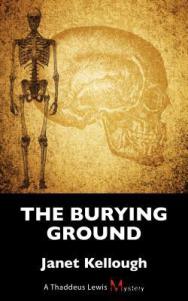
theburyinggroundThis is the fourth book in Kellough’s Thaddeus Lewis series, but it was brand new to me, and I was able to follow the story quite well as a stand-alone. My thanks go to Net Galley and Dundurn Group for the DRC. This book comes out in early August, and I will run my review a second time on my blog then to remind readers that it’s available.

Kellough has merged two enjoyable genres, mystery or detective fiction and historical fiction, and added a splash of social justice–the sort that slides into the story neatly and without preaching. Lots of different story threads eventually braid together elegantly into an ending that satisfies deeply.

The settings are Montreal close to the time of the Industrial Revolution, and outside of Montreal in a village called Yorke. Our protagonists are Thaddeus Lewis, a Methodist Episcopal preacher who travels the circuit, and his son…

View original post 219 more words

Brush Back, by Sara Paretsky *****

brushbackA good mystery writer engages the writer at the beginning, and gets the adrenaline pumping by the 75% point in the story arc. A great mystery writer grabs us by the shirt right from the get-go, ramps us up into overdrive during the first quarter of the story, and doesn’t let us go till we turn the last page, exhausted, feeling both satisfied and bereaved because the story is over. And Sara Paretsky is a great writer, every single time. She’s only gotten better with this 17th installment of the Vic Warshawski series. Thank you and thank you again (and again, and again) to Putnam-Penguin Publishers and Net Galley for the DRC. You can buy this book July 28 if you want to. And you know you do!

Vic is a working class hero, but she’s left the mean streets of the south part of Chicago behind, and when she goes back to visit, nobody who knew her when she was younger will let her forget it. But she does go back, because an old flame approaches her with a serious problem. His mother Stella is out of prison, finally. She pulled the full twenty years for murdering her daughter Annie. But now there is a possibility she really didn’t do it, and Frank wants Vic to search for the truth. Vic doesn’t like it one bit, but agrees to give him a single hour off the clock; after that, it’s the standard fee. She has bills to pay just like he does.

Things turn ugly very quickly, of course. Of course they do! But just as she is ready to wash her hands of the whole unpleasant business, the evening news picks the story up, along with insinuations that smear her own family’s legacy. Now it’s a matter of family honor; Vic is in it for keeps. Her attorney tells her to keep out of it; Lotty, who is like a second mother to Vic, tells her the same thing. Steer clear; let it go. But our detective is like a dog with a bone, and together with her family pride and reckless nature, she’s in it up to her neck again in no time.

In this installment of the Warshawski series, Paretsky has eighty-sixed young relative Petra, who visited a recent installment, and I was glad to see her go. I found her abrasive. However, young cousin Bernie, a high school student checking out colleges, is visiting, and every inch of my being understood Warshawski’s annoyance at the lack of privacy a teen in one’s home creates, and the irritation of having a young person who’s awake half the night and sleeping in the living room all damn day. I have five grown children and endless others have accepted my hospitality over various summers, and so this tidbit hit home. But Bernie is a much more agreeable sidekick than Petra was, and I hope Paretsky will find cause to bring her back in some future installment.

Another of my favorite moments was the lecture Warshawski’s mechanic treated her to when her car was stripped right down to the nub after she left in parked in a South Chicago hot spot under emergency circumstances. He recites the litany of every bad thing she has ever permitted to happen to every single car she’s owned and brought to him, and I laughed out loud as I read it. I would quote it here, but for that I am supposed to wait for the published copy to be sure it hasn’t been altered, and that won’t happen, since you need to know to order your copy right now.

In closing, there are four things you need to remember. First, don’t just pack your gun; pack enough ammunition to get you through your misadventures. Second, technology is a great boon to those that collect threatening evidence against bad guys; scan your pictures, your receipts, your photos and damning letters and put them in the Cloud where bad guys can’t get to them. Third, try to stay away from the cement mafia if at all possible. The things they do to their enemies just aren’t pretty. And fourth, in an unfair scrap when they’re bigger than you are, go for the ankles!

Oh, there’s so much more, but hey, that’s what the book itself is for. It’s not due out till the end of the month, but you can reserve your copy now. Do it!

Mot, by Sarah Einstein*****

Einstein_Mot.inddSarah is forty, and she’s floundering. Her life’s work, like her mother’s, has been to try to make the world a better place, and so she works at a homeless shelter as its director. But things are falling apart there; whereas once upon a time most of the mentally ill homeless were passive, now meth and other addictions have created so much anger and violence that she isn’t even safe there. She’s been physically attacked three times, one of which was sexual, and her life has been threatened on an ongoing basis. Too often she is the only staff member present, and it’s getting scary out there.

Many thanks to Net Galley and University of Georgia Press for the DRC. This title goes up for sale September 15.

In addition, her marriage, which was predicated upon a mutual dedication to social justice issues and the understanding that neither she nor her new husband would be around much because of the time and attention their work demanded, is coming undone as well. Her husband Scotti has at times sided with the population she is supposed to be managing at the shelter against her.

Think of it!

So maybe it isn’t so very strange that she has decided to load herself into her vehicle and drive 1400 miles to Texas to visit a homeless friend who has moved there. “Mot”, who used to be “Thomas”, is living in a beat-up car in a Walmart parking lot. And whereas most of us would regard her mission as either an immense personal sacrifice or even a little bit bizarre, the fact is that she needed to get away from West Virginia, that shelter (where she has given notice and is using up every possible minute of vacation time), and Scotti. She has rented a little cabin—the closest thing Mot will accept even temporarily in terms of living indoors—with two beds, one for herself, and one for him. And as the book opens, she is reflecting that even if he never shows up, a whole week in this primitive little yurt, all by herself, sounds positively wonderful.

Right away her spouse is ringing her cell to complain of how much inconvenience he is experiencing while she is gone. He sends unhappy e-mails constantly, but he also doesn’t want her to use her smart phone because that data costs money. So although she hasn’t explained to us yet about the state of her marriage, which should still be in its honeymoon phase but really, really isn’t, we start to get the picture.

Mot is a complicated fellow. Immediately, when she quotes him, I start asking myself whether this is schizophrenia, a dissociative disorder, both or neither? I’m not a professional by a long shot, but when a guy routinely refers to the other folks with whom he is sharing a body and that control his behavior, it’s pretty clear all is not well. And my jaw dropped on the floor later in the book when he commented, in a moment of total lucidity, that it was probably the latter.

Mot is a veteran, and Sarah’s documentation of the unconscionable way the USA treats its veterans is noteworthy. Advocates for veterans’ health care should be plugging this book all the time, everywhere.

Sarah’s time with Mot mixes with some odd bits of philosophy, most of them his, and so although plot wise there aren’t a lot of parallels, the overall flavor to this book is similar to that of Zen and the Art of Motorcycle Maintenance. (I have never compared any other book to that book before, and don’t expect to!)

I should also add that I came to this galley after having read a couple of Pulitzer winners and some books by my favorite bestselling authors. I dove into Mot not because I thought it would be my favorite of the remaining DRC’s I had to review, but because I had snagged it right before it was due to be archived, and I felt an obligation to the author and the publisher. In other words, although it looked interesting, I didn’t expect to give it five stars. But the sum of the book is so much more than its parts, and to get it, you really just have to read it.

Highly recommended to anyone and everyone.

One Man Against the World: The Tragedy of Richard Nixon, by Tim Weiner*****

onemanagainsttheworldQuestion: What do an old typewriter, a copy machine, Scotch tape, and a razor blade share in common?

Answer: They were all tools used by White House employee Howard Hunt, at President Richard Nixon’s request, to forge a cable that would make (dead) President JFK appear to have ordered the assassination of South Vietnamese President Diem.

My, my, my. The things you can learn once you start digging. This is by no means the most important part of the Nixon story as told by veteran political writer Tim Weiner, nor even the most humorous, in a grim, gallows sense; it’s just a small sample of the bizarre, the paranoid, and above all, the crooked, reprehensible deeds committed by Nixon and his creepy co-conspirators during his administration. And by now I am already supposed to have told you that I read this book free, thanks to Net Galley and Henry Holt Company.

So, can we find a way to go back and make it look like I told you during the first paragraph, like I was supposed to? And for God’s sake, don’t tell anyone.

How much will it cost to keep this thing quiet?

I was just a kid during Nixon’s first term. But as young as I was, I have to tell you, dear reader, that the times were so polarized, so politicized (not unlike the time in which we now find ourselves) that issues like Civil Rights and the Vietnam War could not be relegated to the more traditional venues, such as the evening news or the newspaper. As soon as someone opened the newspaper, or turned on the television, or started to talk about something they had seen on the news, everyone within hearing range erupted in one direction or another. It happened at home; it happened at school; and it probably happened in workplaces. Even if I hadn’t been so fascinated, there was no getting away from it.

During the time Nixon was in office, most of the media criticism of his behavior was initially soft-pedaled out of respect for his office. It took awhile before anyone in the journalistic community used the word “lie”, for example. The words I heard were “discrepancies” and “evasions”. And all of us, kids and adults alike, were stunned by the number of times the words “expletive deleted” were used.

The fact that President Nixon referred to U.S. Supreme Court Justice Thurgood Marshall as “black of course…dumb as hell” was redacted until after Marshall’s death. The horror.

All that was a long time ago, of course, and Weiner is unfettered by any of the above considerations. His story is remarkably complete yet succinct, and oh so darkly funny. Even though others in my household do not share my absorption in things Nixon-related, I can’t get through more than three pages of this book without having to stop and repeat something on the page to whoever is walking through the room. For example, after having invaded Cambodia without the consent of Congress, and in direct violation of every US and international military law on the books, Nixon announced the invasion to the American people on television thusly:

“This is not an invasion of Cambodia.”

One more thing: Nixon’s cover up; the vast number of dead people, mostly young, who should have emerged alive and unhurt rather than killed against their will in an unjust war; the outrageous wrongdoings that unfolded in our capital and that were paid for with our tax dollars; and the outright theft of Federal monies for personal gain…the parallels that shake out between Nixon and Stalin, whose biography I reviewed two weeks ago, are disquieting.

And that much really isn’t funny.

Weiner, whose journalistic pedigree to date may make him America’s finest living political writer, does an outstanding job of eloquently stating what needs to be said and its significance without tossing in a lot of arcane trivia to muddy the water. Unlike most that have written about Watergate, he had no role in the crimes that took place and has no personal ax to grind. So if you want to just read everything that gets printed about Watergate, as I have so far, then read this along with everything else. But if you weren’t around during this time in American history and want to read one—and just one—book about Watergate and Richard Nixon’s resignation, then let this be it.

At the end of the book is a treasure trove of web links that will take the reader to primary resources, very valuable to those doing research.

Read it for your own political education, or look at it as grim, terrible humor, whichever suits you. For me, I guess it was some of each. But if you want to avoid stepping into the abyss, whether here in the USA or in whatever nation you call home, you’re better off being aware of what took place in the past.

Because it’s better to be watching, participating, and engaging in honest dialogue, and better to back your statements with actions that demonstrate integrity, than it is to hide in the fucking basement and scheme against enemies, real or imagined. Honest social and political discourse carried out as citizens of the world are what keep the rest of us from going down that rabbit hole.

Weiner’s masterpiece will be available starting July 21, but it’s probably best to order your copy now. So much of the future depends on what we know of the past.