
 Flo Kennedy was a force to be reckoned with, dismissed by a portion of mainstream Caucasian America as a kook, yet far too clever, too cagey, and too damn smart to be wished away by those that wanted to defend the racist, sexist status quo. When I saw that a memoir of her life was up for grabs at Net Galley I requested a copy immediately, and then took a long time to finish reading it. Part of my tardiness is a stubborn dislike for the PDF format, and so I apologize to University of North Carolina Press and my readers for being so slow; yet a small part of it was the surprisingly dry quality of the memoir. Given the subject, I had expected this biography to set my hair on fire.
Though she was new to Randolph, according to the introduction, Kennedy was no stranger to those of us in the Boomer generation. Her audacity, her wit, and her raw courage that at times bordered on recklessness made for great theater and fascinating press coverage. Raised by parents that taught her not “to take any shit” long before the Black Power movement or even the end of Jim Crow, Kennedy pushed the margins. She studied, worked, and fought her way into Columbia Law; she defended famous individuals like Billie Holliday and Stokely Carmichael, and she did it with style.
By far the most significant part of her legacy was the leadership she demonstrated in bringing together the women’s movement of the late 1960’s and 1970’s with the Black Power movement. As a young woman sending out my own tendrils into the larger world apart from high school and my parents’ home, some of the most influential feminist speeches given were by Kennedy and Gloria Steinem, and sometimes they appeared together. I never got to see them in person, but it didn’t matter that much, because I knew what they had written and what they had said, and soon I was attending meetings of NOW, the National Organization for Women, which was the leading women’s rights organization in the US before their split over women in the military later in the 20th century. Because of women like Kennedy and Steinem, I fundraised my fare to national marches on the Capitol for women’s right to choose whether to reproduce, and to fight for the Equal Rights Amendment.
So I owe Kennedy a great deal.
Kennedy’s confidence and controlled rage positively crackled; she made headlines and was often seen on the evening news. Once when I told a classmate that I wanted to support a female candidate for president of the US, he told me that if I was going to vote for a protest candidate, I should shoot for the moon and vote for Flo Kennedy.
He had a point.
I don’t agree with everything Kennedy said or did, particularly her suggestion that rather than expending great effort to end the US war against the Vietnamese people, Americans should focus their energy toward supporting Black owned businesses. Say what? But nearly everything else she did was so vastly ahead of her time that it made me gasp in awe.
I understand that a memoir produced by a university press is generally going to be scholarly in nature, and that’s one reason I request works like this that are associated with such reputable sources. But a scholarly treatment doesn’t have to drone. By arranging a few of Kennedy’s livelier quotes up front and at chapter beginnings and endings, she might receive the treatment she deserves, instead of being consigned to the dustbin of history a mere decade, give or take a year, after she wore a tee shirt reading “I had an abortion” during her most senior years.
So although I know Randolph is new to Kennedy and probably also has some academic parameters within which she has to work, I still feel that Flo’s memoir should reflect her verve and character to a greater degree.
Nevertheless reader, if you care about women’s rights and the rights of African-Americans, if women’s history and African-American history hold meaning and importance for you, I think you should read this memoir anyway, because as of this writing, it’s really the only memoir of Kennedy that’s available. You can find some of her speeches in feminist collections, but no one else has tackled this woman’s life, and so until and unless something better comes along, you should get this and read it. Because a dry, somewhat conservative treatment of Kennedy is better than nothing.
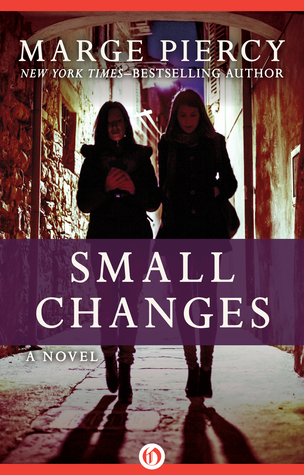 This title was originally published in 1973 during the second wave of feminism that followed the US Civil Rights movement, and then the anti-war movement against the US invasion of Vietnam. Marge Piercy is a prominent veteran writer who spoke to women’s issues during that time and in years to follow. She doesn’t need my review, and neither does Open Road Integrated Media, I suspect, but my thanks go to them and Net Galley for letting me reread this wonderful novel digitally. I received this copy free in exchange for an honest review, but the reader should also know that I came to this galley with a strong, strong affinity for Piercy’s work already, and my bookshelves are lined with paperbacks and hard cover copies of her books. But they are thick and sometimes heavy to the arthritic hand, and it’s a joy to be able to read them on a slender electronic reader. It was released digitally April 12, 2016 and is available for purchase now.
 Lilac Girls is the story of three women during World War II. I received a DRC for this book courtesy of Net Galley and Random House Ballantine in exchange for an honest review. I rate this novel 3.5 stars.
 The Girls is a fictionalized account of the Manson Murders, a terrible killing spree that stunned the USA in the 1960s before any mass shootings had occurred, when Americans were still reeling from the assassinations of President Kennedy, his brother, Senator Robert Kennedy, and Dr. Martin Luther King. Manson, a career criminal with a penchant for violence yet possessed of a strange sort of charisma, attracted a number of young women and girls into a cult of his own founding. Later they would commit a series of grisly murders in the hills outside Berkeley, and it is this cult and these crimes on which Cline’s story is based. Great thanks to Net Galley and Random House for the DRC. This book will be published June 14, 2016.
 Tears in the Grass marks the debut of novelist Lynda Archer. It tells the story of three generations of Cree women, and in doing so also provides the reader with that tribe’s rich history and culture. Thank you to Net Galley and Dundurn for the DRC, which I received in exchange for an honest review. This book is available for purchase now.

 A few years ago I read and reviewed this author’s first memoir, Why I Left the Amish. Her reasons were compelling, some of them inherent in the Amish tradition, others probably atypical of most Amish families, but all together they provided a powerful impetus, that little voice inside all but the dullest that cries out, “Man the life boats! Save yourself!” I understood, having read it, why Furlong would choose to bail, but I was left with other questions, mostly regarding a gap between the end of the book and the author’s biographical blurb. Happily, I heard from her a couple of months ago; she had written a sequel, and this is it. She volunteered kindly to send it in my direction for a chance to read and review, and it is just as riveting as the first.

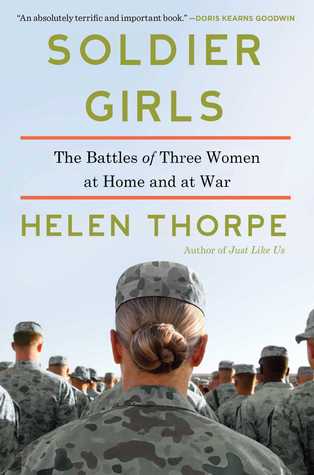 Now that this title has created some buzz, I thought I’d reblog this!
 Seattle Book Mama