
Ill Will, by Dan Chaon**

IllWillThe good news is that if you’re looking for something dark, then Chaon is your author. I received a copy free and in advance in exchange for an honest review; thank you Net Galley and Random House Ballantine. This book was released today and is available to the public.

The plot centers around a psychologist, recently widowed, who’s coming unstuck. One of his sons has developed an ugly drug habit right under his distracted father’s nose, but his dad just keeps giving him money and doesn’t ask questions. At the same time, the psychologist’s brother, who was sentenced to two life terms for the murders of their parents, aunt, and uncle, is exonerated when DNA analysis is done.  Simultaneously a patient of Dan’s comes to him with questions about a series of drowning of drunken college boys that he says he believes are linked. At first, Dan assumes these are paranoid ramblings, but over the course of time, the patient begins to assume greater and still greater importance in Dan’s life, until the reader begins to wonder which of the characters is the psychologist and which is the patient.

The quality of the prose is surreal and at times, dreamlike.

Every reader has a threshold for the level of violence he or she can sustain before a book ceases to be deliciously creepy and instead becomes a thing we wish we never read. I knew when I hit the term “snuff film” before the twenty percent mark that I might be in trouble, but it was a passing reference and since I had an obligation to the author and publisher, I brushed it off and kept reading.  I read multiple books at a time, usually half a dozen or so, and I found that this book was the one that I just didn’t want to read. With the publication date upon me, I forced myself through to the end, and have been slightly queasy ever since.

I didn’t have any fun here; it was just too disturbing.

I want to be fair, and so I read carefully in order to see whether there are any clever literary nuances that might improve my rating, and the second star is included here because of some interesting and innovative stylistic tools that are employed. I liked the triple narrative that appears to be taking place simultaneously, and am interested in the business employed with sentence endings that begins with the father and ends with someone else.

The story’s ending is both unpleasant and disappointing, in that it doesn’t present any sort of epiphany or surprise. My reaction to the end of this whole unfortunate thing is, “Oh.”

None of this means that you won’t like this story. There’s a lot of buzz right now about the now discredited belief in Satanic rituals that were in the news during the 1980s, and if this is in your wheelhouse, maybe you’ll like the book. If your tastes run way out on the edge of horror, you might find it more appealing than I do. On the other hand, it won’t make the ending any less anticlimactic.

Recommended to those interested in extreme horror stories and with a bottomless wallet, or that can read it free or cheaply.
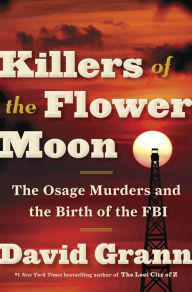
Killers of the Flower Moon**

killersoftheflowermoon I received this book free from Net Galley, courtesy of Doubleday, in exchange for an honest review. It looked like a fascinating read, but I am disturbed by the sources chosen, which sent up all sorts of red flags right from the get-go and before I had even focused on the references themselves, a due diligence that has to be done before any nonfiction work can be recommended. Once I examined the references, I concluded that so many of them are so questionable that nobody, including the writer, can demonstrate anything beyond the premise of the book itself to be true. The killings happened; that’s about it.
I am perplexed, because this kind of error is the sort I’d expect from a novice, perhaps a zealous but careless graduate student bent on self-publication come hell or high water. Grann, however, is an established journalist who’s written for solid mainstream publications. He’s published successful novels. This is his first nonfiction book, and I am surprised that it went to press without his own eyes or those of his publisher finding the glaring problems here.

Early in the text a fact is documented with a block quote from one of Laura Ingalls Wilder’s “Little House” books, a series of YA novels loosely based on the author’s experiences during the Westward Movement, as Euro-Americans pushed the frontier back and took possession of Native territory. Many years ago, an interviewer challenged Wilder on a scene in one of her books, one in which a man recounts having been surrounded, chased, and threatened by wolves. The interviewer pointed out that wolves don’t do that, and Wilder tartly responded that she wasn’t aware that she had been supposed to be writing history or biology, but rather stories she had made up for little children to read. Her only nonfiction is a memoir she wrote later in life, which was not as widely seen.

This historical fiction, then, is Grann’s source material, and the fact that he chooses to give it a block quote also makes me wonder…if this is his good reference, what do the others look like?

A great many other sources are newspapers from what was then Western territory, newspapers from Oklahoma and elsewhere during the early 1800s. This is suspect material. There were no laws against printing inaccurate material, and journalists from this period often printed lies, sons of lies, and interviews based on lies, because there was absolutely no risk of penalty for doing so. To use sources like these, the very least a writer should do is find legitimate sources that agree with the questionable sources and cite both. This doesn’t happen here.

I have no idea why a good house like Doubleday would release this book, or why the writer didn’t use credible sources. Maybe he couldn’t find anything else, but that’s speculation, and I’ve just explained why nonfiction should not be based on guess work, on fiction based loosely on fact, or on unreliable sources, so I won’t take this line any further lest I be guilty of the same.

I was going to close by recommending that the reader just looking for a good story and not concerned about the research might like the book, but then I am confronted by the other unfortunate aspect of this story: I was pushing myself through it. I wasn’t spellbound, but as long as I believed there might be new information to be learned, I was ready to force myself to read this book, tedious though it is. With a DRC, I generally figure that once I’ve signed on, I have to make good on my promise. I wasn’t reading because I was absorbed; once I got a sense of the narrative I was reading out of duty, and out of the hope that at some point this thing would pick up steam. My hope was derailed by the bad source material.

Not this time.

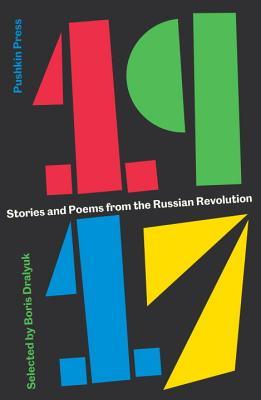
1917, by Boris Dralnyuk**

1917I received my DRC for this collection courtesy of Net Galley and Pushkin Press. I thank them for the opportunity to read and review; this compilation of poetry and prose will be for sale on December 1, 2016. What a crying shame it’s so negative.
There are a few of us left out here—dinosaurs, to be sure—that regard the initial two or three years of the Russian Revolution as an inspirational time, a time when the working class and the Russian peasantry cast off their shackles, ran the brutal, entitled royal family and their minions out of power and eventually to a richly deserved death, and took control of their lives and their nation. When I saw this collection, I believed that this perspective would be represented here somewhere.

Instead, we read poetry about the Tsar’s wine. Oh, no! They destroyed all that expensive wine! Give me a break. Millions of peasants freed from bondage, and all we hear about is the wine casks, and some sorrowful reflections that lament the defeat of the Mensheviks—the party that tried to halt the progress of the revolution and create a bourgeois democratic state. All those sorrowful White Russians weeping into their vodka.

Do I have a bias? Of course I do, but unlike our editor here, I admit mine. The introduction to this thing, which is overlong and somewhat duplicitous, tells us that rather than relate the various political positions that were held during this cataclysmic time, we should instead look at feelings, at experiences. But everyone’s feelings during this tremendous upheaval, a time when the news footage at the time of the revolution shows throngs of joyful Russian workers screaming with enthusiasm, is apparently either sorrowful—aw geez, the poor royals—or conflicted. Not one person is glad it happened.

Poetry and prose are, at their root, political, and in rewriting history, Dralyuk demonstrates this. This collection is revisionist dross.

One other comment I’d make is that when editors decide to republish historic writing, they are often deluded as to how much of their own prose readers are looking for. For every piece, for every author, there is way too much introductory narrative. I really just want to read the work itself, not so much Dralyuk’s discussion of them. Had I enjoyed most of the poetry and prose, I would have upgraded this review to three stars and stated that it is hard to find the original work amidst the rambling discussion. Generally, the poem is short, the introduction is long; lather, rinse, repeat. The same is true of the prose.

So to those lonely Marxists out there hoping for literature, for poetry that’s in English and available readily in the US, I have to say, put that plastic away, because this isn’t that.

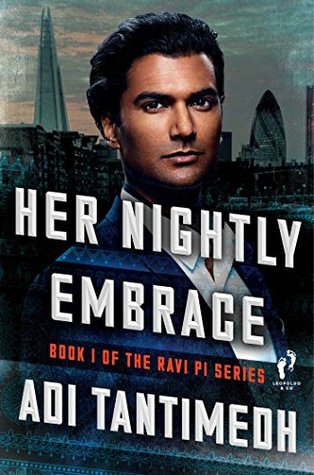
Her Nightly Embrace, by Adi Tantimedh*

hernightlyembraceI was invited to read and review this title by Net Galley and Atria Books. I thank them for the opportunity.  The first two chapters showed signs of promise, but in the end, this book is poorly written and for most, it will also be offensive. I can’t recommend this title. That said, it’s about to become a television program, so perhaps you will enjoy it more than I do. But I have to call them as I see them, and if they give this writer a host of awards, I will still say this book is worth one star and nothing else.
Ravi Singh is our protagonist. He has dropped out of a program of religious studies, to his father’s profound disappointment, and become a detective. He had something of a breakdown, and under stress he sees Hindu Gods that no one else can see. An added pressure is financial; he has bills to pay, and his mother has racked up some gambling debts for which she may be harmed if not paid soon. I warmed to the unlikely loan shark, and I thought this was going to be a fun read. And if it had been well written, it would have been.

In other reviews, I have occasionally noted the way in which a tired, overused plot device may become brand new and almost magical in the hands of a capable writer. This one works the other way around. It’s a unique, if somewhat gimmicky idea, but the author will have to develop a vocabulary before I can enjoy his work.

Profanity has never been a hot button for me. I’ve been known to toss the “f” word into my own reviews when feeling particularly warmly. Unfortunately, Tantimedh uses the word the way I’ve heard teenagers do it; when someone is too lazy to consider what word might be interesting and hasn’t been overused yet, the “f” word can become noun, verb, adjective, and interjection. Everything, everything, everything in this book is said, by either narrator or in dialogue, to be “fucked up”.  By the 40% mark I was so distracted, and it was so obvious that I wasn’t going to engage with the text as I had hoped, that I started keeping track to see whether my perception was accurate. Was I being snarky, or was that word—and a few other similar ones, especially the mother-f word—all over the place? And as I started highlighting, I was amazed to find it on almost every page. Some pages were miraculously free of it, but then there’d be another page where I found it twice, or thrice. At this point I gave myself permission to skip to 80% and see whether something wonderful would happen at the end to redeem this thing. It’s been known to happen; just not here.

I’ve only panned a title I was invited to review once before, and that was because of ugly racist references throughout the text. I’m generally a generous reviewer. But suddenly I felt as if I were before a class of eighth graders once more, explaining that not only will profanity offend some readers, but when it’s overused, it’s often because the writer doesn’t want to do the work to find a more specific or eloquent term.

Whether the issue is due to a translation issue—I didn’t check to see if this was published in something other than English originally—or laziness, or a lack of facility as a writer is moot. The end result is the same.  This is bilge. Save your money.

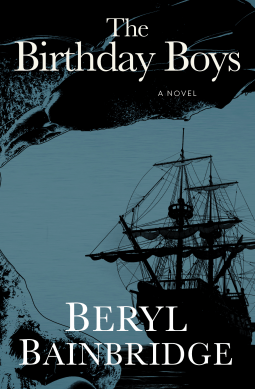
The Birthday Boys, by Beryl Bainbridge**

thebirthdayboysThe Birthday Boys is a fictionalized account of the Scott expedition’s travel to Antarctica in 1910. It’s told sequentially through the perspectives of five men that participate, each picking up where the last has left off and of course, also including some personal reflections and memories to make them more real to us. I was invited to read and review this novel based on my enjoyment of the book Ice Brothers, which was also a maritime tale (and is reviewed here: https://seattlebookmamablog.org/2015/01/03/ice-brothers-by-sloan-wilson/ ). Thank you to Net Galley and Open Road Media, but this isn’t my book. I pushed myself all the way through it hoping for some redeeming aspect of it to pop up at the end, but it only gets worse as it goes, at least from my perspective.

Our story begins in Cardiff, and the men and The Owner (always capitalized) are eager to get started before the Antarctic winter sets in, so they pass their whaler off as a yacht in order to prevent safety regulations from slowing them down. They understand they are sailing across the world in a leaky tub, but one of them is too unprincipled to care, and the others are so darn young. In fact, wouldn’t reaching the destination on one’s twenty-first birthday be the best gift ever? Hence the title.

At the outset, I struggled a bit with some of the technical terms, looking up “plimsol line” and a couple of others, but by the 15% mark I had my legs under me, so to speak, and felt more confident. Soon thereafter, however, the nasty references to gender and race came into it. I looked back at the copyright; since this author, highly respected in the UK and winner of awards, was born in 1932, might this be a digital release of a very old book? But not so much: the original copyright date was 1991. Perhaps Dame Bainbridge felt that ugly racist terms might provide some flavor here. Likewise, the women included here, generally wives of the men involved that were tucked safely away at the base camp, were carping or hysterical, squabbled with one another, and Mrs. Scott, the only woman with any character at all according to the narrative, kept insisting that she hated women.

Whoa.

The plot is rugged and gruesome. If not for the issues just mentioned, I might compare the writing to that of Jack London, fascinating for those that love the adrenaline rush of life-or-death adventures, but too grisly for me. There’s some good work with figurative language and at times the scenes are tremendously visceral. Yet at times the pace actually plods along rather slowly for a book of its kind, and so I find myself wondering how this writer managed to be recognized by the queen; that is true, at least, until I find the following passage:

“It’s difficult for a man to know where he fits in any more. All the things we were taught to believe in, love of country, of Empire, of devotion to duty, are being held up to ridicule. The validity of the class system, the motives of respectable, educated men are now as much under the scrutiny of the magnifying glass…”

Well, perish the thought!

If not for the racism and sexism I’d call this a three star read. If an Antarctic expedition thrills you and you have the stomach for the…never mind. I can’t finish that sentence without scrunching up my face and squinting, so let’s go with the bare truth: I don’t recommend this book to anybody.

Even the Wicked, by Ed McBain**

eventhewickedBest known by the pseudonym Ed McBain, Richard Marsten, the name under which this book was originally scribed in 1958, was born as Salvatore Lombino.  I was a huge fan of McBain’s, and every time I see some small thing he wrote that I haven’t had a chance to read yet, I snap it up. And so it was with this DRC, which I received compliments of Net Galley and Open Road Media. But once I reached the halfway mark, I felt sort of queasy and couldn’t continue. I suspect that much of what he wrote as Marsten might as well be left in whatever obscure attic corner it’s perched in, because society has moved forward since the 1950s, and this book is still there.

The re-publication date for this book is October 25, 2016.

The premise is this. Our protagonist, Zach, is returning to the beach house where he and his now-deceased wife stayed on their wedding night. He brings their little girl Penny along with him. Before he can commence to do any sleuthing, however, the real estate concern that rented the place to him tells him it’s been taken by someone else. Zach isn’t going down easily for two reasons: first, he wants to see if his suspicion regarding the possible murder of his wife is true, and second, he’s already paid in full for the entire stay. The story starts with the excellent, tense build up that would become Lombino-Marsten-McBain-Hunter’s hallmark. I rolled up my sleeves and snuggled in.

And then bit by bit it all went to hell.

First of all, why would a man on a deadly mission bring his little girl with him? Leave the tot somewhere safe or stay home. And then there’s the stereotypic, racist crap about the local Indian. (He’s ‘chiseled’, of course, but he’s also just plain creepy looking.) Next, Daddy Zach tells Penny that he’s pretty sure her mommy was murdered.

The fuck?

And as he sets up his date with destiny, he finally realizes he has to have a sitter for Penny after all—in the contested house, of course, where surely nothing bad will happen to her while he’s away—and so he asks a complete stranger for the name of a babysitter, and the person refers him to someone that’s also a complete stranger. He sets it all up, arranging to leave his little girl, all he has left in this world, with someone he’s never heard of till today and doesn’t even plan to interview, and hits the road to solve the crime.

I got halfway through this thing and finally threw up my hands. Had I read the rest, I might have thrown up, period.

I know that in bygone times, people in the US were much more relaxed about child care arrangements than we are today. Many Caucasian people were also really racist, and men and sometimes even women were sexist, too. But that doesn’t mean I care to see it in my escapist fiction.

If you haven’t read Ed McBain, find something he wrote after 1980 and you’ll be in for a treat. But this one is a thumbs-down.

The Goldfish Bowl, by Laurence Gough***

thegoldfishbowlIt’s seldom that I find myself so ambivalent about a galley; I read this free thanks to Net Galley and Endeavor Press in exchange for an honest review.  The writing skill is probably closer to a five; the respect level for women, people of color, and anyone that isn’t oriented straight as a bullet’s path is closer to a one. So those that are constantly inveighing about how tired they are of trying to be PC, here. This is for you. For those of us that have moved along, I am not so sure. This book was released digitally in January, 2016 and is now for sale.

I spent a good portion of this book confused, because it is billed as a new release, yet it really reads like a novel from the 1980s might.  A little digging revealed that it was initially published in 1988, and this explains a good deal. Mainstream attitudes have come a long way since then, and so some re-released novels stand the test of time, whereas others should perhaps be consigned, as Trotsky put it, to “the dustbin of history”.

The story is set in Vancouver, British Columbia, and this is part of what made me want to read this mystery. I don’t see a lot of fiction set there, and I know the area, so I thought this would be fun. And setting is done well.

Then we have our sniper:

“The sniper sat in the orange plastic chair, hunched over a Lyman ‘All American’ turret press. His hands were large and strong. The thick blunt fingers, nails carefully painted with a glossy red polish, moved with precision and grace as he assembled the shiny brass cartridges, primers, powder and fat 500-grain copper-jacketed slugs.”

Our sniper, who must surely be a baddy if twisted enough to put on women’s clothing and makeup, is referred to as clown-faced and is always designated as “he”. In the 1980s that boat would float with most of book-buying North America. Now, not so much.

There is one victim after another, and the beginning is paced at breakneck speed, relaxing readers only to suddenly shock us repeatedly, so there’s a sort of emotional whiplash. There are two detectives in charge of the sniper shootings, and one is a woman. That’s unusual in the department, where women are routinely referred to in demeaning ways and where hard core porn kept in a file cabinet is just a thing the boys in blue do. None of this appears to be there to make a point about what women put up with, however; it seems to be injected for realism and urban grit. And though none of the cops is particularly brilliant, Parker, the female cop, is particularly incompetent, emptying an entire gun at close range without hitting the target even once.

Okay.

Bright spots come with particular scenes. The climax is brilliant, and I love the detail of the guard horse in front of the evidence room. The author is clearly talented, but every time I found myself engaging with the text and not thinking about anything that had offended me, something else would come to the forefront, popping up like a turd in the punch bowl. Those that visit psychiatrists are all ‘fruitcakes’, and at one point, “a huge black” stands in the doorway. At this point my temper flared and I tapped into my tablet, “Huge Black WHAT, motherfucker?”

Yes, I know. Amazon won’t print that quote. It’s worth editing to have it in my blog, because that’s exactly how I feel about it.

There are good moments with figurative language, but then once in awhile a glaring fact that nobody checked pops up. Do people in Vancouver genuinely believe that the West Coast goes from British Columbia, to Washington, to California? Didn’t think so. Someone needs to apologize to Oregon, which is larger than some European nations.  The denouement, social justice issues aside, was a mighty long reach.

If you are already a tried and true fan of Laurence Gough—and he is an established writer with over a dozen published novels—then you will probably enjoy this one too.

As for me, I’ll pass.


The Last Good Girl, by Allison Leotta**

thelastgoodgirl This title appeared to be a sure fire winner, a thriller that would also spotlight domestic violence and even more so, campus rape. I was pleased when Net Galley and Touchstone Publishers green-lighted my request for a DRC, which I received free of charge in exchange for this review. And without the social issues, which are a mixed bag but still partially useful, this would be a 1.5 star review, because as a mystery, as a thriller, as any kind of fiction, it doesn’t stand up.

A few months back I unfavorably reviewed a title that I said appeared to be a story that was invented purely to make use of some research; the author appeared to have done a lot of digging and was determined to stretch her story to include the information she’d dug up. But this one is even worse, because it really appears to be stretched around a large number of name brands. In fact, I can save you some time and money just by giving you the majority of the story now, though of course I can’t tell you how it ends, because that would be a spoiler. So, here are the key points, bulleted for easy digestion:

  • Pottery Barn
  • Urban Outfitters
  • Nordstrom
  • Calvin Klein
  • Domino’s Pizza
  • Wall Street Journal
  • Louis Vuitton
  • Tory Burch Shoes
  • Ford
  • Sephora
  • Zagat
  • Bank of America
  • iphone
  • Jim Beam
  • US News and World Report
  • Dodge Viper
  • Netflix
  • Jell-O
  • Krispy Kremes

Even without the endless product placement, many of the above-mentioned names being plugged numerous times, it’s a hard story to appreciate. In place of using plot and character development to tell a story, we are given two premises that are hard to embrace. The first is that our victim, Emily Shapiro, put all her deepest, most heartfelt feelings and experiences into a vlog that serves as a class assignment. All of it. Of course she did! And so the author has relieved herself of the main burden here and instead is dumping all of her Emily information into a single lengthy narrative that alternates with the third person story she has shaped around her merchandise promotions.

The initial premise is that a federal prosecutor, the one and only in fact, is somehow able to assist her old flame with a local case. “We could investigate it as a federal hate crime”, Anna tells Jack.

Sure we could.

The social message that there is too much campus rape that college administrators try to sweep aside to protect the reputation of their university’s brand, is somewhat undermined by other messages that struck me as reactionary. Anna sees condoms for sale in vending machines and “…she wasn’t sure about the wisdom of packaging sex as an option as casual as a snack.”

Maybe we should just go back to the age of the chastity belt. That will take care of that darn AIDS virus and the other STDs, too!

Finally, though it’s a relatively small part of the story, an unwanted pregnancy is treated as an automatic gonna-have-a-baby. I could (and have) seen stories in which the pregnant woman decides she doesn’t like the idea of abortion, and that’s fine. Roe v. Wade and the right to choose it confers isn’t about every pregnant woman terminating a pregnancy; it’s about a choice. What grates on my nerves is the suggestion that no such choice even exists.

If you can find a credible story here to hang your hat on, more power to you. The vocabulary is certainly accessible, if a trifle trite in a number of places. But for me, the joy of getting to read the story free has been displaced by the realization that I’ve been snookered into reading a host of obnoxious advertising because I have agreed to produce a review.

It’s for sale now. If you want it, you can have it.


Second Daughter: the Story of a Slave Girl, by Mildred Pitts Walter**

seconddaughterstoryofaslavegirlSecond Daughter is historical fiction based on the true story of an enslaved woman that went to court and won her freedom in New England around the time of the American Revolution. I received this DRC free from Net Galley and Open Road Integrated Media in exchange for an honest review. And it’s just as well, because if I had paid any money at all for this brief but troubled book, I would be deeply unhappy.

First, let’s examine the positive aspects that allowed the second star to happen. Walter has nailed setting, and when Aissa, the girl that serves as our narrator, describes the kitchen of her master’s house, we are there and can see it all. Here she does an excellent job. Other settings are also well told.

Second, the length, just 119 pages, is accessible for young adult readers, many of whom find it difficult, in these technologically advanced times, to focus all the way through a full length novel.

Unfortunately, the problems outweigh the virtues. I have two issues that plant this story on my literary wall of shame. The first is technical, the second philosophical.

Technically I see this as a decent if unmemorable read, and were I to judge this strictly on the writer’s skill, I would call this a three star novel. Overlong passages of narrative, often unbroken by action or dialogue and in lengthy paragraphs, are likely to hit the average adolescent’s snooze button early on. The choice to tell everything in past tense as opposed to the more widely used literary present deadens the pace further. When we finally do get a passage of dialogue, it is so stiff and stilted that not even the most engaging teacher, when reading this out loud to her class, could possibly breathe life into it. One character is depicted as speaking with a Sambo-like dialect, all “dis” and “dat”. If one is going to use a dialect, make it respectful and readable.  This verges on mimicry, and any Black students in the room that haven’t tuned out or gone to sleep yet are going to be pissed, and rightly so.

I can see that Walters meant well in writing from the point of view of a Black slave girl and in depicting a victory gained by Black people on their own behalf, as opposed to the usual torture, death, and despair that represented those kidnapped and forced into slavery. But this is also where I have to step back and ask what the ultimate effect of this book will be on students that read it.

For the average or below average middle school student, reading all the way through even a fairly brief novel such as this one will likely be the only book they make it through during the term in which slavery is covered in the social studies, humanities, or language arts/social studies block. Part of the power of good literature—which this isn’t, and in some ways that may be for the better—is that it drives home a central message. I can envision students that pay attention to this book, perhaps because the teacher is particularly engaging and has driven home its importance, and then walking away from the term’s work convinced that all any slave in any part of the USA ever had to do to get out of his or her predicament was to find a good attorney, take the matter to court, and bang, that’s it, we’re free. Let’s party.

This novel addresses a relatively brief period in the northern states, where slavery had been legal but had not been as widespread as in the Southern states. King Cotton had not become the dominant economic mover it would become by 1850, when its grip on all of US governmental institutions would be absolute. By then, northerners made their money indirectly from the cotton industry in everything from shipping, boat building, rope making, and banking to growing crops for consumption by Southerners and in some cases, for their slaves.

If one is going to teach about slavery, far better to do so as part of an American Civil War unit. It’s a tender, sensitive, painful thing for children of color, but it’s not okay to deceive them, however unintentionally, with the misimpression that all slaves had options that they didn’t.  Better to use portions of Alex Haley’s Roots; teach about the vast but much-ignored free Black middle class in the north that was the primary moving force behind the Underground Railroad; or to show the movie “Glory” in class to emphasize the positive, powerful things that African-American people did during this revolutionary time, than to emphasize something as obscure, limited, and potentially misleading as what Walter provides here.

I am trying to think of instances in which this book might be part of a broader, more extensive curriculum such as the home-schooling of a voracious young reader, yet even then I find myself back at the technical aspect, which results in a book that is dull, dull, dull. Literature should engage a student and cause him or her to reach for more, rather than make students wonder if it will ever end.

In general I have resolved to read fewer YA titles than when I was teaching and treat myself to more advanced work during my retirement. I made an exception for this title because the focus appeared to be right in my wheelhouse, addressing US slavery and the civil rights of Black folk in America. I regret doing so now, but it doesn’t have to happen to you too.

Save yourself while there’s time. Read something else. And for heaven’s sake, don’t foist this book on kids.

Lincoln Reconsidered: Essays on the Civil War Era, by David Herbert Donald**

lincolnreconsideredI received this DRC free in exchange for an honest review. Thanks go to Net Galley and Open Road Integrated Media for letting me read it; Donald won the Pulitzer for his Lincoln biography, and I was sure this series of essays written for the purpose of dismantling myths surrounding the most revered president ever to occupy the White House would be hidden treasure rediscovered. What a crushing disappointment.

In the introduction, Herbert mentions that his section on abolitionists has drawn a great deal of criticism. Unfortunately, he appears not to have used such criticism as an opportunity to reevaluate the framework that limits his thinking in that section. More on that later;  I realized that since this is a collection of essays on various aspects of Lincoln, primarily as president, I needed to set aside the sharp distaste that overwhelmed me initially in reading this selection and see what I thought of the other entries.

I found Donald’s essay regarding Mary Todd Lincoln interesting. Another, which addressed the folklore surrounding Lincoln, part of which involved every possible religious denomination attempting to claim him as one of their own when in reality, he just wasn’t all that religious, was interesting; I could have done without the Rastus-style written dialect provided to the African-American source he quoted.

In fact, it is Donald’s writing—and lack of it—regarding African-Americans that put my hackles up. I realized part way into it that this problem is going to be a common one for any Caucasian American scholar whose main body of work around the Civil War was written before the Civil Rights movement. For a long time, the American intelligentsia was tremendously segregated, and those at almost entirely white institutions of learning would never have deigned to call upon professors at traditionally Black universities or utilize the publications of Black historians. (It’s also before the first wave of feminism of the 60’s and 70’s, and so no woman is considered a credible resource; but that is a secondary consideration to the grave matter of Donald’s easy dismissal of Black historians, due to the topic at hand.)

Anyone that has delved deeply into the study of abolition and the Underground Railroad has to know that the majority of abolitionists in the North were free Black people. They didn’t turn up in Caucasian newspapers, but they were certainly quoted in the Black press. In most cases they did not attend meetings hosted by Caucasians unless specifically invited, as happened sometimes in Quaker-sponsored gatherings. But if WEB DuBois could find this information, then David Pulitzer Donald could have found it, too. His supercilious, offhand treatment of Black people when they are mentioned at all tells us why he chose not to go there.

Had Donald done all the work, rather than choosing those that suited his personal biases, he would have known how extensive the line of support was for John Brown. But he would have had to access publications that featured the writing of Black journalists, because according to DuBois and other sources, Brown did not discuss his plan with any other Caucasian abolitionists except his sons. In short, African-Americans and the information they left behind could have better informed Donald’s essays, but in dismissing them, he came up with incorrect conclusions.

Any essay that touched on what should happen to Black slaves in the south, or that could have included what was being said and done by Black citizens in the north, shared this deficit of information and necessarily misinformed Donald’s conclusions.

The final essay, “A. Lincoln, Politician”, gave me an accurate and interesting tidbit: Lincoln had an understanding with Stanton, one that made its way into private correspondence and was thus documented, that when he came up with an idea that for reasons beyond his own knowledge was absolutely impossible to implement, Stanton was to denounce it, and then Lincoln would passively accept that his cranky Secretary of War had made the call. This makes a great deal of sense; in a way, Stanton was Lincoln’s version of Spiro Agnew—but without the corruption and financial scandal. Every president needs someone close by in their administration to play the role of bad cop in smothering popular but ill-advised initiatives, and for Lincoln, Stanton was that man.

Before reading this collection of essays, I was so impressed with Donald’s achievements that I had gone to my wish list and added his biography of Lincoln in the hope I might receive a copy—even a used one—for Mother’s Day. As soon as I reached the essays dealing with race in this collection, I went back to that list and removed the biography.

I’ve read enough by this guy.