I received my copy of Cooper’s essays free and early, thanks to Net Galley and St. Martin’s Press. Her prose is clear, articulate, and full of fire.
Had I read my post-Trayvon civil rights titles in a different sequence, I might very well have called this a five star collection. However, I read Samantha Irby, Ta-Nehisi Coates, Angela Davis, and Matt Taibbi first, and so the bar was set somewhere in the stratosphere when I opened this galley. I wanted Cooper’s viewpoints to be accompanied by some hard facts, complete with citations. However, for those looking to have their world view clarified and their consciousness raised, Cooper’s collection is recommended.
Ta-Nehisi Coates is pissed. He has a thing or two to say about the historical continuity of racism in the USA, and in this series of eight outstanding essays, he says it well. I read it free and early thanks to Net Galley and Random House, and I apologize for reviewing it so late; the length wasn’t a problem, but the heat was hard to take. That said, this is the best nonfiction civil rights book I have seen published in at least 20 years.
Coates started his writing career as a journalist, and became the civil rights columnist for The Atlantic. For those Caucasians that advise Black folk to just get over this nation’s ugly history because slavery has been gone for 150 years, he has a response. Pull up your socks and be ready. To Bill Cosby and Patrick Moynihan and anybody else that wants to blame the high poverty level on the demise of the Black family, look out. And for anyone that seriously believes that the election of Barack Obama to the presidency is proof that America’s institutional racism is dead and gone, step back a minute.
When Coates sets out to make a point, he comes armed for conflict. Not only is he searing eloquent, his research is hard to dispute. Regarding white folk that hold themselves blameless for what their ancestors have done, he wonders why we feel so free to claim our veterans every May and November and yet pretend that our white bedsheeted predecessors have nothing to do with us.
He has a point.
For those of us that are persuaded that the election of Donald Trump to the White House is more about economics and the unemployment of poor white people or the abrasive nature of Ms. Clinton than about white supremacy, Coates has some cogent arguments that run in the other direction. It’s enough to make you stop and think, and that’s why I am tardy with my review. I read in small bites, and then I had to reconsider some of my own conclusions. And although it stings, great writing does this. If we are paying attention, we have to realign some of our own thinking in order to meet the reality this book presents.
Coates is bemused by Caucasian readers that love his work. I understand his bewilderment; nobody likes to hear bad news about the characters of their ancestors, let alone about themselves. But if a thing needs doing, it needs to be done right, and in that respect, Coates is undeniable.
Highly recommended to everyone genuinely interested in civil rights in the USA.
Dee’s new novel has created a lot of buzz. Despite impressive list of publications and accomplishments, he had slid under my radar until now; thanks to Net Galley and Random House, I read this free and early in exchange for this honest review. It is available to the public Tuesday, August 8, and those that love strong, purposeful fiction should get it and read it.
The Locals is entertaining, and it also conveys a sharply driven message, one that is timely, as we see the middle classes wasting away in Western nations that were once strong and relatively democratic, the most affluent becoming richer, and tens of thousands of homeless living in cardboard shacks and tents beneath the freeways of otherwise-successful American cities.
The story starts with 9/11. Mark Firth is in Manhattan on business and is taken advantage of by a con artist. By contrast, Howland, the small (and fictional) town where he lives and in which our story is set, seems safer, and more benign. He breathes easier when he is home.
He isn’t the only one that feels that way.
Philip Hadi decides to leave the big city, and he hires Mark to fortify his summer home into a secure summer residence. From there things unfold, and Hadi takes on increasing amounts of responsibility and power in Howland.
The story is largely character driven, and I dare you to find a novel in which a large number of townspeople are better developed than these. At the outset, I think I know which are the better citizens of Howland and which are its pond scum, but as the story progresses—told in third person omniscient, with one noteworthy exception—the most lovable characters darken, while those that seem irredeemable at the outset show some vulnerability and decency. Even without the novel’s purpose, which is brainy and clever as hell, it would be a good read. I particularly credit male authors that can develop female characters with this kind of depth. You don’t see it often.
Ultimately, however, we are forced to examine, through the eyes of the people of Howland, the role of the super-rich. How much authority are we willing to cede in exchange for easy material benefit? Teachers that have questioned the authority given philanthropists that have a lot of dollars to throw around, but no background whatsoever in education, will particularly appreciate this story. Beyond all of this, it’s absorbing, entertaining, and in places it’s funny as hell.
Highly recommended to those that love strong fiction.
“You can fuck any girl you like here tonight; they’re all hockey-whores when we win.”
Fredrik Backman is a sly writer, and he has a way of spiraling around his central point so that readers are mighty close by the time they recognize where they are. He writes with philosophical grace tinged with wit, and his novels are popular because of it. And so it cheers me to see him examine what might happen to a small depressed town whose hopes are all hinged on youth sports. Thanks go to Net Galley and Atria Books for the DRC, which I read free of charge in exchange for this honest review. Beartown is available to the public today.
In Beartown, everyone dreams of hockey, and those that don’t are stuck on the outside looking in. A man’s glory days are done before he’s 40; a woman has no glory days at all, since women cannot play on the men’s team and there is no women’s team. Everything comes second to hockey: education, social skills, and even the law are bent, sometimes to the breaking point, in order to accommodate star athletes. Hockey is the town’s only remaining business, and it seems to provide the only possible hope for young men that have grown up in the forest and don’t want to leave it to seek work.
Backman has a genius for drawing the reader in. Some of the scenes in this story actually make me laugh out loud. His respect for women is a breath of fresh air as well. In literary terms, though, the greatest success of this piece is the way a large number of characters are developed so that readers genuinely feel that we know not just a protagonist, but a whole town. We know who is related, what private baggage exists between individuals and families, which marriage is happy and which is not, and it’s delivered to us in a way that never feels gossipy or prurient. Rather, Backman makes us feel as if we are part of the town, and so everything is important to us as well.
Fans of Backman’s will be pleased once again here. My sole quibble is that I see a character at the end behave in a way that is so inconsistent with what we know of him so far that I can hear the violins play. It’s heartwarming, but if the same thing had been achieved more subtly, it would be credible as well.
Nevertheless, you won’t want to miss this book. Regardless of the ugly things that are said and done at various points, the author comes back, as he always has before, to the innate goodness of the human spirit, and it’s messages like this one that we need so badly today. Recommended to those that enjoy good fiction.
Michael Nesmith is a veteran of the entertainment industry, but his name is most recognizable as the wool-beanie-wearing member of The Monkees. Nesmith has a treasure trove of experience and insight, and he’s very articulate. I really enjoyed this memoir, and if American musical and cultural history interest you, I recommend you get a copy when it comes out April 18, 2017. Thanks go to Net Galley and Crown Archetype for the DRC, which I received free of charge in exchange for this honest review.
Nesmith came of age in Texas, the child of a single hardworking mother, and was mentored by the profane elderly Uncle Chick, whose spoken cadence Nesmith would later find in his own sense of musical rhythm. Because Texas was the exclusive province, at the time, of country and gospel music, Michael and his pregnant girlfriend loaded themselves and Mike’s guitar into his mother’s car and took off for Los Angeles. It proved to be a good move.
Those that cannot remember the birth of rock and roll have no idea how polarizing it was. The cliché term “generation gap” represented a genuine source of friction and alienation in a lot of families; some parents decided that rock was not an art form but instead a type of devil worship. Some disowned their children over it and didn’t take them back later. I’m serious. And so when Nesmith credits his mother for her patience and forbearance—he actually didn’t ask if he could take her only car, for instance—he’s not just being gracious. Here, let him tell you:
It was unthinkable to everyone who had just fought World War II that the music…the whole cultural imperative of the victorious warriors would be torn down by their kids as if it were ugly curtains in the den.
Soon Nesmith would be chosen as a member of The Monkees, which catapulted four little-known young men to instant fame; Nesmith recalls that although seventeen to twenty-year-old Beatles fans were incensed by the TV imitation, the nine to twelve-year-old television kids—of which this reviewer was one—saw them as a fact:
What followed was what Nesmith calls “Celebrity Psychosis”, a sense of disproportion and entitlement caused by instant stardom, obsequious handlers, and bizarre social circumstances. He humorously recounts strange experiences, such as singing at a local school and being pursued by screaming adolescent girls, and being “sighted” shopping in a grocery store.
He recalls his experience as John Lennon’s house guest in London, and he cites Jimi Hendrix as the best rocker that ever lived. He also drops a rather nasty slam at Bob Dylan without any real explanation, and I confess that is part of the missing fifth star. What the hell?
Bette Nesmith, Michael’s late mother, invented Liquid Paper while he entered show business, and her fortune helped finance some of his creative products. Nesmith was a pioneer in the field of country rock as well as the music video. He produced movies and won a Grammy for “Elephant Parts”, an early music video:
He is also an ardent feminist, and his recollections show that he was one before it was cool. Thank you, Mr. Nesmith.
I have to admit that I find the first half of the memoir more interesting than the second half. The author goes on in the latter half of the book to speak at length about his spiritual experiences with Christian Science and the ways in which wealth distorts a person’s character, though he recognizes the latter doesn’t garner a lot of sympathy. “Never complain about the air-conditioning a private jet.” He also does a lot of brow-beating about having stolen a friend’s wife, and attributes the failure of that marriage—his second, or his third maybe—to guilt.
Despite the aspects that I didn’t enjoy, I do recommend this memoir, because it eloquently describes a wide, enormously dynamic period in American film, music, and television. Nesmith unspools the last half of the 19th century with the wisdom of his experience, and it’s a perspective completely unlike any other I have seen.
Recommended for those with an interest in contemporary American cultural history, as well as to fans of Nesmith and The Monkees.
It’s an honor to be invited to review any book by Random House and Net Galley, and so when the email came, I accepted without hesitation; I thank them for thinking of me and wish I could honestly recommend this one. Others have referred to this memoir, whose title is taken from a quote by Katharine Mansfield, as “exquisite, intimate, and lyrical”, and the author has won awards for her novels. I looked carefully to see if I could locate the genius in this book, but it eluded me completely.
The intimacy of the work is surely apparent. In essence, this is a mental health memoir, and the author writes of her fight with depression, her multiple suicide attempts and hospitalizations, of the expectation of others that she should continue to live when she didn’t want to. It’s brave writing, although mental health battles are now a fairly mainstream topic, but I am unable to find anything tangible to engage my interest.
My only real pleasure is in discovering that Li is already a successful writer; had it been a debut, I would have been scared silly. After all, if I say I don’t like the book, will the writer harm herself? What if I simply dodge the whole thing and let it get lost in the shuffle; will it happen then as well? But in seeing that this is someone with an established career and a wall full of accolades, probably the displeasure of one humble blogger won’t create a great deal of trauma.
The whole thing is bleak. The writer reminds us repeatedly that her life is private, that no one has the right to know any of its details and all I can think is, so what are we doing here, exactly?
Those that have read and enjoyed Li’s novels may find more to hang their hats on than I have found. All I know is that it is painful to read, has no beginning, middle or end that I can find, and is devoid of the literary qualities that can sometimes make a sad book enjoyable. I can’t recommend it.
Dorothy Day is an interesting historical figure, the woman that founded The Catholic Worker, which was initially a combined newspaper, homeless shelter, and soup kitchen. I once subscribed to The Catholic Worker, and since it cost one penny per issue, you couldn’t beat the price. I saw this biography available and snapped it up from Net Galley; thanks go to them and Scribner, who provided me with a DRC in exchange for an honest review. This title was published in late January and is now available for purchase.
I always had a difficult time getting a handle on what The Catholic Worker stood for. The name suggests radicalism, and indeed, Day was red-baited during the McCarthy era. Day was a Catholic convert and a strong believer in sharing everything that she had with those that had nothing. She worked tirelessly and selflessly, and despite often living an impoverished existence somehow made it into her eighties before she died, an iconic crusader who became prominent when almost no women did so independently—though she was no feminist, and believed that wives should submit to husbands. Since her demise, speculation has arisen as to whether she might be canonized.
What was that huge crash? Was it a marble statue being knocked the hell off its pedestal? Hennessy takes on the life and deeds of her famous grandmother with both frankness and affection. In the end, I came away liking Day a good deal less than I had when I knew little about her. Her tireless effort on behalf of the poor included anything and everything her very young daughter had in this world, and at one point she remarked that she felt unable to ask others to embrace a life of poverty if her child wasn’t also a part of that. It was a different time, one with no Children’s Protective Service to come swooping down and note that the child was sleeping in an unheated building in the midst of frigid winter; that there was no running water, since the building was a squat; that the only food that day was a single bowl of thin soup and perhaps a little hard bread donated from the day-old stores of local bakeries; that even small, personal treasures and clothing given the child by other relatives and friends would either be stolen by homeless denizens or even given away by her mother, a woman with the maternal instincts of an alley cat. Day did a lot of good for a lot of people, and no one can say she did it for her own material well being, but she more or less ruined her daughter’s life, and even when grown, Tamar’s painful social anxiety and panic attacks derailed her efforts to build a normal life for herself.
Nevertheless, the immense contribution that Day made at a time when the only homeless shelters were ones with a lot of rules and sometimes religious requirements cannot be overlooked. She is said to have had a commanding presence, endless energy (and the mood swings that accompany such energy in some people), and a mesmerizing speaking voice. Day’s physician also treated the great Cesar Chavez, and reflected that their personalities were a lot alike.
I confess I was frustrated in reading this memoir, because I really just wanted the ideas behind the Catholic Worker laid out for me along with the organizational structure. Was the whole thing just whatever Day said it was at the moment, or was there democratic decision making? I never really found out, although I gained a sense that the chaotic events shown in the memoir reflected an unarticulated organizational chaos as well. This is a thing that sometimes happens with religious organizations; the material underpinnings are tossed up in the air for supernatural intervention, and the next thing they know, there’s an ugly letter from the IRS.
Only about half of this memoir was actually about Day; my sense was that the author did a lot of genealogical research and then decided to publish the result. The first twenty percent of the book is not only about Day’s various romantic entanglements; a significant portion of the text is mini-biographies of those men, and frankly, I wasn’t interested in them. I wanted to know about Day. Later I would be frustrated when long passages would be devoted to other relatives and their lives. Inclusion of daughter Tamar was essential, because Dorothy and Tamar were very close all their lives and shared a lot, and so in some ways to write about one was to tell about the other. But I didn’t need to know about Day’s in-laws, her many and several grandchildren, and so on. I just wanted to cut to the chase, but given the nature of the topic, also didn’t want to read Day’s own writing, which has a religious bias that doesn’t interest me.
Those with a keen interest in Dorothy Day and the Catholic Worker may want to read this, because not many books are available that discuss her life and work. On the other hand, I don’t advise paying full cover price. Get it free or at a deep discount, unless you are possessed of insatiable curiosity and deep pockets.
This is a collection of funny stories and brief essays. It’s geared for the Boomer generation, and is billed basically as bathroom reading. Thank you to Net Galley and Dundurn Press for the DRC, which I received in exchange for this honest review. I rate this book with 3.5 stars and round it upward; it will be available to the Canadian public –and presumably anyone anywhere that wants to buy it digitally—February 17, 2017.
I confess I made an assumption when I saw the title. I was expecting jokes and essays dealing with man’s best friend; actually, I find very few stories related to dogs, but an unexpected number related to death. Of course, many of the essays are not humorous, but of a more reflective nature. This is all well and good, and the quality of the writing is worthy of such a sobering topic. But when I saw the book billed as being similar to the work of Dave Barry, I wasn’t anticipating reflections on my own mortality. I was expecting jokes.
That aside, there are indeed some very funny pieces here, and although I am on the borderline in terms of being in—or out—of the Boomer generation, a lot of the humor does resonate. I love seeing Benedetti try to explain a home phone to a young person:
“I should probably explain to anyone under thirty that a home phone is an actual device about the size of a toaster that remains in your house. The reason you cannot take it with you to the bar, to your class, and into the toilet, where I’m sure you’re receiving very important calls, is that it’s attached by wires directly to the wall in your house.”
I enjoy the piece on his garden, and about his elderly mother’s dance class. I am disquieted to learn that every person, real or imagined, in any of these stories is assumed by the writer to be Caucasian.
I also find myself wondering why every story has to have booze in it somewhere. Wine, beer, whiskey, Bailey’s, more beer, more wine, gin, Kahlua…what’s up with this?
Should you pick up a copy for yourself? I suppose that depends upon what the purchase price looks like and how much time you spend at home. If it’s affordable and you are retired, you might like to have it. If the price tag is hefty, you may want to wait.
But I imagine Mr. Benedetti would prefer you to purchase it before you get that dog. Because…yeah.
Margaret Randall is an old-school feminist and socialist, and I recognized her name when this volume of Cuban poetry became available. Thank you to the author, Duke University, and Net Galley for permitting me to access the DRC, which I received free in exchange for this honest review.
Many people don’t know much about Cuba, the tiny island nation a mere 90 miles from the coast of Florida. The American media has distorted the Cuban Revolution for as long as I can remember. Before the revolution, which took place in 1959, Havana was like Bangkok, a place where little girls prostitute themselves so they won’t starve to death, where wealthy visitors can experience every pleasure, innocent or corrupt, known to humanity but where most citizens have little chance of even having their basic human needs met. Cuba’s alliance with the Soviet Union (USSR) helped the Cuban people defend themselves from US efforts to overthrow the revolutionary government, but the alliance also led to a period of Stalinist repression that darkened artists’ worlds for a period of time. Randall discusses all of this in her introduction. Following the period Cubans call the Rectification Period (reference mine), Stalinist practices were peeled away, and more freedom of expression created a more hospitable environment for artists, in addition to strengthening the revolution itself. In Cuba art is not privately sold as a general rule, and artists receive a salary for what they do, paid by the Cuban people.
Randall’s collection of poetry is encyclopedic, including a vast stylistic range representative of a range of generations, some little-known voices as well as a number of LGBTQ writers. Randall translates each poem and gives a comprehensive biographical note for each poet. If anything, I might have preferred a slightly more stripped down version, but what Randall has done is very scholarly she documents well.
Since this reviewer does not speak Spanish, I cannot evaluate the translations personally, but given that Randall’s background I would be astonished if it were not rock solid.
That said, I also found myself lamenting my lack of Spanish, because I know that the flow of sound is an important part of poetry, and even the best translator can’t rectify this. Those that speak Spanish will likely get more from the collection; both Spanish and English versions are included.
Those that love poetry and are interested in seeing the work of Cubans, and especially those that also speak Spanish, should get this excellent collection. It becomes available to the public October 14, 2016.
Jenny Lawson is well known as The Blogess (the blogger that came up with Beyonce, the metal chicken). She won awards for her previous memoir, Let’s Pretend This Never Happened. The only DRC I saw for this title was for readers in UK and Australia, so I waited till I could scoop it cheaply and bought it digitally. Those that read my reviews often know I almost never do this. For the $3 it cost on an Amazon Prime daily deal, it was worth it to me.
Lawson is one of a handful of authors that talks candidly and often very humorously about her own struggle with mental illness and autoimmune disorders. Her capacity to create imaginary scenarios totally out of left field is her greatest strength, second only to the ability—sometimes—to find a way to laugh at the nest of spiders that occasionally takes over her brain. And sometimes she is painfully candid. Try this one on:
“Sometimes being crazy is a demon. And sometimes the demon is me…And some of us just carry around our tiny demon as he wreaks havoc in our mind, tearing open old dusty trunks of bad memories and leaving the remnants spread everywhere. Wearing the skins of people we’ve hurt. Wearing the skins of people we’ve loved. And sometimes, when it’s worst, wearing our own skins.”
She rants about the well intentioned but ignorant advice she’s received from clueless amateurs. At various times she’s been told to shake it off, to stop eating gluten, and to let Jesus into her heart in order to experience a full and immediate cure.
Sure.
Her musings about flying, which her fame requires her to do a great deal of, though she is afraid both of flying and of leaving home, are brilliant. This reviewer crowed out loud from glee at Lawson’s suggestion that flight attendants be permitted “to whack one person per flight with a piñata stick for being the stupidest damn person on the plane.”
My favorite section is the one in which she details the horrors of remodeling in a way that makes me howl. And goodness knows we all need to do that.
Lawson inserts women’s reproductive anatomy into almost any sort of discussion, and whereas I applaud the feminist spirit that demands the word “vagina” no longer be treated like a dirty word, I confess it was a bit much for me. But then, I am probably older than you are; this may be a generational thing. And there may also be plenty of women from the Boomer generation that think her use of the word is great.
Now and then there’s an odd moment in which I stop reading and stare at the text. What? Did she proof read this, and did her editors? There are occasional remarks that strike me as racially insensitive. She spins a thread about the wild things in the out of doors, and cautions us that since bears don’t play, we should shoot one first and ask questions later. Assuming said bear is in one’s back yard or trying to fit through a window of one’s home, I can see the point, but it came out of left field and made me wonder. Really? Just shoot bears? And the thread further spins itself into a bison-and-Native-Americans discussion in which she assures us that it’s not great to have bison in one’s yard, but it would be awesome to keep a lot of Native Americans out there. My e-reader says, “?!?”
But then she drops and is off onto another stream-of-consciousness spiel before I can fully digest what’s been said. She does it a couple of other times also. And it occurs to me that she has perhaps the ultimate excuse, having said up front that she has known for most of her life that she is “not right” in the head, but I still wonder that her editors didn’t look at that and say, “Umm…Jenny? This part right here…?” There are no overt racial slams or this review would have a lot of empty stars, but there are small moments where I wonder if she understands how others may read what she’s said.
Many of her entries if not all of them are drawn from her blog, and it’s possible that if you’ve read her blog faithfully, you won’t want to pay for this book. As for me, I found it worth the three bucks to be able to get everything at once in a well organized format—known as a book—that I could read comfortably. I confess I would not have paid full jacket price for it now that I get most books free and also have less money to spend on them than when I was working, but for others it may well be worth it.
On the whole, this is a courageous and often eloquent, fall-down-funny memoir, and with the small reservations mentioned above, I recommend it to you.

 Cooper has had enough, and who can blame her?
 Ta-Nehisi Coates is pissed. He has a thing or two to say about the historical continuity of racism in the USA, and in this series of eight outstanding essays, he says it well. I read it free and early thanks to Net Galley and Random House, and I apologize for reviewing it so late; the length wasn’t a problem, but the heat was hard to take. That said, this is the best nonfiction civil rights book I have seen published in at least 20 years.
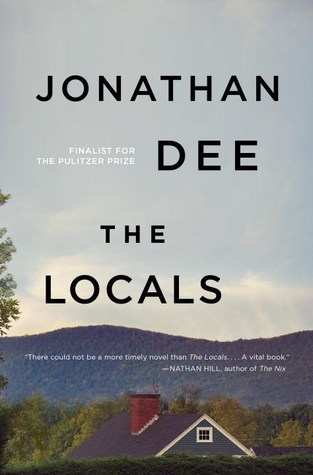 Dee’s new novel has created a lot of buzz. Despite impressive list of publications and accomplishments, he had slid under my radar until now; thanks to Net Galley and Random House, I read this free and early in exchange for this honest review. It is available to the public Tuesday, August 8, and those that love strong, purposeful fiction should get it and read it.
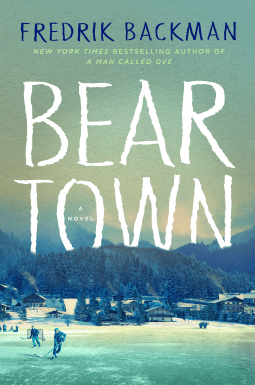 “You can fuck any girl you like here tonight; they’re all hockey-whores when we win.”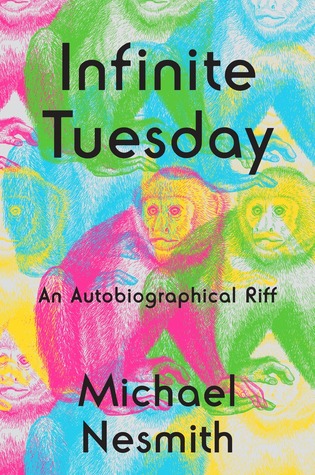
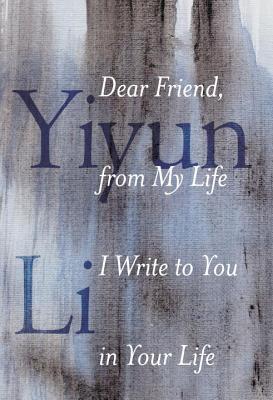 It’s an honor to be invited to review any book by Random House and Net Galley, and so when the email came, I accepted without hesitation; I thank them for thinking of me and wish I could honestly recommend this one. Others have referred to this memoir, whose title is taken from a quote by Katharine Mansfield, as “exquisite, intimate, and lyrical”, and the author has won awards for her novels. I looked carefully to see if I could locate the genius in this book, but it eluded me completely.
 Dorothy Day is an interesting historical figure, the woman that founded The Catholic Worker, which was initially a combined newspaper, homeless shelter, and soup kitchen. I once subscribed to The Catholic Worker, and since it cost one penny per issue, you couldn’t beat the price. I saw this biography available and snapped it up from Net Galley; thanks go to them and Scribner, who provided me with a DRC in exchange for an honest review. This title was published in late January and is now available for purchase.
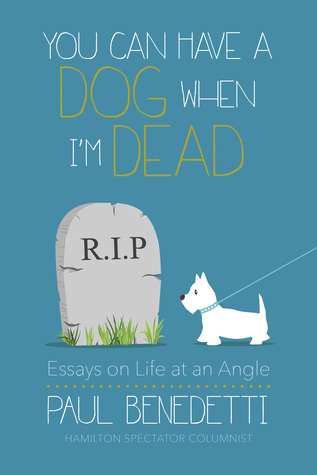 This is a collection of funny stories and brief essays. It’s geared for the Boomer generation, and is billed basically as bathroom reading. Thank you to Net Galley and Dundurn Press for the DRC, which I received in exchange for this honest review. I rate this book with 3.5 stars and round it upward; it will be available to the Canadian public –and presumably anyone anywhere that wants to buy it digitally—February 17, 2017.
 Many people don’t know much about Cuba, the tiny island nation a mere 90 miles from the coast of Florida. The American media has distorted the Cuban Revolution for as long as I can remember. Before the revolution, which took place in 1959, Havana was like Bangkok, a place where little girls prostitute themselves so they won’t starve to death, where wealthy visitors can experience every pleasure, innocent or corrupt, known to humanity but where most citizens have little chance of even having their basic human needs met. Cuba’s alliance with the Soviet Union (USSR) helped the Cuban people defend themselves from US efforts to overthrow the revolutionary government, but the alliance also led to a period of Stalinist repression that darkened artists’ worlds for a period of time. Randall discusses all of this in her introduction. Following the period Cubans call the Rectification Period (reference mine), Stalinist practices were peeled away, and more freedom of expression created a more hospitable environment for artists, in addition to strengthening the revolution itself. In Cuba art is not privately sold as a general rule, and artists receive a salary for what they do, paid by the Cuban people.
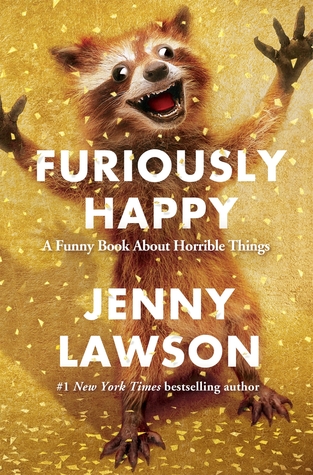 Jenny Lawson is well known as The Blogess (the blogger that came up with Beyonce, the metal chicken). She won awards for her previous memoir, Let’s Pretend This Never Happened. The only DRC I saw for this title was for readers in UK and Australia, so I waited till I could scoop it cheaply and bought it digitally. Those that read my reviews often know I almost never do this. For the $3 it cost on an Amazon Prime daily deal, it was worth it to me.
 Seattle Book Mama