
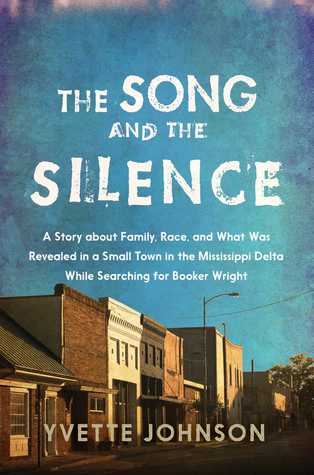
 I was browsing the pages of Net Galley and ran across this gem of a memoir. Often when someone that isn’t famous gets an autobiography published by a major publisher, it’s a hint to the reader that the story will be riveting. Such is the case here; my many thanks go to Net Galley and Atria for the DRC, which I read free in exchange for this honest review. You can order it now’ it comes out Tuesday, May 9.
It probably says a great deal, all by itself, that I had never heard of Booker Wright before this. I have a history degree and chose, at every possible opportunity, to take classes, both undergraduate and graduate level, that examined the Civil Rights Movement, right up until my retirement a few years ago. As a history teacher, I made a point of teaching about it even when it wasn’t part of my assigned curriculum, and I prided myself on reaching beyond what has become the standard list that most school children learned. I looked in nooks and crannies and did my best to pull down myths that cover up the heat and light of that critical time in American history, and I told my students that racism is an ongoing struggle, not something we can tidy away as a fait accompli.
But I had never heard of Booker.
Booker Wright, for those that (also) didn’t know, was the courageous Black Mississippian that stepped forward in 1965 and told his story on camera for documentary makers. He did it knowing that it was dangerous to do so, and knowing that it would probably cost him a very good job he’d had for 25 years. It was shown in a documentary that Johnson discusses, but if you want to see the clip of his remarks, here’s what he said. You may need to see it a couple of times, because he speaks rapidly and with an accent. Here is Booker, beginning with his well-known routine waiting tables at a swank local restaurant, and then saying more:
https://www.youtube.com/watch?v=GM-zG…
So it was Booker and his new-to-me story that made me want to read the DRC. Johnson opens with information from that time, but as she begins sharing her own story, discussing not only Booker but her family’s story and in particular, her own alienation from her mother, who is Booker’s daughter, I waited for the oh-no feeling. Perhaps you’ve felt it too, when reading a biography; it’s the sensation we sometimes feel when it appears that a writer is using a famous subject in order to talk about themselves, instead. I’ve had that feeling several times since I’ve been reading and reviewing, and I have news: it never happened here. Johnson’s own story is an eloquent one, and it makes Booker’s story more relevant today as we see how this violent time and place has bled through to color the lives of its descendants.
The family’s history is one of silences, and each of those estrangements and sometimes even physical disappearance is rooted in America’s racist heritage. Johnson chronicles her own privileged upbringing, the daughter of a professional football player. She went to well-funded schools where she was usually the only African-American student in class. She responded to her mother’s angry mistrust of Caucasians by pretending to herself that race was not even worth noticing.
But as children, she and her sister had played a game in which they were both white girls. They practiced tossing their tresses over their shoulders. Imagine it.
Johnson is a strong writer, and her story is mesmerizing. I had initially expected an academic treatment, something fairly dry, when I saw the title. I chose this to be the book I was going to read at bedtime because it would not excite me, expecting it to be linear and to primarily deal with aspects of the Civil Rights movement and the Jim Crow South that, while terrible, would be things that I had heard many times before. I was soon disabused of this notion. But there came a point when this story was not only moving and fascinating, but also one I didn’t want to put down. I suspect it will do the same for you.
YouTube has a number of clips regarding this topic and the documentary Johnson helped create, but here is an NPR spot on cop violence, and it contains an interview of Johnson herself from when the project was released. It’s about 20 minutes long, and I found it useful once I had read the book; reading it before you do so would likely work just as well:
https://www.youtube.com/watch?v=_xxeh…
Johnson tells Booker’s story and her own in a way that looks like effortless synthesis, and the pace never slackens. For anyone with a post-high-school literacy level, an interest in civil rights in the USA, and a beating heart, this is a must-read. Do it.
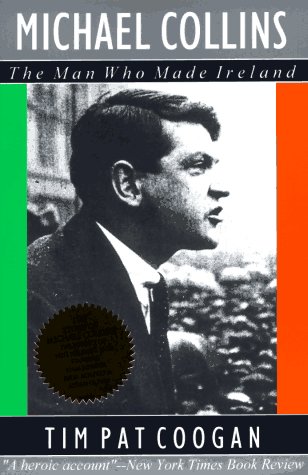 To date, this is the single best volume that’s been written about Collins, and it’s a meal. I purchased this title on an annual pilgrimage to Powell’s City of Books in Portland, Oregon when I was there to visit family a few years ago. Although the length of the book is listed as 480 pages in paperback, the reader needs to come prepared. The type is tiny and dense, and it took me a long time to wade through it. If it were formatted using more standard guidelines, it would be a great deal longer.
 “Nothing’s ever over till the fat lady sings.”
 The good news is that Jeff Guinn tells us everything there is to know about Jim Jones and the Peoples Temple.
 History buffs rejoice; the definitive Nixon biography is here. John A. Farrell is the renowned biographer of Clarence Darrow. Now he gives us a comprehensive, compelling look at the only US president ever to resign from office under the cloud of imminent impeachment. This is the only Nixon biography that answers the many questions that left Americans—and those around the world that were watching—scratching our heads. Why, why, and why would he do these things? Farrell tells us. I read this book free and in advance, thanks to Net Galley and Doubleday, but it would have been worth paying the full retail price if I’d had to. It’s available to the public now.
 “I wanted to write novels for the girls like me, the ones who never got to see themselves on TV or in the movies, the ones who learned to flip through the fashion spreads of Elle and Vogue because nothing in those pictures would ever fit, the ones who learned to turn away from mirrors and hurry past their reflections and unfocus their eyes when confronted with their own image. I wanted to say to those girls, I see you. You matter. I wanted to give them stories like life rafts…I wanted to tell them what I wished someone had told me…to hang on, and believe in yourself, and fight for your own happy ending.”
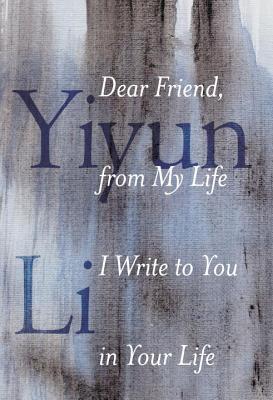 It’s an honor to be invited to review any book by Random House and Net Galley, and so when the email came, I accepted without hesitation; I thank them for thinking of me and wish I could honestly recommend this one. Others have referred to this memoir, whose title is taken from a quote by Katharine Mansfield, as “exquisite, intimate, and lyrical”, and the author has won awards for her novels. I looked carefully to see if I could locate the genius in this book, but it eluded me completely.
 The American Civil War is part of the curriculum I used to teach, and in retirement I still enjoy reading about it. When I saw that Open Road Media had listed this title on Net Galley to be republished digitally this summer, I swooped in and grabbed a copy for myself. I was so eager to read it that I bumped it ahead of some other DRCs I already had, and I really wanted to like it. Unfortunately, this is a shallow effort and it shows. Don’t buy it for yourself, and for heaven’s sake don’t advise your students to read it.
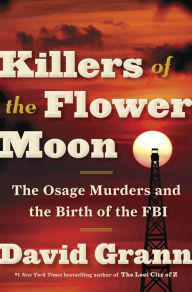 I received this book free from Net Galley, courtesy of Doubleday, in exchange for an honest review. It looked like a fascinating read, but I am disturbed by the sources chosen, which sent up all sorts of red flags right from the get-go and before I had even focused on the references themselves, a due diligence that has to be done before any nonfiction work can be recommended. Once I examined the references, I concluded that so many of them are so questionable that nobody, including the writer, can demonstrate anything beyond the premise of the book itself to be true. The killings happened; that’s about it.
