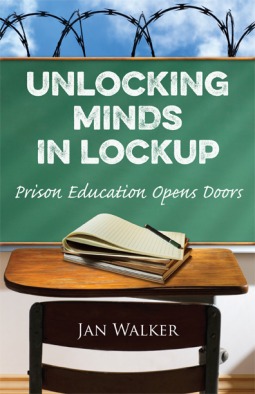
Unlocking Minds in Lockup: Prison Education Opens Doors, by Jan Walker*****

unlockingmindsinlockupJan Walker has spent a large part of her life developing and implementing educational programs, primarily parenting programs, for inmates, and the textbook she has written for these classes is used in prisons around the USA. This book is her account of her work with prisoners of both genders in Washington State. Most of her material addresses her work with serious offenders housed on McNeil Island, a place with a notorious reputation locally because it houses sex offenders. Thank you, Net Galley and Picata Press for allowing me to access the DRC. This book is hot off the presses, and you should read it.

The primary purpose of Walker’s memoir is to let us know that 95% of those currently incarcerated will be released to their families at some point in their lives. A small percentage have their parental rights terminated, and a small percentage are in prison–really and truly–for their whole lives. Almost everybody gets out, and almost everyone goes back to their family. Wasn’t it Robert Frost who wrote that “Home is the place that when you get there, they have to take you in?” And so it is with former inmates. They’re going back to those kids. It’s in everyone’s best interest that they know how to talk to them and how to treat them when they return, as well as while they are incarcerated. She points time and again–and there is so much information and so many anecdotes in between, that it’s a good idea to bring her point back to us–to the fact that most domestic abusers were themselves abused as kids. The only way to break the cycle is to teach inmates how to take responsibility for what they have done; and how to let their children know that they have made a mistake; that prison is the consequence; and that it is not the child’s fault.

Some of this may seem obvious to you, reader, but the woman knows a tremendous amount. And as a former educator in a low income middle school, I can personally attest to the way that children internalize the things that happen to them. Some of them regard themselves as responsible for their parents’ divorces; I’ve had those kids in my classrooms. And when my first husband died in a manner both sudden and tragic, our children didn’t just think it was their faults; they knew it. They were absolutely sure. It took years of therapy to pull them out of that dark place.

Inmates are frequently semi-literate, and literacy skills are crucial to the ability to think critically. So the community college classes that seem like an absurd perk for inmates to receive free of charge, the tab paid by the tax-paying public, are actually beneficial, not only to the inmates and the children that we hope will not repeat their mistakes; they also benefit society in the long run. Better readers are better thinkers; better thinkers make better choices, and they’re better parents in most cases.

Walker has seen and heard plenty of the ugly underbelly of serious offenders’ lives, attitudes, and habits. There was more than one moment when she questioned her personal safety when the prison was short-staffed and she was alone with her classes, no one to help even within range of a good holler. She chose not to wear the gear that guards have because she wanted to differentiate her own role in her students’ minds. The gamble paid off more often than not. But she knew there were some mean, tremendously hard people there. This isn’t about that.

So don’t think she is some namby-pamby bleeding-heart enabler, because she is far from it. We know that she has seen plenty of ugly more from the way she avoids telling us the most shocking material, rather than because she flings it at us (which she doesn’t). But the anecdotes she chooses to share–with names changed for the purpose of privacy, of course–underscore her talking points, and the work is also painstakingly documented. Do you read the sources and end notes in nonfiction? I do. That part of the book says a lot about whether a writer is just referencing other writers, writing up their own opinions, or speaking as an expert. Walker is an expert.

The book starts out dry. Fight your way through that initial fifteen percent; by the time you hit the twenty percent mark, you will be really glad you stuck to it. Although I recommend this outstanding work to everyone, I recommend it especially to public school teachers, particularly those that teach at high poverty schools with large numbers of children of color. I did that for twenty years, and I have seen how deeply affecting it is for children and adolescents to have a parent in prison. Some are ashamed; a lot of them are angry or confused. Some go for a visit that involves a stiff weekend commute, sleeping in the car, and then they fall asleep at their desks on Monday. But the ones that suffer most are those that were promised a visit they didn’t get; that were expecting their parent to be released, and then the parent wasn’t; and those that are convinced their parent is innocent.

And here, though you may roll your eyes, I have to address the one little nugget that ricochets inside my brain when Walker discusses teaching inmates to own what they did and tell their children that they made a mistake; prison is their consequence, it’s not your fault. I understand the rationale, because probably 99.9% of those incarcerated (primarily on McNeil Island, which is near Tacoma, Washington, about an hour from my Seattle home) are not only guilty of what they are in prison for having done, but more offenses for which they weren’t caught. It’s also true that there are no millionaires on death row, and anyone that has read Michelle Alexander’s study of the racial disparity in The New Jim Crow, or who has followed the data produced by the NAACP and other organizations centered on #BlackLivesMatter, knows that Caucasians serve hard time far less often than people of color that commit the same crimes.  But that does not mean that those that are there didn’t do the crime; they did….most of them.

At the same time, my mind kept going back to exceptional people–none of them on McNeil–that I am convinced are innocent. Should Leonard Peltier tell his children that he made a mistake, when he was framed? What about Mumia Abu Jamal? What about the lesser-known Mark Curtis, whose rape case was so clearly bogus that the local chapter of NOW endorsed his case? I know that in the last case, parole was denied over, and over, and over again because he refused to sit down and be rehabilitated for a crime he did not, did not, did not commit and would rot in prison for his entire life before he would crumble and confess to a lie just to get out of that place. He’s out now, but he sat through his whole sentence because he could not have parole by maintaining his innocence.

So although these cases are exceptions rather than rules, and I actually think Walker’s program is both strong and essential, it’s worth bearing in mind that once in awhile, someone that says they didn’t do it, really didn’t do it.

I have so many outstanding passages I flagged, so many poignant anecdotes, so much compelling evidence. I finished reading this book a week ago, but it is the really excellent ones like this that I have to mull over for awhile before I can write the review. I had 187 notes, and it was impossible to select some over others. I went back and reread them, and apart from a few paraphrased instances mentioned above, I think you’ll do better to read them in context, the way she wrote them.

The heartbreaking thing is that now that her classes and text have been adopted around the nation, they have been canceled at McNeil. Some wise ass somewhere decided that volunteers could be found to do this work. Sure, maybe once. Really sturdy do-gooders might last six months, even. But the work has to be done consistently, and you can’t fire a volunteer who phones in sick all the time, or just doesn’t show up, and those that are incarcerated need to develop a relationship with a single reliable professional instructor. I hope the Washington State legislature will reconsider this critical, valuable part of rehabilitation in our prisons. If we can’t raze those prisons to the ground, as the old folk song suggests, then let us at least make a difference for the children of those that are in them.

Highly recommended for all educators, for Civil Rights activists, and for anyone concerned about social justice. Actually, I recommend it to everyone. You can get it right now.

My Life on the Road, by Gloria Steinem*****


mylifeontheroadI’ve been thinking a lot about Steinem since the recent unfortunate episode on a TV talk show. I was heartsick. What woman gets past 80 without a single regrettable senior moment? But most of us will be fortunate enough to have a spouse, partner, adult child, or other companion who will take us aside and suggest we rethink what we’re doing or saying. “Mom, I’m getting a little worried. Can we check your meds? What do you think?”

But Steinem doesn’t have that sort of support system. The women that were closest to her for a long, long time are already dead.

So I republish this blog post asking you to think, not about the single magic moment, for which she later apologized, but instead, for all the amazing accomplishments and selfless deeds she has done on behalf of women, and for her willingness in a time when most of white America kept to itself, to learn at the feet of women of color.

Because this is her legacy; her real one.

Feminist heroes are everywhere, but if I had to name half a dozen women that were at the core of the feminist movement that followed closely on the heels of the Civil Rights movement and the movement to end the US war in Vietnam, Steinem’s name would be among them. In fact, hers might be the first name out of my mouth. It was she who coined the salutation “Ms”, and who founded Ms. Magazine. When I saw she had written a memoir, I knew I had to have it, and when Net Galley and Random House gave me the DRC, I was delighted. But this is one of the few books that if I’d had to, I’d have been willing to pay full jacket price in order to read. Heroes are thin on the ground these days, and we treasure those that still walk among us.

My reading records reflect over 300 biographies, autobiographies, and memoirs I’ve read, and I didn’t even start listing them until about 3 years ago, so who knows how many? The one thing I know to expect, when someone really famous sits down to tell us about her life, is that the ego will be there. It might be veiled, especially if the person is famous for writing as opposed to something else, or it might be big and bold. Once in awhile it’s been so bald-faced that I came away wishing I hadn’t read the book so I could go on liking the author. So for one of the most famous of living feminists, I was braced and ready.

And this icon’s ego isn’t there. I don’t mean she hides it well; I just don’t find it. And it appears as if large amounts of time spent among Native sisters in struggle—Wilma Mankiller foremost among them—taught her so much about focusing on the circle, rather than a table that has someone at its head, a big-boss type, that she let go of whatever ego she might have been thinking about building. For example, when she works as an organizer, she dreads public speaking, but looks forward to the place at which one part of the auditorium begins to answer the questions from another part, and she knows a circle has formed, one in which she becomes just another person present. I was blown away!

Steinem began her career in journalism, and she is one of the finest writers whose work I have read. For a brief time in years gone by, I dismissed her because of her sometimes-attachment to Democratic party candidates, but the sum of her contributions has been so much more that I missed the forest for the trees during that time of my life. Now I want to read everything she ever wrote.

Travel is a great metaphor, but it’s also a material fact for Steinem. She grew up with a father who was a traveling salesman, and unlike most such men, he took his family with him. For most of her childhood, there was no home, merely a series of stop-overs. This rootless existence would leave some children traumatized. Kids thrive on routine, and not all would be able to translate constant travel into a sense of the usual. But Steinem mostly remembers it as a positive attribute, and credits her parents for their capacity to question social norms during a time most Americans were madly conforming. The fact that she continued to live out of a suitcase once she was grown and on her own is the greatest testament of all to her upbringing, and to her response to it.

There are oh, so many stories, some of which made me laugh out loud, and others that made me think. You can go winnow those out for yourself. And of course, my favorites may not be yours.

But the one thing I can promise you is a really great read, one with depth, yet not difficult to access. It’s friendly and feels as if we are having coffee with an old, dear friend, right at the table with one another. A circular table.

You have to read this book. It will be for sale October 27.

Live From Death Row, by Mumia Abu-Jamal*****

livefromdeathrowMumia is a former Black Panther. The facts support his having been framed in the murder of the cop, a crime for which he was nearly executed.

Live from Death Row, written before his sentence was commuted, is not, however, a vehicle he uses to advocate for himself or plead his own case to the public. He has written other books I haven’t read, and I don’t know if he did that there.

Instead, here he uses his own situation to discuss the racism inherent both in the U.S. court system; he also talks about racism on death row.

The mandatory fresh-air time, prized and treasured by men who rarely see the clear blue sky, is an Apartheid one, at least in Supermax, RHU,SMU, and SHU (ultimate maximum security prisons, which he says have swelled since jailhouse overcrowding has made prisons tenser places and more people are tossed into “the hole”). The vast majority of prisoners are Black, though they are a minority of the population at large, and in the Pennsylvania prison he describes, 80% of those maximum security cases, those who wear Black skin, are crowded into a courtyard. They can’t see green grass or the outdoors, only four brick walls and way up there, blue sky. Why? And where are the other prisoners going?

The other prisoners (who are also maximum security) who are not Black have a SEPARATE courtyard, which is surrounded by chain=link fencing with razor-wire, but has the view. The 20% have the perk of a much less crowded space and the capacity to see Mother Earth during their treasured time outside prison walls.

As to the racist system that places Blacks on death row at such a startlingly high rate, he offers the following statistics and footnotes all of them like the scholar he was before being incarcerated, and continues to be behind prison walls. He uses a Georgia case because it is one which caused the Supreme Court to recognize the following facts:

*defendants charged w killing Caucasian victims are 4.3 times as likely to be sent to death row as those charged w/killing Blacks;

*the race of the victim determines whether or not a death penalty is returned;

*nearly 6 of 11 defendants who received the death penalty for killing Caucasians would not have received the death penalty if their victims had been Black;

*20 of every 34 defendants sentenced to death would not have been given the death sentence if their victims had not been Caucasian.

He continues to pound one damning fact upon another, and cites court cases to back them up; those above come from McClesky vs. Kemp (1987). If the case sounds old, I would argue that precedents are set by very old cases indeed, and of course, this book was published early into the 2000 decade. I doubt a more recent gathering of data would return more favorable information; in the case of jail overcrowding, I suspect the recession has made it worse.

A person would have to be hiding under a rock or in a coma not to be aware of the level of violence visited upon African-Americans by cops and vigilantes within the past year.

I applaud Mumia for using his well-known case to set the facts before us, rather than trying to build momentum to save himself. There was a considerable amount of public pressure NOT to execute him, and I do think that had to do with his sentence being commuted; as it was, my kids’ urban U.S. high school was “barely holding together”, according to a counselor I knew there, the day that Mumia’s case was turned away by the U.S. Supreme Court.

If you are interested in reading about social justice issues, this relatively slender volume holds an astounding amount of really critical information. I appreciate Mumia’s relentless effort to make the public, both in the US and internationally, aware of the atrocities that continue to visit Black prisoners in the USA, and it’s more relevant now than ever!

Mot, by Sarah Einstein*****

Einstein_Mot.inddSarah is forty, and she’s floundering. Her life’s work, like her mother’s, has been to try to make the world a better place, and so she works at a homeless shelter as its director. But things are falling apart there; whereas once upon a time most of the mentally ill homeless were passive, now meth and other addictions have created so much anger and violence that she isn’t even safe there. She’s been physically attacked three times, one of which was sexual, and her life has been threatened on an ongoing basis. Too often she is the only staff member present, and it’s getting scary out there.

Many thanks to Net Galley and University of Georgia Press for the DRC. This title goes up for sale September 15.

In addition, her marriage, which was predicated upon a mutual dedication to social justice issues and the understanding that neither she nor her new husband would be around much because of the time and attention their work demanded, is coming undone as well. Her husband Scotti has at times sided with the population she is supposed to be managing at the shelter against her.

Think of it!

So maybe it isn’t so very strange that she has decided to load herself into her vehicle and drive 1400 miles to Texas to visit a homeless friend who has moved there. “Mot”, who used to be “Thomas”, is living in a beat-up car in a Walmart parking lot. And whereas most of us would regard her mission as either an immense personal sacrifice or even a little bit bizarre, the fact is that she needed to get away from West Virginia, that shelter (where she has given notice and is using up every possible minute of vacation time), and Scotti. She has rented a little cabin—the closest thing Mot will accept even temporarily in terms of living indoors—with two beds, one for herself, and one for him. And as the book opens, she is reflecting that even if he never shows up, a whole week in this primitive little yurt, all by herself, sounds positively wonderful.

Right away her spouse is ringing her cell to complain of how much inconvenience he is experiencing while she is gone. He sends unhappy e-mails constantly, but he also doesn’t want her to use her smart phone because that data costs money. So although she hasn’t explained to us yet about the state of her marriage, which should still be in its honeymoon phase but really, really isn’t, we start to get the picture.

Mot is a complicated fellow. Immediately, when she quotes him, I start asking myself whether this is schizophrenia, a dissociative disorder, both or neither? I’m not a professional by a long shot, but when a guy routinely refers to the other folks with whom he is sharing a body and that control his behavior, it’s pretty clear all is not well. And my jaw dropped on the floor later in the book when he commented, in a moment of total lucidity, that it was probably the latter.

Mot is a veteran, and Sarah’s documentation of the unconscionable way the USA treats its veterans is noteworthy. Advocates for veterans’ health care should be plugging this book all the time, everywhere.

Sarah’s time with Mot mixes with some odd bits of philosophy, most of them his, and so although plot wise there aren’t a lot of parallels, the overall flavor to this book is similar to that of Zen and the Art of Motorcycle Maintenance. (I have never compared any other book to that book before, and don’t expect to!)

I should also add that I came to this galley after having read a couple of Pulitzer winners and some books by my favorite bestselling authors. I dove into Mot not because I thought it would be my favorite of the remaining DRC’s I had to review, but because I had snagged it right before it was due to be archived, and I felt an obligation to the author and the publisher. In other words, although it looked interesting, I didn’t expect to give it five stars. But the sum of the book is so much more than its parts, and to get it, you really just have to read it.

Highly recommended to anyone and everyone.

I See You Made an Effort: Compliments, Indignities, and Survival Stories from the Edge of 50, by Annabelle Gurwitch ***-****

ISeeYouMadeanEffortGurwitch is entering the downhill slope of middle age, and she isn’t going to go gently. In this enjoyable collection of essays, she is sometimes hilarious, and at other moments more philosophical. But she is never dull. Thank you to Penguin Random House for sending me an ARC.

Middle age means a deluge of mail order catalogs that sell products for the incontinent, the arthritic, the retired. Gurwitch doesn’t want them. What she might want is a few intimate moments with her hot yoga instructor—ah, so young!—or maybe even the young man who’s fixing her computer.

Alas, middle age also means caring for parents that are in declining health, and some of us get to raise teenagers at the same time. If you can’t laugh, you might have to cry! And sometimes, being middle aged means a precipitate end to a career, when your old employer sends you packing and those that are hiring want someone younger than you. They don’t say it, but it’s obvious.

And so middle age means you need to buy some really good concealer, because if you have been a sturdy feminist whose self-esteem used to mean that no cosmetics were necessary, guess what? Once you’re old enough, just picking those chin hairs out with tweezers isn’t going to do it. Lose the unibrow; trowel on the concealer and redraw the brows you just removed; cross your fingers that it works. “Facial hair,” she reminds us, “is an equal opportunity offender.”

Gurwitch is an actress, for those that didn’t already know that, and she has some stories to tell that will either make you howl with laughter or moan with pain, depending upon your perspective. Perspective? She has it here in spades. My personal favorite was her piece on petty theft. I hope she can still get a hotel room in her own name!

At times her tone becomes more philosophical, because there’s not much that’s funny about having people close to you die, and unfortunately, that’s one more unwanted surprise Mother Nature pushes at us when we edge our way toward 50 and beyond. And she wants you to remember that you can’t die without telling someone your password. You just can’t.

Many of us swore we wouldn’t sit around and bitch about our physical complaints when we grew old, the way our parents did…but now there’s Google. There’s WEB MD. For every symptom we have, there are at least twenty dread diagnoses possible! Get off the computer! Are you listening?

If you are under 40 and still reading this review, you ought to know by now that this book is not for you. If your mother is still alive, however, you should get this for her. Mother’s Day is coming. And for heaven’s sake get her a dozen red roses to keep it company.

Because you just never know. It could be her last. And really, that’s not so funny.

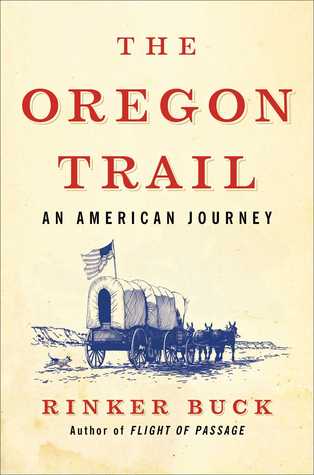
The Oregon Trail: An American Journey, by Rinker Buck *****

theoregontrailBuck is a journalist and author who replicated (to the extent possible in modern times) the covered wagon crossing of the old Oregon Trail, much of which still contains the original wagon ruts. A creature of the Pacific Northwest myself, I thought I had the whole Oregon Trail story down cold, but I learned a lot from Buck’s wonderful memoir, which threads his own experience with the historical information he gleaned from a variety of sources into a fluent, fascinating, accessible yet hyper-literate narrative. My great thanks go to Simon and Schuster and Net Galley for the ARC. The book will be available to the public in August of this year.

Buck discusses his experience, and the book, here:

The germ of Buck’s idea to travel the old Oregon Trail in a covered wagon came from a favorite childhood experience. Buck’s father took his large family on a covered wagon vacation during the late 1950’s. They traveled in New Jersey and Pennsylvania, and it is one of the author’s fondest memories. His brother Nick, who sounds like a real character, decided to join him on this adventure, and their skills complemented each other wonderfully in most instances, with Rinker having done a great deal of research and put up the considerable sum it took to buy the wagon, the mules, and so forth, and Nick having a wealth of eclectic knowledge about covered wagons and mules as well as tremendous mechanical aptitude in general.

Our author is one hell of a writer. His down to earth metaphors made his story accessible for modern people. For example, he says that the Conestoga wagon was the semi truck of the mid-1800s while the prairie wagon used by most families, which was made by Sears Roebuck, Studebaker, and John Deere, were more like the station wagon. The whole narrative is peppered with this sort of figurative language, and it’s both amusing and helpful. And I loved seeing the ways in which the problems of the early pioneers often became his problems also, sometimes in ways that would have halted an ordinary traveler right then and there. But Rinker and his brother are serious badasses, and they kept on going.

Think for a moment how high up the driver’s seat on a covered wagon is, for example, and how immensely soporific the repetitive clopping of hooves are on a very warm spring day. There is no safety belt; there is nothing whatsoever to keep a man from falling off and being crushed beneath the wagon.

Narcissa Whitman, one of the early settlers who together with her husband, founded the Whitman mission in Eastern Washington (part then of the Oregon Territory) made the trip on horseback. But she had no safety belt either.

The Mormons, or Latter Day Saints, did a whole lot of it on foot and pushing carts; those that lived through the experience populated Utah. But I agree with Buck that Devil’s Gate was not solely part of the Mormon experience, and President Bush had no business turning federal park lands over to the LDS Church. Frankly, it steams my clams all over again just writing about it…moving on.

I also have one small bone to pick with Buck’s research, though it isn’t enough to lop a star off my rating: he says that the 400,000 pioneers that crossed the Oregon Trail was the greatest overland migration in history. To be fair, when he wrote this, it was widely accepted as truth. But in 2010, Isabel Wilkerson documented an overland migration of 6 million African-Americans from the South to Northern Industrial cities and also to California between 1915 and 1970. The Oregon Trail, then, may be the second largest, but not the largest.

I also might have liked to see a citation accompany controversial facts tossed in, such as the claim that it was covered wagon makers, not Henry Ford, who started the mass assembly line. Generally I liked the flow of the text made possible by avoiding footnotes, but if one is going to butcher a sacred cow, one should back the assertion with a source.

But all these things are minor compared to the value, both in education and entertainment provided by the story of the Rinker brothers’ modern day reenactment, which is nothing short of spellbinding. I had just begun it when I came down with a case of flu, and I can’t tell you how comforting it was to curl up under my covers with my glass of orange juice and this book and immerse myself in their journey, which commenced in Missouri and like the original pioneers, continued across six states. And although I have never done the trail itself (and if I were to do so, I’d be one of the Winnebago set that made him half-crazy with their giant rigs that spooked the mules and their never-ending cameras winking at him and blocking his way), I have driven through all of the states he crossed through except Kansas.

It was useful to have traveled through most of the region that Buck described, yet his descriptions were so palpable that I think even if you have never been there and never plan to, you will see much of it in your mind’s eye.

I’m not sure what is the most remarkable part of this wonderful memoir: the novel aspect of the covered wagon trip during the 21st century, or Rinker’s voice, which switches seamlessly from that of historian, to that of family member with family issues, to that of the humorist who can appreciate life’s ironies even in adverse circumstances. All I know is that you don’t want to miss out on this one. What a terrific story!

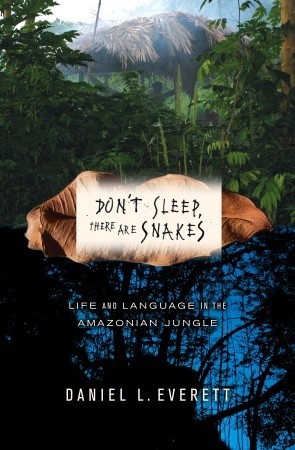
Don’t Sleep, There are Snakes: Life and Language in the Amazonian Jungle, by Daniel L. Everett *****

dontsleeptherearesnakesI read this shortly after it came out, and I’ve been going nuts trying to remember the title. Thank goodness for Google’s search engine! Don’t Sleep, There are Snakes is an amazing memoir that challenges assumptions under which most first-worlders have lived for a very long time.

Everett went to Brazil with his wife;they were Protestant missionaries, sent by their church to convert the Pirahas, an indigenous people who live deep inside the Amazon jungle, to Christ. They took a few tools and trinkets with them, which have been useful to missionaries–think of them as spiritual bribes–for generations. They traveled under tremendous physical hardship, experiencing terrible illness and threatened by deadly snakes and other jungle life, risking their necks for their cause.

Furthermore, they were tasked with deciphering the Piraha language so that the New Testament could be translated for the salvation of these Christless savages.

Instead, the opposite occurred.

First of all, the Pirahas didn’t want their stinking trinkets. Even items that Westerners regard as essential, such as knives and cooking pots, were only of temporary interest. When presented with these goodies, they would enjoy them, then abandon them. Because stuff doesn’t matter to the Pirahas, and when you’re a nomadic people, you need to travel light.

At first, Everett patiently tried to teach them to hang onto things so they’d have them when they needed them. He watched them go to a tremendous amount of effort to replicate a process that the knife, the cook pot could have shortened by hours, not to mention a reduced physical effort. But over the course of time, they let him know that it wasn’t that they didn’t understand him; they just didn’t agree.

And the greatest barrier to the conversion of the Pirahas to Christianity is this: they were already happy.

Eventually, Everett found himself questioning his own prayers. Why was he asking the Almighty to help him change these people, to obliterate their successful lifestyle–at least by the basic standard of personal fulfillment, as opposed to who has the greater technology–in order to become grasping materialists trying to keep up with the Joneses?

Ultimately, he came to a startling conclusion: the Pirahas were absolutely correct. His God was a myth. All the Pirahas needed was what they already had, and to be left alone, along with the environment in which they flourished. And this conclusion ultimately cost him his marriage, but he could not, would not retreat into the opiate of Christianity. Once he had a clue, he couldn’t lose it.

It’s a fascinating read.

Everett also develops a new understanding of how language is learned. My daughter, who is a passionate linguist herself, tells me that his discovery is flawed and has been discredited. I would not know. It sure sounded interesting to me.

The one thing I can guarantee is that if you have no religious drum to pound yourself, you’ll find the transformation that occurs here compelling.

Not recommended reading for serious Christians.

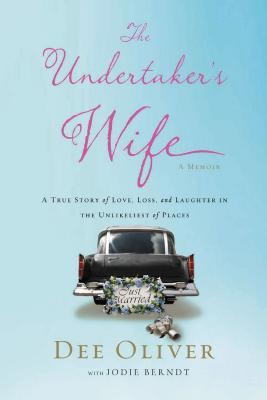
The Undertaker’s Wife: A True Story of Love, Loss, and Laughter in the Unlikeliest of Places, by Dee Oliver and Jodie Berndt***-****

theundertakerswife 3.5 stars. This interesting, accessible memoir will be published in March of this year. My gratitude goes to Net Galley and Zondervan Press for providing me with an ARC.

Dee Oliver grows up in a rarified atmosphere in Virginia Beach, where her parents own an oceanfront home. After completing her degree from a private college, she enjoys life and a series of part-time jobs that entail no serious commitment or career potential, supported by her parents. Eventually she is given a very Southern, Caucasian type of ultimatum: find a real job in which you can support yourself, or find someone to marry. It is understood, in this world in which debutante season actually exists, that the spouse in question will be a man, and that he will be a person of substance. A doctor is preferable, but instead, Dee marries a doctor to the dead, the co-owner of a funeral home.

Life is definitely different now. Dee and Johnnie, her newly betrothed, cannot travel for any length of time, since people don’t make appointments before dying and he could be needed any time. Their honeymoon is a three-way party: just the two newlyweds and the corpse in the rear of the car, being transported, by happy coincidence, to their honeymoon destination.

Their daughters grow up playing tag among tombstones and jumping rope with the velvet rope that keeps the mourners in line.

The one thing that surely does not change is her standard of living. Most of her friends, she tells us, would have to call the painters themselves. How fortunate that Johnnie understood that she needed the advice of a decorator, who would then call the painters personally!

This is a quick, almost flirty read as it begins, but because I make it a point (almost) never to read books by or about affluent people, I almost tossed the book down unfinished. But I knew that something about it had made me request this ARC, and so before throwing my hands up and abandoning ship, I went back to reread the synopsis. It was a good thing I did, because it gave me hope (as Christians like to say) of better things to come.

You see, Johnnie’s occupation taught him how to console and advise the bereaved, but it didn’t take him out of his state of denial about his own mortality. Dee packed him healthy lunches which he threw away, and bought him a gym membership which he never used. It caught up to him in his early fifties, in a sudden and final way.

As half owner of a funeral home, Dee realized that she should go back to school and get the credential necessary to do Johnnie’s job. However, once it was time for her internship, she whacked her well-coiffed head smack on the glass ceiling. No way, no how would her brother-in-law allow her to do such a thing.

It was at this point that Dee received one of life’s more valuable gifts: a new perspective. Riddick’s funeral home is in the African-American section of town, and its owner is not just a man of business, he is a man of the community. It is there that she was able to intern, and the results are really funny, because the area where she lives is exclusively pale, and Riddick’s funeral parlor is in an entirely Black area. Said one visitor, after enquiring whether she was a member of the press, and being told otherwise:

“ ‘So,’ he said slowly, chewing this piece of news the way a child might process his first lima bean. He wasn’t sure whether or not to accept it. ‘So what we got here is a white woman working in a black funeral home.’
‘Yes sir. That’s exactly what you got.’
‘Well, then,’ he concluded, ‘I guess you have overcome too.’ And with that, he tipped his hat to me and walked away.”

Along with her own unique story, Oliver provides us with a good deal of sound advice to follow now, while we are alive. Did you realize that if you die without a will, up to seventy percent of what you own may be taken as taxes? I don’t know whether this applies to those of us in humbler tax brackets than those in her milieu; Oliver did not specify. Either way, though, the point is made that those of us who are married and have divided the responsibilities of married life still need to be aware of a lot of nuts-and-bolts issues that it’s easy to ignore until someone has died.

Here, nobody knows better than Oliver. She has taken care of the dead, advised the bereaved, and she has been widowed. She really does know.

Everyone who writes a memoir is entitled to tell her own story with her own voice. Nevertheless, the class and religious biases here grated and could be toned down. She tells us that we need a “team” to be on to get us through the good times and the bad ones, and here are the teams she recognizes: Baptists, Catholics, Lutherans, Presbyterians, Episcopalians, and nondenominational …it isn’t going to get any more diverse in her world. Jews, Muslims, Hindus, Buddhists, and especially Atheists like me are going to “the other place”, as she describes it earlier in the text, since we have not asked Jesus into our hearts. There’s not a lot of wiggle-room in Oliver’s somewhat limited sphere. Your team may not even exist in her universe.

So should you read this book? I vote that you ought to. Most of this memoir is either light and amusing, or full of down-to-earth, practical advice we can use. Ditch what you can’t use; for example, if you work in construction all day and come home to an empty house, her earnest suggestion that rather than marry too soon after bereavement, you “hire a housekeeper” may not be a real world option for you. But eighty or ninety percent of her recommendations should work for everyone, and if the Bible verses don’t work for you, you can skim past most of them as I did.

The real question is whether you should shell out full jacket price for this book, and that question is a very individual one. If your lifestyle is similar to that of the author, then get one for yourself, and another copy for your BFF. If you’re married, get one for your honey, too.

If not, you may want to pick up a copy less expensively later on, or check it out from your local library if it becomes available there.

Either way, the sobering message to tuck important information where your loved ones can get to it is worth its weight in gold.

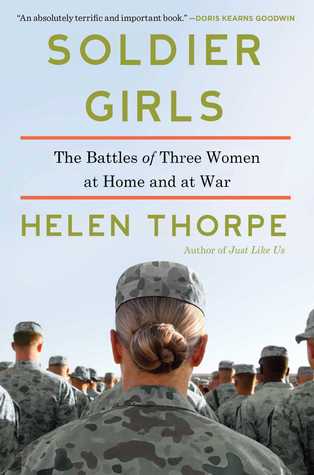
Soldier Girls: the Battles of Three Women at Home and at War, by Helen Thorpe*****

soldiergirlsNow that this title has created some buzz, I thought I’d reblog this!
seattlebookmama's avatarSeattle Book Mama

I was able to read this before its publication date, courtesy of NetGalley.com. Thanks, guys!

I am usually good for half a dozen books at a time, but I have to admit that this one story has dominated my reading hours for the past week or so. I had so many preconceptions (and yes, stereotypes) that I didn’t even realize I’d developed until I read about these brave souls who have gone to Afghanistan and in some cases, Iraq.

What kind of woman leaves the home she knows and signs up for the National Guard? Sometimes (often!) it is someone who needs money quick. Sometimes it’s a woman who is desperate to get out of her current living situation. And once in awhile, it is something done, at first, when one is dead drunk and out of control; the Guard will fix that quickly!

I’ve been a Marxist my whole…

View original post 115 more words

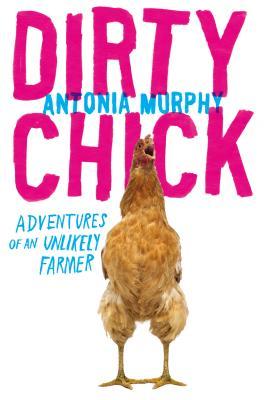
Dirty Chick: Adventures of an Unlikely Farmer, by Antonia Murphy *****

dirty chickWriting humor is risky business. If one writes mainstream fiction or nonfiction and the book is not well reviewed, of course it hurts–writing is always personal, at some level–but few things are as painful as the I-thought-this-was-going-to-be-funny review. In writing about her own family and friends, albeit with a few small changes to protect the privacy of the individuals concerned, Antonia Murphy takes her bleeding heart in her own two hands and offers it up to the public for consumption.

Personally, I have never laughed so hard in my life, or at least not recently. My thanks go to her and to the Goodreads first reads program for the ARC.

If my earlier reference to Murphy and the bleeding heart made you wince, you won’t want to read her book, either, because it has lots of gooey, graphic, gross stuff in it. It is edgy humor out there on the edge of wild, like the hinterlands of New Zealand where she has made her home. Well, see for yourself. This is from the prologue, so it doesn’t ruin the book for you:

“As I watched my goat eat her placenta, I was mostly impressed…Pearl had always been a strict vegan, so her sudden craving for raw meat showed a real taste for adventure…The placenta draped gracefully from her hindquarters, a translucent pink train enclosing a network of blue veins. There was a dark red, ropy thing inside, heavy with blood and the color of liver. It was this that Pearl tucked into first, craning her neck to nibble and swallow…”

As I read, I tried to analyze what it was that made her humor work. Part of it was her sense of remove, the dry commentary of the detached observer even when she is right in the middle of everything. But every now and again, something will happen in her personal life that shatters the entire I’m-just-watching thing. For one thing, she has two children, and when one meets with a really dangerous misadventure, Murphy is nearly consumed with the fear, the stress, the confusion that every mother on this planet, save for a frightening few misfits, would feel at such a time. So we laugh at all the icky stuff and her reactions to same, but now and again we remember that she is vulnerable to the same nightmares that we are. It gives us a stake in what comes next, and between the hilarity (most of the book) and the pain (deftly meted in small doses), there is no putting this book down once you reach a certain point.

Here’s how it shook out at our house: I would read a passage to myself, then burst out laughing. I would hustle straight past my husband, a man of delicate sensibilities with regard to animals and biological detail. I knew he did not want to hear it, or read it, or even be reminded of it. Instead, I made for the younger daughter’s room. She is a teenager with a great lust for gore, so of course she loved it. And I know that if I had headed for the adult-son-who-sometimes-lives-here, he would have chortled merrily also.

The narrative of this amateur adventure at farming just sat on my giggle button. Murphy, rather than wanting to control and fix every little (and large) thing that occurs, has this brilliantly mellow approach. Wow, the goats keep attacking the cars. A neighbor observes that eventually, they will break her windshield. Huh. Well…she loves those goats, so she isn’t going to “dead” them (her daughter Miranda’s word). She doesn’t want to sell them, and after all, who would want them? And fences are very expensive. She is, after all, just a renter.

Occasional visions of the landlords returning to find their property trashed would wink into my head, then wink away.

Every time I think Murphy and her husband are in over their heads and everything is completely out of control, she takes on an additional project. When all is falling apart, why not find something more to add to it?

So there’s Jabberwocky, the rapist rooster. They might have to dead him. Everyone likes baby chicks, and the hens can’t get preggers without him, but the thing is, he’s psychotic. Eventually she comes to understand that this is how it is with roosters. They start bad and get worse, and sooner or later, one generally HAS to dead them.

Good god. See what she’s done to me?

I have four more outstanding quotes, but they are too close to the end of the book. and it would ruin it for you. And the fact is, almost every single page has at least one quote that is fucking brilliant. I think I mostly marked the pages that showed transitions occurring in the plot, and that’s all well and good for academics, but this is not an essay, this is a review, and therein lies the distinction.

Because you, dear reader, don’t want to know how the book ends, and you are capable of analyzing all its nuances yourself, should you choose to do so. On the other hand, you could also just get the book, have an outstanding weekend curled up in your favorite reading spot, and then be done with it.

For those not grossed out by the references in this review, this is a sure fire hit. Pick it up when you have the blues, and I guarantee that in minutes your worries will be smaller.

When you look at it that way, ordering a copy of this book is really the sensible thing to do.