
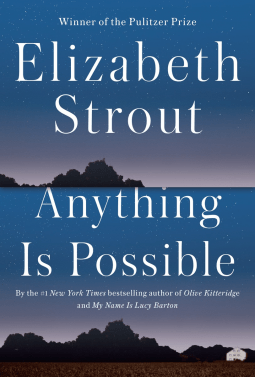
 Strout is a writer of enormous talent and the owner of a Pulitzer. Here she builds on the characters she introduced in 2016 with My Name is Lucy Barton. Lucy is back, along with various relations and everyday people. I read this book free and early, thanks to Net Galley and Random House, for the purpose of generating an honest review. This title will be sold April 25, 2017, and those that love strong literary fiction won’t want to miss it.
Lucy has become a successful writer, and she has left behind her early life of extreme poverty and the people she spent it with. They’re still there, and some of them are bitter. Strout crafts each character in a series of consecutive short stories that build on one another, and although most of the people she features here are not ones you might want to spend time with if they were real, she designs them with so many layers and with so much nuance that it’s hard to remember they aren’t. We revisit the Pretty Nicely girls, and Lucy comes home for a visit. But facing the demons of the past, those that her siblings still speak about freely but that she has kept carefully compartmentalized in an emotional deep freeze is too much for her, and she has to leave earlier than she had planned.
One thing I appreciate about Strout’s writing is her affection for the working class and the down-and-out. Some of her characters have been kept from success by hard luck, and others by lack of talent, but they are still people, and they’re sometimes capable of more care and greater compassion than other folks that haven’t ever suffered. Strout develops these characters like nobody’s business, and you almost don’t need a plot, because the people themselves are the whole story. I like the chapter that features the Hit Thumb Theory, and the ramification of privilege it conveys.
Strout writes with an implied intimacy that is rarely found. Sometimes I feel as if I have entered in the middle of a conversation, and there’s a shorthand among the family members present that I have to watch for carefully before I understand what’s happening between them. Most writers don’t even attempt this kind of subtlety because it’s so difficult to achieve. In someone else’s hands, the reader might come away wondering just what that whole thing was about, but here I find myself leaning in, absorbing details carefully meted out with great discipline and flawless pacing.
If you’ve read this author’s work and liked it, you can be assured you will like this as well. If not, be aware that it isn’t warm and fuzzy writing; don’t take it to the beach. Rather, the joy comes from witnessing the way she draws her characters and their lives without trying to put a shine on them, leaving them as stark and real as human beings often are.
I highly recommend this book to those that enjoy brilliantly written fiction, and to teachers of creative writing.
 “Everything breaks if you hit it hard enough.”
 Silence is the third in the Inspector Celcius Daly series, but I read it alone and didn’t realize I had missed anything until I got online and looked. I received my copy free from Net Galley and Open Road Media in exchange for this honest review. It’s been for sale for almost a year and I apologize for my tardiness; the book had been out for several months before I received my DRC, and so I kept setting this review aside in order to write about stories that were about to be published immediately. None of this should keep you from rushing out to order a copy; as you can see I rated it five stars, and I am picky these days.
 I was invited to read this novel by Random House and Net Galley, and although I read multiple books at a time, this was the one I saved for bedtime, after the lights were out, the hound snoring at the foot of the bed, and everyone else was asleep. This is prime reading time, and this was the story I wanted to follow uninterrupted. You can get a copy for yourself this Tuesday, February 28, 2017.
 The Mercy of the Tide is Keith Rosson’s debut novel, and it’s a strong one. Set in a tiny, depressed town on the Oregon Coast during the Reagan Administration, things start out dark, and they’re about to get a whole lot darker. Thank you, Net Galley and Meerkat Press for the DRC, which I received free of charge for this honest review. This book will be for sale February 21, 2017, and those that love good fiction with a working class perspective will want a copy.
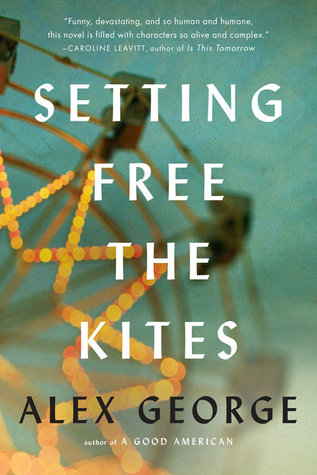 “Hope is a curious thing. It emerges in the most unexpected places.”

 There are good writers, excellent writers, and of course, indifferent writers, but once in a rare while there’s a writer that makes me sit up straight and take notice, someone with that special spark of genius that no money can buy nor school can teach. Krivak’s work is exquisite, the product of both power and restraint. If you love historical fiction, you have to read this book, which comes out January 24, 2107.
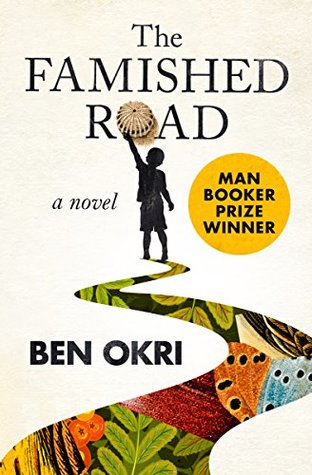 I surrender! Thanks go to Net Galley and Open Road Media, from whom I received a DRC in exchange for an honest review; however, try though I have, I cannot push past the molasses-like allegory and other figurative language to locate a plot. After painfully forcing my way through the first 20% of the book, I went to Goodreads to see what other reviewers had to say about it. Some felt as I did, but others swore that if the reader could endure the first two-thirds of the story, the last third would not only be so amazing, it would also enlighten us as to why the earlier part was necessary. Seeing this, I vowed to persevere. By the 25% mark, I found I was avoiding this DRC, because just about every other galley in my possession was either more enjoyable to read, or more rewarding, or both.
 There are good writers, excellent writers, and of course, indifferent writers, but once in a rare while there’s a writer that makes me sit up straight and take notice, someone with that special spark of genius that no money can buy nor school can teach. Krivak’s work is exquisite, the product of both power and restraint. If you love historical fiction, you have to read this book, which comes out January 24, 2107.
 Seattle Book Mama