The Animators, by Kayla Rae Whitaker*****

 “I always heered that art was for ugly girls and queers.”

theanimators

The Animators is the right story at the right time, outstanding fiction that is too impossibly good to be debut fiction, and yet here it is. I nearly let the DRC pass me by, because apart from its female main characters, there is nothing here that would ordinarily hook me. I am too old, too straight, and too un-artistic to be part of the target demographic. But I had been in a rut lately, reading too many mysteries, and so I decided to step out of my comfort zone; in doing so, I hit the jackpot. Sometimes rewards come when we aren’t expecting them, and it would be a sad thing to let a golden moment pass by unmet. Thanks go to Net Galley and Random House for the advance copy, which I received free in exchange for this honest review.

Our story revolves around the lives of two women that meet at art school. Sharon Kisses is a shy kid from Kentucky, self-conscious but ambitious. Mel Vaught is hilarious, outrageous, and riotously extroverted, a noncomforming thrill-seeker from Florida.  Mel appreciates Sharon’s art in a way that no one else does, and Sharon is grateful to finally have someone understand her. Together they form a team that will become famous.

The entire story hinges on development of our two characters and the relationship that unfolds between them. The plot is original and interesting, but it wouldn’t go anywhere if I didn’t believe Sharon and Mel. I buy both of them immediately, and before we’re even halfway through the story I am making predictions—mostly unsuccessful ones, and it’s the chewy ambiguity that makes the whole thing so fascinating—about what one or the other of them will do. I made one accurate prediction midway through, but nothing else went where I expected it to. That being said, however, everything here made complete sense, and these are two such viscerally relatable characters that I carry them in my head still, though I’ve read at least half a dozen other books since I finished this one. In fact, a hallmark of the very best fiction is that I have to let what I have read cook in my head for awhile before I am ready to describe it. I take notes, but they aren’t enough.

Mel is gay, but Sharon isn’t. On the other hand, Mel is also about ninety percent of everything that Sharon has in this world, once the partnership develops. Sharon always introduces Mel as “my business partner,” and this is both true and safe, but here I wrestle with my own thoughts. Is there anyone else alive that Sharon can love the way she loves Mel, whether she recognizes it or not?

How many women of days gone by—let’s say the early twentieth century—lived with another woman their entire adult lives, never even considered touching one another sexually for fear of their mortal souls, and maybe propagated a myth to the neighbors that they were related? I think there were a lot of them. Being a lesbian was on a par, back then, with having barnyard sex with Old Bessie. No decent person was; no decent person did. So instead, they labeled themselves ‘spinsters’ and invented a story, and just lived together, decade after decade. And when I look at the community from which Sharon has sprung, I can understand how this mindset carries over to some people even today.

Yet there’s another reality, too. Sharon really likes having sex with men. When she isn’t doing it, it’s on her mind.  How many women have pledged their lives to someone that does not physically attract them, because they find the person good company and don’t want to break their heart? And so when I think of Sharon, I remind myself that perhaps Sharon really isn’t gay. Maybe she will never want Mel sexually, and maybe that’s a fair thing to recognize.

The story contains so much life, so much sorrow, and it’s so damn funny at times.  And the rage! Both women carry a tremendous amount of anger, and it provides fuel for their creativity. Hearing their stories is like peeling an artichoke, one layer after another to get to the best part, which is way deep inside.

As the story progresses, we come face to face with the pasts both women carry with them. Mel’s tortured upbringing is the subject of their first animated film, and it’s clearly therapeutic; yet good therapy can only do so much. And as we see the world through Mel’s eyes, the depth of analysis is both brainy as hell and absolutely riveting.

Sharon is the introvert, and so it makes sense that her own story comes out more slowly, and it may never have done so without Mel’s assertive nature insisting that they stop by Sharon’s home town on the way back to New York.

The critical thinking here is deep and dark. Those that have regarded art as a soft discipline will have to sit up and take notice.

This story is for geeks, artists, and anybody burdened by at least one dark secret. It’s a story for strong, unapologetic women and those that love them.  And it’s for sale Tuesday, January 31, 2017. Get a copy. You can’t miss this one!

The Signal Flame, by Andrew Krivak*****

Happy release day to Andrew Krivak! This one is head and shoulders above the rest. If you are ready to get lost in a book, it’s for sale now.

seattlebookmama's avatarSeattle Book Mama

thesignalflameThere are good writers, excellent writers, and of course, indifferent writers, but once in a rare while there’s a writer that makes me sit up straight and take notice, someone with that special spark of genius that no money can buy nor school can teach. Krivak’s work is exquisite, the product of both power and restraint. If you love historical fiction, you have to read this book, which comes out January 24, 2107.

I was lucky and read it free in exchange for an honest review, thanks to Scribner and Net Galley. If you read my last review of a DRC, you know I call them as I see them; I see this one as standing, at the end of 2017, as one of perhaps a dozen that will still shine after I’ve read between one and two hundred others.

Bo, our protagonist, is the grandson of Slovakian immigrants, and…

View original post 578 more words

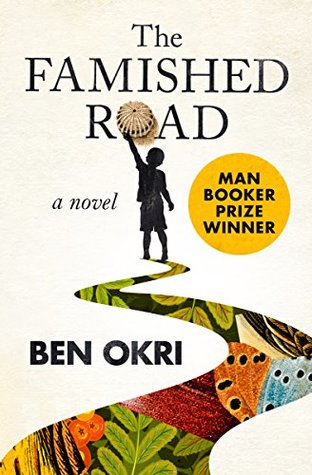
The Famished Road, by Ben Okri**

thefamishedroadI surrender! Thanks go to Net Galley and Open Road Media, from whom I received a DRC in exchange for an honest review; however, try though I have, I cannot push past the molasses-like allegory and other figurative language to locate a plot. After painfully forcing my way through the first 20% of the book, I went to Goodreads to see what other reviewers had to say about it. Some felt as I did, but others swore that if the reader could endure the first two-thirds of the story, the last third would not only be so amazing, it would also enlighten us as to why the earlier part was necessary. Seeing this, I vowed to persevere. By the 25% mark, I found I was avoiding this DRC, because just about every other galley in my possession was either more enjoyable to read, or more rewarding, or both.

Tonight I decided it was time to put up or shut up. Maybe this is one of those rare occasions when one should read a book out of sequence. I skipped to the 70% mark and found it was pretty much more of the same. The allegory pointed toward the horrific debt load that cripples African nations, but I already knew that, and if that is actually where this story is supposed to lead me–because really, I am still not sure–then it’s a disappointment. I already knew about the impact of colonial overlords on African nations, and this did nothing to improve either my knowledge or my appreciation for that, or for literature.

I will add, however, that I have also never liked magical realism. Either write fiction or nonfiction, don’t try to do both at once. Even the work of literary goddess Isabel Allende makes me crazy this way: we are in the midst of what feels like a genuine memoir, and then someone turns bottle-green and levitates. No, no, and no.

Those that have a great love of magical realism and thirst for African fiction may find joy here. This book has won prestigious awards, and I had anticipated that reading it would be rewarding. Just because it didn’t happen for me doesn’t mean it won’t happen for you; but if you come to feast at Okri’s table, bring a high literacy level with you, or you’ll find yourself leaving it still hungry.

This title is available for purchase now.

The Signal Flame, by Andrew Krivak*****

thesignalflameThere are good writers, excellent writers, and of course, indifferent writers, but once in a rare while there’s a writer that makes me sit up straight and take notice, someone with that special spark of genius that no money can buy nor school can teach. Krivak’s work is exquisite, the product of both power and restraint. If you love historical fiction, you have to read this book, which comes out January 24, 2107.

I was lucky and read it free in exchange for an honest review, thanks to Scribner and Net Galley. If you read my last review of a DRC, you know I call them as I see them; I see this one as standing, at the end of 2017, as one of perhaps a dozen that will still shine after I’ve read between one and two hundred others.

Bo, our protagonist, is the grandson of Slovakian immigrants, and has been steeped in the tradition of those that came before him. His grandfather, Jozef, served in the trenches during World War I; Jozef’s son, Bo’s father, was imprisoned for desertion during World War II and then died in a hunting accident upon his return home. Bo’s grandparents and mother have raised him and his brother Sam, who is missing in action in Vietnam. When Jozef dies, Bo is the last man left to carry on the family business and the traditions with which he was raised.

The title of the book refers to the sign for which Agamemnon was to watch for news from Troy; the book is begun with the relevant quote from Aeschylus, an old friend in literature that I hadn’t visited in nearly 40 years. I tell you this not to intimidate you, because I think this text is accessible to most high school graduates that love good literature. No, I just want you to understand that this is a work of depth and quality…and also unending sorrow.

Hannah, Bo’s mother, has been writing to the Navy twice each month for updates about the status of her missing son. Without a body, she doesn’t feel free to mourn; without a notification of death, she holds on to a tiny filament of hope that Sam may come marching home and surprise them all, any day now. Foremost in everyone’s minds is that Sam must not also be considered a deserter.

Now President Nixon speaks of ending the war with honorable peace, but there can be no real peace for Hannah; the Navy sends the same response every time she writes, “informing her that Sam was still carried in a missing status. Like he’s in a box somewhere, she would say, and the marines just haven’t gotten around to opening it yet.”

Father Rovnavaha is their parish priest, but he is also an old, dear family friend, and as he lays to rest two generations of a local family that are killed in a terrible flood, he seeks to comfort those present, perhaps himself included, by speaking of a kingdom, but Hannah has trouble believing as she once did:


“Her faith was once that strong, but she doubted it now, doubted not that there was a promise but that the promise claimed was a gift to hold, a joy that could assuage all sadness. No, she had come to believe that the only thing one could be certain of was loss. The loss of others as one lived on.  Loss as the last thing one left behind.”


Bo’s inheritance takes him in directions no one could have foreseen, and so although Krivak’s novel is indeed full of loss, it also shows us that hope can come from a direction never anticipated.

The characters here are beautifully rendered, developed so subtly that we aren’t aware of it occurring until it’s accomplished. There are no heavy-handed devices such as diaries or extensive local gossip; we see who each person is by the things that they do, and just as in life, we know who they are not only by their words, but by their actions. Krivak never lets a stereotype embrace his characters or plot; the result is so genuine that I feel I am following a dear old friend through the narrative.

Highly recommended for those that love historical fiction, as well as for anyone that needs an excuse to sit down and have a good cry.

Small Admissions, by Amy Poeppel*****

Happy release day! The holidays are over and your humor may be running dry and a little snarky by now. If so, this book is just what the doctor ordered…and it’s for sale right now.

seattlebookmama's avatarSeattle Book Mama

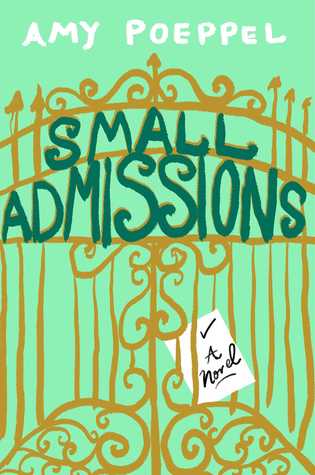
smalladmissionsI received an advance reader’s copy of this darkly amusing novel from Net Galley and Atria Books. It’s funny as hell, and even more amusing to teachers, school counselors, and others that have dealt with high maintenance parents and the aura of entitlement they carry with them. I rate this title 4.5 stars and round upward.  It comes out December 27, 2016, just in time to chase away your post-holiday depression.

I sat on this book for more than three months, which is a rare thing for me.  I kept starting it, not liking it, and deciding to set it aside and look again with fresh eyes later. Finally November came, and I realized the book was not going to change; I’d given my word to the publisher I’d review it; it was time to suck it up and get the job done. And this is a little ironic all…

View original post 408 more words

Best of 2016: Literary Fiction

I’ll bet you do it too! I’ve found myself postponing the most crowded or hotly contestable categories for last, and literary fiction has been strong this year. It’s a really tough call, but in the end, I went with consistency and charm to break what is almost a five way tie.

#1

MillersValey

HONORABLE MENTIONS:

thegirls

Gone to Soldiers, by Marge Piercy*****

gonetosoldiersBrevity isn’t possible here. Settle in and get comfy. Here we go.

The word “epic” gets overused in the world of advertising, and so as a reviewer, I have learned to take the promise with a grain of salt. However, Piercy is renowned, an iconic presence for feminists and for anyone that approaches life from a class perspective. I read this book when it first came out in the 1980’s for no discount whatsoever, and I loved it. Books come and go at my house, since space on the bookshelf is itself a commodity, but Piercy has a permanent shelf all her own; when I saw that Open Road Media had released this book digitally, I jumped on it, even though the release date had passed and even though I already had the book, because I wanted to help promote it, and I was happy to read it again. I rate it 4.75 stars and of course, round it upward.

There are two myths that get told, are believed by others, and then they are retold about World War II. The most recent one is that told by Holocaust deniers, who say that the whole death camp thing was just a huge exaggeration. Yes, there were prisons; yes, guards were mean sometimes; yes, people died, because nobody was getting enough food in Poland and other non-German parts of Europe anyway. This is a lie, but as eyewitnesses grow old and die, it takes a certain vigilance to keep this damnable untruth from gaining a toehold. Piercy tells the truth, and she does it really well. More on that in a moment, but let’s deal with the other lie first.

The second myth, one that’s understandably popular as patriotism grasps the human heart and we wish that our rulers, past and present, were truly noble, is that the USA joined its allies in a quest to preserve democracy and save those poor Jews and other unfortunates tucked away in those hellish camps. Piercy approaches this palace of straw from many different angles and razes it to the ground.  Jews that wanted out faced tremendous obstacles, from nations—the USA included—that were extremely choosy about how many Jews they would take. The US and UK governments were more obstructive than helpful, and countless men, women, and children died because of these exclusions.

Piercy is a brilliant storyteller, and in her hands, the period and its people are so believable, nearly corporal, that I carry them with me still.

This story is told through the eyes of ten characters whose narratives are staggered. There are French characters, British, and Americans; men and women; straight, gay, lesbian, and bisexual.  They hail from a variety of socio-economic circumstances and are affected by the war in different ways. It’s miraculous to see a writer develop even one of these characters as fully and thoroughly as Piercy does; how is it that she does so with a wide range of characters, yet has never been nominated for a prestigious award?

Those of us that are old and perhaps cynical may consider that the very political perspective that makes her prose so rich may be what kept her from landing on a short list. I guess we’ll never know for sure.

Piercy is a scholar and she approaches this historical period with sources in hand. She doesn’t interpret loosely, and her note to the reader tells us in what instance she has taken liberties, for example not wanting to have a whole string of people that have the same first name. Always she is aware of the subtext, the stereotypes that women aviators faced, for example.

My most beloved characters were Jacqueline, a hero of the French resistance, along with her lover, Jeff, and her little sister Naomi, one of the fortunate few who’s sent to live with American relatives before it’s too late. I liked Louise’s moxie, and I loved what happened to Duvey. I also really enjoyed the unusual perspective that Daniel and his fellow code-breakers shared, becoming so familiar with the Japanese point of view that they bonded with the men whose communications they were deciphering.

As we discuss the Japanese, we come to the .25 that I deducted. I did this as a token objection to the use of the racist vernacular that I know was commonplace during the time. This reviewer grew up with a father that served during this war, and reminiscences among the guests he and my mother entertained were so frequent that I, in youthful ignorance, rolled my eyes and decided they were impossibly dull. And my mother taught me that the terms he and they used to speak of Germans, of Jews, of Japanese were never, ever to be used in my own conversations with anyone at any time. And so yes, racist references and ethnic slurs were common to this era.

But I note that whereas our author has had the good taste and the good sense not to repeat the ugly terms by which Jewish people were called, and seldom repeats the anti-German slurs, the “J” word is used dozens of times, usually by the character that fights in the Pacific. And I have to say, it really stings.

There were fewer Asian Americans during the period when Piercy wrote this than there are today, particularly in the author’s own New England home. For anyone writing this today, and for anyone less venerable and also less influential for me personally during my formative years, I would lop off at least a couple of stars from my rating. It’s ugly to repeat these epithets, and it’s particularly painful to me to read them. This is my husband we’re talking about; it’s my daughter, too. It’s my in-laws, one of whom fought, as good Japanese citizens were expected to, for the Japanese Imperial Army. So I would not care to see her go back and insert the horrible terms hurled at Jews and Germans for the sake of consistency; I’d just rather see the “J” word used less often. She could mention it in her introduction if she feels the reader needs to know that she’s made an adjustment.  That’s my viewpoint, and I’m sticking to it.

But it’s also true that when I was young and confused, Piercy was one of the bright feminist lights in literature to whom I looked for guidance. So I am moved not only by the excellence of this work, but also by the shining legacy she has provided for women during an uncertain time.

One further note: though I have a degree in history and have taught it, I have seldom seen much written—at least in English—about the French Resistance. This part is arguably the most deeply resonant part of this novel, and though I had read the book before, it’s amazing what one can forget over the course of twenty or thirty years. I don’t read many books twice because there are so many I haven’t read at all yet; and still this is one that I may read a third time, as I feel my recollection of the fine details already slipping away.

For those that treasure excellent literary fiction; that have the stamina for a novel of this length; that love outstanding historical fiction; that enjoy stories that are told from a feminist viewpoint and that recognize social classes and the way they affect us; this story is unparalleled. Get it and read it.

Small Admissions, by Amy Poeppel*****

smalladmissionsI received an advance reader’s copy of this darkly amusing novel from Net Galley and Atria Books. It’s funny as hell, and even more amusing to teachers, school counselors, and others that have dealt with high maintenance parents and the aura of entitlement they carry with them. I rate this title 4.5 stars and round upward.  It comes out December 27, 2016, just in time to chase away your post-holiday depression.

I sat on this book for more than three months, which is a rare thing for me.  I kept starting it, not liking it, and deciding to set it aside and look again with fresh eyes later. Finally November came, and I realized the book was not going to change; I’d given my word to the publisher I’d review it; it was time to suck it up and get the job done. And this is a little ironic all by itself, since that’s the position in which our protagonist found herself, but more on that in a minute.

The issue with the first part of the book is that it reads like a very lengthy introduction, steeped in character introduction and overlong inner narrative. After I had read—and loved—the rest of the book, I went back and reread that 15%. Was it just me? What was wrong with it? And once I had read the book and become familiar with all of the characters, it seemed perfectly fine. In fact, it seemed a lot like the voice-over at the beginning of a movie. Then I read the author’s biography, and discovered that this novel was first written as a play.

Suddenly, it all made sense.

Our protagonist is Kate, and she’s come undone. Her French boyfriend has dumped her:

“When he’d encouraged Kate to follow her heart, he hadn’t meant she should follow it to Paris.”

Meanwhile, upon departure she’s left her position at NYU.  She was studying anthropology, and now she isn’t, and her family doesn’t know what to do about it. Enter Angela, her sister, who moves heaven and Earth in order to get Kate’s life going again; once Kate’s out of the woods, Angela can’t stop maneuvering and controlling. She’s good at being a white knight, and she can’t give it up. We have Vicki and Chloe, her friends from college, and the old boyfriend from France lurking offstage.

The fun commences when Kate gets a job in the admissions department of a small, private secondary school. She’s misrepresented her skill set to get it, but she’s determined to give it a try:

“Kate viewed Hudson Day as an unknown culture that required her exploration.”

It’s time to start interviewing and selecting students, managing interviews with demanding, sometimes aggressive parents. I’ve taught honors students in a public secondary school, and I thought my experience took fortitude; Kate’s experience was similar to my own, but on steroids.

There are hilariously dysfunctional parents, kids whose folks don’t have a clue what they can do and what they can’t, and in the midst of it all, relationships among Kate’s nearest and dearest become unstuck and reconfigured in ways that mirror those Kate works with, and even Kate herself. I can’t tell you anymore, because it would ruin it for you, but this snarky romp is not to be missed. It’s cunning, wickedly bold humor at its finest.

And Every Morning the Way Home Gets Longer and Longer, by Fredrik Backman****

 “When a star fades, it takes a long time for us to realize, as long as it takes for the last of its light to reach Earth…When a brain fades it takes a long time for the body to realize.”

andeverymorningthewayhome

Frederik Backman’s new novella provides us with a philosophical yet poignant glimpse of an elderly man trying to hang onto his memories, and the love of those that must say goodbye to him inch by inch. I received my DRC from Net Galley and Random House Alibi in exchange for this honest review.  This novella will be published November 1, 2016.

They say that each generation corrects for the one before it, rendering us more like our grandparents sometimes than our parents themselves. So it is with Noah and Grandpa. Grandpa calls his grandson “Noahnoah”, because he likes his grandson’s name twice as much as anyone else’s. Sometimes Noah’s father Ted comes to see Grandpa, and when he mentions Noah, Grandpa doesn’t know who that is. Sometimes Grandpa knows everyone; sometimes he doesn’t. Sometimes he mistakes one of them for the other.

But Grandpa—who has no other name in this book, having taken on the generic persona that Western society tends to give us as we grow very old—shares a special bond with his grandson, and it is his grandson that comes to him, still, with questions about life and the universe.

Grandma is no longer living, but theirs was a happy marriage despite their dispute about God and the afterlife.  Noah says to his grandfather, “’Grandma believed in God, but you don’t. Do you still get to go to Heaven if you die?’”

Grandpa tells him, “’Only if I’m wrong.’”

The years pass. As usual, Grandpa wants to know about school, but he has forgotten that Noahnoah isn’t a student anymore; he’s become the teacher. On the other hand, school is better than ever now. And so it goes.

This story is brief, and I read it in just a couple of sittings. Despite the cover art, it isn’t necessarily a book for children.  It’s a wonderful story in that it shows us a gentle way of dealing with aging—which can be so hard to do, particularly if Alzheimer’s makes the elderly sufferer angry with no reason—and it also helps us learn to let go. For some, this might be a good grief story. For others that had to let go without being able to be with the beloved family member much in their final years, it might be painful, because the grandson and father both spend time with this man as he declines.

I can see ways in which this story might help a YA reader with not only a strong literacy level, but the ability to think abstractly, cope with Alzheimer’s or another form of dementia in an elderly relative that means a lot to them, but I would advise the parent or guardian to read it first, and then decide. There’s no sex, no profanity; just pleasure, love, joy, and aching sorrow.

The Whole Town’s Talking, by Fannie Flagg*****

 “Up on the hill, Lucille Beemer said, ‘Good morning, everybody.’

“Two hundred and three people just waking up answered, ‘Morning’.”

thewholetownstalking Fannie Flagg is legendary, and rightly so. In fact, at one point in my reading of this DRC, I reflected that someone with her power to move people has power indeed; how fortunate that she uses her gift to benefit the rest of us. I don’t know about you, but I am ready to read something that provides a level of reassurance that all has not gone sour in this world, and that everything passes, sooner or later.  I was  fortunate to read this free and in advance thanks to Random House and Net Galley, but it’s one of the very few books for which I’d have paid full freight if it came down to it. It hits the shelves November 29 and is available for pre-order right now.

Our story begins with the first residents of what will become Elmwood Springs. Lordor Nordstrom arrives from Sweden, and after months of searching, finds the perfect place for his dairy farm in a pleasant spot in Missouri. The year is 1889. He puts up a house, buys some cows, and then, as a founding father, he decides he will donate a piece of land, because every town needs one thing for sure…a cemetery.

“Lordor guessed that preparing a place to spend eternity and trying to figure out how many places to set aside for himself was what made him think about his future.”

I went back and reread that sentence a couple of times; it begins our second chapter. Oh my but Flagg is droll. If one were to read this gem with half a mind on other things, nuggets like this might be missed.

The years go on, and with brief, colorful chapters, Flagg develops the town, introducing new residents that move in or are born here, and at first it seems as if the story is cotton candy, all fluff and sugar. But just as the impression is formed, it is vanquished, because our author is just warming up. Moments that are poignant, bittersweet, and darkly funny are sprinkled in lightly as we start, because after all, we are new to Elmwood Springs.

But the longer we stay there, the more intimately we become acquainted with its denizens and their peccadilloes, and then the more emotional aspects of the story unfold, almost as they might within your own large family or tightly knit community. Flagg convinces me that these people are my people, and her characters are so brilliantly developed, so utterly convincing that even when one of them does something surprising, I understand how that has come to pass.  And every time I think I see where she is headed with one thread or another, she surprises me.

About a fourth of the way in, someone dies and we find them interred, of course, at Still Meadows. But there’s an engaging twist to this aspect of Flagg’s story: the first person to pass wakes up when someone new arrives and greets them. They may be six feet under, but they can see what’s happening at the cemetery, along with everything that can be seen from the cemetery, just fine. And so the discussions that took place in life continue after death, and the dead look on avidly and wait for word of the loved ones they left behind.

As the story develops and characters’ lives are more deeply explored—always remaining more light than dark, and without a single word anywhere that isn’t needed—it occurrs to me that she just may have done it again.

Some people like to take gadgets apart to see what makes them work; I enjoy doing that with literature. And so I find myself looking back at my highlights and notes, looking for what, apart from a dry, accurate wit, makes this writer’s work so special. Some of it is an alchemy whose elements can never be described perfectly, taking ordinary Americans and spinning them into gold. But part of it is undoubtedly her deep respect for working people, and her readiness to see redeemable qualities in characters that upon first glance seem abrasive and unlovable:

“Ida had always been different. At school, when all the kids used to play church and one would be the preacher, another the preacher’s wife, a deacon…Ida said she wanted to be God, because she was the only one who knew how to do it.”

But later, once she was grown, “Someone else remarked, ‘By God, if Ida had been a man, she would have made general by now.”

She also acknowledges that once in awhile, someone comes along that no matter what heroic effort is made on their behalf, will never do anything good for anyone. Hey, it happens.

The comments that are made by various characters reflect both the character’s outlook and usually, the prevailing attitude of the time period as she rolls the town steadily forward to 2016.

And this leads to one cautionary note: as with all of Flagg’s work, it is essential to read the chapter and section headings, which provide context. This reviewer once taught a group of teenage honors students that were unable to make heads nor tails of Fried Green Tomatoes, and I discovered it was because they weren’t reading the chapter headings, and so they didn’t know what the time period was or whose point of view they were reading. Don’t let that happen to you!

Finally, I want to thank the author for the kindly manner in which she draws teachers.  Fannie Flagg, every teacher I know that talks about books, loves your work. We need the encouragement sometimes, and your friendly regard means a great deal.

Highly recommended to everyone.