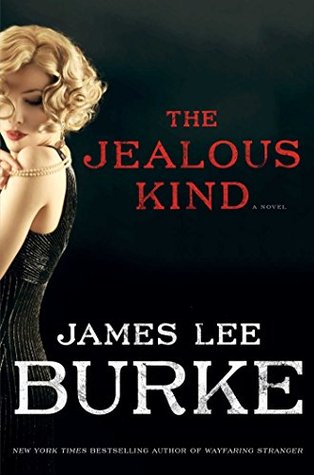
 James Lee Burke is a legend, a venerable and highly respected writer known for his luminous prose and quirky characters. In this, his second work of historical fiction in a planned trilogy, he demonstrates that he can still work magic better than ever. I received this DRC from Net Galley and Simon and Schuster in exchange for an honest review, but I would have paid full freight if I had to, and I rarely say that about any book anymore.
Our protagonist is Aaron Holland Broussard, and the setting is Houston, Texas in the 1950’s. Aaron is a child of the middle class. His father drinks too much and his mother is mentally ill, suffering terribly from depression during a time period when tranquilizers and electric shock were the best—and worst—that modern medicine had to offer. But he’s got a solid home to return to at the end of each day, his own bedroom, and a fine collection of pets. All told, his life is a great deal better than those that the young people around him face, especially his closest friend, Saber Bledsoe.
Diehard Burke fans will recognize in young Saber the ghost of Clete Purcel, a favorite character in the author’s Dave Robicheaux series. The role played by Saber, and before him by Clete, is that of the loyal friend that will do anything for the protagonist but whose judgment is often poor and whose impulse control is nearly nonexistent. At times the friend lightens things up with off-the-chain behavior, and at others the same friend creates problems that the protagonist has to try to repair. Even without Saber, it’s easy to become part of drama in this time and place, because
“Violence was an inextricable part of the culture; it hung in the air, perhaps passed down from the massacres at Goliad and the Alamo and the Battle of San Jacinto or the feuds during Reconstruction or the systematic extermination of the Indians.”
Burke is widely known for his capacity to create settings from the natural and pastoral on down to the bizarre, the exotic, and sometimes the polluted or corrupted. When I entered an exclusive men’s club as an imaginary companion of Aaron’s Broussard’s, I was fascinated immediately not only by the description of the club, but by my anticipation of what Burke might do with it.
But let’s step back a minute and take it from the top. Early in this story, Aaron is at a drive-in restaurant when he sees the lovely Valerie Epstein get into a conflict with her boyfriend, Grady Harrelson, a child of the local bourgeoisie. Grady lives on “…that giant island of oak trees and wealth and faux antebellum splendor…” Grady usually gets what Grady wants, but not this time.
When Grady strikes Valerie, Aaron intercedes. Aaron and Valerie– “I never saw anyone who had so much light in her eyes ”–fall in love. Ah, youth! Mr. Burke may be in his sunset years, but he remembers adolescence like it was yesterday, and he paints a vivid, poignant picture of impossible, doomed love on the part of two young people that imagine so much more than can ever come true.
Meanwhile, Aaron finds he has accidentally created problems his family doesn’t need; combine down-and-out, loyal Saber Bledsoe, a thirst for justice, a sadistic shop teacher, a rodeo that features a notoriously vicious bull named Original Sin, and the local Mob. Toss in a Cadillac with a small fortune concealed in the door panels and some vigilante justice, and you’re in for a hell of a ride.
Readers always deserve to know when some racist terms are going to be tossed their way, and they’re here in plentitude. They span across just about every race and ethnicity, and keep company with ugly remarks about women—by bad guys, of course—and some homophobic remarks common to the time period. On the one hand, these things were part of the scenery of Caucasian middle-America in the 1960’s when this reviewer was growing up, and so I cannot imagine them not also being common in the decade before it, in which this story is set. On the other hand, for some folks one really nasty word can ruin an entire novel, and so if that’s you, step away from this one. This also serves as an advisory to teachers considering using this novel in the classroom; frankly, the literacy level is really past what the average high school student can handle anyway.
That said, the prose of the final two pages is so glorious that I stopped breathing as I read them without realizing it till the last word was read, and I felt myself exhale. The first book in this series was strong, but this one is still more compelling. I am an Atheist, but Mr. Burke can tell a redemption tale like nobody’s business and leave me yearning for more, more, more. I read several books simultaneously, and it always strikes me that Burke’s work is vastly superior to just about everything else out there. May he live and write forever!
Highly recommended, and available tomorrow, August 30, 2016.

 Nagy does a more than serviceable job in documenting Washington’s intelligence methods. Thank you for the DRC, which I received free in exchange for an honest review from Net Galley and St. Martin’s Press. This title is for sale today.
 Brown has had a long and auspicious writing career, and right about now she can do whatever she pleases. I came to this title thinking that it was a stand-alone novel; thank you, Net Galley and Random House Ballantine for the DRC, which I received free in exchange for this honest review. The book is available to the public October 18, 2016.
 Gwendolyn is 19 years old when she marries Laurence Hooper, the owner of a tea plantation in Ceylon, an island nation south of India now named Sri Lanka. Jeffries provides a compelling, sometimes painful glimpse of the mores and assumptions of the heirs of the UK Empire at the outset of the peasants’ rebellion led by Ghandi. Though a few small glitches occasionally distract, this is a strong piece of fiction that fulfilled the writer’s mission admirably. Thank you to Net Galley and Random House-Crown Publishing for the DRC, which I received free in return for an honest review. The book is on sale today.
 Frank Delaney was well known in the UK before those of us in the United States had heard of him; NPR has called him “the most eloquent man in the world”, and after I had read Ireland, an epic novel that has to do with a storyteller and so much more, I was sold. I wasn’t blogging or reviewing back then, and after I had turned the last page, I told my family that I wanted to read everything else Delaney had written. Then I received this novel as a Christmas present, and was underwhelmed. I set it aside and figured I would give it away, but later I realized that it was the first in a trilogy for which I had also received the other two books. In February of this year, I took a deep breath and plunged in for another try.
 I was originally turned down for a DRC of this novel when I requested it last spring, and I took the unusual step of following up with Atria, more or less begging for it. I’ve been reviewing titles for Net Galley for two years and have received nearly 300 DRCs, so it is a sign of my interest level that I went to this extreme to read this one in advance in exchange for an honest review, and it’s a sign of decency and responsiveness that a representative from Atria Books invited me to review it after all. Although I am grateful , this five star review is not about gratitude, but a measure of the importance I attach to the issues it addresses and the skill with which the story is told.
 I received a DRC of this memoir from Random House through its First to Read program. I read the book free in exchange for an honest review. Though it wasn’t a good fit for me, I think there are niche readers out there that might enjoy it.
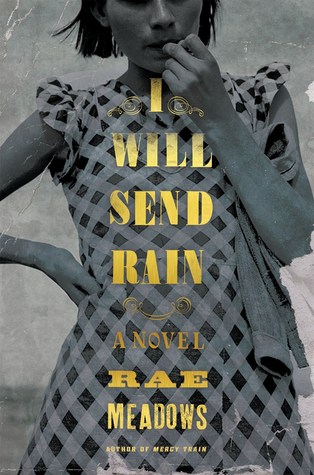 Annie Bell could have chosen to marry a well-to-do member of the gentry in her home town, a man with fine china and a full time kitchen servant. Young and buoyant, she chooses love instead, and moves to Oklahoma with Samuel Bell to start a brand new life on the free land that’s been provided. What could go wrong when two young people are strong and dedicated to one another? Oh, it’s an old, old story in so many ways, but Meadows makes it brand new. Thanks to Net Galley and Henry Holt Publishers, I read it free and in advance in exchange for this honest review. It will be available to the public August 9, 2016.
 Many people don’t know much about Cuba, the tiny island nation a mere 90 miles from the coast of Florida. The American media has distorted the Cuban Revolution for as long as I can remember. Before the revolution, which took place in 1959, Havana was like Bangkok, a place where little girls prostitute themselves so they won’t starve to death, where wealthy visitors can experience every pleasure, innocent or corrupt, known to humanity but where most citizens have little chance of even having their basic human needs met. Cuba’s alliance with the Soviet Union (USSR) helped the Cuban people defend themselves from US efforts to overthrow the revolutionary government, but the alliance also led to a period of Stalinist repression that darkened artists’ worlds for a period of time. Randall discusses all of this in her introduction. Following the period Cubans call the Rectification Period (reference mine), Stalinist practices were peeled away, and more freedom of expression created a more hospitable environment for artists, in addition to strengthening the revolution itself. In Cuba art is not privately sold as a general rule, and artists receive a salary for what they do, paid by the Cuban people.
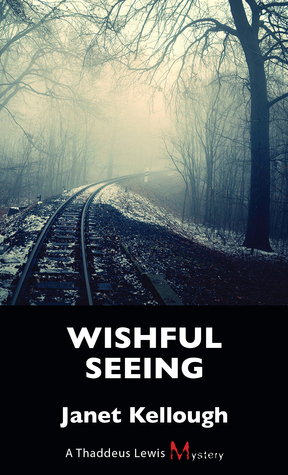 Thaddeus Lewis, the traveling preacher sleuth, is back on the road again. He’s headed to speak at a gathering of Methodist Episcopalians when he finds himself involved, once more, in a murder case. This cozy mystery is my second in an endearing series by Janet Kellough. I snapped up the DRC when I saw that Dundurn had made it available on Net Galley, so I read it free in exchange for an honest review. This title will be available to the public this Saturday, July 30.
