
 Hannibal was the first general to defeat the forces of Rome, and Hunt is the man qualified to tell us about it. I read my copy free and early thanks to Net Galley and Simon and Schuster. This book becomes available to the public July 11, 2017.
Early history has never been my area of concentration, but since retirement, I push myself out of my usual comfort zone, often to excellent result. This time it proved to be a mixed blessing. On the one hand, Hunt is unquestionably qualified to discuss this topic. He is an historian of renown and has dedicated years to the study of Hannibal, even embarking on an expedition across the Alps in order to see what Hannibal experienced—or the closest proximity to it in modern times. On the other hand, I confess I was in it for two things: military strategy and history, which does interest me, and of course, the elephants.
Imagine riding into battle on the back of an elephant. Not only is an elephant massive, it is also impervious to most of the weaponry available at this time. Spears and javelins would just bounce off its hide. War elephants had their tusks sharpened, and being charged by such a force had to be terrifying. And in reading this history it occurred to me that Hannibal’s men would have been bemused indeed if they had known that elephants would be regarded by many of us, in future days, with great sentimentality. They would never have believed the elephant might become endangered. Who could kill elephants? But these are my musings, not Hunt’s.
Hunt is meticulous in demonstrating what Hannibal did and why he did it. He starts with his family background, in particular that he was the son of the great general Hamilcar, who took him to a temple, made him stand at the altar where the live sacrifice had been made, and swear lifelong hatred of Rome, whose government and military made war against Carthage and caused a lot of suffering. Hunt carefully separates what actually happened, from what probably happened, from what maybe happened, but the speculative language—may have, would have, almost certainly—slows me down, because each time the narrative picks up and I immerse myself in the text, I see the modifiers and draw back. I go back and reread in order to find out what is actually known, mentally removing all of the guesses and educated guesses, and then I am left with what is known. And although I appreciate that there are not vast treasure-troves of primary documents sitting around for Hunt to access, given the antiquity of the subject, I wish there were some way to read only the known facts. At the 70% mark I became frustrated and bailed.
Hunt quotes often from Livy and Polybius, both of whom I read many years ago as an undergraduate, and which still grace my shelves. My initial impression was that it might be more useful to go dig up those books, reread them, and give this one a miss. However, what Hunt does is sift through their information and provide an analysis that is deeper and more objective than theirs. Livy was, after all, a Roman; he is renowned as a scholar, but not necessarily objective.
And so those that have a serious interest in the history of Northern Africa and/or Southern Europe, or an interest in military history, can count this as a strong title to add to their historical libraries. To put it another way, what it lacks in terms of easy flowing narrative, it makes up for in accuracy and analysis.
Recommended to those that have a serious interest in world history or military history.


 Lisa Wingate is an established author, but she is new to me. I received this DRC free and early, thanks to Net Galley and Random House Ballantine; it is available to the public Tuesday, June 6, 2017. And although I would love to tell you to run out and buy it right now, in all honesty I have never felt quite so ambivalent about a novel, at least not in recent years. There’s so much that’s good here, but there’s also some terrible material—albeit brief—that any sensible editor would have to question, and that every reviewer that’s paying attention has to notice.
 “’All right. They’re on our left. They’re on our right. They’re in front of us, they’re behind us. They can’t get away this time’.”
 Those looking for a sweet, light romance will find it here and come away happy. It was just published, and you can get it now. Thanks go to Net Galley and Lake Union Publishing for the DRC, which I received free of charge in exchange for an honest review.
 “’It takes a lot of nerve for somebody, mainly a white, to ask me do I hate. I haven’t lynched nobody and hid in the bushes.’”


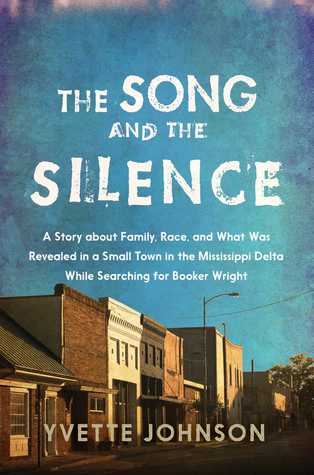 I was browsing the pages of Net Galley and ran across this gem of a memoir. Often when someone that isn’t famous gets an autobiography published by a major publisher, it’s a hint to the reader that the story will be riveting. Such is the case here; my many thanks go to Net Galley and Atria for the DRC, which I read free in exchange for this honest review. You can order it now’ it comes out Tuesday, May 9.
 To date, this is the single best volume that’s been written about Collins, and it’s a meal. I purchased this title on an annual pilgrimage to Powell’s City of Books in Portland, Oregon when I was there to visit family a few years ago. Although the length of the book is listed as 480 pages in paperback, the reader needs to come prepared. The type is tiny and dense, and it took me a long time to wade through it. If it were formatted using more standard guidelines, it would be a great deal longer.
 I was invited to read and review this title by Net Galley and Atria Books. To be honest, I wasn’t sure I wanted to read it. What, Wall Street? What does that have to do with the real lives most of us lead? But when I noted that the story involves an enormous tumble off that golden pedestal, I was intrigued. I am really glad I accepted the offer to read, because it contains a feminist subtext that I had no idea would be here. This story will be available to the public April 11, 2017.
 Seattle Book Mama