
Sometimes I feel sorry for writers that hit it big the first time they publish a novel, because then the expectations are raised for everything they write thereafter, and so I wondered whether Loigman, the author of A Two Family House, would be able to match the standard she has set for herself. I needn’t have worried, because if anything, The Wartime Sisters is even more absorbing. I was invited to read and review, and my thanks go to Net Galley and St. Martin’s Press. This excellent novel will be available to the public January 22, 2019.

The setting is an armory not far from where the author grew up, one that was an important manufacturing site during World War II. The characters are what drive the story, but Loigman’s intimate understanding of the period’s social mores and the economic impact the war had on women on the home front make it far more resonant. Rather than rely on pop-cultural references to set the tone, she conveys unmistakably what American women were expected to do—and to never do–in this unusual yet unliberated time period.
Ruth and Millie are sisters, and yet in some ways they don’t really know each other. Each has built up a personal narrative full of grievances and assumptions about the other over the course of their lives; they are estranged, with Millie back home in Brooklyn and Ruth in Springfield, Massachusetts. Both are married, and both of their husbands have decided to enlist, but otherwise their circumstances are vastly different. Ruth has married well, but when Millie’s husband Lenny is gone and their parents are dead, she has no one to turn to. She has a small child to consider, and during this time period it was unusual for a mother to leave a young child in the care of others. Men worked; women stayed home. And so although she dreads doing it, Millie writes to her older sister Ruth; Ruth doesn’t want to take Millie in, but she does.
Both sisters carry a lot of guilt, and each is holding onto a terrible secret.
The story alternates time periods and points of view, and the reader will want to pay close attention to the chapter headings, which tell us not only which woman’s perspective is featured, but also what year it is. At the outset we have the present time alternating with their childhoods, and gradually the two time periods are brought together.
In addition, we see the viewpoints of two other women that are introduced later in the story. One is Lillian, the wife of a commanding officer; she befriends Ruth and later, Millie. The second is Arietta, the cook that feeds the armory personnel and also sings for them. Although these women’s backgrounds are provided as separate narratives, their main role is to provide the reader with an objective view of Ruth and Millie.
I generally have several books going at a time, but I paused my other reading for this one, because I felt a personal obligation to Ruth and to Millie. Family is family, and while I read this story, they were my sisters. You can’t just walk away.
Loigman joins women’s fiction and World War II historical fiction masterfully, and if this work reminds me of any other writer, it would be the great Marge Piercy. This book is highly recommended to those that cherish excellent writing.
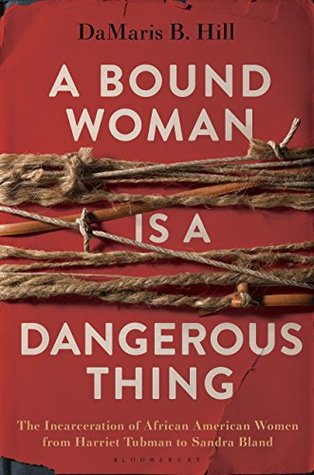




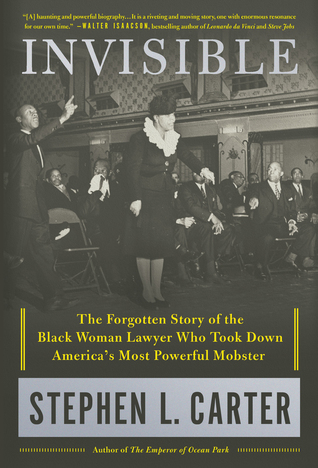 I received a review copy of this affectionate, well-documented biography free and early thanks to Net Galley and Henry Holt. This book is for sale now.
 I read my copy free and early, thanks to Net Galley and St. Martin’s Press. This book is for sale now.
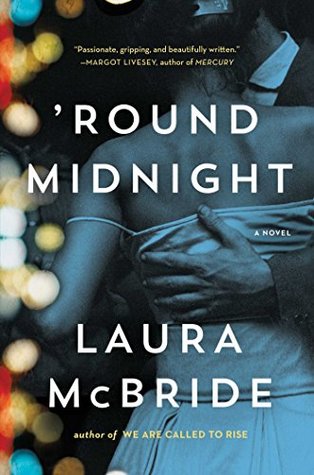 What an unusual story! McBride cleverly links the lives of four women, and we follow their individual journeys over the course of fifty years; near the end, we see how they are connected. My thanks go to Net Galley and Touchstone for the review copy. This book is for sale now.
 I was rooting around on Net Galley looking for some good nonfiction when I ran across this title. Many thanks to Net Galley and Doubleday for the DRC, which I read free in exchange for this honest review. This book is now available to the public.
