“We Irish know what ’tis like to be oppressed by an aggressive neighbor.”
Reyna Grande can really write. This is the first of her novels I have read, but it surely won’t be the last. My thanks go to Net Galley and Atria Books for the review copy; this book is for sale now.
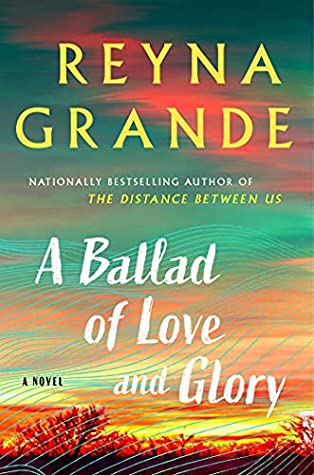
A Ballad of Love and Glory encompasses two genres, romance and historical fiction. It’s the story of John Riley, an Irish immigrant to the USA in the mid-nineteenth century, who is met at the dock by military recruiters that want him and his compatriots to serve in the US army, fighting the war against Mexico. Riley arrives half-starved and worried sick about the fate of his family that he left behind. The promise of soldier’s wages is enough to persuade him, and he enlists.
It’s also the story of Ximena, a Mexican naturopath whose husband is killed by Texas Rangers. She follows the army to help care for the wounded; she and Riley are drawn together.
As for me, I am drawn to this tale by my love of military history, whether nonfiction or fiction, and by the unconventional point of view regarding the U.S. land grab. At the time of the annexation of Texas, followed by the war against Mexico, most Americans accepted the official explanation and believed that the war was initiated by Mexican aggression toward U.S. citizens across the border. Some, including an up-and-coming politician named Abraham Lincoln, saw threw the ruse and understood that the whole thing was a pretext on the part of the US designed to capture Texas, California, and points in between. This is the background information that I bring with me as I begin reading this novel.
The title and book cover both focus on romance, and if a friend hadn’t mentioned this story, I would have passed it by; most romance is too sappy for my tastes. But an entire brigade of Irish immigrants that jump sides in the midst of the conflict and fight, instead, for Mexico? I have to read this!
Grande honors historical truth in her storytelling, and as such, this is one sad read. The Irish soldiers are treated more savagely by the American-born officers than I had known, and Grande gives us plenty of detail. And although I know, when I begin reading, exactly who wins this war, it’s hard to face the inevitable once I am bonded to these characters.
That said, I do think Grande does a better job with the military end of this thing, and of developing John Riley in other regards, than romance. There’s this tension between Riley and Ximena, because he is a married man with a child back home—and I can guess immediately how this conflict will be resolved. Until that resolution, the tension, part of the “honor” mentioned in the title, is drawn to nearly ridiculous proportions; at one point, as the two are straining passionately toward one another, they both stop simultaneously, whip out their rosaries, and start saying Hail Mary’s together. I threw back my head and laughed!
Nevertheless, this is a wonderful novel. If you enjoy historical fiction; unconventional points of view; working class fiction; or tales of forbidden love, this book is for you. If you are in need of a good ugly cry, this book is your catalyst.
Shawn Levy has taken on an ambitious project, researching and writing about the pioneers of women’s stand-up comedy. In his author’s note, Levy says that while it may seem counterintuitive for a man to write about women comedians in this era of #MeToo, nobody else has done it, and because they are heroes, forging the way forward, performing for audiences that were frequently hostile. The result is in On the Joke, a well-researched book that tells the stories of the women that emerged from the vaudeville era to make history, roughly between the World War II era and Watergate.
My thanks go to Net Galley and Doubleday for the review copy. This book is for sale now.
There are eight chapters in this book, each dedicated to a particular type of comic. He starts with Moms Mabley, whom I had never heard of, and continues down the line with Totie Fields, Phyllis Diller, and several others, and ends with “The Scrapper,” Joan Rivers. I confess it was Rivers’ face on the cover that drew me to this historical work.
Levy has cut no corners, and the documentation is flawless; his style of reporting is conversational and written for a general readership. All told, he’s done a fine job here.
My only sorrow—and one that isn’t the author’s fault—is seeing what horrible things these women had to do to themselves in order to meet with success. One after another, women comics have mounted the stage, day after day, night after night, to make self-deprecating jokes, many of them downright vicious. They tell about how ugly they were as children, and how ugly they are now; they tear themselves apart like Christians diving voluntarily into the colosseum pit where the lions await. I expected to laugh my way through this thing, but most of the time I wanted to sit down and sob for these artists.
As I expected, my favorite among them is Rivers. Eventually she eased up somewhat on the self-attacks and began roasting other public figures. I saw some of her work when she was still alive, and at the time, I thought some of her jokes were too mean to be funny, but as Rivers pointed out to her critics, she always “punched up.” Using her well known catch phrase, “Can we tawk,” she eviscerated the most successful celebrities, politicians, and other newsworthy public figures, and a lot of her material was absolutely hilarious. In fact, I’d have finished reading and reviewing this book much sooner had I not kept setting it aside to watch old footage of her routines, as well as some of the others Levy covers.
If you are looking for a book to make you laugh your butt off, this isn’t that book, but it’s an excellent history of the women that paved the way for the likes of Gilda Radner, Tina Fey, Hannah Gadsby, and many others.
Recommended to feminists, and those interested in entertainment history.
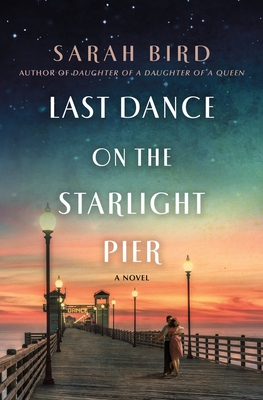
I’ve been a big fan of Sarah Bird’s historical fiction since I read Daughter of a Daughter of a Queen, which was published in 2018. When I saw that she had a new book coming out, I was excited and couldn’t wait to start reading it. My thanks go to Net Galley and St. Martin’s Press for the review copy, and McMillan Audio for the recording. This book is for sale now.
Our protagonist is Evie Devlin; the setting is in Texas during the Great Depression. This is a time before government relief exists. Jobs for capable men are scarce, and for women, nearly nonexistent. Evie’s father is dead, and her mother has let her know that she won’t support her efforts to become a nurse. When hard work and determination land her a scholarship, Evie is over the moon, and she makes her way to St. Mary’s School of Nursing in Galveston. The director is not happy to see her; she disapproves of scholarship girls in general—a low class of girls, she believes—and in particular, a Protestant one! What is this world coming to? However, Sofia Amadeo likes Evie, and she wants her admitted, and since the Amadeo family’s money and power drive absolutely everything in Galveston, the director is forced to let Evie in. She and Sofie become roommates first, and then the closest of friends.
We follow Evie through nursing school, but on graduation day, she hits a snag and is sent away without her pin, which is the equivalent of a license to practice. Now homeless and nearly penniless, Evie is adrift, until she learns about the dance-a-thons that feature cash prizes. She was forced to dance for money as a small child and doesn’t care to do so again, but when she sees what passes for a nurse in the show—basically someone off the street recruited to play the role of nurse, but with no training of any kind—she persuades the manager to hire her instead. From there, romance and all sorts of other entanglements and complications ensue.
For roughly the first eighty percent of the book, I am enthralled. The plot is fascinating, the historical accuracy commendable. Soon this becomes my favorite galley. And this is why I feel such a colossal sense of disappointment, almost a sense of betrayal, in fact, when the ending is cobbled together with feel-good revisionism and wishful thinking. Without going into spoilerish detail, a member of an oppressed minority becomes Evie’s focus, and suddenly we roam so far from the historical truth that we never find our way back again. And make no mistake: the actual truth is ugly. But if you’re going to write in the kitchen, you have to be able to bear the heat. Or, something like that.
Sarah Bird is a badass writer. Just reading her figurative language alone gives me joy, and I am hoping fervently that this bizarre departure is an anomaly. I look forward to seeing what she writes next.
As for the audio, Cassandra Campbell does a serviceable job, though the Italian accent sounds a bit like Dracula. This is a common issue, I find, and so I’m not terribly concerned about this aspect. Everything else she does is right on point. If you are going to read this book—which, sadly, I cannot recommend—I’d say it’s a toss up as to audio versus print. Go with whatever you’re most comfortable with, but do it free or cheap if you decide to acquire it.
Violeta is an epic tale that spans, along with its protagonist, a century-long period that begins during the Spanish Flu and ends with our modern day pandemic. Technically, then, it is part of the growing body of pandemic literature, but as is always true for Allende’s novels, it is so much more.
I received a review copy, courtesy of Net Galley and Random House Ballantine, but had I not, I’d have found a way to read this glorious story anyway. It’s available to the public now.
Violeta is born to wealth and privilege, the only daughter in a large family. Schooled at home by a nanny, sequestered in a mansion with servants to do her bidding, she is unaware that her luxurious standard of living comes at a tremendous cost to others. Then the market drops, and her father, who has overextended himself with unwise investments, is ruined. Most of her brothers are already grown and gone, but one brother, Jose Antonio, had remained at home, groomed by their father to take over the business one day. “He was the model son, and he was sick of it.” After their father’s abrupt departure, Jose Antonio finds himself responsible for the family; with the local populace in a state of near insurrection, the only thing left to do is to take his family—including Violeta—and leave town. They remove themselves to a distant farm owned by poor but generous friends, and they learn to make do as they’ve never done before.
We follow Violeta through her early marriage to a German immigrant who was “so bland and boring that he inspired instant trust,” and then through a long, tempestuous relationship with a handsome thug named Julian, who makes his fortune in dark, horrible ways involving illegal substances, the CIA, and the Mafia. And here, Allende’s startling sense of humor is in full brilliant flower, as she describes his retrieval of ill gotten funds from the septic tank of their Florida home:
He pulled a filthy bag from the hole, dragged it to the kitchen and poured the contents out on the floor; rolls of wet bills covered in poop. Gagging, I saw that Julian planned to clean the money in our washing machine. “No! Don’t even think about it!” I shouted hysterically. He must’ve understood that I was willing to draw blood to stop him, because I’d instinctively grabbed the largest knife in the kitchen. “Okay, Violeta, calm down,” he begged, frightened for the first time in his life. He made a call, and a short while later we had two mafia goons at our disposal. We went to a laundromat and the gangsters paid everyone to leave. Then the men stood guard as Julian washed the poop-covered bills. After that he had to dry them and pack them in a bag. He brought me along because he had no idea how to operate the machines. “Now I understand what money laundering is…”
As with all or most of Allende’s protagonists, Violeta becomes a strong woman that can stand on her own, and who picks and chooses the men she wants to be with. She is beautiful, intelligent, and ends up with piles of her own money that she has earned in an ethical manner. And here is my one, very small issue with this book; just once I would like to see an Allende main character that doesn’t get rich, but is fine anyway.
I am late in reviewing this book, but it’s important not to try to rush through a story such as this one, because the literary alchemy Allende creates is the sort that must be appreciated at one’s leisure. Her novels are not page turners; they don’t try to be. Instead, Violeta is the sort of book you take with you on a spa date, or to your very own bathtub with bubbles, candles, and your favorite beverage.
Highly recommended to feminist readers that enjoy top quality literary fiction.
Though I usually review books that are either newly published or are about to be, once in awhile I reach back and discuss books that have been around for awhile. This one is excellent, and I consider it unmissable.
This book is phenomenal. How much do any of us know about Genghis Khan?
One thing I learned in discussion with my spouse, who is a Japanese citizen, is that whereas we from Western cultures pronounce the warrior’s name with a hard G, Asians–including the Mongolian culture from which the Khan emerged–pronounce it softly, like a J. I figure Mongols know how the name should be pronounced, so I have begun to pronounce it that way, too.
I wanted to read this series, or at least the first entry, because although I have read at least something about most of the greatest warriors in the world over time, I had read nothing about Genghis. We have a nonfiction tome, but it’s the sort of slog one only undergoes out of desperation, or as assigned coursework.
The first two or three chapters seemed fine, but not great. I wasn’t even sure if I would read the rest of the series. By the halfway point, however, my mind had changed completely! I found myself online doing image searches for the housing, clothing, and other parts of the nomadic life.
I have purchased the next in the series. I rarely buy books for myself, because I have so many already and have such constant access to galleys that it isn’t necessary; yet now and then, there’s a book I’ve gotta have, and that’s how I feel about this series.
Highly recommended for those that are interested in this time and place in history; in Genghis himself; or in military history.
3.5 stars, rounded up. Chevy in the Hole is Kelsey Ronan’s debut novel. I love strong working class fiction, and the title and book cover spoke to me. But while it shows a good deal of promise, it’s also a cautionary example of how, in trying to do too much, one can do too little. My thanks go to Net Galley and Henry Holt for the review copies. This book is for sale today.
The protagonists are Gus Molloy, who is Caucasian, and Monae Livingston, who is Black. The book opens as Gus is being revived with Narcan on the floor of a dirty restroom in Detroit. We follow him as he meets Monae, a student working at a farm outside of Flint. Their stories are told alternately with bits and pieces of the lives of their predecessors.
The story is promoted as a love letter to Flint, and a tribute to the resilience of its people; it’s a story of “love and betrayal, race and family.” And we do surely see all of those things, but as soon as one aspect or another is touched on, I wink and poof, it’s gone. Gus and Monae are both sympathetic characters, and I can’t help pulling for them, but I suspect the author could have developed them more fully had we not spent so much time and detail on fragments of their parents, grandparents and so on.
If the author’s purpose is to use these characters from the past to showcase the various struggles through which Flint has gone—sit-down strikes, Civil Rights marches, and now, this horrifying industrial sludge that has polluted the town’s drinking water—it could have been done in a paragraph or two, or through some other device than shifting the point of view. The frequent changes of character and time period make it confusing as heck, particularly while listening to the audio version; that’s a shame, because Janina Edwards is a warm, convincing reader.
But we frequently shift from one protagonist to the other, even after they are married, and all of these people from the past have to be sorted by both time period, and by which protagonist they are related to. A story like this should flow. As it is, it’s work listening to it, and had I not been granted a digital review copy as well to refer to, I might have given up.
My other frustration is that both the labor history and the Civil Rights issues—with Black people shut out of company housing in the past, and the issues with cop violence as well as the pollution that is visited most within the Black community—are huge. The pollution problem is immense, and ties back into both of the other issues. This book could be a powerhouse, a call for change to reward to the plucky souls that have stuck with this place through hell and high, toxic water. Instead they present almost like postcards; oh, look at this! Now look at that! Okay, never mind, let’s go on back to the present.
That being said, the author’s mission is an ambitious one, and her word smithery is of high caliber. I look forward to seeing what else she publishes.
If you choose to read this book, I recommend using the printed word, whether digitally or as a physical copy.
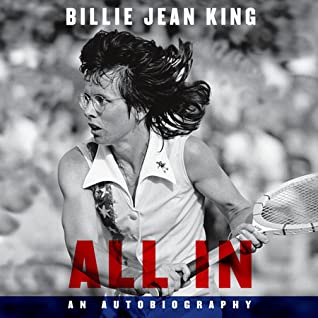
There are books, and then there’s this: the autobiography of an icon that will be read for generations. I passed—perhaps foolishly—on a review copy, because I was afraid there would be large passages of minutiae about tennis, which doesn’t interest me. I was mistaken in my concern, but it worked out well, because I borrowed an audio version from Seattle Bibliocommons, and the author reads her own book. She is an old woman now, and hearing her detail her own remarkable life is a matchless experience. It’s hard to imagine there will be a more important, or more enjoyable book published in the coming year.
Billie Jean Moffitt King is born in 1943 and grows up in Southern California in a conservative working class family; her dad is a firefighter, and her mother stays home, as most mothers did back then. There is Billie, and there is her brother, and the family are devoted Methodists. Who is to know that both children will be famous one day? Brother Randy becomes a professional baseball player, and Billie Jean becomes a record-breaking tennis star and a passionate social justice activist. If you, reader, are younger than sixty, you probably don’t even know how much you owe Billie Jean.
Growing up, King enjoys all sorts of sports, but when she is introduced to tennis, a light comes on. The problem is, tennis is a sport for the elite, even more so back then than now. To find a tennis court, you needed to either have a private court built on your palatial estate, or belong to a country club, and of course, to do that, you also have to be Caucasian. Billie Jean’s family is nowhere near affluent enough to belong. And so, early on, her passion and her obvious talent draw support from people with enough pull, or enough money, to give her access. She takes the time to thank them, but doesn’t let this bog the story down.
Over and over, however, she is shut out on account of her gender. Prize money typically pays enough to help an athlete pay their own travel expenses and buy equipment, but when women are allowed to compete in competitions prestigious enough to offer prize money, it’s only for the men. Women are expected to be grateful that they are included at all. And as King gets better at her sport and her confidence grows, she begins to push back. Nobody wants to watch women play tennis? Since when? And since when should people of color be shut out?
Although she doesn’t say so, it becomes obvious to me that in addition to athletic talent, confidence, intelligence, and almost endless energy, King has one more talent, one that isn’t recognized as such in the mid-twentieth century: she has amazing people skills. Over and over, she is able to reach compromises, make deals, and shorten the gap between conservative perceptions of women athletes, and what all athletes deserve. She discusses the various battles (though she doesn’t use this word) and how they are resolved, and I am amazed at the grace and dignity she demonstrates. Perhaps the most telling moment is when she befriends Bobby Riggs, the obnoxious bastard that she has defeated in front of the world, and later, when he is on his deathbed, takes a call from his wife. Riggs is asking for her, and he doesn’t have much time left. She is too far away to get to him in time, but she tells him on the phone that she loves him. Wow.
If you are or were a girl that participated in high school sports, or if you or your loved ones have benefited from Title IX, thank Billie Jean, who testified before Congress. She also started the first professional tennis circuit for women.
Over the years, King wins 39 Wimbledon Grand Slam titles and a host of others as well. I am a child when she plays Bobby Riggs in “The Battle of the Sexes,” and she beats him squarely. What I don’t know (and would still not have known if I’d been paying attention,) is that she does her very best not to play this tournament. Riggs is much older than she, and he hounds her—in fact, today his behavior would violate anti-stalking laws. But she calmly tells him, over and over, that she isn’t interested, and then she ignores his calls and turns away from his in-person visits. But when a fellow women’s tennis champion plays him and loses, Billie turns to her husband and manager, Larry King, and with a sigh, says, “Okay. You’d better set it up.”
At this point, I turn away from the audio book and head to YouTube to watch The Battle of the Sexes. This trip back to the society in which I grew up is hair-raising. The ways that men talk about women, in public forums! The remarks by Howard Cosell, who was the most liberal of sportscasters, about her physical appearance, and the patronizing remarks of others are appalling. I wouldn’t go back for anything in this world! But when she is asked antagonizing questions, Billie Jean comments, briefly, calmly, and without showing even the slightest offence. Her coolness on the court is mirrored in her cool public appearances. It’s remarkable.
When Gloria Steinem starts Ms. Magazine, King supports her, but she is always either asleep or busy, so husband Larry handles the mail. When he sees the request to add her name to a list of famous women that support a woman’s right to choose, as the controversy over Roe v. Wade heats up, he signs for her and then forgets to mention it to her; had he read more carefully, he would have noted the line, “I had an abortion!” King doesn’t know it’s about to be public knowledge, and her parents didn’t know she’d terminated a pregnancy. It’s not a good moment.
Later, when her feelings for other women grow stronger, she and Larry separate, but not completely. For years, she stays with him when they both show up in town at the same time, and they continue a romantic relationship, though infrequently. It is when she grows close to South African tennis player Ilana, and Ilana makes her choose, that she divorces Larry; again, they remain friends.
I could carry on all day about this woman, a champion on the court and off, but if you are interested enough to read this entire review, then you’re interested enough to get this book. I’m sure the print version is lovely, but the audio book—which sounds like a garrulous old lady telling her story, like Forrest Gump, but authentic and more accomplished—and hearing her voice wobble when she speaks of her most moving experiences, is simply unmissable.
Black Cloud Rising, the historical novel that’s already been excerpted in The New Yorker, is the book I’ve always wished someone would write. Author David Wright Falade tells the story of the African Brigade, a unit of former slaves tasked with rooting out pockets of Confederate guerilla fighters in the Tidewater region of Virginia and in North Carolina’s Outer Banks. This outstanding work of historical fiction is one of the year’s best surprises, and it’s for sale now.
My thanks go to Net Galley and Grove Press for the review copy.
Sergeant Richard Etheridge is our protagonist; he is the son of a slave and her master. This is the only small criticism I have here; it seems like every time I see a fictional former slave that goes on to do momentous things, he’s the master’s progeny. However, Sergeant Etheridge did exist in real life; I have been unable to discover whether this aspect of his beginnings is fact or fiction. If it’s fact, then I withdraw my objection.
One way or the other, this is nevertheless a fantastic novel. In fact, since I taught the American Civil War for many years and have never heard if this sergeant, I wonder, initially, if his story is even true. But a little research shows Etheridge to be have been real. I had known about the existence of this brigade, but the only aspect of it I’d seen was–oh how embarrassing—from the movie, Glory, in which an all-Black military unit volunteers to lead the charge on Fort Wagner. But there, the story is told not from the viewpoint of infantrymen, but from the Caucasian officer chosen to lead them. It’s not as if I failed to do research; but during my years in the classroom, I couldn’t find a single thing that reflected the memories and experiences of the former slaves that fought for the Union. And although this book comes too late to help me teach the upcoming generation, it will be greatly useful to teachers that come after me.
At the outset of our story, Richard approaches his master at dinner, a thing that is generally not done, to tell him that he is going to enlist in the Union Army. Because he is the master’s son, he is able to get away with this, and this has also allowed him to learn to read and write, which in turn makes him officer material. Richard is a well developed character; it is wrenching to see his loyalty and devotion to his father, as well as to his half-brother Patrick, who is the legitimate heir to his father’s estate. Repeatedly the narrative points out that “the son will always seek out the father,” and it makes me ache for this young man. Nevertheless, he does go to war against his father’s wishes, and he demonstrates leadership and skill under pressure.
There is one visceral scene in which the Caucasian master of a plantation who is linked to the guerilla Confederates, is dragged to his own whipping post and beaten by his former slaves. I find it deeply satisfying. In the end and after much bloodshed, the unit is successful in its mission to clear the area of the guerillas that threaten the Union effort.
In many ways this is a coming of age story, but those that will love it most are those that enjoy military history and all things related to the American Civil War, as well as those interested in the Black struggle. It’s a great selection for Black History Month, but it will make excellent reading during the other eleven months as well. Highly recommended.
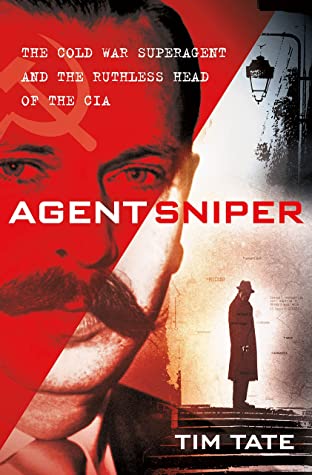
I was invited to read and review this book by Net Galley and St. Martin’s Press. I accepted because I do love a good spy story, and there aren’t many of them being published at this time. Tim Tate has had a long, illustrious career as a documentary filmmaker and as an author, but is new to me.
So, when I began reading and found my attention wandering, I thought it was a personal problem. Too many distractions. I tried again, and when that didn’t go well, I procured the audio version and listened to it while I prepared dinners during the week. Eventually, I threw in the towel and admitted that this is simply not an engaging book. The topic sounds fascinating, but just as a gifted, dedicated author can spin dull material to gold, so can an indifferent one tell an electrifying spy story in a way that leaves the reader checking the page numbers and the clock—is this thing over yet?
It’s not all bad news: the research here is top drawer. For the researcher, this book has use, although I would caution the uninitiated into reading carefully, because history is always politically charged. Every fact that is included, and every fact that is not; the interpretation; the language used, all give a biased account, even when a researcher and writer is endeavoring to be as balanced as possible. I don’t care for this writer’s interpretation, which makes him sound like a hardened right winger, but I have no doubt that the facts that he uses are accurate ones.
Then we come to the audio, and I must wonder why, if we’re primarily dealing with the CIA and its agents, we have a narrator with a clipped English accent (and a few pronunciations that sounded very odd to me,) telling the story. I found it disorienting, but if this had been a more engaging story, I would have overlooked it.
Ultimately it comes down to wordsmithery, and I didn’t find much of it. Those interested in dabbling in this genre would do better to read Ben McIntyre and Tim Weiner.
Lynne Truss is hilarious, but with this fourth installment of the Constable Twitten series, she has outdone herself. My thanks go to Net Galley and Bloomsbury for the review copy. This book is riotously funny, and it’s for sale now.
Truss first came on my radar with her monstrously successful nonfiction grammar primer, Eats, Shoots & Leaves: The Zero Tolerance Approach to Punctuation. A decade later I began reviewing, and one of my first reviews was for Cat Out of Hell, and later, the first in the Constable Twitten series, A Shot in the Dark, followed by the second, The Man That Got Away. I somehow missed the review copy for the third, Murder by Milk Bottle, which I discovered when I received the review copy for this fourth in the series; after sulking for a bit, I took myself to Seattle Bibliocommons and checked it out so that I’d be up to date when I began reading this one. It proved to be a good idea.
I tell you all this so you’ll see why I thought I had this author figured out. She had proven to have a distinctive, rather odd fiction writing style, which began in a sort of corny, groaning, oh-my-God-is-this-the-best-you-can-do style, but then sneakily grew better and funnier until by the second half, I’d be laughing my butt off. So as I open Psycho by the Sea, I have fortified myself to give Truss a minute or two to warm up. It will be funny, I am sure, but probably not just yet.
Surprise! This time, Truss had me laughing right out of the gate.
For the uninitiated, this satirical series is set in Brighton, a coastal resort town in England, in the 1950s. Our protagonist, Constable Twitten, is brilliant but irritating. He joins a small force that consists of Chief Inspector Steine, who has, until recently, been more interested in boosting tourism by pretending that Brighton has no crime, than in breaking up the formidable organized crime gang that runs amok, than in solving any of the crimes that have been committed. That was true until the last installment, when he inadvertently covered himself in glory and is now basking in the limelight, some of it literal as he is invited to speak on television or receive yet another award for his cleverness and courage. We also have Sergeant Brunswick, who would solve crimes gladly if he weren’t so everlastingly stupid; instead, he yearns to go undercover, even when there is no earthly purpose in it; when he does, he always manages to be shot in the leg at least once.
By now the readers know that the cleaning lady in charge of the station is a criminal mastermind. Mrs. Groynes is part cleaner, part den mother, and part overlord, and she makes herself loved and indispensable by showing up with cake, providing constant cups of tea, and listening to the cops to make sure that her operation is nowhere close to being discovered. In the first of the series, Twitten discovers what Groynes has been up to, but not a single, solitary cop or civilian will believe him. He’s new, after all, and they’ve known Palmyra Groynes forever. Mrs. Groynes, a crime lord? Don’t be ridiculous!
Now it seems that Palmyra has a competitor, someone that wants her turf and is willing to mow down her operatives in order to take it. I never would have seen this coming, and it’s an ingenious development. Old characters come back, and a new one, a formidable secretary sent down from London, turns the cop shop into a much more legitimate enterprise, and also sends Groynes packing. Even Twitten wants her back.
My favorite moment is when Twitten is being held at gunpoint, and he is so pedantic and obnoxious that he bores his assailant out of shooting him.
Not only does this book hit my funny bone right away, it also features a more complex, well balanced plot, and more character development. Until now, I had assumed no real character development was being attempted, because it’s satire, satire, satire, but now, it appears one can do both, and Truss does both bally splendidly.
“Flipping hedgehogs!” You have to get this book, but it will be more enjoyable if you read the other three first. Highly recommended.