“I always heered that art was for ugly girls and queers.”

The Animators is the right story at the right time, outstanding fiction that is too impossibly good to be debut fiction, and yet here it is. I nearly let the DRC pass me by, because apart from its female main characters, there is nothing here that would ordinarily hook me. I am too old, too straight, and too un-artistic to be part of the target demographic. But I had been in a rut lately, reading too many mysteries, and so I decided to step out of my comfort zone; in doing so, I hit the jackpot. Sometimes rewards come when we aren’t expecting them, and it would be a sad thing to let a golden moment pass by unmet. Thanks go to Net Galley and Random House for the advance copy, which I received free in exchange for this honest review.
Our story revolves around the lives of two women that meet at art school. Sharon Kisses is a shy kid from Kentucky, self-conscious but ambitious. Mel Vaught is hilarious, outrageous, and riotously extroverted, a noncomforming thrill-seeker from Florida. Mel appreciates Sharon’s art in a way that no one else does, and Sharon is grateful to finally have someone understand her. Together they form a team that will become famous.
The entire story hinges on development of our two characters and the relationship that unfolds between them. The plot is original and interesting, but it wouldn’t go anywhere if I didn’t believe Sharon and Mel. I buy both of them immediately, and before we’re even halfway through the story I am making predictions—mostly unsuccessful ones, and it’s the chewy ambiguity that makes the whole thing so fascinating—about what one or the other of them will do. I made one accurate prediction midway through, but nothing else went where I expected it to. That being said, however, everything here made complete sense, and these are two such viscerally relatable characters that I carry them in my head still, though I’ve read at least half a dozen other books since I finished this one. In fact, a hallmark of the very best fiction is that I have to let what I have read cook in my head for awhile before I am ready to describe it. I take notes, but they aren’t enough.
Mel is gay, but Sharon isn’t. On the other hand, Mel is also about ninety percent of everything that Sharon has in this world, once the partnership develops. Sharon always introduces Mel as “my business partner,” and this is both true and safe, but here I wrestle with my own thoughts. Is there anyone else alive that Sharon can love the way she loves Mel, whether she recognizes it or not?
How many women of days gone by—let’s say the early twentieth century—lived with another woman their entire adult lives, never even considered touching one another sexually for fear of their mortal souls, and maybe propagated a myth to the neighbors that they were related? I think there were a lot of them. Being a lesbian was on a par, back then, with having barnyard sex with Old Bessie. No decent person was; no decent person did. So instead, they labeled themselves ‘spinsters’ and invented a story, and just lived together, decade after decade. And when I look at the community from which Sharon has sprung, I can understand how this mindset carries over to some people even today.
Yet there’s another reality, too. Sharon really likes having sex with men. When she isn’t doing it, it’s on her mind. How many women have pledged their lives to someone that does not physically attract them, because they find the person good company and don’t want to break their heart? And so when I think of Sharon, I remind myself that perhaps Sharon really isn’t gay. Maybe she will never want Mel sexually, and maybe that’s a fair thing to recognize.
The story contains so much life, so much sorrow, and it’s so damn funny at times. And the rage! Both women carry a tremendous amount of anger, and it provides fuel for their creativity. Hearing their stories is like peeling an artichoke, one layer after another to get to the best part, which is way deep inside.
As the story progresses, we come face to face with the pasts both women carry with them. Mel’s tortured upbringing is the subject of their first animated film, and it’s clearly therapeutic; yet good therapy can only do so much. And as we see the world through Mel’s eyes, the depth of analysis is both brainy as hell and absolutely riveting.
Sharon is the introvert, and so it makes sense that her own story comes out more slowly, and it may never have done so without Mel’s assertive nature insisting that they stop by Sharon’s home town on the way back to New York.
The critical thinking here is deep and dark. Those that have regarded art as a soft discipline will have to sit up and take notice.
This story is for geeks, artists, and anybody burdened by at least one dark secret. It’s a story for strong, unapologetic women and those that love them. And it’s for sale Tuesday, January 31, 2017. Get a copy. You can’t miss this one!
 In Mission: Jimmy Stewart and the Fight for Europe, Robert Matzen provides an engaging, compelling memoir that focuses primarily on Stewart’s time as an aviator during World War II. Thanks go to Net Galley and to Goodknight Books for the DRC, which I read free in exchange for this honest review.
 I was invited to read and review this title by Open Road Media and Net Galley. Thanks to them for the DRC, which I received in exchange for an honest review. This title was released to the public October 4 and can be purchased any time you want it.
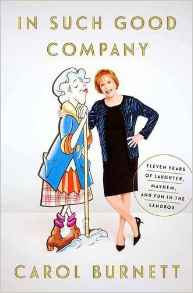 When I saw that Burnett had published a memoir of her years as America’s favorite comedic performer on The Carol Burnett Show, which ran from 1967 through 1978, my first thought was, what, another memoir? She’s already published at least three others, one of which I have read and reviewed. But the fact is, she hadn’t used up all her juice yet. Each of her memoirs focuses on some particular aspect of her life, and so this book is new, it’s original, and it’s probably the stuff you were hoping she’d talk about in her other memoirs. Lucky me, I read it free thanks to Net Galley and Crown Archetype. It was published September 13 and I am sorry to be on the late side, but I scored my own copy just prior to publication; I had no idea it was available till Crown put a promotion up on Facebook and it showed up on my home page. I genuinely held my breath as I logged onto Net Galley to see if I was too late, and happily, the Literature Fairy smiled on me.
 I received a DRC of this memoir from Random House through its First to Read program. I read the book free in exchange for an honest review. Though it wasn’t a good fit for me, I think there are niche readers out there that might enjoy it.
 Many people don’t know much about Cuba, the tiny island nation a mere 90 miles from the coast of Florida. The American media has distorted the Cuban Revolution for as long as I can remember. Before the revolution, which took place in 1959, Havana was like Bangkok, a place where little girls prostitute themselves so they won’t starve to death, where wealthy visitors can experience every pleasure, innocent or corrupt, known to humanity but where most citizens have little chance of even having their basic human needs met. Cuba’s alliance with the Soviet Union (USSR) helped the Cuban people defend themselves from US efforts to overthrow the revolutionary government, but the alliance also led to a period of Stalinist repression that darkened artists’ worlds for a period of time. Randall discusses all of this in her introduction. Following the period Cubans call the Rectification Period (reference mine), Stalinist practices were peeled away, and more freedom of expression created a more hospitable environment for artists, in addition to strengthening the revolution itself. In Cuba art is not privately sold as a general rule, and artists receive a salary for what they do, paid by the Cuban people.
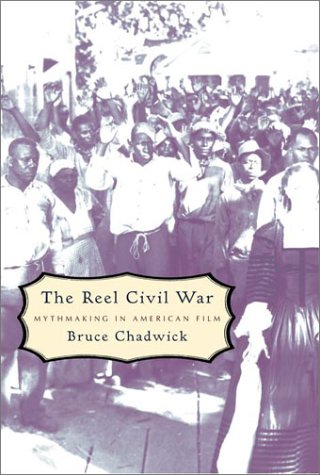 I found this gem at my favorite used bookstore in Seattle, Magus Books, which is just a block from the University of Washington. Its strength, as the title suggests, is in tracing the story of the American Civil War as told by the cinema. Those interested in the way in which movie impacts both culture and education in the USA would do well to find this book and read it.