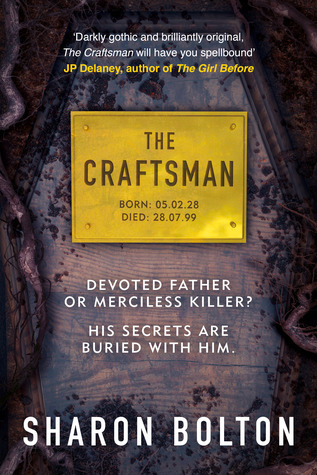
The Craftsman, by Sharon Bolton****-*****

TheCraftsman“One night…what’s the worst that can happen?”

4.5 rounded up. I am late to the party where this author is concerned; a literature chat session directed me toward this galley, and now I am sure to read Bolton’s work again. My thanks go St. Martin’s Press and Net Galley for the review copy. This book will be available to the public tomorrow, October 16, 2018.

Is it a thriller, or is it a horror story? Bolton successfully rides the center here, and there’s a good case to be made in either direction. Our protagonist, Florence Lovelady, is a high ranking cop in the UK. Her career was made when she identified a serial killer and was instrumental in his arrest; now he is dead, and she returns to the small town where he nearly made her one of his victims 30 years ago. The plan is to attend the service with her 15-year-old son in tow, and then spend the night or two in a hotel, where her spouse will join them.

Things don’t go according to plan.

The plot is cunningly constructed, beginning with one of the creepiest fictional funerals in literature. The foreshadowing will give even the most cynical reader a serious case of the heebie-jeebies. As for me, I know my limitations, and as soon as I saw how things are in this one, I decided it could not be the last thing I read before falling asleep at night. Ever.

The interesting thing here—and what keeps this story from actually becoming too horrible to be any fun—is that we know, at the outset, how this case, which takes place in 1969, comes out. We are told in a smooth first person narrative what the broad contours of the case are. We know what the crime was; what happened to Florence while she investigated it; who did it; and that he was caught and convicted. There now.

So as we look back to the teenager that was kidnapped, then buried alive, I confess my eyes skipped over some of the explicit horror, but really the description isn’t a lengthy one, and after all, we know that the guy was apprehended. We see the numerous humiliations to which Detective Lovelady is subjected, in the day when female cops are scarce on the ground and expected to run along and make the tea for their colleagues and to comfort the crying women; I love the scene in which she is told she’s being (punitively) put on a desk to type up reports, and it turns out that she doesn’t know how to type. Ha. But then again, we also know that her career is a successful one, that she has weathered these miseries and now outranks most of the men that treated her badly.
But there are surprises in store too, as new developments surface while she’s there in town. One thing after another unravels till we are on the edge of our seats—and this time we don’t know how it will all shake out.

At about the eighty percent mark, a plot element that I won’t identify comes into play that makes me stop cold for a moment and roll my eyes. Oh please. Not this thing. Every steadfast reader of the genre has a mental list of overused devices they hope never to read again, and after doing so well at avoiding them all, Bolton lets a big, beefy one loose, and just as things are on a roll, too. I don’t want to spoil the story for you, but it took the wind out of my sails for a moment. However, after a brief visit to the literary corn-and-cheese factory, she comes out on top again, and the ending is deeply satisfying.

The story features witches—yes, real ones! As well as shadowy, mostly unnamed stonemasons, and Dwane, who is by far the best-written sexton in a thriller or mystery anywhere.

Highly recommended to all that enjoy a creepy murder story with supernatural elements.

Where the Crawdads Sing, by Delia Owens*****

wherethecrawdadsKya Clark lives with her family in a shack deep in a North Carolina marsh.  The year is 1969. They are miserably poor, but Kya’s mother tells her it will be alright, as long as the women of the family stick together. But then one day, she leaves. Older brother Jodie tells Kya that Ma will be back, because it isn’t in a mother to leave her children, but Kya isn’t so sure. Ma is wearing her alligator heels, and she doesn’t turn midway and wave like she always has. And one by one, everyone in her family leaves, and they don’t return. Kya is not even old enough to enter first grade, and she is alone.
This haunting novel is the best surprise of the summer, and it’s for sale today. Thanks go to Net Galley and Putnam Penguin for the review copy.

Owens is a wildlife scientist of some renown; here she changes lanes with her debut novel. She uses her knowledge base to create an evocative setting that is real and immediate, but she never adds scientific information at the expense of pacing. Instead, the setting is used to reinforce Kya’s character; this is unusual in a researcher turning toward fiction writing. Professors and other specialists tend to shoehorn in every fact that they think the reader ought to know regardless of what it does to the flow of the narrative. Instead, Owens blends setting and character seamlessly, spooling Kya’s life before us with the patience and discipline of the finest master storyteller.

Kya barely survives, digging mussels to eat and selling them at a waterside convenience store owned by an African-American entrepreneur known as Jumpin’.  Little by little, Jumpin’ comes to realize exactly how dire this child’s situation is, and he and his “good sized” wife, Mabel, contrive to provide her with a few of life’s necessities without frightening her or hurting her pride. I would have preferred to see these resonant characters voiced without the written dialect, but there are no stereotypes in this book.

Tate is an older boy that has been a family friend since she was tiny, but she doesn’t remember him, and thinks she is meeting him for the first time after he begins leaving her beautiful bird feathers on a stump in the swamp. It is he that teaches Kya to read, and he becomes her first love.

The narrative shifts between Kya’s life and an investigation of a murder. Chase Andrews, a local football hero and the son of a local bigwig, is found dead at the base of a nearby water tower. Kya, who is poorly groomed, impoverished, and has no family to protect her becomes the focus of the investigation. Townspeople have long considered her to be “swamp trash,” and this discrimination is age old; Kya can remember her mother telling her that she must never run when she goes into town, because if she does someone will say that she stole something.

One of the most appealing aspects of this novel is that the mystery of Chase’s death never eclipses the main story. The book isn’t about Chase or his demise; it’s about Kya in the marsh, and as she becomes an official suspect, we only want what is best for her.

I read several stories at a time, now that I am retired, but this is the one that occupied my thoughts when I was doing other things. I kept thinking about that poor little girl out there. I can almost always put a book down; it’s what I do, after all. This one is exceptional.

Those that love excellent literary fiction; Southern fiction; or romance need to get this book and read it, even If you have to pay full jacket price.


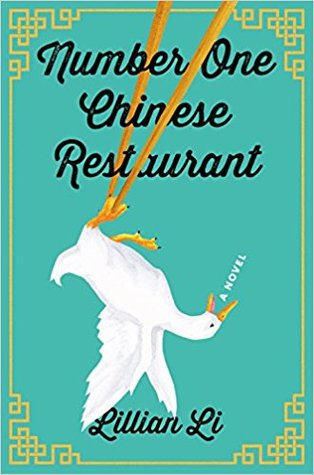
Number One Chinese Restaurant, by Lillian Li*****

NumberOneChineseLillian Li’s debut novel , a tale of intra-family rivalry, intrigue, and torn loyalties is a barn burner; it captured my attention at the beginning, made me laugh out loud in the first chapter, and it never flagged. Many thanks go to Net Galley and Henry Holt Company, from whom I received a review copy in exchange for this honest review.  Don’t let yourself miss this one. This book will be available to the public Tuesday, June 19, 2018.

The book opens with bitter scheming on the part of Jimmy, one of two brothers that fall heir to the family restaurant after their father passes away.  Jimmy has waited for the old man to die so that he could run the restaurant his own way. The Duck House serves greasy, cheap Chinese food, and he is sure he can do better. He craves elegance, a superior menu with superior ingredients. He wants renown, and he doesn’t want his brother Johnny to have one thing to do with it.

Johnny’s in China. Johnny runs the business end of the restaurant, and he takes care of the front of the house. He’ll come back to Maryland in a heartbeat, though, when the Duck House burns down.

Li does a masterful job of introducing a large cast of characters and developing several of them; although at the outset the story appears to be primarily about the brothers, the camera pans out and we meet a host of others involved in one way or another with the restaurant. There are the Honduran workers that are referred to by the Chinese restaurant owners and their children as ‘the amigos’, and we see the way they are dismissed by those higher up, even when it is they that pull Jimmy from a burning building. There’s a bittersweet love triangle involving Nan and Ah-Jack, who work in the restaurant, and Michelle, Ah-Jack’s estranged wife, but it’s handled deftly and with such swift pacing and sterling character development that it never becomes a soap opera. Meanwhile Nan’s unhappy teenage son, Pat, pulls at her loyalties, and she is torn between him and Ah-Jack in a way that has to look familiar to almost every mother that sees it in one way or another. But the most fascinating character by far, hidden in the recesses of her home, is the sons’ widowed mother, Feng Fui, who serves as a powerful reminder not to underestimate senior citizens.

Li is one of the most exciting, entertaining new voices in fiction since the Y2K, and I can’t wait to see what she writes next. Gan bei!

Us Against You, by Fredrik Backman****

“The first time Peter realized that the tiny person was sleeping soundly in his arms. What are we prepared to do for our children at that moment? What aren’t we prepared to do?”

UsAgainstYouUs Against You is the second in book in the Beartown trilogy. My thanks go to Net Galley and Atria for the invitation to read and review. This book will be available to the public tomorrow.

Beartown is in crisis. The hockey team has been undone by the arrest of their star player for rape, and Maya, his victim, has been harassed endlessly as if she were the perpetrator. Resentments simmer. There are anonymous callers. A new coach is hired, not only a woman—but a lesbian. Chins wag. New owners roll into town, friendly and treacherous, generous and oily. Violence hums beneath the surface as the town polarizes between the hometown hockey team and that in the neighboring town, to which some Beartown citizens have decamped.

Fredrik Backman, who is possibly the finest male feminist novelist in the world, is on a roll here. It’s interesting to note that although the hockey players in this story are men and boys, the best developed, most complex characters are the women. I like reading about Peter, Leo, Amat, Benji, and Teemu, but the characters that keep me coming back are Kira and Maya, Ana and Ramona. More than anything I want Kira to pack her bags and seize the opportunities presented to her, with or without Peter. Just go, woman, go. But it’s always easy to suggest that someone else should leave a troubled marriage behind, and the way that she deals with this problem—and the role that her daughter plays in the decision—is thought-provoking.

Meanwhile there are about a dozen other small threads here, and again, Backman is among the best writers when it comes to developing a large cast of town members without dropping anyone’s story or letting the pace flag. His use of repetition as figurative language is brilliant, and he is unquestionably the king of the literary head fake. If I taught creative writing to adults, I would assign my students to read his work.

I have some relatively minor quibbles here, although I know so little of Swedish culture that they may or may not be valid within that framework. I would dial the sentimentality and drama down twenty to twenty-five percent; clearly most readers love this aspect of these novels, but I would argue for a smidge more subtlety. There are occasional exaggerations that remind me that the characters are fictional. When the entire town is economically depressed, and yet everyone shows support for something by showing up in matching jackets, and when a preposterous amount of spare change goes begging in the kitty at the local bar, I wince. But then I am quickly drawn back in by the complex, compelling characterizations.

If you’re a fan of Backman’s, you won’t be disappointed. If you have never read his work before, don’t start here. Read one of his excellent stand-alone novels, or begin with Beartown, the first in this series. Recommended to those that love fiction that features excellent, complex characters, particularly female characters.

39 Winks, by Kathleen Valenti****

39winksValenti’s droll new series continues, with Maggie O’Malley and her hunky boyfriend, Constantine riding in to rescue his beloved Aunt Polly. Those that read Protocol, the series opener, know that Valenti writes with swagger, often with tongue in cheek. Thanks go to Net Galley and Henery Press for the DRC, which I received free and early in exchange for this honest review. This title is now for sale.

What would induce a woman to walk away from her job in order to play amateur sleuth? Maggie wouldn’t know. She is currently unemployed. Her career with Big Pharma tanked after she turned whistle-blower, and now she’s been sacked from her position as a retail sales clerk. Damn. But it’s just as well in a way, because Constantine’s Aunt Polly served as “the woman who fit the mother-shaped hole in her life,” and she needs Maggie’s help. She’s in declining health—Parkinson’s? Alzheimer’s? Bad air, bad water, poisoned food, poison gas? And following the murder of her husband, Howard, who even Polly acknowledges “was a bit of an ass”, Polly is under investigation, a favorite suspect since she is the surviving spouse of an unhappy marriage.

Valenti’s feminist spirit could not be more welcome than it is today, and her dialogue crackles. This is a fast read, part satire, part suspense, and I love the banter that unfolds between Polly and Constantine, reminiscent of the snappy patter of Cybill Shepherd and Bruce Willis in the 1980s TV show “Moonlighting” (which actually draws a mention toward the story’s conclusion).

Take Maggie O’Malley on vacation with you. It will be better with her than without her. Try not to wake the passenger snoozing next to you on the plane with your snickering, though—unless you’re bringing a second copy to share.

Alternate Side, by Anna Quindlen*****

alternateside“If nobody can tell the difference between real and fake, who cares if fake is what you’re showing?”

Score another one for Anna Quindlen. Often prodigious writers lapse into formulas, becoming predictable, but not Quindlen, who brings a snappy, original tale to the reader every time. She makes us think, and she makes us like it. Big thanks go to Random House and Net Galley for letting me read it free and early. This book is for sale now.

The story is built around a controversy that develops around that most prized acquisition among financially successful New Yorkers: a parking place. Local ordinances have a Byzantine set of rules involving parking on alternate sides of the street, and the neighborhood’s homeowners are sick to death of going out to move the car. A privately owned parking lot leases spaces, but there aren’t enough to go around, and a seniority system makes some residents intense; think of the rent-controlled apartments that get passed down like family heirlooms, and then you’ll have the general idea.

Ultimately, however, the parking place is metaphor, and perhaps allegory, for other aspects of life that go much deeper, and the way Quindlen unspools it is not only deft, but also funny as hell in places.

New Yorkers will appreciate this novel, but others will too. This reviewer is one of those visitors that Quindlen’s characters regard with scorn, the people that pop into town, gawk, buy things, and then leave again. But I’m telling you that despite the title, this is not just—or even mainly—a book for New Yorkers.

The audience that will love this book hardest is bound to be people like the main characters: white middle-class readers old enough to have grown children. But the take-down of petite bourgeois assumptions and attitudes is sly, incisive, and clever as hell.

At one point I began highlighting, for example, the many ways in which the phrases “you people” and “these people” are wielded.

Here is a final word of caution: if you are contemplating divorce, this may tip you over the brink. On the other hand, maybe that’s just what you need.

Highly recommended to those that love strong fiction and occasionally are visited by that “crazy liberal guilt thing.”

Limelight, by Amy Poeppel*****

Limelight“Welcome to Gotham, babe.”

Amy Poeppel is a star, and since I loved her debut novel, Small Admissions in 2016, requesting the galley of her second novel was a no-brainer for me. Thank you, thank you Net Galley and Atria Books. This book will be available to the public May 1, 2018.

Allison Brinkley is excited when her husband receives a promotion that takes them from suburban Dallas, Texas to New York City. The excitement! The opportunities! Most people consider themselves lucky if they are even able to visit Manhattan as tourists. She can hardly wait.

Once they arrive, however, reality sets in. There’s no room for anybody’s stuff, and the bedrooms are tiny. Her eldest child is sulking, and the youngest gets in trouble at school. The mothers at the prestigious private school where the children are enrolled snub Allison as if she were the new girl at middle school.  She loses her teaching position, and then she loses her tutoring job too. She wants to be a good family organizer, provider, and cheerleader; and yet.

On top of everything, she bangs into another vehicle right in front of the school; when she goes to settle up with her insurance details, she instead finds herself in the apartment of a badly behaved teenager that turns out to be a famous teen heartthrob. Allison is mesmerized, but not in the manner to which Carter Reid is accustomed; she wants to know how his apartment and his lifestyle has spun out of control so badly. Where is the boy’s mother?

Before she knows it, Allison is swept into the official Carter Reid entourage. He’s sick in bed, and half of his people have up and quit because he’s so insufferable. But Allison deals with adolescents for a living, both as a teacher and as a mother. She knows how to talk to kids, and she knows how to get them to take their medicine and show up to appointments.

But Carter has another problem nobody knows about. It’s not a problem to be proud of, and it’s getting in the way of his career.

Nobody writes like Amy Poeppel. The beginnings of her novels are bizarre and disorienting because the protagonist’s normal is not most people’s normal. My first impression is that one of us—Poeppel or me—must be crazy. But once I am properly hooked on the story, she pulls me in and lets me know what’s up with that. Before the halfway mark is reached, I want to be the gal pal that drops in on Allison, asks questions, maybe drags her into the kitchen for a conversation. I wonder, how much more of her own money is she going to spend on this wealthy brat before she asks for compensation? Has she forgotten she has kids of her own at home?  Has she completely taken leave of her senses?

I make one prediction after another, anticipating well-worn fictional formulas, but Poeppel doesn’t do formulas, she creates surprises. At the end I find myself walking with my head up and a spring to my step. I will bet you a dollar, reader, that you need some of that too.

Frosting on the cake is that rarest of all things, a positive abortion reference tucked in quietly toward the end. It makes my feminist heart sing.

I can’t wait to see what this writer brings to her next novel; will she bring Allison back with a sequel, or will she start from scratch? Whatever it is, I have to read it. Limelight is sharp, funny, and wicked smart. You have to get this book and read it.

Girls Burn Brighter, by Shobha Rao***

GirlsBurnBrighterThanks go to Net Galley and Flatiron Books for the review copy, which I read free and early in exchange for this review.  This book is for sale to the public now.

This story is billed as one of matchless friendship, and it is that, but the misery and despair are so stark and ever present as to destroy all hope, and this ambivalence is the reason for my slowness and frankly reluctance to review.

Our story is set in India, and our two protagonists are Poornima, whose struggling father runs a small textile factory that makes saris, and Savitha, one of his workers. They become friends and uphold one another through the desperate struggle for survival. Poornima’s mother is gone, and the daughter is not considered beautiful, which makes her dowry an even more essential aspect of her marriage than it would otherwise be. She herself has no desire to marry, particularly not to someone she has never met and that only plans to marry her for the income generated by the union, but her father is genuinely eager to be rid of her—one more mouth to feed—and she is hustled through the ordeal despite her misgivings.

Savitha has vowed to protect and defend her friend, but she is banished and must make a run for it.

The entire story is bleak, stark, and horrible. For those that are unaware of the fate of some women in some Asian countries, this may be worth reading for enlightenment, but for many feminists this is not news. Stories of Indian women being fatally burned or badly disfigured by accidentally-on-purpose kitchen accidents by angry in-laws that expect more of a dowry price than is actually paid have circulated since the 1980s at least. I would have found the story more compelling and less difficult to read if there was some small twinkle of hope somewhere. At the seventy percent mark I decided I couldn’t stand it, but when I skipped to the end, I discovered that at least one protagonist was still alive, which is better than I expected, and so I went back and read the rest of it. It proved to be a small reward for a great deal of horror.

Don’t get me wrong; if there was a way that even one woman in India could somehow be spared because I had read this novel, I’d be all in. But to read news that is both old and terrible to no end—because if the US government were ever to actively assert the rights of women anywhere, which it hasn’t, it sure as hell won’t be under the current administration—seems like a lot of grinding sorrow to no good purpose.

Recommended to readers with strong stomachs that have no knowledge of how women in India are treated, with the caveats above.

The Magic Spinster, by Mallory Ortberg*****

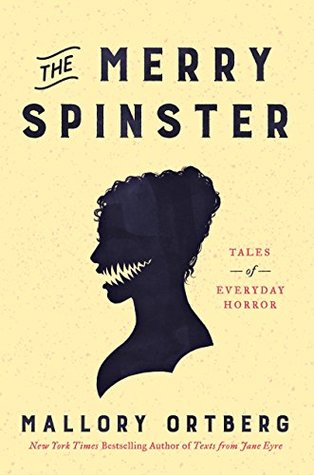
themerryspinsterMallory Ortberg’s feminist horror collection is bound to be the best short story collection of 2018, darkly funny, cleverly conceived and brainier than I realized when I signed on for it. Many thanks go to Henry Holt and Net Galley for the review copy, which I read free and early in exchange for this honest review. This title is for sale now.

Ortberg takes well known children’s stories and fairy tales and injects sinister elements into them, sometimes starting with the exact wording of the story, cited in her endnotes, and then changing it a tiny bit at a time. If you don’t know the story quite well, you may not be able to pinpoint the exact place Ortberg goes off script; some of these are Grimm’s Fairy Tales, which are fairly, uh, grim in the first place and not originally intended for small children. She often combines the influence of a second fairy tale, and everything is beautifully documented at the back, just so you can see how she did it.

At first I wondered if I would react badly to this; I am a grandmother of tiny children as well as a retired teacher, and these stories tread on sacred ground. But it’s done with such genius that all I can do is shake my head in admiration.

There are eleven stories. One of my favorites is the title story, in which a woman is held prisoner by a captor that builds her a fabulous library, but tells her that he will decide what she will read. There’s horror for you. There’s a takeoff on The Little Mermaid that left me with half the story highlighted out of admiration. The Thankless Child features a fairy godmother that is more of a mafia figure, like a supernatural, female Godfather.

But perhaps my very favorite is The Rabbit, which is a takeoff on The Velveteen Rabbit. I began this one with a furrowed brow, because the original story is so dear to my heart, a cherished experience held with each of the four babies I bore and raised. But my prior knowledge is actually a useful thing, because with the original more or less committed to memory, I can see where she begins to alter the story. At first she changes just the tiniest things, and then gradually adds more…and in her version, the rabbit loathes the boy and seeks revenge. In the end it is the same story, and yet different enough that it doesn’t offend me as I suspected it might. She started with apples and made bleeding red oranges.

Ortberg has created a masterpiece of feminist fiction replete with some of the best word smithery found in contemporary prose. It can be read at the surface level, just for your amusement—which is guaranteed to all that enjoy gallows humor—or as a scholarly endeavor. I expected this book to be full of darkly ridiculous stories themed around women’s issues. Instead it is even better, both brainy and hilarious, the best surprise of 2018.

Highly recommended to all that appreciate great feminist fiction and enjoy dark humor.

Not That I Could Tell, by Jessica Strawser****

NotThatIOne year ago today, I reviewed Strawser’s debut novel, Almost Missed You. When I received an invitation to read and review this, her second novel of suspense, I privately wondered whether she had written the same story all over again: missing spouse, missing kids, and is it foul play or a voluntary departure? But although there are many common elements, possibly what will become a signature aspect of her work, I can promise you that this is a very different story. Thanks go to Net Galley and St. Martin’s Press for letting me read it free and early. This book is for sale now.

Our setting is Yellow Springs, Ohio, and our protagonists are the women of the neighborhood, primarily Izzy, who comes in search of a fresh start after her sister marries the man she had her heart set on, and Clara, a stay-home mom that also recovering from a traumatic past event that is alluded to frequently but whose particulars are withheld till near the story’s climax. And we have Kristen, college administrator and estranged wife of Doctor Paul. All are close neighbors, and these women–along with other women in the neighborhood–form a tight bond.

At the outset I feel as if I’m the wrong reader for this story. It’s all so light and fluffy; I don’t need to know the name of every child in the neighborhood, nor what everyone is wearing. But I also remember that I felt that way at the start of Strawser’s last novel, and I didn’t feel at all that way further into the book, and so I keep reading. Sure enough, the adverbs drop, the wardrobes and cute kiddies fade into the background, and the tone darkens nicely (said the evil book blogger with a sinister smile).

After a lovely fall evening spent bonding with friends around a backyard bonfire, Kristen and the twins have disappeared. The police take a hard look at Paul, who is seeking half of the hefty sum in Kristen’s savings account in the divorce proceedings, but nobody can prove anything. There are no bodies; she may have taken the kiddies and left. Some things are missing that make us think she’s taken off voluntarily, and yet other aspects of her absence send up flags.

Paul, for instance, is a smooth operator, but he isn’t a nice guy.

Strawser weaves a complex, credible plot with a strong feminist subtext, one that tells us there needs to be greater support for victims of domestic violence, and also that for some of us, happy endings are possible without romantic relationships. In addition, it is heartening to see a strong work of fiction that mostly features women characters.

I recommend this novel to women and those that love them, and I look forward to seeing more of Strawser’s feminist fiction in the future.