Best Historical Fiction 2018

Image

Best Mystery of 2018

Image

TheCraftsman

Best Humor 2018

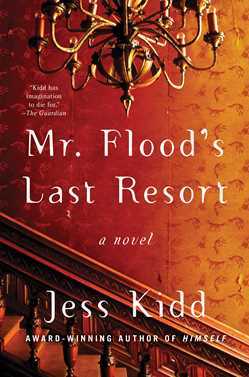
MrFloodsLastHonorable Mentions: 


Best Horror 2018

Image

themerryspinster

Best Feminist Fiction 2018

ASparkofLightA Spark of Light, by Jodi Picoult*****

Goodbye, Paris by Anstey Harris*****

GoodbyeParisThis novel took me by surprise. The first time I saw it, I passed it by, because the cover suggested a light romance, and that’s not a genre that appeals to me.  It’s been compared to Jojo Moyes and Eleanor Oliphant; I read neither. Later I saw an online recommendation for this book and changed my mind, and I am so glad I did. Big thanks go to Net Galley and Touchstone for the review copy. This book is for sale now.

You see, when we begin we recognize that Grace is deluded about David. Oh, how many of us have either been that woman or had her as a friend? Grace and David have been together for eight years, except when he needs to be present at home, for the sake of his children. Grace tells us that David is a devoted father, a dedicated dad who’s promised that he will do a finer job than his own father did, and so even though there’s nothing left between him and his wife, he cannot divorce her until the kids are grown. No, really. And then of course there’s some concern about her mental stability. What if he files, and then she does something awful?

So Grace totally understands why she must be alone every Christmas:  David is with his kids. Grace spends all the most important occasions of the year by herself, making stringed instruments in her workshop; and David is with his family in Paris. He wouldn’t say it if it weren’t true, and she doesn’t ask too many questions, because he is terribly sensitive.

It’s all about trust.

She assists in staying out of the public eye, and she is ever so discreet, but then a random event puts David’s face in the news, a hero that pulls a woman off the Metro tracks just before the train comes. Who is this mysterious man, they ask. And then it all hits the fan. And as we knew—we tried to tell Grace, but she wouldn’t listen—David isn’t a stand up guy. He isn’t even that good as a parent. David is just a philanderer, and Grace has spent eight years of her life planning a future with this asshole, not because she is stupid, but because she is a decent person that expects others to be as upright as she is.

I have never assaulted another human being in my life. I am getting old. But let me tell you, if David had been flesh and had been standing before me, who’s to say he wouldn’t be the exception? I fumed as I prepared dinner, did the dishes, let the dog out.  That rotten scoundrel, treating poor sweet Grace this way. Oh, how crushing for her. It isn’t fair; it really isn’t.

Every reader sees it coming, but what surprises me is that David is outed so early in the book. And here’s the glorious thing: this story appears to be a romance, but it isn’t. It isn’t about Grace and David, and no new knight arrives toward the climax to sweep her away. No, the story is about Grace, and it’s about the ways that friends—true friends—help us pull ourselves together when everything seems to be coming apart. And the metaphors are resonant ones:


“I have to take into account that this violin didn’t really work very well, didn’t have much of a voice. If I take these ribs off completely and remake a whole new set, it will give the instrument a better chance to sing.”


Grace rebuilds her career as she rebuilds herself, scaffolded by the warmth and emotional nourishment of the friends that love her, and one of them tells her, “You have to grasp life by the balls, Grace…and don’t bloody let go until you have to.”

Ultimately, this is a charming story you won’t want to miss. Highly recommended.

Seances Are For Suckers, by Tamara Berry****-*****

SeancesareforTamara Berry is the queen of snarky humor, and now that I have read the first installment of the Eleanor Wilde series, I am primed and ready for those that follow it. Big thanks go to Net Galley and Kensington Books for the review copy; this book is for sale now.

Ellie narrates her own story in the first person. She explains that she makes her living through fraud, scamming those that want to talk to their dead relatives and solve their Earthly problems via séances. A referral brings her a wealthy Brit that wants a fake medium to vanquish the ghost his mother believes is haunting their mansion. Expenses paid, she flies out to join him and is delighted to find that he lives in an actual castle. His mother, however, hates houseguests and discourages them with miserably small, terrible meals and bad accommodations. As preparations are made for the séance, guests exchange furtively obtained and hoarded snacks in order to avoid starvation.

Nicholas is a hunk; he and Ellie are both drawn toward each other and repelled in classic fashion, and there’s a lot of crackling banter that keeps me snickering. Other well drawn characters include Nicholas’s mother, his sister and her teenage daughter, and a couple of other men, one of whom works for the family. When she comments to the reader, “Bless the sturdy and simple folk of this world,” I nearly fall off my chair. The narrative and dialogue are wonderfully paced and hugely amusing. The solution to the mystery is both partially obvious and wildly contrived, but since this is satire, that makes it even better. In fact, there’s more than one tired old saw that works its way into this story, but it’s with a side-eye wink every time, and I love it.

As the narrative unspools, a corpse is found and then lost, threats and warnings heighten the suspense, and we wonder along with Ellie which of these guests and family members are truly as they seem, and which might be a killer.

The scene leading into the séance is so hilarious that I nearly wake the mister with my cackling.

The only aspect I find unappealing here is the somewhat saccharine story having to do with Ellie’s dying sister. Ellie’s dishonest vocation is, she tells us, necessary so that she can pay for her catatonic sister’s nursing care, and while squeamish cozy readers may find it comforting, I am more than ready to dispatch sis to the great beyond and just let Ellie be Ellie anyway. Happily, this doesn’t hold the story back, particularly since most of the sister’s part of this tale is told at the start and is out of the way by the time we are rolling.

I can’t wait to see where life—and the wakeful dead—will take Ellie next. Highly recommended for mystery lovers ready to be entertained.

The Big Book of Female Detectives*****

TheBigBookofFemaleDWell now, that was a meal. Penzler does nothing halfway, and this meaty collection of 74 stories took me awhile to move through. I read most, but not all, and I’ll get to that in a minute. First, though, thanks go to Net Galley and Doubleday for the review copy. This book is for sale now.

The collection begins with Mrs. Paschal, published in 1864, who must find “the cleverest thieves in Christendom,” and it concludes with a piece by Joyce Carol Oates. The stories are broken down into sections, beginning with The Victorians and Edwardians, followed by Before World War I, The Pulp Era, The Golden Age, Mid-Century, and The Modern Era, and concluded with Bad Girls. Says Penzler in his introduction:

“Seeing the Evolution of the female detective’s style as it gathers strength and credibility through the decades is educational, but that is not the purpose of this book, or not the primary one, anyway. The writers whose work fills these pages are the best of their time, and their stories are among the high points of detective fiction that may be read with no greater agenda than the pure joy that derives from distinguished fiction.”

And so the reader must absorb the hallmarks of the time period, and that means the earliest entries carry a certain number of stereotypes, primarily about the nature of women, but in the end, the detective is successful nevertheless. And it’s fun to see historical details written in present tense long ago, and so we know it’s getting to be late out when the lamplighters come out to start the gas lights in the hallways of the manse, for example. It’s also interesting to read authors that were the runaway sensations of their day, the ones that sold the most and wrote the most and were on the tongues of every mystery reader—and yet now they are completely obscure. We can never tell who will stand the test of time until it happens.

And now a confession. The first time I set out to read this tome, I read the entries in the first two sections and decided I would skip the portion devoted to pulp, which isn’t my personal favorite, and I would skip forward to read an entry by one of my favorite present-day mystery writers, and then go back again to cover the sections that come after the pulp section. That was my plan. I’m telling you this because the mistake I made here could happen to you, too, so here it is.

What I did was I skipped to the last section and began flipping through it, and then I was pissed, because I thought the best female detective writers of today had been left out, and in a huff, I abandoned the rest of the book and picked up something else. It wasn’t until I sat down to write a halfhearted review, in which I would explain what I read and what I skipped and why, that I reread the promotional teaser and realized I must have missed something. I went back to the galley, moved back to the second-to-last section that is clearly labeled “Modern”, and there they all were, and it is the longest, most inclusive section in the collection. That changed everything. So reader, if you go for this book, bear in mind that the sections are not completely linear. The “Bad Girls” section at the end, which didn’t do much for me but you may like it, is made up of stories about women criminals from a variety of different time periods. The most recent time period, the one bearing selections by Marcia Muller, Sara Paretsky, the late and beloved Sue Grafton, Nevada Barr, and a host of others, is second-to-last.

Once I realized my error, of course I returned to read the rest of the book.

The one sorrowful note here is that those of us that love these modern female detectives enough to have bought other anthologies, for example those brought to us by the Paretsky group, “Sisters in Crime,” will run across selections we have already read. I have seen both the Grafton and Paretsky stories already, although the piece by Barr, “Beneath the Lilacs,” is new to me. However, I see authors I haven’t read and will happily watch for now. The end of the mid-century section features “Mom Sings an Aria,” and although it veers a wee bit toward stereotypes, I can’t say I mind too much, because this writer makes me laugh out loud. James Yaffe is on my list now. “Blood Types”, by Julie Smith is likewise pithy, and “Miss Gibson,” by Linda Barnes also cracks me up. And I don’t know why I am still surprised by this. After reading so many anthologies, you’d think I’d realize that the greatest charms are had by finding brand new-to-me authors, but since it’s a good surprise every time, I may allow myself not to absorb the lesson; this way I can still be pleasantly surprised over and over again.

If you buy a holiday gift for a mystery lover, I recommend you get this book. If you try to buy something by your loved one’s favorite author, you may run up against it as I did: they’ve already read it. (And you probably hate returning things as much as I do.) But what are the chances she has this anthology? It’s over a thousand pages of detective fiction, and last I saw, it’s on sale for less than twenty bucks. There, that’s one gift chosen for you, and it’s not even November yet. You’re welcome.

Round Midnight, by Laura McBride****-*****

RoundMidnightWhat an unusual story! McBride cleverly links the lives of four women, and we follow their individual journeys over the course of fifty years; near the end, we see how they are connected. My thanks go to Net Galley and Touchstone for the review copy. This book is for sale now.

June comes of age in 1960. She marries Del, and they move to the newly emerging city of Las Vegas, where property can be had cheaply; they purchase a casino, and their entertainers perform in “The Midnight Room.”

McBride uses setting like a pro, placing us within the context of the time period without resorting to the overuse of distracting pop cultural references that would tempt a less subtle writer. We see just enough of the ‘60s to remind us that women didn’t have the same range of choices that we have now; we see just enough of the Civil Rights movement— a glimpse—to remind us how awful life could be for mixed race families. The first section ends on something of a cliff hanger, and then we find ourselves reading about someone else.

The other three women are Honorata, Coral, and Graciela. The section dealing with Honorata’s life is a hard read at the outset, gritty and full of horrors: a mail-order bridal arrangement that is more like human trafficking, and the reader has to be prepared to read some upsetting passages involving sexual assault. Honorata is so powerless in all of this, and what’s more, she knows it, and I want to sit down and cry for her. Just at the point when I start to wonder whether it’s worth it or if maybe I should abandon this thing since we’re not having any fun here, everything changes, and in the end, Honorata is the character I love most.

How often do we see well written fiction in which all of the main characters are women, and the male characters only exist as scaffolding for them? This was a super cool book. I picked it up after the publication date after it was recommended to me, and I am so glad I did. I would read this author again in a heartbeat.

The one character I don’t entirely believe is Jimbo; toward the end of the story, I get new information that is meant to surprise me and it does, but I am shaking my head and not entirely believing it. However, Jimbo isn’t a main character. The four women that comprise this epic story are nearly corporeal, and I believe them absolutely.

Highly recommended to feminists, and to those that relish good historical fiction.

A Spark of Light, by Jodi Picoult*****

ASparkofLightIf there is a prize for courageous literature, Picoult deserves to win it. I have grown frustrated over the years as I have watched countless novelists dodge and weave to avoid the mere mention of abortion as a means to deal with an unplanned, unwanted pregnancy, and I wanted to do cartwheels when I read the teaser for this book.  I thank Net Galley and Random House Ballantine for the review copy, and the author and publisher for having the integrity to go there. This book is for sale now.

That said, this isn’t a fun read, and it in no way resembles the character based escapist fiction that is the hallmark of many of Picoult’s other novels. This one is about social justice, and fiction is an approachable medium with which to discuss it. Those seeking to avoid tension and who don’t want to think critically should read something else.

The story opens at a women’s clinic in the Deep South, and a shooter has just killed the owner of the clinic and taken others hostage.  Our main characters are the shooter, George Goddard; Hugh McElroy, the hostage negotiator; Wren, Hugh’s daughter, who has come to the clinic without her father’s knowledge to procure contraception; and Louis, the clinic’s doctor. There are a host of second string characters, and they include clinic workers, clinic protesters, patients, and a spy that has wormed her way inside the clinic in search of the damning proof that fetal tissue is being sold illegally.

Because we start with the shooting and then work our way backward in time, with the narrative unspooling the background and viewpoint of each of about a dozen people, the first third of the book is agonizing. I am not usually one to peek at the ending of a novel, but frankly I couldn’t stand it. I couldn’t read the fine details until I knew who was going to make it out alive and who wasn’t. I suspect that some of the negative reviews I am seeing are because of this aspect of it. It’s a tribute to how effectively Picoult is able to create tension within a story, but she may have overshot the mark a wee bit.

The first half of the book examines the various reasons why some people are opposed to abortion, and it does it in painstaking detail. I began to feel as if she was doing the work of the Right-to-Lifers for them.  More than anything, though, we see inside the troubled mind of the shooter himself. Goddard may be the best developed of the characters present here (though the story is primarily plot based in any case).

We also see the reasons why women choose to have an abortion, and we see the ambivalence and sometimes the regret of those that do so. In fact, my one real issue with this story is that there isn’t a single woman here that is having the procedure, not because she’s been raped or because she’s impoverished or abused, but because her contraception failed and she doesn’t want to be pregnant. These women exist; I know them. In fact, I have been one of them. Not every woman that seeks to terminate a pregnancy is traumatized, and apart from one character that passes in and out of the plot inside of a brief paragraph, these women are not represented here. But this is a relatively minor concern, and my rating reflects this.

Appropriately enough, the empirical voice of reason belongs to Louie Ward, the doctor.  He’s seen a lot:

“Indeed, when the pro-lifers came to him to terminate a pregnancy and told him that they did not believe in abortion, Louie Ward said only one thing: Scoot down.”   Louie respects the women that come to him, and during the conference the state requires him to have with those that have signed on for the procedure,


“He looked into the eyes of each of the women. Warriors, every one of them…They were stronger than any men he’d ever known. For sure, they were stronger than the male politicians who were so terrified of them that they designed laws specifically to keep women down…If he had learned anything during his years as an abortion doctor, it was this:  there was nothing on God’s green earth that would stop a woman who didn’t want to be pregnant.”


I like the ending.

Picoult has done her homework here, observing abortions conducted at various stages of pregnancy and interviewing over one hundred women that have done this. Her end notes show the level of research on which this story is based. Few fiction writers go to such lengths, and I doff my metaphorical hat to her.

Highly recommended to feminists everywhere, as well as to the tiny sliver of the population that isn’t firmly planted in one camp or the other where the topic is concerned.