The Great Divide, by Cristina Henriquez*****

I found The Great Divide, by Cristina Henriquez, on a short list of most anticipated novels of 2024. I don’t like to get shut out when a book gets this much buzz; then there’s the added draw of an unusual setting. The U.S. doesn’t see a lot of fiction published that’s set primarily in Panama during the early 1900s, and so that sealed it. My thanks go to NetGalley and Harper Collins for the review copies, both audio and digital. This story lives up to the hype, and I recommend it to you.

I am not so sure about it at the outset. There is a robust quantity of characters that are important to the story, and each of them is given a brief chapter all to themselves. I wonder whether they will ever intersect, or if this will turn out to be a collection of short stories, but before much longer, characters are meeting other characters. They don’t all end up together in the end, but we can see the ties that have formed. There are a lot of people to keep track of, and for me, having both the print version and the audio is tremendously helpful. Robin Miles narrates in a way that is natural and fluid, and I don’t notice much of what is around me when I listen to her. But once in awhile a character is mentioned and I draw a blank; here is where the Kindle version is essential, because I highlight the names of each of the characters, and this enables me to instantly flip back to where they were introduced to us without having to stop listening. Eventually, of course, I no longer need to do so, but knowing that I can makes for stress-free reading.

I am engaged with these characters, each of whom feels real to me, and I groan when I see them get into trouble, and sigh with relief once they are in the clear again. The ones that I care about most are a father and son that are estranged from each other, neither wanting to stay that way, yet both of them incorrectly interpreting the silence of the other. As we reach the climax, I can tell there are three ways for this situation to resolve: they can reconcile; one of them can die; or the son can decide to follow another character back to the U.S.A. without reconnecting with his dad.  It only now occurs to me that there was a fourth possibility, which was to leave them still estranged at the end; but by this time, Henriquez had shown herself to be a better writer than that, and while I won’t tell you how they wound up, I will say that she didn’t leave her readers dangling.

Because this is an intricately woven tale with a lot of equally important characters, I’m not including any quotes, but I will say that Henriquez is a talented writer, and anyone that loves good historical fiction should get this book and read it. This applies even more so to those interested in Latin American history and the building of the canal. I hadn’t read her work before, but she’s on my radar now, and I look forward to seeing what she writes next.

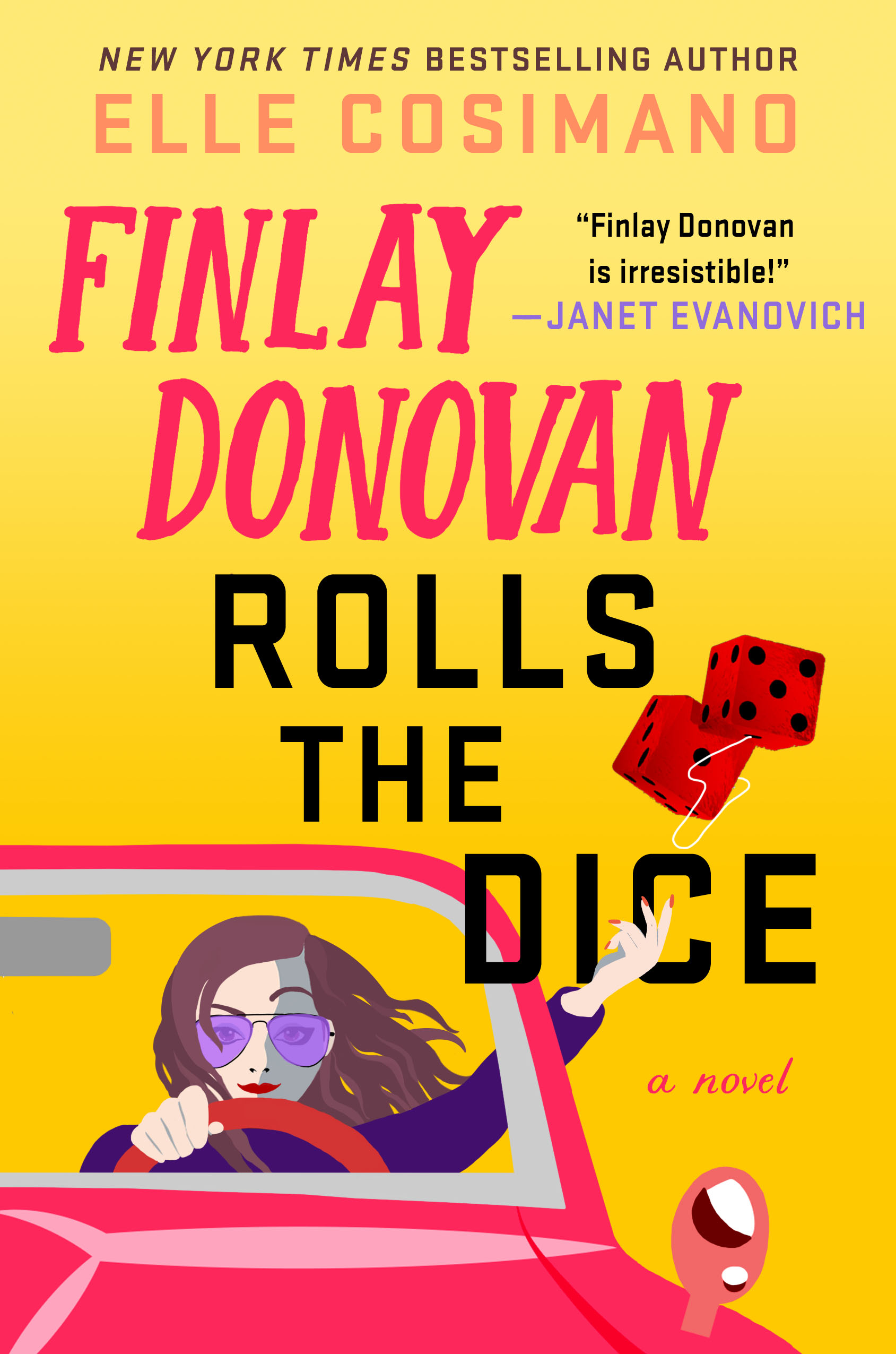
Finlay Donovan Rolls the Dice, by Elle Cosimano*****

“I’m telling you, Finlay, this book is good. This whole SERIES is good. The plots may be a little far-fetched, but these characters are so real! It’s like they just jump off the page!“

Finlay Donovan Rolls the Dice is the fourth in the raucously entertaining series by Elle Cosimano. My thanks go to the Minotaur and St. Martin’s Press Influencer Program and NetGalley for the review copy. It will be available to the public Tuesday, March 5, 2024.

At the end of the previous book, Javi, Finn’s nanny Vero’s boyfriend, was abducted by mobsters that wanted to collect a gambling debt incurred by Vero. In this one, the two women plan to travel to Atlantic City to rescue him, with the cover story of needing time to unwind. However, things snowball, and before you know it, almost all the people they hold dear—and a few people that they don’t—are headed there, too. What follows is a riotous adventure with a lot of moving pieces. I love it.

More than any other, this installment has been controversial among reviewers. In the series debut, Finlay is an innocent, entirely law abiding single mother strapped with bills, work, and child care issues. She’s in the midst of a contentious divorce and her soon-to-be ex is an attorney, which makes Finlay’s efforts an uphill battle. She’s easy to relate to, and when, through no fault of her own, she finds herself with a corpse in her car, it seems entirely believable.

With the second and third books in the series, Finn, accompanied by the more street smart Vero, find themselves in deeper trouble. Just as they mop up one mess, another arises, until there’s a sort of house-that-Jack-built tower of problems that see both women in increasingly tenuous circumstances. They break the law once as a life or death matter, but then cannot safely come clean, so they do their best to put it behind them, but someone or something comes along to threaten the modest safety and security they’ve begun to enjoy. Bodies and crimes pile up, and now, with the fourth installment, the author can’t reasonably convince the reader that whatever happens next is purely an oopsie. Instead, she has to draw on other possibilities. Personally, I like it.

Finn and Vero are chasing down the underworld figures that they believe have abducted Javi, and there’s considerable risk involved. A couple of times I literally draw in my breath at the risks they take. Add to this the need to fabricate excuses to tell the myriad members of the retinue that have descended on Atlantic City with them, and it’s an ambitious undertaking.

In this circumstance, I no longer require realism. The whole thing takes on the flavor of a comic caper, what with the clown car full of women, including Finn’s mother; Finn’s ex-husband, who is in charge of the children; and various others (I am being deliberately vague here) that descend on them once they arrive. To put it another way, if Stephanie Plum and John Dortmunder—or if you prefer, Bernie Rhodenbarr—had a baby, she might be Finlay Donovan.  

If you need a good laugh, this book is for you; however, with this series, you really should begin with the first in the series, Finlay Donovan is Killing It. With just four in the series (and the audio is outstanding, too,) this will be a quick and hilarious adventure. What are you waiting for? Jump on in.

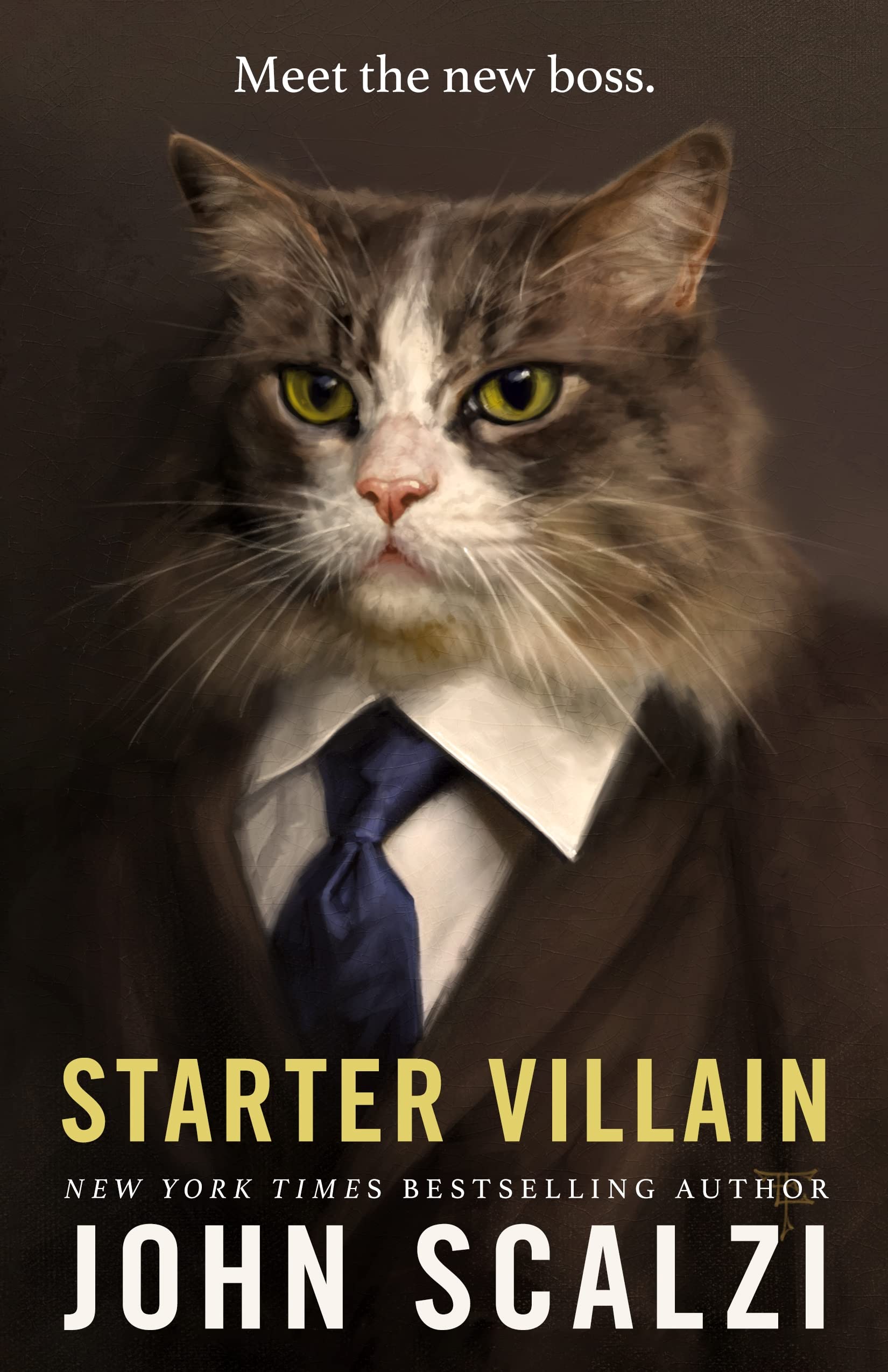
Starter Villain, by John Scalzi****

I’m not going to write a full review for this one; my spouse got it for me for Christmas, so I don’t owe anyone anything. I will tell you, though, that it’s just what I needed, funny, warm, and of course, not even close to realistic. After all, it’s fantasy. The level of unreality is well crafted and consistent within the narrative, and it’s hugely inventive. This is my first John Scalzi novel, and I will read him again in a heartbeat.

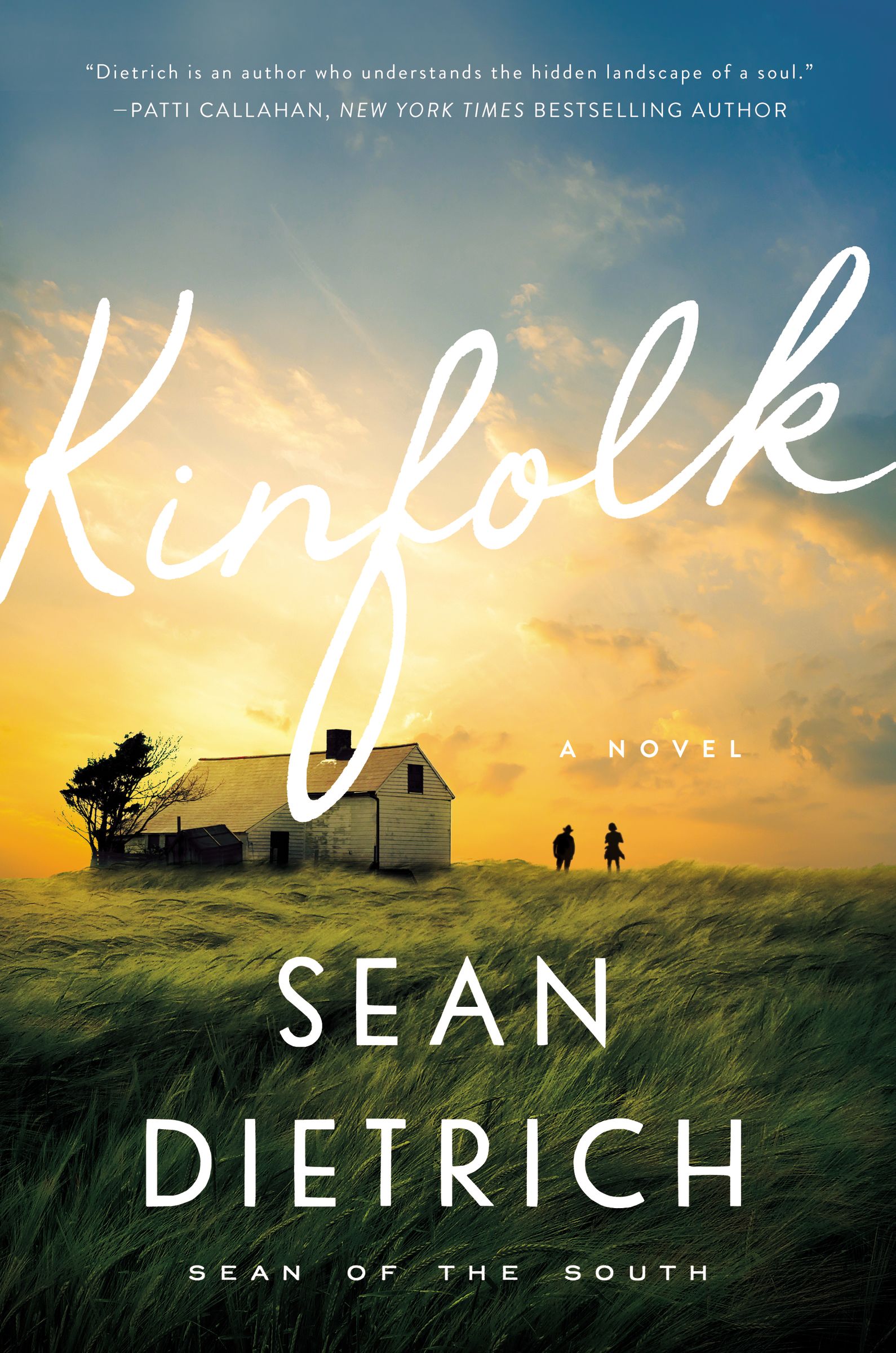
Kinfolk, by Sean Dietrich*****

“Thanksgiving is not about being happy. The holiday is not about mirth and beauty and the warmth of gaiety. Thanksgiving is about fulfilling family obligations and being miserable the way the good Lord intended.”

When we meet our protagonist, Nub Taylor, it is Thanksgiving night, and he and his cousin and best friend Benny are three sheets to the wind, idling in a rusty old truck across the street from the dignified, stately home of Nub’s daughter, Emily. Nub has been invited to dine there, but knows better than to attend. Emily is a widow; she married up, and every mover and shaker in town has shown up. No, Nub won’t be joining them. Nothing good would come of it.

My thanks go to Net Galley and Harper Muse for the review copy. This book is for sale now.

Our story is set in the 1970s in a tiny town in Alabama. Nub is long divorced from Emily’s mother, who keeps her distance these days. He takes his meals at the Waffle House, and that includes today:

“Waffle House did not close on Thanksgiving because Waffle House never closed. Waffle House was like the Vatican, only with better hash browns. Nobody on staff at the Waffle House had a key to the store, not even the manager. Because there were no keys. The doors were never locked. Waffle House just went on and on. Sort of like a disco.”

It is here that he meets Minnie. Minnie is fifteen years old and well over six feet tall. Why is this girl spending her holiday here, instead of with her kin? The answer is that she has none. Her father is in prison, and her mother has just recently killed herself.  

Of course, Nub doesn’t know these things at first, but something about her calls to him. Perhaps all children of suicide victims wear something similar in their expressions; Nub had lost a parent the very same way, and he has never gotten over it. How does anyone? He knows “the cardinal rule about suicide. You don’t talk about it.”

Now, Minnie is orphaned and she is pregnant, courtesy of a thoughtless, spoiled local boy that told her he loved her, then laughed behind her back. And so it is that Nub realizes, as he learns more about Minnie Bass, that perhaps he may have a chance to redeem himself.

This is a wonderful story, full of warmth and a lot of heart. Dietrich is a master story teller, able to create viscerally real characters that leap from the page and a narrative that billows with home truths. There is no question that Kinfolk is among the finest books to be published this year.

Highly recommended.

Scattershot, by Bernie Taupin*****

I was a teenager when Elton John’s music exploded onto the radio, and to this day, there are certain songs that I play in celebration, or when I need my mood lifted. For decades it lay in the back of my mind, wondering what was behind these lyrics or those. Never one to delve into the lives of celebrities all that often—a few shallow attempts convinced me that usually the most interesting thing about them is their work, which I’ve seen or heard already—I nevertheless filed it away, to find out about those lyrics one day.

Retirement came, and so with extra time to spare, I finally learned that Elton didn’t write those words. None of them! It was his writing partner, Bernie Taupin. I found this out only after reading an Elton John bio. I searched for one of Bernie’s and found empty air instead. When I saw this galley, I had to read it, and I am so glad that I did. Big thanks go to Net Galley and Hachette Books for the review copy; this book is for sale now.

Sometimes a public figure will publish a memoir, but either openly or secretly, they require a ghost writer, and in the cases of some others, we may wish that they had. Taupin, however, is a writer, and boy does it show! His eloquence is undeniable, hilarious in some places, moving in others. His judgment is unerring, knowing when to be brief and when to use detail, and his candor is refreshing as well. The result, for me, is that when I’ve finished reading, instead of the usual five or six quotes that I’ve highlighted so that I can select one or two to use later, I instead find that I’ve highlighted eighty-eight, and some of these are multiple pages in length! I’ve spent an hour trying to choose which one to share, and it’s hard because they’re all brilliant. Since choosing just one is impossible, let’s just go with the first, which is near the beginning of the book, the beginning of the Bernie and Reg (Elton, later) show. The chapter begins:

“Sheila hated my coat. I can’t say I blame her. It hung on a hook on the back of our bedroom door like a Neanderthal artifact from the Natural History Museum…when it rained, which was often, it smelled like an uncured yak hide. Afghan coats were in style, as were kaftan jackets, three button tees, and velvet pants. I’m positive we didn’t succumb to the latter, but as for everything else, my new best friend and I did our very utmost to look the part…Sheila was Reg’s mother.”

Born in a tiny, isolated hamlet into the very bottommost scrapings of the working class, Bernie knew from an early age that he wanted out. He loved his family, and later, when money came his way, he took good care of his parents, but he never wanted to live in that place again, and became Californian down to the marrow of his bones the instant he landed in Los Angeles.

Taupin doesn’t hold much back, that’s for sure. The most essential ingredients of a top notch autobiography are that the person has lived an interesting life; knows how to write about it; and is willing to talk about just about every aspect of it. Taupin gets top marks in all three areas. Early on, I became concerned about his attitude toward women, given that the first we learn of his having married is when he makes a side reference to his first marriage dissolving, and I thought, Seriously? You tell us all of the everything, but don’t even mention your marriage? Small wonder it didn’t take. I maintain that concern through two more marriages that get little ink; but then we reach his current, and most likely permanent union, and everything changes and I feel much better.

Taupin has stories about just about every celebrity on the planet, and he does talk about the inspirations for his lyrics. I would have finished this book much sooner, but the greatest joy of reading a rock and roll musician’s memoir is reaching back to listen to the songs whose lyrics he scribed, as well as the many musical influences that shaped him. (Country western, I kid you not!) This book became such a prominent part of my day that my family was leery of turning up during the lunch hour, because I had passages to read aloud. And yet they had to admit that many of them were pretty damn good.

This book is highly recommended to all that love rock music, Elton John, and also to those that just love a resonant, well written memoir.

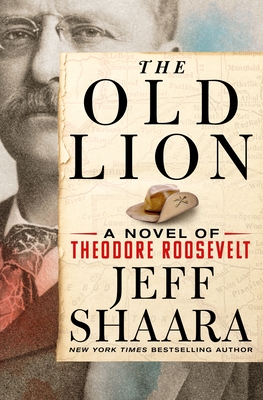
The Old Lion, by Jeff Shaara****

There are a good many books that have been written about President Theodore Roosevelt, and no two are exactly alike. That said, the two I’ve read—this one, and a biography by Clay Risen—could not be more different. In fact, you would never know they were writing about the same man.

My thanks go to Net Galley and St. Martin’s Press for the invitation to read and review. This book was published in May, but it took me some time to push my way through it.  I started out not knowing what tack Shaara would take here, and it is this introductory note that caused me to sit back a bit:

“Few, very few, would disagree that Theodore Roosevelt ranks high among the most revered, most respected, and most admired presidents in history.”

I guess it’s time for me to change my name to Few.

Because I had signed on for it—on the strength of my admiration for its author, whose books I always read without regard to topic—I hunted down the audio version at Seattle Bibliocommons. The voice actor that reads it is second to none, and does a remarkable TR impression. But I also have to say that the various thoughts and conversations which the historical fiction genre permits its author to create seem a bit on the rosy side. Where is the TR that not only organized volunteers, himself included, to fight in Cuba, but used vast amounts of his family’s connections and wealth to advocate for it? Where is the braggard that crowed to his friends about how much he enjoyed shooting an enemy soldier from just a few feet away “like a jackrabbit,” and called his 45 days of combat the ultimate hunting trip?

This is one more reminder that all history is political. Nobody will, or should, write a book about a public figure that uses every single fact available, but it is when the author chooses what to include, and what to leave out, that bias shows. There’s no way around it, even for the most objective of writers.

I cannot deny that there were positive aspects of TR’s tenure in the White House (which he named,) the birth of the nation’s park system, beginning with Yellowstone; he also gets points for having seen, ultimately, that these are not meant to be preserved as hunters’ playgrounds, but rather to preserve the natural life, including animals, that are native to the park. His attitude toward women and Black peoples’ suffrage is laudatory, compared with other politicians of his time, but Shaara doesn’t comment on the ugly racist attitude Roosevelt displayed toward other races and ethnicities, most notably those from Central and South America.

This is a four star read because no matter what he chooses to write about, Shaara spins a tremendously entertaining tale. If you choose to read this one, I recommend you obtain the audio version, and take the dialogue and in particular, Roosevelt’s innermost thoughts with a larger than usual grain of salt, and also read a second, nonfiction work for balance.

The Golem of Brooklyn, by Adam Mansbach*****

Len Bronstein is an art teacher. He has a whole lot of clay he’s filched from his employer’s supply closet, and now he’s stoned. He should make something. He should make a Golem. And friend, that’s just what he does.

Traditionally, The Golem is made by a rabbi to help the Jewish people during difficult times. Len isn’t a rabbi, and he doesn’t expect much from his creation:

Five minutes passed, and nothing happened. Len reminded himself that he didn’t actually expect anything to…he didn’t believe in any of this shit. He stood, dusted himself off, and went inside to grab a beer…Len deposited his beer in the sink just as The Golem ripped his back door off the hinges and flung it aside.

My thanks go to Net Galley and Random House Ballantine for the invitation to read and review. This book is for sale now.

Now that The Golem has awakened, he needs to know what his target is. His answer comes to him as he views the news on Len’s television. White Supremacists are railing about a Jewish conspiracy; the Holocaust, they say, was a hoax. The Golem was asleep during the Holocaust, but once it’s explained to him, he’s ready to get busy. But first, he must talk to the rabbi.

Our second main character is a woman named Miriam, Miri to you and me. She works at the bodega down the street, and Len recruits her to be a translator; The Golem, you see, only speaks Yiddish, and Len doesn’t. Miri has been drummed out of the temple because she is a lesbian, but The Golem likes her just fine. Before you know it, Len, Miriam and The Golem are on a road trip beyond all others, first to find a way in to see the Sassov Grand Rebbe, a wealthy and powerful man with a great many gatekeepers, and then to a scheduled White Pride rally down south.

This is, as may be obvious by now, very edgy humor. There’s a great deal of profanity, and whereas most of it is hilarious, at the beginning, the author could have varied his choices more. There are lots of cuss words out there, and not all of them begin with F. But this is a small matter. This novel’s action is interspersed with brief passages of Jewish history that I find very interesting, and they are so brief, and so skillfully woven into the narrative, that you may not notice that you’re learning some things.

My favorite passages involve a bombastic politician, and multiple encounters with cops. (The Golem doesn’t care for them.) As for me, I have read several very funny novels this year, but none made me laugh out loud as often as this one. And in the end–well, you don’t expect me to tell you how this ends, now do you?

Highly recommended to readers that lean left and can tolerate profanity.

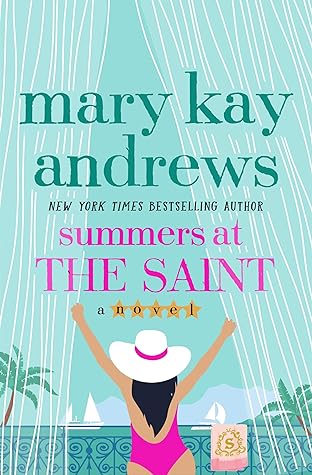
Bright Lights, Big Christmas, by Mary Kay Andrews****

I tend to avoid heartwarming holiday stories and romances because so many of them are infused with saccharine and require the reader to put their I.Q. in a box until the book is over. But two years ago, I was happily impressed with Mary Kay Andrews’ The Santa Suit, and so when I was invited to read and review Bright Lights, Big Christmas, I happily agreed. My thanks go to Net Galley, St. Martin’s Press, and Macmillan Audio for the review copies. This book is for sale now.

The Tolliver Christmas tree farm is an institution, not only at home in North Carolina but as far north as New York City. As a child, Kerry sometimes accompanied her family to New York to set up a tree stand and sell the trees, but as an adult, she’s had other priorities. This year, though, she finds herself unexpectedly jobless, while at the same time, her father’s health prevents him from executing the task. Kerry must take his place, traveling to the Big Apple with her brother, Murphy. They set up the stand, and they sleep in the ancient pink trailer nicknamed “Spammy” because of its resemblance to a canned ham. Adventure awaits.

Kerry’s love interest pops up before we’re even ten percent into the story, but it appears that the author planned for us to know that, and it doesn’t hurt anything. Over the weeks they are in New York, various small (and large) crises present themselves and are worked out with team work, ingenuity, and the occasional well-placed bribe. They have Murphy’s dog Queenie with them, but she is primarily left in the background where she belongs.

What I appreciate most about this novel is how well grounded the plot is, and the author’s restraint in not permitting any elements to go over the top. There are a host of stereotypes possible, but every time I see one coming, Andrews chooses a different path, and it keeps the story fresh and original. Small details that might be overlooked by someone less detail oriented are seen to, and it keeps the narrative credible. Examples are the need for a shower or bath, given the length of their stay in a trailer without working plumbing; the cost of living in New York; the hazards of theft and vandalism, especially active at Christmas. None of these sidetracks the plot or slows the pace, but the questions a reader might have are tidied away, and this makes for greater enjoyment.

One small criticism involves a situation where theft and vandalism occur at a time when Murphy has to be away, and immediately, other men folk clamor over the need to have someone—someone with a Y chromosome, folks—to do lookout duty, protecting the fair damsel, her trees, and so on.

Apart from that, this is a delightful story. However, for awhile I wasn’t sure I liked it, because I was listening to the audio version, which is poorly done. The male characters are voiced in a way that is choppy, wooden, and unconvincing; but worse is Kerry’s voice, which is performed in a high-pitched, girly-girl voice so off-putting that it took me awhile to realize that the problem wasn’t the author’s, but rather the voice actor’s. The children’s voices are much better, and I actually howled with laughter when the baby in a stroller wailed!

As the story reaches its climax, Kerry has to make some serious choices, and I admire the way this part is resolved. The side character Heinz, an elderly man that lives in the neighborhood and often stops by the tree stand, is terrific.

When all is said and done, I rate the printed version of this novel 4+ stars, and the audio version 3+ stars, with an overall score of 4. I recommend the print version of this book, but not the audio.

Mother-Daughter Murder Night, by Nina Simon****

Nina Simon’s debut novel, Mother-Daughter Murder Night, marks a fine beginning to an auspicious career. My thanks go to Net Galley and William Morrow for the review copy. This book is for sale now.

The story unfolds with three generations of women—Lana, Beth, and Jack—solving a murder mystery together. Lana, the grandmother, has just received dreadful news from her doctor, and she’s forced to rely upon Beth, her estranged daughter, for help to and from chemo appointments. Jack is her granddaughter, Beth’s daughter. Although all three are important characters, Lana is the protagonist.

Lana doesn’t deal well with helplessness.

No sooner has she moved into the little beach house in central California where the other two reside, than Jack, a teenager with a job as a kayak tour guide when not in school, finds a dead body while she is working. Suspicion initially falls on Jack, and so Beth and Lana dive in, first seeking to prove that Jack is innocent, and then, led by Lana, to find out who actually did it.

Amateur sleuth books come with an inherent challenge to the author, because obviously, civilians that have never worked in law enforcement are badly outmatched by actual cops. They don’t have the tools, the connections, or the experience to carry it off, and so such mystery novels sometimes end up looking ridiculous. Simon holds her own here nicely.  Another issue I see frequently is with characters that are children. Jack is a teen, and she’s a bright girl, but Simon doesn’t fall into the trap of creating an unbelievably smart teen in order to justify making her walk and talk exactly like an adult. Jack has the naivete and occasional bad judgement common to kids her age, and because of this, the story rings true.

There are a couple of things that I’d change if I could. First, the whole “fiercely independent” and “tiny firecracker” personas are badly overused and becoming a cliché. The second may be partially due to my own false assumptions. Between the cover and the title, I initially thought this would be a comic caper, with the women planning to mete out some vigilante justice with hilarious missteps and hijinks along the way. Although the book has its moments, it’s not as funny as I anticipated.

Nonetheless, this is a fun read, easily followed, and with more character development than one usually sees in a novel of this nature. The chemo occasionally seems a little too easy on Lana, but it’s not beyond the pale; after all, different people tolerate these things at different levels. There’s never a moment where I slam down the book due to disbelief. I appreciate the working class realism in Beth and Jack’s lives.  

I recommend Mother-Daughter Murder Night  to those that enjoy the genre, and I look forward to seeing what Simon writes next.

Lucky Red, by Claudia Cravens*****

Larry McMurtry, eat your heart out. There’s a fine new word-slinger come to town, and her name is Claudia Cravens.

My thanks go to Random House and Net Galley for the invitation to read and review Lucky Red. This book is for sale now, and you should get it and read it.

Bridget lives a life of hardscrabble deprivation; her mother died in childbirth, and all she has is her pa. He loves her, but he’s worthless; when he finally gets a bit of money, he invariably drinks and gambles till it’s nearly gone. During one such episode, he gambles away their little house, and then buys a homestead, sight unseen and many miles away. What they find instead is a tar paper shack; there are no crops or tilled acreage, no tools or even a decent place to live. They crawl into the miserable hovel to get out of the elements, at least, and get some sleep; a rattler has the same notion, but when pa thrashes in his sleep, the rattler bites him in the neck, and then there is only teenage Bridget.

Bridget makes her way to Dodge City, and in no time, she is stone cold broke. She’s recruited to work in a brothel, the only one in town owned and run by women. She doesn’t mind the work and makes friends among the other “sporting women,” and is curiously removed from the process for which she is paid; slide prong A into slot V; moan a little, gush, and collect your pay. But later, she finds herself obsessed with a new sex worker; a lovely blonde woman named Sallie. Everyone around her understands the significance of this fascination, but Bridget herself doesn’t get it. She’s young, and she’s naïve. But when Spartan Lee, a female bounty hunter, comes to town and asks to hire Bridget, the sun shines and the angels sing.

This story is epic, and in many ways reminds me of Little Big Man, but with a female protagonist. And in many ways, what makes it so successful is its restraint. At the book’s outset, there’s a slimy man that wants to buy Bridget’s hand in marriage, which would give her father a nice chunk of change, but she hates the man, and her father doesn’t push it. A less capable writer would have done it the other way, but here, and in every instance where I predict what will happen because it’s so obvious, Cravens does something else. And the lesbian sex is brief and almost free of physical details—a sad thing for anyone looking for soft porn, but it serves to keep the story moving forward—with the emotion behind it carrying the internal narrative.

Although Bridget has no complaint about the work she does, and the management is more benign than in houses owned and run by men, Cravens keeps it real. One night, Sallie is attacked by a client, and Bridget bursts in to rescue her. It doesn’t go well. Sallie berates her for her naivete:

“You don’t see the first thing about this, though, do you. They all have a knife, Bridget. They all have a gun, and they were all born with two fists on the ends of their arms. You think you’ve got this all figured out, but any single one of ‘em could take a swipe at you some night and you’d be dead before you hit the ground.”

To tell you more would be to spoil it for you, so I’ll leave you with this: Lucky Red is the best debut novel of 2023, and one of the best books I’ve seen this year, period. Don’t miss it.