When Women Were Dragons, by Kelly Barnhill*****

I read Kelly Barnhill’s The Ogress and the Orphans, and I loved everything about it, so I was pumped when I saw she’d published another book last fall. I was disappointed not to get the galley, but I pulled my socks up and got in line at Seattle Bibliocommons. I was able to get the audio version, and narrators Kimberly Farr and Mark Bramhall do an outstanding job, so perhaps it was for the best. This book is for sale now, and it is a true delight.

The story is set in the American Midwest during the 1950s, a time known for its stifling repression of women. Some women can take it; others turn into dragons. It’s not always by conscious choice; when you’ve had enough, you’ve had enough.

The tale centers on one family, with a mother, father, daughter Alex, and the devoted Aunt Marla, who visits frequently with her adorable baby, Beatrice. Marla is a physically strong and imposing woman, and she raises eyebrows by sometimes showing up in overalls instead of a dress or skirt. The most important person in her life is her sister, a gifted mathematician whose talents are withering away while she focuses on making the perfect pot roast, getting tough stains out of the laundry, and creating endless patterns in her knitting.

Alex is the narrator for most of the story, with the occasional change to the points of view of various bewildered men that live locally. It is the characters here that make this an outstanding story rather than a manifesto. Alex has so many questions as a child, and as she grows up, she struggles to absorb the predominant values of the time, which seem unfair to her. She wants to be a good daughter and play by the rules, but so many of them baffle her, and we feel that struggle with her. For reasons that I won’t share, little Bea comes to live with Alex’s family, and we see Alex try to help raise Bea to be responsible and obey all of the requirements of the time, whether written or unwritten, but Bea struggles with them even more than Alex has, and because of this, Alex is forced to think critically about the things she’s been sweeping under the rug in order to get along. And ultimately, Alex learns the lesson that all parents and older siblings face to some degree, that to help a child grow, we must let go.

Teachers and librarians must especially love this book.

I have read a few unfriendly reviews that insist that this message has already been conveyed by The Stepford Wives. I loved the Stepford Wives, too, but seriously, are we saying that once a novelist drives home a point, that’s it, and nobody else can have a go at it? If it comes down to it, I’d take this novel over the other anyway, for nuance and character development. My favorite grumpy review asks why a dragon needs a purse! I ask you, would you be the one to take that dragon’s purse from her?

I love this book with all my fiery heart, and I highly recommend it to feminists, and to those that love us.

The Making of Another Major Motion Picture Masterpiece, by Tom Hanks*****

Tom Hanks has more than one talent, that’s for sure; or perhaps he is an artist that’s ridiculously talented at telling stories, whether they be on the page or screen. One thing I’ll tell you now: I am completely convinced that he did indeed write this book himself, and it’s damn good, too.

My thanks go to Net Galley and Alfred A. Knopf Publishing for the review copy. This book is for sale now.

The story begins with a child prodigy, an artist living in Lone Butte, California, who as he matures, becomes a comic book illustrator. Fast forward about thirty years, and that comic becomes a movie.

Our story doesn’t have just one protagonist, and it is intentional, or so it appears to this reviewer. We have the big boss, Bill Johnson, his assistant, Candace, and the assistant she recruits in Georgia, Allicia. We learn something of their backgrounds and their personalities, but mostly, we see how important they are to the success of the movie. When the movie is finished with Atlanta, Allicia, who now goes by Al, comes along and is eventually promoted; she then finds someone to take her place. We learn more about other people that are working the production, and I am amazed by the sheer number of people involved, and how much must be done to keep everyone on an even keel. Eventually we meet the two big stars of this action movie; one is hardworking, cooperative, and comes up with a host of useful ideas; the other is an egotist, a Do-You-Know-Who-I-Am type, and everybody walks on eggshells in an effort to make him happy, and to make him want to show up and do his job.

In the hands of a less talented writer, this whole thing might feel list-like, but Hanks sculpts these characters so that I feel I know them, and I care about what happens to them.

There’s more than a little wry humor in this tale, and the copious footnotes at the end of each chapter are a part of that. I read them all, because some of them are hilarious, but readers that lack the patience for it can breeze right on by them without missing anything critically important. And here’s a nugget that cracked me up:

“Of late, Bill had been using military-style call words rather than expletives. Fuck was Foxtrot. Asshole was Alpha Hotel. Cocksucker? Charlie Oscar Charlie Kilo Sierra.”

As a bonus, artist Robert Sikoryak has written the comics themselves, and they are included in the book. Those that love comics should probably get this book in hard cover, because a lot of the detail is hard to see in the digital version that I read. As for me, I don’t give one single poo about comics, and I skipped them.

Movie buffs will be fascinated with the vast amount of movie making minutiae here. I am not a big movie viewer, but I eat it all up, anyway, because I had no idea of the amount of time, personnel, and materials necessary to creating a major movie, masterpiece or otherwise.

Although he doesn’t beat the drum hard enough to distract from the overall story, Hanks’s message is crystal clear: everyone involved in creating a movie is important. If the crew doesn’t have enough restrooms, it affects the movie. If nobody brings lunch to the set, some people will be miserable and perform below par, whereas others will slip away in search of food and not be available when needed. And if just one person is a horse’s ass and drags his feet, or if he blabs things to the press that aren’t supposed to be released yet, he can add millions of dollars to the cost of the production. Here’s a perfect quote:

“What advice can you give us to make it in Hollywood?” She talked about the great divide between solving problems and causing them, and the importance of being on time.”

Through all of this, I keep wondering when we will see the young artist that made the comic again. If we started with him, it makes sense we will see him again at some point, right? Yes. This detail—along with every other—is done beautifully.

There’s not one thing about this book that I don’t love, and the feel-good ending is icing on the cake. Highly recommended to those that love movies as well as excellent fiction.

Mastering the Art of French Cooking, by Colleen Cambridge****

This charming cozy mystery, set in Paris during the postwar years, had me at hello. Tabitha is an American expat, and her best friend, Julia Child, is teaching her how to cook. But one evening, during one of the Childs’s many soirees, a woman is murdered…and the knife in question came from Julia’s kitchen!  To make matters even worse, the victim was carrying a card with Tabitha’s name and address on it when she was found. For some young women, this would be a wakeup call, and the morning would see them on the next available plane to Detroit; but Tabitha is made of sterner and more curious stuff, and so she begins snooping.  

My thanks go to Net Galley and Kensington Books for the review copy; this book is for sale now.

To cope with the horror of the previous night’s events, Julia is roasting a ham.  “I just had to take my mind off everything. Can you even believe it, Tabs? Someone murdered a woman in this building—with my knife! That means they had to have been in my kitchen! This kitchen!”

Like many an amateur sleuth in other mysteries, Tabitha begins poking around. Sometimes she has smart ideas, and at other times she is breathtakingly dense, but there is never a time that I am thinking about the author rather than the protagonist, and that means that I believe the character. There are some familiar tropes and the occasional cliche: “She knew too much!” But it never becomes a problem, possibly because this is a novel that doesn’t take itself too seriously. Now and then the author breaks down the fifth wall, or nearly so. For example, Tabitha tells us that she knows what to do because she has read plenty of Nancy Drew mysteries.

The solution to this whodunit is fairly transparent, and I am able to predict the solution, along with the conclusion of the additional thread of incipient romance early in the book, but the whole thing is so adorable that I never become annoyed. “Just like an Agatha Christie novel—all the questions answered at the end, and the villain is caught, and everyone else is happy.”

Because I had fallen behind, I supplemented my review copy with the audio version, obtained from Seattle Bibliocommons, and narrator Polly Lee does a brilliant imitation of Julia Child! In fact, all of the passages involving Julia are brilliant, and that is my favorite aspect of this story.

Sometimes an author manages to step on multiple pet peeves of mine, and yet I emerge pleasantly entertained anyway, and that’s what has happened here. This is light reading, but it isn’t insipid. I look forward to reading the next in this lovely new series. Recommended to cozy readers.

Silver Alert, by Lee Smith ***-****

3.5 stars rounded upwards. My thanks go to Algonquin Books and Net Galley for the invitation to read and review. This book is for sale now.

The premise is one that a lot of readers over age 40 will be able to relate to. Herb and Susan have been very happy, but as they enter their twilight years, Susan is no longer able to care for herself or even communicate well. I don’t think we are ever told the specific cause, whether it’s a stroke that’s left her undone, or dementia, or some other thing, but the result is the same. Herb believes he is qualified to care for his wife, together with a home health assistant that he can well afford to pay, but the truth is, he is too forgetful to do the job properly. In fact, he is closer than he will admit to needing care himself.

Susan always did love a good mani-pedi, and so he hires a traveling manicurist to stop in and take care of Susan’s nails. The young woman that calls herself Renee does more than that, however; she becomes fond of Susan, and shows up with outlandish hats and art supplies and other things that make Susan smile.

But now the family is here, the responsible, busy adults that can see this situation is untenable. They want to move Herb and Susan to a care facility, but Herb is adamantly opposed. Herb isn’t going to have anything to say about it much longer, though, and he can see the handwriting on the wall.

As I read first half of this little book, I feel a certain amount of reviewer’s remorse. Why have I signed on to read this thing? It’s supposed to be funny, but it isn’t. And I took it because it has been billed as humorous; ordinarily I avoid books about aging.

About halfway into it, however, my feelings begin to change, because I realize this story isn’t about Herb and Susan. It’s about the manicurist, whose real name is Dee-Dee.  Dee-Dee comes from hardscrabble poverty, and has escaped from a trafficking situation she was thrust into just as puberty began. She took some of the traffickers’ money when she fled, and she uses the name Renee to cover her trail.

Herb’s son is leery of Dee-Dee. He believes she has questionable motives; maybe she a grifter, or a gold digger, or who knows what? When he uncovers her true identity, he is sure he is right. As preparations are made to move the old folks and sell the house, he visits her in the sad little trailer where she is staying to warn her off.

I like the interplay of these two characters of wildly disparate social classes, and the difference in their thinking. The most redemptive feature throughout this quirky little novel is the voice that comes through. The rich (asshole) son is absolutely believable, though his is a minor character; that’s okay, I don’t really want to spend more time with him. But sweet little Dee-Dee, who is desperately undereducated and has nobody to help her, nevertheless tends to give others the benefit of the doubt. She’s plucky, using advanced vocabulary words that she’s picked up, planning for her future.

It seems likely that this sweet little novel will get less credit than it should, because of the way it’s marketed. When we see a book in the humor section, we expect it to make us laugh. It has a warm and fuzzy cover, and nobody would expect the serious trigger issues contained within it. (Do NOT buy this book as summer reading for your precocious middle schooler!) Had it been presented to readers as a whimsical tale of friendship, it would have met with friendlier reviews.

Recommended for adults over 40 that are looking for a beach read.

Swamp Story, by Dave Barry*****

Dave Barry’s new novel, Swamp Story, should come with a warning label: Danger. Do not read in area where explosive laughter is not permitted. Fans of Barry’s will be pleased to hear that this is possibly the best thing he’s ever written. Readers new to Barry will want to read more. This book will be available to the public May 2, 2023.

My thanks go to Net Galley and Simon and Schuster for the invitation to read and review.

Our protagonist is Jesse, a lovely person that has made a huge mistake. She feel hard for Slater, a young man with a smokin’ hot body, a limited brain, and a solipsistic world view. Now she’s stuck in a cabin in the Everglades with him and his camera wielding buddy Kark, and oh yes—their baby, Willa; not to mention all of the flora and fauna that live here:

“Kark! You need to get this!”

“What?” said a voice, as hoarse as Slater’s, maybe hoarser.

“Big fucking snake,” said Slater. “I mean big.”

The snake slid forward another two feet, directly toward Jesse and Willa. Jesse saw that she now no longer had the option of even trying to run past it.

“Slater!” she said, trying to keep the panic out of her voice, not wanting Willa to pick up on it.

Slater held up his hands in a Calm down gesture.

“It’s cool,” he said. “This’ll be good. Good footage.”

“Good footage?” said Jesse. “Are you—”

“Goddammit, Kark,” yelled Slater, “get the camera out here!”

“OKOKOK,” said Kark, emerging from the cabin, holding the video camera. ” Fuck. The battery’s dead.”

Things appear to improve for Jesse when she stumbles across a cache of gold bars hidden in the glades, but this proves to be a mixed blessing, as some truly bad men learn of her good fortune and seek to take it from her, using any means necessary. However, the first such men, Billy and Duck, are not only evil, but also hilariously bumbling at times. And then, of course, there are the others.

Meanwhile, the owner of Bartle Brothers Bait and Beer decides to give his languishing business a shot in the arm by manufacturing an internet hoax. The Everglades Melon Monster is a sketchy, low budget creation whose star is an inebriated fellow wearing a Dora the Explorer head, and yet, somehow it works. Now it seems that everyone is descending on the Everglades, and almost every person that arrives is “batshit crazy.”

I’m not telling you how this thing ends; you’ll need the book for that. Don’t wait for the movie. You can thank me later!  As for me, I’m off to order a Bartle Brothers Bait and Beer tee shirt.

Hang the Moon, by Jeanette Walls*****

Jeanette Walls is the author of outstanding memoirs, most notably The Glass Castle. Her new novel, Hang the Moon, is brilliant, and you should read it. My thanks go to Net Galley and Scribner for the review copy. This book is for sale now.

Sallie Kinkaid is born and raised near the turn of the twentieth century in a tiny backwater in Virginia, daughter of its wealthy scion, “Duke” Kinkaid.  Her mother has died, and Duke has remarried, and now Sallie has a younger half-brother, Eddie. Sallie is a daredevil, given to occasional recklessness, whereas Eddie has a gentler, more introverted nature, with a love of learning and music. But one day, hoping to awaken some more adventurous aspect of his personality, Sallie takes Eddie out for a ride in her cart, and he is injured. Just like that, Sallie no longer lives with her father; she is cast out to live with an impoverished aunt, and there she remains for nearly a decade.

Sallie is a young woman when she returns, and now she must navigate the shoals of local politics, keeping clear of Duke’s sometimes unpredictable temper.  Duke owns nearly every property in the county, and he is deft at doling out favors and keeping the local peace, always in a way that works to his own advantage. Sallie has a hundred questions, some longstanding, and others that develop as she works for her father. However, questions are discouraged in the Kinkaid home. An aunt tells her, “Honey, there are some rocks you don’t want to look under.”

When the local economy is shaken by the unthinkable, Sallie must make some hard choices as she comes into her own. Moonshine has long been an unofficial, yet pivotal way that the local working class makes its living, and when feuds erupt and the government attempts to intervene, Sallie must choose sides. As she comes into her own, she discovers some hard truths about the family she thought she knew. Walls is at her best here, with a strong, resonant setting, a clear, credible plot, and unforgettable characters. This is the sort of book that one comes back to. Highly recommended.

Kunstlers in Paradise*****

4.5 stars, rounded upward. My thanks go to Net Galley, Henry Holt Publishers, and Macmillan Audio for the review copies. This magnificently quirky novel is for sale now.

Julian Kunstler is kind of a mess. He’s a twenty-something New Yorker whose girlfriend has just dumped him. He has no job, and he doesn’t want one; at least, not the low-paying, entry-level variety of jobs for which he is qualified. He takes himself home to his parents who have been paying his way, confident that they will understand his plight and increase his allowance. Instead, he hits a wall. What are your plans for the future, Julian? (None.) What do you plan to do for money? (Get it from you.) Just as a dramatic situation has begun to unfold, they hear from his 93 year old grandmother, Mamie, who lives in Los Angeles. She wants him to come to stay with her awhile; she needs assistance. He’s not so sure that he wants to go, but when his parents insist, he gets on that plane. Once there, the pandemic strikes, and he is trapped in lockdown with his grandmother and her elderly companion, Agatha.

Mamie has always been fond of Julian, and although she does need a driver for doctor appointments and the like, what she wants, more than anything, is to tell her life story. Most of it, anyway. It begins in Austria, as Jewish artists like her father, a successful composer, are being pushed out of public life by the Nazis. (Here, I emit a small moan; I am heartily sick of Holocaust stories. Happily, we don’t stay there long, and this story is worth it.) She goes on to describe the shock she experiences in suddenly being transplanted into a completely different climate, language, and culture, and much of Mamie’s story is droll. And Julian, who never would have sat still for these tales had they come from his parents, listens. At first, he listens impatiently, assisted by Mamie’s generous liquor collection. As time goes on, he begins to listen with greater patience and understanding. And by the end of a year’s time, he listens with genuine interest. His own exile from New York is pale, after all, in comparison to the exile his predecessors endured.

The most dynamic character is, of course, Julian, but through Mamie’s stories, we see how life has already changed her. Agatha is enigmatic until the book is nearly over, and I love what Cline does with her, too.

If I were to change one thing, I would edit down the material about the genius composer friend that emigrates from Austria and is close to the family. This reviewer was a music major once upon a time, and if this part of the narrative is a bit much for me, then probably many others will feel the same. Of course, if the reader comes to the book with a deep interest in Schoenberg, then it may prove quite satisfying.

I am fortunate to have access to both the digital print galley and the audio version, and reader Jesse Vilinsky is hands down the funniest, most skillful voice actor I have ever had the pleasure to hear. Cline’s book is very good, but in the hands of Vilinsky, it is infinitely better. Her interpretations of Mamie and Julian are spot on, hilarious at times, moving at others. The way she voices Agatha is absolute comic genius!

For those that love quirky humor and historical fiction, this book is highly recommended.

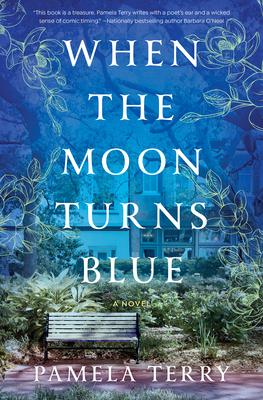
When the Moon Turns Blue, by Pamela Terry*****

Once in a while the odd thing happens,

Once in a while the dream comes true,

And the whole pattern of life is altered,

Once in a while the moon turns blue.

The tiny Georgia hamlet of Wesleyan is preparing to bury one of its own, and Mother Nature is preparing to cover the entire town in ice. But nobody—well, almost nobody—knows that a source of local tension is about to go nuclear, as someone is planning to topple and destroy the statue of a Confederate general in the park inside the boundaries of Old Man Griffin’s land. “The fight was just getting going good, and now somebody’s declawed the cat.”

This riveting, curiously charming and sometimes hilarious novel is the second by Pamela Terry, whose outstanding debut novel was The Sweet Taste of Muscadines. This one may be even better. My thanks go to Net Galley and Random House Ballantine for the invitation to read and review. This book is for sale now.

With the death of Harry Cline, we find ourselves at his funeral, a massively attended affair. But his wife, Marietta, develops a disabling, blinding migraine, and although they have been on the outs for years, Butter, her (former) best friend, comes to the rescue. By the time they’ve snuck out the side door of the church, we already know at least a little about both women, and now we want to know everything.

With just two novels published, Terry has already proven herself to be among the best authors when it comes to character development. Soon we’ll meet others—Marietta’s obnoxious brother, Macon and his beleaguered wife Glinda, who will have a large part in this story and is one of my favorite characters, as well as a host of others, who have smaller roles but are each so unmistakably established that it’s no work at all to keep track of them. But perhaps her finest achievement here is in creating a masterpiece that is ultimately a feel good book, despite the use of a red hot real world controversy within its pages.

I generally read several books at a time, and this one is the one that I saved for bedtime, because I wanted to be able to read it uninterrupted, and it is the one I wanted in my head when dreams came. It didn’t let me down.

This inspirational work of Southern fiction stands shoulder to shoulder with the finest classics, To Kill a Mockingbird and Fried Green Tomatoes. I wholeheartedly recommend it to you.

The Sweet Spot, by Amy Poeppel*****

“Brood parasites, like certain birds, intentionally lay their eggs in the nests of other birds.”

Amy Poeppel is fast becoming one of my favorite authors; she wrote Small Admissions, Limelight, and Musical Chairs, and I read and loved them all. Her new novel is The Sweet Spot, and it is destined to become one of the best books of 2023. My thanks go to Net Galley, Atria Books, and the author for the review copies.

One of the aspects of Poeppel’s writing that sets her apart is her ability to create female characters that are so dynamic, so well developed that I feel as if I know them. Here we have four that span a wide range of ages and income levels, yet somehow wind up forming an unlikely sorority. The first, Lauren Aston-Shaw is an artist, and she’s in the midst of moving into a brownstone in New York City’s famed Greenwich Village, along with her husband, children, and large dog, Bumper. The boxes are only partially unpacked when she receives a mostly-delightful surprise: a prominent businesswoman and influencer has decided to place a massive order of Lauren’s handmade porcelain for her boutiques. The house is already in a state of happy chaos, and it’s about to be more so.

During a conversation with Felicity—the retailer in question, who is pregnant—Lauren makes an offhand remark, which Felicity interprets as an engraved invitation to break up the decades-long marriage of the baby’s father, Russell. Miranda, the spurned wife, learns of Lauren’s role and decides, in a fit of grief and rage, to burn Lauren’s life to the ground. Miranda, then, is our second of the four women.

Olivia, our third main character is one of Felicity’s employees. She is in her twenties, low on the management chain, but she is ambitious, hardworking, and determined to climb; that is, until she becomes a casualty of Miranda’s rampage. Olivia is also the beloved daughter of Dan, who runs The Sweet Spot, a neighborhood bar located in the lower level of the brownstone currently occupied by the Shaw family. Dan is a lovable, level-headed sort, and through his eyes, we see the drama unfolding between Lauren, Miranda, and Felicity through a more objective lens.

The novel’s promotional blurb tells us that these are the women that the story is about, but I would add one more. Evelyn is Lauren’s mother; they have a complicated relationship. But under the strain of the sudden and unexpected increase in work, Lauren reaches out and begs her mother to come assist her with the children until she has things in hand. Evelyn can only stay for a weekend; she has so many social obligations back home. And yet, a weekend grows to a long weekend, and then to a week. Evelyn is far too interesting to be considered a side character; she is our fourth main character.

Despite her despair and fury, Miranda finds herself caring for Russell and Felicity’s baby; it is supposed to be for a couple of hours, but in the solipsistic way of the wealthy and entitled, both parents depart for the West Coast without making childcare arrangements, and Lauren and Olivia find themselves also assisting as hours turn to days, and then to weeks.

This story has everything I want in a novel, and when I got a go-to-bed-and-die flu virus, I curled up in bed and spent my waking time there reading it. I’ll tell you from experience that it’s good for what ails you. The plot is deftly managed, and that is no small feat given its complexity. The pacing never flags and no balls are dropped (except possibly Russell’s.) The dialogue sizzles. But the thing that turns a good novel to a great one is Poeppel’s insight into the human condition. Her level of perception is what makes the characters shine, and it’s also what makes the entire book drop-dead funny. Lastly, Amy Poeppel is one of a very few authors that can write a feel-good story that never insults the reader’s intelligence.

Admit it. You need this book! Happily, it will be available to the public January 31, 2023, and you can pre-order it now. Highly recommended.

The Matchmaker’s Gift, by Lynda Cohen Loigman*****

“The heart is big enough to hold both grief and love.”

I read Loigman’s debut novel, The Two-Family House, followed by The Wartime Sisters, and I loved them both, so when Net Galley and St. Martin’s Press invited me to read and review The Matchmaker’s Gift, I leapt. Once again, Loigman has me at hello. This outstanding historical novel is for sale now, and you should get it and read it.

The story is told from the point of view of two protagonists, a woman and her grandmother; they were close, but Sara the grandmother has died, so her story is told in the past, beginning in 1910, when she arrives in the U.S. as a child, along with her family. Abby is her granddaughter; her story begins in 1994. Their stories are told alternately, but both are in the third person omniscient and told in a linear time frame, so I am free to lean back, relax, and get lost in their stories, without any confusion or doubling back to check things.

Sara was a matchmaker, although she initially had to be very careful, because Jewish tradition dictated that matchmakers be married men, and she was still just a girl. But she was gifted with visions of a sort, and could tell who belonged together. And so she was forced to create matches “in secret, pairing people together like a rogue puppeteer.” She never missed. And upon her passing, she leaves a cryptic message indicating that upon her death, Abby will inherit her special talent.

Abby is nonplussed by this, and even as she grieves her beloved grandmother’s death, she is confused as to what she should do. She’s a divorce lawyer, for heaven’s sake! Is she to toss her education and become a modern day yenta? She hasn’t even found a man for herself yet, let alone for others.

It’s always a joy to find a story that diverges from the well-worn path, and novels involving Jewish matchmakers—or any others, for that matter—are thin on the ground. But that is only a small part of this novel’s appeal. I love Sara and Abby; I almost feel they are my friends. I feel their sorrows and admire their courage and integrity. When either of them meets with unfair opposition, I want to smack their detractor with my cane.

But there’s something extra that’s infused into Loigman’s stories, an intangible but unmissable warmth. Nobody can teach anyone this. I can count on one hand the number of authors that can write heartwarming stories that don’t follow formulas or insult the reader’s intelligence. Loigman is one, and this makes her golden.

When I was halfway finished reading this glorious novel, I saw that an audio galley was available. I was a bit cautious, because I had already developed a firm sense of how these women sounded in my head, and I was afraid I might not like the narrators’ interpretations, but my concern was unfounded. I had a road trip ahead of me, and I listened to the next forty percent as I drove, and there wasn’t a single moment that I didn’t love. Narrators Eva Kaminsky and Gabra Zackman do a lovely job, and I have never had such a seamless transition from the digital galley, to the audio, and back again.

Highly recommended, and bound to be one of the year’s best loved books.