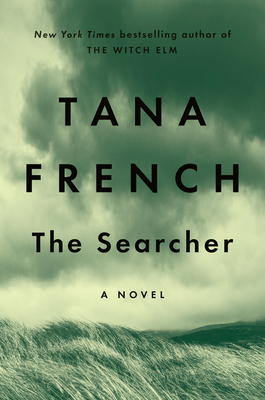
The Searcher, by Tana French*****

I was bewildered at first why my fellow reviewers are so stingy with their ratings for this novel, which I fucking LOVE, but then I realized, it’s because of expectations. Those that are looking for a seat-of-your-pants thriller or heavy, heart-thudding suspense won’t find a lot of it here. However, if you love strong contemporary fiction and/or literary fiction, here it is.

I was turned down for the galley, and so I checked out the audio version from Seattle Bibliocommons as soon as it became available. (Serious wait list; no surprise there.) I finished it this evening, and although I have other books on board, this is the one I keep thinking about. I’m particularly taken with the character named Trey, who is at least as important here as the protagonist.

That said, once again, this is not from the Dublin Street series, which I also love; it’s a stand alone novel, and an excellent one at that. I don’t want to give spoilers, but I will say this: thank you, Ms. French, for not hurting the beagles.

The narrator does a splendid job.

Highly recommended.

Love and Other Crimes, by Sara Paretsky*****

Sara Paretsky is a venerable author, one who—along with the late, great Sue Grafton—reframed the role of women in detective fiction nearly forty years ago. When I saw this collection available for review on Edelweiss, I jumped on it. It’s for sale now, and you should get it and read it—although there’s a caveat coming up that should be considered first.

Sometimes when a favorite writer releases a book of short stories, I find that I’ve already read a lot of them in one form or another. This time, nearly every story is new to me. One forms the basis of a full length book that I read a long time ago and have forgotten much of. Another is a reworked version of the short story “Wildcat,” which I purchased a short time ago. These are the only duplicate stories I can detect, and I am a voracious reader where this author is concerned.  Some of her work was included in Sisters in Crime anthologies, but I haven’t seen them. Not all of them feature the iconic V.I. Warshawski. The signature elements that include social justice issues such as women’s rights, immigration, racism, and the homeless are here in abundance, as one might hope.

My favorite selection is the second, “Miss Bianca,” a mystery in which a little girl saves a research rat and ultimately uncovers a dangerous conspiracy. Paretsky gets the tone of the child’s voice just right, making her bright within the bounds of what a child that age is capable of, and registering the thought processes and perceptions of her protagonist flawlessly.

There’s an historical mystery that involves a Sherlock Holmes retelling, and like all of that ilk, it bored the snot out of me, a first where this writer is concerned. I abandoned it halfway through. The five star rating is unchanged, because the reader can skip this story and still get her money’s worth and then some; also, I am aware that not everyone is as averse to this type of writing as I am.

Another story is set during the late 1960s, and the Civil Rights Movement is center stage. In order to convey the horror of the backlash by some Caucasian Chicagoans during this tumultuous period, the *N* word is included several times. I used the audio version of this book for some of the stories, including this one, and I feel as if it should have a warning sticker of some sort because hearing that word shouted angrily sent a cold finger right up my spine, and I don’t like to think of other readers, especially Black readers, listening to it within the hearing of their children. I don’t deduct anything from my rating, because the author includes a note about its use and her reasons for it at the end of the story; in fact, there is an author’s note at the end of many of these that makes the story more satisfying. But you should know that this word is there, so be ready for it.

When all is said and done, there are few authors that can deliver the way Paretsky can. With the considerations above included, I highly recommend this collection to you.

Memphis Luck, by Gerald Duff**

In 2015, I read and reviewed Gerald Duff’s Memphis Ribs, the opening book in the Ragsdale and Walker series. It was irreverent but hilarious, and although it straddled the line between edgy but funny and straight-up offensive, it didn’t cross over, and I was still laughing out loud when it ended. I figured I was a Gerald Duff fan for life. All of us love the great literary talents, but a writer that can produce a good, hearty belly laugh is worth his weight in gold. With that in mind, I decided I’d keep an eye out for whatever else he might publish.

When Brash Books offered this second book in the series for review, I leapt on it. I’m sorry to say that I don’t love it the way I did the first.  Many of the same components are there—colorful bad guys, snappy banter between the two detectives—but the overall quality is lacking in places, offensive in others.

The mix includes a group of rip-off artists that are stalking an evangelical preacher, and a special needs teenager that the blurb tells us is autistic and also homicidal. I’m glad the blurb clarified these things, because although the character obviously has issues, none of them would suggest autism to me or as far as I can see, to anyone that has worked with autistic teens. So there’s that.

What I do like is the snappy banter between the two cops, which is one of the aspects of the first story that made it work for me. And the bizarro characters—the preacher that uses a cowboy theme to the extreme in his sermons, the odd teenager that appears to idolize him—at the outset seem pretty damn funny too.

But the corrupt Southern preacher schtick has been done quite a lot, and it’s in danger of becoming a trope. I might have locked into the whole cowboy thing, which is unique, but then there are the race jokes. And it’s the way Duff approaches race that tips this book over a deal-breaking boundary. Yes, I get it that the nasty racial remarks are all made by bad guys, but do we need so many of them? It’s as if Duff has studied every racist he’s ever known and catalogued every ugly racial insult for his future use. Less is more, but there are passages where they’re on every page, almost as if the author is looking for a good excuse to dust them off and make ample use of them. At times it’s cringeworthy; then at other times, it’s just sickening. I’m not having a good time anymore at this point, and were it not for my fondness for Brash Books and the previous book in the series, I would have quit reading it midway through. There’s lots of dialogue and it’s a quick read, but then it would be even quicker not to read it at all, and I wouldn’t have this sour feeling in my gut. Sad to say, I think Duff and I are done.

I cannot recommend this book to you.

The Dirty South, by John Connolly*****

A few years ago I read and reviewed my first book in Connolly’s Charlie Parker detective series, and I became immediately addicted. Since then I’ve never missed an installment, and after the 17th in the series, A Book of Bones, I more or less stalked the internet to find out when I could find the next in the series. It doesn’t disappoint. My thanks go to Net Galley and Atria Books for this, the 18th in the series. It’s for sale now.

Here, Connolly steps away from the crossed-genre, pants-on-fire entries he’s written recently to scribe a prequel. A couple of new readers have inquired whether to read this before all of the other Charlie Parker books, or treat it as the 18th.  The fact is, you can take it in either direction. On the one hand, I have reached back and read a couple of the first in the series and whereas they are perfectly respectable detective novels, they don’t hold a candle to those he’s written more recently. Once I had read the 14th, which is where I began, I was spoiled and a wee bit disappointed by the earliest books in the series. So whereas it makes sense to start reading with this prequel, I fear some readers will notice a dip in quality if they read this masterful literary mystery Connolly has just published, and then dive into his earliest Charlie Parker books. Again, they aren’t badly written. But they aren’t brilliant, and the most recent five in the series, including this prequel, are. So take that and do as you like with it.

Parker is reeling, as the book unfolds, from the vicious murders of his wife and daughter by a killer that intended to slay him, but found them instead. He is convinced that their murderer is a serial killer, and so he has taken a leave of absence from the police force back home and is touring the country by car, chasing down every murder anywhere that bears a resemblance to theirs. He is a dangerous man, because he has no sense of self-preservation. He sees himself as a man that has lost everything, and such men will take risks that more happily situated investigators would consider unthinkable. He also has a source none of the others can access: his wife, his daughter appear to him now and then, and they tell him things that relate to the case at hand, things that nobody else knows.

Those familiar with the series know that Connolly’s most recent Parker books have veered more in the direction of horror, and they include a number of supernatural events that his earlier work does not. Here he steps away from it, and once again his only information from the great beyond is what the spirits of his loved ones share. His adversaries are purely mortal ones. And as to which is better, it’s hard for me to say. His last book prior to this one is a monster, and it includes a tremendous amount of historical research that I find appealing, along with some hugely original, sinister characters that surely must come straight from the bowels of hell. It’s amazing work.

But there’s something to be said for books like this one, too. Most of Connolly’s work is so edgy and so full of violence that I have had to take it in small bites, lest it affect my overall mood. I didn’t have to do that here. I can crawl under a quilt and read for hours without needing to come up for air. I always make sure I read something less malign for a few minutes before turning out the light, but at the same time, this is a much more comfortable read.

Which is not to say that it’s tame. It isn’t. Someone has murdered Black girls in this tiny Arkansas burg, and Parker pulls into town right on the heels of the most recent one. Right away, it becomes obvious that there’s shifty business going on. The town is miserably depressed economically, and the local robber barons, the Cade family, have a deal in the works to bring a large manufacturer to town.  The Cades stand to make a great deal of money, and the locals, poverty-stricken and jobless or badly underemployed, are convinced that better times are just around the corner.

And so it seems that nearly everyone has a stake in keeping the waters calm. The dead girls had to go and get themselves murdered, just when the deal’s about to go through? How inconsiderate. Yes, their killer should be found and brought to justice; but that can wait until the big dogs have signed on the dotted line.  Prosperity is just around the corner. A scandal might ruin everything, and Parker refuses to cooperate, insisting on justice for the murdered children. The nerve of him.

Connolly’s signature elements—the malign, solipsistic, endlessly greedy local bourgeoisie; the poignance of Parker’s grief and his communication with his dead family; and the fast paced, complex plot with a zillion characters and some snappy banter are all here in spades. As usual, his writing style is literary, and so this may not be the best choice for someone whose mother tongue is not English.

As always, highly recommended. This is indisputably one of the year’s best. As for me, I’ll be keeping an eagle eye out for the 19th Parker book, because nobody else writes like this.

A Private Cathedral, by James Lee Burke*****

A Private Cathedral is the twenty-third in the immensely popular Dave Robicheaux series, which began in the early 1980s. James Lee Burke has been called “America’s Best Novelist” by the Denver Post, and his books have been made into movies. Lucky me, I read this one free and early; thanks go to Net Galley and Simon and Schuster for the review copy. This book is for sale now.

Fans of this series—and there are many—will recognize all of Burke’s signature elements. Set in New Iberia, Louisiana, a small working class enclave about an hour from New Orleans, we find the usual wealthy, sleazy bad guys, in this case the Shondell family and the Balangie family; their victims, ordinary people with no money that scrape by the best they can; a pair of grizzly murders; and in this instance, a case of human trafficking. There’s always a woman or two ready to fling herself into Dave’s arms, even though he and Clete are supposedly getting old, and as usual, one of the women stands on the tops of his feet before she seduces him, or vice versa. (This has got to be some sort of private joke or reference on the author’s part, because you know that a writer with this level of skill cannot be inadvertently ascribing the identical quirky behavior to all of his protagonist’s romantic interests across over three decades of a series.)

And of course, best of all perhaps, we have Dave’s fiercely loyal best friend, Clete Purcell, a man that looks “like an albino ape” and whose impulse control is even worse than Dave’s, at least most of the time. He shows up in his pink Cadillac wearing his signature porkpie hat, and I smile. I can’t help it. Clete does this to me every single time, and I’ll bet a whole lot of other readers feel just the same way.

                “He was the trickster of folklore, a modern Sancho Panza, a quasi-psychotic jarhead who did two tours in Vietnam and came home with the Navy Cross and two Purple Hearts and memories he shared with no one. Few people knew the real Clete Purcel or the little boy who lived inside him, the lonely child of an alcoholic milkman who made his son kneel all night on rice grains and whipped him regularly with a razor strop…Nor did they know the NOPD patrolman who wept when he couldn’t save the child he wrapped in a blanket, ran through flames, and crashed through a second story window with, landing on top of a Dumpster…He hated evil and waged war against it everywhere he found it. I sometimes wondered if he was an archangel in disguise, one with strings of dirty smoke rising from his wings, a full-fledged participant in fighting the good fight of Saint Paul. “

My sole complaint, a key one I probably wouldn’t give any other writer a pass on, is the way the author deals with his female characters. All the women and girls are mothers, whores, lovers, or children, and in some cases more than one of the above. No woman comes into the stories on the merit of her occupation, her character, or her abilities, aside from Helen, a long-running character that is exempted by virtue or being a lesbian and androgynous in appearance. (God forbid she be gorgeous and gay, or gorgeous and straight and completely sexually uninterested in Dave.) But the fact is, Burke has been writing and publishing great novels since 1965, and now he’s an 83 year old author and it seems unfair to expect him to change direction with regard to his female characters, or to suddenly regard them as equals in all respects rather than to nurture the whole pedestal package.

Moving on.

The story commences with Dave suspended from the sheriff’s department, and he’s behaving badly, embarking on a series of “dry drunks,” a term used liberally throughout this series and that I’ve never seen or heard of anywhere else. He’s so far out of line that Clete has to reel him back, when more often it’s the reverse. A teenager named Isolde is being sold by her parents, and Dave is attempting to rescue her. But it’s a useless endeavor because there is so much money and power buffering the offenders. Meanwhile, Clete is kidnapped and hung upside down and tortured by a being that seems otherworldly to him—mostly because it is. And this is a departure for Burke, a good one, as it turns out.

Those familiar with the series and the author know that redemption is at the core of every story he writes, and given the amount of mystic imagery that appears in his prose, it isn’t a long stretch to go from imagined spiritual beings to actual ones, which is what he does here. And I can only bow in awe at a writer—even one with residual sexist attitudes—that can take a long-running, iconic series like this one, a series that has run for more than 30 years, and decide to expand it across genres now. This would be remarkable for anyone, but for an octogenarian, it’s jaw-dropping.

I also enjoy the way he develops the side character, Father Julian, who is heroic and who pursues pedophiles and brings them to justice. Way to fight stereotypes.

I love the ending.

Highly recommended to Burke’s many fans, and to new readers as well.

A heartfelt tribute, featuring a lot of famous writers:

https://www.youtube.com/watch?v=3cwNHIsoHG0

Firewatching, by Russ Thomas***

Firewatching is the first in the Adam Tyler detective series, and also the first novel written by Russ Thomas. It’s been praised by Lee Child, and published by Putnam Penguin, an auspicious sign. Thanks go to the publisher and Net Galley for the review copy.

All of the right elements are here for a rip roaringly great tale, but the execution fell short. When I found myself drifting off while reading the digital review copy, I went to Seattle Bibliocommons and checked out the audio book. Sadly, I couldn’t bring myself to listen to all of it, either. I kept with it to the 45 percent mark; skipped to 75 percent in hopes there would be something tantalizing that would reel me back in; and when that didn’t work out, I listened to snippets from there to the end.

Here’s what I like. Conceptually, it sounds promising. Tales of crazed arsonists are generally irresistible, and there haven’t been a lot of them published lately. Fiction writing is as prone to fad and whim as is anything else, as any reviewer can see. This story steers clear of dead, sick, or disabled siblings; Paris; alternate past and present narratives, and struggling alcoholic detectives. Detective Tyler resists his boss’s impulse toward stereotypes. There are two elderly women side characters, one of whom struggles with dementia, and Tyler is told that old women in small towns always love gossip; he refers to them often as “the old dears.” I know I am not the only Boomer that wants to smack that obnoxious character, and so Tyler endears himself to me by not going there. And actually, I like the two older women in this story a great deal. I also like the brief—maybe too brief—passages where we are inside the head of the firebug.

But alas, the story’s protagonist isn’t the arsonist, and it isn’t either of the elderly women. It’s Tyler, and Tyler just bores the snot out of me. I want him to just do something. I don’t need to know what he is wearing, what he is thinking, what he is feeling, wearing, feeling some more, thinking….

During my teaching career, I recall one impatient girl that was sent home for a few days because of her tendency to walk up to a teacher that was standing in her way—tutoring, or speaking to another student—and barking at him, “MOVE!” And I found myself channeling this student as I read and/or listened to this story. I don’t care about your damn wardrobe, Tyler, just move! Move it! Do something, for the love of…

Fine. Whatever.

A possible silver lining occurs to me, and that is that with this first in a series, all of the personal details of wardrobe and emotion may be emphasized in order to introduce the protagonist, and perhaps with the second in the series, the pace will pick up and we’ll be on our way. I surely hope so.

But for now, I can only write about what I know, and I know it would be wrong of me to urge you to purchase this book at full jacket price. If you’re going to read it, get it cheap or free, because most of the joy I see here is in potential, and future maybe-joy makes a thin soup indeed.

The Talented Mr. Varg, by Alexander McCall Smith*****

There are hundreds, perhaps thousands of mystery writers whose work falls within the cozy subgenre, but none of them hits exactly the right note the way Alexander McCall Smith does. His feel-good vibe is engaging, but it’s never smarmy or cloying; the reader feels respected. Add to that a spot here and there that is straight-up hilarious; I can think of no better time to read his work. This is the second in the Detective Ulf Varg series, and it is every bit as delightful as the first. Can you read this book alone even if you missed the first? Yes and yes.

My thanks go to Edelweiss and Pantheon Books for the review copy. This book is for sale now.

Detective Ulf Varg leads a quiet sort of life; after all, he’s a cop, and this is Malmo, Sweden, hardly a hotbed of crime. He is the lead detective for a special bureau, one that was introduced to us in the first in the series, The Department of Sensitive Crimes. Often the matters under investigation involve misunderstandings, deceptions carried out to avoid embarrassment, and cultural miscues. Ulf spends his down time teaching his deaf dog, Martin, to read lips and taking him to therapy for his depression.

There’s a lot of that in Sweden, you know. Northern latitudes.

And so, it is from his dog’s psychiatrist that Ulf receives a tip of a possible counterfeit dog breeder. Someone out there is breeding husky/wolf mixed dogs, which are then sold to handlers that furnish trained wolves to appear in movies and television shows. Fraud! This could be Varg’s biggest case yet. But then, that wouldn’t be saying much.

Meanwhile, Varg longs for intimacy with his partner, Anna, but he mustn’t act on his feelings. There are departmental policies to be observed, and she is married. Oh, how he pines for her, quietly and in private. He dreams of a woman that will hold his hand as he falls asleep at night, a woman that will touch her toes to his under the covers and wiggle them. There are other women of course, but none like Anna. So when Anna needs a matter of her own investigated on the down-low, Ulf is ready and willing.

The most amusing thread here, as far as I’m concerned, involves Varg’s struggle with bureaucracy. You’ll have to find out the particulars for yourself.

Smith’s novels are my favorite bedtime material, subtle humor that unknots my twisted muscles and helps me gain perspective on whatever worries of the day have climbed in with me. I daresay he could do the same for you, too.

Highly recommended.

Dead Land, by Sara Paretsky*****

Detective Vic Warshawski was born in 1982, a time when a woman advocating for herself, or another woman, or women on the whole were few and far between. Such a woman often spoke softly, hesitantly, and to reassure the listener that she wasn’t stark raving mad, she might begin by saying, “I’m not a feminist or anything, but…” And so for the lonely few of us that were uncloseted, audacious feminists, this bold, brazen, unapologetic character was inspirational. Vic is fictional, but Paretsky is not. It was leading lights such as hers that made me feel less alone. I have loved her from then, to now.

Paretsky is no longer a young woman. I know this because I am a grandmother myself, and she is older than I am. For her readers that wonder if she’s still got it, I have great news. She’s better than ever.

By now I should have thanked William Morrow, Net Galley, and Edelweiss Books for the review copies. You can get this book April 21, 2020.

Victoria’s young goddaughter, Bernie Fouchard appears in an earlier story, and now she returns. Bernie’s youthful passion and impetuous disposition counter Vic’s experience and more measured responses. I liked Bernie when she was introduced, and am glad she is back. Chicago’s shady politicians are about to quietly sell a prime chunk of the city’s park lands to developers; the corrupt nature of the deal makes it essential that the whole thing be done fast and with as little publicity or public input as possible. Bernie and a handful of others learn of it, and they protest at a meeting at which the city fathers had hoped to slide this oily project through. There are arrests, and soon afterward, Bernie’s boyfriend is murdered.  

At the same time, Bernie tries to help a homeless singer named Lydia Zamir. Zamir is brilliant and was once very famous, but everything crumbled around the time that her lover was shot and killed; she’s been living under a bridge, filthy, disoriented, playing her music on a child’s toy piano. Now Lydia is missing. Lydia’s champion has been a man named Coop, and Coop is missing too. Before pulling a bunker, Coop deposits his dog outside Vic’s apartment, earning her the enmity of neighbors that are already up in arms over the barking of Vic’s own dogs when she is gone. Now Vic has every reason to help find Coop, Lydia, and the murderer. At the same time the reader must wonder how the sleazy deal, the murder, and the disappearances are connected. The pacing is urgent and my interest never flags; the haunting mental image of Lydia and her small, battered piano tug at my social conscience, all the more so as the world is hurtled into quarantine.

Long-running characters Lottie and Max, who are like parents to Vic, and newspaperman Murray, a close friend of Vic’s, return here, and I love them all. No doubt this colors my response as well. I have known these characters longer than my husband of thirty years; at one point I realized that somewhere along the line, I had separated the other books I was reading (some of them quite good) from this one. I had my books-to-read category, but I had mentally shifted this story into the same category as my family business. I should check on my sister, who’s been ill; I wanted to set a lunch date with one of my kids; and I should check and see whether Vic is having any luck finding…oh hey. Wait a minute.

Can you read this story as a stand-alone? You sure can. However, this bad-ass, hardboiled Chicago detective is an addictive character; once you’ve read it, you’re going to want to go back and get the other 21 in the series. I swear it. You probably won’t experience the nostalgia that I do, but a damn good read is a damn good read, any way you slice it.

Highly recommended.

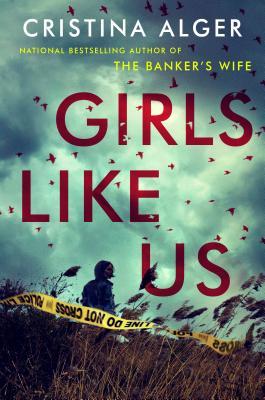
Girls Like Us, by Cristina Alger***-****

I received a review copy of this book from Net Galley and Putnam Penguin last summer. Since I received it after the publication date, I moved it to the back burner in order to prioritize galleys whose publication dates could still be met. January came, and I still hadn’t opened the book. Deeply ashamed, I checked out the audio version from Seattle Bibliocommons and listened to it in the evenings while preparing dinner. The audio version is three stars, but I suspect that if I had stuck to the digital review copy, it might have been closer to four, so I am rounding my rating upward.

FBI agent Nell Flynn, our protagonist, returns home after ten years away in order to bury her father and deal with his estate. She and her dad were estranged, and her mother died when she was a child; she has no siblings; she is also dealing with post-traumatic stress disorder, the fallout from an earlier case. I assumed incorrectly that this earlier case must mean that Nell Flynn either had, or was about to have her own series, yet no mention is made of this; as far as I can tell the PTSD has nothing, nothing, nothing to do with any other aspect of the story. Her boss urges her to seek treatment; she doesn’t want to because she’s hard-boiled, and yada yada. Moving on.

The body of a young woman is found, and then there’s another; since she happens to be visiting Suffolk County, her father’s partner asks Nell to lend a hand. She is recruited as a consultant, but she gets the sense that the local veterans don’t want her to dig deeply. Her father’s partner is a relative newbie, not part of the old boys’ network, and so she and he work together to try to solve the killings, but she is obstructed at every turn. Is there a cover-up taking place, and if so, is it because her father was culpable? First one thing and then another makes her wonder whether he might have killed them, and while she is at it, she also wonders if he had a hand in her own mother’s death many years ago, when she was quite small.

The thing that makes this story unique is the fact that the cop is investigating her own dead father. I also like the way the author deals with the mystery woman that her father’s will includes. I thought I saw how that thread was going to play out, and I was not even close to being right. I like Alger’s subtlety here.  I also like the medical examiner, who is female too.

The main challenge for me was as a listener. The reader that performed the audio version has a painfully wooden delivery and pronounces a couple of fairly common words differently from anyone else that I’ve heard, and each time she said them I was distracted away from the story line. The way Nell’s father’s old friend, Dorsey, is voiced sounds like a bad John Wayne imitation. So, should you read this book? If you enjoy crime fiction that’s character based, particularly with a female cop or detective, you could do worse. I wouldn’t pay full jacket price for it, though, and I don’t recommend the audio version.

Things in Jars, by Jess Kidd*****

Nobody writes better than Jess Kidd.

Bridget Devine—you may call her Bridie—is an investigator for hire. She’s small of stature, with green eyes and a mane of auburn hair. She smokes a pipe, keeps a dagger strapped to her ankle and poison darts in her boot heels, and wears “the ugliest bonnet in Christendom.” The year is 1863; the place is Britain. Bridie has been hired to find a kidnapped child. A dead pugilist named Ruby has volunteered his assistance; he had a soft spot for her while he lived, and now that he’s deceased, his affection for her lives on.

My thanks go to Net Galley and Atria Books for the review copy. This book is for sale now.

The subject of her inquiries is an extraordinary girl named Christabel. Christabel has unusual qualities; it is said that she is a merrow, a mermaid-like being that loves snails and salamanders can tell what others are thinking, has teeth like a pike that she uses freely against those that displease her, and can drown humans on dry land. Bridie is having none of it. “Christabel is a child. She is not a merrow because they are legendary beasts that do not exist in real life, only in fables.” So what if hundreds of snails appear everywhere the child has turned up?

The search for Christabel takes Bridie and her assistants all over Victorian London. Kidd is a champ with regard to time and place, taking us deep into the past. In particular, we visit the charlatans that collect and sometimes experiment with people born with disabilities or distinctions, as a form of sordid entertainment for those with prurient interests. There are some passages here that won’t work well for the squeamish.

The side characters are magnificent. We have Cora Butters, the housemaid that accompanies Bridie. Cora is seven feet tall and has muttonchop whiskers. Her huge hands make her a formidable defender when the going gets rough. There are others, but some of the most entertaining are the critters: a sarcastic parrot and a sage python are among them.

Those that have read Kidd’s first novel, Himself and her second, Mr. Flood’s Last Resort (in UK it was titled The Hoarder) will be delighted once again to find Kidd’s distinctive voice and brilliant word smithery in full flower once more. There are differences as well; there’s more of a story arc, and along with that we see the best figurative language and the wickedest humor after about the sixty percent mark. At the heart of it all is the same disdain for pretense, and the same deep respect for the working class.

My records show that I’ve reviewed over 1,300 titles over the past few years, and of the review copies I’ve received, I’ve chosen to read fewer than 10 of them a second time. This book will be one of them.

Aren’t we done here? Get a copy of this book and read it soon so that you can buy another copy to wrap up for Valentine’s Day. Because Jess Kidd’s books are peerless, and you should only give the very best.