In the Pacific Northwest, October evenings are a great time to stay home. Of course, some people put on their hunting jackets, grab their gear, and head out into the woods; some are party animals seeking a good Halloween bash; and some are charitable souls that organize haunted houses and other seasonal attractions, with the proceeds going to good causes. But a fun fact is that a majority of us do exactly what I plan to do: curl up at home with my beagle, my book, a cup of hot apple cider and a bunch of Halloween candy that trick or treaters never show up to claim. Can’t let all that chocolate go to waste, now can we. If my plan looks good to you, check out these scary reads that I’ve collected over the years. A note of apology: ten years with Word Press isn’t enough, apparently, for me to adequately intuit all of the layout options. I have tried mightily to post each of these choices in a reasonable arrangement with links, but there are gremlins involved. Once again, then, I must ask that if you wish to read my review of one or more of these goosebump-worthy selections, please enter the title in the search bar. All of them are waiting for you!

The Golden Gate, by Amy Chua****-*****

“If I told a jury that Japs killed Santa Claus, I could prove it beyond a reasonable doubt. Everything changes, Sullivan, once you’ve got a different color defendant in the box. There isn’t a jury in this state that wouldn’t send a Jap to the gas chamber if they had a chance.”

4.5 stars, rounded upward.

‘The Golden Gate marks the authorial debut for Amy Chua, a badass author whose stories will be read for a long, long time. My thanks go to Net Galley, Macmillan Audio, and St. Martin’s Press for the review copies. This book is for sale now.

Our story is set during two time periods, 1930 and 1944, in Berkeley, California. Detective Al Sullivan is investigating a murder whose roots are inextricably tangled with those of another, in 1930. Our point of view shifts often, both in time period and narrator. Most of it is told in the first person, either by Sullivan or by the elderly Genevieve Bainbridge, grandmother of the victim in the 1930 murder, now ready, in full Mama Bear protective mode, to do whatever she must to protect what family she has left.

The narrative has a strong noir flavor, and I halfway expect to find Humphrey Bogart around the corner, smoking and looking pensive. However, there is something Chua brings to the story that Bogart never did: a frank look at the injustices of the period, from the immense disparity of wealth among the denizens of Northern California, to the shameless victimization of people of color, who were much fewer in number in this part of the world then, than now.

I put this information up front, because in the early portion of the novel it isn’t obvious that the racism isn’t being highlighted, rather than propagated. I nearly discontinued reading this book because the “J” word is a hot button for me, and I initially believed that it was being used as a lazy way to depict the culture of Anglo Caucasians during this time period. I’ve seen it done many times, the use of the racial slur against Japanese because the author believed it increased the story’s authenticity. In Chua’s case, it’s the opposite.

The solution provided at the end relies overmuch on the journal of Mrs. Bainbridge, and in places, the details of the murder, and the motivation for same, are a stretch. For that reason, I initially rated this fine novel four stars. In the end, though, I realized that the social justice component more than makes up for it.

I was fortunate enough to have both the audio and digital galleys. Although the readers do a creditable job, the complexity of the story, including frequent changes of place, time period, and point of view, make for a confusing listening experience. For that reason I recommend the print version over the audio, unless both are available together.

Highly recommended.
Blind Fear, by Brandon Webb and John David Mann*****

Blind Fear is the third book in the red hot series by former Navy Seal Brandon Webb and concert cellist turned author, John David Mann. When the two of them collaborate, the pages jump. My thanks go to Net Galley and Random House for the invitation to read and review; this thriller is for sale now.

In Cold Fear, the second in the series, our protagonist, Finn, is on the run. He’s a SEAL for the U.S. Navy, an elite combat diver, but corrupt elements have framed him for the slaying of his closest team members, and until he can prove his innocence, Finn needs to be invisible.

He’s good at it.

Now he’s moved on from Iceland to Puerto Rico, and he’s been renting a room from Zacharias, an elderly man that supports himself and his two grandchildren by running a café. He works in the café in exchange for room and board. But now there’s trouble; his two grandchildren haven’t come home. Zacharias would go and look for them, but Zacharias is blind.

There’s nobody better at ferreting out secrets than our man Finn, but doing so puts him at risk. He’s deliberately stayed clear of the city because there are so many military people stationed there. The hinterlands have been safe, and until he can come forward with the proof he needs to save himself, the hinterlands are where he belongs.

But then…what about the children?

Like those before it, this is a taut, tense thriller with multiple massive emergencies weaving in and out of one another. We have Finn’s need to avoid discovery yet, find the missing children; now add a serial killer known as El Rucco who’s left grizzly human remains all over the island and a major hurricane, and friend, this is not your bedtime reading material. Read this one sitting up and with the lights on. Just trust me.

Through all of this, Finn also deals with personal baggage that he tries to ignore, but which comes to him in dreams. He has blocked out a large portion of his early life due to trauma, and he has “questions that had hung over him for thirty years like a kettle of vultures.” This is no soap opera and so we see and hear very little of it, but the snippets that intrude during Finn’s unguarded moments heighten the suspense and the reader’s sense of dread.

There are other praiseworthy attributes I could discuss; as we are introduced to the setting, we have brief but meaty passages that serve to inform us about the injustices that are meted out to this lovely but impoverished nation, and the way that the U.S. government has kept its boot on the necks of the people that live there. But all of this remains secondary to the story itself, and the focus is tightly maintained. The research is meticulous, and the organization is stellar. The development of the protagonist is outstanding; the secondary characters, particularly Zacharias and the older grandchild, Pedro, are visceral and memorable, and I would be delighted to see them again.

Highly recommended to all that enjoy a true thriller.

Murder Off the Books, by Tamara Berry*****

“There came a time in every crime solver’s life when they wanted to stop getting stuffed in the backs of vans and facing down danger at every turn.”

My thanks go to Poisoned Pen Press and Net Galley for the review copy. This book is for sale now.

Tess Harrow lives with her daughter, Gertrude, in a tiny hamlet in Washington State. She’s taken the hardware store she inherited and had it redone, and so now it’s her bookstore. But the locals are a bit leery of Tess; everywhere she turns, somebody drops dead. To reassure them that she is normal and trustworthy, she’s throwing a gala bookstore opening; wine, cheese, books, and…a corpse.

Well, heck.

But the good news is, Tess is a pretty decent sleuth. She’d be a lot better if she knew when to shut up, though:

“His words became a snarled growl. ‘Has anyone ever told you that you talk too much?’ Everyone, all the time—and she wasn’t about to stop now.”

This book, and this series, contains exactly what I like to see in a cozy mystery: colorful characters, an easily followed plot, and a good deal of whimsy.

Because I was running late, I checked out the audio version of this story from Seattle Bibliocommons. I like the reader, and the narrative is easy to follow, even for a text-oriented reviewer like me. I highly recommend this book in whatever format is your favorite.

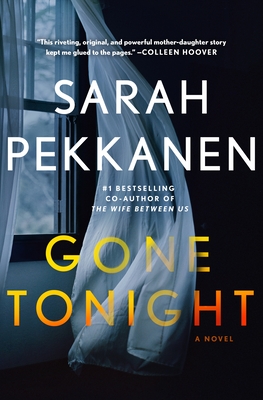
Gone Tonight, by Sarah Pekkanen*****

I’ve been reading and enjoying Sarah Pekkanen’s novels for years now, but Gone Tonight is far and away the best of the bunch. My thanks go to Net Galley, Macmillan Audio and St. Martin’s Press for the invitation to read and review. This book will be available to the public August 1, 2023. If you love psychological fiction or thrillers, you should order it now.

In her previous thrillers—the ones I’ve read, at least—there is similarity. She’s written about women ganging up on one woman, and love triangles, or what appear to be love triangles. This one is different, and it’s better. Here we have just two characters, mother Ruth and her young adult daughter Catherine. The unseen character is James, Catherine’s biological father. Throughout the story, Ruth is vigilant, always watchful. She’s afraid she’s being stalked, or investigated, or otherwise watched. Ruth isn’t merely careful; she keeps a bug-out bag ready for each of them, varies her routine to where she really doesn’t have one. She doesn’t take the same exact route to any of the places she frequents regularly. To see and hear this character, one would think that the CIA, the Mafia, and all of the cartels were out to get her and kill her.

Early in the book, Ruth provides Catherine with some hard news: she has early onset Alzheimer’s. I tell you this in particular, because when I saw it, my eyes glazed over with boredom and I thought that this thriller wasn’t going to thrill me at all. I nearly slid the book onto the bottom of my stack, and that would have been a terrible mistake, because this is *not* an Alzheimer’s story.

Catherine has never met any of her relatives; Ruth lies to keep her from investigating them. But now Catherine is an intelligent adult, and there is the internet. It’s mighty hard to keep a secret these days, and that’s rough for Ruth, because she’s got a lot of them, some bigger than others. As Catherine digs, she is surprised, and this makes her dig even harder. She keeps finding things, and Ruth keeps changing her explanations. It isn’t long before Catherine realizes she’s been lied to, and she stops telling Ruth what she discovers.

The format Pekkanen uses is an effective one, and it’s easy to follow. She changes the point of view in the standard way from one to the other and back with both sides told in the first person, but the tricky part is how to provide Ruth’s narrative. Catherine can give us her first person narrative and we think nothing of it, but Ruth talks to no one except her daughter, and even so, she lies to her daughter all the damn time, so under what circumstances will she spill her guts to us? The solution isn’t all that original, but it’s effective and reasonably believable. Ruth has a secret diary that she’s writing for Catherine to have when Ruth is gone. It requires me to overlook the unlikelihood of someone as obsessively private as Ruth sitting down and documenting the whole shooting match, including names and dates in writing, but this is such a fun book that I set my momentary disbelief aside and keep reading, because I have to know what happens next.

Once we are past the Alzheimer’s passage, my attention is rapt, but friend, the last ten percent of Gone Tonight is one for the ages! I rarely say this, but this creepy little novel would make an amazing movie or miniseries.

Actor Kate Mara reads the audio version, and she does a fine job. Highly recommended!

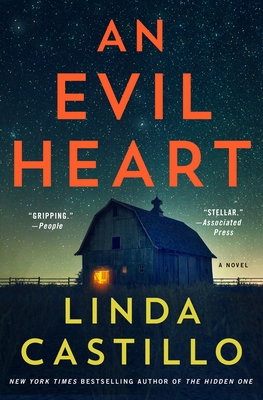
An Evil Heart, by Linda Castillo****

Four stars for the printed version.

Although An Evil Heart is the fifteenth entry in the Kate Burkholder series, it is my first, and also the first time I have read a book by Linda Castillo. I came to this one on the advice of Goodreads friends, and they weren’t wrong. My thanks go to Net Galley, Macmillan Audio, and St. Martin’s Press for the review copies. This book is available to buy now.

Our story is set in the fictitious town of Painter’s Mill, Ohio, where the Amish make up about a third of the population. Kate Burkholder, the chief of police here, is preparing for her wedding when a call comes in about a bizarre murder. A young Amish man, Aden Karn, has been shot with a crossbow and left to die. This would be unusual anywhere, but for the peaceable Amish, it is a tremendous blow. Who would do such a thing? And then there’s another murder as well. Are they linked, and if so, how?

Of course, things are not what they seem. Eventually, Emily Byler, Aden’s girlfriend, comes in to the station accompanied by both of her parents. Emily has finally confessed the horrible deeds that Aden has visited upon her. As the girl, burdened by “a dark mix of horror, shame, and grief,” buries her face in her mother’s shoulder, her mother says “Let me tell you about Aden Karn. The devil whispered his name and Aden Karn took his hand and went.”

But Emily didn’t kill Aden, so the case is far from being solved; if anything, it’s become more complex. Now Kate wonders whether Aden did such things to other girls as well.

At the outset I listen to the audio version of this book, and friend, it’s dreadful. For awhile I wonder whether it’s read by an A.I., because the sound is choppy, the words cut off in a way that suggests it’s not the fault of any narrator. But as I reach the 20th percentile, I realize that actually, the reader is not doing well, either. When it comes to voicing the male characters, the narrator sounds amateurish, and I have never said this about a narrator before. I begin to dread opening this book again, and that’s when I abandon the audio entirely and settle in with the digital review copy instead. It is the right thing to do. Castillo is a good author with a poor narrator, and I hope the glitches in the sound quality have been dealt with now that it’s publication day.

The ending is somewhat predictable, but not until the last quarter or so of the book. I would cheerfully read further entries into this series, and can tell you from experience that you can jump in right now without concerning yourself over the first 14 books if you choose. I recommend the printed version of this book to all that love the genre.

Mastering the Art of French Cooking, by Colleen Cambridge****

This charming cozy mystery, set in Paris during the postwar years, had me at hello. Tabitha is an American expat, and her best friend, Julia Child, is teaching her how to cook. But one evening, during one of the Childs’s many soirees, a woman is murdered…and the knife in question came from Julia’s kitchen!  To make matters even worse, the victim was carrying a card with Tabitha’s name and address on it when she was found. For some young women, this would be a wakeup call, and the morning would see them on the next available plane to Detroit; but Tabitha is made of sterner and more curious stuff, and so she begins snooping.  

My thanks go to Net Galley and Kensington Books for the review copy; this book is for sale now.

To cope with the horror of the previous night’s events, Julia is roasting a ham.  “I just had to take my mind off everything. Can you even believe it, Tabs? Someone murdered a woman in this building—with my knife! That means they had to have been in my kitchen! This kitchen!”

Like many an amateur sleuth in other mysteries, Tabitha begins poking around. Sometimes she has smart ideas, and at other times she is breathtakingly dense, but there is never a time that I am thinking about the author rather than the protagonist, and that means that I believe the character. There are some familiar tropes and the occasional cliche: “She knew too much!” But it never becomes a problem, possibly because this is a novel that doesn’t take itself too seriously. Now and then the author breaks down the fifth wall, or nearly so. For example, Tabitha tells us that she knows what to do because she has read plenty of Nancy Drew mysteries.

The solution to this whodunit is fairly transparent, and I am able to predict the solution, along with the conclusion of the additional thread of incipient romance early in the book, but the whole thing is so adorable that I never become annoyed. “Just like an Agatha Christie novel—all the questions answered at the end, and the villain is caught, and everyone else is happy.”

Because I had fallen behind, I supplemented my review copy with the audio version, obtained from Seattle Bibliocommons, and narrator Polly Lee does a brilliant imitation of Julia Child! In fact, all of the passages involving Julia are brilliant, and that is my favorite aspect of this story.

Sometimes an author manages to step on multiple pet peeves of mine, and yet I emerge pleasantly entertained anyway, and that’s what has happened here. This is light reading, but it isn’t insipid. I look forward to reading the next in this lovely new series. Recommended to cozy readers.

With My Little Eye, by Joshilyn Jackson*****

Joshilyn Jackson is one of my favorite writers, first as an author of brilliant—and often hilarious—Southern fiction, with bestsellers such as Gods in Alabama and Almost Sisters, and now with acclaimed suspense novels. All of the latter have titles that use the names of children’s games to chilling effect. She began with Never Have I Ever, followed with Mother May I, and her current release, With My Little Eye. Jackson never disappoints.

My thanks go to Net Galley and William Morris for the review copy, though I’d have paid cold, hard cash if push came to shove. This book is for sale now.

Meribel Mills is an actor with a past and a problem. Years ago, she fled her hometown in Georgia and her marriage following a traumatic surgery, but she realized her dream of becoming a working actor. But a persistent stalker has caused her to flee Los Angeles with her adopted daughter, Honor, and now she’s back in Georgia, laying low, working locally, and stalking her ex-husband.

Wait. What?

This intrigues me, the notion that a stalker might also be stalked. Meribel’s intentions are benign, as she wistfully revisits the past, but she’s also over the line, obsessively following her ex’s social media accounts, mostly via his second wife, and at one point following them out to dinner. The heck? And so I wonder if that will be the focus of the story.

But Jackson never does anything predictable, and that’s part of what keeps me coming back.

Throughout the story, I am on the back foot, trying to ascertain which of her would-be swains is a genuinely nice guy, and which is the creepo. At one point I begin to wonder if she has multiple stalkers! And Jackson makes a strong point about the worthlessness of law enforcement when it comes to dealing with stalkers and women threatened with violence:

“Rape threats, abduction threats, death threats, and I got forms and tutting and sad jazz hands…I made copies [of the letters] and took them to the police, who filed them for just in case he killed me, later. Then it would be serious. Then someone would find his ass and get him into prison. It would make a great Lifetime movie, with a purely fictional, leggy lady cop as the necessary strong, female protagonist. And me? I’d be playing the dead girl, once again.”

But the best part of this novel isn’t Meribel or her stalker(s), it’s the children. Daughter Honor is Autistic, though very bright and relatively high functioning. Her new friend comes with baggage of her own; both of these girls is so well developed that I feel I would know them if I saw them on the street. They develop a friendship with a homeless teen who also has an important role here, and these girls are what make the story shine.

The resolution is believable and nothing comes from left field. This is an outstanding read, and I recommend it to you.  

Collateral Damage, by J.A. Jance****

Collateral Damage is the 17th book in the Ali Reynolds mystery series by J.A. Jance. My thanks go to Net Galley and Gallery Books for the review copy; this book is for sale now.

As fans of the series know, Ali is married to B. Simpson, and together they run a small but increasingly prominent cybersecurity firm called High Noon, appropriately named given their Arizona home base. In this installment, B. is on his way to the airport when he’s run off the road. He and the man driving him are badly injured, and the police take the lazy way out, assuming that Ali is behind the crime. Who could better benefit from his death? The business is worth a lot of money, not to mention B’s fat life insurance policy. Soon Ali and her trusted High Noon employees investigate, assisted once more by Frigg, the nearly sentient AI that can go where no one is supposed to go, and find out things that aren’t legally obtainable.

Jance is a veteran mystery writer, and she’s produced bestselling novels for decades. This time around, the novel is better than what most authors can do on their best days, and yet it’s not Jance’s most riveting story. The pacing is on the sedate side, and it’s not until we are well and truly at the climax that it feels urgent. I suspect this is because the story’s protagonist, Ali, and the other repeating characters that I have enjoyed so much over the past few years are sidelined here. Once Frigg ferrets out the critical information that suggests that the crime is the work of a longtime serial killer, Ali provides the cops whose unsolved cases are involved, and we mostly follow them, alternately with the baddie.

A side note, but one worth mentioning: Jance has a couple of long-running series that are set in Arizona, and there have been times when I’ve reported that I dislike the tinge of stereotyping that I have seen in the way her Latinx and Black side characters are depicted. I feel as if she’s turned that around here, and having registered complaints in the past, it’s only fair to recognize that this time, she’s done well.

Fans of the series will want to read this in order to enjoy continuity between the last, Unfinished Business, and whatever she writes next. For new readers, I advise beginning the series with number 11, Clawback. Going back to the first entry—which of course, you can do—requires reading the series before it develops into a strong vehicle. If you start the series here instead, you will have the information you need to move forward, and the quality is as uniformly excellent as any other series I have read.

I recommend this book to Jance’s readers, and I recommend it to new readers as suggested above.

Unnatural History, by Jonathan Kellerman****

Unnatural History is the 38th entry in the wildly successful Alex Delaware series. I began reading it soon after the first volume was published; When the Bough Breaks came out in 1985, so the series has been going strong for close to forty years, and very well may continue for many more. My thanks go to Net Galley and Random House Ballantine for the review copy. This book is for sale now.

For the uninitiated, Delaware is a child psychologist; Kellerman is also a child psychologist, and his earlier books incorporated his area of expertise, placing him in a subgenre all his own. I’ve wished many a time that he would write more books along these lines, but he hasn’t done a lot of it lately, and in this book,  there are only glimpses of it. Nevertheless, the story held my attention.

I’m not giving you much of the plot, because there’s a synopsis for that, but in large strokes, the story is about the murder of the son of one of the world’s wealthiest men. He’s an odd duck, not terribly bright; his mother is dead, and his father is a hands-off parent, to say the very least. Our victim has unlimited access to money, and that’s about it. He makes a splash in the art world by photographing homeless people in costumes that reflect their deepest dreams. Find a derelict street person, and find out what they always wanted to be. A pilot? A surgeon? A ballerina? Offer them the chance to be photographed as if that’s what they are now, and give them a juicy wad of cash for their trouble; then send them back to the streets where they came from.

The family structure for this strange young artist is truly bizarre; the father marries, and he fathers a child. One child, no more. Then, a couple years later, he divorces his wife and does the same thing again. The children of these unions are never introduced to one another.

Thus, Milo has plenty of meaty material to work with, and with such strange circumstances, Alex is tapped to analyze the participants.

Delaware works part time as a kiddie shrink, often consulting when there is a court case involving insurance claims or divorce. However, he still has plenty of time to work for the Los Angeles Police Department, consulting on cases where a psychologist’s input is valuable. His BFF, Milo Sturgis, is a homicide detective, spurned by others in the department because of his sexual orientation. Often as not, Delaware ends up riding along as an unofficial partner.

This aspect of the series—the almost-a-cop—is usually where things start to slip a little, when anything does. I want to buy the premise, and so I can go along with it as long as it doesn’t become too obviously unrealistic. We all want to be entertained, right? So when Alex trots out to the patrol car and slides in beside Milo, I smile and nod, and I push away the little skeptic within me that says, “But really…?”

There have been a few Delaware books that have gone sideways for me for that reason, books where Delaware puts on his Kevlar vest and packs a revolver. I am happy to say that this isn’t one of them. In fact, the manner in which these details are dealt with is one of its strengths. First of all, there are times when Milo wants Alex to go with him, but Alex is busy. He has to be in court that morning. Thank you! Then later on, toward the climax, there’s a situation that (no spoilers) shakes out in a way I find the most believable of anything Kellerman has written. It’s satisfying, without sacrificing the fun of the story.

The whodunit at the end might be the nicest touch of all.

I recommend this mystery to Kellerman’s faithful readers, and to those that love the genre.