The Family Recipe, by Carolyn Huynh*****

“We all need to feel needed. Otherwise, what’s the point of living?”

Carolyn Huynh made her authorial debut in 2022 with The Fortunes of Jaded Women. It was one of my favorite novels not only of that year, but of all the thousand-plus galleys I have read since I began reviewing. She’s back again with The Family Recipe, and it’s every bit as good as the first. My thanks go to NetGalley and Atria Books for the invitation to read and review, but make no mistake: I would have hunted this thing down and bought it with my Social Security check if it came down to it. I wouldn’t have been sorry, either.

This book is available to the public now.

Once again, our protagonists are Vietnamese and Vietnamese-Americans, mostly women, and once again, they are siblings and other family members that must come together; it isn’t a voluntary reunion. And that’s where the similarities between the first book and this one end.

Duc Tran, the patriarch, has laid out the terms by which his children may inherit his fortune. Once upon a time, he was the Vietnamese sandwich king, and in order to become his heir, each of his four daughters must relocate to a city she doesn’t want to live in, and revive a down-at-the-heels restaurant in a now undesirable end of town. It’s a contest; that is, unless Duc’s one son, Jude, succeeds in getting married within the one year’s time limit of the contest. If he can do that, he wins. (His sisters aren’t worried; who would marry Jude?)

The story is told from several points of view; these include the siblings, their uncle—a shady lawyer, and Duc’s best friend; their mother, who abandoned them when they were small, when her mental health collapsed, and never went back; Duc’s second wife; and briefly, Duc himself, who mostly serves as a mysterious figure that doesn’t even return to the States to lay out his children’s requirements, sending their uncle as his proxy.  As the story unfolds, we learn more about each sibling, and about the traumas they have experienced, as well as their successes.

The thing that makes it work so well is Huynh’s unerring sense of timing. It’s a dramatic tale, but it’s shot full of humor, as we see at the outset, when we learn the sisters’ names. Their father was a huge fan of the Beatles, and so the girls are named Jane, Paulina, Georgia, and (wait for it…) Bingo!

There are plenty of twists and turns, and the dialogue crackles. The internal monologues are mesmerizing. This book would make a fantastic movie.

Since I was reading this galley digitally, I highlighted quotes that I thought I’d like to use in this review, but there are 28 of them. Obviously, I cannot share them all here, but let that inform you, if nothing else here has, how much I love this book.

Highly recommended to anyone that has a beating heart, at least a passing interest in Vietnamese-American culture and/or family stories, and can use a few good laughs.

The Road to Tender Hearts, by Annie Hartnett*****

The Road to Tender Hearts is aptly named, possibly the most big-hearted novel of 2025. Author Annie Hartnett first came on my radar in 2022 when she published Unlikely Animals, which turned out to be one of my favorites that year. When I saw that she had a new one out, I tried to temper my expectations; not many authors can write more than one novel so hugely imaginative, genre defying, darkly funny, and yet heartwarming. And it’s true; not many can. As it happens, however, Hartnett can, and she has.

My thanks go to NetGalley and Random House Ballantine for the review copy; however, this is one of those rare instances where I would have paid full cover price if that was the only way for me to read it. It will be available to the public Tuesday, April 29, 2025.

Like Hartnett’s previous novel, The Road to Tender Hearts has quirky characters and at least one sentient animal with an internal monologue, but the structure of the plot is not as complex—a thing I am grateful for, near bedtime—and there are fewer characters and settings. Both are magical, and the distinctions show that Hartnett is not one to write the same book, more or less, over and over. She has more imagination than that; she may have more imagination than ten or twelve ordinary people.

Our protagonist, to the extent we can identify just one, is PJ Halliday. PJ was living the good life, a happy family, steady work, and the esteem of his neighbors in Pondville, Massachusetts, but then his elder daughter, Kate, died when she was eighteen, and PJ, and his marriage, came apart. Since then, he’s been doing two things: drinking, and giving away chunks of his huge lottery prize to every sad sack and every player that comes with an outstretched palm. But all that is about to change.

The son of PJ’s late brother, from whom he was estranged, dies, along with his wife, leaving two elementary aged children without a home or family. It seems that PJ is the only relative these little tikes have. Luna and Ollie aren’t sure that PJ can be trusted, since their own parents and skeezy grandpa never could be, but he actually has some strong if rusty parenting skills, and he is determined to clean up his act for them. There’s just one other thing he needs to do: his old high school flame, Michelle Cobb, has recently become a widow. He never forgot her, and now he intends to drive to her retirement community, Tender Hearts, in Arizona and see if he can try again with her. Two little kids in the car? No problem. And now, add his (still living) daughter Sophie, who figures she’d better keep an eye on him and the tots, and Pancakes, the cat that has adopted him.

Pancakes has a unique talent: he can tell who is about to die, and he goes to them, so that oftentimes, their last breaths are taken as they stroke a purring kitty. And so, Pancakes goes on the trip too, but every now and then, he disappears and is found on the lap of some elderly individual in poor health. (Or, not elderly. Hey, Pancakes just knows.) It’s no coincidence that the story begins and ends with Pancakes.

PJ is not always the best decision maker, and there are several times when I wince at the choices he makes. Sometimes, someone else swoops in and fixes his blunders, and at other times, they’re left hanging in the wind, and we have to wait to see how they will affect the story’s outcome.

Every single aspect of this book is golden. The dialogue flows naturally, and the internal monologues, all told in the third person omniscient, are authentic and full of character. In short—and I rarely say this—there’s not one single thing about this glorious redemption tale that I would change.

Highly recommended to everyone that loves fiction, and that has a beating heart.

Rednecks, by Taylor Brown*****

“Law only serves them that’s in power. Ain’t no different than always…’Tis the victor who writes the history—and counts the dead.”

I’ve been an enthusiastic fan of author Taylor Brown since reading Gods of Howl Mountain, which was published in 2018. His new novel, Rednecks, is out now, and as with his earlier work, it is outstanding. My great thanks go to NetGalley and St. Martin’s Press for the invitation to read and review.

Brown tells the story of the Battle of Blair Mountain, a very real large scale battle, complete with machine guns, helicopters, tens of thousands of angry, armed miners, and the U.S. Army, an event which really did take place in the Appalachian Mountains in 1921. Over a million rounds were fired, and then the story was suppressed by the government, bosses, and big business media.

 In his author’s note, Brown tells us that the character of Dr. Muhanna, a heroic individual sympathetic to the cause of the miners, is based on his own great-grandfather. There is a meaty explanation of what parts of the story are based on the actual historical record, and what parts—small ones, to be sure—he has changed.

Apart from his skill as a writer and researcher, the thing that I have always loved best about Brown is his deep respect for the working class. It shines through every page of this novel. Mother Jones, the fiery Socialist labor organizer, is here as well, and she is possibly my favorite figure in American history. Unfortunately, she is not at her best here. Past ninety years of age and in poor health, she attempts to deceive the miners into quitting their struggle early once she learns that Washington, D.C. intends to send troops. It’s a pity that her many years of inspirational organizing and leadership are not on display here, but the facts are the facts, and this story is not, after all, chiefly about Mother, but about the miners, so I suppose that Brown has written it in the only honest way that it could be written. There are indeed passages that demonstrate her eloquence and loyalty to workers of every race and ethnicity.

As I read, I like to highlight passages to include as quotes in my review. This time, I came away with 53 quotes. Reluctantly, I am setting most of them aside; you will have to find them yourself. They’re better within the context of the story, anyway.

As a personal aside, I will mention that my own grandfather—“Papaw”—died of Black Lung disease in 1978 after having worked in a nonunion mine in South Dakota beginning in the eighth grade. He had to leave school and work fulltime, as there was not a social net back then, and he and his family would have starved if he had done otherwise. World War II brought him better fortunes, but coal dust, once lodged in the lungs, never leaves.

This is a gritty tale to be sure, one full of bloodshed and suffering, but also of immense courage and inspirational leadership. I read it in small bites lest it work its way into my dreams, until I reached the climax, at which point I had no choice in the matter, and was unable to put it down. This book is one of the year’s best. I highly recommend it to those that love labor history, historical fiction, or that just love a well-told story.

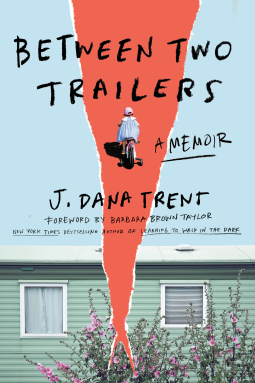
Between Two Trailers, by J. Dana Trent*****

And you thought your childhood was difficult.

Dana Trent is the child of two drug addicted schizophrenics who met and fell in love on the psych ward. The fact that she lived to adulthood is astonishing. Her story is captivating; my thanks go to NetGalley and Random House for the invitation to read and review. This memoir will be available to the public April 16, 2024.

“’Kids make the best hustlers,’ King told me the week after I was expelled from preschool. He lifted me onto the counter and coated his arms with palmfuls of petroleum jelly from the biggest Vaseline tubs Walmart sold. Then he greased up mine. ‘No one expects a runt in a Looney Tunes T-shirt to shank you,’ he explained. ‘Budgie!’ he said and pointed to my chest, then sealed my street name with a Vaseline cross to my forehead. ‘Budgie,’ I parroted, finger to my own chest…‘Guns are for idiots,’ he added. ‘Here.’ He handed me my first pocketknife, a foldout two-inch blade with a horse and buggy painted on the handle. Knives teach you to accept the inevitable. ‘You’ll get stabbed,’ he said, ‘but you’ll survive. No big deal.’”

The nickname “Budgie” was chosen because she was his lookout on drug deals. She would ride along with him, his trunk stuffed full of drugs, and when he got out, she was stationed on the highest available vantage point. If she saw someone—an ambush, the cops, anyone—she was supposed to sing like a bird. (Even other drug dealers and manufacturers questioned the wisdom of hauling a three year old on such expeditions, but King, as her father was known, was not easily influenced.)

At such moments, one might wonder where her mother was. Usually her mother was either unconscious in bed, or on the way into or out of that state. Because her father was awake and slightly more predictable, Dana considered him the more reliable parent. Before she was old enough for kindergarten, she understood that it was up to her to take care of The Lady.

My initial response to this scenario was to be bitterly angry at whoever decided to expel this child from preschool. Boom, there went that tiny girl’s one tie to the safer, saner world. How could anyone look at her behavior, her clothing, her hair and not call Children’s Services? I’m still fuming.

Miraculously enough, Trent made it to adulthood, and after years and years of therapy, she is able to lead a normal life. She’s achieved a remarkable amount, with a Ph.D. to her credit along with a solid career in academia.

And she can write! There is never a slow moment in this memoir, a hair raising read that I brought out at lunchtime, but never at bedtime. There is very little by way of dialogue, and that makes the swift, steady pacing even more remarkable.

Between Two Trailers is one of the year’s best reads. Highly recommended.

The Fortunes of Jaded Women*****

The Fortunes of Jaded Women by Carolyn Huynh, is hilarious and oddly touching. It’s the best debut novel of 2022, and it isn’t as if there was no competition. My thanks go to Atria Books and Net Galley for the review copy; this book is for sale now.

Mrs. Mai Nguyen was born in Vietnam, but has lived most of her life as a Californian. When we meet her, however, she has flown to Kauai, the home of a renowned Vietnamese psychic. The psychic tells her that the year ahead will be a pivotal one, the one in which she must repair her relationships with her sisters and her daughters. There will be one wedding; one funeral; and one pregnancy.

Well, now.

Nobody likes to be estranged from a family member, and yet it happens. But all of them? Both sisters, and her daughters, too? (No brothers, and no sons, either.) But surely, it isn’t her fault; after all, there’s the curse.

Chapter four is when everything kicks up a gear, and I have seldom laughed so hard. Mrs. Minh Pham is the first to arrive, and she has my attention from the get-go when she slips the waitstaff some money and explains there could potentially be a “small, tiny, little shouting match, with a propensity for small, tiny, little objects to be thrown through the air.” Mrs. Pham is the middle daughter, and is accustomed to being the mediator in any dispute. She takes all the precautions she feels are wise; she parks near the door for a fast getaway if necessary. She removes the sharp utensils as well as the chopsticks from the table, and requests paper plates and plastic cutlery. “Mai had a reputation for throwing things.”

As the women arrive at the dim sum restaurant, they flash their fake Louis Vuitton handbags and immediately set about trying to one-up one another with regard to social status and affluence, and especially—oh yes, especially—that of their respective daughters. Within three minutes, a donnybrook ensues, and the other diners, who are also Vietnamese and well acquainted with the curse of the Duong sisters, begin placing wagers on the winner. The sixty-something sisters commence throwing things at each other and are gently escorted out of the restaurant. They head for a bakery, and they get kicked out of there, too. Finally, the three of them end up on a park bench, their hair and clothing in dishabille, and yet none of them makes any move to leap up and go home.

These are not spoilers; this all takes place within the first 17 percent.

The chapters change points of view, moving between the sisters, their elderly mother, and their daughters, all in the third person omniscient. The fascinating thing is, these crazy behaviors, and the ways that they mold and shape their daughters and their relationships, all fit perfectly.

Although the setting changes, from Orange County, California to Hawaii to Vietnam to Seattle and beyond, this story is character based, and that’s my favorite type of novel. The skeezy men they date—mostly white boyfriends with Asian fetishes—make it even funnier.

The ending is perfect.

This is one of those rare galleys that I may actually read a second time for pleasure. One thing I know for sure is that Huynh is on my radar now. I can’t wait to see what her next book looks like!

Unlikely Animals, by Annie Hartnett*****

There are indifferent writers; good writers; outstanding writers; and then there are writers like Hartnett, that leave me with my jaw dropped down to my knees, thinking that I like to write, and you probably do, too, but friend, neither one of us will ever write like this. Not ever.

My thanks go to Net Galley and Random House Ballantine for the review copy.

Emma Starling is our protagonist, and she was born with healing powers in her hands. She went away to medical school, but was expelled for reasons that we don’t understand until later, and her healing touch is gone. She has quietly left school without telling a soul back home. She hasn’t even returned for a visit, but now she has been summoned unequivocally; her father is dying, and her mama wants her to come home. NOW.

There are enough points of view in this story to make your head spin. We have the graveyard crowd, for example, and since Everton, New Hampshire is such a tiny town, everybody knows everybody, dead or alive. When I first see that the dead are discussing the affairs of the living, I am dismayed, because the legendary Fannie Farmer has already done this in The Whole Town’s Talking. But soon it becomes obvious that this story isn’t derivative in the least; Hartnett takes this device and uses it in a different way, and it doesn’t dominate the story as Flagg’s does; these characters are there to provide a slightly more objective perspective than those that still live.

There are several points of view from among the living, too. And there are references throughout to the writings of Harold Baines, a naturalist instrumental in shaping the town and in particular, the iconic yet bizarre Corbin Park, which is open only to a chosen few. There are points of view offered from the critters as well; not all of the critters are real, however. And at the EXACT moment when I begin to think that the author should have pared this thing down, for heaven’s sake, because the organization appears to be all over the place, the narrative explains that “A good story doesn’t always follow an arrow, sometimes it meanders a little instead, so we hope you’ll excuse this tangent…It might seem unrelated, but sometimes a minor character doesn’t become important until later…The lives of the living often get tangled up in unexpected ways, especially in a town as small as ours, even when a ten-foot electrified fence splits it up.”

I howled, because it felt as if the author had read my mind!

An important plot point is the disappearance of Crystal Nash. Crystal was Emma’s best friend, and had lived with the Starling family as sort of an informal foster child. Crystal developed an addiction and disappeared; Emma and Crystal had had a falling out, and Emma tries not to think about her too much now. Clive, Emma’s father, seldom thinks about anybody else. He’s turned over every rock; slapped a poster on every telephone pole.

To say the least, it’s an interesting homecoming for Emma.

As if the many points of view don’t make for a complex enough story, Hartnett takes us back in time—sometimes just a few years, at other times, way back in the past—and I am awestruck at the way she pulls all of it together at the end, with no loose ends hanging. At the outset I had been sure that this story should have been streamlined, but at the end, when I look back to see what, if anything, could be cut without detracting from the story, there is nothing that’s superfluous. Not one thing. All of these odd bits and pieces are essential to the story she is telling; “meandering,” indeed.

Because I had fallen behind in my reading, I checked out the audio version from Seattle Bibliocommons, and it is brilliantly performed. Usually a story this complicated doesn’t work for me as an audiobook, but this one is outstanding and not hard to follow (although I did go back over the DRC for some quotes.)  Mark Bramhall and Kirby Heyborne do an exceptional job as narrators.

This is undoubtedly one of the finest novels we’ll see in 2022. Highly recommended in whatever format makes your heart happy.

Favorites From the First Half

From January to June, here are the ones I love best.

Black Cloud Rising, by David Wright Falade*****

Ten Steps to Nanette, by Hannah Gadsby*****

Hannah Gadsby appeared from seemingly out of nowhere—to those of us in the States—with a searing personal story about her own trauma that was built into her standup comedy routine. Nanette singed our eyebrows and made a great many of us absolutely love her. When I saw this memoir, I knew I had to read it. My thanks go to Net Galley and Random House Ballantine for the review copy; that said, I would have paid an exorbitant price for a personal copy had it been necessary, and I would not have been disappointed in what I bought.

This book is for sale now.

In some ways it seems useless to review this memoir, because those that are interested in reading it are already fans; those that recoiled in horror from her blunt revelations and assessments of the world around us won’t read it, no matter what I say. But for the few that haven’t seen her standup routine, I counsel you first to watch Nanette on Netflix, and then watch Douglas, too. Of course, you can go into this memoir green, but you’ll appreciate it more if you understand her references to the show.

For those that are fans but are wondering whether the memoir is going to be her standup material, recycled—and surely, plenty of other people have done that sort of thing—I can reassure you that it is not. There are references to Nanette, and there are also references to her newer release, Douglas, the show she named after her dog. But there’s a good deal of information here that you won’t get anywhere else, and that’s what makes it worth it.

After discovering that Gadsby made it in the entertainment business despite coming from no money whatsoever, with no connections to anyone in show business in her native Australia or elsewhere, and having a host of disabilities, foremost among them autism, I wondered whether her success was a piece of rare good luck, or the result of hard work and perseverance unseen by most of her viewers. It’s the latter. And not only has she worked long and hard to make it as a comic, she is also one hell of a fine writer. The depth of analysis and critical thinking in this memoir took my breath away.

Since I’ve been reviewing, I have built myself a bit of a reading routine. There are particular times of day when I read, and also times when I put my books down to get other things done. Gadsby destroyed my orderly timetable. It’s been a long time since any book, however enjoyable to read, has caused me to say, Nope. Not stopping. This one did.

I highlighted a lot of passages, but I’ve decided not to use any direct quotes here, because all of them are so much better in context. But I will say that I am truly ashamed at the way that teachers let her down. As a child she was disciplined, bullied, and received everything at school except the help she desperately needed. I am devastated that my profession failed this brilliant woman. I’d love to believe that things have improved significantly since she was a child, but in my heart, I know there are still little Hannahs out there. Some are falling through the cracks, whereas others are pushed. The horror!

Most of her story is not horrifying, however; it is immensely entertaining. Nobody could safely walk through the room while I was reading without having to listen to a passage or two. On the other hand, nobody minded much, either, because Gatsby.

The most engaging aspect of this memoir—and its author—is authenticity. She never pulls punches, whether describing her own poor choices, or those made by others. One or two very popular American performers have taken passive aggressive swipes at her, and she uses this opportunity to swipe back, right at the start of the book, no less! I wanted to stand up and cheer, but instead, I did it sitting down so as not to lose my place.

The only question remaining is whether you should read this brilliant, darkly funny and disarmingly frank memoir in print or audio. I haven’t heard the audio, but since she reads it herself, you know it’s good. On the other hand, there are several passages that are so well written that I went back over them before moving on; you might miss those with an audio book. True fans that can do so should get both versions.

Highly, hugely recommended.

Mother May I, by Joshilyn Jackson*****

Joshilyn Jackson is one of my favorite authors, and so I was delighted to see that she has another novel coming out this spring. My heartfelt thanks go to Net Galley, Harper Audio, and William Morrow for the review copies. This book is for sale now.

One of the things I love about Jackson is that she recognizes and includes social class as a large factor in the lives of her characters. I am initially sorry to see that her protagonist, Bree Cabbat, is married to a wealthy man, but once the story unfolds, it becomes obvious that the story won’t work any other way. Although Bree is rolling in it now, she grew up poor, the child of a single parent that took her back-to-school shopping at a Goodwill two towns over from their tiny Georgia town, carefully making sure that Bree’s classmates not recognize their own castoffs when Bree wore them. Later, theater classes helped Bree refine her accent to make her more employable; acting lessons helped her project the carefree confidence that is common to young adults whose families have money.

Now she is married to Trey, a man “who’d grown up with Scooters and Biffs and Muffys.” As the story progresses, there are frequent subtle reminders of this; Trey has a gun safe; Trey has a bottle of whiskey, a gift, that cost over two thousand dollars; their daughters are in an upscale school with a nice theatre program, and their daughters are enrolled in extracurricular activities like Quiz Bowl and Robotics. Yes, our Bree has come up in the world, alrighty. And so when their baby is kidnapped out from under her very nose, naturally Bree’s assumption is that there will be a ransom, and that she and Trey will pay it.

But this time, she is oh so wrong.

When the call comes, it turns out to be a very elderly woman bent on exacting revenge against Trey’s business partner, who is also his cousin. Bree must do exactly as she says, because if she sees any sign of police, “I’ll break his flimsy neck…I’ll twist his little head right around backward.”

Dear God.

 This story grabbed me by the hair and didn’t let me go till I was done with it. I was initially approved for the audio version, and by the time I was given access to the print version, I had finished the first galley. Ordinarily, when something like this happens, I write my review, submit it to both places, and figure my work is done here. But for Jackson I do due diligence and more, and it’s a pleasure to read her book twice, so I did. And while both versions are excellent, I give a slight edge to the audio version. Print is a desirable medium anytime one is reading any mystery, because sometimes we want to flip back to check a detail or two. But Jackson always records her own audio books, and so I know the interpretation of the reader is always completely consistent with the writer’s intention. And in this case, the key side character—Marshall, an ex-cop that was married to Bree’s best friend, now dead—has a distinctive voice that comes through somewhat in the printed version, but much more plainly in the audio. I love the way she voices him, and although Marshall isn’t the protagonist, his role in this story is critical. The narrative shifts between Bree, who speaks to us from the first person limited, and Marshall, who comes to us in the third person.

The story carries an added social justice component: it’s MeToo on steroids. The things we learn about the men in the story add complexity, and though there’s a trigger or two here, I suspect most female readers will find the denouement deeply satisfying. I do.

The ending would ordinarily be deemed over-the-top, but because I believe the characters and story so completely by the time we get there, I also believe the resolution.

The one thing I would change here, if I wanted to be picky, would be to find a way to inject some of the epic laugh-out-loud humor I have enjoyed in Jackson’s earlier books. But that’s a tall order, given the intensity of this one.

One way or the other, this book is guaranteed to be one of the year’s very best. Don’t let yourself be left out. I strongly recommend this book to you, even at full cover price.

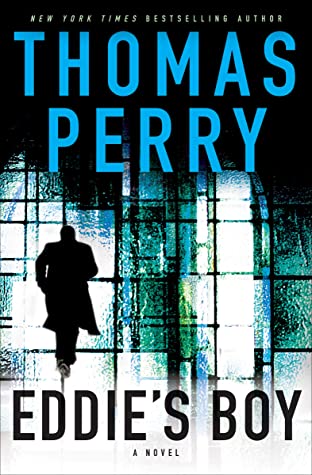
Eddie’s Boy, by Thomas Perry*****

Can we talk for a minute? It’s just…well, don’t you hate it when you have to kill four assassins that were gunning for you, but then they won’t all fit in your trunk? It’s the worst; but when Thomas Perry writes about it, it’s the very best. My thanks go to Edelweiss and Mysterious Press for the review copy of Eddie’s Boy. This book is available to the public today.

This mystery is the fourth installment of Perry’s hugely successful Butcher’s Boy series. For those that aren’t in the loop, Michael Shaeffer (as he currently calls himself) was orphaned as a small child and taken in by the neighborhood butcher, who raised him as his only son. But the butcher didn’t merely cut and sell meat for the dinner trade; he had a side line that involved cutting, and otherwise killing, people that other people wanted dead. Both trades were passed on to his adopted son Michael. Now, however, the butcher has been gone a long time; Michael is an older man, retired from all of everything, and happily married to a minor member of the British nobility, living in a splendid home in the UK. They grow lovely rosebushes together.

But then in the wee hours one day, Michael is awakened by a tiny but unmistakable sound that tells him someone is entering his home. Sadly, it is not a mere burglar, but hired muscle sent by a vengeful someone that has figured out who he is and where he lives. Now Michael and his wife cannot rest until he finds out who is pursuing him and disposes of them.

This book is the caliber of the early work that made Perry famous. The suspense and pacing starts out at ten and it stays there till the thing is over. There’s a particularly heart-stopping scene on a train early on that I don’t think I’ll ever forget. And the details make it even more chilling. Returning to the four corpses that can’t all fit in the trunk; after Schaeffer moves one dead killer to the passenger seat and belts him in, he tosses a tarp over the three men in the trunk, and then he drops his flight bag on top of them, because he means to jettison the men en route to the airport.

Can you read this thriller even if you haven’t read the first three in the series? Sure you can. In fact, the third in the series was still on my wish list when the chance to read and review this one appeared, and obviously I navigated it just fine. But I want the one that I missed extra hard now, and I guarantee that once you have read this one, you’ll want to read the rest also.

Highly recommended to those that love a good thriller.