
 If there is a prize for courageous literature, Picoult deserves to win it. I have grown frustrated over the years as I have watched countless novelists dodge and weave to avoid the mere mention of abortion as a means to deal with an unplanned, unwanted pregnancy, and I wanted to do cartwheels when I read the teaser for this book. I thank Net Galley and Random House Ballantine for the review copy, and the author and publisher for having the integrity to go there. This book is for sale now.
That said, this isn’t a fun read, and it in no way resembles the character based escapist fiction that is the hallmark of many of Picoult’s other novels. This one is about social justice, and fiction is an approachable medium with which to discuss it. Those seeking to avoid tension and who don’t want to think critically should read something else.
The story opens at a women’s clinic in the Deep South, and a shooter has just killed the owner of the clinic and taken others hostage. Our main characters are the shooter, George Goddard; Hugh McElroy, the hostage negotiator; Wren, Hugh’s daughter, who has come to the clinic without her father’s knowledge to procure contraception; and Louis, the clinic’s doctor. There are a host of second string characters, and they include clinic workers, clinic protesters, patients, and a spy that has wormed her way inside the clinic in search of the damning proof that fetal tissue is being sold illegally.
Because we start with the shooting and then work our way backward in time, with the narrative unspooling the background and viewpoint of each of about a dozen people, the first third of the book is agonizing. I am not usually one to peek at the ending of a novel, but frankly I couldn’t stand it. I couldn’t read the fine details until I knew who was going to make it out alive and who wasn’t. I suspect that some of the negative reviews I am seeing are because of this aspect of it. It’s a tribute to how effectively Picoult is able to create tension within a story, but she may have overshot the mark a wee bit.
The first half of the book examines the various reasons why some people are opposed to abortion, and it does it in painstaking detail. I began to feel as if she was doing the work of the Right-to-Lifers for them. More than anything, though, we see inside the troubled mind of the shooter himself. Goddard may be the best developed of the characters present here (though the story is primarily plot based in any case).
We also see the reasons why women choose to have an abortion, and we see the ambivalence and sometimes the regret of those that do so. In fact, my one real issue with this story is that there isn’t a single woman here that is having the procedure, not because she’s been raped or because she’s impoverished or abused, but because her contraception failed and she doesn’t want to be pregnant. These women exist; I know them. In fact, I have been one of them. Not every woman that seeks to terminate a pregnancy is traumatized, and apart from one character that passes in and out of the plot inside of a brief paragraph, these women are not represented here. But this is a relatively minor concern, and my rating reflects this.
Appropriately enough, the empirical voice of reason belongs to Louie Ward, the doctor. He’s seen a lot:
“Indeed, when the pro-lifers came to him to terminate a pregnancy and told him that they did not believe in abortion, Louie Ward said only one thing: Scoot down.” Louie respects the women that come to him, and during the conference the state requires him to have with those that have signed on for the procedure,
“He looked into the eyes of each of the women. Warriors, every one of them…They were stronger than any men he’d ever known. For sure, they were stronger than the male politicians who were so terrified of them that they designed laws specifically to keep women down…If he had learned anything during his years as an abortion doctor, it was this: there was nothing on God’s green earth that would stop a woman who didn’t want to be pregnant.”
I like the ending.
Picoult has done her homework here, observing abortions conducted at various stages of pregnancy and interviewing over one hundred women that have done this. Her end notes show the level of research on which this story is based. Few fiction writers go to such lengths, and I doff my metaphorical hat to her.
Highly recommended to feminists everywhere, as well as to the tiny sliver of the population that isn’t firmly planted in one camp or the other where the topic is concerned.
 Thanks go to Net Galley and Simon and Schuster for the DRC, which I received free in exchange for this honest review.
 Ed Scott Junior was one of the first Black catfish growers in the USA, a “Delta titan,” and he was the very first to own a catfish processing plant. My thanks go to Net Galley and the University of Georgia Press for the review copy. It’s inspirational, well written, and well sourced. The book will be available to the public tomorrow, July 10, 2018.
 Voice, voice, voice; nobody writes like Sharyn McCrumb. Here her dry, dark humor combines with her expertise in Appalachian culture and above all, her deep respect for the working poor, and the result is a masterpiece of an historical mystery. Thanks to Net galley for the DRC, and to Atria for sending a hard copy galley and a finished copy of this excellent novel. However, had I paid full freight, I’d have come away happy. This book will be available to the public September 12, 2017.
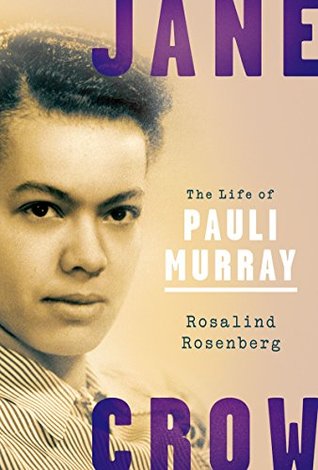 Pauli Murray is the person that coined the term “Jane Crow”, and was the first to legally address the twin oppressions of color and gender. I had seen her name mentioned in many places, but this is the first time I’ve read her story. Thank you to Net Galley and Oxford University Press for the opportunity to read it free in exchange for this honest review. This biography is for sale now.
 I was browsing the pages of Net Galley and ran across this gem of a memoir. Often when someone that isn’t famous gets an autobiography published by a major publisher, it’s a hint to the reader that the story will be riveting. Such is the case here; my many thanks go to Net Galley and Atria for the DRC, which I read free in exchange for this honest review. You can order it now’ it comes out Tuesday, May 9.
 I was originally turned down for a DRC of this novel when I requested it last spring, and I took the unusual step of following up with Atria, more or less begging for it. I’ve been reviewing titles for Net Galley for two years and have received nearly 300 DRCs, so it is a sign of my interest level that I went to this extreme to read this one in advance in exchange for an honest review, and it’s a sign of decency and responsiveness that a representative from Atria Books invited me to review it after all. Although I am grateful , this five star review is not about gratitude, but a measure of the importance I attach to the issues it addresses and the skill with which the story is told.
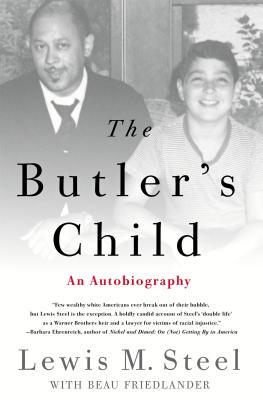 Lewis M. Steel has a long, noteworthy career as a civil rights attorney. He was an observer during the Attica Prison riots; worked for the NAACP during the Civil Rights movement, and later defended boxer Hurricane Carter against a frame-up charge of murder. And I was permitted to read this story free and in advance, thanks to Net Galley and St. Martin’s Press in exchange for this honest review. I rate it 3.5 stars and round upwards; it is now available to the public.
 Flo Kennedy was a force to be reckoned with, dismissed by a portion of mainstream Caucasian America as a kook, yet far too clever, too cagey, and too damn smart to be wished away by those that wanted to defend the racist, sexist status quo. When I saw that a memoir of her life was up for grabs at Net Galley I requested a copy immediately, and then took a long time to finish reading it. Part of my tardiness is a stubborn dislike for the PDF format, and so I apologize to University of North Carolina Press and my readers for being so slow; yet a small part of it was the surprisingly dry quality of the memoir. Given the subject, I had expected this biography to set my hair on fire.
 Second Daughter is historical fiction based on the true story of an enslaved woman that went to court and won her freedom in New England around the time of the American Revolution. I received this DRC free from Net Galley and Open Road Integrated Media in exchange for an honest review. And it’s just as well, because if I had paid any money at all for this brief but troubled book, I would be deeply unhappy.
