

“It was all so clear. She’d been so stupid…Cue the flying monkeys.”
The Maggie O’Malley series has taken wing. Thanks go to Henery Press and Net Galley for the DRC, which I was invited to read free in exchange for this honest review. In a crowded field, Valenti stands apart. Her snappy wit and precise pacing combine to create a psychological thriller that’s funny as hell. I didn’t know it could be done until I saw it here.
Maggie’s career is off to a promising start when she is recruited to work as a researcher for a major pharmaceutical firm. It’s a perfect chance to make the world a better place, and the beefy salary lets her take care of herself and send desperately needed funds to save her ailing father’s restaurant. It seems too good to be true, and we know what that means.
She’s barely through the door when she receives a mysterious meeting reminder on her refurbished new-to-her cell phone. Who is this person, and why would she meet her? And then, quick as can be, she sees the woman she is supposedly about to meet, die. Since the meeting reminder vanishes from her phone once it’s played, and since the reminder itself isn’t sinister, the police brush her off…until it happens again. Eventually, of course, she herself becomes a suspect.
This is a page turner, and we look over Maggie’s shoulder all the way through, wondering whether this friend or that one is to be trusted. Which date is a godsend, and which one is a snake in the grass?
The most notable difference between this story and others is the way Valenti sets up what looks like an error either on the part of the author or stupidity on the part of the protagonist, and then on the back beat, we see exactly why that was there, and that she anticipated our reaction all along. She does it over and over, and it’s hilarious. I feel as if the author is speaking to me as I read, howling, “Gotcha again!” It’s zesty, brainy writing. Valenti is the new mystery writer to watch.
This book is for sale now, and I recommend it to those that love funny female sleuths.
 By now you’ve heard the buzz about Kate Moretti’s newest novel, and it’s true; this is one you shouldn’t miss. Lucky me, I read it free thanks to Net Galley and Atria Books. This book is for sale today.
 I had never read Ward’s work before, and now that I have I will follow her anywhere. Sing Unburied, Sing is a literary masterpiece, and one that fits the time in which we live. It opens up all sorts of thorny questions for examination, but like most thorns, it stings. I received my copy free and early courtesy of Scribner and Net Galley. This title is available to the public now.
 The place is Amicus, Kansas; the Campbell family has come together to celebrate the birthday of their frail, ancient patriarch, Abel. Ultimately, though, their attention is drawn, unavoidably, to the youngest among them. Billy is a walking pharmacy, but he won’t be walking anywhere for much longer if something isn’t done.
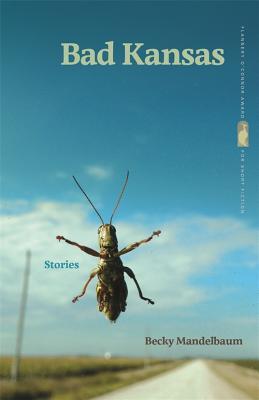 This collection won the Flannery O’Connor Award for Short Fiction, and it may very well win more awards as well. Thanks go to Net Galley and University of Georgia Press for providing me with a free advance review copy in exchange for this honest review. The collection is now available to the public.
 During World War II, the Japanese Imperial Army forced over 400,000 women into sexual slavery; though the Korean comfort women have been recognized for a long time, the survivors in the Philippines lived with the trauma and appalling social stigmatization for decades, unheard. Recently 173 of them, now very elderly, filed suit against the Japanese government. This collection includes interviews with 16 Filipina women whose lives were ruined by this atrocity. Thanks go to Net Galley and Northwestern University Press for the DRC, which I received early and free in exchange for this honest review. The collection is for sale now.
 Otto Penzler doesn’t mess around, and so when I saw this collection, I was all in. Many thanks go to Net Galley and Pegasus Books for the digital review copy, which I received free in exchange for this honest review. This title is now for sale.
 I had never read Ward’s work before, and now that I have I will follow her anywhere. Sing Unburied, Sing is a literary masterpiece, and one that fits the time in which we live. It opens up all sorts of thorny questions for examination, but like most thorns, it stings. I received my copy free and early courtesy of Scribner and Net Galley. This title is available to the public now.
 The German Girl arrived in my mailbox, a nice surprise from Atria Books. This novel is historical fiction, an international bestseller translated into many languages; it tells the story of Hannah, a survivor of the Holocaust who was sent to Cuba, and her namesake, Anna, who lives in present day Manhattan. This title is available for purchase now.
