
The Night Ship, by Jess Kidd****

Jess Kidd can write. I read and reviewed her debut novel, Himself, which I loved so much that I bought a copy to give as a gift; I called it “Sly as hell and fall-down-laughing funny.” I have read and reviewed her others as well:  Mr. Flood’s Last Resort (The Hoarder in Britain,) and Things in Jars. Her most recent novel, The Night Ship, is technically as good or better than any before, but I love it less, largely because of the expectations I brought to it, based on the other three before it. I’ll explain that momentarily.

My thanks go to Net Galley and Atria Books for the review copy. This book is for sale now.

The Night Ship is based on a true story, the sinking of the famous ship, the Batavia, in 1629. Our protagonist is Mayken, a child whose mother has died; she is being sent to her father in the company of her elderly nurse maid.  When the ship goes down, she is marooned on an island near Australia.

Over three hundred years later in 1989, a boy named Gil has also lost his mother, and is sent to live on the same island with his cantankerous grandfather. There isn’t much to do there, and he finds his imagination is captured by the tales of a shipwreck that occurred here hundreds of years ago.

The way that Kidd braids the stories of these two children into one well crafted novel is admirable. They are separate, and yet together, and the nearer we get to the conclusion, the more commonalities reveal themselves. Clearly, Kidd is at the height of her craft—so far, at least. Goodness knows what else she’s got up her sleeve. Her eccentricity and her appreciation of working class struggle sets her in a class beyond most authors.

And yet. When I read her debut novel, she captured my whole heart. I couldn’t stop talking about it, the way her adroit word smithery combined with a hilarious tale of sheer, spun magic. It remains a favorite of mine some five years and hundreds of novels later. And when the next, Mr. Flood, came out it wasn’t quite as magical, yet really, nothing else could be, and it was still vastly superior to what anyone else was writing, and I adored it. And the next one after it, while not as humorous, was wonderfully dark, and the ending made me smile. The author’s message was rock solid.

Every single one of her previous novels had an uplifting quality, and when I read the last page, I was smiling. And so I began to feel that I could count on Kidd to raise my spirits. In fact, I rationed this story out to myself, and when, given my penchant for reading multiple books at a time, I found myself buried in dark works—in one, I was freezing and bloody in the Ardennes Forest during World War II; in another, the devil had possessed a psychiatrist in a high security asylum; add into the mix a bio of a falsely accused prisoner in the U.S. that lost his entire youth before he was exonerated, and another young man being ‘re-educated’ in a North Korean prison camp; I figured I needed a good dose of Jess Kidd right now. Now. This instant!

And so I got her book, and then the ship went down.

So, I didn’t get what I wanted from this novel, but it had more to do with my own expectations than with any defect in the quality of her writing. Still, I cannot help feeling a trifle disappointed.

If you’re ready to go dark, this is your book. If you just love good writing, this is your book, too. But if you need a feel-good book to lighten your heart, get her debut novel.

Back to the Garden, by Laurie R. King*****

Laurie R. King is best known for her Mary Russell and Sherlock Holmes historical detective novels, but I have long preferred her contemporary mysteries. Back to the Garden is her latest of these, and it is excellent. My thanks go to Net Galley and Random House Ballantine for the review copy. This book is for sale now.

Our protagonist is Raquel Liang, a detective based in San Francisco. When a long-dead body is found in the garden of the Gardener Estate—a famous mansion and grounds that sound faintly reminiscent of Hearst Castle—Liang, who is working on a task force to find and identify victims of serial killer Michael Johnston, becomes involved in the case.

Rob Gardener is the heir to the estate, and he had clashed often and bitterly with his grandfather before his demise in the 1970s. Upon learning of his windfall, Gardener turned the manse into a commune, with murals on the walls of what were once imposing, grandiose rooms and vegetable gardens where more formal floral ones previously stood. Now the place is being restored, and as gardeners work to clear a thicket of overgrown hedge, a huge statue topples over, exposing the bones of someone long interred there.

Meanwhile, in a hospital in the big city, convicted serial murderer Michael Johnston lies dying. During the same period that the commune reigned, Johnston was spiriting girls and young women off so that he could murder them. Improved technology has provided a number of leads, but the window in which the cops can extract information from the old bastard is rapidly closing. Liang suspects that the body found on the estate, which dates back to the same time that Johnston was slaying women in the area, may be one of his, and so she makes frequent visits to learn as much about the place and its residents, past and present, as possible.

The intriguing bit about this mystery is that the members of the commune, other than Rob himself, didn’t use their birth names, and it makes them tricky to trace. With names like Meadow, Pig, and Daisy, they could be just about anybody. Is one of them the body beneath the statue?

King does a fine job of segueing from past to present and back again, and of juggling a moderately large number of characters. As I read, I never have to flip back to be reminded of who someone is. The reader should know, however, that this is not a thriller. It isn’t written in a way to grab you by the hair and make your pulse pound. The pace is a bit more laid back, but for some of us, that is a pleasure. I never lost interest, and I could read this thing while eating my lunch without gagging.

There’s a good deal of period nostalgia, and so I suspect that the greatest appeal will be to Boomers.

Highly recommended.

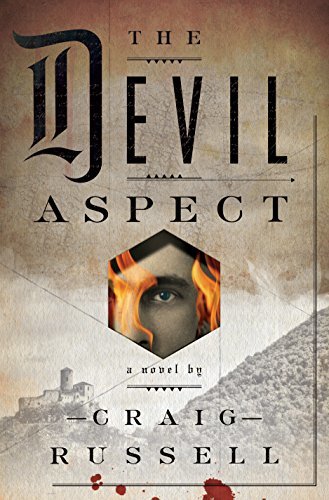
The Devil Aspect, by Craig Russell

3.5 stars, rounded upward. I read this creepy tale during the last half of October, and it is indeed a good way to get into the Halloween spirit. I am disgracefully late with my review—3.5 years late, as it happens—but I do thank Net Galley and Doubleday for the review copy. This book is, of course, for sale now.

Here is what drew me in. This is horror of the old school variety, with gothic towers and half a dozen criminally insane inmates. It’s set in Czechoslovakia, which I seldom see. The flavor, overall, is similar to the stories we told as children around campfires or late at night during slumber parties. Of course, it has a more adult approach, but even so, this is classic horror.

Our protagonists are Viktor Kusarek, a Jungian psychiatrist who comes to the asylum to conduct experiments on the patients, or inmates, in order to prove a theory, and police chief Lukas Smolak, who is pursuing a serial killer that is running amok in Prague.

This is a story that is more about the journey than the destination, though perhaps not intentionally so. Hearing about each of the six savage killers as Viktor interviews them is vastly entertaining. There’s one spot about a third of the way in, where a patient, partially sedated, is explaining that he is innocent, and also that a guest sorely provoked him. Always so critical! He was determined to impress her with his cooking, and indeed, the longer he worked at the stove, the more reasonable she became. Viktor points out that the guest had stopped complaining because he had her head in the skillet. I laughed out loud! The middle of this novel is unmissable.

There are three things I would change. First, the book is a little overlong, and could bear some tightening. Second, the whole Nazi menace has nothing to do with the problem or its resolution. It seems more like window dressing than anything else, but it doesn’t add a thing to the story. If I were the editor, I would cut that part of it out and voila, some of the tightening would be achieved. And third, the ending is so, so predictable. I stuck with the story until around the 85 percent mark, at which point I figured all hope of an ending other than what I expected was pretty much gone. At that point I skipped to the end. Yup. There it was. I would have liked a less formulaic ending.

Still and all, fans of old fashioned horror could do a lot worse. If this sounds like your kind of book after everything I have said, then go for it. I am old and cranky, and what seems obvious to me might seem new and clever to those that haven’t read many books of this ilk. And one way or the other, getting there is a lot of fun.

The Black Cabinet, by Jill Watts***-****

3.5 stars, rounded upward.

The premise sounds exciting: a cabinet consisting of African-American luminaries that advised Franklin D. Roosevelt, widely regarded as the best president the U.S. has ever had; well, as far as white folks went, anyway. Wouldn’t it be cool if he had Black advisors, even if it was kept away from the public eye?

It would have been cool, except mostly, he didn’t. Not really.

My thanks go to Net Galley and Grove Atlantic for the review copy. This book is for sale now; in fact, it’s been for sale for a long time. I’m very late with this review, because I was very late finishing the book, because it depressed me so deeply that I couldn’t face it.

Watts is a fine writer and has done the research. The issue for me is that this cabinet, which consisted of outstanding academics and other highly respected Black professionals, had incredibly little clout. They were kept secret. They were unofficial. And it sounds as though FDR tolerated them more than he appreciated them. Despite all of their labor and their eloquence, the New Deal left people of color standing in the rain without an umbrella.

The 1930s were a dreadful time for African-Americans, to be sure. The Jim Crow stranglehold on the South, along with less formal, mostly uncodified discrimination in the North, made it more or less impossible for most bright young Black men to make any headway in their chosen professions, apart from within the Black community (and for Black women? Fuhgeddaboudit.) So, it made my heart sing to learn that there was this exceptional group that advised FDR; but actually, they got crumbs off the president’s table. It makes me a little bit ill to see that this huge study turned up so very little.

For those still interested: there it is.

The Fortunes of Jaded Women*****

The Fortunes of Jaded Women by Carolyn Huynh, is hilarious and oddly touching. It’s the best debut novel of 2022, and it isn’t as if there was no competition. My thanks go to Atria Books and Net Galley for the review copy; this book is for sale now.

Mrs. Mai Nguyen was born in Vietnam, but has lived most of her life as a Californian. When we meet her, however, she has flown to Kauai, the home of a renowned Vietnamese psychic. The psychic tells her that the year ahead will be a pivotal one, the one in which she must repair her relationships with her sisters and her daughters. There will be one wedding; one funeral; and one pregnancy.

Well, now.

Nobody likes to be estranged from a family member, and yet it happens. But all of them? Both sisters, and her daughters, too? (No brothers, and no sons, either.) But surely, it isn’t her fault; after all, there’s the curse.

Chapter four is when everything kicks up a gear, and I have seldom laughed so hard. Mrs. Minh Pham is the first to arrive, and she has my attention from the get-go when she slips the waitstaff some money and explains there could potentially be a “small, tiny, little shouting match, with a propensity for small, tiny, little objects to be thrown through the air.” Mrs. Pham is the middle daughter, and is accustomed to being the mediator in any dispute. She takes all the precautions she feels are wise; she parks near the door for a fast getaway if necessary. She removes the sharp utensils as well as the chopsticks from the table, and requests paper plates and plastic cutlery. “Mai had a reputation for throwing things.”

As the women arrive at the dim sum restaurant, they flash their fake Louis Vuitton handbags and immediately set about trying to one-up one another with regard to social status and affluence, and especially—oh yes, especially—that of their respective daughters. Within three minutes, a donnybrook ensues, and the other diners, who are also Vietnamese and well acquainted with the curse of the Duong sisters, begin placing wagers on the winner. The sixty-something sisters commence throwing things at each other and are gently escorted out of the restaurant. They head for a bakery, and they get kicked out of there, too. Finally, the three of them end up on a park bench, their hair and clothing in dishabille, and yet none of them makes any move to leap up and go home.

These are not spoilers; this all takes place within the first 17 percent.

The chapters change points of view, moving between the sisters, their elderly mother, and their daughters, all in the third person omniscient. The fascinating thing is, these crazy behaviors, and the ways that they mold and shape their daughters and their relationships, all fit perfectly.

Although the setting changes, from Orange County, California to Hawaii to Vietnam to Seattle and beyond, this story is character based, and that’s my favorite type of novel. The skeezy men they date—mostly white boyfriends with Asian fetishes—make it even funnier.

The ending is perfect.

This is one of those rare galleys that I may actually read a second time for pleasure. One thing I know for sure is that Huynh is on my radar now. I can’t wait to see what her next book looks like!