Blanche Cleans Up, by Barbara Neely ****

blanchecleansupBlanche Cleans Up, which is #3 in the Blanche White mystery series, is more than a murder mystery, as the numerous word plays in the title imply. This is a smart, funny-yet-serious series, and I am thrilled to be able to review another one for Net Galley and Brash Books, who provided me with a DRC. This title was released at the beginning of May, and so you ought to be able to buy it right now.

Blanche is a single African-American woman who chooses to do domestic work so that she can select her employers. She is good at her work, and so anybody she doesn’t like, doesn’t get to hire her. But in this episode, she has been roped into a job she otherwise would not do, at the behest of a family member. Inez, their usual cook and head housekeeper, is in desperate need of a vacation, and Inez can’t go unless she can guarantee a good substitute to take her place. Blanche, who sometimes has an acid tongue but also a heart of purest marshmallow, caves in and agrees to step in for a week. Of course, after all hell breaks loose, Inez is gone for at least two weeks. Who wouldn’t be, under the circumstances?

Neely is a seriously brainy writer. Meta-meta-meta-cognition is all over the place in Blanche’s internal narratives. It’s an approachable way to talk about social issues, primarily race, but also about sexism, the rights of gay and lesbian people, and of course, about class. So if you are socially conservative…if you are conservative, why are you reading my review at all? What are you thinking? Are you new here? Get out get out get out. Shoo! Scoot. Skedaddle.

Ah. I feel better now. Gave me quite a turn. Anyway, those who are looking for a mystery because their brain is tired and they just want a cozy read—and I do this myself from time to time, nothing wrong with it—will need a different book, because Blanche books are really about social issues, and the mystery is merely an approachable forum with which to address them. Not that pacing, characterization, and story arc are missing; far from it! I was riveted from the seventy percent mark and had to finish it. It’s a solid story, not literary fiction, but a good mystery. But if you are looking for a good story and think you will just ignore the issues under discussion, you are mistaken, because they are so strongly interwoven here that it’s impossible to just read it for the mystery aspect.

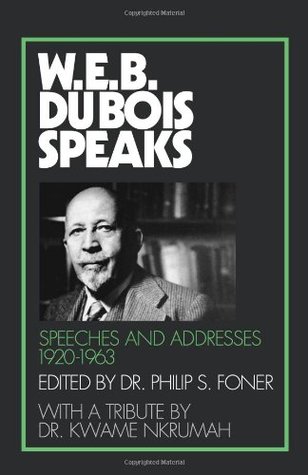
I should also mention that the intended audience appears to be Black folk and other people of color. That doesn’t mean Caucasians can’t enjoy it, and it may be a good lesson in empathy, especially if you haven’t done a lot of introspection. At times, Neely echoes WEB DuBois on the color line; in the elite white folks’ household, a young Black man who was close to the child in residence was welcome through the front door…until.

Neely weaves a lot of plot points and a lot of issues into one deft tale. It’s really well crafted. I especially enjoyed the development of Blanche’s adopted son (nephew whose mother is dead) along with neighborhood activist Aminata. And I liked what she did with her teenage relative who developed a serious problem.

When you finish the book, you almost have to have a heart and mind that is a little more open to types of people you might have unthinkingly dismissed before. There’s really nothing else like it. How often do you get the opportunity to improve yourself and have fun at the same time? Do it!

Trailerpark, by Russell Banks *****

Aside

Who but Banks would even go there? He makes his characters real and gives them credible back stories. None of the stereotypes generally dealt out to people who live in mobile homes surface here. His respectful attitude toward every day, working class people, or in some cases, people who have slid from a position of greater prosperity, makes this book work. The transitions are so smooth, so subtly crafted that when one character, one I felt almost as if I knew them as family, eased into the life of another who had been separately introduced, it was close to magical.

I have no doubt that Banks is one of America’s greatest novelists. When he publishes something, I read it (and I recently got to write an advance review; see A Permanent Member of the Family). But one hallmark of his novels–all of them–is tragedy. If you want a good three-hankie-narrative, he’s your writer. I once went on a jag of reading nothing but Russell Banks, and found myself nearly ready to go put my head in the oven. (That would have been a painful way to go, since my oven is not gas, but electric.) From this, I learned that it’s best to read Banks alongside a little of something else. That way I can enjoy his genius without having to carry all of the novel’s despair.

At one point, I said Cloudsplitter was my favorite Banks novel. Now I think it may be a tie. Read them and see what you think, if you like well-developed, real characters, and can deal with (often) unhappy endings.

The Autobiography of Mother Jones, by Mary Harris Jones, Mary Field Parton (ed), Clarence Darrow (intro) *****

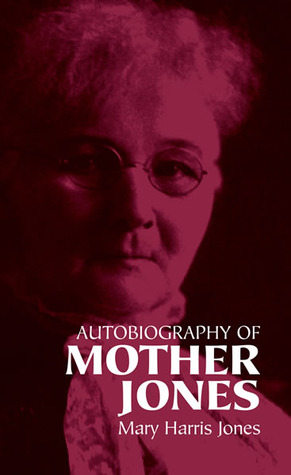
autobiomotherjonesMother Jones has been called “the most dangerous woman in America”. Some refer to her as an anarchist, but in her autobiography, she denounces anarchism, though allows that these folks have their hearts in the right place. She has been called a syndicalist (which is probably closer to the truth), but the fact is that she was motivated by what she saw right there on the ground in front of her. When the Russian Revolution unfolded, she was by her own account past 90, and by the account of another biographer, in her mid-80’s, so either way, she was very, very elderly, yet she championed its achievement at the Pan-American labor conference held in Mexico:

“…a new day, a day when workers of the world would know no other boundaries than those between the exploiter and the exploited. Soviet Russia, I said, had dared to challenge the old order, had handed the earth over to those who toiled upon it, and the capitalists were quaking in their scab-made shoes.”

Jones’ career as a political organizer began shortly after she turned 30. She was a married woman, her husband an iron worker, and she stayed home with their four small children. “Yellow fever” (which I think is malaria) came and killed her whole family, and then as if that wasn’t enough, the great Chicago fire swept away her home and all her possessions.

Some would have turned to suicide. Some would have gone looking for an elderly widower to marry. Some would have gone off to find distant relatives and live with them as little more than domestic servants.

Jones reinvented herself and gave the next fifty-plus years of her life to making the world a better place.

Still clad in a widow’s black garments, she put her hair up in a chaste bun and left Mary Harris Jones behind. From this time forward, she would be “Mother Jones”. Think of it! The cinders from the American Civil War were barely cold, and women had no position in American political life, including the labor unions. Yet by becoming a mother to workers everywhere, including the women and small children laboring in mines and textile mills, she became a force to be reckoned with. It was a brilliant piece of theater, entirely sincere in its intention and in many cases successful. She was one of the most ardent champions of the 8 hour day:

“The person who believed in an eight-hour working day was an enemy of his country,a traitor, an anarchist…Feeling was bitter. The city [Chicago] was divided into two angry camps. The working people on one side–hungry, cold, jobless, fighting gunmen and policemen with their bare hands. On the other side the employers, knowing neither hunger or cold, supported by the newspapers, by the police, by all the power of the great state itself.”

When Mother speaks, people feel they should listen, and if she speaks in their better interests, they listen harder. And in the early days, at least, the boss’s goons and the local law thought twice about putting a hand on Mother. It wasn’t nice!

Later, as her impact on their wallets hardened their resolve, they would deal with her less gently. She didn’t care. She spent nights in jail when she could have left town instead. Sometimes she traveled into a coal mining enclave where every bit of property besides the public roads was owned by the mine owners. Even homes that had been rented to miners were closed to her, as was made clear enough to break almost anyone’s heart. She describes a mining family that held a union meeting at which she was present in the coal fields of Arnot, Pennsylvania. The following day the company fires and evicts the family, and “they gathered up all their earthly belongings, which weren’t much…and the sight of that wagon with the holy pictures and the sticks of furniture and the children” made the local miners so angry that they decided to strike and refuse to go back to work till their union was recognized.

The quote most well known that shows up on tee shirts, posters, and coffee mugs among the liberal and radical milieu today is knocked clean out of context, in my view. “Pray for the dead and fight like hell for the living” was delivered in order to get working men out of the local church, where the priest was trying to cool down the heat and persuade the coal miners to wait for a reward in heaven. “Your organization is not a praying institution,” she reminded them, “It’s a fighting institution!” She tells them to leave the church and meet in the local school, which their own tax dollars had bought. And she later tells other miners that striking is done to provide “a little bit of heaven before you die.”

From Chicago to the coal fields of West Virginia, from New Mexico to Pennsylvania, she was found among railroad men and their families, machinists, textile workers, and above all, miners. She had no use at all for union officialdom, and though she occasionally praised a senator or governor who saw the light of day and called off the hounds of vengeance so that unions could be organized and the workers represented, more often than not she saw them as perfidious and untrustworthy.

When Eugene Debs became a candidate for U.S. president, she embraced his campaign, though she stayed among the workers, which I think was the correct thing to do. But when Debs comes to speak to coal miners and the union officialdom wants to meet his train quietly with a few representatives, Jones proposes all the union members go to greet him. They stampede down to the train, leap over the railings, and lift Debs onto their shoulders, she says, shouting, “Debs is here! Debs is here!”

I could have been finished with this slender volume quite quickly if I hadn’t been making notes (most of which, as usual, I cannot fit into my review, but then I should leave you some choice tidbits to find for yourself, and there are still many of them!) The chapters are brief, and so the book can be read just a few minutes at a time. And the introduction is written by one no less auspicious than Clarence Darrow himself.

You may look at the price and wonder whether you should pay that price for this slender little volume. The answer is, oh hell yes. Please remember that the words of the woman herself are worth twice as many from some armchair hack who wants to pick it apart and wonder whether she was really 83 or 85 at such-and-such moment? Spare yourself the blather and go straight to the primary source. It’s worth double the cover price!

Malcolm X: The Last Speeches by Malcolm X, Bruce Perry (ed.) *****

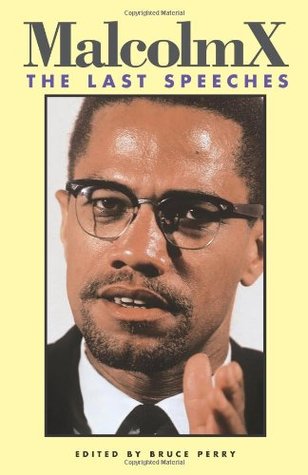
malcolmxlastspeechesIf you read The Autobiography of Malcolm X, the most widely-read of the books about Malcolm, you will get an idea of the general development of his self-education in prison, and of his attraction to, and eventual prominence in, the Nation of Islam. This volume, in contrast, shows the speeches he made when he broke with the Nation of Islam and decided that the struggle for racial equality was tied to class struggles, and that this meant that people who were not Black could still be part of the fight that he believed was necessary. It shows his attraction to socialist ideas, and these are speeches that were not published until recently, when his widow found them buried amongst a lot of other things in storage, and called the publisher she wanted to distribute these ideas.

For example, for awhile there were posters and tee shirts available for sale showing Malcolm X and Dr. King standing together. The implication inherent in overemphasizing this photograph is that the two were comrades and brothers in struggle. I can’t believe the number of young people I taught believed that Malcolm “wanted peace”. Whereas this is true in the long run, it isn’t what he talked about. When middle class Caucasians were interviewed on TV and they pontificated that it was important for those Black demonstrators walking across the South, being confronted with tear gas, firehoses, police dogs, and arrest, to remain nonviolent, Malcolm responded, “I will be nonviolent when the White man is nonviolent.” In contrast to the ideas of Dr. King, Malcolm was ready to fight for his rights. It was in the last year of his life that he realized that the material interests of the entire working class dovetailed, and he targeted the ruling rich as his oppressors, (correctly so in my view), rather than blaming all members of any ethnicity or race. This was an enormous change from the belief system he had espoused while he was with the Nation of Islam. These speeches serve as the clearest documentation of this change.

These speeches are important, though their context was quite different from today’s, because they break up the myth that mainstream media and US government sources have built up surrounding Malcolm X.  If you can’t stamp out someone’s speeches and memory, what do you do instead? You co-opt them, sanitize them, find a way to make more in tune with what you wish they’d been. And that’s what has been done to Malcolm X’s legacy, by and large.

For those who are seeing a big difference between his earlier speeches and the ones published here, it is not hypocrisy, it is development. It takes a lot of integrity for someone who is famous and controversial to admit he has been in error, and explain what his new viewpoint is, and why he has changed his way of thinking. If you don’t read this book, you will not know the whole evolution of the ideas and political program embraced by Malcolm X over the span of his life.

All of this has more relevance than ever now that we are in the midst of a second, perhaps even more vital civil rights movement. Malcolm’s philosophy and political perspective should be widely read. He’s been gone for a long time, but nothing can kill his ideas, and we need them now.