
Steel Fear is the first in a series by Brandon Webb and John David Mann. It’s billed as a “high-octane thriller,” and that’s what it is. My thanks go to Net Galley and Random House Ballantine for the invitation to read and review. You can buy this book now.

Before starting the novel, I flipped to “About the Authors,” which is at the end of the book. Webb is a retired SEAL himself, boasting a list of awards as long as your flippers. He is a top level frog, which is a combat diver, and he not only is trained as a sniper, but has been in charge of training other snipers. Suffice to say, he is qualified to write a book like this and knows what he’s talking about. This thriller took ten years to see publication, and a good part of that delay was getting one aspect after another of his description of the aircraft carrier, The Abraham Lincoln, cleared by the Pentagon. Mann is not ex-military, but has an impressive list of achievements in the arts.
Our protagonist is Finn, a SEAL who’s being sent back to the states on The Abraham Lincoln. He doesn’t know why; nobody on the boat does, either; and he cannot reach anyone that can enlighten him. This keeps Finn off balance, the reader doesn’t know whether Finn is trustworthy, so that keeps the reader off balance, too. We meet him when Monica Halsey, a helicopter pilot who is also an important character, is sent to pick him up. Two men approach the helicopter, and they are described as a large man that looks like a mountain lion, and a little guy that looks like a marsupial. Finn is the marsupial, and when I learn that he is a funny-looking little guy, it endears him to me. When we see him disappear on board ship, blending in, seeing and hearing things he isn’t meant to, it’s all the more impressive. I still don’t know if I should like this guy, yet I do.
The crew is reeling from a horrible, unexplainable accident that took the lives of a helicopter crew; soon after, there is a suicide, and then another. Suicide, we learn, is at epidemic levels in the military, and so at first, most people don’t question it; but both suicides are a little too similar, and Halsey smells a rat. So does Finn.
At the outset, there’s a great deal of description of the aircraft carrier, and at first I feel impatient to get on with the story, but soon I can see that the setting is very important, and the description is necessary to understanding it. Webb does a fine job with it, and it’s a good thing, because when I ran a Google search for images, I got mostly air.
National security indeed.
The chapters are very short, and the point of view changes constantly, with Finn and Monica occupying more space than other crew members. Between the shifting viewpoints; Finn’s anxious attempts to find out where he’s going, what his status is, and why he’s being sent away; and Monica’s urgent need to know why her friends are dead, and if anyone else she cares about is next, I am kept on the edge of my seat. Still more deaths follow, and by the halfway mark, my heart is beating a little quicker, and I know better than to let myself read it at bedtime. Fortunately, despite the deaths, which continue of course, there isn’t a lot of gore, and I happily made this book my lunchtime companion. Once I got near the climax, there was no putting it down till the thing was done.
I tend to be leery of books written by military folks, because sometimes there’s a right-wing overtone to the prose that grates against my own values. This isn’t a problem here. Instead, this is a rock solid opening to a promising new series, and I can’t wait to read the next one. Highly recommended to all that love the genre.
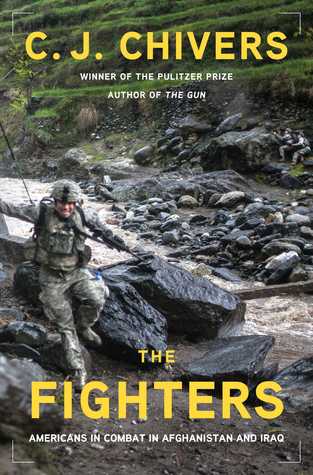 Chivers is a senior editor at The New York Times, and has won the Pulitzer for journalism. This meaty but readable book is the culmination of his years covering the U.S. wars in Iraq and Afghanistan. It is not the creation of a man parked in a library behind his laptop; he has personally gone to Iraq, Afghanistan, Syria, Ukraine, and Libya, and has either accompanied the people he writes about or retraced their footsteps. He covers the lives of six servicemen in the lower and middle ranks of the armed forces, and so he primarily uses eye witness reporting and interviews, in addition to American military data. I read it free courtesy of Net Galley and Simon and Schuster in exchange for my honest review. The Fighters will most likely be regarded in future years as the go-to book for those that want to know more about this war and the people whose lives were changed by it—including many of those whose homeland is or has been part of the war zone.
 I received this excellent Civil War tome from one of my sons as a Christmas gift. I don’t request a lot of books anymore because it’s so easy to get others free, but I asked for this one and I am glad I have it. I’ll be reading more by this guy. Despite one fact that I dispute—for which the citation also is sketchy—and some crummy maps, there’s no way to deny five stars here. The topic is among my favorites, and of course Sherman is my all time favorite general, hailing from a time when the United States government still attracted and produced heroes.
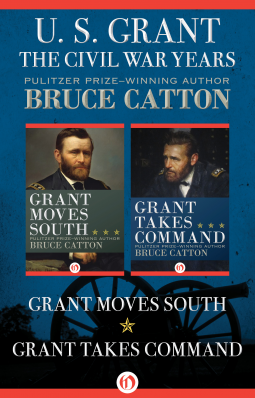 I was fortunate to receive a DRC of this two volume biography of America’s greatest general, US Grant. Thanks go to Open Road Media and Net Galley for providing it in exchange for this honest review. This is the sixth Grant biography I’ve read, and aside possibly from Grant’s own memoirs, which are valuable in a different way than this set, I have to say this is hands-down the best I have seen. Catton won the Pulitzer for one of his civil war trilogies, and this outstanding biography is in the same league. Those with a serious interest in the American Civil War or military history in general should get it. It’s available for purchase now.
 Bryan was a journalist and author during the mid-twentieth century, and Friendly Fire, which originally began as a story for the New Yorker and grew into something more, tells the story of the Mullen family and their response to the death of Michael, a clean-cut young man that answered his draft notice, dutifully served and was killed by friendly fire not long after he was sent to Vietnam. Thanks goes to Open Road Integrated Media and to Net Galley for the invitation to read and review. This is right up my alley and I found it compelling. It was published digitally May 10, 2016 and is now available for purchase.
 Seattle Book Mama