Unnatural Death, by Patricia Cornwell*****

Unnatural Death is the twenty-seventh installment in the Kay Scarpetta series by Patricia Cornwell, and it’s as good as they get. My thanks go to NetGalley and Grand Central Publishing for the review copy. You can get it now.

For those not conversant with the series, Scarpetta is a medical examiner for the state of Virginia. She’s moved around over the course of the series, decamped to Boston, and come back. So now she’s in her old stomping grounds, but all is not well. The obnoxious, obstructive secretary she was saddled with in the last book, a miserable woman that blamed her for the ouster of the corrupt man that came before, has been—finally—fired, but somehow, she is back in a different government position in the same building, along with the corrupt guy she likes working with, so it’s tense.

Our other permanent characters are Pete Marino, who’s worked with Kay forever and is now married to her sister, Dorothy, who’s a hot mess; Benton Wesley, Kay’s enigmatic husband, a forensic psychologist that works in extremely high level situations that he can’t tell Kay about, even when they have a bearing on her life; and Lucy, her adult niece whom she has raised as her own, and who is the daughter of Dorothy. Lucy is a wunderkind, a tech wizard employed by the FBI, sometimes on loan to the CIA.

I won’t go into the premise for this installment because you can get that in the promotional blurb, but I will tell you that by the ten percent mark I was riveted, and before the halfway point my notes say, “I hate being away from this thing.” A shocking development occurs that is much more impactful to those of us that have followed the series from the start. I have heard other reviewers say that they used to read the series, then lost the habit, so I will say this: if you have read most of the series but missed a book here or there, you can still get the full measure of this thriller. If you just missed the most recent one, that’s okay. But if you go into this book cold, your very first time reading a Scarpetta book, some of the magic will be missing. Perhaps you will read it and be impressed enough to go back and binge read the whole series. It’s not a bad idea!

Any author that writes a long running, successful series like this has to flesh out the main characters to keep readers’ attention. For the first few books, pure plot-based adrenaline rushes are possible, but at some point, there’s going to be a credibility issue continuing that way. I would have difficulty believing that a forensic coroner had been kidnapped by bad guys and hurled into the back of a vehicle, bound and gagged, even once, but when it happens over and over, I’m done and I’m done. Cornwell does the smart thing instead, developing crises that are sometimes more about others in Kay’s family, but that nevertheless spill over onto her in a big way. In doing this, she forces us to examine questions that have no easy answers. For example, if an extremely dangerous development comes up that could affect you or your family, but it is also a matter of national security, and one family member knows, should they break the vows of their office in order to let you or other family members know? Or should they keep it ambiguous, along the lines of, “Maybe you should stay home today?” What if two know, and you don’t?

One way or the other, this story is a wild ride. The tension is occasionally broken up by Marino’s fixation on Bigfoot. He’s obsessed, and it cracks me up when we’re worried about killer drones and enemies unseen, and then Marino pipes up about the big ole footprint he found in the woods. For quite awhile I have wondered why Cornwell hasn’t been made a Grand Master by the Mystery Writers of America. Hopefully, this outstanding novel will serve as a clarion call. Highly recommended.

Blind Fear, by Brandon Webb and John David Mann*****

Blind Fear is the third book in the red hot series by former Navy Seal Brandon Webb and concert cellist turned author, John David Mann. When the two of them collaborate, the pages jump. My thanks go to Net Galley and Random House for the invitation to read and review; this thriller is for sale now.

In Cold Fear, the second in the series, our protagonist, Finn, is on the run. He’s a SEAL for the U.S. Navy, an elite combat diver, but corrupt elements have framed him for the slaying of his closest team members, and until he can prove his innocence, Finn needs to be invisible.

He’s good at it.

Now he’s moved on from Iceland to Puerto Rico, and he’s been renting a room from Zacharias, an elderly man that supports himself and his two grandchildren by running a café. He works in the café in exchange for room and board. But now there’s trouble; his two grandchildren haven’t come home. Zacharias would go and look for them, but Zacharias is blind.

There’s nobody better at ferreting out secrets than our man Finn, but doing so puts him at risk. He’s deliberately stayed clear of the city because there are so many military people stationed there. The hinterlands have been safe, and until he can come forward with the proof he needs to save himself, the hinterlands are where he belongs.

But then…what about the children?

Like those before it, this is a taut, tense thriller with multiple massive emergencies weaving in and out of one another. We have Finn’s need to avoid discovery yet, find the missing children; now add a serial killer known as El Rucco who’s left grizzly human remains all over the island and a major hurricane, and friend, this is not your bedtime reading material. Read this one sitting up and with the lights on. Just trust me.

Through all of this, Finn also deals with personal baggage that he tries to ignore, but which comes to him in dreams. He has blocked out a large portion of his early life due to trauma, and he has “questions that had hung over him for thirty years like a kettle of vultures.” This is no soap opera and so we see and hear very little of it, but the snippets that intrude during Finn’s unguarded moments heighten the suspense and the reader’s sense of dread.

There are other praiseworthy attributes I could discuss; as we are introduced to the setting, we have brief but meaty passages that serve to inform us about the injustices that are meted out to this lovely but impoverished nation, and the way that the U.S. government has kept its boot on the necks of the people that live there. But all of this remains secondary to the story itself, and the focus is tightly maintained. The research is meticulous, and the organization is stellar. The development of the protagonist is outstanding; the secondary characters, particularly Zacharias and the older grandchild, Pedro, are visceral and memorable, and I would be delighted to see them again.

Highly recommended to all that enjoy a true thriller.

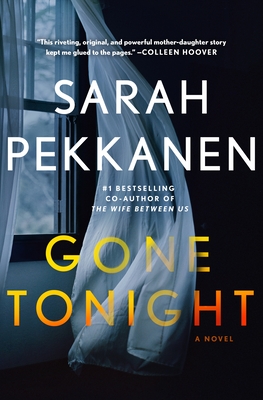
Gone Tonight, by Sarah Pekkanen*****

I’ve been reading and enjoying Sarah Pekkanen’s novels for years now, but Gone Tonight is far and away the best of the bunch. My thanks go to Net Galley, Macmillan Audio and St. Martin’s Press for the invitation to read and review. This book will be available to the public August 1, 2023. If you love psychological fiction or thrillers, you should order it now.

In her previous thrillers—the ones I’ve read, at least—there is similarity. She’s written about women ganging up on one woman, and love triangles, or what appear to be love triangles. This one is different, and it’s better. Here we have just two characters, mother Ruth and her young adult daughter Catherine. The unseen character is James, Catherine’s biological father. Throughout the story, Ruth is vigilant, always watchful. She’s afraid she’s being stalked, or investigated, or otherwise watched. Ruth isn’t merely careful; she keeps a bug-out bag ready for each of them, varies her routine to where she really doesn’t have one. She doesn’t take the same exact route to any of the places she frequents regularly. To see and hear this character, one would think that the CIA, the Mafia, and all of the cartels were out to get her and kill her.

Early in the book, Ruth provides Catherine with some hard news: she has early onset Alzheimer’s. I tell you this in particular, because when I saw it, my eyes glazed over with boredom and I thought that this thriller wasn’t going to thrill me at all. I nearly slid the book onto the bottom of my stack, and that would have been a terrible mistake, because this is *not* an Alzheimer’s story.

Catherine has never met any of her relatives; Ruth lies to keep her from investigating them. But now Catherine is an intelligent adult, and there is the internet. It’s mighty hard to keep a secret these days, and that’s rough for Ruth, because she’s got a lot of them, some bigger than others. As Catherine digs, she is surprised, and this makes her dig even harder. She keeps finding things, and Ruth keeps changing her explanations. It isn’t long before Catherine realizes she’s been lied to, and she stops telling Ruth what she discovers.

The format Pekkanen uses is an effective one, and it’s easy to follow. She changes the point of view in the standard way from one to the other and back with both sides told in the first person, but the tricky part is how to provide Ruth’s narrative. Catherine can give us her first person narrative and we think nothing of it, but Ruth talks to no one except her daughter, and even so, she lies to her daughter all the damn time, so under what circumstances will she spill her guts to us? The solution isn’t all that original, but it’s effective and reasonably believable. Ruth has a secret diary that she’s writing for Catherine to have when Ruth is gone. It requires me to overlook the unlikelihood of someone as obsessively private as Ruth sitting down and documenting the whole shooting match, including names and dates in writing, but this is such a fun book that I set my momentary disbelief aside and keep reading, because I have to know what happens next.

Once we are past the Alzheimer’s passage, my attention is rapt, but friend, the last ten percent of Gone Tonight is one for the ages! I rarely say this, but this creepy little novel would make an amazing movie or miniseries.

Actor Kate Mara reads the audio version, and she does a fine job. Highly recommended!

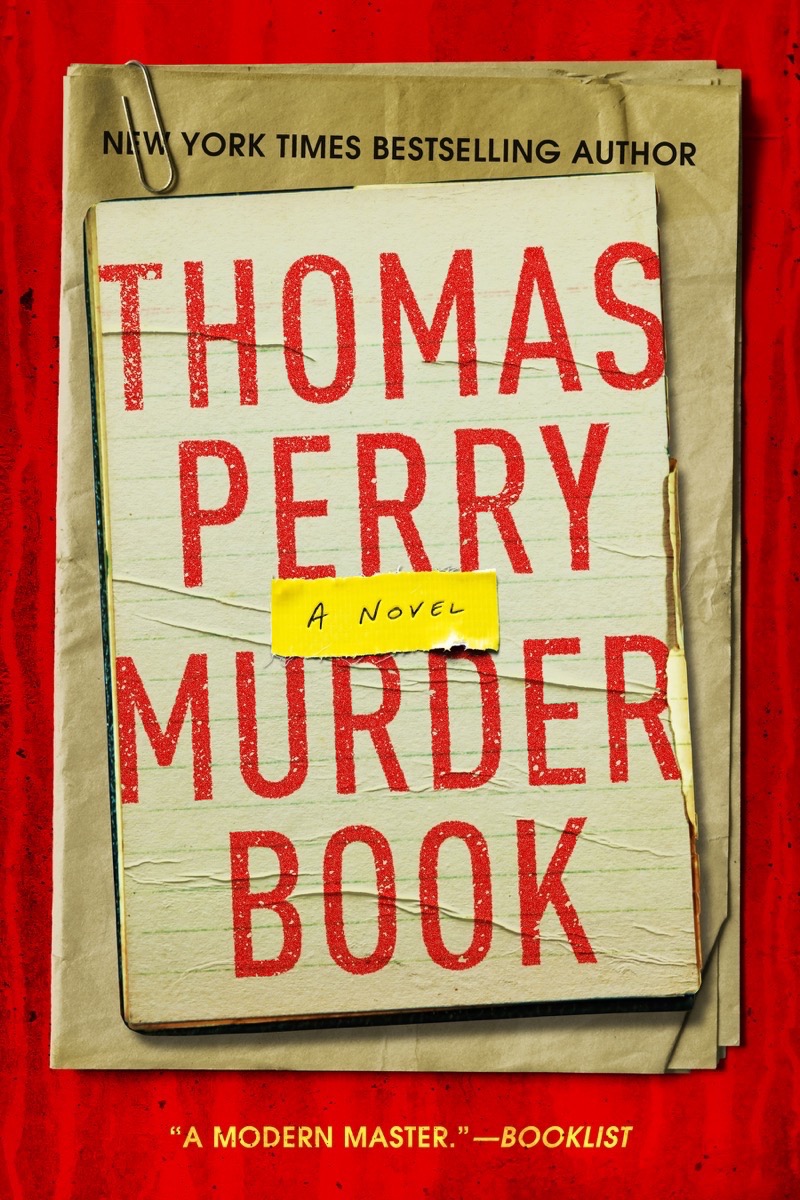
Murder Book, by Thomas Perry*****

Harry Duncan is a former cop, now a private investigator. His ex-wife, Ellen, is the U.S. Attorney for the region, and she asks him to check out a small town that appears to have a racketeering problem. Is it serious enough to warrant the attention of the FBI? Harry agrees to explore the situation, which turns out to be far more serious than either of them imagined.

My thanks go to Net Galley and Random House for the review copy. This high octane thriller is for sale now.

Perry’s feet have hardly hit the ground in this tiny Indiana backwater before he discovers a protection racket. A local businesswoman is determined not to pay; how can a bar or restaurant pay $300 daily and still stay open? The profit margin just doesn’t allow for it. And the thugs know that. But let’s not get ahead of ourselves. Rather than give anything away, I’ll just say that there’s more to this than meets the eye in this tiny, out of the way burg.

Perry is king when it comes to details involving stealth and unobtrusive investigation. Whereas a cop cannot use the unorthodox (and okay, illegal) methods that Duncan employs, a consultant can and does, or at least, he can and does in this story.

And if one were to criticize this novel, that’s the soft spot—because almost nothing about this tale is realistic. It’s so much fun to read, though, that by the time I thought, “Wait a minute…” the rest of my thoughts shushed my inner cynic as if it were a noisy jerk in the back row at a movie theater.

Highly recommended.

Favorites From the First Half

From January to June, here are the ones I love best.

Black Cloud Rising, by David Wright Falade*****

The Golden Couple, by Greer Hendricks*****

Audio Narrated by Karissa Vacker and Marin Ireland

 My thanks go to Net Galley and St. Martin’s Press for the invitation to read and review. The Golden Couple is the third novel I’ve read by Greer Hendricks and Sarah Pekkanen, and it’s the best so far. This book becomes available to the public, in print and in audio, March 8, 2022. Those that enjoy a solid psychological thriller should order it right now.

We have three major characters. The first is Avery, the therapist, and she is the only one to use the first person, so if we have to choose one character as protagonist, she’s the one. The other two are Marissa and Matthew, two halves of the married couple she is counseling. The narrative shifts between them, with the lion’s share going to Avery and Marissa, and less to Matthew.

Before we go farther, I will tell you that when I learn that Avery is a therapist, my initial reaction is the eye roll. Seriously? Another therapist, as in An Anonymous Girl? Can we have a little variety here, maybe. And suspicious type that I am, I think I smell a good writing team becoming hacks, too comfortable with a formula. But oh no no no, that’s not at all what is happening here! This is nowhere near the same story.

The premise is that Marissa wants to come in with Matthew for counseling. She has cheated on him—just once—and she wants to tell him, but she is afraid of his reaction. She treasures her marriage, and the little family they have created with their son, eight year old Bennett. She doesn’t want him to leave her, and he has a bit of a temper. She’s come to ask a pro for help, and has heard fine things about Avery’s work. Avery has a ten-step method that she swears will help every couple, whether it’s to find a way to stay together, or the best way to uncouple. She believes the marriage can be saved.

Now, Avery, our therapist, is an odd duck. She’s lost her license to practice as a psychologist because of some unconventional methods, and we learn this right at the outset, so we’re already on the back foot, watching to see if she does something hinky. She seems like she may be a bit sketchy, and the couple seem almost too good to be true, both ready to do whatever it takes to salvage their relationship and move forward. And yet, clearly, not all is as it seems.

I can’t tell you more than that. You don’t want a lot of information going in. Because this is a work of suspense, you can’t guess who the baddy is by keeping track of the facts as they are revealed; just sit back, and enjoy the ride.

I also received the audio version, and I alternated my reading between it and the review copy on my Kindle. Voice actors Karissa Vacker and Marin Ireland do a fine job; it’s really a toss up as to which version is better, so go with the medium you most enjoy.

Highly recommended to those that like the genre.

Steel Fear, by Brandon Webb and John David Mann*****

Steel Fear is the first in a series by Brandon Webb and John David Mann. It’s billed as a “high-octane thriller,” and that’s what it is. My thanks go to Net Galley and Random House Ballantine for the invitation to read and review. You can buy this book now.

Before starting the novel, I flipped to “About the Authors,” which is at the end of the book. Webb is a retired SEAL himself, boasting a list of awards as long as your flippers. He is a top level frog, which is a combat diver, and he not only is trained as a sniper, but has been in charge of training other snipers. Suffice to say, he is qualified to write a book like this and knows what he’s talking about. This thriller took ten years to see publication, and a good part of that delay was getting one aspect after another of his description of the aircraft carrier, The Abraham Lincoln, cleared by the Pentagon. Mann is not ex-military, but has an impressive list of achievements in the arts.

Our protagonist is Finn, a SEAL who’s being sent back to the states on The Abraham Lincoln. He doesn’t know why; nobody on the boat does, either; and he cannot reach anyone that can enlighten him. This keeps Finn off balance, the reader doesn’t know whether Finn is trustworthy, so that keeps the reader off balance, too. We meet him when Monica Halsey, a helicopter pilot who is also an important character, is sent to pick him up. Two men approach the helicopter, and they are described as a large man that looks like a mountain lion, and a little guy that looks like a marsupial. Finn is the marsupial, and when I learn that he is a funny-looking little guy, it endears him to me. When we see him disappear on board ship, blending in, seeing and hearing things he isn’t meant to, it’s all the more impressive. I still don’t know if I should like this guy, yet I do.

The crew is reeling from a horrible, unexplainable accident that took the lives of a helicopter crew; soon after, there is a suicide, and then another. Suicide, we learn, is at epidemic levels in the military, and so at first, most people don’t question it; but both suicides are a little too similar, and Halsey smells a rat. So does Finn.

At the outset, there’s a great deal of description of the aircraft carrier, and at first I feel impatient to get on with the story, but soon I can see that the setting is very important, and the description is necessary to understanding it. Webb does a fine job with it, and it’s a good thing, because when I ran a Google search for images, I got mostly air.

National security indeed.

The chapters are very short, and the point of view changes constantly, with Finn and Monica occupying more space than other crew members. Between the shifting viewpoints; Finn’s anxious attempts to find out where he’s going, what his status is, and why he’s being sent away; and Monica’s urgent need to know why her friends are dead, and if anyone else she cares about is next, I am kept on the edge of my seat. Still more deaths follow, and by the halfway mark, my heart is beating a little quicker, and I know better than to let myself read it at bedtime. Fortunately, despite the deaths, which continue of course, there isn’t a lot of gore, and I happily made this book my lunchtime companion. Once I got near the climax, there was no putting it down till the thing was done.

I tend to be leery of books written by military folks, because sometimes there’s a right-wing overtone to the prose that grates against my own values. This isn’t a problem here.  Instead, this is a rock solid opening to a promising new series, and I can’t wait to read the next one. Highly recommended to all that love the genre.

Love and Other Crimes, by Sara Paretsky*****

Sara Paretsky is a venerable author, one who—along with the late, great Sue Grafton—reframed the role of women in detective fiction nearly forty years ago. When I saw this collection available for review on Edelweiss, I jumped on it. It’s for sale now, and you should get it and read it—although there’s a caveat coming up that should be considered first.

Sometimes when a favorite writer releases a book of short stories, I find that I’ve already read a lot of them in one form or another. This time, nearly every story is new to me. One forms the basis of a full length book that I read a long time ago and have forgotten much of. Another is a reworked version of the short story “Wildcat,” which I purchased a short time ago. These are the only duplicate stories I can detect, and I am a voracious reader where this author is concerned.  Some of her work was included in Sisters in Crime anthologies, but I haven’t seen them. Not all of them feature the iconic V.I. Warshawski. The signature elements that include social justice issues such as women’s rights, immigration, racism, and the homeless are here in abundance, as one might hope.

My favorite selection is the second, “Miss Bianca,” a mystery in which a little girl saves a research rat and ultimately uncovers a dangerous conspiracy. Paretsky gets the tone of the child’s voice just right, making her bright within the bounds of what a child that age is capable of, and registering the thought processes and perceptions of her protagonist flawlessly.

There’s an historical mystery that involves a Sherlock Holmes retelling, and like all of that ilk, it bored the snot out of me, a first where this writer is concerned. I abandoned it halfway through. The five star rating is unchanged, because the reader can skip this story and still get her money’s worth and then some; also, I am aware that not everyone is as averse to this type of writing as I am.

Another story is set during the late 1960s, and the Civil Rights Movement is center stage. In order to convey the horror of the backlash by some Caucasian Chicagoans during this tumultuous period, the *N* word is included several times. I used the audio version of this book for some of the stories, including this one, and I feel as if it should have a warning sticker of some sort because hearing that word shouted angrily sent a cold finger right up my spine, and I don’t like to think of other readers, especially Black readers, listening to it within the hearing of their children. I don’t deduct anything from my rating, because the author includes a note about its use and her reasons for it at the end of the story; in fact, there is an author’s note at the end of many of these that makes the story more satisfying. But you should know that this word is there, so be ready for it.

When all is said and done, there are few authors that can deliver the way Paretsky can. With the considerations above included, I highly recommend this collection to you.

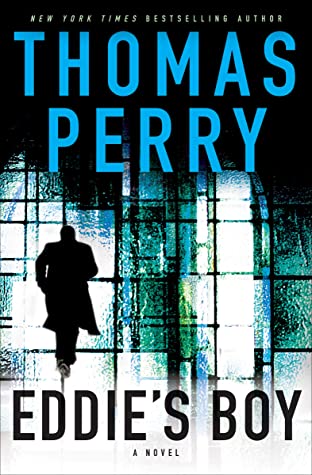
Eddie’s Boy, by Thomas Perry*****

Can we talk for a minute? It’s just…well, don’t you hate it when you have to kill four assassins that were gunning for you, but then they won’t all fit in your trunk? It’s the worst; but when Thomas Perry writes about it, it’s the very best. My thanks go to Edelweiss and Mysterious Press for the review copy of Eddie’s Boy. This book is available to the public today.

This mystery is the fourth installment of Perry’s hugely successful Butcher’s Boy series. For those that aren’t in the loop, Michael Shaeffer (as he currently calls himself) was orphaned as a small child and taken in by the neighborhood butcher, who raised him as his only son. But the butcher didn’t merely cut and sell meat for the dinner trade; he had a side line that involved cutting, and otherwise killing, people that other people wanted dead. Both trades were passed on to his adopted son Michael. Now, however, the butcher has been gone a long time; Michael is an older man, retired from all of everything, and happily married to a minor member of the British nobility, living in a splendid home in the UK. They grow lovely rosebushes together.

But then in the wee hours one day, Michael is awakened by a tiny but unmistakable sound that tells him someone is entering his home. Sadly, it is not a mere burglar, but hired muscle sent by a vengeful someone that has figured out who he is and where he lives. Now Michael and his wife cannot rest until he finds out who is pursuing him and disposes of them.

This book is the caliber of the early work that made Perry famous. The suspense and pacing starts out at ten and it stays there till the thing is over. There’s a particularly heart-stopping scene on a train early on that I don’t think I’ll ever forget. And the details make it even more chilling. Returning to the four corpses that can’t all fit in the trunk; after Schaeffer moves one dead killer to the passenger seat and belts him in, he tosses a tarp over the three men in the trunk, and then he drops his flight bag on top of them, because he means to jettison the men en route to the airport.

Can you read this thriller even if you haven’t read the first three in the series? Sure you can. In fact, the third in the series was still on my wish list when the chance to read and review this one appeared, and obviously I navigated it just fine. But I want the one that I missed extra hard now, and I guarantee that once you have read this one, you’ll want to read the rest also.

Highly recommended to those that love a good thriller.

The Dirty South, by John Connolly*****

A few years ago I read and reviewed my first book in Connolly’s Charlie Parker detective series, and I became immediately addicted. Since then I’ve never missed an installment, and after the 17th in the series, A Book of Bones, I more or less stalked the internet to find out when I could find the next in the series. It doesn’t disappoint. My thanks go to Net Galley and Atria Books for this, the 18th in the series. It’s for sale now.

Here, Connolly steps away from the crossed-genre, pants-on-fire entries he’s written recently to scribe a prequel. A couple of new readers have inquired whether to read this before all of the other Charlie Parker books, or treat it as the 18th.  The fact is, you can take it in either direction. On the one hand, I have reached back and read a couple of the first in the series and whereas they are perfectly respectable detective novels, they don’t hold a candle to those he’s written more recently. Once I had read the 14th, which is where I began, I was spoiled and a wee bit disappointed by the earliest books in the series. So whereas it makes sense to start reading with this prequel, I fear some readers will notice a dip in quality if they read this masterful literary mystery Connolly has just published, and then dive into his earliest Charlie Parker books. Again, they aren’t badly written. But they aren’t brilliant, and the most recent five in the series, including this prequel, are. So take that and do as you like with it.

Parker is reeling, as the book unfolds, from the vicious murders of his wife and daughter by a killer that intended to slay him, but found them instead. He is convinced that their murderer is a serial killer, and so he has taken a leave of absence from the police force back home and is touring the country by car, chasing down every murder anywhere that bears a resemblance to theirs. He is a dangerous man, because he has no sense of self-preservation. He sees himself as a man that has lost everything, and such men will take risks that more happily situated investigators would consider unthinkable. He also has a source none of the others can access: his wife, his daughter appear to him now and then, and they tell him things that relate to the case at hand, things that nobody else knows.

Those familiar with the series know that Connolly’s most recent Parker books have veered more in the direction of horror, and they include a number of supernatural events that his earlier work does not. Here he steps away from it, and once again his only information from the great beyond is what the spirits of his loved ones share. His adversaries are purely mortal ones. And as to which is better, it’s hard for me to say. His last book prior to this one is a monster, and it includes a tremendous amount of historical research that I find appealing, along with some hugely original, sinister characters that surely must come straight from the bowels of hell. It’s amazing work.

But there’s something to be said for books like this one, too. Most of Connolly’s work is so edgy and so full of violence that I have had to take it in small bites, lest it affect my overall mood. I didn’t have to do that here. I can crawl under a quilt and read for hours without needing to come up for air. I always make sure I read something less malign for a few minutes before turning out the light, but at the same time, this is a much more comfortable read.

Which is not to say that it’s tame. It isn’t. Someone has murdered Black girls in this tiny Arkansas burg, and Parker pulls into town right on the heels of the most recent one. Right away, it becomes obvious that there’s shifty business going on. The town is miserably depressed economically, and the local robber barons, the Cade family, have a deal in the works to bring a large manufacturer to town.  The Cades stand to make a great deal of money, and the locals, poverty-stricken and jobless or badly underemployed, are convinced that better times are just around the corner.

And so it seems that nearly everyone has a stake in keeping the waters calm. The dead girls had to go and get themselves murdered, just when the deal’s about to go through? How inconsiderate. Yes, their killer should be found and brought to justice; but that can wait until the big dogs have signed on the dotted line.  Prosperity is just around the corner. A scandal might ruin everything, and Parker refuses to cooperate, insisting on justice for the murdered children. The nerve of him.

Connolly’s signature elements—the malign, solipsistic, endlessly greedy local bourgeoisie; the poignance of Parker’s grief and his communication with his dead family; and the fast paced, complex plot with a zillion characters and some snappy banter are all here in spades. As usual, his writing style is literary, and so this may not be the best choice for someone whose mother tongue is not English.

As always, highly recommended. This is indisputably one of the year’s best. As for me, I’ll be keeping an eagle eye out for the 19th Parker book, because nobody else writes like this.