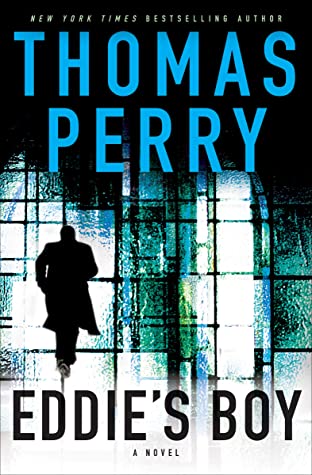
Eddie’s Boy, by Thomas Perry*****

Can we talk for a minute? It’s just…well, don’t you hate it when you have to kill four assassins that were gunning for you, but then they won’t all fit in your trunk? It’s the worst; but when Thomas Perry writes about it, it’s the very best. My thanks go to Edelweiss and Mysterious Press for the review copy of Eddie’s Boy. This book is available to the public today.

This mystery is the fourth installment of Perry’s hugely successful Butcher’s Boy series. For those that aren’t in the loop, Michael Shaeffer (as he currently calls himself) was orphaned as a small child and taken in by the neighborhood butcher, who raised him as his only son. But the butcher didn’t merely cut and sell meat for the dinner trade; he had a side line that involved cutting, and otherwise killing, people that other people wanted dead. Both trades were passed on to his adopted son Michael. Now, however, the butcher has been gone a long time; Michael is an older man, retired from all of everything, and happily married to a minor member of the British nobility, living in a splendid home in the UK. They grow lovely rosebushes together.

But then in the wee hours one day, Michael is awakened by a tiny but unmistakable sound that tells him someone is entering his home. Sadly, it is not a mere burglar, but hired muscle sent by a vengeful someone that has figured out who he is and where he lives. Now Michael and his wife cannot rest until he finds out who is pursuing him and disposes of them.

This book is the caliber of the early work that made Perry famous. The suspense and pacing starts out at ten and it stays there till the thing is over. There’s a particularly heart-stopping scene on a train early on that I don’t think I’ll ever forget. And the details make it even more chilling. Returning to the four corpses that can’t all fit in the trunk; after Schaeffer moves one dead killer to the passenger seat and belts him in, he tosses a tarp over the three men in the trunk, and then he drops his flight bag on top of them, because he means to jettison the men en route to the airport.

Can you read this thriller even if you haven’t read the first three in the series? Sure you can. In fact, the third in the series was still on my wish list when the chance to read and review this one appeared, and obviously I navigated it just fine. But I want the one that I missed extra hard now, and I guarantee that once you have read this one, you’ll want to read the rest also.

Highly recommended to those that love a good thriller.

One by One, by Ruth Ware*****

We can’t party this Halloween, but I have the perfect pandemic book for you. Ruth Ware has been called the modern Agatha Christie, and her latest mystery, One by One, is like a modern version of Dame Agatha’s And Then There Were None. There are plenty of differences, naturally, so you won’t be able to figure out the ending. Personally, I think it’s Ware’s best book to date, and when you curl up with it tomorrow, you’ll forget about your usual Halloween activities. Get your bag of treats, the beverage of your choice, and your favorite quilt, and you’re good for the evening.

 Big thanks go to Net Galley and Gallery Books for the review copy. This book is for sale now.

Erin and Danny work for a resort company, running a European ski chalet that caters to small companies and the well-to-do. A start-up company called Snoop schedules a retreat, but no sooner have the loud, entitled Snoopers disembarked and gone skiing, than an immense avalanche thunders down, leaving the vacationers stuck. Nobody can get cell service; everyone is grumpy. And one of them hasn’t come back from the slopes.

From there, things only get worse. At least there’s enough food to last awhile; but then the electricity goes off, and someone else is found dead in their room, most likely murdered! Oh, it surely isn’t pretty. Erin and Danny are scrambling, trying to improvise amid the bickering guests, whose in-groups are becoming more rigid; small hostilities increase. But it isn’t just about personalities; there’s a company buyout on the table, and a great deal of money is at stake. They have to hold everything together until the authorities can reach them.

This is a fun book, with lots of snappy dialogue and just the right number of variables. We backtrack after the murder is discovered, figuring out who was in the right place at the right time; and with the missing person still gone, it’s increasingly likely that we have two murders, not one. But as the alibis and witness statements unfold—all unofficially, since the cops can’t reach the chalet, which is still nearly buried in snow—it becomes evident that most of what’s offered is hearsay. Person A couldn’t have done this, because they were somewhere else. But…do we know for sure that’s true? They say so, but they could be lying. And as more murders and more stories unfold, we have a tasty little puzzle indeedy.

I have read and reviewed all but the first of Ware’s novels, and in each case I was drawn in, reading avidly, only to throw up my hands at the preposterous revelations and developments that I found in the last twenty percent of the book. But that doesn’t happen this time. I go all the way through it, and in the end the story stands up and I feel as if Ware has played fairly. The suspense is palpable and it builds steadily leading up to the climax. This is a good solid mystery, and I have new respect for this writer.

So there you go. Get your copy, and you can thank me later. But turn on the lights and lock the doors before you commence, cause this one is a humdinger.

When These Mountains Burn, by David Joy*****

David Joy writes some of the best Grit Lit published in the U.S. of A, and if you haven’t read him yet, it’s time to get started. This soaring, wrenching tale of addiction, community dysfunction, and miserable unrelenting poverty delivers some hard truths about the distribution of wealth in this country, and about the uneven way that justice plays out. Lucky me, I read it free and early; my thanks go to Net Galley and Putnam Penguin for the review copy. It’s for sale today.

Ray Mathis is a big man with a big burden. His wife, Doris, has been dead for three years, but his grief hasn’t ebbed. A stoic man, he goes in and out of every day carrying out necessary tasks, but he feels as if his arm is missing, all the time. His companionship comes solely from his old hunting beagle, Tommy Two-Ton. His only child is Ricky, and although Ricky is in his forties, Ray still thinks of him as “the boy.” When the boy comes home, Ray is suffused with a sense of dread. Ricky is a hardcore addict, and all those stories you were told in junior high health class are true: a junkie has no loyalties and no shame great enough to override his need for the substance he’s come to crave. When he sees that Ricky is home for a visit, Ray’s first instinct is to check his few valuables that haven’t been stolen and pawned yet to see if they’ve vanished.

Is this all too familiar to some of you? Because it hit close to home for me.

Not long after he arrives, Ricky is gone again, and that’s not unusual; but later he gets a phone call from someone he doesn’t know. The caller says that Ricky has failed to meet a payment and will die if Ray doesn’t pay up. Because Ricky has no shame, he has told them exactly how much is in his father’s savings account. And though he understands that it’s only going to postpone the inevitable, Ray pays up, but he tells the men that collect that he will be back for them if they ever sell to his son again. And when Ricky is back on opiates before he has even recovered from the savage beating administered by the dealer’s goons, Ray tells him, “I’ve thrown you ropes till my arms is give out, and I ain’t got no more to throw.”                 `               “            

Meanwhile, our second protagonist, Denny Rattler, a Cherokee burglar, is arrested and offered treatment for his own addiction, but he declines. It turns out that the very purest heroin is sold on the Cherokee Reservation, and so jurisdictional issues complicate law enforcement. Still worse, there are dirty cops right on the other side of the state line. Denny finds himself in the middle of it all.

One of the nastiest villains in literature is Walter Freeman, who goes by “Watty.” “I ain’t calling you that,” Ray tells him. “That’s the stupidest fucking name I ever heard.” Ray confronts Watty after his son’s death to deliver some “backwoods justice,” but Watty is entirely unmoved. He doesn’t even remember Ricky. He leaves the individual users to the minions beneath him. He tells the bereaved father, “Your son is small potatoes. They’re all small potatoes. It’s too much of a headache, dealing with junkies.”

It’s forest fire season in the Appalachian Mountains, and as the conflict between Ray and Watty, between Watty and local law enforcement, and among the addicts, law enforcement and Watty build, a conflagration begins on the reservation, encompassing the “Outlet Mall,” where drugs are sold.  The entire ordeal rises to a fever pitch that leaves me sitting forward, as if the outcome is just beyond my physical reach. At one point I am sure everyone will die, and I tell myself I’ll be okay as long as nothing happens to Tommy Two-Ton.

What Joy does with the conclusion is tremendously satisfying. When I reviewed his last book, I felt as if he had wimped out on the ending, but this time it’s rock solid. It isn’t predictable, yet there are no new people or facts introduced at the last minute to prevent us from foreseeing the outcome, either.

In fact, this may be his best book yet.

I’ll offer a final word about genre. This book is billed as Crime Fiction, and that’s not how I see it. I consider this novel to be gritty Southern Fiction at its finest. The fact that it happens to involve crime as an integral part of the story is almost beside the point. But call it what you will, this book is one of the year’s best, and you should get it and read it.

You Are Not Alone, by Greer Hendricks and Sarah Pekkanen****

I read this novel free and early, thanks to Net Galley and St. Martin’s Press. It’s for sale now.

Shay Miller has watched a woman die, and now life will never be the same. She is alone in the big city, barely getting by like so many working class women. She is in love with her roommate but doesn’t rock the boat by propositioning him; she has no friends or family nearby. Then one terrible day, she is waiting for her subway when a sinister looking man turns in her direction. Imagine how glad she is to see Amanda, a normal-looking woman who’s also headed her way. But instead of providing the security Shay is hoping for, Amanda jumps onto the tracks in front of a moving train.

It happens so quickly!

Shay is the sort of person that relies on information to deal with stress. She has a little notebook, what she calls her “Data Book,” filled with all sorts of oddball statistics that she quotes from at the start of each chapter and throughout the novel. (Frankly, I could have lived without this feature, which began to feel like filler at times.) She deals with the stress of having witnessed a suicide by finding out every single detail she can about the late Amanda.

And this part is the hardest aspect for me to buy into. She’s haunted by what she saw; okay. Amanda looked a lot like Shay, which made her more fascinating to our protagonist. Fine. But the obsessive way she pursues information—even once she finds she has the dead woman’s necklace, which she had forgotten momentarily—doesn’t jibe with me. She goes to her apartment, visits the woman’s mom…huh. Go figure.

Now, once I quit rolling my eyes and allowed myself to buy this premise, things flowed a lot more smoothly. Cassandra and Jane, friends of Amanda’s, hold a memorial service for her, and it is by attending this event that Shay comes to know these two sisters. They are kind, they are solicitous, and they are caring. Before Shay knows it, they are her new best friends, and because she herself is a good person—if a little odd—it doesn’t occur to her that their motives might not be as benevolent as they pretend to be. They are the spiders, and she is the fly.

Here’s the thing I like best about this story. Shay’s character has to be rock solid for it to work, and once we get past the stupid parts at the beginning, it is. I half expected her to be dumb as a box of rocks all the way through, but not so much. The way she is developed, neither too unrealistically savvy nor ultra-naïve, is admirable. There’s a thin path through the middle between these two extremes, and I wondered if she would be the dithering idiot that has to be saved by someone smarter, but that’s not how it shakes out. There are a couple of loose threads that are left dangling, but it’s the way Shay’s character is crafted that wins the day.

Those that enjoyed this authorial pair’s other books will like this one too; those in search of a good beach read or a fun weekend book should consider this one. All told, big fun, and delightfully original.

Full Throttle, by Joe Hill*****

I’m late to the party, so by now this book has a pile of accolades; every one of them is earned. I received a review copy courtesy of Net Galley and HarperCollins. I am fond of short stories, all the more so when the stories are as riveting and suspenseful as these. How else could the reader get any sleep at all, if there wasn’t a natural stopping point at the end of each story? If you like this author’s work, or if you like horror stories—not all of them, strictly speaking, fit into the genre, but we can consider the collection horror, nevertheless—or if you just like a good short story collection, reach for this one.

Hill begins with the title story, “Full Throttle,” a gritty tale of parenting gone wrong. I couldn’t put it down, and friends, I can always put a book down. I read too much to obsess over my fiction, but this story owned me till it was over. The next story, “Darkened Carousel,” a story of slightly thuggish teens encountering carousel horses with unusual powers was every bit as strong. Another favorite is the one about wolves on a train, and I especially appreciated the line, “You smell like privilege and entitlement…this is first class, after all.”

In fact, all of these are excellent. I had read “In the Tall Grass,” and to be honest it isn’t my favorite, so I skipped it this time. That’s the only story I don’t wholeheartedly recommend, and the collection gets all five stars from me because I consider the book to be worth every red cent it costs, even without it.

The only downside of a collection like this—and this only applies for reviewers and others with a finish date in mind—is that it’s easy to set the book aside whenever a story ends. I sidelined this collection after the first two stories in order to conquer a pair of 700 page tomes that were on the brink of publication, and eventually this book became the one that made me feel guilty every time I looked at it. Recently I checked out the audio book from Seattle Bibliocommons, and since I had enjoyed the first two stories so much, I decided to begin again from the start. There’s a string of excellent readers, some of them famous, and those that like listening should consider this version.

As is generally true of the genre, there are triggers all over the place, and there’s some R rated material. If in doubt, read it yourself before handing it off to the middle schooler you are trying to home school during this pandemic.

To those that love the genre, this book is highly recommended.

The Janes, by Louisa Luna****+

 4 stars plus. Louisa Luna debuted in 2018 with the first book in this series, Two Girls Down. When I learned that Alice Vega was returning, I jumped on the galley without a moment’s hesitation. Thanks go to Doubleday and Net Galley for the review copy. This book becomes available to the public tomorrow, January 21, 2020.

Alice Vega is back home in Southern California, and she is hired as a consultant on a case for the local cops. Two dead girls have turned up, both recent immigrants with IUDs in their too-young bodies. All signs point to their having been victims of trafficking for purposes of sexual exploitation, yet there is no evidence of rape. What happened here, and where did the IUDs, which aren’t available in stores, come from? She is offered an astonishing amount of money for her services, and she decides to use some of it to hire her old partner, Max Caplan, who’s back on the Eastern seaboard entertaining job offers. When Vega crooks her little finger, Cap comes running.

Luna has a voice and style not like anyone else’s. One of the things that I love is the way she swaps the stereotypic gender roles of these two main characters. Cap is nurturing, and he loves kids. Vega isn’t a nurturer, and when huge stressors come down on her, she becomes angry and violent, but as a reader I love this because her rage is always spot on. Cap has sex when he’s in love, but Vega has sex to fulfill a biological need, and then wonders why the guy is still hanging around. Clean yourself up and get out of here, dude, I have things to do today. Run along. And while Vega’s vigilante justice would be a terrible thing in real life, in fiction it feels deeply satisfying.

In other words, Alice Vega makes my feminist heart sing.

Luna is better than most authors of the genre in that no matter how off the chain her protagonist is, I never disengage because of an unlikely plot element. We have corrupt cops; we have bureaucrats; we have secrets that would become public if Vega and Cap were prosecuted for crimes committed in the line of duty. My single twinge of regret comes when Cap sustains a head injury that renders him unconscious; wakes up dazed and confused, with some memory loss; and then shakes it off without tests or treatment of any kind. Vega reminds him to get an MRI when everything is over, but it doesn’t feel like enough. I wonder at times whether she meant to do more with it and then edited it back out.

Given that both stories, this one and the last, feature two female victims, I wonder if this will be her signature element throughout the series.

This story differs from the first in that it is darker, less funny, and ramps up to the high octane, pulse-pounding excitement of a true thriller at around 80%. The plot and characters are credible, but they lack the bounce and the zip that made the first book so memorable. Nevertheless, I love Alice Vega and eagerly await the next in the series.

Heartily recommended to those that love the genre and respect women.

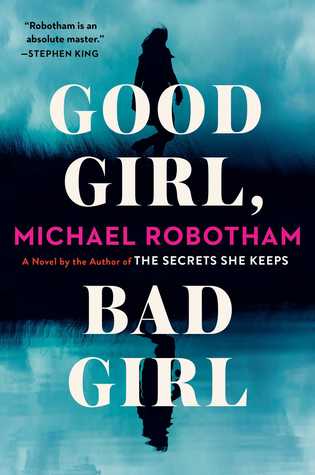
Good Girl, Bad Girl, by Michael Robotham****

I had never read this author’s work before, but went looking for it after reading raves about it from online friends. Thanks go to Net Galley and Scribner for the review copy, and to Seattle Bibliocommons for the audiobook that helped catch me up when I found I’d fallen behind. This book is for sale.

Evie Cormac–whose real name is unknown–is a patient in a children’s psych ward. She was found emaciated and filthy at the scene of a violent crime; it’s believed she was kept hostage, though she won’t deny it or confirm, or talk to anyone about it. Cyrus Haven, a psychologist that looks to become a recurring series protagonist, has his own tragic past. When Evie applies for emancipation, Cyrus offers to bring her home as a foster child until she can live alone. Everyone tells him it’s a crazy thing to do.

Meanwhile, a very different girl has been murdered. Jodie Sheehan had a golden future; a championship figure skater, she was locally famous and appeared destined for great things. Instead she was found murdered not far from home. Who the heck would do such a thing? Jodie had no enemies. Police are baffled.

Throughout this tautly written novel I found myself waiting for big reveals. What connection can there be between Evie and Jodie? Who is Evie really?

The thing I admire about this story is the restraint Robotham shows. A more formulaic writer would twist things around and then hit us with all sorts of deep though wildly unlikely ties between the two cases. He doesn’t do that. I expected the big dramatic scene in which Evie spills everything; he doesn’t write that scene. I’ve probably read a few too many novels of mystery and suspense lately, and I was in the mood to roll my eyes. That eye-roll had to wait for a different book and author, because I believed most of this story, and Robotham had shown excellent taste in keeping the reveals minimal.

Here’s the one thing that makes my eyebrows twitch; it’s the same issue I sometimes have with Jonathan Kellerman’s Alex Delaware books, which I  like a lot. Psychologists don’t race around conducting independent investigations, confronting possible perpetrators, and interviewing people t hat don’t want to talk to them. And sure as hell, psychologists don’t wear bulletproof vests.

But those of us that like these stories agree to suspend disbelief given half an excuse, because a psychologist’s ordinary job—interviewing truculent teens in an office, perhaps, or making hospital rounds—is not nearly as much fun to read about as is a psychologist-as-detective protagonist.  There were a couple of times toward the end where I made little frowny notes in my copy, but for the most part I was on board. Robotham takes us deep inside Cyrus’s head, and the more I felt I knew the character, the more I was able to believe the narrative.

Should you read this book? Sure, why not? It held my attention quite nicely, including during my loathsome hours on my exercise bike.  I would happily read this author’s work again.  Recommended to those that enjoy the genre.

2019 Best Book by a Pacific Northwest Author: Old Newgate Road, by Keith Scribner

Scribner held me in thrall with this one. I’m surprised it hasn’t turned up on more lists. This is the first of 20 best-of posts for this year; to keep track, check the Best Books page listed on my header.

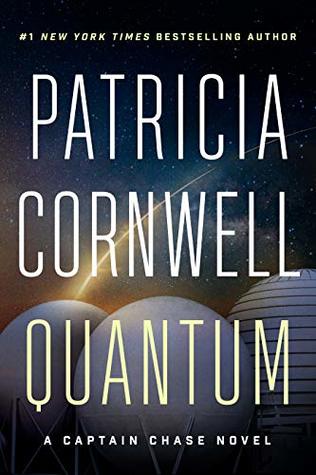
Quantum, by Patricia Cornwell**

I’m a longtime fan of Cornwell’s Scarpetta series, so when Amazon offered me a free, early look at this first book in the new Captain Chase series, I was over the moon. Thanks go to Amazon First Reads, and I am sorry not to provide the kind of review that I expected to write, but this one doesn’t work for me.

Whereas her earlier series was the original forensic thriller genre, Calli Chase, our protagonist, is a cop for NASA. Perhaps I should have seen this problem coming. I am generally not interested in the sciences, at least to any detail. I don’t mean to sound like a Luddite: I maintain the practical knowledge necessary to raise plants, provide quick home-medical treatment when called upon, and carry off other every day, practical matters. But physics? Chemistry? That whooshing sound right now was me leaving the room. So all of the science chatter early in the narrative led me to close the book and read something else several times, until I realized we were past the pub date and I owed a review. Surely it would get better, once we got into the actual plot. We have heavy foreshadowing that lets us know that some big bad event is about to unfold, and more foreshadowing that tells us there are some great big ol’ skeletons in Calli’s closet and that of her twin, Carme.

But that’s another matter. The foreshadowing used in the Scarpetta series is masterful stuff, suffusing me with a profound sense of dread that makes me turn the pages faster just to know what in the world is around the corner. This foreshadowing, on the other hand, is so heavily troweled on that it makes me impatient. This foreshadowing feels like filler by the 25 percent mark, and there are places in my notes where I say, Enough already. What. Just tell us and get on with it.

As Cornwell’s Scarpetta became a long-running series, she did what great writers of the genre do, moving more deeply into character. After a certain point readers became jaundiced as our hero was once again knocked out, blindfolded, and stuffed in a car trunk or whatever–how many times can this happen to the same person?–and so she moved more toward a psychological thriller, where there were possible enemies within the fortress, so to speak. Could she really trust her Benton, her husband, who is keeping secrets from her? Could she trust her niece? What about her work partner? There was all sorts of scheming and things were not as they appeared. Some readers grew cranky at this point, but I found it fascinating, because I felt I knew her core characters so completely.

But with Captain Chase none of this works, because the author has basically created the same characters with different names and relationships. Perhaps wary of this inclination, the protagonist is unlike Scarpetta, but obnoxiously so, and Chase is not a character I believe. Every tenth word from this character is a euphemism, with copious amounts of the first person narrative explaining and re-explaining how much she hates vulgar language. But whereas I have no problem with most off-color language, I’ve had people in my life that avoided it on principle, usually due to a religious conviction, and not one of them used euphemisms like this character does. Most of them believe that a euphemism is wrong because it’s a swear word dressed up as something else, and the best thing to do is omit them altogether. Instead of yelling ‘Gosh darn,’ they would say ‘Oh no!’ or, ‘How did this happen?’ But with Chase, it’s one long eye-roll, and so when we get to our less-than-stirring climax and she actually says, “Shit!” (and then of course has to talk about having actually said that word) I let out a snort and closed the book. I quit at 85 percent and didn’t stick around for the ending.

It’s a sorry thing, having to write a review like this for an author I like, because of course I cannot help but wonder what personal circumstances would make a bestselling author write and publish something this unworthy. Money? Health? But I don’t know, and ultimately my responsibility is not to the author but to my readers.

As for you, if you are fascinated with NASA, maybe you won’t find this story as repellent as I do, but I would urge you not to spend big on it. Get it free or cheap unless your pockets are very, very deep.

Right After the Weather, by Carol Anshaw****

Carol Anshaw has written a good deal of fiction, but this is the first time I have read her work. Right After the Weather turned up on Net Galley when I ran a search for humor; thanks go to Net Galley and Atria Books for the review copy.  This book will be available to the public October 1, 2019.

Cate is a set designer working in Chicago. She’s divorced and looking for the right woman to settle down with. She’s in her early forties, and the clock keeps ticking; Dana is the one she wants, but she wants to be more than Dana’s woman-on-the-side, and Dana isn’t leaving her girlfriend for Cate. Cate meets Maureen who is actually fairly awful, but Maureen makes her life easier and wants her desperately, and so she is trying to persuade herself that Maureen is the woman she wants. Meanwhile her ex-husband, a nice guy that she dumped when she came out, is camped out in her apartment. All of these things make it hard for Cate to move forward.  Her role model is her best friend Neale, a single mother that lives nearby, but all hell is about to break lose at Neale’s place.

Alternately with Cate’s narrative, we have infrequent but unsettling blurbs from a different point of view.  Nathan and Irene are addicts, “casual sociopaths.”  Every now and then there’s a page or two– distinguished by a different font—that articulates their priorities and plans, such as they are.  Anshaw is clever as hell, planting these tiny landmines that let us know that at some point, Cate and our criminals’ lives will intersect; at the same time, when it comes to people like this, less is more, and so they pop into the story just long enough to leave me feeling a little jarred, and then it’s such a relief to return to Cate’s story that I immediately forget about these other guys. The author plays fairly in letting us know that something is coming, but it takes awhile before I start anticipating what their role in this story will be. It’s so much easier to not think about them.

There’s some very uncomfortable material about Maureen about ten percent of the way into the story, and if I hadn’t had a review copy I might have stopped reading. However, that business gets put into context right away, and the rest of the story, though edgy, isn’t in that same out-of-bounds zone. Instead, Anshaw makes me laugh out loud several times with her dry humor and the perception that goes with it; in particular the scene with Cate’s mother is uproariously funny. I am ordinarily not pleased by bad-mother humor because it’s becoming a cliché, but when Anshaw goes there, she outclasses others and there’s no putting this book down.

I would read this author again in a heartbeat.