After Annie, by Anna Quindlen*****

After Annie tells the story of a family that is changed by the sudden death of the mother, a woman still in her thirties. My thanks go to NetGalley and Random House for the invitation to read and review. This book will be available to the public Tuesday, February 27, 2024.

I’ve read a number of books by this author, and I have come to notice a pattern. I read the synopsis, like the sentence I used to begin this review. I see what it’s about and shrug. Doesn’t sound like it would be all that special, but hey, it’s Quindlen, and I have liked her work before, so let’s give it a shot. After all, in past novels, the topics also didn’t seem engaging at the outset. One novel is about a family being forced to relocate due to eminent domain; another has to do with parking spaces in New York City. There’s a memoir about grandparenting, and another about—I kid you not—her dog. Nothing here seems all that appealing.

Yet in some ways, it is the very ordinariness of her subjects that draws us in. So many of us have had to move when we didn’t want to, and so we fought it; or we became so angry with a neighbor’s thoughtlessness that we fantasized about terrible revenge; or we dealt with a death that came out of the blue, striking down someone that was perfectly healthy, or that seemed to be. If we haven’t done any of these things, chances are excellent that someone else we care about has. By tapping into every day experiences and crises of various sizes, Quindlen finds commonalities.

But perhaps the most important feature of her books, particularly her novels, is the way that she crafts characters that are so visceral we would know them if we saw them on the street. Young Ali, the daughter who’s just beginning middle school, yet suddenly finds herself burdened by all of the things her mother did for the family, from child care to meals to housework, is so real to me that I nearly climb inside of her skin, and when Annie’s best buddy tries to tell Bill, Annie’s husband, Ali’s dad, that this isn’t okay and he blows her off, I want to cry out. We can see that he’s behaving selfishly, whether he knows it or not, because he is so poleaxed with grief. It’s hard to prepare a meal when you can’t stop crying. Hell, Bill can hardly go into the kitchen, because that’s where she died.

Grief was like spring, maybe. You thought you were getting out from under it, and then it came roaring back. And getting out from under it felt like forgetting, and forgetting felt like treason.

I began reading this story because I like the author, but it also serves as a grief book. I found this out when my sister died about halfway through. Unlike Annie, my sister was not in the prime of her life, nor was her death unexpected. She’d been horribly ill and in great pain for years on end. Her death was a relief, ending her pain, and ending the anguish of others that had been constantly seeing her that way, helpless to improve her life in any way. So I am not poleaxed like poor Bill. She didn’t leave behind a houseful of small children and a middle schooler trying to pick up all of the pieces. She didn’t have a six year old who would explain to everyone that his mommy wouldn’t be dead anymore once she came home from the hospital. But what I am saying is that I find this book more soothing than I would have guessed. If you or someone near to you is dealing with loss, After Annie may help you too.

Highly recommended.

North Woods, by Daniel Mason*****

By now the word is out about this genre-bending novel. North Woods, by Daniel Mason, is nothing short of brilliant. My thanks go to NetGalley and Random House for the invitation to read and review; this book is available to the public now.

This book is all about the setting; there are some terrific characters, but don’t get too attached to any of them, because for the most part, they come and then leave. Rather, our story is about a cabin in the woods of upstate New York, and the acreage surrounding it, and how its use changes over the years.

We commence before the American Revolution, and so in the beginning, the narrative has the style of a very old diary, with antiquated spelling and language. This section is the reason I am so dreadfully late reading and reviewing this book. Honestly, the first fifteen percent or so is as dull as watching paint dry. I would begin reading it, but then my eyes would glaze over and I knew I had some other things to read by authors I knew and loved, and so I would switch books. But my Goodreads friends were raving about this book in unusually large numbers. Nobody didn’t like it. And so I summoned my self-discipline and went to it in a determined fashion, fortified by the audio version, which I received from Seattle Bibliocommons. This was very helpful. And once I got past that dry beginning, I began to understand why other readers were raving about it.

The first characters that are noteworthy are twin daughters named Alice and Mary, who are left to run the apple orchards on their own when their father goes off to war. He is a Loyalist, determined to save New England for his king. He doesn’t survive the war, which is just as well, because the locals hate him; he chose the wrong side to fight for. Neither daughter marries, and the property eventually goes to someone else.

The chain of owners is varied and, in many regards, absolutely hilarious. We see one new owner after another explore the house and the grounds, and of course, none of them has a full picture of the previous owner. I love the fact that I know more about this place than its most recent purchaser, and the assumptions that they make range from the merely incorrect to the disastrous. I cannot say too much more, although I particularly enjoy the character of George, whose phlegmatic, unattractive qualities are rendered uproarious in the audio version, and also the medium, a complete charlatan who’s horrified when she inadvertently awakens some actual supernatural beings. I would love to say more, but that would ruin it for you, and that would be a crime because surprise is an important part of the book’s success.

There is a formidable cast of actors that take on the reading for the audio book, and for those readers that are on the fence between audio and print, I recommend the audio version; better still, use both together.

After reading this one clever, memorable book, I will be watching to see what Daniel Mason writes next, because whatever it is, you know it will be good.

Highly recommended to those that enjoy historical fiction, literary fiction, humor, and horror.

I Did It for You, by Amy Engel****

Amy Engel is the author of The Roanoke Girls and The Familiar Dark, both of which were unrelentingly creepy, and I loved them. When I saw that she had written another, I had to read it. My thanks go to Net Galley and Random House Dutton for the review copy of I Did It for You. This book is for sale now.

Greer Dunning’s sister, Eliza and her boyfriend, Travis, were murdered when they were teenagers. One minute they were making out in his car, and the next, boom. Someone shot them dead, right through the window. The guilty party was eventually caught and charged, and eventually admitted what he’d done, but it never made sense, especially not to Greer. She had a hunch that the killer, an intellectually disabled fellow with little imagination, had not acted alone. But he has said nothing about it, refused to provide a motive, and what he knew, he took with him to the electric chair.

Greer moved on. She finished school, moved from her hometown of Ludlow, Kansas to Chicago, where she works as a middle school counselor. But now a similar crime has occurred back in Ludlow, and Greer feels the pull, the urge to turn toward home and find out for real just what is going on.

This is a solid mystery, though not one with the sort of page turning urgency as the other two. It’s deeply atmospheric, and there’s a melancholy, brooding mood that’s thick and rich, and this is becoming Engel’s signature quality. The internal monologue is an absorbing one.

The choices that she makes while she is home make sense in a strange way, and parallels form in the most unexpected of places.

The solution itself doesn’t work for me. What? No. But the journey we take to get there makes this novel worth reading.

The only problem with writing a big-deal debut novel is that you’ve set the bar high, and readers develop stratospheric expectations for each subsequent book. So it is here. I Did It for You is a decent read, but it isn’t The Roanoke Girls, and it isn’t The Familiar Dark. Instead, it is simply a good book.

For mystery lovers that have never read anything by this author, this book is recommended. For those that have, you may want to get this one free or cheap, rather than paying full cover price.

The Mystery Guest, by Nita Prose****-*****

“The maid is always to blame.”

4.5 stars, rounded upward.

Author Nita Prose introduced Molly the Maid to us in 2022. Now Molly is back. She’s the head maid now, and considerably more confident than when we first met her. Her boyfriend Juan Manuel has moved in with her, but he is conveniently out of town for most of this novel, and it’s just as well, because there’s another murder about to occur at The Regency Grand Hotel, and once more, Molly will be instrumental in identifying the killer.

My thanks go to Net Galley and Random House Ballantine for the review copy. This book will be available to the public November 28, 2023, so you can plan your gift lists accordingly.

The hotel is in high gear, planning for the big gathering that will introduce the large, new, lovely tearoom. Business has been down at TRG since the murder last year, and this special occasion should bring new life into the hotel. In fact, Molly has given up her vacation with Juan so that she can see to the set-up; everything must be cleaned, shined, and buffed to perfection. You see, famous author J.D. Grimthorpe has an important announcement to make, and he’s chosen the tearoom as the venue from which to do so.

The stage is set, and the fans arrive. Molly’s protégé, Lily, has arranged the tea cart perfectly. Grimthorpe takes the podium, and is presented with his tea. After doctoring it to his own tastes, he takes a sip and ascends the stage once more, but before he can get to the surprise announcement, he keels over dead, right on top of Lily!

Lily is terrified. She’s always been a quiet one, but now she is virtually mute. When the police come in to question her, Lily is nearly undone.

“Molly, I’m afraid.” Her eyes are round pools of trepidation.

“I know,” I say. “But why?”

“Because a famous man is dead. Because they always blame the maid. You of all people should know that.”

“You’re not in any trouble, Lily.”

“Bit soon to tell,” the detective replies.

With that, we’re off and running. The book is one hell of a page turner, and it’s over before I know it. There’s lots of spunky dialog that jumps off the page. I seldom regret putting away my book because I spend so much time reading each day, but for this one, I stayed up late.

My only quibble—a small one—is that a key part of the solution is a bit of a reach. But this is a fun story, and so I make a quick note and move on.

For those that enjoy a sparkling mystery interspersed with wry humor, this book is for you. The profound respect for the working class is icing on the teacake.

Highly recommended.

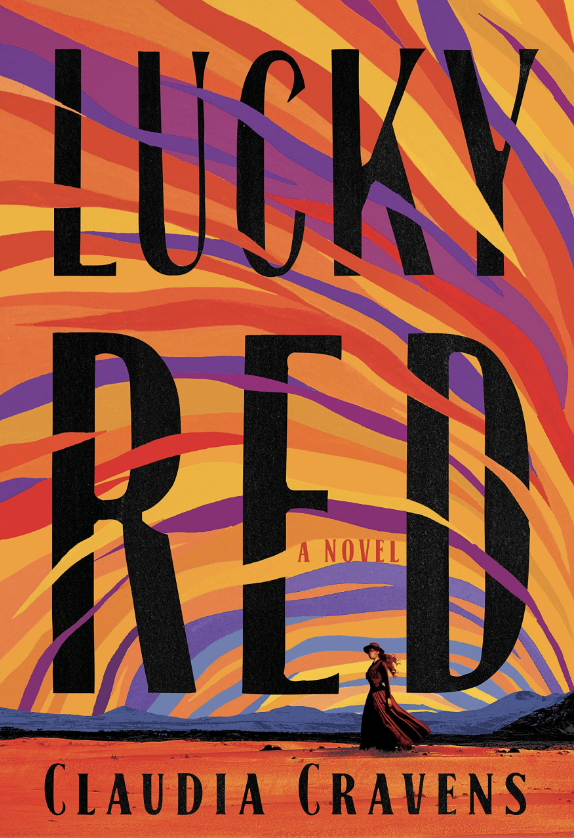
Lucky Red, by Claudia Cravens*****

Larry McMurtry, eat your heart out. There’s a fine new word-slinger come to town, and her name is Claudia Cravens.

My thanks go to Random House and Net Galley for the invitation to read and review Lucky Red. This book is for sale now, and you should get it and read it.

Bridget lives a life of hardscrabble deprivation; her mother died in childbirth, and all she has is her pa. He loves her, but he’s worthless; when he finally gets a bit of money, he invariably drinks and gambles till it’s nearly gone. During one such episode, he gambles away their little house, and then buys a homestead, sight unseen and many miles away. What they find instead is a tar paper shack; there are no crops or tilled acreage, no tools or even a decent place to live. They crawl into the miserable hovel to get out of the elements, at least, and get some sleep; a rattler has the same notion, but when pa thrashes in his sleep, the rattler bites him in the neck, and then there is only teenage Bridget.

Bridget makes her way to Dodge City, and in no time, she is stone cold broke. She’s recruited to work in a brothel, the only one in town owned and run by women. She doesn’t mind the work and makes friends among the other “sporting women,” and is curiously removed from the process for which she is paid; slide prong A into slot V; moan a little, gush, and collect your pay. But later, she finds herself obsessed with a new sex worker; a lovely blonde woman named Sallie. Everyone around her understands the significance of this fascination, but Bridget herself doesn’t get it. She’s young, and she’s naïve. But when Spartan Lee, a female bounty hunter, comes to town and asks to hire Bridget, the sun shines and the angels sing.

This story is epic, and in many ways reminds me of Little Big Man, but with a female protagonist. And in many ways, what makes it so successful is its restraint. At the book’s outset, there’s a slimy man that wants to buy Bridget’s hand in marriage, which would give her father a nice chunk of change, but she hates the man, and her father doesn’t push it. A less capable writer would have done it the other way, but here, and in every instance where I predict what will happen because it’s so obvious, Cravens does something else. And the lesbian sex is brief and almost free of physical details—a sad thing for anyone looking for soft porn, but it serves to keep the story moving forward—with the emotion behind it carrying the internal narrative.

Although Bridget has no complaint about the work she does, and the management is more benign than in houses owned and run by men, Cravens keeps it real. One night, Sallie is attacked by a client, and Bridget bursts in to rescue her. It doesn’t go well. Sallie berates her for her naivete:

“You don’t see the first thing about this, though, do you. They all have a knife, Bridget. They all have a gun, and they were all born with two fists on the ends of their arms. You think you’ve got this all figured out, but any single one of ‘em could take a swipe at you some night and you’d be dead before you hit the ground.”

To tell you more would be to spoil it for you, so I’ll leave you with this: Lucky Red is the best debut novel of 2023, and one of the best books I’ve seen this year, period. Don’t miss it.

The Forgotten Girls, by Monica Potts***

My thanks go to Net Galley and Random House for inviting me to read and review The Forgotten Girls, by Monica Potts. I generally enjoy reading books that focus on the working class, and so I thought this would be a good fit. And it might have been, had it been better written.

In broad contours, it’s a memoir that examines the lives of Potts and her best friend, Darci, both of whom grow up in a tiny, isolated town in the Ozark Mountains. The community is long on religion and red hats, and short on jobs, opportunity, ambition, and encouragement for girls to make something of themselves. Nevertheless, Monica, whose mother has raised her with the expectation that she complete her high school education, go to college, and then live somewhere else where there are more possibilities, has done all of those things, while Darci, who is every bit as talented and has just as much potential, is raised by a dithering mother that lets her do whatever she chooses because she dislikes conflict, and who has no expectation that her daughter will make a better life for herself, since she herself did not.

Okay.

Potts wonders why she made it out of there and Darci didn’t, and yet I’m not seeing the mystery, nor anything that’s all that different from what’s happening all over the country. And indeed, part of the time, Potts discusses this fact, that it is happening in many places that lack resources and that don’t prioritize education. And so, sometimes the story seems to be a sociological study that uses Monica and Darci as examples, and at other times there is so much anguished self-flagellation that I find myself wondering why she thinks the public needs to hear about her friend’s failure to thrive, and whether this isn’t mostly therapeutic writing for the author’s own benefit.

In other words, the book seems like a lengthy treatise in search of a thesis. We wander in and out of both girls’ lives, with a good deal of attention paid to the death of Potts’s sister, but there’s no real direction or clear purpose that I can find.

In the back of my mind, I can hear choruses of other readers asking whether this situation is considered special because it’s about white girls. Nobody makes a fuss when girls in rural areas that are Black or of Latinx heritage fall through the cracks; hell, it’s been happening for more than a hundred years.

Many other reviewers seem to find merit here, but I confess I don’t see much. If you choose to read this one, I suggest getting it free or cheap.

Liberation Day, by George Saunders*****

Liberation Day is a collection of the best short stories you will ever encounter. I had never read George Saunders before, but when I received an invitation from Random House and Net Galley to read and review this book, I remembered him by reputation and jumped at the chance. This book is for sale now.

Sometimes I feel conflicted when I see words like “Booker prize winner” and “exquisite” I feel torn. The book may be brilliant, but it also may be a whole lot of work to read. I am happy to report that is not the case here. Every one of these nine stories could serve as the cornerstone of a collection; the title selection is first, but I suspect that is more about length than anything, as it approaches novella length. It’s science fiction but also vaguely political; a group of people have had their brains scrubbed to near emptiness, and they are mounted on a “speaking wall.” Their sole purpose is to provide entertainment as a sort of scripted Greek chorus. They may only speak upon command; they assume this is a good arrangement, because they have no memories of their prior lives. But then the home (and Speaking Wall) owners are visited by their adult son, who concocts a scheme to liberate the speakers.

Many of these stories have stylized prose and invented words that might be difficult for a reader whose first language isn’t English.  “Mother’s Day,” which is one of my favorites, begins:

“This distinguished-looking gentleman would appear at your door somewhat sloshed and ask, Were your trees slaggard? Were they gublagging behind the other trees? Did they need to be prodderated? And hold up the little device. In this way they had nearly lost the house.”

Happily, for underconfident readers, there is an audio version available. I used it part of the time because I was running behind. There’s a different narrator for each story; actor Tina Fey does one of them! My notes are full of praise for these performers, who make a brilliant book even more so.

I especially enjoyed “The Mom of Bold Action,” which features the ultimate unreliable narrator, and my absolute favorite, “Ghoul”. Imagine, if you will, landing in Hell, or its amusement park equivalent, but there are still rules of etiquette to be observed; in particular, you are expected to be positive, and constantly encourage the other ghouls as they commit the ultimate misdeeds assigned to them. I laughed so hard at this one that it made my family a little cranky, and I had to go off by myself to hear the rest. Worth it.

The stories are a mixed bag in terms of genre, and all are outstanding.

Highly recommended in whatever format makes your heart happy.

Blind Fear, by Brandon Webb and John David Mann*****

Blind Fear is the third book in the red hot series by former Navy Seal Brandon Webb and concert cellist turned author, John David Mann. When the two of them collaborate, the pages jump. My thanks go to Net Galley and Random House for the invitation to read and review; this thriller is for sale now.

In Cold Fear, the second in the series, our protagonist, Finn, is on the run. He’s a SEAL for the U.S. Navy, an elite combat diver, but corrupt elements have framed him for the slaying of his closest team members, and until he can prove his innocence, Finn needs to be invisible.

He’s good at it.

Now he’s moved on from Iceland to Puerto Rico, and he’s been renting a room from Zacharias, an elderly man that supports himself and his two grandchildren by running a café. He works in the café in exchange for room and board. But now there’s trouble; his two grandchildren haven’t come home. Zacharias would go and look for them, but Zacharias is blind.

There’s nobody better at ferreting out secrets than our man Finn, but doing so puts him at risk. He’s deliberately stayed clear of the city because there are so many military people stationed there. The hinterlands have been safe, and until he can come forward with the proof he needs to save himself, the hinterlands are where he belongs.

But then…what about the children?

Like those before it, this is a taut, tense thriller with multiple massive emergencies weaving in and out of one another. We have Finn’s need to avoid discovery yet, find the missing children; now add a serial killer known as El Rucco who’s left grizzly human remains all over the island and a major hurricane, and friend, this is not your bedtime reading material. Read this one sitting up and with the lights on. Just trust me.

Through all of this, Finn also deals with personal baggage that he tries to ignore, but which comes to him in dreams. He has blocked out a large portion of his early life due to trauma, and he has “questions that had hung over him for thirty years like a kettle of vultures.” This is no soap opera and so we see and hear very little of it, but the snippets that intrude during Finn’s unguarded moments heighten the suspense and the reader’s sense of dread.

There are other praiseworthy attributes I could discuss; as we are introduced to the setting, we have brief but meaty passages that serve to inform us about the injustices that are meted out to this lovely but impoverished nation, and the way that the U.S. government has kept its boot on the necks of the people that live there. But all of this remains secondary to the story itself, and the focus is tightly maintained. The research is meticulous, and the organization is stellar. The development of the protagonist is outstanding; the secondary characters, particularly Zacharias and the older grandchild, Pedro, are visceral and memorable, and I would be delighted to see them again.

Highly recommended to all that enjoy a true thriller.

Lone Women, by Victor LaValle*****

“Queer folk, the Henrys.”

Adelaide Henry is “profoundly lonely,” growing up without siblings, with older parents that spurned the world around them. They had their reasons. And yet, in the opening chapter, as I see Adelaide pour kerosene over both of their lifeless forms and burn them, along with their house, I wonder…were they bad enough to deserve this?

But nothing is as it seems, and this is part of the magical spell that Victor LaValle weaves into this kickass novel, Lone Women. By the time I understand the why and the who and the what, I feel an intimate connection to Adelaide, as if I may be the only one trusted with her secrets.

My thanks go to Net Galley and Random House for the review copy. This is one of the finest novels to be published in 2023, and you should get it and read it.

Adelaide flees the California farm where she’s lived all of her life, and buys a homestead in Montana. Almost everything about her life changes; from the warmth of California to the frigid winters of the Northern Rockies, from life with her parents to one lived alone, and from an all-Black community to one that is almost entirely Caucasian. She brings very little with her, only what she can carry, but she is curiously possessive of her extremely heavy trunk, and though I initially assume that she keeps something of great monetary value inside it, I soon realize that isn’t it. My early notes ask the same thing over and again: “What is in that trunk?”

From there, our story unfolds and I can’t stop turning the pages. I’ve never read a novel of any genre that’s like this one, and I’m guessing that you haven’t, either.

Do yourself a favor. Don’t read the synopsis. Go into it blind. It’s a lot more fun if you learn of the characters and events at the times the author intends.

There’s a powerful message in play, but the story is so adroitly delivered that it never feels like a polemic.

I won’t say more, because I don’t want to ruin it for you, but believe me, the next time LaValle publishes a novel, I will be first in line to read it. Highly recommended, especially to feminists.

Everyone in My Family has Killed Someone, by Benjamin Stephenson****

When life gets you down, it’s time to kick back and relax with a nice little book about multiple murders. Benjamin Stevenson’s nifty little mystery is just the ticket. This book is for sale now.

My thanks go to Net Galley and Random House for the review copy.

Once in a while, a novelist will disarm his audience by speaking to them directly; this is known as breaking the fourth wall. Stevenson doesn’t just chip a corner of plaster; he comes in with a wrecking ball, because that’s just the kind of writer he is. The product is as funny as the title. Each chapter is devoted to a family member, and some of them get more than one.

The premise is this: narrator Ernest Cunningham is invited to a family reunion at an out of the way mountain lodge, a ski resort in the dead of winter. The event is timed to coincide with Ernest’s brother, Michael’s, release from prison, where he was sent for…well. You know. And as is true with all families, there’s all kinds of baggage, both literal and figurative; there are grudges, guilt, and oh yes, secrets. So many secrets!

The first body turns up in less than twenty-four hours. Is there a mass murderer at large, perhaps the one in the news dubbed “The Black Tongue?” If so, is s/he a Cunningham?

The whole story is told in a jocular, familiar tone, explaining to the reader what the rules are when writing a murder mystery. He assures us that he is a thoroughly reliable narrator, which immediately makes us wonder, because if so, why bring it up? Most narrators are reliable. So…?

I enjoy reading this thing, and am impressed at how well the author juggles a sizeable collection of characters. It doesn’t take me long to straighten out who everyone is, and this may be because we are apprised of who is annoyed with whom over what, fairly quickly. When he brings in reasons why certain people avoid each other, it helps me recall who they are.

There are two things I would change if I could. The book would be even funnier if he cut back on the side remarks to the reader long enough to let us forget he’s doing it; then, when it surfaced again, it would get more laughs. I note that toward the end, he tells us—in another side reference—that his editor has suggested he pare back some of the chatty parts, and that he isn’t going to do it. That makes me laugh too, because I have been harboring the same notion.

The other thing that I’d change is a detail that distracts me. The author refers early on, and then another time later, to a plot hole big enough to drive a truck through, but he never tells us what it is; possibly the detail that distracts me is the thing he refers to. Early on in the story—so probably not a spoiler—Ernest is badly injured, to the point where one of his hands isn’t usable. Yet throughout the story, when he could go to a hospital, he doesn’t do so, and he doesn’t even address the possibility. People come; people go. Yet there’s Ernest, with an oven mitt stuck over one hand to protect it, and nobody suggests he hop into town and have it looked at. Toward the end of the story there’s a general reference to the Cunningham stubbornness preventing family members from leaving the reunion, but it doesn’t hold water with me.

Nevertheless, this is a fun book. While I was reading it, I was reading several others, but this one became the go-to at lunchtime and whenever I had a spare minute, and so I recommend this book to those looking for a light, amusing read.