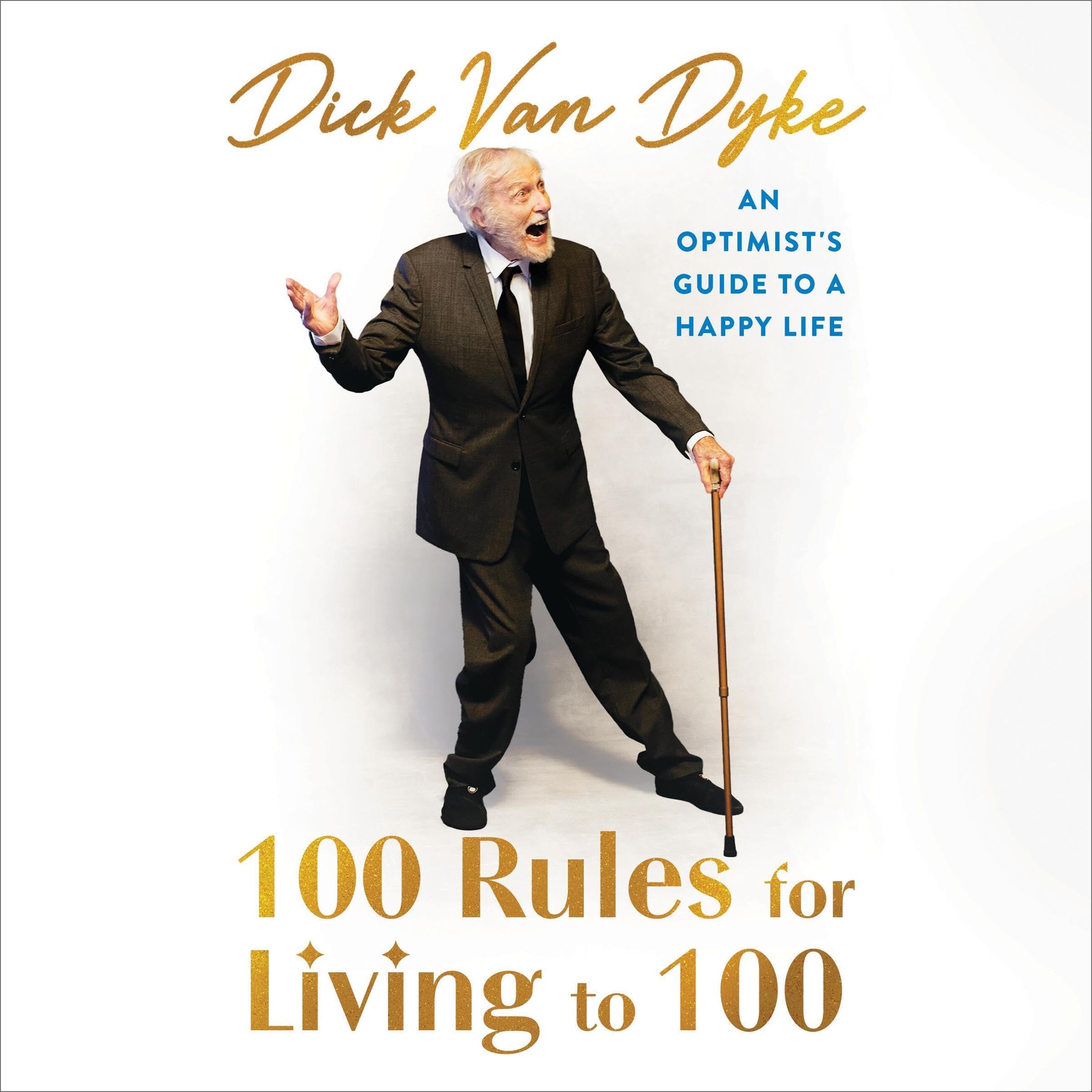
100 Rules for Living to 100, by Dick Van Dyke****

Version 1.0.0

Dick Van Dyke was a wonderful part of my childhood, and this lovely audiobook has put a little more bounce in my step. It’s not really about rules, of course, but the format is a perfect scaffold for a combination memoir and self-help book. My thanks go to NetGalley and Grand Central Publishing for the review copy; this book is for sale now.

Van Dyke entered my consciousness when I was a kindergartener, and the original movie Mary Poppins brought droves of families to theaters. I was not the only family member that was entranced, and all of us sang along to the sound track once the record was on our stereo turntable. The movie, and its lead characters, played by Julie Andrews and Van Dyke, glowed with humor and optimism.  What a wonderful message to share, the idea that the best we can give our children is our time and our attention. In the early 1960s, the suggestion that adults ought to listen to children was ahead of its time and much needed.

Many of the anecdotes the author conveys have to do with experiences shared between him and Arlene, his current wife. Despite the May-December romance, it sounds like a wonderful union. He talks about the recent and horrific events with the Santa Ana fires that took the homes of so many—though his own was spared. My favorite parts, though, are the ones in which he discusses the future roles he’d like to play, because he isn’t really retired from the industry. Way to go, Dick!

Reader Tom Bergeron does a nice job, and as a bonus, he sounds quite a bit like the author.

I recommend this little gem to everyone that could use some positive energy, and to all that love the author.

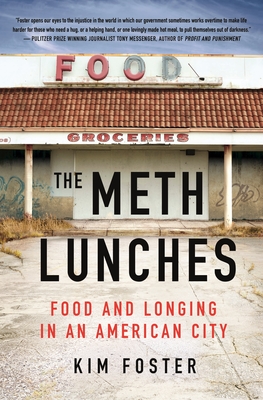
The Meth Lunches, by Kim Foster****

Kim Foster and her husband, David, create a food pantry in front of their house—and later, inside it—during the pandemic. It begins with the employment of one hungry handyman who’s also an addict, and from there, it mushrooms. This is her memoir of that time, and also a philosophical treatise on poverty and hunger in the United States.

My thanks go to Net Galley, RB Media, and St. Martin’s Press for the review copies. This book is for sale now.

When Foster’s family moves from New York to Las Vegas, one of the first thing she notices is the meth. It’s everywhere. Perhaps it is the milder weather; addicts in New York have to find a spot out of the weather during much of the year, but Vegas is in the desert, mild enough for the unhoused to sleep just about anywhere, warm enough that addicts don’t have to hide themselves away to get high.

The pandemic hits Vegas hard. So many people make their living from some aspect of the entertainment business, and for a while, it is a dead industry. And so, after hiring a man with an obvious dependency to do work on their property—work that he never completes—and hearing his story, the Fosters decide to convert the little free library in front of their home to a little free pantry. And from there, it mushrooms.

The pantry begins small, but Foster is a chef, and she can’t stand the notion of just putting out pre-packaged crap when she can cook food with fresh ingredients that will make others feel better. And as the book takes off, I momentarily regret taking this galley, because I generally hate stories that drop recipes into the middle of the plot. If I want cooking information, I’d rather go to a cookbook, or to a recipe website. And it was right there in the title, after all: The Meth Lunches. It’s pretty obvious from the get go that lunch is going to be juxtaposed with social issues.

But as the story continues, I don’t hate it after all. For one thing, this whole book is nonfiction. There’s no plot that is sidelined by a recipe. The whole point is that that Foster considers food, and the act of feeding others, to be a sort of therapy. She makes the point well.

Eventually, the scale of the operation becomes mind boggling. Multiple freezers to hold meat; trucks that deliver food. The pantry begins as an out-of-pocket gift from the Fosters to the down and out of Las Vegas, occasionally supplemented via Venmo from friends, when they are able to help. Inevitably, the pantry finds its way into the local media, and networks form with other food banks and nonprofits.

In between all of this, Foster develops relationships with some of the people that come by. She and her husband are foster parents—ironic, given their name, right? And we hear not only about what the children they house and love have experienced, but also about the children’s biological families. Because although it’s officially discouraged, Kim strongly feels that the children heal best if their biological parents are in their lives in whatever limited way is possible. So before we know it, she is deeply involved with some horribly dysfunctional adults as well. And it is the stories she tells about interacting with them and the children, two of whom she and David eventually adopt, that make this story so riveting.

At the outset, she intends for the pantry to be a resource for local families that have homes and kitchens, but whose finances have taken a huge hit due to the pandemic. The very poor already have resources, she reasons. But of course, the homeless find her, and she doesn’t turn them away.

And here is the rub, the only aspect of this book that I dislike. She tells us that one unhoused person in four is mentally ill, and she believes that this official figure is low, at least in Las Vegas. And then she talks about those with addiction issues.

But what she never gets around to discussing at all—unless she does it so briefly that I miss it—is the unhoused people that are not chemically dependent on anything, whose mental health is stable, but who don’t have a permanent residence because they straight-up ran out of money. To hear her tell it, you’d think they don’t exist, and you know that’s not so. So many American families live from paycheck to paycheck, even when the economy is said to be booming. And I feel that she has left these people without faces or voices. And that, in turn, perpetuates a stereotype, the one that suggests that everyone that is homeless is there because they’re either crazy or junkies or both. I use the offensive terms intentionally, because that’s how the stereotype works. 

And the stereotype in turn begets a lie, the insinuation that nobody has to be unhoused. Don’t use drugs. Get mental health care. Get over yourself. And whereas I can see that Foster doesn’t intend to promote such thinking, and in fact takes a hard line over poverty existing at all in such a wealthy nation, when she doesn’t give space to the many, many individuals and families that are out there because the wage earner was laid off, or because they were just squeaking by but then the rent increased, it does distort her overall picture. I don’t come away from this book thinking that most of the homeless are not using meth or any other dangerous, life-altering street drugs, even though it’s true.

Nevertheless, this is a poignant, stirring tale that won’t be told by anyone else, because it can’t be, and bearing in mind the caveats above, I recommend it to you, both as audio and print.

Dirtbag, Massachusetts: A Confessional, by Isaac Fitzgerald***-****

I enjoy a good memoir, and so I was all in when I saw this singular work; my thanks go to Bloomsbury and Net Galley for the review copy. It’s by “the beloved founding editor of Buzzfeed Books,” but somehow, I either missed that part or forgot about it, so I read it and assessed it as if he were just some random guy, and ultimately, that’s probably the fairest way to do so anyway. This book is for sale now.

Fitzgerald has seen and done just about everything. His family life growing up is dreadful, and he is delighted to bail out of the screaming, wretched mess called home in order to attend boarding school. He is the scholarship kid, but he benefits plenty from the largesse of his classmates. Post education, he takes himself to San Francisco, with an entire continent stretching between himself and his family. Upon arrival, he continues his favorite pastime, drinking, which he began doing with his older brother when he was just twelve. His parents didn’t do it, so he figured it might be a good choice.

The promotional blurb says that this is the story of the author’s “search for a more expansive vision of masculinity.” Perhaps this is why I find it so hard to relate to. There are moments, though. A huge chunk of the first half in particular describes his affinity for bars, which he identifies as his safe spaces. My notes from the start of this segment say “Oh boy, I always wanted to read yet another alcoholic memoir.” Soon afterward, though, he says, as if reading my mind, that if we expect him to discuss the way he quit drinking, we’ll be in for a long wait, because he still drinks, though not nearly as much. That much was good for a chuckle. Then there’s another segment about his period with the porn industry. I confess I straight-up skimmed some of that, although again, there’s a moment, when he talks about the importance of consent, and how the porn industry, in his experience, is more careful and respectful of this boundary than anyone else he’s encountered.

The book is billed as being humorous, but this is a massive overstatement. Most of the content is dead serious. But then again—yes, you guessed it. There are moments.

What takes me by surprise, and happily so, is the message that he’s spent the whole book building toward, and I never see it coming until we’re there. I highlighted it in case I wanted to use it as a quote here, but that would be an epic spoiler. You didn’t know that memoirs can have spoilers? Oh yes. They can. And when I see this one, my disgruntlement fades and I am once again a perfectly gruntled reader and reviewer.

One aspect that I appreciate, and particularly appreciated during the rougher patches, is that the brief essays that, strung together, make up the memoir, make very short chapters, and they’re clearly marked. This is a terrific bedtime book, because I am able to find a reasonable stopping place when I need to turn out the light (or, as it happens, turn off my Kindle.)

If you’ve read this review and are interested, then I recommend it to you. I anticipate that men will enjoy it more than women.

Happy Release Day!

I reviewed this outstanding collection earlier, but today it is available to the public. Hill won awards for the first collection, and this is, if anything, even better.

https://wordpress.com/view/seattlebookmamablog.org

The Soul of a Woman, by Isabel Allende*****

Isabel Allende has long been a guiding light for women, immigrants, and social justice activists. She is an old woman now, and her wisdom and word smithery have only grown deeper and wider. Thanks go to Net Galley and Random House Ballantine for the review copy. This book is for sale now.

There are four sections to this compact memoir, and overall, it is a memoir of Allende’s feminist philosophy and experiences. She also describes the trajectory of the feminist movement and the gains that have been made.  One of Allende’s most agreeable attributes is her candor, and she discusses her relationships with the men she has married with disarming frankness and humor. Her voice is like nobody else’s.

Generally speaking, I find it annoying when an author uses space in the book they’ve sold us to advertise a product or beg for funds, nonprofit or not; however, this time I wanted to stand up and cheer! Allende’s foundation exists to support women’s reproductive choices, and that includes abortion. Out of all the years I’ve blogged, over one thousand reviews I’ve scribed, and I have never seen abortion rights advocated so forcefully. I bow in admiration.

If I could have something more from this iconic writer, it would be an overall autobiography. She has written numerous memoirs, but all of them focus fairly narrowly on one particular aspect or time period. I would love to have her whole story in her own words.

Highly recommended.

Things My Son Needs to Know About the World, by Fredrik Backman***

Purely by serendipity, Backman’s collection of essays came out in the US as my own son is initiated into fatherhood. My thanks go to Atria Books for the review copy; it’s for sale today.

Backman is known to me as a fiction writer, and I have read most of his novels, which are beloved worldwide. Here he delivers nonfiction with the same gently philosophical voice.  Despite the title, the essays are written for adults; this is not a children’s book.

Backman waxes eloquent on diverse topics, and it sounds sweetest—as always—when he focuses on what real men do. For example, all his life, he says he has been told to stand up like a man, but he wants his son to know that a real man should also know how to “stay seated, shut up and listen.”  Women the world over, myself among them, cheer this, and in saying it Backman helps make the world a better place. Other parts are funny as heck, as when he describes trying to change a diaper on an airplane.

The book’s only weakness is the overuse of the words “stuff” and “crap,” throughout the text, and knowing the author’s signature style, I suspect that this began as deliberate repetition for emphasis and as a form of figurative language that somehow didn’t translate effectively.

That said, it’s a sweet little book and a good read, and its timing begs for it to be a reverse-Father’s Day gift in the US, from fathers –or better still, grandfathers—to sons.

Nanaville, by Anna Quindlen*****

Author Anna Quindlen is queen of all things warm and wise, and so it’s not surprising that her ode to grandmothering  hits just the right note.  I was lucky and read it free and early, thanks to Random House and Net Galley, but it would have been worth the purchase price had it come down to it. This friendly little book is available to the public now.

Quindlen’s memoir can double as a primer for her peers that are new grandparents also, but that’s not where its greatest strength is found. The most resonant aspect is that common chord, the eloquence with which she gives voice to our common experience. It makes me feel as if she and I are sitting together with our baby pictures—the grandbabies and our children that created them—and as she speaks, I am saying, “I know, right?” I chuckle as she recounts trends in the advice given by experts to new parents:  when our first babies were born, we were told to put them to bed on their stomachs so they wouldn’t spit up and choke to death on it; then later children slept on their sides, which seems like a safe bet either way, but babies don’t stay on their sides very long; and now babies are supposed to be safer on their backs. And she voices so well the pride we feel when an adult that we have parented turns into a wonderful parent in his own right. And I nod in agreement as she says of her toddler grandson, “No one else has sounded that happy to see me in many, many years.”

Quindlen speaks well to the ambivalent moments as well, to the need to hold our tongues when we want to offer advice that hasn’t been requested; at the same time, there’s the relief that comes of not being in charge of all the big decisions.  And I echo the outrage that she feels when some ignorant asshole suggests that our biracial grandchild is not part of our blood and bones. (A jerk in Baby Gap wants to know where she got him; she replies that she found him at Whole Foods.)

Unequivocally joyful is the legacy grandchildren present. “I am building a memory out of spare parts…someday that memory will be all that’s left of me.”

And then, there are the books:

“’In the great green room…’

“’Mouse,’ Arthur says.

“’There is a mouse,’ I say…falling down the well of memory as I speak, other children, other chairs.”

Go ahead. Read it with dry eyes. I dare you.

Quindlen is writing for her peers. If you aren’t a grandparent and don’t expect to become one anytime soon (or perhaps at all,) then this memoir will probably not be a magical experience for you. But the title and book jacket make it clear exactly where she is going, and I am delighted to go with her.

Highly recommended to grandparents, and to those on the cusp.

Lessons from Lucy, by Dave Barry***-****

3.5 rounded up; thanks go to Net Galley and Simon and Schuster for the review copy.

Dave is seventy, and his dog Lucy is up there in years as well. Unlike most of Barry’s essays and books, this one has a reflective aspect and a bit of advice for those nearing or entering their senior years. There’s still a great deal of humor, but there’s a gently philosophical self-help thrust not present in his earlier work. As a 60-year-old retired reader that loves her dog, I represent his target demographic. And I also have to say—his demographic is clearly Caucasian, and this made me a mite uncomfortable. I’ll get back to that in a minute. I have to, since apparently no other reviewer anywhere is going to address it. *

Dave breaks his advice down into seven suggestions, all of which are in some way inspired by Lucy. None of his points are especially new or profound, but because he is so capable in describing and explaining them, he makes old tired advice seem worthy of my attention. A number of his observations left me nodding my head, and he includes liberal humorous anecdotes that in some cases, made me laugh out loud. And here I will put on my teacher hat and tell you that brain studies reveal that learning is easier when there is positive emotion that goes with it.

Dave wants senior citizens to stop merely being content—which is exactly what I am—and take the occasional trip out of our comfort zones. He describes a family trip to a wildlife preserve in Africa to illustrate his point, and his story is so hysterical that it leaves me gasping for air. I can never imagine myself participating, as Dave has, in a parade involving decorated lawnmowers, but I love reading about it. And he reminds senior men to find their friends and tell them how important they are. A great many men have friends that are very important, and that they haven’t talked to in person or even by phone for years. What are you waiting for? At some point, one of you will be dead, and then the survivor will realize his mistake. Barry argues for seizing the moment. (He also makes me glad I am female. My friends hear from me all the damn time, and when I leave the planet, they will know what they meant to me.)

I began reading Barry’s work in the 1980s, and during the ‘90s and ‘00s, I used one of his columns, “How to Play with a Dog,” to teach middle school students expository writing. Step by step, he told us how to do it, and in the most enjoyable way; and that’s what expository writing is. Kids that didn’t like to write sat up and listened to this. It is a genius piece of work, and because of this, and because of the long period during which I loved each and every thing he wrote, this book receives a favorable rating from me. Because there’s also a big problem with it. Keep reading.

I loved the way Barry skewers the whole ‘mindfulness’ shtick even as he also advocates for some of its better aspects. When he digs into the topic of the diversity workshop, I feel a little hitch in my breathing, a twinge of anxiety. I read Dave Barry Does Japan, and the things he said about the Japanese demonstrated that his understanding of other races and cultures needs an upgrade. Here he tells us that his wife is half Cuban, half Jewish, so we know he’s probably not an alt-right white supremacist, but at the same time, some of the jokes he makes are cringe-worthy at best. When he tells us that if he was ever forced to sit through another diversity workshop (as was required by the Miami Herald,) he would join the Klan and the Black staff members would go with him, I slumped. Aw, shit. Dave, statements like this are why diversity training even exists. If there’s a training and you are invited, run there and get you a real good seat. In fact, there’s a chance that other staffers had to go to a workshop that was mostly aimed at you!

I have had a similar experience with 3 or 4 other books I’ve reviewed, and there’s always someone out there that will leave a comment saying it’s ridiculous to fuss over one little sentence in the book. In anticipation, I have an analogy just for those people, and here it is:

imagine you have been invited to a potluck supper. You hand your contribution, maybe a bowl of potato salad to the host to add to the collection of food, and you grab a plate. There are three long tables, and you move down the row selecting from among the crispy fried chicken, the smoky ribs, watermelon, three-alarm chili, coleslaw, nachos, garden salad, pasta salad, fruit salad, a bowl of human excrement, baked squash with cinnamon, homemade cherry pie, key lime pie, shrimp salad, pesto salad, deviled eggs, and of course, your own contribution, the potato salad. But once you sit down, your appetite has fled, hasn’t it? You came in feeling hungry. You skipped a meal before this thing, cause you knew there’d be a lot of good things to eat. And of course, when you passed that bowl of human poo, you didn’t take any of it, and like everyone else, you politely diverted your eyes away from it once you were satisfied that it was exactly what it looked like. What the hell…? After a glance around the room to see whether a joke is about to be sprung, or at least a conversation had about this inappropriate addition, you edge toward the garbage, where you quietly deposit your uneaten meal, and then you edge toward the door…all because of that one thing.

Why would you toss a plateful of delicious food merely because there was one distasteful thing on the table? Because neither you nor your food could be close to that mess for even a minute.

So that’s how I see the Klan reference. It’s hard to chuckle after a bomb like that has been included, and he even includes a snarky remark after it about the fact that some will be offended, which comes off like an extended middle finger to anyone that doesn’t like a Klan-friendly joke.

And maybe that’s how it rolls with him; he has all the money he needs, and he doesn’t care if there are people that don’t like what he wrote. But I cannot for the life of me understand why someone would write a memoir like this, one intended to provide an excellent philosophy for his aging readers, one which will also be a part of his legacy after he’s gone, and then include something that will hurt some of the people that read it. I just don’t get it.

Do I recommend this book to you? From where I sit, if you want it, don’t pay full price for it. I wouldn’t buy it for anyone I like, but now you have my take on it, so the as always, the decision rests with you.

*Sigh!

Such Good Work, by Johannes Lichtman****

I was invited to read this debut novel by Net Galley and Simon and Schuster, but when I first saw it in my inbox, I recoiled. Another addiction memoir! Another chance to live through someone else’s excruciating nightmare! But then I read a few early reviews—they didn’t bear the numbed courtesy of an obligatory write-up.  And then my own sense of courtesy tipped me over the edge. I was, after all, invited. Did I not want to be invited anymore? Of course I should read it.

The story is Lichtman’s own written as autofiction, and his unusual writing style drew me in. I was surprised to see how quickly I went through it. At the outset, he is teaching creative writing and is crestfallen to find that a student he has championed has plagiarized her work for him, and not only is his anecdote written with great humor, it is immediately familiar to me, and most likely will be to all English teachers.  We want to believe; we want to be supportive. And once in awhile, someone younger than ourselves comes along and manipulates the hell out of us. It is a humbling experience.

Jonas is half American, half Swede, and he finds that to get off of opiates and opiods, he needs to be in Sweden, where street drugs are much harder to procure.  He is enrolled in a graduate program in Malmo, but finds his time is primarily consumed by the refugee crisis as he volunteers to teach in a language school. Young men from the Middle East come by the thousands, and he is proud that Sweden doesn’t close its border, doesn’t set a cap to the number of immigrants it will welcome. At the same time, the Swedish government has some double standards where race is concerned; the Roma people that set up an encampment are quickly swept away. Then the nightclub bombing in Paris provides officials with an excuse to shut it all down; it’s a tremendous blow to the refugees and to those that want to help them.

At times I fear for this writer, because he seems to have no filters with which to protect his own heart as he hurls himself into his volunteer work; he wants to make a difference so desperately.  Many years ago I saw a short film that showed a Bambi-like deer grazing in a forest, and then the massive foot of Godzilla smashes it like a bug, and in his ragged, hungry quest for social justice, the author reminds me of that deer. Social justice work requires sacrifice to be sure, but a little care toward one’s own mental health is also essential. Lichtman’s master’s thesis focuses on a Swedish writer that ultimately succumbs to despair, turning on the car and closing the garage door, and I found myself urging this author to have a care, lest the same happen to him, a danger he refers to himself in the narrative. (From the acknowledgements at the end, I see that he appears to have emerged in one piece, at least so far.)

The stories of the refugee boys are searing ones. A young man told of walking through Iran, followed by Turkey, Greece, Macedonia, Serbia, Hungary, Austria, Germany, and Denmark on his way to Sweden. The whole journey was done on foot. So many families were dead that the boys’ tutors learned it was sometimes better not to inquire too deeply about those left behind. At one point, Jonas decides to become a mentor to one person, but things go amiss and he ruefully recalls his own role as that of “clumsy Samaritan.”

Lichtman’s prose is gently philosophical in a style that is slightly reminiscent of Zen and the Art of Motorcycle Maintenance, though in no way derivative. His perceptive commentary regarding the events that unfold around him, along with the lessons he learns about himself, is witty and absorbing. Along the way I picked up a little knowledge about Swedish culture and society that I didn’t have before.

The title has sharp edges.

Recommended to those interested in Swedish culture, the refugee crisis, and addiction issues, as well as to anyone that just enjoys a good memoir.

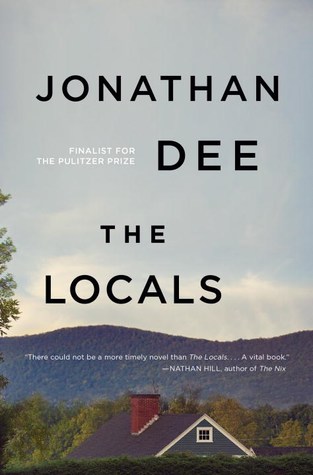
The Locals, by Jonathan Dee*****

theLocalsDee’s new novel has created a lot of buzz. Despite impressive list of publications and accomplishments, he had slid under my radar until now; thanks to Net Galley and Random House, I read this free and early in exchange for this honest review. It is available to the public Tuesday, August 8, and those that love strong, purposeful fiction should get it and read it.

The Locals is entertaining, and it also conveys a sharply driven message, one that is timely, as we see the middle classes wasting away in Western nations that were once strong and relatively democratic, the most affluent becoming richer, and tens of thousands of homeless living in cardboard shacks and tents beneath the freeways of otherwise-successful American cities.

The story starts with 9/11. Mark Firth is in Manhattan on business and is taken advantage of by a con artist. By contrast, Howland, the small (and fictional) town where he lives and in which our story is set, seems safer, and more benign. He breathes easier when he is home.

He isn’t the only one that feels that way.

Philip Hadi decides to leave the big city, and he hires Mark to fortify his summer home into a secure summer residence. From there things unfold, and Hadi takes on increasing amounts of responsibility and power in Howland.

The story is largely character driven, and I dare you to find a novel in which a large number of townspeople are better developed than these. At the outset, I think I know which are the better citizens of Howland and which are its pond scum, but as the story progresses—told in third person omniscient, with one noteworthy exception—the most lovable characters darken, while those that seem irredeemable at the outset show some vulnerability and decency. Even without the novel’s purpose, which is brainy and clever as hell, it would be a good read. I particularly credit male authors that can develop female characters with this kind of depth. You don’t see it often.

Ultimately, however, we are forced to examine, through the eyes of the people of Howland, the role of the super-rich. How much authority are we willing to cede in exchange for easy material benefit? Teachers that have questioned the authority given philanthropists that have a lot of dollars to throw around, but no background whatsoever in education, will particularly appreciate this story. Beyond all of this, it’s absorbing, entertaining, and in places it’s funny as hell.

Highly recommended to those that love strong fiction.