
 I decided to read and review this title because I anticipated that it would be, by and large, a depiction and critique of the American prison system and Homeland Security. As it happens, that is really only a small part of this memoir, which focuses more on the couple’s relationship and the way that addiction warps and undermines trust and affection. Nevertheless, I found it really compelling, and so thank you Net Galley and Random House Ballantine for the opportunity to read and review free and ahead of the public in exchange for this honest review. The memoir will be available to the public June 7, 2016.
Susan met Graham at a beach getaway where they were two of the people sharing a large house over the course of a vacation. Later, when she needed an author photo done for a book she had written, she remembered that he was a photographer that had worked for the Guardian, and she called him to see if he was interested.
That’s when everything began.
The memoir was originally going to be Susan’s alone, but eventually it occurred to her that Graham could contribute a lot in sharing his experiences with addiction and the point of view from which he saw the world when he was in that condition.
Imagine using heroin because it is easier to hide than alcoholism. From the frying pan into the fire! And hide it he did through the first stages of their relationship. He did romance like nobody’s business and she tried to remain objective, but there’s nothing all that objective about falling in love. And so although he made some highly questionable decisions, it took her awhile to find out about the heroin, which he had told her was behind him. But the heroin wasn’t behind him, and neither was the crack. And before she knows it, she is drawn partially down his rabbit hole while keeping one foot in that of mainstream journalism. It’s a strange place to be.
This reviewer has never minced words about my dislike for cops in general and the punitive, demoralizing, racist, class-based system that is the so-called American Justice System; yet Macindoe didn’t earn much sympathy from me. His narrative is in turns puling, angry with no justification, whiny and full of self pity, up until the end when he has finally shucked the monkey from his back as he reaches his golden years.
Macindoe had climbed from his early impoverished years as a child of a Scottish miner to the middle class world of photo-journalism. He was in the USA by preference and because his son from an earlier marriage was here; thus it was hard to feel the kind of solidarity with him that automatically comes to me regarding Third World citizens that are in the US as the only means by which they can feed their families. He owned a brownstone in New York City and had published photos internationally, garnering praise and a certain level of renown. And so…seriously? Heroin?
It was Stellin that kept me turning the pages. Every time she decided to step back from the relationship I wanted to yank her into the nearest lady’s room and tell her one woman to another to lose this guy entirely. Even her former husband, now in a gay relationship, advised her to “cut bait”. And every time she decided she could offer him some assistance even though they were no longer romantically involved, every time she wondered what their relationship could be like if only he were off the smack, I wanted to howl. After all, the relationship might be interesting if one of them grew a second head or a third eye in the middle of the forehead, but what were the chances?
“Chancers” turns out to be a Scottish expression, and I will leave the reader to find out what it means.
I found this story had an addictive quality of its own, a romantic drama not unlike the soap operas that were the only adult voices I heard most days when I was a stay-at-home mother in the 1980’s. Graham was full of shit, I figured, but I still had to know what happened next.
In the course of hearing Susan and Graham’s story, I did learn a number of things about Homeland Security that I had not known before. Imagine feeling nostalgic for Riker’s Island because it was so much more compassionate than the one for potential deportees!
And so I have to say this is a good read, an ideal book to take on vacation and flop on the beach with; just don’t get so absorbed that you scorch your tender skin, because it’s mighty distracting regardless of what is happening around you.
Fascinating and recommended to those that like compelling memoirs or are interested in addiction issues and the US penal system.
Tag Archives: memoir
Friendly Fire, by C.D.B. Bryan****
 Bryan was a journalist and author during the mid-twentieth century, and Friendly Fire, which originally began as a story for the New Yorker and grew into something more, tells the story of the Mullen family and their response to the death of Michael, a clean-cut young man that answered his draft notice, dutifully served and was killed by friendly fire not long after he was sent to Vietnam. Thanks goes to Open Road Integrated Media and to Net Galley for the invitation to read and review. This is right up my alley and I found it compelling. It was published digitally May 10, 2016 and is now available for purchase.
Michael Mullen was the favorite son of Iowan farmers Gene and Peg Mullen, working farmers steeped in traditional values and respect for authority, who had never questioned the US involvement in Vietnam. If the government said that US forces were fighting there to contain the spread of communism and keep Americans safe, then it must be so. Michael was the kind of young man that called people “ma’am” and “sir”. When his effects were delivered to his family following his death, there were no fewer than three rosaries he’d carried on his person. He had expected to return from service, as his father had done from an earlier war, and inherit the family farm. His family was part of the Silent Majority to which governmental authorities referred when defending the role of the USA in Indochina.
In short, they were the last people anyone would have expected to see become anti-war activists.
Michael’s death rocked parents Peg and Gene, and their grief eventually alienated them from the three children left to them. The part of their story that galvanized me was in reading their intelligent, sharp responses during the initial period following their bereavement. For many of us facing the loss of any loved one—and the death of a child is the worst loss of all—ferreting out information about that person’s days, weeks, even months is our last link to them. But Peg and Gene took it to another level when they realized that some of the information they had received was untrue. Peg became an organizational whirlwind, searching for the names and stories of other Iowa boys that had died in that conflict and she realized that the casualties that were being reported to and in the media were incorrect. The responses she received from everyone from US officials to the parish priest were so insensitive, so baldly insulting that she and husband Gene made the war and those near their son when he died into an immense research project, reaching out to newspapers and television news widely. This reviewer grew up during this period and when I read that Peg was on the phone with national newscaster Chet Huntley’s secretary in New York, my jaw dropped! In this era before satellites gave us phones in our pockets and information available at the touch of a keyboard, they typed letters, made long-distance phone calls, and in time even traveled to Washington D.C. in order to know how and why their son had been killed and who was to blame.
The fifth star here is denied because the beginning of the story, which goes into overmuch detail about the family’s genealogical beginnings and its long history in Iowa soil, is deadly dull. When the book was first published, the video game had not yet been invented and readers had longer attention spans. Today if a book does not hook a reader from the start, chances are excellent it will be immediately and forever abandoned. Although the point that the Mullen farm had stood for five generations is surely relevant to the story, the author drags this portion of the story out sufficiently to glaze even the eyes of this history teacher, and together with an awkward introduction that appears to substitute for a bibliography or end notes, a lot of readers won’t get to the interesting part, and that’s a crying shame.
Ultimately the Mullens’ cause alienated them from their community, probably because they were so free in dispensing blame to everyone that drew breath. Everyone that had not actively opposed the war was called out at some point. The heat of their rage and grief lacked focus. In many ways they undid a lot of the good they had done by cursing old friends and neighbors simply because they had never done anything about the war.
The story will interest those that research conspiracies. The Mullens believed more deception was in play than actually was, yet when a person knows he has been lied to about one thing, it is the intelligent thing to do to wonder how much more one was told is also untrue. And so as they relentlessly sought to find one particular officer that might be to blame for the friendly fire that killed their son, I wanted to bang my head on the wall, because it was so much more than that; the conspiracy, we know now, was seated in the Oval Office, jotting more names, possibly their own, onto his enemies’ list. Targeting this soldier or that minor officer was just wrong-headed, but when people are hurt, they lash out, and the Mullens did so exponentially.
The end of the book deals with the author’s own motivation in following the Mullens and their search for the truth so diligently; nevertheless, it seemed strange to find a host of author photos at the end of the book rather than of the Mullen family.
Had the editing of this digital edition been given to me along with permission to do anything I wished, I would have tightened up the beginning, put the author’s notes at the end of the book rather than the start, and deleted the photo section entirely.
Nevertheless, those with an interest in the struggle to end the US war in Vietnam will find this story well worth reading, and to them I recommend this memoir.
Run, Don’t Walk: The Curious and Chaotic Life of a Physical Therapist Inside Walter Reed Army Medical Center, by Adele Levine*****
 I loved this memoir. I read it in 2014 through the Goodreads First Reads program when I first began writing reviews, a few months before I began my blog. This is a memoir intended for general audiences, disarmingly funny and engaging. I recommend it to everyone.
I’ve been through physical therapy for things like whiplash from car accidents–yes, some folks really do get whiplash–but nothing like the scale experienced by the veterans and soldiers that Levine treats. And so the first sign of expertise is in the title, where she wisely excluded any reference to amputations.
Ask yourself: is there a tasteful way to laugh about amputations and amputees, as well as the people who work with and visit them?
Amazingly, there is. She’s found it.
And at first I could not accept that this was Levine’s first book, because the amount of synthesis and development of characters is not in any way rookie writing, and I don’t care how brilliant the writer might be. The blurb says “experienced writer”. Everything clicked into place when I noted that she had been writing a weekly humor column for a local news source.
I didn’t set out to learn anything here–it’s not as if I am considering becoming a PT. And as stated, this should not be viewed as a niche book just for medical folk or military types, but for the general book-loving public. It would even make a good beach read.
But I learned some things, nevertheless. I didn’t know that anyone who loses both legs ever has a shot at walking on two prostheses, for example; and indeed, some don’t, but the possibility is strong. I didn’t know some prostheses have computers. And I groaned at the obstacles put in place by the fishbowl environment where she worked: deliberately limited computer access so that anyone, celebrities, congressional staff, or John Q. Public, will see the therapists ONLY working with patients, and then therapists have to stay after work in order to enter notes about progress registered, because people who come to see the circus don’t want to see more than two people using a computer at a time. The banning of coffee for the same reason; nobody wants to see your cup! And I loved reading about the guerilla response to said ban.
Levine uses either real people with changed names, or patients and colleagues that are an amalgamation of more than one person. Characters Cosmo and Major Dumont were favorites of mine. And I loved the Jim-quote and how it is used at a party full of insufferable assholes that think that they are really something because they went to Walter Reed and WATCHED the patients and therapists for awhile. The punch line is awesome, and I won’t ruin it by telling it here.
And I really loved the Miracle reference.
I was on my third day with this book when someone in my family died. It was a total fluke, someone younger than me whose time should not have been up yet, and it hit all of us in the solar plexus. The writer’s chapter on the bone marrow transplant proved really cathartic. It wasn’t written for that purpose; I just had the right book at the right time, and so I sat with the book in my hand and cried awhile. Thanks; I needed that.
Sometimes I recommend getting a book free or cheap, but this one is worth the jacket price. Funny, absorbing, and informative.
Long Walk to Freedom, by Nelson Mandela*****
 I read this memoir, one of the most important of our era, before I was writing reviews. I bought it in the hard cover edition, because I knew I would want it to last a long time and be available to my children and their children. It was worth every nickel. It’s lengthy and requires strong literacy skills and stamina, but if you care about social justice and are going to pull out all the stops for just one hefty volume in your lifetime, make it this one.
The first two or three chapters flow like molasses on a hot day. Mandela is laying his ground work, but it’s tedious at the start. Fight your way through it, because the story to follow–and we’re talking about the huge majority of the book here–is absolutely riveting, and in many ways is a tremendous lesson in struggle as well.
Mandela is gone, but he is still a luminary figure in world history. In writing his memoir, some of which he did in prison, he was not following any publishing house’s advice about grabbing the reader right at the get-go. He didn’t need to toss in the usual teasers or follow a blueprint, because he was Mandela. An immensely articulate individual, an attorney before he devoted his life purely to the downfall of Apartheid South Africa, he was capable of telling his story brilliantly in many languages, and he did it.
This autobiography chronicles Mandela’s life, first as the son of a tribal chief, then as an educated Black man under apartheid (a dangerous thing to be), then the journey, both outward and inward, from attorney to the leader of a revolution. You will read about his time on Riecher’s Island, the notorious prison, and the various experiences he had in the courtroom and in captivity. He tells of the cunning ways those who were jailed for political reasons created to communicate and to an extent, continue to lead from inside prison. And he breaks up the horror with an occasional vignette of a surprisingly kindly jailor or other authority figure who does small, decent things when no one is looking.
If you are interested in the history of South Africa and the defeat of Apartheid, this is a must-read. If you ever, as I did, had a “Free Nelson Mandela” poster in your living room…read this, and celebrate.
Immunity: How Elie Metchnikoff Changed the Course of Modern Medicine, by Luba Vikhanski***-*****
 Elie Metchnikoff is credited with several medical discoveries, some of which were found before Mother Russia was entirely ready to receive them. This interesting though technically challenging text is the story of his life, and especially of his scientific career and achievements. Thank you Net Galley and Chicago Review Press for the DRC, which I received in exchange for an honest review. This title will be available to the public April 1, 2016.
In the latter half of the nineteenth century, Russia still had a tsar—a royal ruler with power similar to that of an emperor—and it still had serfs, who legally could not leave the plots of land assigned to them to farm for the benefit of royal landowners. It was not an ideal climate for science or any other aspect of enlightened thinking, but Metchnikoff was not only gifted, he was immeasurably stubborn, and by such methods as posing as a college student in order to sneak into lectures, he achieved an excellent education and began to pave new inroads toward discovering how the human immune system works.
His theory that cells in the human body swarm around and dispose of microbes that enter the body in order to kill germs was true, but proving it to those with authority in Russia was not an easy thing to do. Only recently had germs been discovered to cause disease; not so long before, it was assumed that God smote certain people or their loved ones in retribution for their bad behavior or thoughts. Being a scientist in such a place was challenging, and eventually, after being snubbed repeatedly by the German academics he sought to win over, Metchnikoff found his way to Paris, and the Pasteur Institute, where he would spend the bulk of his career.
His refusal to participate in elitist cliques that feasted on 8 course gourmet meals while half of London starved warmed my heart, as did his refusal to be roped into other social pretensions. Really, in another time and place, this would be my kind of guy.
Here I must disclose the fact that the sciences are not my forte. Only since retirement from teaching in the humanities have I found the time and confidence to explore memoirs of famous scientists. Last autumn I read and reviewed the biography of Dr. Bennet Omalu, the man that discovered a brain disease that was the result of repeated blows to the head consistent with American football. Cheered by my success in understanding and reviewing that fascinating story, I decided to tackle this one…with less satisfactory results.
I have never been good at understanding science. It’s that simple.
So if science and in particular the history of immunology or disease is your wheelhouse, this may be a four or five star read for you. But although I am not scientifically minded, I do have a sturdier education than the average American, and so I think I’m being fair in saying that the average reader-on-the-street that picks this up due to general interest rather than exceptional training may find it to be a great deal of work.
I did check the endnotes; I always do. So unless the author has simply invented a lot of sources in other languages than English—which seems very unlikely indeed—then I can safely say that this author has relied primarily on sources that the average English-speaking reader will not be able to tap into. Strong documentation from a wide variety of sources.
Recommended to those with a higher than average facility for matters of science, and for those interested enough to wrestle with challenging material.
The Autobiography of Mark Twain, Volume 3, by Mark Twain****
 Huge thanks go to Net Galley and University of California Press, who provided me with a DRC in exchange for an honest review. It has taken me some time to read and rate it because once I had the DRC for Volume 3, I decided I should hunt down volumes 1 and 2 and read those first. Now I am finally finished, and it was well worth the effort.
First let’s talk about the obvious thing: how dare I rate Twain four stars rather than five? I considered the matter and reflected that if Twain himself were to rate it, he might say the same. The reason is that, as he plainly states more than once in his narrative, he is writing not for posterity, but for bulk. An unfair copyright law that was present at the time he began his autobiography permitted a copyright to stand for only 42 years, after which the work entered the public domain. Twain hired a lobbyist to attempt to gain an amendment offering the author the option to renew the copyright, and ultimately he won. But when he started the autobiography, his plan was to write 500,000 words and then republish each of his books with a portion of the autobiography attached so that it could be called a new work and thereby merit a brand new copyright. Twain’s wealth had been considerably depleted by dishonest people in his employ, not once but three times. He had made a fortune, but much of it was gone, partially due to an unscrupulous publishing agent and then later to two household employees he regarded as close to him as family. The double blow of losing so much money and learning of the duplicity of people he had loved and thought loved him was a bitter pill indeed.
So the book contains filler, and this he unabashedly admits. And at times I had found myself wondering why he included all of the letters he had received from cute children he had met onboard a ship, but until I found the bald statement that he needed 500,000 words, I had attributed it to his eccentricity. No, not so much. There is gold in this memoir, and if you like Twain, or history, or both, you should buy it and read it. He says things nobody else has said, and so even once you realize you have entered into a portion of the memoir that is just plain filler and you skim till that section ends, the next things you read will be worth your time and money.
I promise.
Twain stipulated that the autobiography in its entirety must not be published until he had been dead 100 years. He did this because if he wanted to say someone was a rotten scoundrel and then give details that might well draw a lawsuit, he could go ahead and say it; he also said he didn’t want to hurt the feelings of said people’s children or grandchildren. I’d say he succeeded. Some of those he consigns to the flames are individuals contemporary readers won’t recognize. However, he hated President Theodore Roosevelt with a fiery passion, and he doesn’t mince words where he is concerned.
Most of the memoir is not angry in tone, however; there are places where I laughed out loud. The way he talks about Carnegie, who mentally catalogued every compliment ever paid him and then went through the entire litany when one visited, adding new ones but never removing or abbreviating the old ones, just cracked me up.
Most of all, I loved his explanation of the privileges conferred upon us by old age, one of which was the right to pitch a fit if one felt like it:
“But indeed the older you grow, the less secure becomes the furniture. When I throw chairs through the window I have a sufficient reason to back it. But you–you are but a creature of passion.”
Toward the end I wanted to sit down and cry with him. He lived a long life, but the outcome was that he outlived three of his four children—a little boy that died shortly after birth, as well as two of his three daughters—and also his lovely wife, whom he adored, and his best friends. The autobiography was to provide support for the two daughters that he feared would not see a nickel from his earlier works because of the copyright laws.
Then two things happened almost simultaneously: the law was changed, with the amendment he had fought for added so that his copyrights could be extended; and the daughter that still needed his financial support, a woman that had spent much of her life in an institution because of epilepsy but now had medication that made it possible for her to be at home with a private nurse, died in the night.
It was right before Christmas, and she had been planning a surprise for her father, a Christmas tree decorated in an unusual, very artistic and tasteful manner, as he discovered when he entered her private sanctuary after her death. There were over fifty Christmas gifts there in various stages of wrap, many of them for people Twain says he would not have even thought of shopping for, and so he just sits in that room with his memoir, and he sobs. His other daughter, Clara, has married an affluent man and is very happily married; she won’t need his money. And now Jean is gone. Twain records the fact that the purpose the autobiography was to serve no longer exists…and he stops writing.
It’s enough to break your heart.
And so it ends, but it is an epic work.
For those planning to get this memoir, I give two crucial bits of advice: first, look at the title of the book carefully. Make sure it is this exact title. If it’s turned around—if for example the title becomes “Mark Twain’s Autobiography”—that’s not the one you want; it’s a knock-off and it’s not really even readable. It’s cheaper, but it is a false economy. The Twain Project took painstaking care in sorting and assembling what amounted to two whole file drawers full (or ten feet of files) of Twain material, some of it duplicated, some of it in his own handwriting, and some of it dictated, then typed by someone else. It was a huge job, and UC did it right.
The second bit of advice is not to worry too much about reading volume 2, or if you do, purchase the book that includes volumes 1 and 2 together. For some reason, even after all the effort that was expended into the organization of this hefty memoir, there is some duplication that renders most of volume 2 the same as portions of volume 1. Maybe it was Twain’s intention to duplicate it and so the Twain Project did so to honor his wishes; I can’t say. But everything you need in order to read this memoir in its entirety can be found in volumes 1 and 3.
Even with the filler, it is amazing work, and I highly recommend it to those that love Twain; those that love history; and those that love great memoirs.
Grant, by Jean Edward Smith*****
 What, another one? Yes friends, every time I find a noteworthy biography of Grant, it leads me to another. This is not a recent release; I found it on an annual pilgrimage to Powell’s City of Books in my old hometown, Portland, Oregon. I always swing through the American Civil War shelves of their history section, and I make a pass through the military history area as well. I found this treasure, originally published in 2001 when I was too busy to read much of anything. It was a finalist for the Pulitzer; A New York Times and American Library Association Notable Book; and Publishers Weekly Book of the Year. But in choosing a thick, meaty biography such as this one—it weighs in at 781 pages, of which 628 are text, and the rest end-notes and index—I always skip to the back of the book and skim the sources. If a writer quotes other secondary texts at length, I know I can skip the book in my hand and search instead for those the writer has quoted. But Smith quotes primary documents, dusty letters, memos, and military records for which I would have to load my wide self into the car and drive around the country to various libraries in out of the way places. Source material like Smith’s is promising, so I bought a gently used copy for my own collection and brought it on home. And unlike the DRC’s I so frequently read at a feverish pace in order to review them by a particular date, I took my time with this one, knowing that if I only read a few pages each day and then reflected on them before moving on, I would retain more.
Usually the best place to read about a famous person is to read their own account. Grant’s autobiography was, at one time in US history, the second most commonly book owned by ordinary families. He was so deeply loved that many homes held two books: the Bible, and Grant’s memoir. That says a lot. And I did read that memoir quite awhile ago, and it was great. I recommend it. However, there are areas where we need an outside party to discuss things. For one thing, Grant was exceptionally modest. It takes an outsider to tell the full extent of his remarkable achievements, which Grant tended to soft-pedal. Also, alcoholism was not considered a disease during Grant’s lifetime, and his memoir simply makes no note whatsoever of his struggles with it; he doesn’t tell us about his early problems with it, or when he quit, and so he also doesn’t defend himself against later charges by enemies at times when most scholars say he was likely dry as a bone. And finally, of course, Grant was unable to tell us how the nation would respond to his death. So for those with a deep and abiding interest, it’s worth it to read multiple histories in which he is largely figured, as well as multiple biographies.
The fact that I had read a handful of Grant biographies in addition to Grant’s autobiography, yet came away with this volume studded with sticky notes marking new information as well as new insights and perspectives on known information is a good indication that Smith’s biography has met the gold standard.
We start with Grant’s childhood and his early gift for working with even the most difficult horses. Grant was physically quite compact, even by the standards of the day, about five feet five, weighing not more than 120 pounds. In another life, he could have been a jockey, but the purpose his life served gave us so much more. His education at West Point was not part of an initial plan toward a military career; his family could not afford to send him to college, and Grant sought higher education. A connected friend of his father’s got him into West Point, which charges no tuition but requires a period of service after graduation; until war broke out, his plan was to become a professor of mathematics, at which he excelled.
The war with Mexico is where he first saw service, and his job as quartermaster taught him a thing or two about priorities. Although many biographers say that Grant had no head for business, Smith argues that his early misfortunes in business were flukes for which outside causes were really to blame. As quartermaster, Grant succeeded in actually turning a profit for the army by buying flour, baking enough bread with it to feed the army and also sell to the local Mexican populace, with whom he kept friendly relations, and so Uncle Sam was able to feed his troops at bargain prices, since Grant put the profit back into food purchases and did not have to requisition the amount of other food ordinarily required. While in Texas and Mexico, he grew to greatly admire his commanding officer, General Zachary Taylor, whose understated, unpretentious manner and friendly relationships with those he commanded Grant would later emulate.
Smith carries us through all of Grant’s major battles, including Donaldson, Shiloh, Vicksburg, and The Wilderness. He argues convincingly that Grant was never corrupted, but that those that would overturn the victory for African-Americans gained by the Civil War by denying them suffrage went out of their way to smear Grant’s reputation. Grant was also somewhat naïve when it came to politics. Surely he had had to deal with military politics—struggles for control between generals and generals, between generals and bureaucrats—but he did not understand initially how limited the executive power is, and how much Congress can undermine a president.
Grant had not wanted to become president, had in fact hoped to return to the beautiful West Coast after the war, but Andrew Johnson, who succeeded Lincoln as president after his assassination, so brutally and intentionally set about dismantling Lincoln’s legacy that he felt compelled to run. He was nominated by his party unopposed, never even attended the nominating convention, and won the general election by a landslide.
The American people loved him. I myself feel he was our last truly progressive president, and although Smith never makes such a flat assertion as mine, he gives me plenty of documentation to back it with, should I ever again find myself in a position where it’s called for.
This tome is not for the novice. If the reader is new to the American Civil War, I recommend James McPherson’s Pulitzer winning Battle Cry of Freedom, which is lengthy, comprehensive, and fascinating. For those looking for less of a time commitment, Michael Shaara’s The Killer Angels, well researched historical fiction which also won the Pulitzer, is excellent. If you like it and want more, his son Jeff has continued the series one battle at a time, and I have yet to find a book he’s written that is not worth your time and money. All of these titles are reviewed on my blog.
For those that know the basics of the Civil War but are interested in learning more about Grant himself, this biography is the best I have read to date apart from his autobiography, which is also excellent.
Highly recommended to those with a strong interest; basic knowledge of the American Civil War; and college level literacy skills and stamina. Brilliant work.
When Breath Becomes Air, by Paul Kalanithi*****
This beautifully written memoir is for sale today, and definitely worthy of a re-blog!

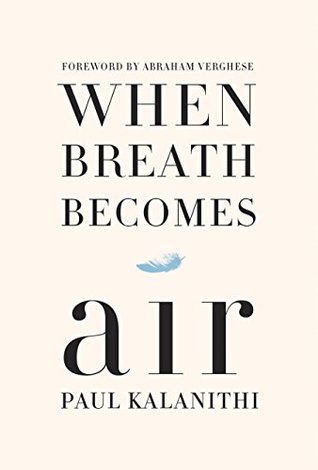 Paul Kalanithi was a promising young physician who had nearly finished completing ten years of training as a neurosurgeon when he was diagnosed with Stage IV lung cancer. His twin ambitions had been to become a neurosurgeon and to write. When he realized how little time was left of his too-brief life, he decided to spend his remaining time writing this book. Thank you, Net Galley and Random House Publishing House for the DRC. Dr. Kalanithi died in March 2015, but he left this luminous memoir behind as part of his legacy. It is available to the public January 19, 2016.
The memoir starts with fond adolescent memories that left me dumbfounded, not only at the level of privilege he was born into, but the assumptions that go along with that. I was afraid I would fall into the uncomfortable place of not being able to generously review a dead…
View original post 422 more words
When Breath Becomes Air, by Paul Kalanithi*****
 Paul Kalanithi was a promising young physician who had nearly finished completing ten years of training as a neurosurgeon when he was diagnosed with Stage IV lung cancer. His twin ambitions had been to become a neurosurgeon and to write. When he realized how little time was left of his too-brief life, he decided to spend his remaining time writing this book. Thank you, Net Galley and Random House Publishing House for the DRC. Dr. Kalanithi died in March 2015, but he left this luminous memoir behind as part of his legacy. It is available to the public January 19, 2016.
The memoir starts with fond adolescent memories that left me dumbfounded, not only at the level of privilege he was born into, but the assumptions that go along with that. I was afraid I would fall into the uncomfortable place of not being able to generously review a dead man’s memoir. To make matters worse, I read two other memoirs that bitterly recounted the arrogance of doctors. I set this one aside about a third of the way into it until I could look at it with fresh eyes, and I am glad I did.
The spell of entitlement is broken by the forty percent mark; in fact, when he decides to continue in college simply because he isn’t done learning—a luxury that would never occur to most of us—I find myself interrupted mid-eye-roll when he mentions that in order to afford his apartment, he has to take a part time job. Now we are back in the realm of the real, and I can relate to the author.
With deft pacing and remarkable eloquence, he takes us into the world of the medical student, and we go with him to his first dissection and learn a few basic facts about the brain, including what tumors, both benign and malignant can do, and what priorities are generally set in maintaining its function. He explains why doctors sometimes recommend against heroic measures to continue a patient’s life when the patient inside is forever gone. There is information that should be shared, and information that should sometimes be saved for later; we see this from a much more personal vantage point later on.
And upon Kalanithi’s own diagnosis of terminal cancer, which has invaded his lungs and his brain, he is left “searching for a vocabulary with which to make sense of death.” Once his medical options are gone—oh, so swiftly!–he delves into poetry, philosophy, and even religion in order to come to terms with what he knows will happen, as well as the frustratingly ambiguous aspect of not knowing how long that will take.
Despite the fact that his death interrupted his writing, Kalanithi’s work is eloquent and absorbing, and it really didn’t feel as if it were under length to me. Maybe its brevity is what prevents it from becoming too emotionally taxing for the reader to absorb. It should rank high along with the work of Mitch Albom and Randy Pausch as a story that helps us learn to let go. Because as he points out, death will come for each of us. It always wins; the only question is when.
This book contains an epilogue written by his wife Lucy, but it stands quite nicely on its own.
Recommended for those facing death or dealing with loss, as well as for those who just like a powerful, hyper-literate memoir.
A Thousand Naked Strangers: A Paramedic’s Wild Ride to the Edge and Back by Kevin Hazzard *****
 Take a former journalist; make him a paramedic in a high-poverty, high-danger area for a decade; then turn him loose again to write about it, and he will play his readers like violins and make us like it. A Thousand Naked Strangers is a high octane, gloriously visceral ride in an ambulance and out of one, through Southeast Atlanta, Georgia. Thank you to Net Galley and to Scribner for the DRC. Since I read multiple galleys at a time and I loved this one best, I tried to feed it to myself in small nibbles, like Mary Ingalls hoarding her Christmas candy, but it was just too riveting and I could not stay away.
At the memoir’s beginning, our guy is just looking for work. With just a few months of training, he can become an EMT. His journalistic career wasn’t working out as he had expected, and he found himself working as a paperboy instead, delivering the newspaper for which he had written. That’s about as rock bottom as it gets.
He becomes an EMT; then he sets out to discover whether he wants to commit to the extra year and a half of schooling required become a medic. Once in, he’s hooked, not so much in spite of the risk and unpredictability of the job, but because of it.
And when you think about it, what other job pays so very little, involves so much danger, and gets so little respect? Teaching comes to mind, but being a rescue worker trumps even that, particularly for the low pay and insane hours–holidays missed–to do it, a person needs to be young, and to be an adrenaline junkie. And for a decade, Hazzard fits that description.
When he starts out, he is callous, as youth often are, speculating with his partner about what constitutes the perfect call. The perfect call, to their way of thinking, has requirements that are measured in the number of dead and wounded, the amount of danger. Does the patient have to survive in order for it to be a perfect call? Nah.
Over the years he matures, and he becomes more respectful of the patients with whom he deals. He talks to addicts, hookers, and children in a way that is forthright and kind. The job takes a lot out of him, but it also gives him a lot. He grows up. He deals with the dead; the nearly dead; those that are feigning death; and those that are just looking for a free ride somewhere. He delivers babies in record numbers, and he transports a guy on a roof down to the ambulance. He sees just about everything, from suicides to homicides, from the domestically abused, to the kid with a roach in her ear. He plays the wildest imaginable pranks, and once in awhile he gets called on the carpet for it.
Some of the incidents described in this memoir are just drop-dead funny, if you’ll pardon the pun, and I laughed out loud more than once. Some are incredibly dark. Some just left me with a feeling of awe. But although the tone changes many times, the pacing is absolutely consistent. Hazzard’s journalistic background shows; every single word is there for a reason. It is tight, taut, and urgently compelling, all the way through.
So it’s entertaining, but it’s also educational. I didn’t know the distinction between an EMT and a paramedic before I read this memoir. I also didn’t know that not a holiday goes by without someone having a heart attack. I didn’t know that just about everyone, regardless of their level of intoxication, says they’ve had two drinks. And I didn’t know about the tension between paramedics and firefighters, between paramedics and cops.
There’s more, but you can’t have it all in this nifty review; I’ve given you enough to move forward. If you want your own job to look easier, get this memoir. If you’re retired and have a little more time to read now, get this memoir. If you are staying home with little kids and wonder when you should call an ambulance and when you should deal with your own mess, get this memoir. And if you are considering going into the field yourself? Get this memoir!
It’s for sale January 5, 2016, but you can order it right this minute.
 Seattle Book Mama