Being Nixon: A Man Divided, by Evan Thomas ****

beingnixonSuddenly, everyone is writing Nixon biographies; it’s a Watergate junkie’s dream come true! Here Thomas does his best to take us inside Nixon’s skin and tell us what motivated some of the decidedly strange things he did. It makes for highly engaging reading. 3.75 stars get rounded up to 4, along with my thanks to Net Galley and Random House for the DRC. This book is available for sale now.

When I signed on for this galley, I imagined that perhaps Thomas had a background in psychology or psychiatry and was going to take a stab at diagnosing a mental illness that might explain what in the world Nixon was thinking when he did the things he did; if he’d had different meds, would things have shaken out differently? But that isn’t what this book is about. Instead, it is a glimpse at Nixon’s life, including his early childhood and adolescence, postulating that childhood experiences may have shaped the politician Nixon became.

To this, I will admit that I said, “Psssh. Right. Whatever.”

Because it’s a plain and simple fact that many presidents had lives that were scarred by events as bad or worse than what Nixon experienced, and most of them still managed to do their jobs without coming within a hair’s breadth of impeachment. So I don’t buy that theory.

Nevertheless, there are so many interesting tidbits and stories in this memoir that even if the reader doesn’t buy the overall thesis, it’s a compelling read. The conversational narrative kept me rolling along, and every time I found an opinion I thought was baloney, I made a note of it and kept going. I would have continued reading even if I didn’t have an obligation to the publisher, because it really is fascinating stuff.

Imagine, for instance, a solitary candidate with a love for classical music, sitting all by himself in his hotel suite, with the 1812 Overture blasting away, with his arms furiously directing an unseen orchestra. Just one aide saw this, and Thomas ferreted the incident out and presented it here. I doubt you’ll find these tidbits anywhere else!

In addition, few other biographers have managed any insights into what went on in the Nixon residence. I often wondered about Pat, Tricia, and Julie. When he showed up to home, did he storm in and turn the coffee table over? Get quietly drunk? Blame his family for all his ills? Drawing heavily on the memoirs written by family members that I am unlikely to ever read, Thomas gives us a little voyeuristic peek behind the curtains, and I found it intriguing indeed.

When it comes to Watergate, Thomas holds Nixon responsible for what he did, for the greater part, but I rolled my eyes at the repeated claim that if he hadn’t been too shy to socialize with the staff, with the Washington socialites who invited him to dinners, and so forth, maybe he would not have become so isolated…if his childhood hadn’t been so poor, and if his father hadn’t kept him home from his Yale scholarship because there was no money for dorm fees…if…if…if…

I felt much more certain that the author’s research, which is mostly done via secondary sources and the Nixon family’s memoirs, including heavy use of Nixon’s own (RN), was based on fact when he dealt directly with Nixon’s personal life. Although various quotes by the Watergate conspirators were interesting, some are more believable than others. I found one fact in this bio that directly conflicts with that of biographer Tim Weiner, and it has to do with the choice of Spiro Agnew as a running mate. Thomas cites reasons personal and political; Weiner documents that the choice was bought and paid for by Greek financial interests. Here, I believe Weiner. It’s just one directly conflicting fact, but when I found it, just as a humble reviewer rather than as a researcher, it called other things into question, which is where ¼ star fell off this review.

The author thanks a number of people in his after-notes. I always read those, because you can pick up little things lost elsewhere. He especially thanks the man that told him to beware the various items found in the prodigious memoirs by “that old thespian”, Richard Nixon, who was a student actor before he went into politics. It was strong advice.

In perusing this biography, I realized two things. The first is that the reason Nixon had so little domestic policy, and the reason the country moved so smoothly without him during the tortuous period prior to his departure, is because he didn’t have much of a tool kit to start with. The author notes that although Nixon has gained a sinister reputation as an evil, sneaking genius, in fact there were areas in which he really wasn’t all that smart, and this was one of them. He focused on three things: foreign policy, in which he was better equipped to carry out the wishes of the bourgeoisie than most presidents have been; running for office again and when that was done, honing his legacy, about which enough has been said; and of course, revenge, revenge, revenge.

The second thing I realized is that the reason he was virtually cast out of office in a situation in which other presidents might have been able to pull their chestnuts out of the fire, had to do with the fact that he believed himself, as US president, to be more powerful than the ruling bourgeoisie. He misjudged the relationship of power between himself and those that rule us quietly, usually in an unseen way. In attempting to yank the broadcasting license of CBS as part of a personal vendetta against the owner of the Washington Post, he took on a sector of the ruling rich, and he made of himself an object lesson.

By my count, this was my twelfth Nixon biography, though I may have read and forgot about some others. It’s neither the best nor the worst, but for those fascinated with Nixon’s rise and fall, and with Watergate, it should go on the to-read list. It’s just too good to miss!

The President and the Apprentice: Eisenhower and Nixon, 1952-1961, by Irwin F. Gellman***

thepresidentandtheapprenticeGellman’s biography covers Nixon’s tenure as Vice President of the USA under President Dwight Eisenhower; he covers the election campaign beforehand as well as the famous “Checkers Speech”. Thank you to Net Galley and Yale University Press for the DRC, which I took in exchange for an honest review.

It is a little bit hard to be sure about this work, because the galley I got was so rough that it was difficult to judge its fluency. I settled on 3 stars rather than 4 stars because I saw some issues with organization, small tidbits that only marginally bore mentioning showed up in multiple chapters.

That said, it’s a good resource for anyone looking to study the Eisenhower administration or Nixon’s early years in government. I learned some things I didn’t know, and I have read my share (and maybe your share too!) of Nixon-related literature. Gellman has done a great job with research, and even offers pictures of primary documents, such as Ike’s notes during Nixon’s famous speech, at the end of the book.

I learned that the USA of that time period was a much more innocent one than that which we live in now. The Checkers Speech is one good example: now it is regarding laughingly as a mawkish bit of theater, but what is not widely publicized anymore is that the American public was asked to respond as to whether he should stay on the ticket, and they flooded the Republican headquarters and media centers with letters that supported him 350 to 1.

Now that it is known that he used public dollars for personal gain as president, I had rather assumed he had done the same during the funding crisis in question, but actually, back then he was guilty of nothing. The donations that were made were a travel fund, because the Nixons didn’t have the money to travel around the country campaigning. Donors pitched in for their air fare, cab fare, and hotels. There was no law regarding campaign spending limits back then; no law was violated.

As vice president, Nixon had more responsibilities, and occupied a position of greater trust, than most who occupied the same position. He was sent overseas, not only as a good will ambassador or ribbon cutter, but to do unpleasant, tricky things, like talking down the heads of state in South Korea and Taiwan. In addition, Ike never cared to do his own dirty work domestically, and so if someone needed to be officially taken apart, there was a good chance Nixon would be tapped for the job. He had an unstoppable work ethic and was unflinchingly loyal.

If Nixon’s vice presidency is of interest to you, get a copy of Gellman’s book. It goes up for sale in late November, so you can also consider it as a holiday gift if someone you know would appreciate it.

Peaceful Neighbor: Discovering the Countercultural Mister Rogers, by Michael G. Long ***-****

peaceful neighborI confess I was intrigued by the title and description of this biography. Mr. Rogers came on television when I was entering adolescence, and so I didn’t watch it for myself. When I had children of my own, I tried to limit their time spent in front of TV, and so I tended to watch Sesame Street with them and then reach for the off button. But my son wanted to see Mr. Rogers, and I confess that although the magic escaped me—who wanted to watch this dull man with the puppet on his hand, seriously?—my son, who was three years old, thought differently. I watched the little smile play on his lips as Mister Rogers spoke to him, face straight into the camera. It made my kid feel better. And so I decided to plunge into this biography and see if I could figure out what made the show so appealing to little kids. I went all the way through a Master’s degree in education and came out still clueless, so why not? Thank you to Net Galley and Westminster John Knox Press for the DRC. The title was published in March and is available for purchase.

On the whole, I never did find the magic, but from an analytical standpoint, I could see where the work done by Fred Rogers was effective. He treated small people with respect. He was an expert in the psychology of very young children, and his show was crafted around gently, reassuringly addressing some issues that parents might not know how to talk to their children about. This is not to say that he had a superior attitude or spoke down to parents, when he acknowledged our presence, but I was a mom who had spent my entire pregnancy unemployed, sitting around the house reading books about pregnancy, childbirth, and the raising of young children, and I had no idea that my son had been afraid he might go down the drain after the bath was over. And I watched his little face light up when Mr. Rogers sat at the piano and sang, “You can never go down, never go down, never go down the drain!”

The first twenty percent or so of this biography deals with Rogers’ religious beliefs, and I nearly had to stick myself with a pin to stay awake through it. The guy was a pacifist, and so although he was ordained as a Presbyterian minister, his belief system and his quiet, subdued manner was largely that of the Friends, or Quakers. So for those who have a strong interest in examining the intricate details of faith as it relates to war and children, this will be more absorbing than it was for me.

Just at about the point at which I had decided that grabbing the galley had been a mistake—seriously, 176 pages and I had only read twenty percent? It felt like forever—and gave myself permission to skim and review this thing, it became more interesting. And although I think the author very much overstates his case in calling Rogers “subversive”, I agree that he openly, if subtly and carefully, disagreed with Presidents Reagan and HW Bush about the wars in the Middle East, and before that, with the Vietnam War. He never carried a sign, our writer points out several times, but chose to work behind the scenes and to use his television show as a platform for peace.

“War isn’t nice.”

He was no radical; during the Civil Rights movement, rather than encourage integration, he held fundraisers to buy supplies for the African-American schools that were separate and entirely unequal, to try to level things out a little bit, one school district at a time. Good luck with that.

But the real gift that he gave to small children was that of absolute acceptance. Children were valuable no matter what they looked like. He acknowledged that we feel mad sometimes, and talked about ways to work out the mad without hurting anyone. He recognized that sometimes girls want to play with machines, and sometimes boys might like to hold a doll, to dress it and pretend to feed it. His was a gentle persona, and he let everyone know that men can also be nurturers. And when a company presumed to use his likeness on a tee shirt with a gun in his hand, he took their ass to court and made them not only stop selling those shirts, but destroy every last one they still had in their possession or for sale.

He also had blind spots. He was raised in a wealthy family—Mr. McFeely, the neighborhood postal character in the Make Believe neighborhood where Mr. Rogers filmed, was also the name of his grandfather, who built the family fortune. And at Christmas time, the staff of Mr. Rogers’s TV show each got a nice card with a note saying he had made a gift in their name to a charity; but one of the staffers pointed out to the author that some of them were paid very low salaries, and sure could have used the holiday bonus instead.

A documentary that was filmed about Fred Rogers was made with the understanding that the cameras must not show “the tasteful opulence of my home”.

Ahem.

The writer does a fine job of analyzing where Fred Rogers stood on all of the key issues of the day before his rather sudden death due to stomach cancer. If this man was important to you, or if you have an interest in the connection between social justice and religion, or children’s television shows, this might be a great book for you. If you are not interested in religion, you may want to skim through the first chapters and get to the meatier parts.

Either way, Fred would’ve liked you exactly as you are now.

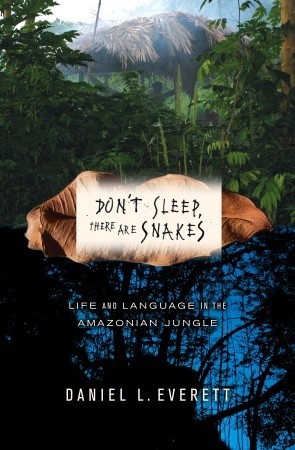
Don’t Sleep, There are Snakes: Life and Language in the Amazonian Jungle, by Daniel L. Everett *****

dontsleeptherearesnakesI read this shortly after it came out, and I’ve been going nuts trying to remember the title. Thank goodness for Google’s search engine! Don’t Sleep, There are Snakes is an amazing memoir that challenges assumptions under which most first-worlders have lived for a very long time.

Everett went to Brazil with his wife;they were Protestant missionaries, sent by their church to convert the Pirahas, an indigenous people who live deep inside the Amazon jungle, to Christ. They took a few tools and trinkets with them, which have been useful to missionaries–think of them as spiritual bribes–for generations. They traveled under tremendous physical hardship, experiencing terrible illness and threatened by deadly snakes and other jungle life, risking their necks for their cause.

Furthermore, they were tasked with deciphering the Piraha language so that the New Testament could be translated for the salvation of these Christless savages.

Instead, the opposite occurred.

First of all, the Pirahas didn’t want their stinking trinkets. Even items that Westerners regard as essential, such as knives and cooking pots, were only of temporary interest. When presented with these goodies, they would enjoy them, then abandon them. Because stuff doesn’t matter to the Pirahas, and when you’re a nomadic people, you need to travel light.

At first, Everett patiently tried to teach them to hang onto things so they’d have them when they needed them. He watched them go to a tremendous amount of effort to replicate a process that the knife, the cook pot could have shortened by hours, not to mention a reduced physical effort. But over the course of time, they let him know that it wasn’t that they didn’t understand him; they just didn’t agree.

And the greatest barrier to the conversion of the Pirahas to Christianity is this: they were already happy.

Eventually, Everett found himself questioning his own prayers. Why was he asking the Almighty to help him change these people, to obliterate their successful lifestyle–at least by the basic standard of personal fulfillment, as opposed to who has the greater technology–in order to become grasping materialists trying to keep up with the Joneses?

Ultimately, he came to a startling conclusion: the Pirahas were absolutely correct. His God was a myth. All the Pirahas needed was what they already had, and to be left alone, along with the environment in which they flourished. And this conclusion ultimately cost him his marriage, but he could not, would not retreat into the opiate of Christianity. Once he had a clue, he couldn’t lose it.

It’s a fascinating read.

Everett also develops a new understanding of how language is learned. My daughter, who is a passionate linguist herself, tells me that his discovery is flawed and has been discredited. I would not know. It sure sounded interesting to me.

The one thing I can guarantee is that if you have no religious drum to pound yourself, you’ll find the transformation that occurs here compelling.

Not recommended reading for serious Christians.

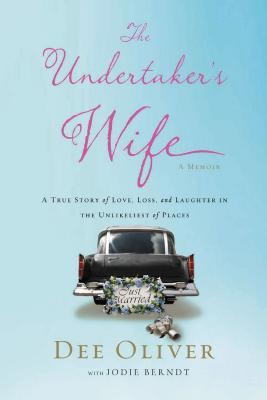
The Undertaker’s Wife: A True Story of Love, Loss, and Laughter in the Unlikeliest of Places, by Dee Oliver and Jodie Berndt***-****

theundertakerswife 3.5 stars. This interesting, accessible memoir will be published in March of this year. My gratitude goes to Net Galley and Zondervan Press for providing me with an ARC.

Dee Oliver grows up in a rarified atmosphere in Virginia Beach, where her parents own an oceanfront home. After completing her degree from a private college, she enjoys life and a series of part-time jobs that entail no serious commitment or career potential, supported by her parents. Eventually she is given a very Southern, Caucasian type of ultimatum: find a real job in which you can support yourself, or find someone to marry. It is understood, in this world in which debutante season actually exists, that the spouse in question will be a man, and that he will be a person of substance. A doctor is preferable, but instead, Dee marries a doctor to the dead, the co-owner of a funeral home.

Life is definitely different now. Dee and Johnnie, her newly betrothed, cannot travel for any length of time, since people don’t make appointments before dying and he could be needed any time. Their honeymoon is a three-way party: just the two newlyweds and the corpse in the rear of the car, being transported, by happy coincidence, to their honeymoon destination.

Their daughters grow up playing tag among tombstones and jumping rope with the velvet rope that keeps the mourners in line.

The one thing that surely does not change is her standard of living. Most of her friends, she tells us, would have to call the painters themselves. How fortunate that Johnnie understood that she needed the advice of a decorator, who would then call the painters personally!

This is a quick, almost flirty read as it begins, but because I make it a point (almost) never to read books by or about affluent people, I almost tossed the book down unfinished. But I knew that something about it had made me request this ARC, and so before throwing my hands up and abandoning ship, I went back to reread the synopsis. It was a good thing I did, because it gave me hope (as Christians like to say) of better things to come.

You see, Johnnie’s occupation taught him how to console and advise the bereaved, but it didn’t take him out of his state of denial about his own mortality. Dee packed him healthy lunches which he threw away, and bought him a gym membership which he never used. It caught up to him in his early fifties, in a sudden and final way.

As half owner of a funeral home, Dee realized that she should go back to school and get the credential necessary to do Johnnie’s job. However, once it was time for her internship, she whacked her well-coiffed head smack on the glass ceiling. No way, no how would her brother-in-law allow her to do such a thing.

It was at this point that Dee received one of life’s more valuable gifts: a new perspective. Riddick’s funeral home is in the African-American section of town, and its owner is not just a man of business, he is a man of the community. It is there that she was able to intern, and the results are really funny, because the area where she lives is exclusively pale, and Riddick’s funeral parlor is in an entirely Black area. Said one visitor, after enquiring whether she was a member of the press, and being told otherwise:

“ ‘So,’ he said slowly, chewing this piece of news the way a child might process his first lima bean. He wasn’t sure whether or not to accept it. ‘So what we got here is a white woman working in a black funeral home.’
‘Yes sir. That’s exactly what you got.’
‘Well, then,’ he concluded, ‘I guess you have overcome too.’ And with that, he tipped his hat to me and walked away.”

Along with her own unique story, Oliver provides us with a good deal of sound advice to follow now, while we are alive. Did you realize that if you die without a will, up to seventy percent of what you own may be taken as taxes? I don’t know whether this applies to those of us in humbler tax brackets than those in her milieu; Oliver did not specify. Either way, though, the point is made that those of us who are married and have divided the responsibilities of married life still need to be aware of a lot of nuts-and-bolts issues that it’s easy to ignore until someone has died.

Here, nobody knows better than Oliver. She has taken care of the dead, advised the bereaved, and she has been widowed. She really does know.

Everyone who writes a memoir is entitled to tell her own story with her own voice. Nevertheless, the class and religious biases here grated and could be toned down. She tells us that we need a “team” to be on to get us through the good times and the bad ones, and here are the teams she recognizes: Baptists, Catholics, Lutherans, Presbyterians, Episcopalians, and nondenominational …it isn’t going to get any more diverse in her world. Jews, Muslims, Hindus, Buddhists, and especially Atheists like me are going to “the other place”, as she describes it earlier in the text, since we have not asked Jesus into our hearts. There’s not a lot of wiggle-room in Oliver’s somewhat limited sphere. Your team may not even exist in her universe.

So should you read this book? I vote that you ought to. Most of this memoir is either light and amusing, or full of down-to-earth, practical advice we can use. Ditch what you can’t use; for example, if you work in construction all day and come home to an empty house, her earnest suggestion that rather than marry too soon after bereavement, you “hire a housekeeper” may not be a real world option for you. But eighty or ninety percent of her recommendations should work for everyone, and if the Bible verses don’t work for you, you can skim past most of them as I did.

The real question is whether you should shell out full jacket price for this book, and that question is a very individual one. If your lifestyle is similar to that of the author, then get one for yourself, and another copy for your BFF. If you’re married, get one for your honey, too.

If not, you may want to pick up a copy less expensively later on, or check it out from your local library if it becomes available there.

Either way, the sobering message to tuck important information where your loved ones can get to it is worth its weight in gold.

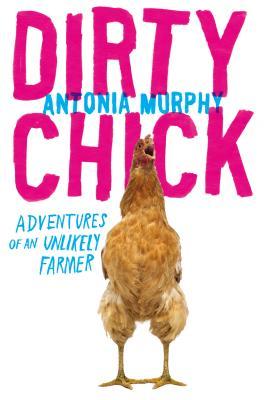
Dirty Chick: Adventures of an Unlikely Farmer, by Antonia Murphy *****

dirty chickWriting humor is risky business. If one writes mainstream fiction or nonfiction and the book is not well reviewed, of course it hurts–writing is always personal, at some level–but few things are as painful as the I-thought-this-was-going-to-be-funny review. In writing about her own family and friends, albeit with a few small changes to protect the privacy of the individuals concerned, Antonia Murphy takes her bleeding heart in her own two hands and offers it up to the public for consumption.

Personally, I have never laughed so hard in my life, or at least not recently. My thanks go to her and to the Goodreads first reads program for the ARC.

If my earlier reference to Murphy and the bleeding heart made you wince, you won’t want to read her book, either, because it has lots of gooey, graphic, gross stuff in it. It is edgy humor out there on the edge of wild, like the hinterlands of New Zealand where she has made her home. Well, see for yourself. This is from the prologue, so it doesn’t ruin the book for you:

“As I watched my goat eat her placenta, I was mostly impressed…Pearl had always been a strict vegan, so her sudden craving for raw meat showed a real taste for adventure…The placenta draped gracefully from her hindquarters, a translucent pink train enclosing a network of blue veins. There was a dark red, ropy thing inside, heavy with blood and the color of liver. It was this that Pearl tucked into first, craning her neck to nibble and swallow…”

As I read, I tried to analyze what it was that made her humor work. Part of it was her sense of remove, the dry commentary of the detached observer even when she is right in the middle of everything. But every now and again, something will happen in her personal life that shatters the entire I’m-just-watching thing. For one thing, she has two children, and when one meets with a really dangerous misadventure, Murphy is nearly consumed with the fear, the stress, the confusion that every mother on this planet, save for a frightening few misfits, would feel at such a time. So we laugh at all the icky stuff and her reactions to same, but now and again we remember that she is vulnerable to the same nightmares that we are. It gives us a stake in what comes next, and between the hilarity (most of the book) and the pain (deftly meted in small doses), there is no putting this book down once you reach a certain point.

Here’s how it shook out at our house: I would read a passage to myself, then burst out laughing. I would hustle straight past my husband, a man of delicate sensibilities with regard to animals and biological detail. I knew he did not want to hear it, or read it, or even be reminded of it. Instead, I made for the younger daughter’s room. She is a teenager with a great lust for gore, so of course she loved it. And I know that if I had headed for the adult-son-who-sometimes-lives-here, he would have chortled merrily also.

The narrative of this amateur adventure at farming just sat on my giggle button. Murphy, rather than wanting to control and fix every little (and large) thing that occurs, has this brilliantly mellow approach. Wow, the goats keep attacking the cars. A neighbor observes that eventually, they will break her windshield. Huh. Well…she loves those goats, so she isn’t going to “dead” them (her daughter Miranda’s word). She doesn’t want to sell them, and after all, who would want them? And fences are very expensive. She is, after all, just a renter.

Occasional visions of the landlords returning to find their property trashed would wink into my head, then wink away.

Every time I think Murphy and her husband are in over their heads and everything is completely out of control, she takes on an additional project. When all is falling apart, why not find something more to add to it?

So there’s Jabberwocky, the rapist rooster. They might have to dead him. Everyone likes baby chicks, and the hens can’t get preggers without him, but the thing is, he’s psychotic. Eventually she comes to understand that this is how it is with roosters. They start bad and get worse, and sooner or later, one generally HAS to dead them.

Good god. See what she’s done to me?

I have four more outstanding quotes, but they are too close to the end of the book. and it would ruin it for you. And the fact is, almost every single page has at least one quote that is fucking brilliant. I think I mostly marked the pages that showed transitions occurring in the plot, and that’s all well and good for academics, but this is not an essay, this is a review, and therein lies the distinction.

Because you, dear reader, don’t want to know how the book ends, and you are capable of analyzing all its nuances yourself, should you choose to do so. On the other hand, you could also just get the book, have an outstanding weekend curled up in your favorite reading spot, and then be done with it.

For those not grossed out by the references in this review, this is a sure fire hit. Pick it up when you have the blues, and I guarantee that in minutes your worries will be smaller.

When you look at it that way, ordering a copy of this book is really the sensible thing to do.

Sweet Holy Motherfucking Everloving Delusional Bastard, by Jerome Segundo****

sweetholyWow. What do I do with this story? It is clear to me that it’s most likely only nominally fictional. This is the saddest funny memoir I have ever read in my life.

Most of you won’t have the benefit of reading the cover letter that first-readers receive, which made me laugh out loud. This man has a gift for writing, and has the potential to be really hilarious. In places, his book is funny, in a dark way. But life has taken the spring out of his step.

He’s been to prison, and he emerged broke, without a license or a home. He had earned a college degree before being incarcerated, but now because his name was tarnished, it is virtually worthless, since he has to get a job under an assumed name. And he has to register as a sex-offender.

I got this from the Goodreads.com giveaway, and it initially gave me serious pause–and gentlemen out there, this is almost reflexive for most women–to see the man say that he was a convicted rapist who had pleaded nole contendre…and I had given him my address. Yes, that’s irrational. But “rape” is a really electrifying term to most of us.

Once I had read the book (and it’s a quick read, partly because I couldn’t put it down till I had the whole story, especially once I had peeked at the ending and come to believe in the guy’s innocence after all) I just wanted to cry for the man. He isn’t a rapist. He was clueless and in a relationship with a really unstable woman, unless he’s made parts of his story up wholesale…and I don’t think he has.

The fact is, the U.S. “justice” system isn’t much of one. More and more often, it serves to isolate and undercut a layer of young men and make them lesser citizens when they emerge, assuming they ever do. And whereas Segundo should have fought the charges against him, he was so physically ill,alienated and demoralized that he didn’t. Where was his family? Did they turn their backs on him, or did he slink away, afraid that they would be ashamed of him?

And I need to say this, too. This business of registering one’s whereabouts for life after having done the time for a crime (which is, as is always the case in capitalist society, unevenly enforced and penalized according to one’s wealth), is absolute bullshit. I say this as an old-school, card-carrying feminist warrior who has marched on the Capitol multiple times for women’s rights. We cannot isolate one group of “offenders” and make them permanent pariahs and then say that we have a rehabilitative system. What’s that about?

There is a lot of really graphic sexual content here. On the one hand, I am an old lady and it embarrassed me, but on the other hand, I have never seen a story where the sexual content was more essential to the telling of the story.

I wish this guy well, and I hope he can rebound and regain some joy in living. If he has become cynical, one can hardly blame him. This is not a light read, but a Lenny-Bruce-like attempt to restore some dignity to his own life and that of others who may find themselves wrongly accused and convicted of one of society’s most heinous crimes.

The Opposite of Fate, by Amy Tan *****

theoppositeoffateThough book stores and book clubs bill this as a memoir, it is really a collection of essays and speeches originally published for other purposes. Though I would love to read an actual autobiography written by Tan, this is an excellent anthology, and I cannot deny it the five stars it deserves.

Tan writes about a wide range of experiences, from contracting Lyme disease to writing the screen play of The Joy Luck Club for Disney. It was nice to see somebody say something positive about Disney for once.

But if there is one really urgent entreaty nestled amongst the wide variety of topics addressed here, it is this: Tan would like to be released from her pigeon hole. Though the large number of her books sold is both profitable and gratifying, she feels both awkward and a trifle outraged as well at having been labeled by the press, by school districts who require that her stories be read, and by any number of other sources as an Asian-American writer, or a writer of color. What, she asks, is required just to be called an American writer? She was born in the USA. It’s accurate to say that she has written a lot of stories, both fictional and true, about her mother, who was born in China. But Tan takes exception to being held up as the one person who is supposed to represent all Asian-American writers.

One might imagine other Asian American writers would take even greater exception, if they could be heard.

I confess that I am at least partially among the guilty, having created an Asian studies label on my own bookshelves. Actually, since I am married to a Japanese citizen, the titles written by and about Asian Americans are crowded by vastly more titles written in Japanese, which take a number of bookcases all by themselves. This is not something that happens in most American homes. But yes, I have also regarded Tan as an Asian-American writer, and she is right in saying that regardless of pigmentation or ethnic background, her prose has won her a place on our shelves. Marketing be damned.

I reflected a bit here. My youngest daughter is half Japanese, half Caucasian. We named her for her Japanese grandmother, and we started attempting to teach her Japanese when she was quite young. She has been to Japan and met relatives there. Yet she would rather be regarded as an American rather than an Asian-American. She pointed out to me that my own side of her counts too; does anyone call her an Irish-American because one parent is of Irish descent?

The score stands at parents 0, offspring 1.

But Tan also reminds us that our lives are not about what has happened to us—and she certainly does a fine job of recounting her own varied, sometimes bizarre experiences—but about whether we take charge of them. In the final essay, “The Opposite of Fate”, she contracts Lime disease and it continues to ravage her health and interfere with her writing until she does a comprehensive web-crawl and diagnoses it herself. Leaving the mystery for physicians to unravel hasn’t helped, and so she does what needs doing. That having been done, the official, medical diagnosis and treatment are fairly straight-forward. The cure isn’t easy or quick, but progress is made steadily. She took ownership of her problem, advocated for herself, and received treatment.

Though the message inherent in the title seems obvious, I find it powerful. Most of us know someone—perhaps even in the family—who seems to ride through life helpless and riddled with excuses for everything. There is nothing for these folks that can’t wait another day, and sometimes another and yet another. They don’t “do” things; things “happen”.

I confess it makes me crazy.

Thus I found Tan’s essays keenly satisfying. She tells hilarious stories sometimes, while others are poignant, but all of them involve decisions at some level, though not always up front and pointed. She doesn’t preach, but she also doesn’t duck and cover. When life presents challenges, she rises to meet them.

One could, of course, say that in publishing these stories, she has created a powerful example for Asian-American girls. But one really shouldn’t.

Because the fact is, she has presented a strong, positive example for everybody.

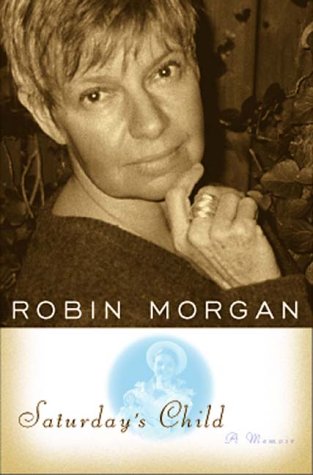
Saturday’s Child: A Memoir, by Robin Morgan *****

saturdayschildRobin Morgan is one of the mothers of contemporary feminism. She has charted history, together with other women and those who support them, in more ways than I can even keep track of. Although she was once famous for her performances as a child actor, it is for her feminism that I know her, and for that reason I was eager to read her memoir. Huge thanks to Net Galley and Open Road Integrated Media for the ARC.

Now a social warrior of advanced age, she is still undoubtedly one of the most articulate individuals alive. However the heat that came from her discussion of her childhood all but singed my eyebrows. Some of us grow mellower with age and learn to let go of things that happened when we were small, but I suppose for some, outrage and sorrow compound faster than interest on a credit card.

You see, Morgan was raised as a child celebrity. From the age of two years her life was a constant swirl of organdy dresses, auditions, and performances. She rode in parades and promoted a doll that resembled her, though she was not permitted to play with one. She wasn’t allowed to nurture friendships, and would not have had time for them in any case. Work, education, and rehearsal took up all of her time, and special arrangements had to be made in order for her education to be completed because of her exhausting schedule. She was a highly capable student and is clearly extremely literate, but her formal education ended with high school; her mother, who lived off of Morgan’s pay from Morgan’s toddlerhood until her death (including investments that lived on after Morgan retired from show business), told her that college was out of the question. She deals articulately and extensively with issues surrounding the exploitation of child actors by adults during this period, as well as the surprise revelation that came about when she tracked down the father she had never known.

I found my long dead and slightly famous great-uncle buried in her text; Sherman Billingsley, owner of The Stork Club, named a drink for her, similar to a Shirley Temple, but with a chunk of pineapple. Funny stuff, though Morgan’s childhood experiences were mostly grim.

The rest of the book gave me what I came for. Morgan came of age during the antiwar era of the late 1960’s and early 1970’s. The era of protest surrounding the US war against the people of Vietnam radicalized the youth who participated in it; the women who had been side-lined during this time period by their male counterparts began to realize that they should be taking part in the decision-making process instead of rustling up sandwiches and coffee while the men talked politics.

“Free love” really meant group sex, and Morgan learned quickly that it was not liberating for her, but rather it was traumatic. From Eldridge Cleaver to Abbie Hoffman, one radical male after another showed himself to be a member of the old boys’ club where women were concerned. It gave her and several other women pause, and soon led to a number of publications, including Sisterhood is Powerful, an anthology I treasure to this day. Morgan’s energy and achievements appear to have been boundless.

The urban myth in which feminists all burn their bras appears to have originated with Morgan and other feminists’ boycott and picket of the Miss America Pageant in 1968. At this event a certain amount of street theater took place to draw attention to the objectification and trivialization of women in US society. One of these involved whirling bras, symbol of the restriction and shaming of women, in the air and then dramatically dropping them in trash cans. (No fire.)

Morgan’s achievements are too many to enumerate here, but her history, and that of other feminists, from Betty Friedan, bell hooks and Bella Abzug to Gloria Steinem, founder of Ms. Magazine, should be part of every general course in American history, and here the author weighs in once more. She is absolutely correct in reminding us all that the history of women does not belong isolated in a women’s studies department, but is a part of history in general. Pick up a textbook and list the names; how many are male, and how many are female, even for the relatively recent period since World War II? Nor is this problem limited to the USA; in fact, it appears to extend all over the world. There can be no post-feminist era until women enjoy social, political, and economic equality. It hasn’t happened yet.

In fact, Morgan’s internationalism, which has been a large part of her career since the first publication of Sisterhood is Global, is where she shines brightest.

After reading Saturday’s Child, I have found myself once more becoming conscious of the imbalance in the world around me. I have noted that if I mention in one instance or another that women are under-represented, even my own children give me a look that says I am bringing up trivial, petty matters that I should have let pass. And then I hear Morgan, reminding me that trivializing women is part of the problem.

If you are a woman, or if you love one, reading Saturday’s Child may leave you feeling dissatisfied and in need of social change. And until the world becomes equal for everyone, that is as it should be. If Morgan’s legacy is that more women raise hell for their reproductive freedom and economic equality until both are gained, then what better thing could she have done for the world?

Confederate Bushwhacker: Mark Twain in the Shadow of the Civil War, by Jerome Loving *****

confederate bushwhacker Good things come to those who wait. Jerome Loving established his credentials as an academic and historian a long time ago. I haven’t read the other biographies he has written, but they’re going on my list now.

Here’s what you have to know going into it: if you are looking for the sound bite, the cut-to-the-chase, you can’t have that wish. Loving uses induction rather than deduction, and brick by brick he builds toward his conclusion, taking the time to set context in a way that only a specialized biography such as this one, which focuses on the single year 1885, can do. And since I received this gorgeous little hardcover book as a Goodreads.com First Reads giveaway, I was impatient at first. “What the heck. Where’s the bushwhacking? Where’s Grant?”

Uh uh uh. No. Go back, reread. Everything that is in this book is there for a reason. If you hustle through the first part to get to the second, you may leave too many holes in the foundation. Do you want the wall to fall down? Of course not.

What I noticed, as I marched through with my sticky notes, is that the clusters were initially sparse, as the stage was set, and then suddenly ramped up around page 100, and by the end of the biography I was putting a sticky on every page and sometimes on facing pages.

I could tell you what he has to say; I went back and looked at all of those notes, but then, why would I wreck it for you? An author who builds up to the last page does not need a reviewer to hand over his punch line for him.

Instead, I can tell you that this is a careful, painstaking, well-documented analysis of a complex character. Twain’s ideas evolved between his 20’s and the end of his life, and of course, for most of us they do, but perhaps because his mind was open and searching, or perhaps because of his great fondness for “Sam” Grant, he watched what took place–including the Haymarket martyrdom, which I never knew had been an interest of his–and revised his ideas accordingly. Smart people can do that.

Perhaps the greatest measure of the success of this work is that it not only makes me want to see what else Loving has written, it also makes me want to revisit Twain. I had avoided much of Twain’s philosophical writing because of his anger toward the “damn human race”, to which I am much attached, thanks. But I want to see more about the connection between the events that played out during this time period and his changing perspectives.

One small correction is in order to Loving’s work, though I know this is a tiny, picky detail: Loving states that a huge redwood tree had been named for Grant. Ahem. It is a Sequoia tree. It is immense, but it is General Sherman’s that is the largest in the entire world. Sequoias belong to the same family as redwoods, but they are different. Having driven several days from Seattle to Southern California to see the tree; survived a four-car pile-up, rescued my luggage, bandaged and iced myself and my children, hired a rental car and driven onward to fulfill my mission, I can’t let it go by without mentioning it. Two great huge trees in honor of my two favorite American generals of all time. Sequoias. A hint is that they are located in Sequoia National Park. Makes sense, no?The biggest tree in the world!  50%

If you are reading this exclusively for the Civil War aspect, I will tell you that most of the book is not devoted to that time period; it says it is about 1885, not 1865, and when examining the book’s jacket, a knee-jerk reaction will leave you dangling. There is a small but meaty portion in which Twain discusses his part in the American Civil War, but this is not a Civil War history.

For those who read memoirs and biographies as rapaciously as I do, this is a must-read. For those who enjoy American history and literature, and most of all Twain, it is highly recommended. If you like Grant and maybe have even plowed through his remarkably readable autobiography, even better! But you can easily understand this book without it.

Many of my Goodreads.com First Reads will eventually be given away to my daughter’s school or some other good cause. Not this one; it will retain a place of pride in our home library. Thank you for writing it, Mr. Loving, and thanks to the University Press of New England for the free copy.