Bright Lights, Big Christmas, by Mary Kay Andrews****

I tend to avoid heartwarming holiday stories and romances because so many of them are infused with saccharine and require the reader to put their I.Q. in a box until the book is over. But two years ago, I was happily impressed with Mary Kay Andrews’ The Santa Suit, and so when I was invited to read and review Bright Lights, Big Christmas, I happily agreed. My thanks go to Net Galley, St. Martin’s Press, and Macmillan Audio for the review copies. This book is for sale now.

The Tolliver Christmas tree farm is an institution, not only at home in North Carolina but as far north as New York City. As a child, Kerry sometimes accompanied her family to New York to set up a tree stand and sell the trees, but as an adult, she’s had other priorities. This year, though, she finds herself unexpectedly jobless, while at the same time, her father’s health prevents him from executing the task. Kerry must take his place, traveling to the Big Apple with her brother, Murphy. They set up the stand, and they sleep in the ancient pink trailer nicknamed “Spammy” because of its resemblance to a canned ham. Adventure awaits.

Kerry’s love interest pops up before we’re even ten percent into the story, but it appears that the author planned for us to know that, and it doesn’t hurt anything. Over the weeks they are in New York, various small (and large) crises present themselves and are worked out with team work, ingenuity, and the occasional well-placed bribe. They have Murphy’s dog Queenie with them, but she is primarily left in the background where she belongs.

What I appreciate most about this novel is how well grounded the plot is, and the author’s restraint in not permitting any elements to go over the top. There are a host of stereotypes possible, but every time I see one coming, Andrews chooses a different path, and it keeps the story fresh and original. Small details that might be overlooked by someone less detail oriented are seen to, and it keeps the narrative credible. Examples are the need for a shower or bath, given the length of their stay in a trailer without working plumbing; the cost of living in New York; the hazards of theft and vandalism, especially active at Christmas. None of these sidetracks the plot or slows the pace, but the questions a reader might have are tidied away, and this makes for greater enjoyment.

One small criticism involves a situation where theft and vandalism occur at a time when Murphy has to be away, and immediately, other men folk clamor over the need to have someone—someone with a Y chromosome, folks—to do lookout duty, protecting the fair damsel, her trees, and so on.

Apart from that, this is a delightful story. However, for awhile I wasn’t sure I liked it, because I was listening to the audio version, which is poorly done. The male characters are voiced in a way that is choppy, wooden, and unconvincing; but worse is Kerry’s voice, which is performed in a high-pitched, girly-girl voice so off-putting that it took me awhile to realize that the problem wasn’t the author’s, but rather the voice actor’s. The children’s voices are much better, and I actually howled with laughter when the baby in a stroller wailed!

As the story reaches its climax, Kerry has to make some serious choices, and I admire the way this part is resolved. The side character Heinz, an elderly man that lives in the neighborhood and often stops by the tree stand, is terrific.

When all is said and done, I rate the printed version of this novel 4+ stars, and the audio version 3+ stars, with an overall score of 4. I recommend the print version of this book, but not the audio.

The Bitter Past, by Bruce Borgos***

2.5 stars, generously rounded upward.

The Bitter Past is the first in the Porter Beck series by Bruce Borgos, and if I liked it, I’d be thrilled to read more. On balance, though, I don’t. Nevertheless, my thanks go to Net Galley and St. Martin’s Press for the invitation to read and review. This book is for sale now.

The setting is the hinterlands of Nevada; part of the story takes place in the 1950s, and part of it is in the present. I rate the historical threads as 3.5 stars, and the contemporary part as 1. The premise is that Porter Beck is the local sheriff who is called when a grisly murder is discovered; in addition, a sister-wife goes missing. Sana Locke is the woman that the Feds send in, uninvited. The premise for the other thread is that a Russian operative named Georgiy Dudko lands in Nevada, tasked with entering the nuclear test site and stealing a nuclear warhead. Toward the book’s conclusion, we see how the two stories are joined.

Before I am even twenty percent of the way into this story, my hackles are up. I haven’t seen an author write with such brazen disrespect for women in a very long time, and I hope not to see it again. You see, Beck is God’s gift to women, and it’s a good thing, too, because none of them prove smart enough to find their butts with both hands until he sails in and fixes everything. From the instant Agent Sana enters the narrative, introducing herself as FBI, Beck is the guy in charge, and Sana is his li’l buddy, his sidekick. Good thing he is here to educate her. It is Beck that finds a hidden room in a house they’re searching; it is Sana whose eyes “go big.” He has to dive quickly to save her from the bad guy with the gun. He tells her what to do, and she does it. Here are some quotes that set my teeth on edge:

“Before [Sana] can speak, I place a finger over her lips.”

“Sana appears confused.”
“I bring my finger under her chin. ‘Look up.’”

And no collection of sexist bilge is complete without the old saw about how women are unable to get along with other women: “[Sana’s] still miffed about Brinley, [Beck’s sister] and it’s clouding her judgment…I glare at Brin, a warning to her to retract her claws.”

Beck feels completely free to comment on Sana’s physical features, particularly her “exquisite ass,” but of course, Sana likes that in a guy. She’s in the sack with his middle-aged, um, butt in no time flat.

For a long time I hold out hope that things will turn around, and the author will prove to us that actually, Beck is about to get his just desserts, and Sana had been sent to take him down for some reason, but the only comeuppance she deals him at any point is when she pulls a jujitsu move on him, and that’s only once.

What else? Ah yes, the sister-wife. The girl’s husband is a good FLDS neighbor, Beck tells Sana. They don’t force anyone to marry. She’s seventeen years old, so it’s fine.

What the fuck. Seriously? Excuse me while I grab my blood pressure medication.

In addition to all of this, there is the constant use of the word “illegal” to describe a person that is in the U.S. without documentation. They don’t even call them illegal immigrants, or illegal residents. They don’t merit a full grammatical description.

The thread that takes place in the past is more palatable. Georgiy needs into the nuclear test site, and so he befriends a scientist that works there, and is introduced to Kitty, the scientist’s daughter, whom he courts and accidentally falls in love with. Kitty is not developed as a character any more than Sana is, but at the same time, during the 1950s in the U.S., marriage and motherhood were very nearly the only acceptable path for women, so within the context of time and place, this is believable. I like Georgiy much better than Beck, that’s for sure!

There’s a twist of sorts at the end, but it’s not all that impressive, and it mitigates nothing.

I was provided with the digital review copy and the audio as well, and so I listened and read at the same time. Narrator James Babson does a fine job portraying the characters as they are written, and he isn’t to blame for the way I feel as I read.

That’s it in a nutshell. If all of this sounds just fine to you, then go ahead and get this thing, and stay away from me. Does anyone have any matches I can use?

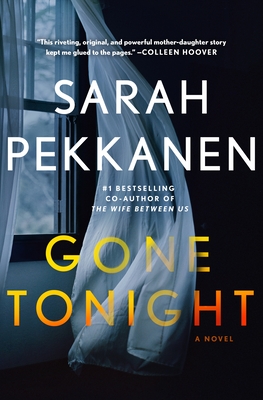
Gone Tonight, by Sarah Pekkanen*****

I’ve been reading and enjoying Sarah Pekkanen’s novels for years now, but Gone Tonight is far and away the best of the bunch. My thanks go to Net Galley, Macmillan Audio and St. Martin’s Press for the invitation to read and review. This book will be available to the public August 1, 2023. If you love psychological fiction or thrillers, you should order it now.

In her previous thrillers—the ones I’ve read, at least—there is similarity. She’s written about women ganging up on one woman, and love triangles, or what appear to be love triangles. This one is different, and it’s better. Here we have just two characters, mother Ruth and her young adult daughter Catherine. The unseen character is James, Catherine’s biological father. Throughout the story, Ruth is vigilant, always watchful. She’s afraid she’s being stalked, or investigated, or otherwise watched. Ruth isn’t merely careful; she keeps a bug-out bag ready for each of them, varies her routine to where she really doesn’t have one. She doesn’t take the same exact route to any of the places she frequents regularly. To see and hear this character, one would think that the CIA, the Mafia, and all of the cartels were out to get her and kill her.

Early in the book, Ruth provides Catherine with some hard news: she has early onset Alzheimer’s. I tell you this in particular, because when I saw it, my eyes glazed over with boredom and I thought that this thriller wasn’t going to thrill me at all. I nearly slid the book onto the bottom of my stack, and that would have been a terrible mistake, because this is *not* an Alzheimer’s story.

Catherine has never met any of her relatives; Ruth lies to keep her from investigating them. But now Catherine is an intelligent adult, and there is the internet. It’s mighty hard to keep a secret these days, and that’s rough for Ruth, because she’s got a lot of them, some bigger than others. As Catherine digs, she is surprised, and this makes her dig even harder. She keeps finding things, and Ruth keeps changing her explanations. It isn’t long before Catherine realizes she’s been lied to, and she stops telling Ruth what she discovers.

The format Pekkanen uses is an effective one, and it’s easy to follow. She changes the point of view in the standard way from one to the other and back with both sides told in the first person, but the tricky part is how to provide Ruth’s narrative. Catherine can give us her first person narrative and we think nothing of it, but Ruth talks to no one except her daughter, and even so, she lies to her daughter all the damn time, so under what circumstances will she spill her guts to us? The solution isn’t all that original, but it’s effective and reasonably believable. Ruth has a secret diary that she’s writing for Catherine to have when Ruth is gone. It requires me to overlook the unlikelihood of someone as obsessively private as Ruth sitting down and documenting the whole shooting match, including names and dates in writing, but this is such a fun book that I set my momentary disbelief aside and keep reading, because I have to know what happens next.

Once we are past the Alzheimer’s passage, my attention is rapt, but friend, the last ten percent of Gone Tonight is one for the ages! I rarely say this, but this creepy little novel would make an amazing movie or miniseries.

Actor Kate Mara reads the audio version, and she does a fine job. Highly recommended!

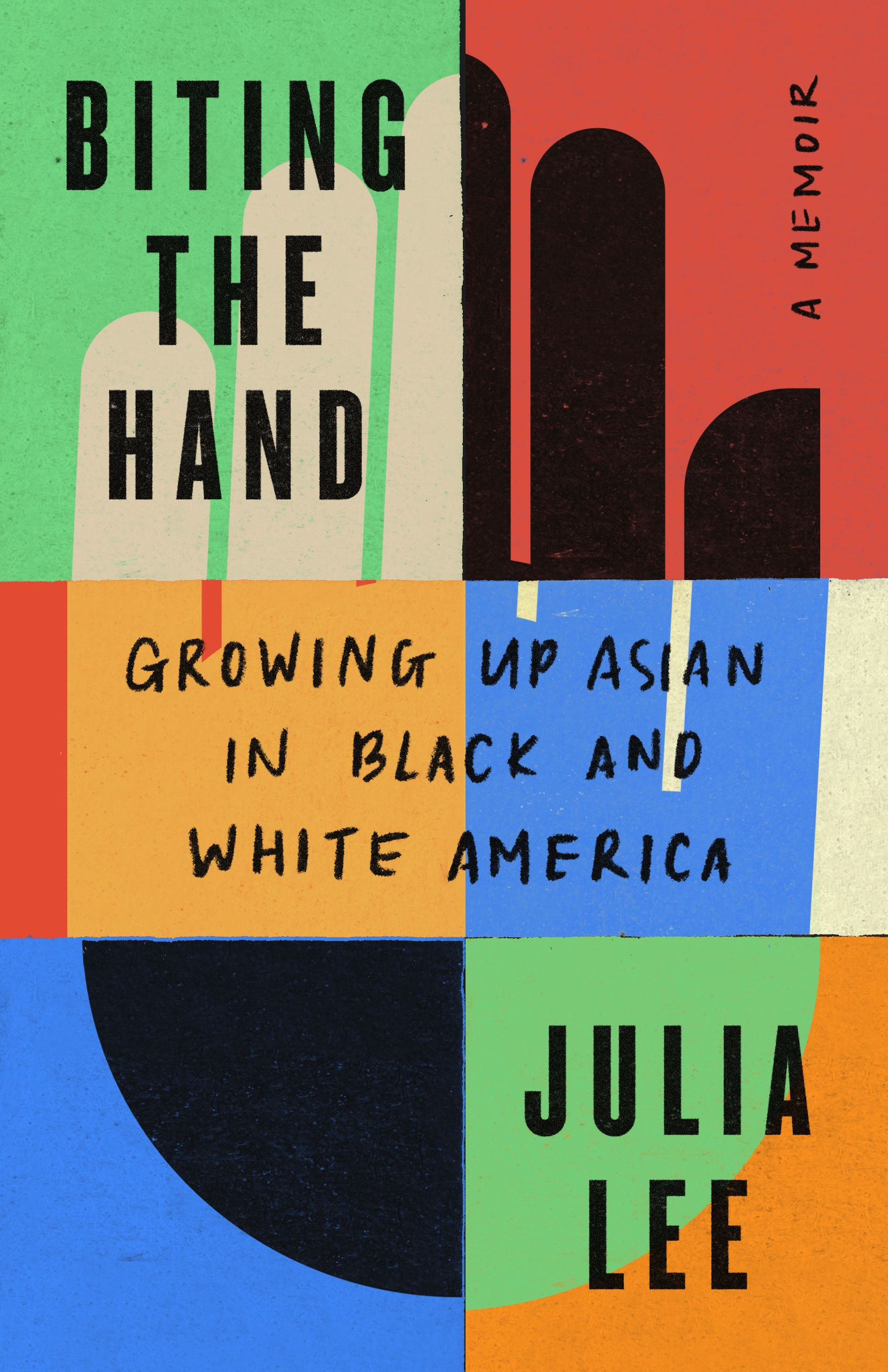
Biting the Hand, by Julia Lee****

Julia Lee is not amused, and she’s decided to say the things nobody else is saying. In this deeply analytical, provocative memoir, she tells us about her own experiences growing up, and the issues faced by Asian immigrants and Asian Americans in the United States, where “we are critical to the pyramid scheme of the American Dream.”

My thanks go to Net Galley, Henry Holt Publishers, and Macmillan Audio for the review copies. This book is for sale now.

In some ways, I feel as though I am reading someone else’s mail as I read this, because it is clearly intended for an audience of people of color. However, I did read it, and I’m going to review it.

When the discussion of race in the U.S. comes about, it is, as Lee states, almost always a conversation about Black people and Caucasians. Those that don’t fit into either group are sidelined. Perhaps more harmful is the way that people of Asian descent are presumed to be sympathetic to the status quo. Ever since a major news periodical dubbed Asians as “the model minority” back in the early 1960s, expectations and assumptions have leaned in that direction. And the roots of this division—Black versus Asian—make this a particularly thorny assumption to untangle. After all, a large percentage of African-Americans can trace their lineage to slavery; their ancestors weren’t born in the States, nor did they choose to come here, but were kidnapped and brought by force. Angry? You bet! But Asian immigrants came of their own accord, oftentimes fleeing untenable circumstances in their countries of origin. And so, their children, and those that have come after, have largely been indoctrinated to be appreciative. If things don’t go well, they tell them, then we must work harder!

This Caucasian reviewer comes to you without the Asian background, appearance, or experience that Lee speaks of; yet I live in a city that has one of the largest Asian populations in the U.S., and am married to an Asian immigrant, and parent to a child that is half-Japanese. So many of the stories—strangers that ask where you’re from, and won’t accept the truth of “California,” where Lee was born, or “Seattle,” my daughter’s hometown, are familiar ones.

Lee is fed up with the mainstream news stories that endeavor to pit Asian and Black people against each other. Her parents were small business owners in a mostly Black part of Los Angeles during the riots of 1992, and her experiences inform her conclusion, that there must be solidarity between all people of color in order to successfully fight for significant change.

The one bone I have to pick is the casual manner in which she dismisses the question of social class as a key factor. Her very brief note about this is that it’s a tomato and to-mah-to issue, not worth much discussion, because most people of color are working class. This is simply untrue, and it enforces a stereotype of Black people as being mostly poor and dispossessed, when in actuality, eighty percent of Black people in the US live above the poverty line. There are African-Americans that have far more money than I will ever see; some of the many Asian groups have a higher median income than Caucasians. So yes, social class is a huge factor here, one that Lee should examine more critically. There are working class Whites that can be allies; there are wealthy families of color that would shut down the struggle, given half a chance. The missing star in my rating reflects her failure to recognize this, and to offer concrete solutions to this problem.

The book’s title comes from Lee’s mentor at the otherwise very white-supremacist dominated Harvard—Jamaica Kinkaid. I actually gasped when I saw this. What a luminary she found to guide her!

Both the audio and print version of this book are equally readable, so go with whatever you usually prefer.

This is a fine resource for those seeking to examine Asian and Asian-American racial dynamics. Read it critically, but do read it. There’s a lot here that has needed to be said for a long, long time.

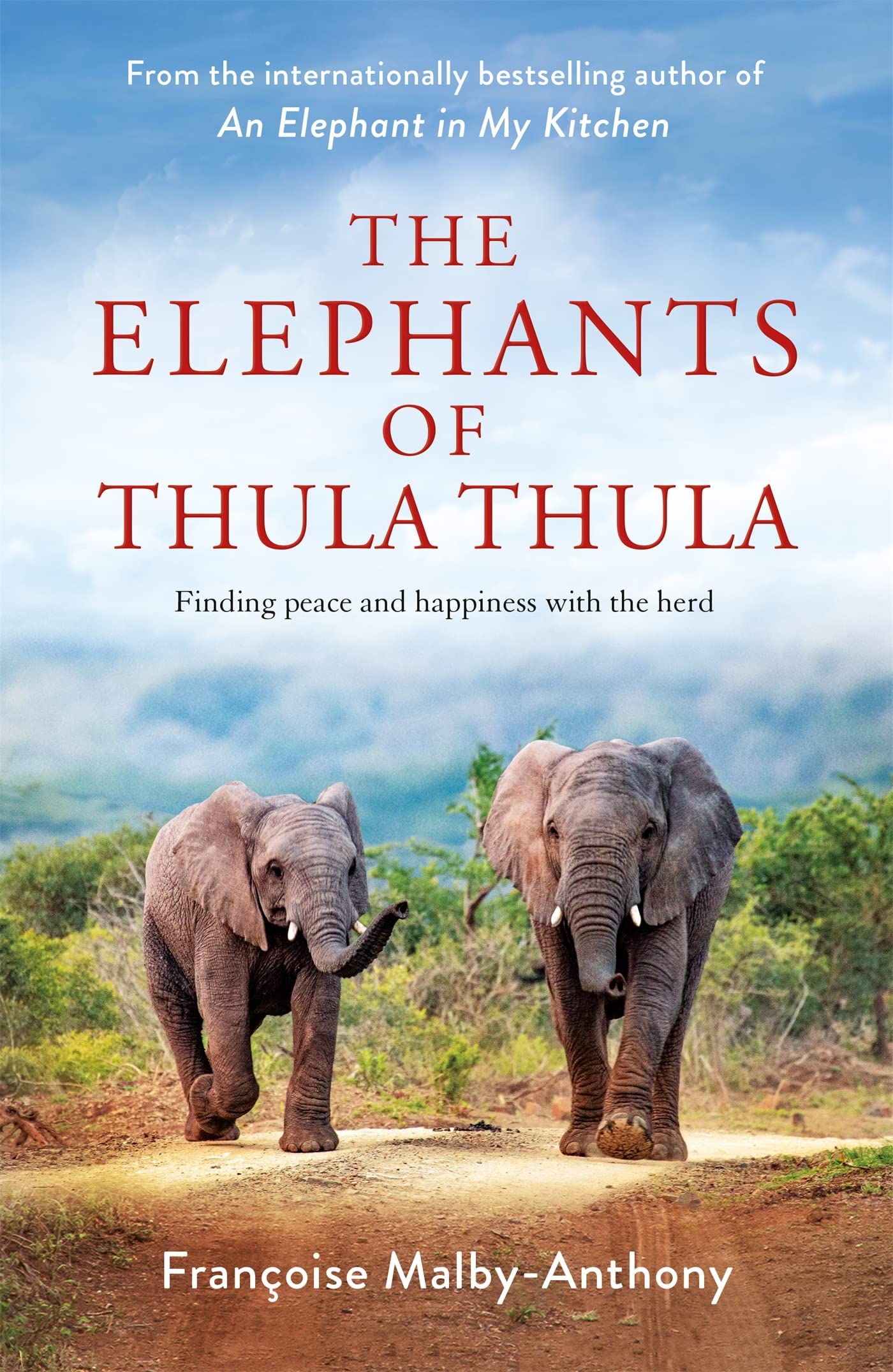
The Elephants of Thula-Thula, by Francoise Malby-Anthony****

Francoise Malby-Anthony is an established author and the owner of a game reserve in South Africa. Although she’s written previous books about this reserve, The Elephants of Thula-Thula is the first of her books that I’ve read. My thanks go to Net Galley and Macmillan Audio for the review copy; this book is for sale now.

As I begin listening to the audiobook, I am not sure I like it much. After a brief passage about elephants, the author segues into a longer piece about rhinos and by the time she admits that the rhinos are her favorites, I mutter, “No kidding!” There are other passages in which she gushes about the refuge’s well-heeled but generous donors, and I’m beginning to feel as if this is the sort of book that people will buy because the refuge is a good cause, but nobody will actually learn anything or even enjoy it much.

About halfway in, though, I have a change of heart. The second half is much better than the first. She discusses throughout the book the challenges posed to the refuge by the pandemic, and she talks about the measures taken to remain solvent while also keeping her employees whole. There is actually more talk about elephants now. I confess I am jarred by the moment when a favorite animal dies (no spoilers) and she tells us that this is the worst grief of her entire life. She says this not too long after explaining that the reserve’s founder, her husband, has recently died, and so my head snaps up when the tells us that the loss of the animal is the worst. I am chalking it up to hyperbole, but if I were the editor, I’d suggest a rewording.

Nevertheless, there are wonderful anecdotes about the elephants, and of course the rhinos, as well as the addition of a cheetah. She discusses baboons—I’d never fully realized how scary they can be—and I enjoyed hearing about how one goes about moving a giraffe to another location. There’s a lot more about elephants in the second half, and she discusses the threat to the herd when some bureaucrats add up the acreage and decide that there are too many elephants here, and some must be either moved out or “culled” (which means, of course, killed!) The reserve is expanded, but it takes a whole lot of jockeying and maneuvering to carry it off.

Readers that have enjoyed Malby-Anthony’s earlier books, or that have a strong interest in wildlife preserves may enjoy this book greatly, and it is to them that I recommend it.

Kunstlers in Paradise*****

4.5 stars, rounded upward. My thanks go to Net Galley, Henry Holt Publishers, and Macmillan Audio for the review copies. This magnificently quirky novel is for sale now.

Julian Kunstler is kind of a mess. He’s a twenty-something New Yorker whose girlfriend has just dumped him. He has no job, and he doesn’t want one; at least, not the low-paying, entry-level variety of jobs for which he is qualified. He takes himself home to his parents who have been paying his way, confident that they will understand his plight and increase his allowance. Instead, he hits a wall. What are your plans for the future, Julian? (None.) What do you plan to do for money? (Get it from you.) Just as a dramatic situation has begun to unfold, they hear from his 93 year old grandmother, Mamie, who lives in Los Angeles. She wants him to come to stay with her awhile; she needs assistance. He’s not so sure that he wants to go, but when his parents insist, he gets on that plane. Once there, the pandemic strikes, and he is trapped in lockdown with his grandmother and her elderly companion, Agatha.

Mamie has always been fond of Julian, and although she does need a driver for doctor appointments and the like, what she wants, more than anything, is to tell her life story. Most of it, anyway. It begins in Austria, as Jewish artists like her father, a successful composer, are being pushed out of public life by the Nazis. (Here, I emit a small moan; I am heartily sick of Holocaust stories. Happily, we don’t stay there long, and this story is worth it.) She goes on to describe the shock she experiences in suddenly being transplanted into a completely different climate, language, and culture, and much of Mamie’s story is droll. And Julian, who never would have sat still for these tales had they come from his parents, listens. At first, he listens impatiently, assisted by Mamie’s generous liquor collection. As time goes on, he begins to listen with greater patience and understanding. And by the end of a year’s time, he listens with genuine interest. His own exile from New York is pale, after all, in comparison to the exile his predecessors endured.

The most dynamic character is, of course, Julian, but through Mamie’s stories, we see how life has already changed her. Agatha is enigmatic until the book is nearly over, and I love what Cline does with her, too.

If I were to change one thing, I would edit down the material about the genius composer friend that emigrates from Austria and is close to the family. This reviewer was a music major once upon a time, and if this part of the narrative is a bit much for me, then probably many others will feel the same. Of course, if the reader comes to the book with a deep interest in Schoenberg, then it may prove quite satisfying.

I am fortunate to have access to both the digital print galley and the audio version, and reader Jesse Vilinsky is hands down the funniest, most skillful voice actor I have ever had the pleasure to hear. Cline’s book is very good, but in the hands of Vilinsky, it is infinitely better. Her interpretations of Mamie and Julian are spot on, hilarious at times, moving at others. The way she voices Agatha is absolute comic genius!

For those that love quirky humor and historical fiction, this book is highly recommended.

The White House Plumbers, by Egil “Bud” Krogh and Matthew Krogh

Egil “Bud” Krogh was one of the men known as the “White House Plumbers,” which was a small group of operatives that dressed as tradesmen in order to illegally break into and ransack private offices for the purpose of digging up dirt on political opponents. Krogh’s job, together with E. Howard Hunt, was to lead a small team of men to burglarize the office of Dr. Fielding, the psychiatrist that treated journalist Daniel Ellsberg, in search of a way to discredit Ellsberg, whom President Richard Nixon regarded as an opponent.

My thanks go to Net Galley, St. Martin’s Press, and Macmillan Audio for the review copy and audio book. This book is for sale now.

Few people shy of the Boomer generation will have personal recollection of the Watergate scandal that brought down a sitting U.S. president for the first time, and the burglary of Fielding’s office was the first illegal event that set it all in motion. Nixon was furious that the Pentagon Papers had been released and that the U.S. Supreme Court had come down on the side of the First Amendment and the free press. Consequently, the president decided that the executive branch must go it alone, and sought a way to discredit the journalists behind it. That was how all of this came about. He howled about national security, and may or may not have believed it; or, he may have sought to cover up lies he had told to the American people about the war in Indochina, and  since he couldn’t force the publication out of circulation, the next best thing would be to persuade the public that its authors—or annotators, at any rate—were crazy and not to be believed. This background information comes from me, not from the book.

At any rate, this political memoir comes to us courtesy of Bud Krogh, and also his son Matthew, who completed it after Bud’s death. For the purpose of this review, I will use the name Krogh to refer to Bud, unless otherwise noted.

Krogh was brought into this mess by John Ehrlichman, one of the two advisors that were nearly as close as a second skin to Nixon during his time in office. Other accounts refer to both as cold-blooded thugs, and my earlier reading leads me to agree with them, but to Bud, Ehrlichman was a noble soul dedicated to his country and his president, a fine, devout individual that was like a second father to him growing up. It didn’t occur to him, initially at least, that anything he was being asked to do was corrupt or scandalous; here, I find myself shifting in my seat. Surely he must have wondered why this secret little group of men, not even government employees, were being tasked with this job, rather than the agencies that ordinarily do the cloak-and-dagger jobs? He claims that Nixon couldn’t trust FBI director J. Edgar Hoover, who was a slimy character, and that makes at least a little sense to anyone familiar with him. Yikes.

The writing as well as the accountability are uneven throughout this book. The prologue sounds sketchy to me. Those of us that have spent any time at all watching criminal trials take place is familiar with the vaguely nebulous language I see and hear at the beginning of this thing. Instead of saying that he has done something very wrong and is sorry, he says he has made bad choices, and he is sorry about “what happened.” This is the language that guilty people use when their attorney has told them to show remorse. Someone not listening carefully might think that the speaker has apologized, but they’ve actually distanced themselves from wrongdoing. During this portion of the memoir, I glanced at the text and also the device playing the audio, half expecting to see a little slime leaching from its margins.

And yet, at the end, the prose is more eloquent, and the accountability rock solid. Krogh goes to the psychiatrist in order to apologize in person, once he is out of prison. He visits Nixon to apologize to him (which baffles me, but okay.) He claims to have declined a presidential pardon. He never loses an opportunity to put on a hair shirt prior to his many speaking engagements. And so it goes.

One could surmise that the early portion was written by Krogh, and the end written by his son, but even if that is true, those speaking engagements were taken by Bud, not by Matthew, and likewise the specific apologies rendered. So who knows?

The narrator for the audiobook is Peter Krogh, who does a fine job.

If you are interested in studying the Watergate scandal and haven’t read any other books about it, this is not the one. Krogh’s involvement ended with the break-in to Fielding’s office, and he helped cover it up, lying under oath as he was told to do, but he had nothing to do with the Watergate Hotel burglary of the Democratic National Committee’s offices. In short, though famous enough to be remembered for his actions, he was not a central player. For those interested in reading just one book about this scandal, I’d go with All the President’s Men, by Woodward and Bernstein; The Nixon Defense, by John Dean; or Nixon: The Life, by John A Farrell. These are all fairly lengthy; if you are looking for something less lengthy, try One Man Against the World, by Tim Weiner.

As a general read for the uninitiated, I’d give this book 2.5 stars. For Nixon and Watergate buffs, I rate it 3.5 stars.

The Last Hill, by Tom Clavin and Bob Drury***-****

In 2021, Clavin and Drury published Blood and Treasure, an outstanding biography of Daniel Boone, several American Indian tribes, and their relationship to the American Revolution. When I saw a chance to hear their new audiobook titled The Last Hill, I jumped on it. And the early portion of it convinced me that I was missing too much by listening but not seeing, so then I went back and requested the digital version as well. My thanks go to St. Martin’s Press, Macmillan Audio, and Net Galley for the review copies. This book is for sale now.

This meaty yet readable book details the fight for Castle Hill, a strategically essential location that leads into the core of Nazi Germany. Several entire American divisions had tried and failed to take it, and so General Eisenhower ordered the Rangers to go in. Rudder’s were the most elite, battle-hardened unit of the already elite group known as the Rangers. Led by Lieutenant Colonel James Rudder, they were ordered to fight to the last man, if necessary, and they very nearly did; 130 special operatives, as they were known, ascended the hill, and only 16 were left standing when it was over. Nobody there knew that Hitler’s Wehrmacht had been given nearly identical instructions, as it was through here that a massive number of German troops were slated to descend through the gateway and conclude the Battle of the Bulge for the Axis powers.

The most interesting and enjoyable part of this book, for me, was in the first chapters, where we see the contrast between the misleadership early on, when the Rangers were being trained in rural Tennessee, and that which Rudder provided. The troops were sent on marathon marches without canteens, and their superior officer would be driven alongside them, where they could see him relaxing in his seat and drinking as much water (or whatever?) as he chose. Some men quit; others died.  There were also war games, including “…the pit fighting competitions” that took place in a three foot deep, forty foot square hole in which “…entire platoons jumped in to attack each other like ancient Spear-Danes, screaming lusty war cries that echoed throughout the camp…by the ordeal’s conclusion, the sawdust looked as if it had been coated with red paint and the pit itself smelled like the inside of a leper. Afterward, the medical team—whose members were not spared the crucible—found themselves treating gashes, sprains, dislocations, and a no-inconsiderable number of broken bones, sometimes their own. At the end of these long days the Rangers returned to their tent city too exhausted to make the two-mile, round-trip walk to the barracks showers.” Angry servicemen, when they finally scored passes to the nearest town named Tullahoma, brawled with the locals and left the bars and taverns with splintered wood and broken glass. Lieutenant Colonel Saffarans had to go.

When “Big Jim” Rudder came in, the pit fights vanished and he marched alongside his own men, not for just a portion of the hike, but for the whole thing. When his feet became blistered, he waved away the medics and took care of himself. Soon morale improved, and so did the quality of the troops.

As we move from training to the European theater, I see less information that I didn’t already know. It’s not badly done, but I was so inspired by the earlier portion that I felt a little let down. I am also chagrined—though this is not the authors’ faults—at the casual way that the US Army threw its soldiers into the line of fire. Why could they not soften the area up before sending these poor men to the slaughterhouse? There were 260,000 grave markers in the hold of their transport ship. Whereas I have never been a proponent of nuclear war, it does seem to me that if someone was going to be hit with the bomb, Hitler’s minions were likely very strong candidates; the Japanese that were nuked at Nagasaki and Hiroshima were nearly beaten already, and the bomb was nearly superfluous. And I’ve said it in earlier reviews but I’ll say it again: it’s too bad that the U.S. Military treated white enemies gently, and its nonwhite ones ruthlessly.

Do I recommend this book to you?  If you are looking for just one book about American forces in World War II, this is probably not the one you’re looking for. It’s specific to just one part of Germany and just one hill, so it’s better suited to those that already have the basics mastered.

I might not recommend it at all, as I personally was offended by some of the remarks intended as humorous in reference to local women, as well as women in the service. Whereas I have no doubt that the misogynistic jokes told here are legitimately jokes that were told back then, there are some things that don’t bear repeating, and surely not in detail. I also wasn’t crazy about the clipped bro-speech of the narrator in the audio version.

For this reason, I recommend the printed version over the audio, for those that are interested.

Marked for Life, by Isaac Wright, Jr. *****

Marked for Life is the legal memoir of Isaac Wright, Junior, and it is a compelling story. At age 28, Wright was framed as a “drug kingpin,” though he had never used or sold drugs, and when he rejected the plea deal offered him, he was convicted and sentenced to life plus seventy years. Through his own efforts, he was able to prove his own innocence and regain his freedom. This book is for sale now, and you should get it and read it.

My thanks go to Net Galley and Macmillan Audio for the review copy. Listening to the recorded version is all the more powerful, because the author reads it himself. Readers should know that this book starts out painfully harsh, with the blow-by-blow events of the day he is arrested, and his subsequent treatment. There’s not a tremendous amount of physical violence, but the emotional toll could just about bring me to my knees; imagine how it must have been for Wright, who lived through it! I begin to fear that I will dread listening to it, and so I promise myself that this will be my car book; I will listen to it while I am driving around, and when I get home, I will turn it off. However, only the beginning is harsh, and once I am twenty percent of the way into it, it becomes so interesting that I quickly change my mind, and it joins me in the kitchen. So reader, don’t be afraid of this book. The rough part is all in the first few chapters.

Wright is targeted by corrupt local officials, who are under the misapprehension that he has a small fortune socked away in the safe in his bedroom. In fact, Wright is a successful businessman; he starts as a music producer, then moves into management, touring with Run DMC, and indeed, he and his family live well. Although he doesn’t say as much, part of me wonders if that is his crime, in the eyes of the local cops and courts: he’s a Black man with money. As soon as he is arrested, the shakedown begins. Give us the money, Wright, and we’ll make it all go away.

He doesn’t, and they don’t.

The most fascinating part of this is learning how a prisoner is able to study the law and represent himself. Obviously, not everyone is as literate and intelligent as Wright is; he makes himself indispensable to other prisoners by assisting them with their own cases also. His ability to juggle a lot of moving parts—his own appeal, his fellow inmates’ cases, and the rigors and restrictions of the prison system, along with the endless pressure on him from those that framed him—is impressive. A lot of his success lies in his perception of what other people want. What does the warden want? What do his fellow prisoners want and need? If this had been me, I don’t think it would have gone well. I’d have been good with the research and the paperwork, but I doubt I could have read the wishes and intentions of those around me as successfully as Wright has done. Ultimately, it is an inspirational story, and I highly recommend it to you.

Elvis and Me, by Priscilla Presley****

Priscilla Presley is the ex-wife of the king of Rock and Roll. I was a teenager when he died, and neither I nor most of my peers were fans; in the event his name did come up, we’d invariably ask, “Wait. Do you mean young hot Elvis, or old pudgy Elvis?” But I do love a good memoir, and those written by or about musicians are high on my list. My thanks go to Net Galley and Macmillan Audio for the review copy. This audio version of the author’s 1985 memoir is for sale now.

The relationship between Priscilla and Elvis took place in a completely different time, with completely different sexual mores and assumptions. That said, this was still a truly messed up pairing. Today, Elvis would probably be considered a predator, but within the context of the American South in the 1950s and early 1960s, he was regarded as a romantic, and women threw themselves at his feet. A quick online peek at old film and television clippings says it all.

Priscilla grew up in a strict but loving household. Her stepfather, the only father she knew, since her own died when she was an infant, was a military man, and so the family moved often. It was while they were stationed in Germany that one of Elvis’s employees saw Priscilla and invited her to meet with Elvis, who was doing his own tour of duty.

I have to feel for the bind her parents were in. On the one hand, she was just fourteen years old, and Presley was twenty-four, a grown man. On the other hand, if they refused to let her go, she would never have forgiven them; this was an invitation that literally millions of girls yearned for. Seeking a happy medium, her stepdad set boundaries: they were to be chaperoned, never alone together, and he wanted her home at a certain time. He groused about the fact that someone other than Elvis would be transporting her, but the reason was a legitimate one: Elvis could not drive himself anywhere without the car being mobbed. It was genuinely unsafe.

Rather than being the single event that the family anticipated, Elvis made their visits regular ones; when her parents balked, Elvis spoke to them personally, turning all of his charismatic charm on them, and telling them everything they wanted to hear. Most of it was untrue, of course, but the one thing he adhered to was not having sexual intercourse. During this time period, the Madonna-Whore dichotomy was alive and well, and any girl or woman known to have sex outside of marriage was likely to be ostracized by former friends and in some cases, family. It’s hard to imagine now, but at that time, no birth control pill had been invented, and a pregnancy outside of marriage was likely to ruin a young woman’s entire life.

Priscilla reads this memoir to us herself, and that makes it much more fun to hear. As we age our faces and our bodies change a lot, but our speaking voices change very little. Remembering some of the silly moments from that time, the author lets out a brief, girlish giggle, and it’s almost impossible to believe that she is now a grandmother.

Priscilla acknowledges that this was a monstrously unequal relationship. Elvis dictated whom she could talk to, what she wore, and sometimes even what room in the house she was supposed to be in. At one point, when he is going to be touring for months on end and she will be left at home with his grandmother, she goes out and gets a job. She’s so proud of herself. He makes her quit immediately. When he phones from the road, she had by God better be there. Priscilla compares this to Pygmalion. He has all the power, and she is in his thrall before she has even had a chance to grow up.

I have read two other Elvis biographies, and as dreadful as all of this sounds, the other authors were less gentle. In fact, this is part of Priscilla’s stated reason for deciding to tell her own story.

There are advantages to reading this particular biography. The official version of events is often what is published, but Priscilla is positioned to know the real story, more often than not. For example: when Elvis is drafted, the official story is that, although stars of his caliber are often offered soft assignments that involve singing to the troops, or making inspirational training films, Elvis insisted on doing the same job as every other American man.  On the other hand, Priscilla states that this is all his manager’s doing, because it will make Elvis appear noble. Enough new songs were taped in advance for there to be regular new releases on the radio throughout his tour of duty; toward the end, Elvis feigns illness because he’d prefer to be in the hospital being swarmed by nurses than marching around and getting dirty.

Her memory of Elvis, despite everything he put her through, is mostly a tender one. The spiral that led to his death, his issues with mental health, back before much was known, coupled with the immense number of strong prescription drugs he used to wake up in the morning and go to sleep at night—or to NOT go to sleep at all, and just stay up, night after night—set him up for relationships with unscrupulous characters, and nobody could rein him in, because he was the King.

Recommended to those that like vintage rock music or well-written memoirs of famous musicians.