
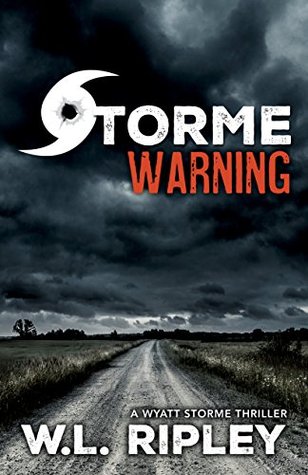
 Storme Warning is the fourth and thus far final installment in a terrific series. I have read three, and will read the fourth if I can find it. The snappy patter and nonstop action and suspense make it hard to put down once you’ve begun. I rate it 4.49 stars, and thank Brash Books Priority Readers Circle for providing me with this DRC in exchange for an honest review. The book is available for purchase right now.
Wyatt Storme is retired from football. He divides his time between his cabin in Missouri and another cabin in Colorado; this story takes place in Missouri. He owns a considerable piece of land because after having the press follow him hither and yon for the duration of his NFL career, he craves simplicity and solitude. “Reclusive”, as his best friend Chick explains to an outsider.
Because all of a sudden, Wyatt’s land is chock full of outsiders. Hollywood director Geoffrey Salinger wants to shoot his hot new movie on location; his star has received death threats, and Chick has been tapped as bodyguard. Wyatt doesn’t like it much, but Chick wants the work, so he agrees to tolerate the intrusion, but he sets terms in a way that provide him with an unusual amount of control over industry hotshots that aren’t accustomed to leaving the driver’s seat. Combine this scenario with the smart, snappy patter between Wyatt and Chick; throw some 70’s song lyrics into the narrative as if they are merely part of the story; add some mobsters from out of town; and you have a really fun, fast-paced story.
The final .51 star is denied because of the way the author deals with race. He means well to be sure. But racist terms that are sprinkled in an almost nonstop stream throughout the book are going to make this a prohibitively painful book for most African-American readers. It’s true that Ripley uses the “n” word and other slurs (against other races also, but mostly Black folk) to determine who is a bad guy, but when one is close enough to the heat those terms create, all the fun stops as soon as the word appears. It’s like finding a rattlesnake in the cookie jar; you’re having a good time, expecting good things to continue happening, and then, bam, there it is.
Depending on who you are, it’s enough to take your breath away.
To be sure, I don’t know what it is like to be a person of color; I am not one. But for many years I have been the only Caucasian person in my house, with others here being either Asian, Black, or mixed, and I do know what it is to be the wife and mother of people that don’t enjoy white privilege. The “n” word and others like it are serious, serious things. And insult is added to injury by having the African-American character unable to enter a scene without race issues being the first to fall from his lips. Most Black people don’t really want to engage white people in discussions of race unless it’s in a formal political setting, and even then, it’s more comfortable to talk to another person of color, or a room that is mostly people of color. But LeBeau is clearly in this story for no purpose other than to be the Black character. He isn’t developed, and what is worse, he isn’t capable of much that is positive. As with the Black girl in the brief restaurant scene, a white guy has to come to the rescue. To depict all characters of color as victims and set them up to be saved every stinking time by Caucasian characters is inexcusable. (LeBeau tries to carry off a rescue once, but it doesn’t work out, and Chick emerges the hero once more.)
Should the writer continue the series, I recommend that he simply use white folks, if that’s his comfort zone, or include multiple people of color and develop them. Give them characteristics beyond coming into the room and making readers aware they aren’t white. And don’t diminish them by making them unable to stand up for themselves or others. I further recommend not using that word, ever again. It’s cheap and easy, but it costs some readers dearly. I would not give this book to my son to read. The pain would outweigh the enjoyment; in fact, I guarantee he wouldn’t finish it. There are more subtle yet unmistakable ways to demonstrate that a character is racist, if that is a key goal. There are other ways just to show that a character is a bad guy, too.
Hollywood and television have learned how to create actual characters of color, as opposed to casting someone to “be the Black guy”. Ripley has skill enough to do the same.
I’ve given the downside of this novel more space than the 90 percent that I enjoyed, but I have done so because no other reviewer I’ve seen so far has addressed it, and someone has to do it.
With the single clear caveat provided here, this fast-paced, mostly-funny detective story is recommended .
 “There is a terrible alchemy coming.”
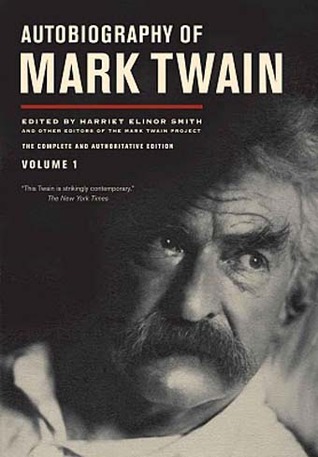 Initially I was surprised not to have seen the autobiography of such a famous individual before. Twain, I learned at the outset, composed his memoir with the stipulation that it not be published until 100 years following his death, because he wanted to be entirely frank about some situations and persons without incurring the displeasure of them, their children, or their grandchildren. Twain died in 1910, and his memoir had been finished just four months. For those of us living now, it was worth the wait. Although I was fortunate enough to snare the DRC for volume 3, I had to go out and hunt down volumes 1 and 2. It’s well worth obtaining and reading for those with the attention span and literacy skills it requires.
 Oh my stars. Keillor is at his finest here. I’ve never read anything funnier. Every now and then I permit myself to read a title that isn’t a new release but that I’ve been considering reading for a long time. This is one of those.
 In 2015, I reviewed Storme Front, the second of four books in the Wyatt Storme series. I loved it and rated it 5 stars. Given the opportunity to read and review this first in the series, thanks to Brash Books Priority Reviewers Circle, I didn’t have to think twice. Thank you to Brash for the DRC, which I read free in exchange for this review.
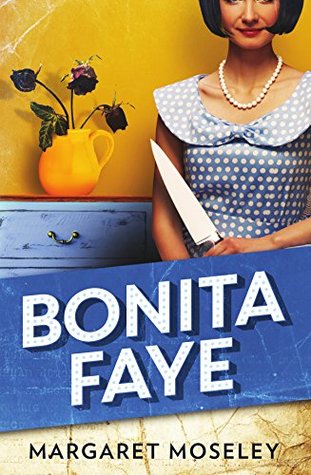 Brash Books has a new release, and it’s exactly the kind of novel you’d want to take to a warm sandy beach, or perhaps just to curl up with while the snow falls. I was permitted an advance glimpse, courtesy of Brash Books Priority Reviewers Circle. It was originally published in 1997, but due to be released again February 23, 2016. You’re in for a good time with this one.
 If Fannie Flagg worries that she has no heir, she can relax; Richard Fifield is here. The Flood Girls is his brilliant debut, and you have to read it! Fifield will cut out your heart and feed it to you with a rusty spoon, and he’ll make you like it, too. Hell, he’ll even make you laugh through it. I got the DRC free via Net Galley and Gallery Books in exchange for an honest review, and I’m going to read it a second time before I archive it as I am supposed to. This is only the second time I have done so after hundreds of galleys have come my way; that should give you a measure of how impressed I am with this title.
 I was already a Barbara Neely fan when I received this DRC, courtesy of the Brash Priority Reviewers Circle, in exchange for an honest review. I’ve been reviewing books for Brash Books and others for the past couple of years, and had read three other Blanche White mysteries out of order, so when I saw that the first in the series—which I think was the only one I hadn’t read yet—was up for grabs, I nailed it right away. It’s available for purchase now.
 Tawni O’Dell is an experienced writer, but she is new to me. I was attracted to her working class setting and protagonist Dove Carnahan, the fifty year old police chief in a tiny Pennsylvanian coal town. I received this galley free for an honest review thanks to Net Galley and Gallery Threshold Pocket Books, and I liked it so much that now the rest of her work, some of which has been featured in the Oprah Book Club, is on my to-read list. Dispensing hilarity and palpable real life truths in equal measure, O’Dell is a keeper.
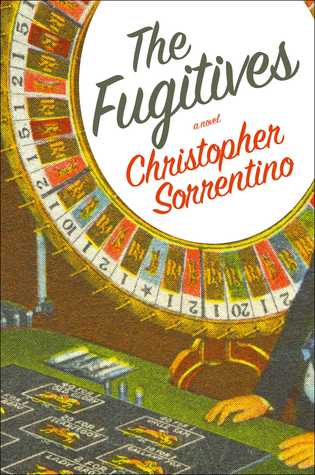 Sandy Mulligan is a renowned author, but he’s hit a crisis. He’s left his wife and children for someone else, and it didn’t work out. Now he’s taken to the hinterlands to try to write the book he’s contracted to produce. Meanwhile, he runs across John Salteau, who claims to be an Ojibway storyteller, but it doesn’t ring quite true. Like Mulligan, Salteau is hiding from something. And if that isn’t enough, we have Kat Danhoff, herself a refugee of sorts, and she has landed in the same tiny burg, first to write about Salteau, and then to write about Mulligan interviewing Salteau. And before I can say more, I need to tell you that this clever satirical work was given me free of charge by Net Galley and Simon and Schuster in exchange for this honest review. It goes up for sale on February 9, 2016.
 Seattle Book Mama