I haven’t been this disappointed in a book in quite some time. The Dilemmas of Working Women is Fumio Yamamoto’s collection of five stories about women that work (or that should but don’t,) and it is immensely successful and highly regarded in her native Japan. As I read, I kept looking for the greatness, a bit like scrounging for coins lost under sofa cushions, but it has completely eluded me, and my rating and review can only be based on my own experience and reaction.
I thank NetGalley, Blackstone Audio, and HarperCollins for the review copy. This book is for sale now.
As suggested in the title, each of the five stories focuses on a woman that has a problem. None of them makes a serious effort to do one damn thing about it. Lazy, neurotic, or…? Who can say. I sure can’t. One might expect a book that’s written by a woman and that has exclusively female protagonists to have a little feminist swagger, but this feels like the opposite. I found it hard to root for any of them, because they were all so useless.
When I took the galley, I expected there to be some humor. Look at the cover! It’s been years since I was taken in by a hilarious book cover that masked a crummy read, and I won’t do it again anytime soon.
I was given access to both the digital galley and the audio. The reader, Yuriri Naka, does as good a job as possible with this collection.
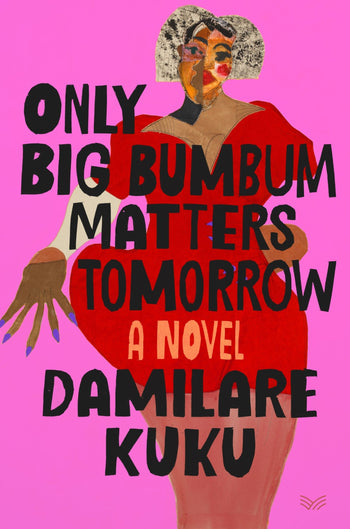
When a novel written and set in Nigeria is so successful that it’s translated into English and sold in the U.S., you know it’s probably one hell of a good book, and Only Big Bumbum Matters Tomorrow is clear evidence that this is true. My thanks go to HarperCollins and NetGalley for the review copy; this book is for sale now.
Our protagonist is Teme (TEE-mee), a young woman fresh out of college who is sure of her next course of action: she must develop a perfect body, starting with her backside. She works and saves her money so that she can have her buttocks enhanced surgically. Everybody loves a woman with a big butt, and once hers is augmented, she can marry anybody she wants. It will be a great investment!
This choice, not surprisingly, blows the roof off her family home. All of the women, her mother, auntie, sister, and others are adamant, and they scheme together, and bicker together, about how to prevent her from carrying out what they perceive to be a dangerous and foolish task. In the process, they reveal their own long held secrets, and also? They are hysterically funny!
The reader should know that the best material isn’t dropped in at the beginning, as is the unfortunate trend. Instead, it starts out fairly serious, and then I find myself snickering a little, and then a little more, and by the end, I am howling! There are quite a number of characters, and not recalling all of them won’t interfere with your enjoyment; however, it’s easier to catch up and also identify certain Nigerian terms that are peppered in, most of which are self-explanatory anyway, if you read digitally. However, because I had fallen behind, I checked out the audio version from the library and followed along as I did my morning exercises, and the audio version is brilliant as well. The lilting Nigerian dialect is mesmerizing!
Although it doesn’t seem like it at first, this novel packs a satisfying feminist punch. I highly recommend it to any reader that has eyes, ears, or both. Don’t miss it!
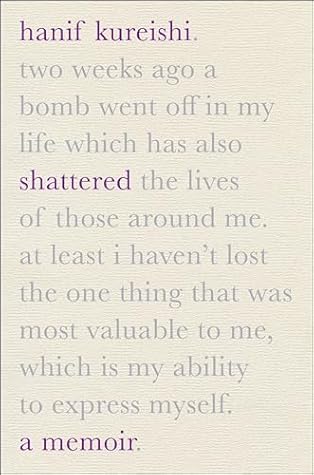
A while back, I read a novel by Hanif Kureishi titled The Last Word. It was not his most successful book in terms of sales, but I was gob-smacked by his cleverness, and so when I saw that he had a memoir coming out, I felt compelled to read it, even though it was likely going to be sad, since it is, at least in part, a memoir of what it’s like to be almost completely paralyzed.
My thanks go to Harper Collins and NetGalley for the review copy. This book is for sale now.
Kureishi is a seasoned writer and journalist, and as he writes about this horrifying event alternately with the earlier parts of his life, we see happier times as well. I thought it would be a narrative that I would need to take in small bursts because of its tragic nature, but that I would nevertheless appreciate it for its brilliance. What a surprise; I can read about his accident, hospitalization, and the experiences he has as a disabled person without a lot of difficulty, but I am drawn up short by the numerous passages about his sexuality.
You see, I am of the old school that believes that just because a thing is true, that doesn’t necessarily mean that its many details belong in a memoir. For example, sometime during nearly everyone’s life, we have digestive difficulties brought on by a case of the flu or some other thing. Has it happened? Yes. Do we need a detailed description of the writer’s vomit and bowel movements? Perhaps not. And this is the way I feel about his fondness for porn, for explorations of his own sexuality with various partners and all by himself (ew!) and even his fondness for street drugs and booze. Why would I want to read about any of this?
Sadly, Kureishi says that he no longer enjoys reading or writing fiction, and since that is the part of his work that I admire, I think we’re done here.
To be clear, he is a capable wordsmith, and those that are curious about what a disability might be like can get a taste of that here, which is why there are three stars and not fewer. I cringe when I read about his plane flight, with people shoving past him, even as they glance pityingly down at him. But like many Boomers, I have tasted a less extreme aspect of this myself, and so Kureishi’s version of it feels to this reviewer like a busman’s holiday.
This book is recommended to those of his readers that have appreciated his earlier nonfiction work, and to those with an interest in the lives of paraplegics and quadriplegics. For others, there are numerous online reviews that include large excerpts, and I recommend reading those before you invest in this book.
I found The Great Divide, by Cristina Henriquez, on a short list of most anticipated novels of 2024. I don’t like to get shut out when a book gets this much buzz; then there’s the added draw of an unusual setting. The U.S. doesn’t see a lot of fiction published that’s set primarily in Panama during the early 1900s, and so that sealed it. My thanks go to NetGalley and Harper Collins for the review copies, both audio and digital. This story lives up to the hype, and I recommend it to you.
I am not so sure about it at the outset. There is a robust quantity of characters that are important to the story, and each of them is given a brief chapter all to themselves. I wonder whether they will ever intersect, or if this will turn out to be a collection of short stories, but before much longer, characters are meeting other characters. They don’t all end up together in the end, but we can see the ties that have formed. There are a lot of people to keep track of, and for me, having both the print version and the audio is tremendously helpful. Robin Miles narrates in a way that is natural and fluid, and I don’t notice much of what is around me when I listen to her. But once in awhile a character is mentioned and I draw a blank; here is where the Kindle version is essential, because I highlight the names of each of the characters, and this enables me to instantly flip back to where they were introduced to us without having to stop listening. Eventually, of course, I no longer need to do so, but knowing that I can makes for stress-free reading.
I am engaged with these characters, each of whom feels real to me, and I groan when I see them get into trouble, and sigh with relief once they are in the clear again. The ones that I care about most are a father and son that are estranged from each other, neither wanting to stay that way, yet both of them incorrectly interpreting the silence of the other. As we reach the climax, I can tell there are three ways for this situation to resolve: they can reconcile; one of them can die; or the son can decide to follow another character back to the U.S.A. without reconnecting with his dad. It only now occurs to me that there was a fourth possibility, which was to leave them still estranged at the end; but by this time, Henriquez had shown herself to be a better writer than that, and while I won’t tell you how they wound up, I will say that she didn’t leave her readers dangling.
Because this is an intricately woven tale with a lot of equally important characters, I’m not including any quotes, but I will say that Henriquez is a talented writer, and anyone that loves good historical fiction should get this book and read it. This applies even more so to those interested in Latin American history and the building of the canal. I hadn’t read her work before, but she’s on my radar now, and I look forward to seeing what she writes next.
An Honest Lie is a thriller by Tarryn Fisher. Thanks go to Harper Collins for the review copies; I wish I had something good to say, but the truth is, this is one of the worst written novels I have seen in my many years of reviewing and blogging.
Our protagonist is Rainy, although we learn that her given name is Summer; she fled a terrifying cult earlier, and she changed her name to make herself harder to find. Now she is living in an upscale home on a mountain in eastern Washington State with her boyfriend; her boyfriend is trying to integrate her into his friends’ group, and has pressured her into going on a “girls’ trip” to Vegas while he is travelling on business. She goes, though only because she sees no way out. He bought her a ticket; she should be a good sport.
The story changes point of view from present, to past, etcetera, and we see the cult where she was more or less imprisoned in the Nevada desert during her childhood. However, adult Rainy doesn’t develop much, at least during the initial sixty percent, which is as far as I am willing to read. Fisher has wrapped Rainy’s character and the suspenseful aspects of the story together to such an extent that she can’t let us see much of the character without giving away plot points that she is saving for later. Consequently, I get tired of Rainy’s whiney anxiety fairly early in the book. But that’s not what limits this story to a two star rating.
Here’s the insurmountable problem. As noted, Rainy is an anxious mess, and the mere idea of setting foot in Nevada nearly undoes her. When they get to their swank hotel, the women discover that all of the bedrooms but one has a gorgeous desert view; the last one, the one with the view of the parking lot, is the one Rainy requests, because just looking out the window and seeing the desert is triggering for her.
And yet, somewhere shy of the fifty percent mark, Rainy hops into a cab and pays the driver to take her to the little town closest to the compound from which she escaped, and suddenly she’s playing detective, asking questions and snooping around. And reader, there is no development that explains this; there’s no aha moment where she gathers her wits and develops a plan of some sort. We aren’t even all that clear what it is that she hopes to achieve, out there in the scary, triggering desert all by her lonesome. Our protagonist goes from I-can’t-look-at-the-desert-or-I’ll-have-an-anxiety-attack-and-nightmares, to I-think-I’ll-go-see-the-place-and-maybe-seek-vengeance with no segue way, no clear goal, even.
If I were to guess, I’d say maybe the author changed a whole section of the story during the latter stages, and the sequencing and character’s motivation got messed up due to sloppy editing, but I don’t really know what went so badly wrong. It isn’t my job to know why this book is a train wreck. Whatever the reason, the result is an insult to the reader’s intelligence. I feel this way, and I got to read it free. How might others feel once they’ve shelled out the purchase price?
This book is for sale now, but I don’t recommend it to you.
This book is not at all what I expected; it’s much better than that. My thanks go to Net Galley and Algonquin Young Readers for the invitation to read and review. This book is for sale now.
This lovely story is told in the second person omniscient, and we cannot tell, until the end, who the narrator is. Our setting is the sweet (fictitious) village of Stone-in-the-Glen, and it’s told in linear fashion. Because its telling is straightforward, with no changes in point of view or time period, and no heart-hammering suspense, it is ideal for bedtime reading. It’s marketed as a children’s book, and here I disagree, in part anyway. The vocabulary is too advanced for an early reader, but would serve well as a story to read aloud to students in upper elementary classes, or as a read-alone for the gifted child. There is no sexual content, drugs, or bad language.
Because I believed this was going to be a children’s book, I thought I’d whisk through it in no time and review it the same week I started, but I sensed immediately, once I’d begun, that this was not that kind of story. Its length, density of page and paragraph, and content call for a more leisurely pace, but also, it’s just too good to rush through. I am a sucker for excellent alliterative language (see what I did there?) and Barnhill is a champion in this regard. I found myself going back a page or two to reread, highlighting the best passages for no reason but my own pleasure.
The plot is easily summarized. The lovely little village is friendly and flourishing until the town library, which has magical powers, burns down. Without benefit of the library, villagers keep to themselves, and they become secretive and greedy. The mayor could help, but chooses not to do so. He’s a real piece of, um, work.
The orphanage in particular is in dire straits. They haven’t been getting their promised funding lately, and the place is starting to fall apart. The children are hungry. Were it not for the largesse of an anonymous donor, one that leaves big boxes of vegetables at the gate for them to find in the morning, they would starve.
The Ogress is their benefactor. We know this early on, so I don’t consider it a spoiler. However, due to the misconceptions of the villagers, which the mayor feeds shamelessly, the Ogress soon becomes a scapegoat. These two problems—local poverty, and the hostility toward the one among them that is different—form the basis of the story.
As to the allegory, which is dropped in midway through in a fairly heavy-handed manner, I am of two minds. On the one hand, my philosophy is similar to the author’s, and so I snicker when I see what she’s doing here. On the other hand, this is exactly the book one reaches for when one has had enough, enough, enough of current events and the outside world, and allegory becomes something of a distraction. When I see who the mayor represents, I start eyeing the other characters. Does the Ogress represent someone in the real world as well? What else am I missing? These musings are more likely to lodge themselves in the mind of a language arts teacher; I recognize that. But my preference would be to either turn the whole thing into a piece of political satire and own it, or to leave it alone and have a sweet story devoid of political content, one that readers on both ends of the political spectrum can enjoy—maybe even enjoy together.
These minor issues aside, I love this story. It’s my first taste of Barnhill’s writing, but it surely won’t be the last. Highly recommended.
I reviewed this excellent novel in January, based on a true story of American women that travel to France to help civilians during World War I. If you haven’t checked it out, have a look by clicking the link below the picture.
When I requested the galley for this book, I was taking a chance. I do love good historical fiction, but I seldom enjoy a cozy mystery, and this story is but a whisker away from being one. I was afraid the story might be cutesy instead of quirky, cloying instead of life affirming. And how delightful it is to be wrong! I received my copy free and early, thanks to Net Galley and Harper Collins. It’s for sale now.
The premise is that Tilda has returned to the town where she and her mother lived after her parents separated. She was an only child, and her mother is dead, and so it falls to Tilda to tie up the loose ends of her mother’s small estate. And at this point, my snark is already peeking its beady eyes out, saying Oh geez, another story that starts with an only child cleaning up the estate. Lots of those lately! And a mean mother? That’s got to be my number one eye-roller right now! And I tell you these things, reader, because it underscores what a job Hogan had ahead of her in order to break down my resistance; and yet, she did.
The narrative is divided into two points of view which alternate. The first is young Tilly, the little girl that doesn’t understand what is happening between her parents, and is devastated when her father moves out. The second is the adult Tilda, whose capacity for trust in other people is limited.
The first part of the book is a hard read in places, because Tilly is in so much pain, and it feels drawn out, although one could argue that time passes more slowly when we are young. Tilly’s parents are always quarreling; then her daddy moves out, and Tilly, who was a daddy’s girl, takes out all of her hurt and rage on her mother. Her mother is brittle and not very stable, and she’s at wit’s end. First they move from the house where the family had lived to the hotel in the title; then, against her wishes, Tilly is sent off to boarding school. Tilly had loved living at the hotel and didn’t understand why she was exiled.
Tilda learns what her mother was thinking when she finds and reads the journals that her mother had left for her, and again, it’s not exactly an original device on the author’s part, but it’s done so well that it doesn’t matter. Tilda also finds one of her mother’s old friends, and she learns some things that way as well. There are some genuine surprises that are also believable and fit the characters and setting. It’s artfully done.
As to the quirky bits, they are what makes the story unique and successful. For starters, Tilly (and Tilda) see ghosts, not just now and then, but in some cases regularly. Let’s take, for example, the little dog named Eli. Not everyone can see Eli; Tilly can, and some others can as well, but most cannot. And our suspicion that Eli is not a corporeal critter is affirmed by the fact that decades later, this woman still has exactly the same dog, and he is as spry as ever.
Then—and I have saved the best for last—there’s the child’s narrative. Tilly explains things to us in the language, and with the frame of reference, of a small child of six or seven years. She is a bright girl, but she’s a child, and so her explanations for things are often a bit twisted, and her conclusions are often far-fetched ones that are based on the limited amount that the girl understands. My favorite bits are the mondegreens, and there are many. (A mondegreen is the word or phrase that results from someone that hears words that aren’t in her vocabulary, and thus replaces them with words she does know; one well known example is the American Pledge of Allegiance, starting with “I led the pigeons to the flag.”) My favorite of Tilly’s mondegreens is when she attends church and sings “The Old Rubber Cross.” And the thing I love most about Tilly’s mondegreens is that Hogan doesn’t explain them or beat them to death; she drops them in and then moves on as if nothing unusual has occurred.
I started reading this book using the review copy provided me, but because I was running behind, I checked out the audio version at Seattle Bibliocommons when I was a short way in, and I alternated versions. I especially want to give a shout out to Jane Collingwood, who reads the audio version. I can think of no more challenging narration than that of a child. Collingwood had to sound like a little girl half the time, but nobody wants to hear an actor’s version of baby talk at all, and surely not for half of a novel, so she has to walk a very fine line, not sounding like an adult, but also not sounding inane. On top of that, she must also voice the adult version, sounding like the same child, except grown up. It’s a tricky assignment and she carries it off perfectly; I tip my hat to her.
The ending is optimistic, yet credible. Those in need of a feel-good story—and there are an awful lot of us that do, right now—could do a whole lot worse. Recommended to those that enjoy quirky novels and historical fiction.
My thanks go to Net Galley and HarperCollins for the review copy; after publication, I used an audio book to finish it, thanks to Seattle Bibliocommons. It’s available to the public now.
There are two reasons I was drawn to this story. The first is the setting, which is primarily in Nova Scotia’s Black community. I have never read or heard a story set there, and so I was intrigued. There’s also a Civil Rights Movement tie-in, and for me, that sealed the deal.
The book starts out as a rough read, involving dead babies and “bad luck” babies that weren’t dead but needed killing. I was so horrified that I had to restart the book several times to get past it. Now that I have, I can assure you that once you’re past the introduction, that’s it. The dead babies are done. I’m not sure I would have lead off with this aspect, because I’m probably not the only reader to pick the book up and put it down fast. In fact, had I not owed a review, I would not have returned to it. I’m glad I did.
The story itself is ambitious, covering three generations of a family there. At the outset we have Kath Ella, who has ambition, but also a mischievous streak. I find this character interesting, but there are times when I don’t understand her motivation. The story is told in the third person and not all of her thoughts are shared with us, and so there are times when I’m left scratching my head. When the end of the book arrives, I’m still wondering.
Kath’s son and grandson comprise the second and third parts of the story; apparently the term used back then for passing as Caucasian was called “crowing,” and we see some of that. There are too-brief passages involving the Civil Rights Movement against Jim Crow in the Southern U.S., and I am disappointed not to see more about this or have the characters involved more deeply. What I do see of it is the surface information that most readers will already know.
Toward the end there’s a subplot involving getting an elderly relative out of prison, and I like this aspect of it, in particular the dialogue with the old woman.
The setting is resonantly described throughout.
All told, this is a solid work and a fine debut. I look forward to seeing whatever else Colvin has to offer. As to format, although Miles does a lovely job reading, something of the triptych is necessarily lost when we don’t see the sections unfold. For those that can go either way, I recommend the print version.
I’m late to the party, so by now this book has a pile of accolades; every one of them is earned. I received a review copy courtesy of Net Galley and HarperCollins. I am fond of short stories, all the more so when the stories are as riveting and suspenseful as these. How else could the reader get any sleep at all, if there wasn’t a natural stopping point at the end of each story? If you like this author’s work, or if you like horror stories—not all of them, strictly speaking, fit into the genre, but we can consider the collection horror, nevertheless—or if you just like a good short story collection, reach for this one.
Hill begins with the title story, “Full Throttle,” a gritty tale of parenting gone wrong. I couldn’t put it down, and friends, I can always put a book down. I read too much to obsess over my fiction, but this story owned me till it was over. The next story, “Darkened Carousel,” a story of slightly thuggish teens encountering carousel horses with unusual powers was every bit as strong. Another favorite is the one about wolves on a train, and I especially appreciated the line, “You smell like privilege and entitlement…this is first class, after all.”
In fact, all of these are excellent. I had read “In the Tall Grass,” and to be honest it isn’t my favorite, so I skipped it this time. That’s the only story I don’t wholeheartedly recommend, and the collection gets all five stars from me because I consider the book to be worth every red cent it costs, even without it.
The only downside of a collection like this—and this only applies for reviewers and others with a finish date in mind—is that it’s easy to set the book aside whenever a story ends. I sidelined this collection after the first two stories in order to conquer a pair of 700 page tomes that were on the brink of publication, and eventually this book became the one that made me feel guilty every time I looked at it. Recently I checked out the audio book from Seattle Bibliocommons, and since I had enjoyed the first two stories so much, I decided to begin again from the start. There’s a string of excellent readers, some of them famous, and those that like listening should consider this version.
As is generally true of the genre, there are triggers all over the place, and there’s some R rated material. If in doubt, read it yourself before handing it off to the middle schooler you are trying to home school during this pandemic.
To those that love the genre, this book is highly recommended.






 Seattle Book Mama