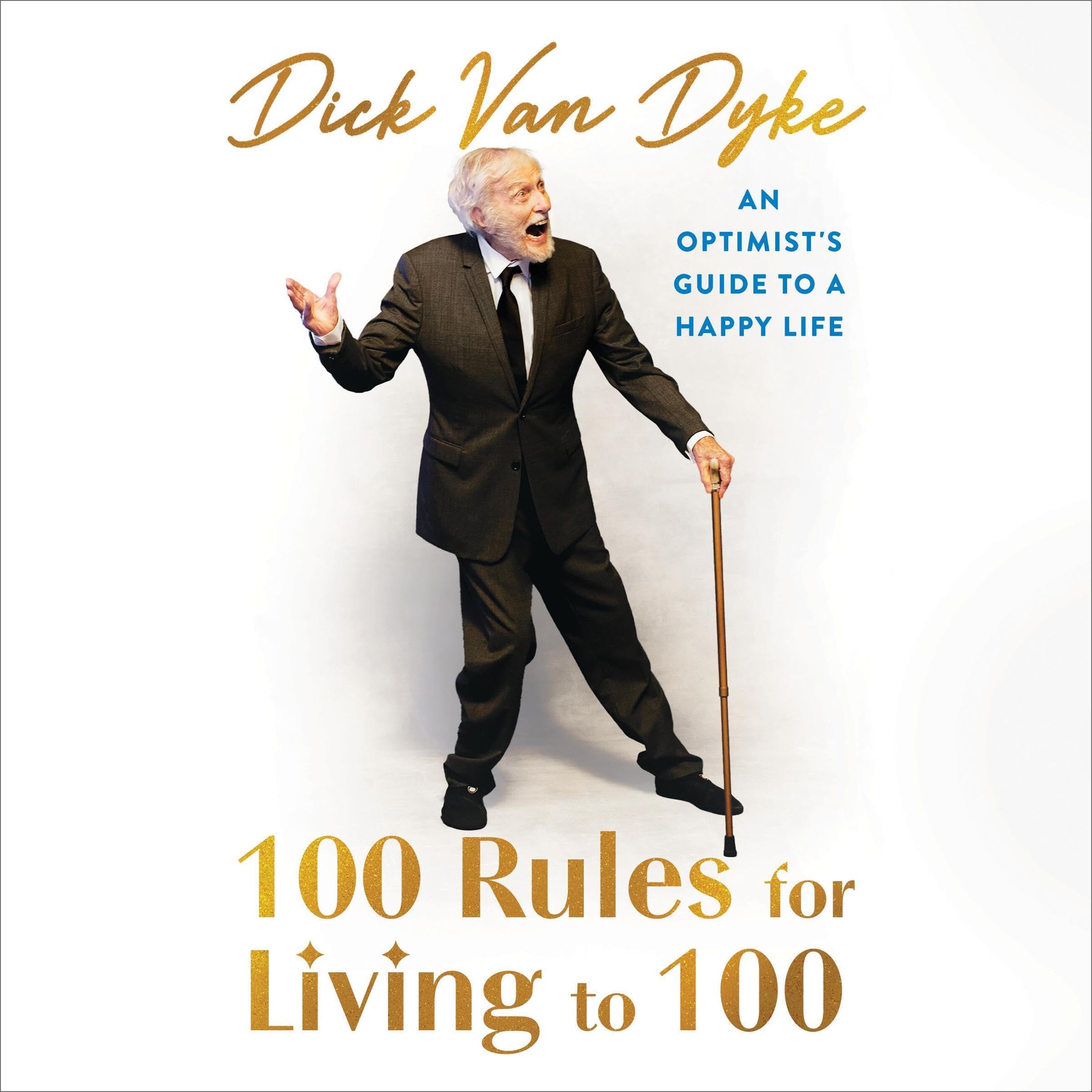
100 Rules for Living to 100, by Dick Van Dyke****

Version 1.0.0

Dick Van Dyke was a wonderful part of my childhood, and this lovely audiobook has put a little more bounce in my step. It’s not really about rules, of course, but the format is a perfect scaffold for a combination memoir and self-help book. My thanks go to NetGalley and Grand Central Publishing for the review copy; this book is for sale now.

Van Dyke entered my consciousness when I was a kindergartener, and the original movie Mary Poppins brought droves of families to theaters. I was not the only family member that was entranced, and all of us sang along to the sound track once the record was on our stereo turntable. The movie, and its lead characters, played by Julie Andrews and Van Dyke, glowed with humor and optimism.  What a wonderful message to share, the idea that the best we can give our children is our time and our attention. In the early 1960s, the suggestion that adults ought to listen to children was ahead of its time and much needed.

Many of the anecdotes the author conveys have to do with experiences shared between him and Arlene, his current wife. Despite the May-December romance, it sounds like a wonderful union. He talks about the recent and horrific events with the Santa Ana fires that took the homes of so many—though his own was spared. My favorite parts, though, are the ones in which he discusses the future roles he’d like to play, because he isn’t really retired from the industry. Way to go, Dick!

Reader Tom Bergeron does a nice job, and as a bonus, he sounds quite a bit like the author.

I recommend this little gem to everyone that could use some positive energy, and to all that love the author.

Sharp Force, by Patricia Cornwell****-*****

4.5 stars, rounded upwards.

Sharp Force is the 29th mystery in the Kay Scarpetta series, and it’s a humdinger. My thanks go to NetGalley, Grand Central Publishing, and Highbridge Audio for the invitation to read and review; this book will be available to the public October 7, 2025.

In writing this wildly successful series, author Patricia Cornwell goes deep into character, which is the best way to write a long running series. There are, after all, only so many ways to kill someone, and only so many reasons for doing so. One can add strange variations that raise questions, and indeed, Cornwell does, but the thing that keeps me on the edge of my seat is not only identifying and stopping the killer in question, but also making sure that Kay and her family are also safe. I’ve been following these folks for the whole series, and knowing that Benton, Marino, Lucy, and even Dorothy, Kay’s obnoxious sister who’s married to Marino are safe. I even worry about the cat, and this time around, we have reason to do so. (For those with triggers: no animal cruelty is involved in this book.) Conversely, there are also long running nemeses such as Dana Diletti, the journalist that will ruin the progress of an investigation in order to gain a scoop, and Maggie, the obnoxious secretary whom Kay fired for cause, but who is still working in an adjacent position, spying for friends in high places. Round all of these off with the disturbing, fascinating Janet, an AI entity developed by Kay’s badass niece, Lucy, a tech genius whose late lover, Janet, is the model for the AI. Janet—the artificial one, since the flesh and blood one was killed several books back—knows too much, and though she is helpful at times, she also has a tendency to stir up trouble within the family.

When all of these characters are stirred into Cornwell’s cauldron, the trite, often obnoxious tropes one runs into aren’t needed or used here, a welcome relief. Kay isn’t going to be knocked over the head and kidnapped; she doesn’t have an alcohol problem and the constant itch that goes with it; she hasn’t been framed and called upon to exonerate herself. (Some of these appeared early in the series, but have been blessedly absent for a good long while.)

There are a couple of recurring features that I would like to see the author avoid. These appear at the very beginning, so the reader has a long time to get over them: for example, why does there always have to be a big storm on the way just as the book opens? And when the narrative commences with Kay and Benton packing to spend Christmas in London on vacation, I roll my eyes and say, “No, we already know something will prevent this trip from taking place. Unpack your suitcases, kiddies, you never get to go anywhere.”  And once again, the murder victim is someone Kay knows. These are small issues and rendered smaller by their appearance early, so I can quickly recover from my annoyance, but honestly, Cornwell has enough skill to dodge these next time, and she should.

I was fortunate enough to have both the digital and audio versions of this novel. Reader January LaVoy, one of my favorites, does a fine job.

The high rating I give this story, despite the opening irritants, is based on how I feel as I’m reading. I read anywhere from six to ten books at a time, located in various forms and on various devices, and while I am reading this one, I don’t have much interest in the others, although some of them are quite good. I cannot deny a strong rating to a book when I itch to return to it, as I surely do; then too, the ending is always important in a novel, and all the more so in a mystery, and this ending is terrific!

One side note: the Scarpetta books form the basis for a new series coming out soon, starring Nicole Kidman—a personal favorite—in the title role. I’m on pins and needles waiting for it!

Highly recommended to those that love the genre.

Identity Unknown, by Patricia Cornwell*****

Patricia Cornwell’s Scarpetta series is among my favorites. Identity Unknown, the 28th in the series, is every bit as riveting as her earlier ones, and I am thrilled to have received a review copy. My thanks go to Grand Central Publishing, NetGalley, and Hachette Audio. This book is for sale now.

First, I have to offer a shout out to January LaVoy, who reads the audio version. I was unsure how I would feel about this one, because I read the first 27 installments with my own eyes, and so I had developed the voices for each character in my head. Would I be thrown by the way they were voiced by a professional? As it happens, no. The protagonist and her ever present sidekick, Pete Marino, who is now her brother-in-law, sound exactly as I had thought they would. Of course, much of this comes down to excellent writing. The voices of her niece, Lucy, who now occupies the top echelons of governmental spookdom, is softer and slightly higher pitched than I had expected, but it fits, and I made the mental transition easily. Kay’s husband, Benton, doesn’t have as deep a voice as I would have thought, but to make his voice that deep would require a second, male reader. All told, LaVoy does a fine job, and I didn’t feel distracted from the story.

I have begun reading the DRC when I am provided the audio, and so from there forward, I switch to the audio, referring occasionally to the DRC to make notes or highlight possible quotations. Once the climax comes, however, the tension gets the better of me, and because I know I can read faster than LaVoy can talk, I switch back to the text.

The premise is that there have been two deaths. The first is an old boyfriend of Kay’s, a man named Sal Giordano. They have remained friends over the years, and she saw him recently when she dropped off a basket of goodies for his birthday. He has been the victim of a death flight, which is new to me but apparently, according to Wiki, is a thing. It involves killing someone by dropping them from a plane.

Holy crap!

Now we get into aspects of the case that make it an even better October read, as well as darkly funny. The prose itself doesn’t appear to be intentionally humorous, and yet I cannot, for the life of me, imagine that Cornwell didn’t snicker a bit as she wrote it. The area where Sal is dropped is inside an abandoned amusement park with a Wizard of Oz theme. It’s been vandalized, and is seriously creepy. The higher ups within the U.S. military are in on the investigation, and so:

“’Let me make sure this is clear,’ General Gunner says to me. ‘He landed on the Yellow Brick Road in the middle of an apple orchard.’

“’Inside the Haunted Forest. Yes.’”

I couldn’t help myself. I squawked out loud!

Soon another corpse is identified, a child belonging to a pair of wealthy, powerful people that are also terrible human beings, and as it happens, horrible parents. The two deaths are connected. The parents throw their weight around and try to manipulate the investigation, but of course, they don’t succeed.

Ultimately it seems that one of the guilty parties is Kay’s nemesis, Carrie Grethen. Carrie was once Lucy’s true love; later, her evil nature became apparent, but nobody can seem to keep her locked up, and she has become Kay’s Moriarty. I mention this here because it is raised early in the story, so I don’t think it can be called a spoiler, but I won’t say more about that.

To the faithful readership, I will also say this. As the book opens, two of Cornwell’s old standbys, ones that I’d be happy to see her retire, appear. First, she has to be driven to the scene in a helicopter, but oh no, there’s a storm coming. I was irritated. Can Kay not go anywhere without there being a storm? Just once? Please? And then something has to be retrieved by diving, which harks back to an earlier book in which she’s attacked with a spear gun. But friends, neither of these turns out to be key to the story, and we’re done with them in a heartbeat, so be patient.

I like to read a few books at a time for variety, but once this one began, it edged out the others—except at bedtime, because when I go to bed, I need to sleep! It’s among her finest work, and I recommend it wholeheartedly to you.

Unnatural Death, by Patricia Cornwell*****

Unnatural Death is the twenty-seventh installment in the Kay Scarpetta series by Patricia Cornwell, and it’s as good as they get. My thanks go to NetGalley and Grand Central Publishing for the review copy. You can get it now.

For those not conversant with the series, Scarpetta is a medical examiner for the state of Virginia. She’s moved around over the course of the series, decamped to Boston, and come back. So now she’s in her old stomping grounds, but all is not well. The obnoxious, obstructive secretary she was saddled with in the last book, a miserable woman that blamed her for the ouster of the corrupt man that came before, has been—finally—fired, but somehow, she is back in a different government position in the same building, along with the corrupt guy she likes working with, so it’s tense.

Our other permanent characters are Pete Marino, who’s worked with Kay forever and is now married to her sister, Dorothy, who’s a hot mess; Benton Wesley, Kay’s enigmatic husband, a forensic psychologist that works in extremely high level situations that he can’t tell Kay about, even when they have a bearing on her life; and Lucy, her adult niece whom she has raised as her own, and who is the daughter of Dorothy. Lucy is a wunderkind, a tech wizard employed by the FBI, sometimes on loan to the CIA.

I won’t go into the premise for this installment because you can get that in the promotional blurb, but I will tell you that by the ten percent mark I was riveted, and before the halfway point my notes say, “I hate being away from this thing.” A shocking development occurs that is much more impactful to those of us that have followed the series from the start. I have heard other reviewers say that they used to read the series, then lost the habit, so I will say this: if you have read most of the series but missed a book here or there, you can still get the full measure of this thriller. If you just missed the most recent one, that’s okay. But if you go into this book cold, your very first time reading a Scarpetta book, some of the magic will be missing. Perhaps you will read it and be impressed enough to go back and binge read the whole series. It’s not a bad idea!

Any author that writes a long running, successful series like this has to flesh out the main characters to keep readers’ attention. For the first few books, pure plot-based adrenaline rushes are possible, but at some point, there’s going to be a credibility issue continuing that way. I would have difficulty believing that a forensic coroner had been kidnapped by bad guys and hurled into the back of a vehicle, bound and gagged, even once, but when it happens over and over, I’m done and I’m done. Cornwell does the smart thing instead, developing crises that are sometimes more about others in Kay’s family, but that nevertheless spill over onto her in a big way. In doing this, she forces us to examine questions that have no easy answers. For example, if an extremely dangerous development comes up that could affect you or your family, but it is also a matter of national security, and one family member knows, should they break the vows of their office in order to let you or other family members know? Or should they keep it ambiguous, along the lines of, “Maybe you should stay home today?” What if two know, and you don’t?

One way or the other, this story is a wild ride. The tension is occasionally broken up by Marino’s fixation on Bigfoot. He’s obsessed, and it cracks me up when we’re worried about killer drones and enemies unseen, and then Marino pipes up about the big ole footprint he found in the woods. For quite awhile I have wondered why Cornwell hasn’t been made a Grand Master by the Mystery Writers of America. Hopefully, this outstanding novel will serve as a clarion call. Highly recommended.

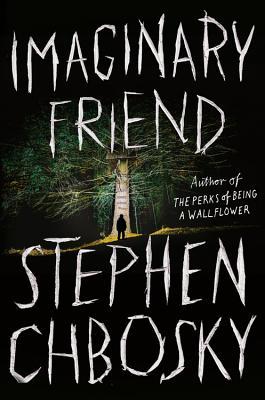
Imaginary Friend, by Stephen Chbosky***

It was the best of books; it was the worst of books. Big thanks go to Net Galley and Grand Central Publishing for the review copy. This book is for sale now.

Chbosky met fame twenty years ago with The Perks of Becoming a Wallflower. He takes a bold step—and I would still argue, a good one—in switching genres with Imaginary Friend. The whole thing is written in accessible language and mostly short, simple sentences with the overall effect of the world’s creepiest bedtime story. At first I wasn’t sure I was down for 720 pages of simple sentences, but he makes it work. I like the horror of it, and I like the voice too. And so when I saw the mixed reviews, I was preparing my heated defense of this work before I was even halfway in. And halfway, sadly, it where the thing begins to weaken.

The premise is that seven year old Christopher is learning disabled, but his mother urges him to keep trying. Nothing much works until the day he is lost in The Mission Street Woods. He is called by a friendly face in the clouds; once he is there, he is incapacitated and held for six days. When it’s over, The Nice Man leads him out. He goes home; the perpetrator is never identified because Christopher recalls none of the six days nor who took him. But suddenly he is the world’s cleverest kid. His grades rise, and he graduates from the special classroom. Later in the story, he is called again to build the tree house to end all tree houses; he must do it furtively at night, because he is no longer allowed in those woods, and naturally that’s where the project unfolds.

This aspect of it is very cleverly conceived and executed. Christopher does all manner of things that no seven year old child, however advanced intellectually, would be able to do but it is plain to us that this is part of the supernatural effect that is part and parcel of The Nice Man and that face in the clouds. Likewise, there are many areas where he infers adult meanings and feelings, but we know that these are also supernaturally bestowed. Meanwhile, he is in most ways the way one would expect a child his age to be. As his friends—the twins and Special Ed—are drawn into the project, they too become capable students with unusual talents. But as to the tree house, that’s a big damn secret. Parents and the public are not in the loop for a long, long time.

As the story unfolds we have numerous subplots and several characters that have significant roles here. They are largely bound together by the children’s school, although we also have the sheriff and a handful of people from the nursing home where Christopher’s mother, Kate works. I have no difficulty keeping up with this large cast of characters, and Chbosky deserves kudos for creating so many distinct characters that stay consistent throughout the story. We see the ways that people become warped, often by the disappointments that life has meted out, and sometimes by mistaken goals, particularly where the children are concerned. I liked this a good deal too. We see a great deal of kickass figurative language, although I would have preferred to see a lighter hand with regard to the repetition. At first when the song “Blue Moon” is used, it gives me chills, but by the end of the story, whenever music enters a scene I find myself grumbling, “Oh let me guess. I bet I know what song is playing.” (The MAD Magazine of the 1970s would have had a field day with this book.)

A number of other reviewers have suggested that the second half of the story could do with some serious editing down, and I echo their concern. It would be stronger if it were tighter. But there are two other more serious concerns that dropped my rating from four stars to three. They have to do with mixed genre, and with Chbosky’s depiction of women and girls.

It is a brave thing to combine horror and literary fiction, but there is such a thing as trying too hard. The last twenty-five or thirty percent of this story becomes tortuous, confusing and overlong with the heavy use of allegory along religious lines. There are multiple places where the plot just doesn’t make sense at all, but because the author is determined to provide us with a virgin birth, stigmata in multiple characters (what?), sacrifice and redemption and yada yada yada, what has been a good horror story becomes a little ridiculous and a lot pretentious. It’s a crying shame. Had the author let the horror story be a horror story, or had he been satisfied with a more subtle level of allegory rather than the screaming-red-flags variety that is shoehorned in here, this would have been a much better book.

The other aspect , the one that made my feminist heart simmer is the way that women are depicted here. We have several important female characters, and none of them is developed in even the tiniest way beyond their relationship to men and their capacity to be nurturers. Our greatest female hero is Kate, mother of Christopher, and I have not seen as two-dimensional a character in many a year. The only thing that matters is her child. The only. The only. Gag me with a stick, already.  And had the author been content to have a horror story that is just a horror story I would cut him a little slack, because most horror stories do not have brilliantly developed characters. Even so it’s ham-handed, but I might have been tempted to call this a 3.5 star read and round it upward. But this is the most reactionary treatment of women—the girlfriend that feels filthy because she rendered oral sex; the women coming unstuck because of husbandly inattention; the stereotypical mean-old-broad at the nursing home—that I have seen in decades. It’s appalling, and it bothers me that other reviewers haven’t mentioned this at all. What the hell, guys?  And with literary fiction, a responsibility for nuance and character development is conferred in a way that horror novels do not require.

In other words, don’t talk the talk unless you’re gonna walk the walk.

Should you buy this book? Probably not, unless your pockets are deep and you have a good deal of free time. For the curious, I recommend getting it cheap or free. But if you are going to read it, read it critically, and don’t hand it off to your middle-schooler until you have read it yourself.

Hollow Kingdom, by Kira Jane Buxton***

I received a review copy courtesy of Net Galley and Grand Central Publishing. Buxton has had her work appear in The New York Times and some other impressive places, and I was drawn by the buzz. To be honest, this book didn’t work for me, but I also have to admit that I am probably outside the target audience.

The setting drew me first; it’s hard to resist work set in my own hometown of Seattle. The premise has to do with a smart crow and a dumb dog setting out to save what’s left of their world. It’s billed as a romp, and I make a point of punctuating my other reading with humor so it doesn’t get too dark out there. So there were reasons to think I would enjoy this book.

But I was expecting a story arc and a plot. And I noted at the ten percent mark that I had seen enough product placements for the rest of the story and a boxed set to go with it. I quit about halfway through and skimmed till I reached the 80 percent mark, and then read the ending; no joy.

If a friend has read this book and says they think that you will like it, that friend might be right. But I can only share what I have seen and give you my honest opinion, which is that this is only something to be obtained only if it’s free or cheap unless your pockets are deep.