
 Fearless women change history.
Radio Girls is a fictionalized account of the British Broadcasting Corporation and the remarkable women that shaped it. As we near the centennial of women’s right to vote in the USA and the UK, Stratford’s riveting historical fiction could not be better timed. I received my copy free and in advance thanks to Net Galley and Berkley Press in exchange for this honest review. I am overjoyed to be able to recommend this new release unequivocally. You have to read it.
Maisie Musgrave is born in Canada and raised in New York City. Tossed out of the nest without a parachute by unloving family, she makes her way to Britain, the place her heritage began. She wanders into the BBC half-starved and looking for an honest way to pay for her room and board, hoping in the meanwhile to meet a man she can marry for financial security.
At the BBC she meets supervisor Hilda Matheson, who fears nothing: “Give that woman an inch and she takes the entire British Isles,” a colleague remarks.
Under the firm and commanding wing of Matheson, Maisie’s confidence and talent grow daily. It’s a very good thing, because over the course of time, more will be demanded of her than secretarial skills and errand-running. My busy fingers marked one clever, articulate passage after another to share with you, but to enjoy Stratford’s fresh, humorous word-smithery, you really need the book itself.
Occasional historical figures drop in—Lady Astor, who was a moving force in the development of the BBC and a champion of women; Virginia Woolf, early feminist writer and crusader. Yet Stratford metes out these references in small enough batches that it’s clear she isn’t relying on them to hold her story together; rather, they are the cherry on the sundae.
Setting of time and place, pacing, and a million twists and turns in plot make this a good read, but it’s the character development that makes it a great one. I found myself wanting to talk to Maisie and cheering her on when she broke through to higher ground personally and professionally. I feared for her when she veered into dangerous waters and nearly wept with relief each time she was able to extricate herself and move forward. There isn’t a slow moment or an inconsistent one, and the protagonist is just the character women need to see right now as we move forward too.
How much of this is based on truth and how much made up for the sake of a great story? Read the author’s notes; she spills it all.
All told, Sarah-Jane Stratford’s historical feminist tale is perfect for today’s modern feminists—and those that love us.
This book is available to the public Tuesday, June 14. Change the screen and order a copy for yourself now. You won’t want to miss it!
 Flo Kennedy was a force to be reckoned with, dismissed by a portion of mainstream Caucasian America as a kook, yet far too clever, too cagey, and too damn smart to be wished away by those that wanted to defend the racist, sexist status quo. When I saw that a memoir of her life was up for grabs at Net Galley I requested a copy immediately, and then took a long time to finish reading it. Part of my tardiness is a stubborn dislike for the PDF format, and so I apologize to University of North Carolina Press and my readers for being so slow; yet a small part of it was the surprisingly dry quality of the memoir. Given the subject, I had expected this biography to set my hair on fire.
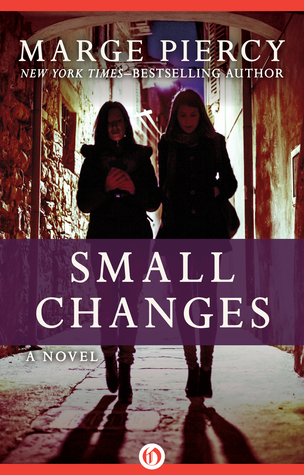 This title was originally published in 1973 during the second wave of feminism that followed the US Civil Rights movement, and then the anti-war movement against the US invasion of Vietnam. Marge Piercy is a prominent veteran writer who spoke to women’s issues during that time and in years to follow. She doesn’t need my review, and neither does Open Road Integrated Media, I suspect, but my thanks go to them and Net Galley for letting me reread this wonderful novel digitally. I received this copy free in exchange for an honest review, but the reader should also know that I came to this galley with a strong, strong affinity for Piercy’s work already, and my bookshelves are lined with paperbacks and hard cover copies of her books. But they are thick and sometimes heavy to the arthritic hand, and it’s a joy to be able to read them on a slender electronic reader. It was released digitally April 12, 2016 and is available for purchase now.
 I’ve been thinking a lot about Steinem since the recent unfortunate episode on a TV talk show. I was heartsick. What woman gets past 80 without a single regrettable senior moment? But most of us will be fortunate enough to have a spouse, partner, adult child, or other companion who will take us aside and suggest we rethink what we’re doing or saying. “Mom, I’m getting a little worried. Can we check your meds? What do you think?”
 Seattle Book Mama