Charlie Chaplin vs. America, by Scott Eyman*****

Charlie Chaplin rose to fame over 100 years ago, but his fame hasn’t faded over the years. One of the most visionary movie makers in modern history, he rose from desperate poverty and homelessness during his childhood to become one of the wealthiest and most respected men in his chosen profession. And yet, for some odd reason, the U.S. government relentlessly pursued him as if he were an enemy agent, eventually forcing him to retire abroad. It’s a bizarre episode in U.S. history, and a fascinating one.

When I saw that Scott Eyman, an author whose biographies of actors I have previously enjoyed—John Wayne, Jimmy Stewart, Henry Fonda—had written about this case, I had to read it. My thanks go to NetGalley and Simon and Schuster for the invitation to read and review. This book is for sale now.

Charlie was born in 1889 in London. His mother Hannah was an actress, a loving mother whose health was dreadful. In addition to more conventional illnesses, she was sent repeatedly, and for longer stretches each time, to mental hospitals; it has been speculated that she suffered from syphilis, which eventually had devastating effects on her brain. Charlie’s father was a businessman who left the family and refused to pay a single shilling of child support because one of Charlie’s brothers was conceived with another man. And as an aside, if there is an afterlife, I sincerely hope that Charles Chaplin, Senior is roasting eternally in the flames of hell.

For a while, Hannah’s relatives cared for Charlie and his older brother, Syd, but eventually the boys found themselves in a workhouse, beaten, abused, sickened, and barely fed. It was his brother Syd who first discovered that acting could keep him out of the workhouse and put food on the table, and once he was so employed, Syd took his pale, sickly little brother to the theater and persuaded his boss to use Charlie, too. Thus was a star born.

His tremendous suffering during his childhood gave Charlie a lifelong sympathy with the working class, the impoverished, and the down and out. Early in his career, a director gave Charlie a costume and told him to come up with a character, and this was when he invented The Little Tramp.

I’ve known for most of my life about Charlie’s expulsion from the U.S., but I’ve never been sure whether he was a Communist. I’ve known people brought up in Communist households in America, and for many years, they existed strictly underground, so I wondered, did Chaplin deny his affiliation because he wasn’t a Communist, or because he was? Eyman’s meticulous research demonstrates once and for all that Charlie was not political. He told the truth about himself: “I am not a Communist. I am a peace monger.”

Nevertheless, once he gained prominence in the American movie industry, he had a target on his back. It’s difficult to understand why politicians and bureaucrats in California and in Washington, D.C. hated him so fiercely.

“A month after the revocation of [Chaplin’s] reentry permit, the FBI issued a massive internal report documenting more than thirty years of investigations focused on Chaplin, a copy of which was dispatched to the attorney general. The report revealed that, besides the FBI, Army and Navy Intelligence, the Internal Revenue Service, the Central Intelligence Agency, the Department of State, and the U.S. Postal Service had all been surveilling Chaplin at one time or another. In short, the entire security apparatus of the United States had descended upon a motion picture comedian.”

Eyman has done a wonderful job here. Because I had fallen behind, I checked out the audio version of this book from Seattle Bibliocommons, and I alternately listened to it and read the digital review copy. Of course, anyone reading this book for the purpose of academic research should get a physical copy, but those reading for pleasure may enjoy the audio, which is well done; this is a through, and a lengthy biography, and the audio makes it go by more quickly.

I confess I haven’t read any other Chaplin biographies, so I cannot say for certain whether this one is the best, but it’s hard to imagine a better one. For those sufficiently interested to take on a full length biography, this book is highly recommended.

Waco Rising, by Kevin Cook*****

Waco is a disaster that will be remembered for a very long time, one of the most egregious uses of excessive force against a group of people in the history of the United States. Kevin Cook’s new book, Waco Rising, is well researched and documented, yet is also written in a way that is accessible to a general audience. My thanks go to Net Galley and Henry Holt for the review copy. This book is for sale now.

The religious compound at Waco was headed by the charismatic David Koresh, and Cook takes us there, through the evolution of this sect, various splits and skirmishes among the faithful, and its final structure. Unlike many cults and other religious offshoots, this one was largely middle class, and numerous members brought their assets into the group. But the most distinctive aspect of it, compared to other such oddball organizations, was its fondness for munitions. The compound at Waco was armed to the teeth.

Koresh’s organization drew the attention of the Federal government when a disaffected former member leaked the news that Koresh was practicing polygamy—nobody else, just him—and that many of his wives were children:

“One Davidian remembered [Koresh] ‘approaching Michele in the dead of night.’ The word “approaching” was a euphemism. Describing the encounter later as if he found it amusing, [Koresh] told some of the men that he’d invited Michele, who had recently celebrated her twelfth birthday, into his bed “to get warm.” When he tried to pull down her underwear, she resisted. He kept going, he said, because God told him to.”

Initially, the ATF (Bureau of Alcohol, Tobacco, Firearms and Explosives) saw this situation as an opportunity to redeem themselves after the debacle at Ruby Ridge. This time, they would get it right, rescue the little girls, and their reputation would be restored. It didn’t shake out that way. The ATF, and eventually the FBI and the armed forces were deployed, surrounding the Davidians from the land and even the air in a siege of fifty-one days. When it was over, the compound was a smoldering ruin, and seventy-six people, including twenty-five children, were dead.

I was initially unsure if I wanted to read this thing. I knew how it was going to end, after all, and did I want the details in my head? However, Cook paces the story expertly, punctuating the first two-thirds with the occasional darkly funny vignette. But the ending is nothing but grim, and that’s because there’s no other honest way to tell it.

The conversational way it’s written makes it a quick read, and there are a lot of excellent quotes. Cook uses material that hasn’t been reported previously, and he does a fine job. I highly recommend Waco Rising to anyone that is interested in this topic.

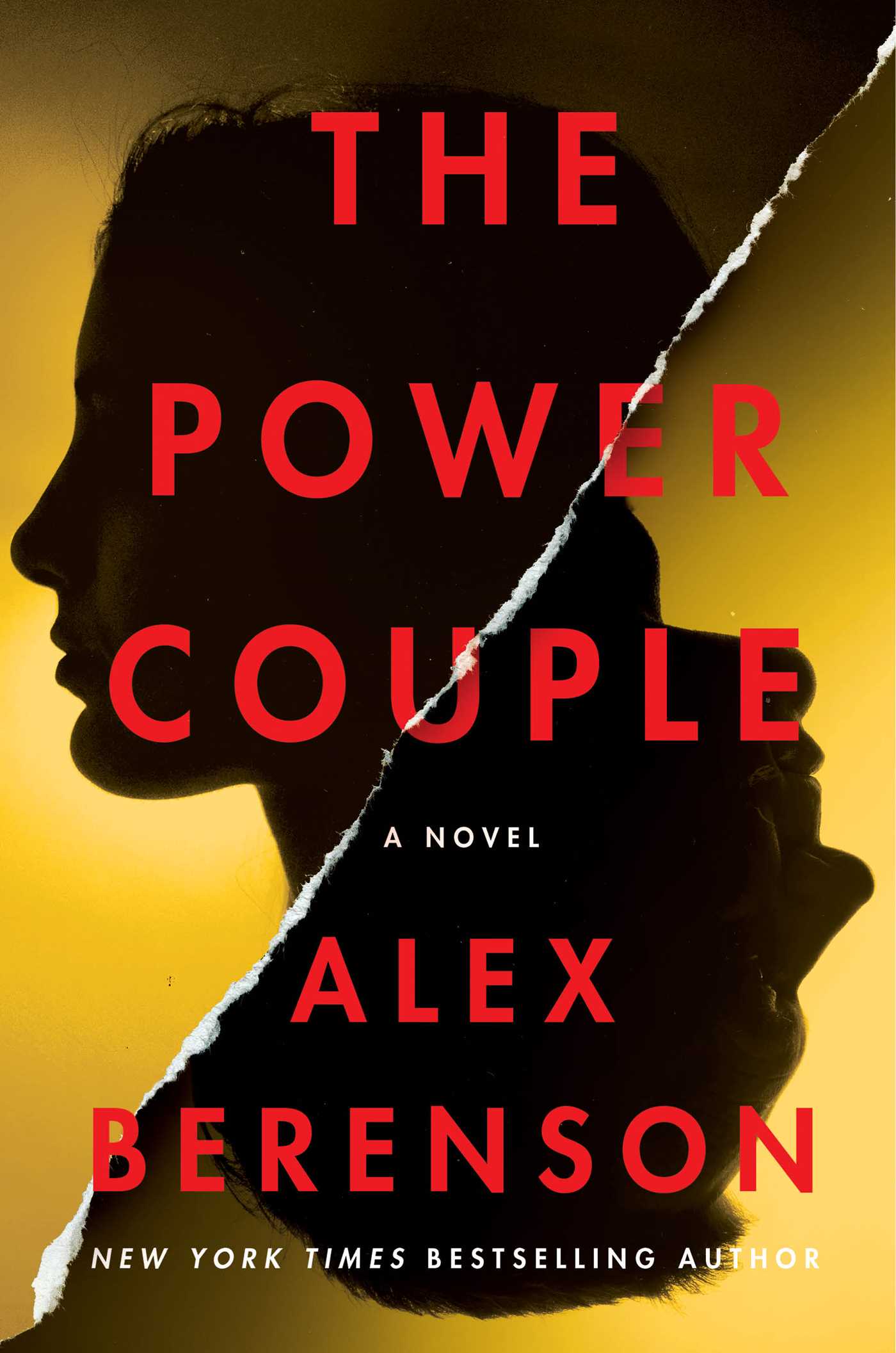
The Power Couple, by Alex Berenson****

Alex Berenson has done it again! I first read his work when I found a galley for The Prisoner, the eleventh in his John Wells series. When I saw that this stand alone thriller was available, I jumped on it. My thanks go to Net Galley and Simon and Schuster for the review copy.  The Power Couple is a fast read and a fun one, and I recommend it to you.

Rebecca (call her Becks) and Brian Unsworth are type A achievers, and both work for the federal government; she is a spy, and he is a hacker. But like so many couples, the similarities that brought them together are getting in their way now. With their children, Kira, who is nineteen, and Tony, who is younger, they take off for Europe to let off steam and spend quality time together. Maybe.

Early in the story, Kira is abducted, and from there forward, the pacing is perfect. Now and then Berenson pulls us back a bit as he shares sketches from their pasts that lead up to this event, but each reminiscence is brief, and the shift between points of view and time periods adds to the suspense. We see their lives through the perspectives of all except Tony, who is a minor character. In the end, Kira is the one we like best. (Trust me.) There’s not a lot of character development, but this isn’t that kind of novel.

I don’t want to give more away, because if I kill any surprises, you won’t enjoy the story as much; what I will say is that even if your own marriage is less than perfect, it is a shining beacon of integrity and affection when contrasted with that of the Unsworths.

This book is for sale now, and just right to take on vacation with you.

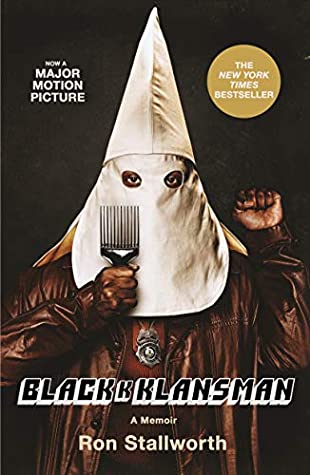
Black Klansman, by Ron Stallworth****

I was intrigued when I saw this book, and so I checked out the audio version, which the author reads himself, from Seattle Bibliocommons. It is one of a kind.

My first question, upon seeing the premise, is since when the FBI has any interest in busting the Klan or other White Supremacist organizations. Generally they chase activists on the left, and give those on the ultra-right a pat on the head and a cookie. This is addressed in short order, as the author explains it is his own idea. He initiates it when he learns how easy it is to join the Klan, and once he has access, his bosses agree to let him pursue it. And understand this: he is the only Black FBI agent in Colorado, and there is at least a wee bit of pressure on the Feds to increase their diversity just a wee. So for a brief and shining time, Stallworth is permitted to chase this lead.

The way Stallworth is able to join is that his membership interview is a phone call. At this time, there aren’t a lot of Klan members in the Rockies, and they’re spread thin. When the occasion arises for him to show up in person, he sends another agent, then takes over again on phone and through the US mail. (Heaven knows how this would shake out today; this would be difficult on Zoom.)

The memoir is important to write, because just as he is closing in hard on illegal activity that might result in arrests, he is called off by the brass, and he’s ordered to destroy every speck of research and evidence he’s compiled. Without this memoir, nobody would ever know it even happened. What a crock. What a bitter pill. I feel sick for him.

The audio is delivered in a wheezy, laconic narrative that sounds a lot like an old man sitting on his front porch telling the neighbors about his proudest exploits. It works for me.

Highly recommended.

Girls Like Us, by Cristina Alger***-****

I received a review copy of this book from Net Galley and Putnam Penguin last summer. Since I received it after the publication date, I moved it to the back burner in order to prioritize galleys whose publication dates could still be met. January came, and I still hadn’t opened the book. Deeply ashamed, I checked out the audio version from Seattle Bibliocommons and listened to it in the evenings while preparing dinner. The audio version is three stars, but I suspect that if I had stuck to the digital review copy, it might have been closer to four, so I am rounding my rating upward.

FBI agent Nell Flynn, our protagonist, returns home after ten years away in order to bury her father and deal with his estate. She and her dad were estranged, and her mother died when she was a child; she has no siblings; she is also dealing with post-traumatic stress disorder, the fallout from an earlier case. I assumed incorrectly that this earlier case must mean that Nell Flynn either had, or was about to have her own series, yet no mention is made of this; as far as I can tell the PTSD has nothing, nothing, nothing to do with any other aspect of the story. Her boss urges her to seek treatment; she doesn’t want to because she’s hard-boiled, and yada yada. Moving on.

The body of a young woman is found, and then there’s another; since she happens to be visiting Suffolk County, her father’s partner asks Nell to lend a hand. She is recruited as a consultant, but she gets the sense that the local veterans don’t want her to dig deeply. Her father’s partner is a relative newbie, not part of the old boys’ network, and so she and he work together to try to solve the killings, but she is obstructed at every turn. Is there a cover-up taking place, and if so, is it because her father was culpable? First one thing and then another makes her wonder whether he might have killed them, and while she is at it, she also wonders if he had a hand in her own mother’s death many years ago, when she was quite small.

The thing that makes this story unique is the fact that the cop is investigating her own dead father. I also like the way the author deals with the mystery woman that her father’s will includes. I thought I saw how that thread was going to play out, and I was not even close to being right. I like Alger’s subtlety here.  I also like the medical examiner, who is female too.

The main challenge for me was as a listener. The reader that performed the audio version has a painfully wooden delivery and pronounces a couple of fairly common words differently from anyone else that I’ve heard, and each time she said them I was distracted away from the story line. The way Nell’s father’s old friend, Dorsey, is voiced sounds like a bad John Wayne imitation. So, should you read this book? If you enjoy crime fiction that’s character based, particularly with a female cop or detective, you could do worse. I wouldn’t pay full jacket price for it, though, and I don’t recommend the audio version.

Three minutes to Doomsday, by Joe Navarro***

threeminutestodoomsday“Nothing’s ever over till the fat lady sings.”

Trite? Yes. Abrasive? Absolutely!  Sexist? All the damn time. Profane? Seriously profane, and not in a way that some of us might find amusing. And yet, this memoir has a strangely fascinating aspect as well.  It combines two stories, the primary one an espionage case in which the author plays the primary role, and a secondary one, the implosion of the author’s personality and marriage. It’s not fun reading, but after a certain point, there’s no turning away from it either. Thanks go to Net Galley and Scribner for the DRC, which I received free of charge in exchange for an honest review.

Navarro is a hot-shot young FBI agent in 1988, and it is while conducting what is expected to be a fairly routine interview that he notes a “tell” from former US soldier Rod Ramsey. It becomes the basis of an espionage case that goes much deeper than anyone anticipated. Navarro uses his expertise in nonverbal communication to tell what Ramsey is feeling during the various phases of his interviews, and he also uses it to control and manipulate Ramsey into cooperating with the investigation. Ramsey is the one soul on this planet with fewer friends than Navarro, and so Navarro spends years making Ramsey believe that he himself is that friend, practically family. He does it so he can have this kid busted and send him away for a really long time.

Navarro knows a lot about reading and controlling others nonverbally, but he doesn’t know a thing about building a family life or about how to make friends, and it’s clear he knows this, yet he can’t help himself. He tells us that an agent he wants to assist him tells a supervisor that she would prefer to work with someone else, and specifically, with anyone, anyone, anyone else but him. A number of other people echo this, and yet his personality continues on its hell-bent-for-leather downhill trajectory.

While he continues his self-aggrandizement with a hearty side-serving of brazen braggadocio, Navarro recounts again and again how much he hates the office staff at work, little people that are getting in his way by attempting to do their jobs. Clearly they just don’t understand how very important he is, but that’s okay, because he is letting the world know now.  Regarding the office manager that dares remind him of small requirements like changing the oil in his official vehicle, he uses a tired aphorism:

“Don’t try to teach a pig to sing. It annoys the pig and it wastes your time.”

He lets us know that he swore at, patronized, and berated her constantly, and lest we take his admissions as a sign of penitence, he also lets us know that he hates her still. He has changed her name for obvious legal reasons, but he hasn’t changed his obnoxious attitude or gained a speck of humility.

Add to this the fact that, though this case is terrific book material, the guy isn’t much of a writer. Clichés abound, and very basic principles of narrative writing are either never learned or disregarded. He starts chapters with lists, apparently too busy and important to transform these into paragraphs. I’m not all that sure he ever edited his work (because he might have noticed his overuse of parenthesis) and I’m not sure he permitted anyone else to do so either (because surely they would have come to his rescue).

Still, it’s an interesting story. Whereas someone else could no doubt do a finer job of writing this thing, it’s undeniably compelling. I recommend this memoir to those that enjoy espionage thrillers and true crime stories, but don’t give up the full sticker price. Read it for free or cheap, and save your serious dollars for serious writers.