Words for My Friends: A Political History of Tupac Shakur***-****

3.75 stars, rounded up.

Tupac Shakur lived for just 25 years, but he left an outsized legacy. Author Dean Van Nguyen has published a “political history,” a biography of sorts focusing on Tupac’s political ideology and the foundation on which it was formed. My thanks go to NetGalley and Doubleday for the review copy. This book is for sale now.

Van Nguyen begins his narrative with an overview of the Civil Rights Movement of the 1950s and ‘60s.  This is an area I’ve studied fairly closely, and so there was no new information in it for me, but I could see its value in a community college Black Studies or general history course. Once we’re past that, we enter into Tupac’s family background, and from there forward, his personal and political upbringings are intertwined. His parents were members of the Black Panthers, a militant, armed group of rebels seeking to force equity for Black people in the U.S. from a government that was long on promises and short on substance. There is a tremendous amount of the book given to the history of the Panthers, and most of what is recounted occurs either before Tupac was born, or while he was an infant.

Here’s my takeaway: I have often been curious about the Panthers, whose struggle I knew in broad strokes, but few specifics, and so this is interesting to me. But the book’s title has led me to believe that this book is primarily about Tupac, and we are at around the 40% before he even comes into the narrative. This is my sole complaint about this work, but it’s a significant one. Had the title been clearer that this is really a history of Tupac and the Black Panthers, I probably would have still read it, but because of the way it’s promoted, I feel frustrated when the 20% mark goes on by, then the 30% mark, and apart from a brief reference or two, Tupac isn’t even in it. In fact, we learn more about his mother than we do about him.

Once we do get to the meat of the matter, this is riveting material. What a gifted man he was, and yet he was still coming of age when he died. He loved reading classical literature, and he attended a fine arts high school where he was better able to develop his interests and talents, playing in Shakespearean productions; but as is often the case for children in low-income households, about the time he put down roots and made connections, his mother had to give up their lodgings, and that meant moving to a new town and a new school.

 This happens again and again. Single motherhood is hard anyway, but once you bring crack into it, the game’s all but over. And (here I suppress a primal scream,) because his father isn’t there and his mother is struggling, Tupac believes he must take care of his mother and long, long before he is old enough to bear such a burden. Teachers everywhere have seen that kid. He might be Black, Caucasian, or any other ethnic and racial background; he might be a she, for that matter. But children that take the responsibility that belongs to the head of the household are under a whole lot of stress, and the fracture lines often don’t show in their teens. They look as if they’re handling the job like an adult, often being praised by those in authority for their organization and focus. But—ask a social worker here—when they hit their twenties, that’s when they start falling apart. Because kids cannot be adults. When they are forced into the role, it will break them, sooner or later. And it seems clear to me that this is part of what led to Tupac’s early demise.

There’s a lot of interesting material packed into the relatively small part of the book that he occupies. We learn about the other famous performers he meets and befriends, first in school, then professionally, and about the political ideas he explores, serving for a while as a member and organizer of the local chapter of the Communist Party’s youth group. His willingness to dive deep into ethical and political ideas is reflected in his music, and to my knowledge, there is no other rapper that has included respect for women, along with an overtly pro-choice message, in their recordings. But just as his star begins to rise in earnest, he is killed.

Those considering reading this book should either be ready to read extensively about peripheral issues and events that don’t directly include Tupac, or should be ready to get the book with the intention of skipping a lot of material. As for me, I’m glad I read it.

Tonight in Jungleland, by Peter Ames Carlin*****

“And then the door flew open, and the wolf of doubt came slinking in.”

Springsteen fans, get your plastic out. Peter Ames Carlin has crafted a riveting Springsteen biography about the making of the iconic album, “Born to Run.” Having read it, I have gained even greater appreciation for the Boss’s rock and roll genius. My thanks go to NetGalley and Doubleday for the review copy. This book is for sale now.

“Born to Run” is Springsteen’s third album; the first and second albums received rave reviews from industry publications, but they sold poorly, and Columbia Records had Bruce on their kill list. He was contracted for three albums, but since they had already decided he wasn’t going anywhere, it was difficult to get them to finance the third album’s production or even listen to it once it was done. Take a brilliant, charismatic singer/songwriter, a talented, loyal band, and a couple of industry influencers that would all but starve themselves in order to see this album succeed, and it was nevertheless a nail-biter.

Mike Appel was Bruce’s manager, and he believed in his client so passionately that he was ready to bend a few rules and take a blow torch to a few others. When expenses exceeded the support from Columbia, when everyone’s charge cards were maxed and there was still a record to finish, he dumped his children’s college funds into the general kitty so that the album could see daylight. Columbia Records had told him they’d review his client’s work if he could make a hit single, so “Born to Run” became the song on which the album’s success was hinged. Then Jon Landau, a much-revered industry journalist, heard Bruce’s music and wrote, “I saw rock and roll future and its name is Bruce Springsteen.” Landau became his producer, and it is due to this holy musical trinity that Springsteen and the E Street Band became world renowned. In fact, they went so far as to send bootleg copies to friendly deejays, since the record company was doing absolutely no promotion, and it worked!

I have never been a sufficiently rabid fan to go into the weeds on this band or any other. I didn’t know who else was in his band, apart from his wife. I also had no idea what was required of anyone attempting to get an album financed and promoted by a major house—particularly during the pre-digital days of the late 1900s. Two things have always drawn me to Springsteen’s music: tunes so impossibly resonant that I am unable to sit still when I listen to them, and the lyrics that speak to the industrial working class. These are not the songs of a pretender. Bruce grew up lean and hungry, and because of that, and his rare talent for communication, the songs ring true.

Springsteen was, and I suspect still is, a perfectionist. The following quote is lengthy, but that seems appropriate, given the amount of time, toil and sweat they put into this album:

Ensconced in 914 in the wee hours, Appel and Bruce seemed to try every idea that occurred to them. A string section. An ascending guitar riff repeating through the verse. A chorus of women chiming in on the chorus. An even bigger chorus of women oooh-ing behind the third verse. Still more strings on the bridge and on the last verse, doing those disco-style swoops, like sciroccos whipping up from the dance floor. They’d work out a part, hire whatever musicians or singers were needed to get it on tape, then mix it all together to see what they had. Sometimes it would stick, sometimes they’d just laugh, shake their heads, and slice it out… Work on the instrumental track went on and on, but it still didn’t rival Bruce’s laboring over the lyrics. He had always put energy into his narratives but the pressure he felt to get “Born to Run” just exactly right pushed him to a whole other level of perfectionism, determined to get every word, every nuance, every syllable, something like flawless. No, exactly flawless. Sometimes he’d be in the midst of a take, sing a few lines of a verse, shake it off, then take his notebook to a folding a chair. He’d find a pen, open the book, look at the page, and just …think. He’d be there for a while. An hour, two hours, maybe more. Meanwhile in the control room Appel would be at his place at the board, Louis Lahav in his. This happened a lot. How long would it be this time? They’d peer through the glass, chat a bit. Fiddle with paperwork, try to see what Bruce was up to. Still staring into space? Reading back through his pages? Writing? Impatience was not an option. Appel was paying the bills but as far as he was concerned Bruce could have all the time he needed. Eventually he’d look up, reach for his headphones, and say he was ready to record. Lahav would roll the tape and they’d begin again.

When I read a musical memoir or biography, I take frequent breaks to stream the music in question. Ames’s narrative has made me appreciate the musician and his band more deeply. I also have to say—as a person that once aspired to become a musician also—that I am dumbfounded by anyone that can write and then play their music without knowing how to read music, or assembling a score to help them recall it later. The same is true for band members that can hear a song and create their own accompaniment without benefit of a written score. As a youngster, I thought such an approach was stupid. Now I stand in awe of it.

If you’ve made it all the way through this review, the book will be a snap. If possible, read it in a time and place where you’ll be free of distraction. It’s worth it. Highly recommended.

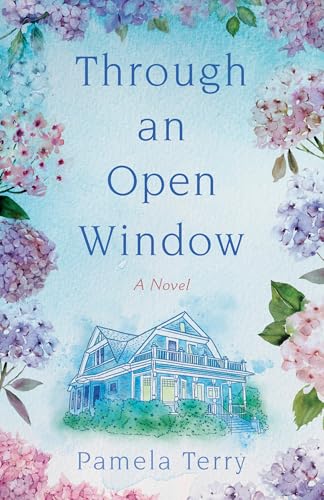
Through an Open Window, by Pamela Terry*****

“When you’re the last one with memories it’s like trying to hold on to hot sand.”

Author Pamela Terry never misses. Her debut, The Sweet Taste of Muscadines, forged such an emotional connection in me that if someone had told me they didn’t like it, I might not have cared for them as much as before. The same held true for her next work, When the Moon Turns Blue, which was every bit as good if not better. And now, with her new novel, Through an Open Window, I know that I will follow this author anywhere.

My thanks go to NetGalley and Ballantine Books for the invitation to read and review. This book will be for sale August 19, 2025. If you are female and have a beating heart, you should get it and read it.

We open with a scene from 1956. The local sheriff rescues two small children from a scene of horrific carnage; the baby girl is surrendered to the social worker before they find the little boy. The sheriff and his wife have been unable to have children, and want them so badly that instead of reporting the boy also, he takes him home and they keep him.

Cut forward now to the fictional town of Wesleyan, Georgia. A family is grieving the loss of its patriarch, Lawrence Elliot. His widow, Margaret is the first to receive a visitation—not from Lawrence, but from Great-Aunt Edith, who has been dead for years. Aunt Edith wants her to know something. And in fact, other family members will also see her at various times, in various places, but it’s not the sort of thing one shares with others. But Edith isn’t leaving until her message is received and understood.

As we see Margaret and her three adult children cope in different ways, we also see the interplay of their relationships to each other. This story is loaded with character development, and I believe each and every one, even Jubal, the rescued Clumber Spaniel that comes to live with Margaret. (I had never heard of this breed before, and now I kind of want one. Someone stop me!)

Events roll forward, and slowly we learn what it is that Edith is trying to convey, as the family does, and we find the tie-in to the prelude. It’s done brilliantly! Along the way, the author’s voice comes through in undeniable word smithery that forces me to highlight way, way too many passages to quote here. I experience the entire gamut of emotion, and when I near the ending, I am torn, wanting to read more slowly so that the book won’t end, but also needing desperately to know what is coming next.

The only possible improvement would be if Terry could write, and write up to the standard she has established, as fast as I can read, because I cannot wait for her next novel! She has become a favorite author, one I’d pay to read if I couldn’t do it free of charge. Highly recommended.

Fever Beach, by Carl Hiaasen**-***

What happened? I used to absolutely love novels by Carl Hiaasen. In his most recent release, Fever Beach, we see a conflict between good—in the person of our main character, Viva Morales—and evil, played by a variety of Proud Boys wannabees and other undesirables. The good person is always good; the bad guys have no redeeming qualities. Only Viva’s ex-husband is a dynamic character.

Still, my thanks go to Doubleday and NetGalley for the review copy. This book is for sale now.

As I read, I keep reminding myself that this is not a book I’m supposed to take too seriously, to lighten up and just roll with it. I certainly used to do so when reading Hiaasen’s work. But perhaps because of the stereotyping and complete lack of nuance, what might otherwise have seemed droll and satirical, instead comes across like a whole lot of cheap shots fired off the bow.

Mind you, I am certainly not a fan of ultraright organizations, and the rising tide of bigotry, fascist ideology and anti-Semitism concerns me greatly. But in an already highly polarized nation and world, all I can think as I read is that this story isn’t helping. It is the snobbery and elitism of the highly educated that has driven a large number of folks into the arms of extreme right; some intelligently reject the elitism and cancel culture consciously, but they aren’t in this book. In real life, those that are poorly educated and/or intellectually handicapped, as the bad guys in this book are, would in most cases give their right arms to wake up “clever” like Viva.  It strikes me as counterproductive to write a book that makes fun of right-wing intolerance, while practicing intolerance from a different angle.

Back in the day, before anyone judged anyone else by the color of their hat, I used to roar with laughter at this author’s work. Did it change, or did I? I would like to think it is the former.

I rated this book 2.5 stars and have rounded it upward, more from a fondness of his early novels than anything else. I do recall reading another of his more recent books—not for review, but just because I felt like it—and saw some of the same problems, so I will tell you that this book will probably work for you if you enjoyed his last one. Apart from that, I cannot recommend it.

American Spirits, by Russell Banks*****

American Spirits is a collection of three short stories that take place in the fictional New England town of Sam Dent. My thanks go to NetGalley and Alfred A. Knopf for the review copy. This book is for sale now.

I wasn’t sure this book would be up to Banks’s usual standard, as it was published posthumously, more than a year following his death. Sometimes a successful author will have a book that isn’t their best, and they’ll toss it in a drawer in hopes of improving and publishing it later. When they die, their heirs find the book and seeing dollar signs, send it off to a publisher. Still, though, Russell Banks’s sloppy seconds are still going to be vastly better than your average successful author’s best effort, so I decided to take a look. And holy crap, it’s actually one of his finest!

One thing any uninitiated reader must know is the Banks is brutal. If the story seems to be leading up to something pretty bad happening, the unwary might anticipate that the author will pull it out of the water at the last minute in order to send the readers away with smiles on their faces. Banks doesn’t do that. With stories by Banks, the main question is whether all of the important characters are going to die, or only some of them. He is unflinchingly brutal, but oh honey, he does it so well that I wish I could thank him for it!

One of the things that underlies everything Banks writes is his deep knowledge of, and appreciation for, the working class. His own hardscrabble background most likely plays a role, but one way or the other, the struggles of the ordinary man or woman, usually living in rural parts or small towns in New England are depicted with such care, distilling vast amounts of tiny details into the briefest of spaces that I believe the character and I believe the setting. Banks is also, to the best of my knowledge, the first to set a story in a manufactured home or mobile home court.

The first story, “Nowhere Man”, is about a man that sells off part of his land to a newcomer, partially because of a private agreement that the two make, but that isn’t ever codified. The new owner eventually goes back on his word; the original owner is having none of it; and then all hell breaks loose.

The second, “Homeschooling,” is about an average family whose life is changed when newcomers with a somewhat bizarre parenting style move in next door; when the emaciated children sneak over at night to beg for food, they become involved.

The final story, “Kidnapped,” is about a couple of senior citizens that are kidnapped and held until the drugs that their grandson’s addicted mother has filched are returned.

When I read Banks, I tell myself not to get attached to the characters, but he’s smarter than I am, so I can’t help myself.

There is something deeply satisfying in reading an author that has the confidence to buck literary trends. I wish that Banks, who was twice nominated for the Pulitzer Prize, could have lived and written fiction forever, but the legacy he has left us is the next best thing. Highly recommended.

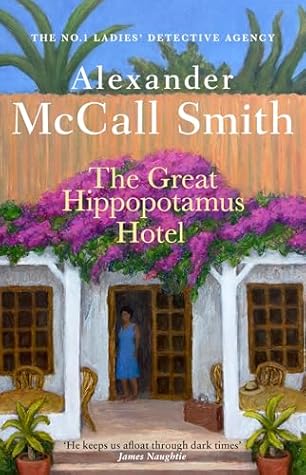
The Great Hippopotamus Hotel, by Alexander McCall Smith*****

The 25th book in the #1 Ladies Detective Agency series is not to be missed. My thanks go to NetGalley and Knopf/Doubleday for the review copy; this book is available to the public now.

When life becomes stressful, what do you do? Some swear by yoga, herbal tea, walking or running, therapy, mindfulness, journaling, or a number of other remedies. Some of us dive into the chocolate; the short-term benefit is mitigated by the long term weight gain, but when we’re upset enough, we don’t care. And for some of us, this series is just what the doctor ordered.

Precious Ramotswe is our detective protagonist, assisted, and occasionally encumbered, by her headstrong but goodhearted colleague, Grace Makutsi, part time apprentice detective, Charlie, and occasionally, by her bestie, Mma Potokwane, who runs the local orphan home.

Our mystery revolves, as the title suggests, around a case of possible sabotage at The Great Hippopotamus Hotel. There’s another thread, too—as there usually is—involving Precious’s husband, Mr. J.L.B Matekoni, owner of the garage and technically, Precious’s landlord.

Those looking for an action packed thriller will always be disappointed here, because that’s not what this series is. Instead, it’s closer to being a Miss Marple-ish cozy mystery. The problem is nearly always solved, not by DNA or murder weapons or questioning baddies until they break, but by an examination of the circumstances and characters of those involved. It is here that Precious is at her finest. In addition, she must tread carefully around the feelings of her staff, primarily that of Grace Makutsi, whose insecurities tend to make her prickly. Grace is a bit threatened by Mma Potokwane, and when Precious explains gently that they will be accompanied by the orphan farm matron on an investigation, Grace says, in a serious case of look-who’s-talking:

“Mma Potokwane—yes, she is observant, but…But Mma, if Mma Potokwane has any faults—and we all have faults Mma, myself included—if she has any faults, one of them is taking over. I am not saying that she is bossy—that is not a word that I would use for Mma Potokwane—I would not say that, Mma, and I am not saying it now. No. But there are some people, I think, who might say that.”

And so, in addition to her detective work, Mma Ramotswe must navigate the small minefields that exist between these two women, both of whom are dear to her.

In some ways, the mystery aspect of these stories is almost superfluous. Every story has to have a problem and a resolution, and so it’s convenient, perhaps, to use a mystery as scaffolding for whatever problem Precious must confront. It’s certainly served Smith well. But the real benefit I see in these series is that the solutions to these problems are always dealt with as gently and as kindly as is possible. Nobody is getting thrown face down on the ground and handcuffed in these stories; every effort is made to turn the problem around while allowing the perpetrator to retain as much dignity as possible. The lyrical prose is so soothing that I love reading these stories at bedtime.

And one more word, for regular readers: the recurring character of Violet, who is the closest we have to a villain, pops up here right away, and I rolled my eyes and said, “Not this again. Smith needs new material.” But the way the character is used this time is different, and if I had a hat, I would tip it in appreciation of the author’s cleverness. He always seems to know when it’s time to break a pattern.

Highly recommended.

Martyr! by Kaveh Akbar

“’Do you worry about becoming a cliché? ‘

“’How do you mean?’

“’Another death-obsessed Iranian man?’”

My thanks go to Doubleday and NetGalley for the invitation to read and review this singular debut novel. This book is for sale now.

Our protagonist is Cyrus, an Iranian immigrant who comes to live in the U.S. as an infant. He is raised by his father, Ali; his mother’s plane was shot down shortly after Cyrus was born, an accident on the part of the U.S. military. His father dies suddenly while he is away at college, leaving him rootless. He spends a lot of time anguishing over death, wondering what is worth dying for. He doesn’t want to waste his “one good death.” Later, he points out that “If I died trying to kill a genocidal dictator tomorrow, the news wouldn’t say a leftist American made a measured and principled sacrifice for the good of his species. The news would say an Iranian terrorist attempted a state assassination. “

And you know that he’s right.

The thing that attracted me to this story is its difference from everything else that I have read. Persians almost never show up in American novels, and when they do, the Persian is the other, the bad or weird person, pretty much like the quote above suggests. So I was all in.

However, I have to say that the amount of angsty inner dialogue makes this a slooow read in places. There is also dialogue between Cyrus and friends, but most of it basically the same thing with a different format. I was primed for humor, since that’s how the book is being promoted, but didn’t find much of it.

The story wakes up a bit when Cyrus leaves Indiana for New York, but the writing remains inconsistent, and the transitions are sometimes a bit ragged.

The revelation about his mother, which occurs toward the end of the story, is startling, and I didn’t see it coming, but it also presents a credibility issue; I won’t go into details here, because it would be a spoiler. Still, apart from this one reservation, the ending is nicely rendered.

Akbar is an interesting writer, and I look forward to seeing what he writes next.

When Women Were Dragons, by Kelly Barnhill*****

I read Kelly Barnhill’s The Ogress and the Orphans, and I loved everything about it, so I was pumped when I saw she’d published another book last fall. I was disappointed not to get the galley, but I pulled my socks up and got in line at Seattle Bibliocommons. I was able to get the audio version, and narrators Kimberly Farr and Mark Bramhall do an outstanding job, so perhaps it was for the best. This book is for sale now, and it is a true delight.

The story is set in the American Midwest during the 1950s, a time known for its stifling repression of women. Some women can take it; others turn into dragons. It’s not always by conscious choice; when you’ve had enough, you’ve had enough.

The tale centers on one family, with a mother, father, daughter Alex, and the devoted Aunt Marla, who visits frequently with her adorable baby, Beatrice. Marla is a physically strong and imposing woman, and she raises eyebrows by sometimes showing up in overalls instead of a dress or skirt. The most important person in her life is her sister, a gifted mathematician whose talents are withering away while she focuses on making the perfect pot roast, getting tough stains out of the laundry, and creating endless patterns in her knitting.

Alex is the narrator for most of the story, with the occasional change to the points of view of various bewildered men that live locally. It is the characters here that make this an outstanding story rather than a manifesto. Alex has so many questions as a child, and as she grows up, she struggles to absorb the predominant values of the time, which seem unfair to her. She wants to be a good daughter and play by the rules, but so many of them baffle her, and we feel that struggle with her. For reasons that I won’t share, little Bea comes to live with Alex’s family, and we see Alex try to help raise Bea to be responsible and obey all of the requirements of the time, whether written or unwritten, but Bea struggles with them even more than Alex has, and because of this, Alex is forced to think critically about the things she’s been sweeping under the rug in order to get along. And ultimately, Alex learns the lesson that all parents and older siblings face to some degree, that to help a child grow, we must let go.

Teachers and librarians must especially love this book.

I have read a few unfriendly reviews that insist that this message has already been conveyed by The Stepford Wives. I loved the Stepford Wives, too, but seriously, are we saying that once a novelist drives home a point, that’s it, and nobody else can have a go at it? If it comes down to it, I’d take this novel over the other anyway, for nuance and character development. My favorite grumpy review asks why a dragon needs a purse! I ask you, would you be the one to take that dragon’s purse from her?

I love this book with all my fiery heart, and I highly recommend it to feminists, and to those that love us.

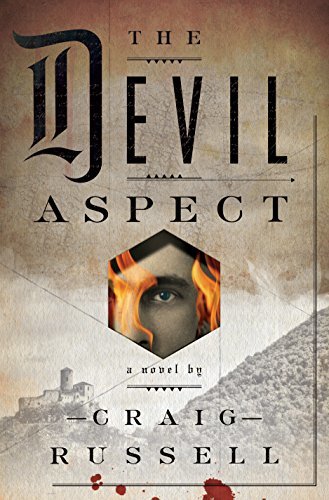
The Devil Aspect, by Craig Russell

3.5 stars, rounded upward. I read this creepy tale during the last half of October, and it is indeed a good way to get into the Halloween spirit. I am disgracefully late with my review—3.5 years late, as it happens—but I do thank Net Galley and Doubleday for the review copy. This book is, of course, for sale now.

Here is what drew me in. This is horror of the old school variety, with gothic towers and half a dozen criminally insane inmates. It’s set in Czechoslovakia, which I seldom see. The flavor, overall, is similar to the stories we told as children around campfires or late at night during slumber parties. Of course, it has a more adult approach, but even so, this is classic horror.

Our protagonists are Viktor Kusarek, a Jungian psychiatrist who comes to the asylum to conduct experiments on the patients, or inmates, in order to prove a theory, and police chief Lukas Smolak, who is pursuing a serial killer that is running amok in Prague.

This is a story that is more about the journey than the destination, though perhaps not intentionally so. Hearing about each of the six savage killers as Viktor interviews them is vastly entertaining. There’s one spot about a third of the way in, where a patient, partially sedated, is explaining that he is innocent, and also that a guest sorely provoked him. Always so critical! He was determined to impress her with his cooking, and indeed, the longer he worked at the stove, the more reasonable she became. Viktor points out that the guest had stopped complaining because he had her head in the skillet. I laughed out loud! The middle of this novel is unmissable.

There are three things I would change. First, the book is a little overlong, and could bear some tightening. Second, the whole Nazi menace has nothing to do with the problem or its resolution. It seems more like window dressing than anything else, but it doesn’t add a thing to the story. If I were the editor, I would cut that part of it out and voila, some of the tightening would be achieved. And third, the ending is so, so predictable. I stuck with the story until around the 85 percent mark, at which point I figured all hope of an ending other than what I expected was pretty much gone. At that point I skipped to the end. Yup. There it was. I would have liked a less formulaic ending.

Still and all, fans of old fashioned horror could do a lot worse. If this sounds like your kind of book after everything I have said, then go for it. I am old and cranky, and what seems obvious to me might seem new and clever to those that haven’t read many books of this ilk. And one way or the other, getting there is a lot of fun.

Rogues, by Patrick Radden Keefe****

Patrick Radden Keefe is a much celebrated journalist with a list of honors and awards as long as your arm. He first drew my notice in 2019 with Say Nothing, his searing, meticulously researched book on The Troubles, that period of guerilla warfare in the North of Ireland, as its people tried (yet again) to break free of British imperial rule. That book rattled me to my core, and when I received a review copy for this book, I understood that there couldn’t possibly be another book as deeply affecting as his last. And I was right; it isn’t. It is, however, interesting in most places, and Keefe can write like nobody’s business. This book is for sale now; my thanks go to Net Galley and Doubleday for the galley.

Each chapter of this book is on a different topic; ostensibly, each is about a different rogue, or group of rogues, or—in one case—a whole family of rogues! However, there are a couple of chapters where that isn’t really true, and that is my strongest quibble with anything presented there. Most, however, are unquestionably about scoundrels. The first, about an obscenely wealthy wine snob who finds himself with some counterfeit wine, makes my blood boil. A private plane, burning enough fuel to melt the polar caps, or to transport a good many people to work for an entire year, is dispatched to fetch some wine. This one makes me cranky enough, and is lengthy enough, that I abandon it halfway in. The next, “Crime Family,” is a riveting expose of a notorious, yet strangely beloved Scandinavian kidnapper whose sister turns him in when she senses that he’s spiraling out of control. She owns five armored cars, because she knows her brother will never rest until one of them is dead. Chilling, indeed! Other favorites are about El Chapo, and about Mark Burnett, the promoter that turned Trump into The Apprentice, splicing and editing sufficiently to make the man sound coherent and businesslike. There is one about the Lockerbie bombing, and another about insider trading, that I tried to care about but couldn’t, so I skipped those. And there’s one about Jeffrey Epstein, too.

All told, this book is a meal. Even if you do as I did, and skip those that don’t spark your interest, this is a well written, worthwhile collection.

Recommended to those that enjoy well crafted journalism.