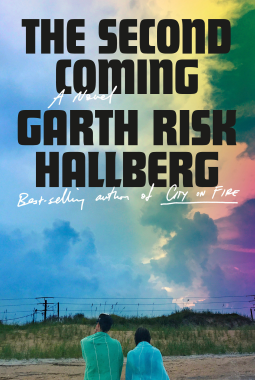
The Second Coming, by Garth Risk Hallberg***-****

Garth Risk Hallberg is the author of the epic, memorable novel City on Fire, which was among my short list of favorites the year it was published. My thanks go to NetGalley and Alfred A. Knopf for the invitation to read and review his new novel, The Second Coming. This book is for sale now.

The story begins in New York City when Jolie, who is thirteen years old, is nearly struck by a train. Her parents are divorced, and she hasn’t seen her father in quite a while. Ethan is addicted, and his cravings make him unreliable. He makes promises he won’t keep, and Jolie has more or less given up on him, but her brush with death convinces him that she is in a darker place than her mother realizes, and that only he can save her.

Heaven help the girl!

The episode is the beginning of a twisted, bizarre odyssey. Jolie’s mother is distracted, not paying a lot of attention to her daughter, and Jolie becomes involved with a complete stranger, young man much older than herself. As a reader, I became frustrated and wanted to shake Jolie’s mama and tell her to wake up and take care of her kid. Just because they look grown at 13, doesn’t mean they are grown.

On glorious display here is Hallberg’s remarkable word smithery. The man has a gift, and he’s not afraid to use it. Portions of this book were a joy to read, simply because his prose is matchless.

For me, however, the plot and characterization of Ethan got in my way. Addicts and alcoholics in literature are becoming a trope, and I had vowed to myself to steer clear of them. I read the synopsis of this one and knew what I was walking into when I accepted the galley; I had hoped the author’s talent and skill would take a tired old plot point and make it seem new. He partially succeeded; I didn’t throw my reader across the room as soon as the addiction material appeared. But I didn’t love it the way that I loved City on Fire. Also, large portions of this are in epistolary form, from letters that Ethan writes to his daughter, and although they have been edited down considerably between the galley I read and the polished, finished result, they still got in my way.

So, this is a competent effort, but not a magical one. If you enjoy fiction with addicted characters, or if you like books about fathers and daughters, this book may be a happier experience for you than for me. However, I was expecting great things, and I came away feeling somewhat disappointed.

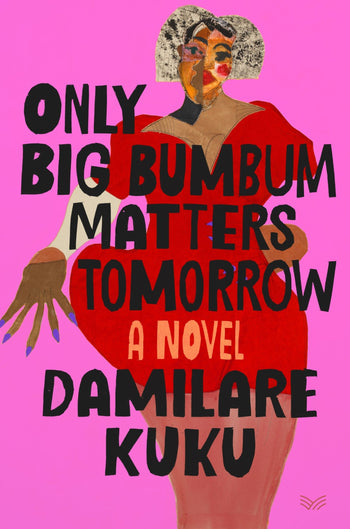
Only Big Bumbum Matters Tomorrow, by Damilare Kuku

When a novel written and set in Nigeria is so successful that it’s translated into English and sold in the U.S., you know it’s probably one hell of a good book, and Only Big Bumbum Matters Tomorrow is clear evidence that this is true. My thanks go to HarperCollins and NetGalley for the review copy; this book is for sale now.

Our protagonist is Teme (TEE-mee), a young woman fresh out of college who is sure of her next course of action: she must develop a perfect body, starting with her backside. She works and saves her money so that she can have her buttocks enhanced surgically. Everybody loves a woman with a big butt, and once hers is augmented, she can marry anybody she wants. It will be a great investment!

This choice, not surprisingly, blows the roof off her family home. All of the women, her mother, auntie, sister, and others are adamant, and they scheme together, and bicker together, about how to prevent her from carrying out what they perceive to be a dangerous and foolish task. In the process, they reveal their own long held secrets, and also? They are hysterically funny!

The reader should know that the best material isn’t dropped in at the beginning, as is the unfortunate trend. Instead, it starts out fairly serious, and then I find myself snickering a little, and then a little more, and by the end, I am howling! There are quite a number of characters, and not recalling all of them won’t interfere with your enjoyment; however, it’s easier to catch up and also identify certain Nigerian terms that are peppered in, most of which are self-explanatory anyway, if you read digitally. However, because I had fallen behind, I checked out the audio version from the library and followed along as I did my morning exercises, and the audio version is brilliant as well. The lilting Nigerian dialect is mesmerizing!

Although it doesn’t seem like it at first, this novel packs a satisfying feminist punch. I highly recommend it to any reader that has eyes, ears, or both. Don’t miss it!

How to Summon a Fairy Godmother, by Laura J. Mayo*****

“She was Theodosia Balfour. Good things did not happen to her.”

Theo is engaged to be married, despite her wishes; her mother has bartered her to an ancient, badly behaved duke for the prestige of his title and the money she must have to keep the family manse. Beggers can’t be choosers, amirite? Her stepsister and the prince have barred her from their castle due to her own unseemly behaviors, and her sister is about to be wedded to a more desirable man. There’s only one way out of it: Theo needs to find her stepsister’s notes on summoning a fairy godmother. Only magic can possibly get her out of this mess.

My thanks go to Orbit Books, Hachette Audio, and NetGalley for the review copies. This book is for sale now.

Because I am lucky enough to have both the print and audio galleys, I pair this book with my morning regimen on my exercise bike. While my feet are doing the work, my eyes and ears are on a pleasure cruise, listening to the story as read by the talented Josie Charles. At the outset, I’m not sure I’m going to enjoy it. After a handful of quick laughs, the story and voice actor seem to be a little over the top, perhaps trying too hard. However, a number of other reviewers that I respect have really enjoyed this thing, so I keep an open mind, and sure enough—about a third of the way in, I realize that I’m bonded to the protagonist. As I follow the narrative and become accustomed to the writing and narrative styles of the author and performer, the whole thing grows on me, and before long I find myself looking forward to my wretched exercise bike, because Theodosia needs me.

Once the fairy has been summoned, Theo is magicked away to fairy land, and she is provided with a set of tasks she must accomplish in order to be freed from the loathsome old toad to whom she’s betrothed. She is provided with some assistants and supervisors, and it’s a good thing because she needs rescuing now and then. The hardest part, perhaps, is the caveat that as she completes the steps required, she must behave respectfully—at all times!

The chapters are brief and have hilarious titles. A couple of examples: “Chapter 5 Where Theo Should Probably Think of Something Before She Ends Up Married,” “Chapter 11 Where It Becomes Quite Clear Theo Was Never Trained as a Lawyer.”  There’s lots of snarky dialogue, with a tender moment or two tucked in here and there.  There’s a twist at the end that I absolutely did not see coming.

Should you listen to the audio, or read the printed version? There are some American readers that don’t like a British accent, and Ms. Charles’s is a heavy one. Once I’m used to it, I rather like it, but you know what type of reader you are. Follow your usual go-to. If you enjoy an audiobook, this one could make your commute much pleasanter.

Highly recommended to those that enjoy fantasy and/or humor.

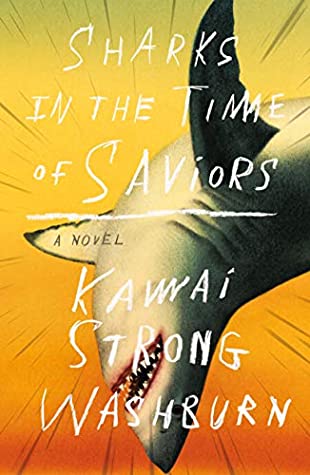
Sharks In the Time of Saviors, by Kawai Strong Washburn*****

A story like this one only comes along once in a rare while, luminous, intimate, and deeply affecting. My great thanks go to NetGalley and also Farrar, Strauss and Giroux for the review copy. This book is available to the public, and you should get it and read it.

Initially I was drawn to this book for several fairly superficial reasons. The cover is certainly arresting; the title is perplexing. But the biggest draw for me was that it was set in Hawaii, and all of the characters are native Hawaiians. In my corner of the world, the Pacific Northwest, there are a lot of Pacific Islanders. Why anyone would leave such an idyllic climate for the dark, soggy winters we see here used to be a mystery to me, but ultimately, people follow the jobs, and so many Seattle residents come from there.

As a history teacher, I’ve always felt that my students deserve to be included in the curriculum, and so in addition to teaching about Caucasians during whatever time period we’re examining, I work in African-Americans, Latinx, Native peoples, and a variety of Asian ethnicities, but time and again I hit a wall when I tried to find something for my Islander students. And when I’ve taught literature, it’s been the same struggle. Islander kids get shut out every time.  And so now I am retired, and here’s my appeal to other educators out there. Put this book in your classroom.

For the rest of you: apologies. Let’s get on with it.

As we open, the setting is Hawaii in 1995, and the protagonists are two parents and three children, all members of the Flores family. They’re on vacation when seven year old Noa falls into the ocean where sharks are circulating. But instead of devouring the boy, one of the sharks delivers him back to his family, carrying him gently in its jaws, “Like you were made of glass, like you were its child.” The first chapter is told in the second person, with Malia, the mother, recalling the event, speaking to Noa. She tells him, “The gods were hungry for change, and you were that change.” It’s obviously a miracle, and others see it happen also. Their lives will never be the same.

As the story continues, we hear from all of the family members. At first, Noa appears to be gifted with a magical healing ability, but he is still a child, and the demands on him are grueling, exhausting. But this is not the only change his magical abilities produce. Noa is the youngest child in the family, but now the siblings’ hierarchy is completely flipped, and the resentment felt by his brother and sister is dreadful. At one point Kaui, who is academically talented, fumes that she is “just his shadow, shaped like a sister.”  And his brother Dean, who is an athlete, explains:

You’re out at breakfast without him, eating cereal and joking with Mom and Dad, Kaui coming in, and you get them all laughing and smiling, just because of you. But then Noa shows up right, and suddenly it’s all questions about what’s happening with his day and did he sleep okay and here’s some thoughts about which extracurricular program he should enroll in…Hard not for get angry at that. I felt it like a fist flexing inside my own chest.

To make matters even more fraught, there’s an economic downturn that makes it impossible for the parents to support the family. They begin charging people that come to be healed by Noa, and so the youngest child is not only the golden favorite because of his miraculous ability; he’s also the family breadwinner. And again: it’s an awful lot to put on the shoulders of one small child.

The dialect combines with the authorial voice to create characters that I swear I would know if I ran into them, and in many ways, they remind me of the adolescents that I taught. Because I was so unconscionably late here, I checked out the audio version at Seattle Bibliocommons, and I have never heard an audiobook I loved more. The voice actors are so convincing that I can hear them now, more than a month and several other audiobooks, after I finished it.

For me, that would be enough. Create visceral enough characters and I don’t even care much about the plot. But the plot is also gobsmackingly brilliant! I believed I could track where it was headed up until perhaps the 60% mark, and then there’s one surprise turn, and another, and another, till at the end I was simply sitting with my mouth open and my eyes on the text as the audio gave way to the afterword and credits. I had to remind myself to breathe.

This is one of those rare galleys that I could see reading again just for the love of it. This review is my 923rd for NetGalley, and I have chosen to reread fewer than 10 of them, so let that indicate the measure of esteem in which I hold this novel.

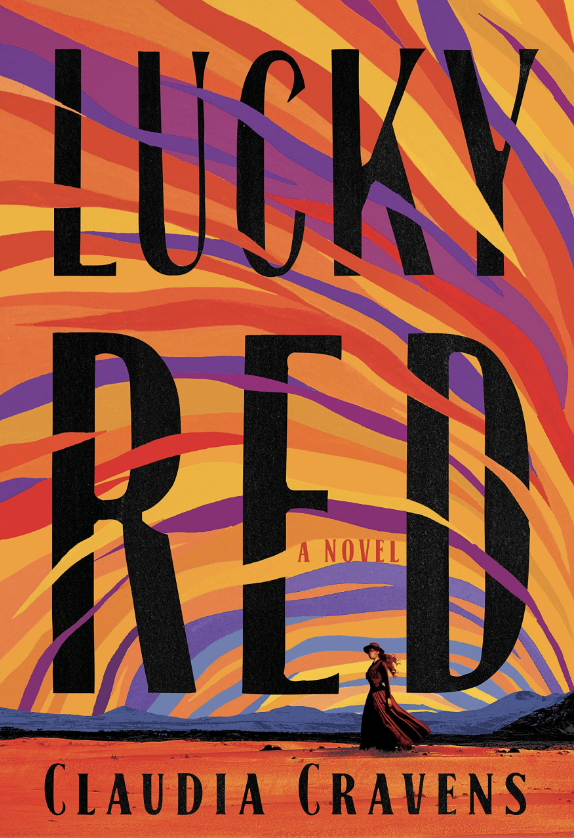
Lucky Red, by Claudia Cravens*****

Larry McMurtry, eat your heart out. There’s a fine new word-slinger come to town, and her name is Claudia Cravens.

My thanks go to Random House and Net Galley for the invitation to read and review Lucky Red. This book is for sale now, and you should get it and read it.

Bridget lives a life of hardscrabble deprivation; her mother died in childbirth, and all she has is her pa. He loves her, but he’s worthless; when he finally gets a bit of money, he invariably drinks and gambles till it’s nearly gone. During one such episode, he gambles away their little house, and then buys a homestead, sight unseen and many miles away. What they find instead is a tar paper shack; there are no crops or tilled acreage, no tools or even a decent place to live. They crawl into the miserable hovel to get out of the elements, at least, and get some sleep; a rattler has the same notion, but when pa thrashes in his sleep, the rattler bites him in the neck, and then there is only teenage Bridget.

Bridget makes her way to Dodge City, and in no time, she is stone cold broke. She’s recruited to work in a brothel, the only one in town owned and run by women. She doesn’t mind the work and makes friends among the other “sporting women,” and is curiously removed from the process for which she is paid; slide prong A into slot V; moan a little, gush, and collect your pay. But later, she finds herself obsessed with a new sex worker; a lovely blonde woman named Sallie. Everyone around her understands the significance of this fascination, but Bridget herself doesn’t get it. She’s young, and she’s naïve. But when Spartan Lee, a female bounty hunter, comes to town and asks to hire Bridget, the sun shines and the angels sing.

This story is epic, and in many ways reminds me of Little Big Man, but with a female protagonist. And in many ways, what makes it so successful is its restraint. At the book’s outset, there’s a slimy man that wants to buy Bridget’s hand in marriage, which would give her father a nice chunk of change, but she hates the man, and her father doesn’t push it. A less capable writer would have done it the other way, but here, and in every instance where I predict what will happen because it’s so obvious, Cravens does something else. And the lesbian sex is brief and almost free of physical details—a sad thing for anyone looking for soft porn, but it serves to keep the story moving forward—with the emotion behind it carrying the internal narrative.

Although Bridget has no complaint about the work she does, and the management is more benign than in houses owned and run by men, Cravens keeps it real. One night, Sallie is attacked by a client, and Bridget bursts in to rescue her. It doesn’t go well. Sallie berates her for her naivete:

“You don’t see the first thing about this, though, do you. They all have a knife, Bridget. They all have a gun, and they were all born with two fists on the ends of their arms. You think you’ve got this all figured out, but any single one of ‘em could take a swipe at you some night and you’d be dead before you hit the ground.”

To tell you more would be to spoil it for you, so I’ll leave you with this: Lucky Red is the best debut novel of 2023, and one of the best books I’ve seen this year, period. Don’t miss it.

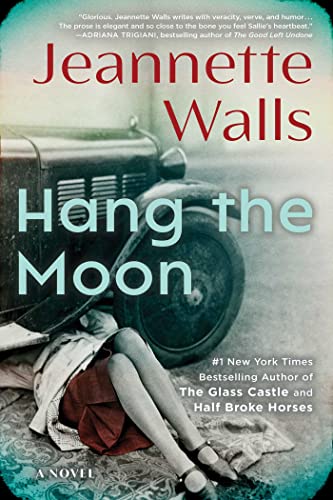
Hang the Moon, by Jeanette Walls*****

Jeanette Walls is the author of outstanding memoirs, most notably The Glass Castle. Her new novel, Hang the Moon, is brilliant, and you should read it. My thanks go to Net Galley and Scribner for the review copy. This book is for sale now.

Sallie Kinkaid is born and raised near the turn of the twentieth century in a tiny backwater in Virginia, daughter of its wealthy scion, “Duke” Kinkaid.  Her mother has died, and Duke has remarried, and now Sallie has a younger half-brother, Eddie. Sallie is a daredevil, given to occasional recklessness, whereas Eddie has a gentler, more introverted nature, with a love of learning and music. But one day, hoping to awaken some more adventurous aspect of his personality, Sallie takes Eddie out for a ride in her cart, and he is injured. Just like that, Sallie no longer lives with her father; she is cast out to live with an impoverished aunt, and there she remains for nearly a decade.

Sallie is a young woman when she returns, and now she must navigate the shoals of local politics, keeping clear of Duke’s sometimes unpredictable temper.  Duke owns nearly every property in the county, and he is deft at doling out favors and keeping the local peace, always in a way that works to his own advantage. Sallie has a hundred questions, some longstanding, and others that develop as she works for her father. However, questions are discouraged in the Kinkaid home. An aunt tells her, “Honey, there are some rocks you don’t want to look under.”

When the local economy is shaken by the unthinkable, Sallie must make some hard choices as she comes into her own. Moonshine has long been an unofficial, yet pivotal way that the local working class makes its living, and when feuds erupt and the government attempts to intervene, Sallie must choose sides. As she comes into her own, she discovers some hard truths about the family she thought she knew. Walls is at her best here, with a strong, resonant setting, a clear, credible plot, and unforgettable characters. This is the sort of book that one comes back to. Highly recommended.

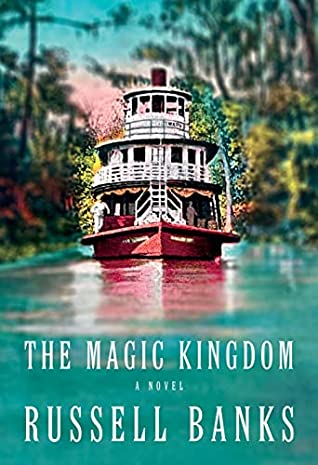
The Magic Kingdom, by Russell Banks*****

Some writers may fade as their bodies begin to fail them, publishing books that aren’t quite up to their usual standards; Russell Banks, on the other hand, seems to have saved one of his best for last. The Magic Kingdom tells the epic tale of Harley Mann, a boy that spends most of his boyhood on a Shaker plantation in Florida, and then becomes a real estate mogul later in life. My thanks go to Net Galley and Knopf Doubleday for the review copy. This book is for sale now.

Harley’s father dies when he is young, and his mother is forced to take him and his many siblings elsewhere. At first, they land in a religious cult on a plantation that works them like slaves; then Elder John, the head of a Shaker Colony in Florida, rescues them. Harley’s mother and most of his siblings become Shakers and remain with the colony until its eventual demise, but Harley has his doubts.

Nobody can craft character the way that Banks has, and he has melded a fascinating setting, one which begins over a hundred years in the past and follows Mann into his dotage in 1971, and which also incorporates a fair amount of Florida geography and history. Most of the story centers around Harley’s deep and abiding love with Sadie Pratt, a young woman being treated for tuberculosis in a nearby sanitarium. Sadie is not a Shaker, but is friend to them, and visits often when her health permits; Harley, just coming of age, falls for her hard. There’s a good deal of tension between Harley and Elder John, who despite all of his adherence to Shaker beliefs and practices on the surface, is also privately building himself a personal stake that only Harley knows about. By the time the book is over, I find myself wondering whether Harley’s character represents a real historical figure. No indeed; this is just the kind of magic that one finds in Banks’s novels, his capacity to build characters so real that they are nearly corporal.

The little shots off the bow that are fired at the Disney Corporation—by Harley, of course, and his representative after his demise, not by Banks—add a tinge of edgy amusement.

Because I had fallen a bit behind, I procured the audio version of this book from Seattle Bibliocommons, and so I can tell you that the narrator does a fine job, and it’s as easy to get lost in this story listening to it as it is reading it from the text; I did some of each.

This novel is brilliant, and all that love excellent literary fiction or historical fiction should get it and read it.

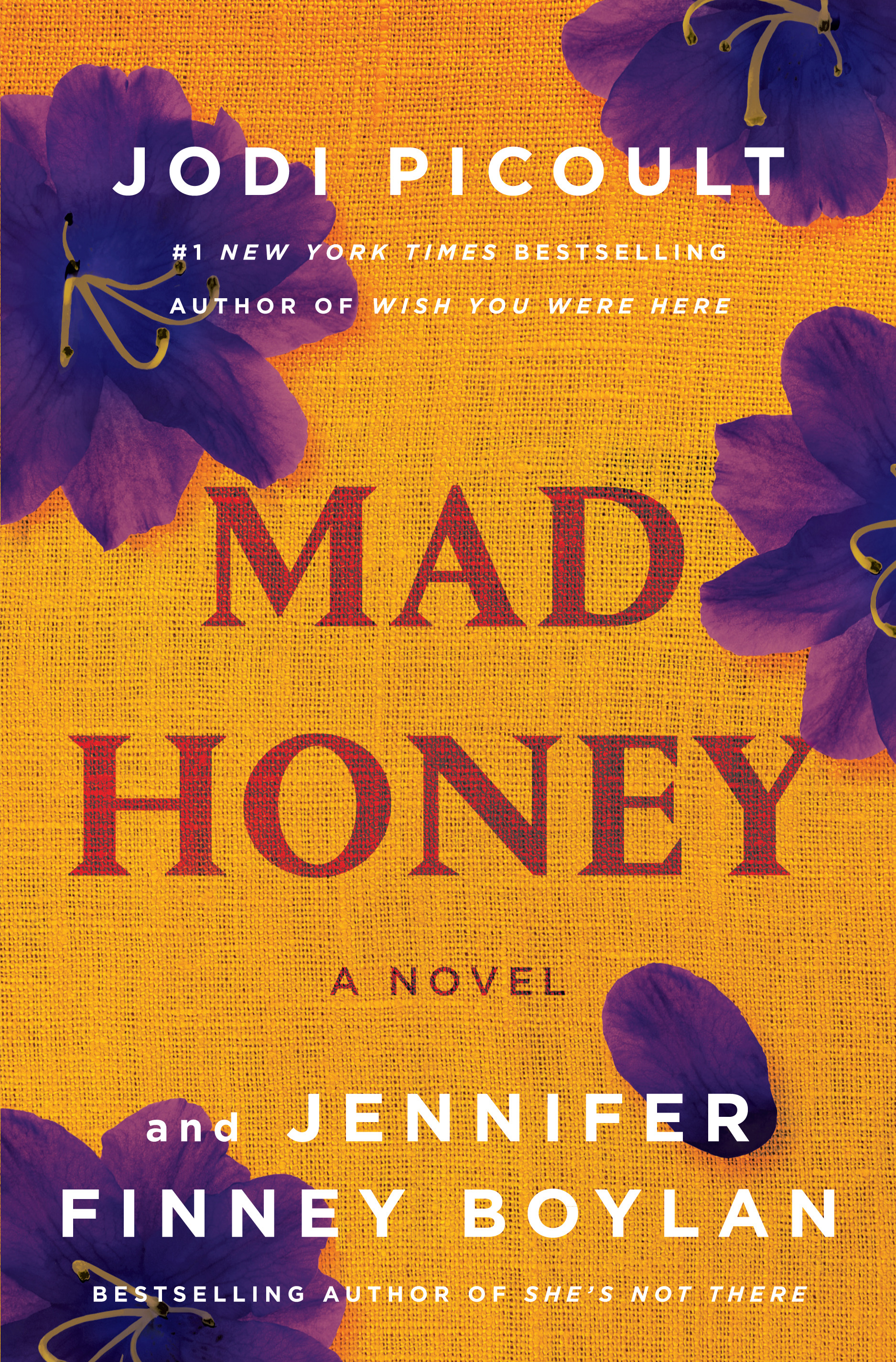
Mad Honey, by Jodi Picoult and Jennifer Finney Boylan*****

Mad Honey is the joint endeavor of bestselling author Jodi Picoult and Jennifer Finney Boylan. My thanks go to Net Galley and Random House Ballantine for the invitation to read and review.  This book is for sale now, and I recommend it to you.

The hallmarks of Picoult’s work are immediately evident. She frames her story around a particular area of interest, and so when one of our main characters, Olivia, is a bee keeper, I figure I am in for an education with regard to bees and honey; I am not wrong. Of late, Picoult has also used some of her fiction to promote social justice causes, and that’s here, too; I did a quick search on Boylan, her co-author, and learned that Boylan is one of the first transgendered Americans to write a bestseller, and this is the other focal part of Mad Honey, which features a trans character.

We have Olivia, then, the bee keeper, and her son, Asher, who is the light of her life. She took Asher and fled an abusive marriage, and enjoys her new life. She is close to Asher, and they talk openly and often; yet, there are things that Asher isn’t telling his mother, and she doesn’t see that.

Then there’s a new girl in town, Lily Campanello, a cellist, and Asher falls for her. Later, Lily is found dead, and suspicion falls on Asher. Olivia stands behind her son, and yet a corner of her mind has doubts. What if, when push comes to shove, Asher is his father’s son after all?

It’s tricky to write fiction that focuses on a controversial topic, and the critical ingredient is characterization. If the characters feel real to us, the story flows and the message becomes an integral part of their lives. We can’t reject the theme without rejecting the character. But it would take a true Grinch to step away from Olivia, Asher, and Lily. I want what’s best for the characters, and so I’m not focused on the authors and what they have chosen to discuss within this framework, but on the story. The writing flows like melted butter, smooth and inviting, and later, the suspense ratchets up almost unbearably, and I have to know what becomes of Olivia and Asher.

Because I am a bit behind, I check out the audio version of this novel at Seattle Bibliocommons.  There are multiple narrators, but the one that resonates most for me is the reader voicing Lily. I say this, despite the fact that she butchers the pronunciation of place names in the Pacific Northwest. Eugene, Oregon is not hard to say. Siuslaw and Willamette are trickier, but there’s only one pronunciation for each, and the reader should have done due diligence.

And now that I’ve said this, I can urge you to get this book and read it. For those unfamiliar with trans people, there’s some good information, and the story is a compelling one. There’s a twist at the end, and I would probably have left that out, as it doesn’t add much, although I can also see the reason it is included. Nevertheless, this is a story worth your time and money, whether as an audiobook or in print.

Now Is Not the Time to Panic! by Kevin Wilson****-*****

Now is Not the Time to Panic is, according to its author, Kevin Wilson, “a book about friendship, about memory, and about what it means to hold on to the person who we were, even as we become someone else. It’s about the ways in which art is the door that lets us walk into a new life, one that never seemed possible.”

Frankie is kind of a quirky kid, friendless and grieving her parents’ divorce and her father’s abandonment of his kids. She has nothing but time this summer, and so when Zeke, an even quirkier new kid, moves into the tiny town of Coalfield, Tennessee, the two are drawn together.

My thanks go to Net Galley and Ecco Publishing for the review copy. This book is for sale now.

Frankie invites Zeke over one day; her dad has flown the coop, and her mom is at work, so in order to make it clear that she hasn’t invited him over for carnal purposes, Frankie talks to him about her love of writing. Zeke says that he likes to draw, and so together, they make a poster. The words are Frankie’s, and they are indeed well written for a kid of sixteen years: “The edge is a shantytown filled with gold seekers. We are fugitives, and the law is skinny with hunger for us.” Zeke fills in the rest of the page with his artwork, and for good measure, they prick their fingers and comingle their blood on the poster. Then they dig out an old photocopy machine in Frankie’s garage, and make copies with which to furtively festoon the whole town. (After all, Coalfield isn’t a big place.) They don’t tell anyone it’s theirs, and enjoy the reactions to their guerilla art as sly observers.

The two teens share a lot in common. Both are outsiders; both are creatives; and both are living through the implosions of their families, with fathers that cheat and then leave, and mothers that are beside themselves with anger and shame.

Once the posters become noticed around town, rumors begin, and then copycats come along and make improvements, sometimes. There’s a hysterical piece in the local paper suggesting that their work is Satanic. Frankie and Zeke don’t say one word to anyone. They watch and they listen; they talk about it only with each other.

The crafting of these two characters, and their relationship, is well done, and I ache for both of these kids. The only time I see character slip is with regard to Frankie’s attitude toward sex. Her dispassionate take on it—she isn’t sure she really wants to, but maybe she should just do it and get it over with? Is not a mindset I’ve ever seen in a teenage girl, and believe me, I’ve known plenty of quirky ones. No, that’s a male attitude, and I suspect that Wilson would do better to use male protagonists, or else run his female ones by several very honest females in his chosen field, prior to publication.

As the summer goes on, I keep expecting the two to launch another joint project, but they don’t. She does some writing, and he draws, but there is no sequel, no follow-up. The poster is the poster. Shantytown, gold seekers, fugitives, hunger. Boom. That’s it. But years into the future, Frankie is still putting these damn things up. The heck…? I believe this of her; she is one strange person. Zeke’s mental health deteriorates that summer, and where that goes is completely credible. Those that work in the field will recognize Zeke, who is by far the better drawn of the two main characters.

This fascinating novel can be enjoyed by young adult audiences, because both of the protagonists are teenagers; however, this is also fiction that can be enjoyed by anybody. If you don’t read YA—and the truth is, I don’t, not anymore—you can still appreciate this one, and I recommend it to you.

Unlikely Animals, by Annie Hartnett*****

There are indifferent writers; good writers; outstanding writers; and then there are writers like Hartnett, that leave me with my jaw dropped down to my knees, thinking that I like to write, and you probably do, too, but friend, neither one of us will ever write like this. Not ever.

My thanks go to Net Galley and Random House Ballantine for the review copy.

Emma Starling is our protagonist, and she was born with healing powers in her hands. She went away to medical school, but was expelled for reasons that we don’t understand until later, and her healing touch is gone. She has quietly left school without telling a soul back home. She hasn’t even returned for a visit, but now she has been summoned unequivocally; her father is dying, and her mama wants her to come home. NOW.

There are enough points of view in this story to make your head spin. We have the graveyard crowd, for example, and since Everton, New Hampshire is such a tiny town, everybody knows everybody, dead or alive. When I first see that the dead are discussing the affairs of the living, I am dismayed, because the legendary Fannie Farmer has already done this in The Whole Town’s Talking. But soon it becomes obvious that this story isn’t derivative in the least; Hartnett takes this device and uses it in a different way, and it doesn’t dominate the story as Flagg’s does; these characters are there to provide a slightly more objective perspective than those that still live.

There are several points of view from among the living, too. And there are references throughout to the writings of Harold Baines, a naturalist instrumental in shaping the town and in particular, the iconic yet bizarre Corbin Park, which is open only to a chosen few. There are points of view offered from the critters as well; not all of the critters are real, however. And at the EXACT moment when I begin to think that the author should have pared this thing down, for heaven’s sake, because the organization appears to be all over the place, the narrative explains that “A good story doesn’t always follow an arrow, sometimes it meanders a little instead, so we hope you’ll excuse this tangent…It might seem unrelated, but sometimes a minor character doesn’t become important until later…The lives of the living often get tangled up in unexpected ways, especially in a town as small as ours, even when a ten-foot electrified fence splits it up.”

I howled, because it felt as if the author had read my mind!

An important plot point is the disappearance of Crystal Nash. Crystal was Emma’s best friend, and had lived with the Starling family as sort of an informal foster child. Crystal developed an addiction and disappeared; Emma and Crystal had had a falling out, and Emma tries not to think about her too much now. Clive, Emma’s father, seldom thinks about anybody else. He’s turned over every rock; slapped a poster on every telephone pole.

To say the least, it’s an interesting homecoming for Emma.

As if the many points of view don’t make for a complex enough story, Hartnett takes us back in time—sometimes just a few years, at other times, way back in the past—and I am awestruck at the way she pulls all of it together at the end, with no loose ends hanging. At the outset I had been sure that this story should have been streamlined, but at the end, when I look back to see what, if anything, could be cut without detracting from the story, there is nothing that’s superfluous. Not one thing. All of these odd bits and pieces are essential to the story she is telling; “meandering,” indeed.

Because I had fallen behind in my reading, I checked out the audio version from Seattle Bibliocommons, and it is brilliantly performed. Usually a story this complicated doesn’t work for me as an audiobook, but this one is outstanding and not hard to follow (although I did go back over the DRC for some quotes.)  Mark Bramhall and Kirby Heyborne do an exceptional job as narrators.

This is undoubtedly one of the finest novels we’ll see in 2022. Highly recommended in whatever format makes your heart happy.