Guisewite began publishing the comic strip “Cathy” in 1976,
the year that I graduated high school. It was a time of high expectations for
women, and the unrealistic suggestion that we would be able to “bring home the
bacon, fry it up in a pan, and never let you forget you’re a man,” as Madison
Avenue decreed, was daunting. Through
her sharply perceptive humor, Guisewite let her peers know that it wasn’t just
us; we were judging ourselves with an unfair yardstick. She kept it real, and
in doing so, kept us sane.
My thanks go to Net Galley and G.P. Putnam for the review
copy.
So how does cartooning translate to prose? Whereas the cute, punchy single-page entries
and single sentence proclamations—and the lists—are her most familiar territory,
my favorite parts of this memoir are the least cartoonish ones. Yes, I love the
way she takes down the women’s fashion industry and the unhealthy way it
affects our body images. She was good at
it forty years ago, and she’s good at it now. But the passages that drew me in
and let me get lost in her story are the more vulnerable, deeply perceptive
parts of the narrative, her fears for her aging parents; the struggle and
triumph of raising a daughter, one with special needs, alone; and the failure
of her marriage. I am in awe of the fact that she and her ex made each other
laugh until the tears came as they planned their divorce. Who does that? And of
course, she made me laugh too.
Guisewite stays inside her usual parameters, never veering
outside of the middle class Caucasian realm with which she has experience.
Younger women won’t get much joy out of this memoir; women that came of age
between 1965 and 1985 are right in her sweet spot, and it is to them that I
recommend this book. It’s available now.
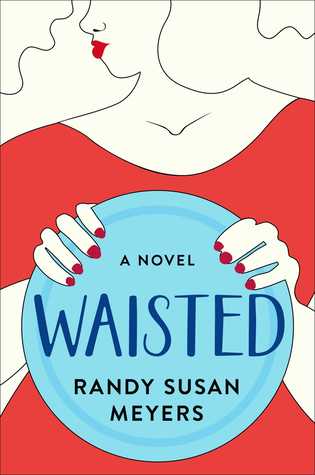
Randy Susan Meyers wrote The
Murderer’s Daughters and The Widow of
Wall Street. Her new novel, Waisted is
a fiercely feminist story that skewers the weight loss industry and a society
that “treats fat people like out-of-control horrors” and the war against women
with its “intersectionality of misogyny, fat shaming, [and] faux health
concerns.” Thanks go to Atria and Net
Galley for the review copy. You should read this book.
Alice married Clancy when she was “break-up skinny,” not
knowing that he isn’t attracted to any woman that isn’t thin. Daphne is
tormented by her 108 pound mother, whose toxic monitoring and obsession with
Daphne’s eating have nearly driven her daughter over the edge. Alice and Daphne meet at Privation, a live-in weight loss program in rural
Vermont. They and five other women sign on because they are promised rapid
weight loss free of charge, with the caveat that they must agree to be filmed
24 hours a day for a documentary. The program is not only extreme; it is cruel
and dangerous.
“Welcome to hell, ladies, where we recognize
that life is unfair, and you pay the price for every action you take…You’ve
eaten your way through pain, through loss, through happiness, and just for the
plain pleasure of crunching calories between your teeth. Not one of you knows
how to live with privation. So you landed here. The last stop.”
The women don’t know that there are no doctors here, or that
they are part of a nasty experiment to see what women will tolerate in order to
become thinner, even when it is obvious that such a program cannot be
sustained. Each time one or another of them considers decamping, there’s a
weigh-in that shows them to be even lighter than they were earlier in the week,
and with dreams of a new, sleek, lovable body ever nearer realization, they
persevere.
The readers that will relate to this story best are also the
ones that will have a hard time getting through the first half of it. Meyers
drives home so many uncomfortable truths that overweight women like me have
trained ourselves not to think about most of the time because they are painful.
Do it anyway. It’s high time someone wrote this book.
Apart from its very real underpinnings, the story is
far-fetched and features an unlikely outcome, but that doesn’t matter. A more
nuanced or realistic version would fail to deliver the message in as brilliant
a fashion.
This is urgent, angry, and at times darkly funny prose. It
will be available Tuesday, May 21, 2019. Highly recommended.
Cussy Mary Carter delivers books to the rural poor folk of
Troublesome Creek, Kentucky during the Great Depression. I read this quixotic
tale free and early, thanks to Sourcebooks and Net Galley; it’s available for
purchase now.
Cussy is the daughter of a miner; her mother is dead, and
her father is dying slowly of Black Lung, known to them locally as “the miner’s
sickness.” She has no siblings. The government pays her to follow every possible
winding path to reach out-of-the-way homes, loaning books, magazines, and the
scrapbooks assembled of odds and ends by the librarians themselves. It provides
a bright spot in an otherwise grim little town.
I like Cussy Mary, but I have to admit that I am more
attached to Junia, her mule—and if you read this book, you’ll see why.
Everything Cussy does is fraught with peril, and though I seldom do this, I
cheat and look ahead because although I can tolerate any fate for the human
characters here, I need to know whether anything will happen to Junia. Junia
serves as Cussy’s transportation, watchdog (watch mule?) and best friend.
Ordinarily I am no more attached to hoofed animals than any other city dweller,
but this plucky critter has me at hello.
One of the best single moments in historical fiction occurs
when Cussy Mary is confronted by a rattlesnake on a path. A shot rings out, and
a neighbor woman steps out of the trees holding a gun and yells, “Back. That’s
my supper.”
The story’s greatest strengths all have to do with setting and historical detail. Cussy Mary and her father are among a relatively rare racial group that no longer exists, people possessed of blueberry-blue skin. They were often shunned by those they lived among, some of whom regarded them as “colored” (as did local law), and others of whom feared they carried a curse. I had never known about the “blues” before reading this novel, and this is historical fiction at its best, that which educates us and makes us like it.
I would have liked to see more subtlety and ambiguity in the
development of Cussy Mary and the lesser characters. Everyone here is either a
good person or a bad one. Richardson’s good people never have bad moments or
vice versa. I understand when Cussy Mary turns down offers of food even though
she is hungry; part of it is the pride that is an inherent part of the culture,
and she also fears that those making the offer may be giving up their only food
of the day. I understand this the first time she tells us, and the second, and
the third…but by the time I see it again (and again, and..) I am rolling my eyes
and wishing fervently that once, just once she will say thank you and scarf
down the biscuit, or the apple, or the whatever. On the rare occasion she
accepts food, she takes it to someone else, and then she goes home and eats
thistles. It makes it difficult to believe her character, because nobody is
that saintly every minute of every day.
Nonetheless, I recommend this book to you, because there’s
nothing else like it. If there were a body of fictional literature widely
available regarding this time, place, and its people, I might say differently,
but as far I can see, this is it, and the setting is strong enough to just
about stand on its own. Those that enjoy the genre will want this book.
Edwards is the author of This
I Know, and here, once again, she creates a powerful story based on a youthful
yearning for identity. My thanks go to the author and her publicist for the
printed galley, and to Kensington and Net Galley for the digital copy. It will be available May 28, 2019.
Our setting is a small commune in California in the early
1970s. Our protagonist, Clover Blue, sleeps in a tree house with some of the
other commune members. There’s no running water or electricity, but we don’t
miss what we don’t have, and California has a mild climate. Though decisions
are made collectively, with younger and older residents each having a vote,
Goji is the spiritual leader of the group. In place of formal education, young
commune members study with him. Blue can read as well as other children his
age, and he knows more about nature than most would because it’s part of his
everyday experience. He doesn’t remember living anywhere else; his life is
happy, and his bonds with his communal family are strong ones.
But everyone wants to know their origins, and Blue is no
different. As puberty approaches, he begins to ask questions. He gains the
sense that older members know things they won’t tell him, and it heightens his
desire to find out. Goji promises him that he will be told when he turns
twelve, but his twelfth birthday comes and goes, and still Goji evades his queries.
And so the story darkens just a bit as Blue undertakes
research on his own. He has a hunch as to who his biological parents might be,
and despite the communal culture that regards every older person as the mother
or father of every younger person, he wants the particulars and is determined
to get them. The things he learns are unsettling and produce further questions.
A large part of the problem the communal elders face is that
the State of California does not recognize the commune, and the living
conditions and educational process used there are not legally viable. Because of
these things, Goji discourages interaction with the outside world, and
sometimes essential services—such as medical care—are given short shrift
because of the risks they pose. Instead, naturopathic remedies are used, often
to good result.
Edwards builds resonant characters, and I believe Blue, the
sometimes-mysterious Goji, and Harmony, the member of the commune that is
closest to Blue. There is enough ambiguity within each of them to prevent them
from becoming caricatures; everyone holds various qualities within them, none
being wholly benign or malevolent. The way that we judge these characters isn’t
built upon their ability to do everything well, but in how they deal with their
mistakes when they make them. In addition, some writers of historical fiction—which
technically this isn’t, but it has that vibe—fall into the trap of establishing
time and place through the cheap shortcut of pop cultural references and well
known historical events. Edwards doesn’t do that, but she does use the speech
of the time period so effectively that at times, I feel transported back to my
own adolescence. There are aspects of the period I’d forgotten entirely that
surprise and delight me; if there are errors, I don’t see them.
Ultimately, the story takes a turn that harks back
(somewhat) to George Orwell’s classic, Animal
Farm, in that while everyone at the commune is said to be equal, some are “more
equal than others.” Cracks in the foundation of their once-idyllic lives form,
and we see who has strength of character, and who is lacking.
If I could change anything, I would make the ending less
rushed, and I’d also urge the author to be less afraid of letting the ugly
parts play themselves out as they most likely would in real life. In this novel
and her last, it seems like the tragic aspects that occur near or at the climax
are a hot stove, and we have to move away from them quickly. I’d like to see
Edwards let the stove burn a little more.
I do recommend this
book to you. In fact, it may be a five star read, but it’s almost impossible to
evaluate it without comparing it to what the author wrote earlier, and this
made the five star standard difficult to achieve here. Those that love
historical fiction should get it and read it.
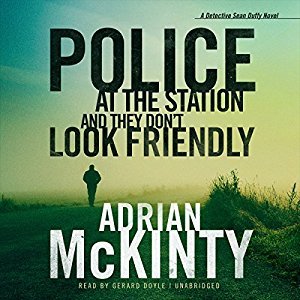
I listened to the audio version of this quirky, darkly funny mystery, set in Belfast. I only use audio books while I use my exercise bike. I hate exercise like grim death, and so my audio book is my incentive. My rule for myself is that it’s okay to stop cycling early, but if I do, I have to stop the book also. I never quit early while I was listening to this book.
The reader has a lovely Irish accent, and while I don’t know accents well enough to know whether it’s a Belfast accent, it certainly worked for me.
McKinty develops Sean Duffy in a way that is believable and
sympathetic, and there are a couple of surprise twists that made me laugh out
loud. I wonder whether McKinty made himself laugh while he was writing. It must
have been immensely satisfying.
My thanks go to the Goodreads friends that persuaded me to
try this book. I seldom dive into an unknown series this far in, but I had no
trouble keeping up with it, and will certainly watch for future installments. I
read enough mysteries that most of them have a sameness to them. This one
doesn’t.
Purely by serendipity, Backman’s collection of essays came
out in the US as my own son is initiated into fatherhood. My thanks go to Atria
Books for the review copy; it’s for sale today.
Backman is known to me as a fiction writer, and I have read
most of his novels, which are beloved worldwide. Here he delivers nonfiction
with the same gently philosophical voice. Despite the title, the essays are written for
adults; this is not a children’s book.
Backman waxes eloquent on diverse topics, and it sounds
sweetest—as always—when he focuses on what real men do. For example, all his
life, he says he has been told to stand up like a man, but he wants his son to
know that a real man should also know how to “stay seated, shut up and listen.” Women the world over, myself among them,
cheer this, and in saying it Backman helps make the world a better place. Other
parts are funny as heck, as when he describes trying to change a diaper on an
airplane.
The book’s only weakness is the overuse of the words “stuff”
and “crap,” throughout the text, and knowing the author’s signature style, I
suspect that this began as deliberate repetition for emphasis and as a form of
figurative language that somehow didn’t translate effectively.
That said, it’s a sweet little book and a good read, and its
timing begs for it to be a reverse-Father’s Day gift in the US, from fathers –or
better still, grandfathers—to sons.
Chris Pavone is the real deal. The Paris Diversion sees the return of CIA employee Kate Moore, the protagonist from his first novel, The Expats. This taut, intense thriller is his best to date, and that’s saying a good deal. Lucky me, I read it free thanks to Net Galley and Crown, but you can get it tomorrow, May 7, 2019.
Kate wears many hats, moving deftly from professional spy to
primary caretaker of two children, one of whom is medically fragile. Her
husband Dexter calls himself an investor, but he’s basically just a weasel. His
weak character comes into play in a big way in this story as he is tied to a
shady financial deal that in turn is tied–though he doesn’t know it– to a
terrifying terrorist event that takes place in the heart of France:
“She gasps. She is
surprised at her reaction, like an amateur. She has never before seen anything
like this. No one here has. What she sees:
a man is standing all alone in the middle of the vast open space,
looking tiny. He’s wearing a bulky vest, and a briefcase sits at his feet, the
sort of luggage that in action-adventure films follows around the president of
the United States, a shiny case lugged around by a tall square-jawed man
wearing a military uniform, a handsome extra with no speaking lines. The
nuclear codes…Yes, Dexter was right: that’s a suitcase bomb.”
Events unfold seen from the viewpoints of several different
characters. In addition to Kate, we have the bomb-wearer; his American driver; the
sniper assigned to take the bomb-wearer out; billionaire Hunter
Do-You-Know-Who-I-Am Forsyth; and a mysterious woman using the name Susanna. Points
of view change frequently, and the brief chapters become even briefer as the
story unfolds, creating even more suspense. Pavone (that’s three syllables—Puh-vo-KNEE)
has keen insight into the lies weak people tell themselves to justify their
poor choices, and at times he is wickedly funny. Favorites here are the
internal monologue of our ass hat billionaire; the moment Kate takes down the
security guard; and the exchange between Kate and Hunter’s assistant, Schuyler.
Because I spend several hours of every day reading, I can
almost always put a book down, even an excellent one. For the best books, I
reserve good-sized blocks of time when I won’t be interrupted, and these are
the ones I read with joy, rather than out of duty to the publisher. But it’s
been awhile since I stayed up late because I had to know how a book ended. The
prose here is so tightly woven that every word is important; in most books of
the genre, there’s a winding down period at the end of the book after the climax
has been reached and the problem resolved. In contrast, Pavone moves at warp
speed until almost the last word of the last chapter.
I have rarely seen a male writer that can craft a believable
female character, and Pavone does that. I appreciate his respect for women. In
addition, it appears that Kate may have met her own Moriarti, and so I suspect
both she and her nemesis will be back. I hope so.
To say more is to waste words, an unfair tribute to a bad
ass writer who wastes none. Get this book and read it. You won’t be sorry.
Best-selling author J.A. Jance is something of a legend here
in Seattle, and I came to her work as a huge fan of the J.P. Beaumont series. It
took me awhile to bond to the Ali Reynolds series—which is set in Not-Seattle–
but I am all in it now. Big thanks go to
Net Galley and Gallery Books for the review copy.
Our story commences inside a prison where a killer is
spending what’s left of his life and plotting vengeance. On his arm are
tattooed 5 initials which comprise his “A list” for the five people he wants
dead. He understands he’ll have to hire out the “wet work,” but that’s okay.
The voice Jance gives this character sends chills up and down my neck, and I
don’t get that way easily. We learn that Ali, our protagonist, is on that list.
Once the reader’s attention is secure, we go through a
complex but clear and necessary recap, which gets us through the essential
information that’s developed during the first 13 books of the series, which is
set in Arizona. So here, I have to tell you that I don’t recommend starting the
series with this book. I have read all or most of the series, but with a year
or so passing between each of these, I very much needed this recap to refresh
my memory. Young readers with sterling memories might be able to keep up with
it, but the audience that will love this story best are middle class Caucasian
women over 40. The reader doesn’t necessarily have to go all the way back to
the first book to begin reading, but I would urge you to go back to an earlier
book somewhere else in the series and work your way forward. The books fly by
quickly, and it’s definitely worth it. While some authors lose the urgency in
their prose when they get older, Jance just gets leaner and sharper, and this
story is among the very best I’ve seen her write, which says a lot.
The premise is centered around The Progeny Project, a
nonprofit organization that helps children born through artificial insemination
find their biological relatives for the purpose of learning about their own
medical background. It begins when one such young man, in desperate need of a
new kidney, makes a public plea for information on Ali’s television news
program. Results come in quickly and reveal that Dr. Eddie Gilchrist’s
fertility clinic did not use the donors he advertised, instead inseminating his
many female patients with his own sperm. Events unfold, and the doctor is
convicted of murder, and is sent away for life in prison. From there, he seeks
revenge.
The plot is among the most original I have seen in many
years, and its execution requires tight organization, which Jance carries off
brilliantly. She could have written this mystery successfully without lending a
lot of attention to the characters, but she doesn’t do that. It’s the
combination of an intricate but clear plot and resonant characters that makes
this story exceptional.
In an earlier book we were introduced to Frigg, an AI entity
created by an IT guy that works for an internet security company owned by B.
Simpson, Ali’s husband. Frigg disregards what she considers to be unreasonable
laws against hacking, and attempts to take Frigg down completely have been
foiled by the AI herself. This scenario creates all sorts of vastly amusing
problems when Ali herself needs personal security; Frigg learns she is on the A
List, and her vigilance is both essential and illegal, at times.
The second and most fascinating character is Hannah
Gilchrist, the elderly, very wealthy mother of Dr. Eddie. When she learns that
her only son has decided to have everyone responsible for his ruin killed, she
decides she’s going to help him. She has terminal cancer and no other children,
and a sort of modern, rich Ma Barker personality emerges. Hannah is a dynamic
character and I absolutely love the way Jance develops her, laying waste to a
multitude of sexist stereotypes.
If I could change one thing, I would have Jance lose the
word “gangbanger,” a stereotype in itself, and include some positive Latino
characters in the Reynolds series.
Make no mistake, this mystery is brainy and complicated. You
don’t want to read it after you have taken your sleeping pill. But the
masterful way Jance braids the plot, the return of Frigg, and the development
of Hannah all make it well worth the reader’s effort. But again—don’t let this
be the first of the series for you. Climb aboard an earlier entry and work your
way into it. In fact, newbie readers will likely have an advantage over long
time readers, because you can read these mysteries in succession without having
to wait a year to come back to the series.
With that caveat, this mystery is highly recommended.
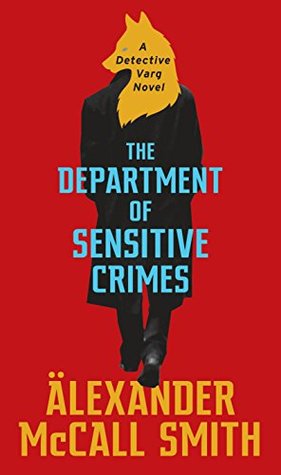
The author of the renowned #1 Ladies Detective Agency books has begun a brand new series, and when I found a chance to get in on the ground floor, I hopped onto it. This one is the first in the Detective Varg series, and the author’s signature drollery is in full effect. Big thanks go to Edelweiss and Random House Pantheon for the review copy. It’s for sale now.
Detective Varg works for the sensitive crimes unit of the Malmo police. The unit exists for the purpose of investigating cases that require research. The setting is one of mind numbing blandness; Martin, our investigator’s dog, is growing deaf, and Varg is teaching it to lip read. We read about skin problems, a dairy farm, aging bikers, and my eyes begin to glaze over. And then, eureka! A case! There’s been an assault in the market. Someone has entered the puppet theater and stabbed its proprietor in the back of the knee. Not only a crime, but a crime of violence! Everybody wakes up and roars into action. Varg and Anna, his partner, head for the scene of the crime; they could conduct their interviews at the station of course, but Anna needs to buy eggs anyway.
The stabbing is the first of three stories, but each piggybacks on the last, so you should read them in order. Once the stabber has been caught, tried, and has tearfully confessed, we move onto a missing person’s case featuring an imaginary boyfriend that can’t be found anywhere, followed by other disappearances. Yes, things are hopping at the Department of Sensitive Crimes.
Smith has a dry, sneaky sense of humor, so if you read this while you are partly thinking about something else, you’ll miss a lot of the funniest bits. This is what I appreciate most about this author. Some humor writers assume that the reader is as stupid as a sack of rocks, and they drop the joke, but they can’t leave it there, and so they drop it again and then explain it, and it ruins the whole thing. Smith is the opposite. He’ll include a remark that is almost offhand, and then there’s a beat of about three seconds where I start to read on, and then it hits me, and my eyes scroll back. Did he say…oh my god. That is hysterical. And so if you’re paying attention you’re in for a treat, and if you’re checked out, it’s your loss.
This satirical series is off to a strong, vastly amusing start, and I rate it five giggles. Mother’s Day and Father’s Day are right around the corner; could your parent use a laugh or two? Who knows. If you buy it for your parent, they might let you read it when they’re finished. Highly recommended.
Delicious! This book is straight-up fun. McMahon—a successful
author, but new to me—takes an old school ghost story and drops it into a
contemporary setting, while providing alternating glimpses of what happened in
this same place long ago. My thanks go to Net Galley and Doubleday for the
review copy. You can get this book Tuesday, April 30, 2019, and I don’t know
how you can stand the suspense until then.
Helen and Nate are ready for rural life. Using recently
inherited funds, they purchase a chunk of land in Vermont, quit their jobs, sell
their Connecticut condo, and head for the hinterlands. They will build their
own house. They will get chickens and sell eggs on the side. They will grow
their own food and be almost self-sufficient. Just smell that fresh air! Oh,
aren’t they adorable.
Meanwhile, Olive, who has recently lost her mother and whose
father is unraveling, is channeling Wednesday Addams, lurking in trees nearby
and wishing these new people gone. “I banish you,” she says quietly. No one
hears; well, nobody alive does anyway.
Nate and Helen are hurt and perplexed by the local residents’
reception. Why is everyone so surly? Why are they looking at them side-eyed all
the time? Turns out the locals don’t
want them upsetting Hattie’s ghost. Everybody knows that Hattie is in the bog
that is part of Helen and Nate’s land. The last owner, an elderly man that fled
to Florida and won’t talk about it, apart from advising the new owners to get
out of there also, saw some things. Not everyone does, though. Hattie chooses
who will see her, hear from her. And Hattie isn’t happy.
At first, Nate and Helen are oblivious. Their belongings
disappear, but that turns out to be Olive, whom they will befriend. But the more
Helen learns about Hattie—who reveals herself to Helen and Olive both—the more
distracted she is by her. Time and money that should be directed toward the
house and improvements to the new property are instead spent on deep research,
and on carrying out Hattie’s wishes. It becomes an obsession; first she
procures a hunk of wood from the tree on which Hattie was hanged, thinking it
will be perfect to frame the doorway she and Nate are building. Hey, who wouldn’t
want something like that in their new home? Next, she finds old bricks from the
mill where Hattie’s daughter died. And Nate can see this is just nuts, and he
tries to talk her out of it, but she won’t let him in. She is lying to him now.
But Nate has an obsession of his own: he keeps seeing an albino deer that
visits him, and then leads him into the swamp.
A man could get lost in there. Nate wouldn’t be the first.
Olive is on a mission of her own. She wants to find the
treasure that Hattie buried somewhere near the bog. She is sure it is there,
and it was a project that she and her mother worked on together. She secretly
hopes that if she can find the treasure, her mother will come home to her.
The mystery of where Olive’s mama has gone segues in and out
of the ghost story, and the plotting is deft and surefooted, never slowing,
never inconsistent, and relentlessly absorbing. Helen is obsessed with Hattie;
Nate is obsessed with the deer; Olive is obsessed with the treasure and her
mama; and I am obsessed with this story.
The typical way for a book like this to end would be with
the discovery that some sketchy character has somehow created all of the events
that seem otherworldly in order to profit materially or achieve revenge.
Although I am impressed with McMahon as we near the climax, part of me is
expecting this. But this writer doesn’t use tired plot points or tired
characters, and she sure as hell doesn’t end this tale in a way that is trite
or expected. I guessed one aspect of the ending, but by the time I saw it
coming, we were closing in on it, and I can’t help but believe the author means
me to see it just before it’s revealed. And this is a hallmark of an excellent
thriller: there aren’t brand new characters or plot points tossed in at the end
that make it impossible for the reader to have guessed what’s going on. McMahon
is a champ, and her respect for her readership is evident in the way she spins
the climax and conclusion.
The book’s last paragraph is masterful.
Highly recommended to those that enjoy a classic, well
turned ghost story. As for me, I’ll be watching for this author in the future,
and….oh hey. Did you hear something just now?







 Seattle Book Mama