
 The Invisible Guardian has received widespread acclaim in Spain. It will be available to English speaking audiences March 8, 2016. My thanks go to Net Galley and Atria Books for the DRC, which I received in exchange for an honest review. I rate this book 3.5 stars and round upward.
The title comes from the Basajaun, which translates to “invisible guardian”. It’s a mythological creature, large, hairy, filled with kind intentions; sort of a goodhearted Bigfoot. Protagonist Amaia Salazar is a detective who finds herself drawn back to the Basque country, where she grew up and where her family resides, in order to solve a mystery. Locally, many residents regard the Basajaun as undeniable reality. Salazar deals with this, in addition to limitless family drama, in order to solve the crime.
I really struggled with this novel. There were times I felt I was being talked to death, and I am guessing that Basque conversational tradition may be very different from that of the US. I was stunned that a detective would be permitted to run an investigation in which her own family members are considered suspects, but since it isn’t discussed beyond a brief conversation in which Salazar is offered the chance to hand the case off to someone else, it is probably a thing that is done in that part of the world. I can’t see how it would become an international best seller if not. Or perhaps I am naïve.
At times it feels as if there was far too much personal drama, and it seems to distract from the mystery. Some of it turns out to be germane to the case, and other parts are included primarily to develop the protagonist. On top of the relationship issues between Salazar and siblings, Salazar and in-laws, and Salazar and her colleague, she is trying to become pregnant, and we have to deal with her feelings about that. If it were up to me, the pregnancy thread would be yanked and saved for a future installment if used at all. It seems like one thing too many.
I did a huge eye-roll during the scene in which a local resident wants to know whether the body was bitten by a bear or the Basajaun, and Salazar explains that it’s too early in the investigation to know, one way or the other. There are also hideous sexist assumptions and statements in the dialogue throughout the book, but these will be dealt with near the end, so don’t abandon the story over this alone.
To the positive, I wanted to read this novel partly to stretch my own cultural boundaries, and in that I succeeded. When I think of Spain, I tend to think—as urban dwellers often do—of its cities, art, and music. I knew nothing, nothing, nothing about the Basque people. I still don’t know a great deal, but I got my toes wet, and everyone has to start somewhere.
In addition, Redondo can tell setting like nobody else. The descriptions of areas I have never been and never will are adroit and visceral. I felt as if I were the invisible presence standing alongside Salazar.
It seems unfortunate that there is new information introduced during the last ten percent of the novel, without which the reader has no possible opportunity to unravel the mystery. However, the plot and pace pick up significantly, and many of what seem to be extraneous story elements are braided together so deftly that my overall impression of the novel is greatly improved.
For those interested in learning more about the Basque culture, this novel is recommended.
 I had promised myself not to read any more Holocaust memoirs. What is to be gained? But when I saw this title available as a review copy on Net Galley, I thought that there is actually something to cheer the spirit in recounting how some of these monsters were tracked down and brought to justice. To date this is the most comprehensive telling of that achievement that I have read. Thanks go to Simon and Schuster and also to Net Galley for the DRC. This book is available for purchase May 17.
 Initially I was surprised not to have seen the autobiography of such a famous individual before. Twain, I learned at the outset, composed his memoir with the stipulation that it not be published until 100 years following his death, because he wanted to be entirely frank about some situations and persons without incurring the displeasure of them, their children, or their grandchildren. Twain died in 1910, and his memoir had been finished just four months. For those of us living now, it was worth the wait. Although I was fortunate enough to snare the DRC for volume 3, I had to go out and hunt down volumes 1 and 2. It’s well worth obtaining and reading for those with the attention span and literacy skills it requires.
 I’m a long time reader of novels by JA Jance, but until I read this new release, I would have told you that her Arizona series are second string efforts compared to the JP Beaumont titles set in Seattle. Not anymore! Thank you to Net Galley and Touchstone Publishers for the DRC, which I read in exchange for an honest review. The book will be available to the public March 8.
 “Dead men tell no tales, Jacob. The ones left to living are the ones who write the history.”
 My older sister gives away most of the books she reads when she is done. She doesn’t have a lot of shelf space, and she likes the idea of other people getting to read something free. So imagine my surprise when, seeing how much I liked Randy Pausch’s The Last Lecture, she gave me this book and said, “You may want to read this.” Almost as an afterthought, I asked, “Do you want it back?” I was amazed when she said, “Yes. Take your time, but I would like it back.”
 Barclay is an established writer, with a number of best sellers to his credit, but he was new to me. My thanks go to Net Galley and Berkley Publishing Group for providing me with a DRC in exchange for an honest review.
 I am always on the lookout for a new, well written female detective series. There are some Grand Masters out there that I adore, but the problem is that I can read faster than they can write. So when I was given the opportunity to check out Delilah West, a sleuth whose stories originated during the latter half of the 20th century, I jumped on it, and I am so glad I did. Thank you, Brash Books Priority Reviewers Circle, for the free DRC. This book is available for sale now.
 Lisa Lutz is best known for her series, The Spellman Files, which I confess I have not read or watched on television. I came to this stand-alone story brand new, and can tell you that it’s fresh and original, a real kick in the pants. Thank you Simon and Schuster, and thank you too, Net Galley, for the DRC. I picked this thing up and then hardly put it down, but my review had to wait awhile in order to be within the courtesy-window of no more than three months from publication. And it gave me some time to think.
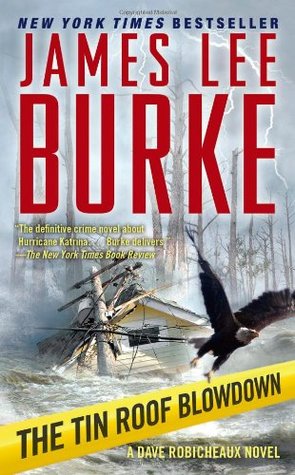 Sometimes people say they “ran across” a book, and that is close to how I came to read James Lee Burke for the first time. I had been tidying up for company, and my daughter had selected this book from the “free” pile at school, then decided she didn’t want it. She is a teenager, so instead of finding our charity box and putting it there, she dropped it on the upstairs banister. I scooped it up in irritation..then looked at it again. Flipped it over…read the blurb about the writer. This man is a rare winner of TWO Edgars. Really? I examined the title again; I hadn’t read any novels based on Hurricane Katrina, so why not give it a shot?
 Seattle Book Mama