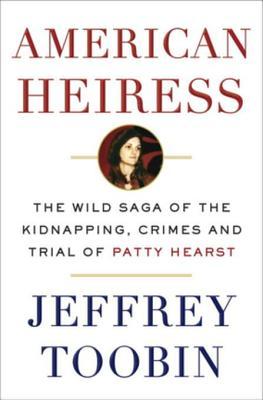
 Sometimes the truth is stranger than fiction, and the Patty Hearst fiasco was definitely a case in point. This reviewer is old enough to remember the news coverage at the time; here Toobin presents us with what is likely the most objective and well researched account of the kidnapping and subsequent crime spree in which Hearst was a participant. Thanks go to Net Galley and Doubleday for the DRC, which I received in exchange for an honest review. This book was released digitally earlier this month and is available to the public now.
In February of 1974 Patricia Hearst, favorite daughter of Randolph Hearst, the publishing magnate, was kidnapped from the Berkeley apartment she shared with her fiancee. The group that grabbed her called themselves the Symbionese Liberation Army, or SLA. It was an historical time when many young people considered themselves revolutionaries, inspired by the Civil Rights movement, the women’s movement, and the Vietnamese and Cuban revolutions. But the SLA was an odd formation at best. They were the product of students from the University of California at Berkeley that had been part of a project to tutor prisoners at the Vacaville penitentiary. Instead of the prisoners gaining literacy, the students were mentored by a handful of prisoners in how to handle explosives and commit crimes against private property and the US government. The entire SLA, it would later be learned, consisted of seven Caucasian people under the age of 30 and one Black man named Donald DeFreeze. By the time this group of irresponsible nut wings made headlines, there wasn’t a legitimate group on the Left that would have anything to do with them.
But the story gets weirder still. The heiress had become bored with her boyfriend and was a terrible student; her future was looking lackluster, even depressing when the kidnapping took place. Within a few weeks, Hearst had joined her captors, brandishing an automatic weapon during a bank robbery, one of a number of crimes in which she participated. And the enormous amount of media attention paid to this band of misfits set tongues to wagging from city, to suburb, to the hinterlands: was Hearst truly a convert, or was she just following orders to stay alive?
Other books have been published about this bizarre series of events, but as far as I know, all of them have been written by those with a stake in the outcome. Toobin, an independent journalist who’s written for the New Yorker, has examined court documents and a host of other primary resources to ferret out the truth. Hearst chose not to cooperate with his book, which is the most objective treatment of the subject I have seen.
Most of the book chronicles events that are too strange to be fictional, and there is tragedy as well. But my favorite passage is when things are falling apart and one of the kidnappers tells a friend on the outside that a “Ransom of Red Chief” situation is developing, and everyone would really like to release this woman so the cops would stop searching so hard, but she just won’t go home. I also enjoyed the anecdotes regarding attorney F. Lee Bailey.
This is a fast read, with plenty of dialogue. There are no slow spots. And I can almost guarantee that no matter how off kilter your own life is right now, Hearst’s adventures will make it look tame indeed.
 Shelley Costa is a writer to remember. Her dazzlingly dark humor and her ability to spin a tight original story that builds irresistibly caught my eye with her first Val Cameron mystery, Practical Sins for Cold Climates. I began checking in with Henery Press regularly when I logged onto Net Galley, and my stalking paid off big time. Thanks go to Henery and also to Net Galley, from whom I received a DRC in exchange for an honest review.
 I received a DRC of this memoir from Random House through its First to Read program. I read the book free in exchange for an honest review. Though it wasn’t a good fit for me, I think there are niche readers out there that might enjoy it.
 Doctors tell us that laughter improves our health. Now and then, I go in search of laughter in my favorite medium, between the covers of a good book. Thank you to Net Galley and Doubleday Publishers for this DRC. Not only is The Grand Tour achingly funny, it’s also strong fiction. It is available to the public August 9, 2016, and you ought to read it.
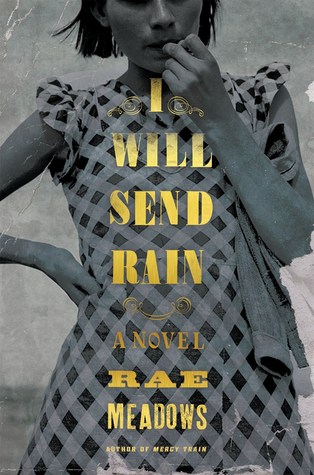 Annie Bell could have chosen to marry a well-to-do member of the gentry in her home town, a man with fine china and a full time kitchen servant. Young and buoyant, she chooses love instead, and moves to Oklahoma with Samuel Bell to start a brand new life on the free land that’s been provided. What could go wrong when two young people are strong and dedicated to one another? Oh, it’s an old, old story in so many ways, but Meadows makes it brand new. Thanks to Net Galley and Henry Holt Publishers, I read it free and in advance in exchange for this honest review. It will be available to the public August 9, 2016.
 And you thought Fifty Shades of Gray was controversial. Just remember that you heard it here first: if this novel has legs and gets around, it’s going to create a lot of noise. I could almost smell the book-burning bonfires as I read the last half. And lucky me, I read it free thanks to Net Galley and St. Martin’s Press, from whom I received a DRC in exchange for this honest review.
 I rate this novel 2.5 stars and round it upward. Thank you to Kensington Books and Net Galley for allowing me to read this book free and in advance in exchange for an honest review. Here it is.
 I had never read anything by John Connolly before, but this eerie thriller has made a forever-fan of me. Thanks go to Net Galley and Atria books for the invitation to read and review. Connolly cooks together a hair-raising thriller with a handful of horror, a smidge of fantasy and a dash of magical realism; the resulting brew is one that nobody else could possibly cook up. For those that write, reading this dark redemption tale is likely to produce both admiration and despair, because this novel is born of a talent that no creative writing workshop will ever be able to produce. You may write, and I may write, but nobody else will ever, ever be able to write like Connolly.
 “Hot flashes are rolls of unreasonable, unseasonable heat that create a rush—a flush that floods the face from neck to hairline. A hot flash is itchy, prickly and provocative—like a sudden spike of fever that produces a mean and cranky irritability.”
 Many people don’t know much about Cuba, the tiny island nation a mere 90 miles from the coast of Florida. The American media has distorted the Cuban Revolution for as long as I can remember. Before the revolution, which took place in 1959, Havana was like Bangkok, a place where little girls prostitute themselves so they won’t starve to death, where wealthy visitors can experience every pleasure, innocent or corrupt, known to humanity but where most citizens have little chance of even having their basic human needs met. Cuba’s alliance with the Soviet Union (USSR) helped the Cuban people defend themselves from US efforts to overthrow the revolutionary government, but the alliance also led to a period of Stalinist repression that darkened artists’ worlds for a period of time. Randall discusses all of this in her introduction. Following the period Cubans call the Rectification Period (reference mine), Stalinist practices were peeled away, and more freedom of expression created a more hospitable environment for artists, in addition to strengthening the revolution itself. In Cuba art is not privately sold as a general rule, and artists receive a salary for what they do, paid by the Cuban people.
