Fidelity, by Jan Fedarcyk***-****

fidelityRetired FBI agent Jan Fedarcyk makes her debut with this intense spy novel, and it is bound to keep the reader guessing and turning pages deep into the night. Thanks go to Simon and Schuster and Net Galley for the DRC, which I received for review purposes. I rate this story with 3.5 stars and round it upward.

The selling point for the new reader of what is destined to become the Kay Malloy series, is that the author has spent 25 years in the FBI and knows what she’s talking about. Though she reminds the reader that a lot of the FBI agent’s job is done at a desk sifting through endless forms to fill out and reports to write and not much of what we see on TV, we also know that she can spot an implausible situation a mile away and not go there or do that.

So the initial question that came to me was whether someone that’s worked for the Feds for a quarter century still has enough imagination left to write interesting fiction, and now I can tell you straight up that Fedarcyk does, and she can, and she did. I like the level of complexity, which is literate without being impossible to follow. The reader will want to give her story full attention; nobody can watch television and read this book during the ads. It’s well paced and the suspense is built in a masterful manner.

Characterization comes up a little short, and I can imagine that this will be her key focus in writing future books in the series. Kay is so darn perfect, and I never feel I know her deeply, despite the discussion of her past and how she is motivated by it. We see her tempted to use her position for a very small, somewhat justifiable personal reason briefly, but she is nonetheless something of a cardboard hero all the way through. Likewise, the Russian spies are big, blocky bad guys, thugs that drink Vodka. The spy novel tradition has been honored, but I would like to see more layers to these characters as we move forward. The ending, while it surprises me to some extent, is not one that the reader had a reasonable chance of guessing, but to some extent that’s true of a lot of espionage thrillers.  What might be really cool would be to see an espionage version of Kay’s own Moriarty come into play.

As is always the case for me when I read espionage thrillers, police procedurals, and other novels that involve heroic cops, I have to construct a mental barricade between what I see in real life and what I am willing to believe when I read fiction. One of Fedarcyk’s characters snorts in derision about the time when people were willing to die for Marxism, and I have news: some of us still would. But for a fun ride, I am delighted to suspend reality and buy the premise until the book is done.

One area where I struggled—and to be honest, I don’t know whether anyone else will or not—was with two characters, first Luis, whose last name isn’t used very much, and then Torres, whose first name doesn’t get used much either. This reviewer has taught more than one student named Luis Torres, so this may factor into my confusion about 75% of the way through the story when I realize that these have to be two separate people, but for awhile I am convinced that Uncle Luis Torres has mentored her into the field, and so when the story arc is near its peak, I have to go back and reread some of the novel to be certain I knew who is who. Luis is the uncle; Torres is the agent and mentor; they’re two separate guys.

All told, this is a promising start to what is sure to be an engaging series. The world needs to see more strong women in fiction, and so I welcome Kay Malloy and look forward to seeing future installments. A fine debut, and it’s for sale now.

The Girl from Venice, by Martin Cruz Smith*****

thegirlfromvMartin Cruz Smith is the best-selling author of Gorky Park and the Arkady Renko series. His new stand alone novel, The Girl from Venice, shows he hasn’t lost his magic, and it quickly became my favorite DRC once I began reading it. Thanks go to Simon and Schuster and Net Galley, from whom I received an advance copy in exchange for an honest review. You can get this book today.

Cenzo Vianello is a fisherman from the tiny village of Pellestrina, an ancient place steeped in tradition. He once had two brothers, but now has only one; Hugo died in Mussolini’s Africa campaign, and his remaining brother Giorgio is a movie star as well as an influential member of the Fascist government. Cenzo detests him for his politics, but even more for having stolen his wife Gina, who died when a bomb fell on the movie set to which Giorgio had escorted her.

All of this is background, complex and deliciously ambiguous in many aspects. It is within this context that Cenzo finds the girl, Giulia, floating like a corpse in the lagoon. To his surprise, he finds she is alive. She is Jewish, from a wealthy family and on the run. She figures that if the poet Byron could cross that lagoon, then so can she. Cenzo hates to spoil her dream, but he tells her this is a dangerous plan, and for many reasons. He develops a plan for her rescue, but later finds he is ambivalent about having turned her over to someone else. Is she safe? Does she remember him? Who can he trust, and who not?

One must, after all, be careful who one embraces.

“The trouble was the war. It should be over. Instead, the Americans were taking forever while Mussolini ruled a puppet state and the Germans, like decapitated ants, went on fighting.”

 When one fears defeat, one may become desperate; in some ways, the Fascists now have little to lose, and so their behavior becomes more extreme. There are partisans that oppose the Fascists, but it’s difficult to be sure who is sincere, and who is a double agent.

Part of the suspense inherent in successful spy novels is the feeling of looking over your shoulder, wary of everyone all the time. The relationship between Cenzo and Giorgio is particularly well developed and is intertwined with this aspect of the story; we never know whether one of them is going to kill the other, and when Giorgio says he will help Cenzo, we wonder whether he is helping lead him into a trap.

Although Giulia provides us with a premise and a scaffold for the story, not to mention a really beautiful book jacket, hers is not the character we see developed. The characters that are meaty and interesting are the brothers.

That being said, Smith should get credit for including an interesting female side character in Maria, the wife of the consul of Argentina, a woman with shadowy business and motive. Maria isn’t there to seduce anyone, not really; she’s also not a victim. In a field riddled with endemic sexism, I was happy to see this progressive element, and was fascinated by the brief, spectral appearance of her husband from his sickbed.

This story is a page-turner, an unmissable tale that will keep your light burning late and distract you from your daily pursuits until it’s over.  Don’t miss this one.

American Gothic:The Story of America’s Legendary Theatrical Family—Junius, Edwin, and John Wilkes Booth, by Gene Smith***

americangothicI was invited to read and review this title by Open Road Media and Net Galley. Thanks to them for the DRC, which I received in exchange for an honest review. This title was released to the public October 4 and can be purchased any time you want it.

Although I love a good night at the theater as much as anyone else, I came to this bearing a love of history and a strong affinity for the American Civil War. I didn’t realize to what extent this would be purely a biography of this family of actors, and it was because of this that I became somewhat disillusioned.

Smith has carefully documented the lives of Junius, Edwin, and John Wilkes Booth. He talks about their predecessors, their early development, and their careers, and he documents everything he talks about. Those studying nineteenth century American actors will want this book, because these men were the most famous of their time period, tickets to see them perform much sought after.

My problem is with the elephant in the room.

It’s hard not to approach John Wilkes Booth without thinking about military history, and about his role in what was essentially an incipient CIA within the Confederacy. Other sources neatly document the fact that it was not a case of simple mental illness on the part of an assailant that made President Lincoln, the greatest president in the history of the USA, die. There was a great deal of planning involved, of research about where he would be and when he would be there. Contacts were made, and a plot was launched that was initially much more far reaching in scope, but with the surrender of Lee’s army, others within the cadre left town fast and didn’t look back. Booth was the one that decided he was going to follow through, one way or the other. How much of it was due to a longing for an historical spotlight, how much was due to emotional instability, and how much was a calculated effort to revive the Confederacy by assassinating Lincoln, we do not know, but what we do know, and what Smith doesn’t say, is that this was not a matter of simply yielding to impulse, of losing one’s sanity and suddenly deciding to kill a great leader. It was done in a calculated way, and I can’t respect this biography when this information is omitted. All we hear about are references to early signs of “madness”, as if this horrible deed can be swept to the side by the use of one well-placed word.

That being said, The New York Times loved this book. If the history of acting is your wheelhouse, you may want to read it. There’s nothing of method or technique that will help a developing actor, but it doesn’t pretend to be. It’s about the actors’ lives and careers, and that’s pretty much it.

Those that treasure history as a bigger picture, or that are looking for some tiny morsel to help them understand what made John Wilkes Booth carry out this monstrous, well-planned killing will remain as much in the dark when the book ends, as they are now.

The Legacy, by Gary Gusick***

thelegacy Gusick’s hero, Detective Darla Cavanaugh, became an instant favorite of mine when I read the screamingly funny Officer Elvis, and so when I saw that Random House Alibi was about to publish this third book in the series, I scrambled quickly over to Net Galley to snatch up a DRC. Though Gusick is a tremendously courageous writer, one that seeks to stand uncompromisingly on the side of the angels, this time he’s stepped over a line in the sand that was better left uncrossed. I look forward to the next book in the series, but am not sure I can recommend this one.

The book will be available to the public December 6, 2016.

Darla has been planning a leave of absence. She and her husband, a doctor that runs the only remaining abortion clinic in Mississippi, have been unable to have a child of their own, and there’s a baby waiting for them in China. But she has to go quickly, or the adoption won’t go through. It is then that she receives a special request to investigate a murder. She says no; this is one time her family comes first. But the summons is from the governor. His daughter is dead, and he wants Darla to find out who did it.

This reviewer actually has an elderly relative that was tapped to investigate the murder of a governor’s aide in the 1980’s, and he didn’t want to do it either. There was a question of organized crime being involved, and it was dangerous. But as he pointed out at the time, there are some things you can’t say no to. It’s like being invited to tea with the queen; you have to go. And so it is with Darla.

By far the most endearing character here is Darla’s partner, Rita Gibbons:

“Rednecked Rita was…half a licorice stick short in the manners department, a deplorable character flaw in the state of Mississippi.”

When a witness that’s being interviewed coolly inquires as to whether Rita is a “Natchez Gibbons”, Rita tells her that she is actually a “Red Hills Trailer Park Gibbons”, from outside of Louisville.  And oh, how I wanted to engage, because this character is enormously entertaining, but there’s a problem, and it is at the core of the story’s premise.

You see, at the beginning of the story, we learn that Caitlin Barnett, the governor’s adopted daughter, who is African-American, was found hanging from a tree on the campus of Ole Miss. And once we have a lynching—whether it’s racially motivated and a real lynching, or whether there’s an ulterior motive and perhaps the body was posed there to deceive us—we can’t have any fun.

Here’s my litmus test to see if I am overreacting: I imagine giving this novel to one of my African-American family members to read, and I imagine what their reaction to it would be. Would they give Gusick props for pointing out that racism is still alive and flourishing in American society? Would they be glad that he has raised the issue of the Confederate flag? Or would they be slightly queasy, as I was? And immediately I knew that I would never, ever ask any of them to read this book, and if I did, they would probably take my husband aside sometime soon and inquire as to whether I was on any strange new medications.

In other words…no. Once there’s a lynching, or the appearance of one in a story, there can be no giggles, and we can’t rock and roll. It’s a hot stove top kind of issue; it’s not something we can touch, whatever our fine ultimate intentions might be, if we’re going to be partying anytime soon.

I still admire Gusick. Who else would have the rare courage to open oh, so many cans, and release oh, so many worms? But if one has the heart of a lion, one also needs some judgment, and this is where his story comes undone.

Although I cannot recommend this book to you, I look forward to reading this author’s work in the future. He’s done great work before, and he’ll do it again.

Fire Lover, by Joseph Wambaugh*****

fireloveratruestory John Orr was a fire fighter that wanted to become a cop. The psychological test weeded him out; his personality wasn’t stable enough for a guy that carries a gun for a living, and they turned him down. Over the years, however, he became not only a fire chief, but a highly respected arson investigator, and took tremendous pride in the fact that he was part of the law enforcement community. However, occasional snubs from that group made him livid, and he dealt with his rage in the most horrific manner imaginable: he became the most prolific arsonist in California history. Joseph Wambaugh captures this true crime story in electrifying detail. I received my copy from Open Road Media and Net Galley in exchange for an honest review, but you can get your copy Tuesday, October 18, 2016 when it is digitally released.
It starts with the Ole Hardware Store fire. Ole is a family owned business, but it is large in scale, the size of a big box store, and four people die there. Wambaugh provides personal, poignant details of those that perish, and I appreciate this. The white Volkswagen is particularly moving.

Orr doesn’t see it as poignant or tragic, however; he is enraged at the cops and insurance investigators for calling it an accident, and in order to achieve recognition for his twisted projects, he sets more fires. More. And still more. And as the fires increase, the budget, which had been going to be cut, isn’t cut after all, and Orr has all the work he can handle and more, because he is investigating his own crimes. Time and time again, he is seen at the sites of fires doing uncharacteristic things, or before an alarm has yet been sounded, but no one is ready to suggest that he is the party responsible until it is screamingly obvious.

The author is tremendously skilled at shifting the mood from the somber, to the ironic, to the occasional moment that is genuinely comical, without ever missing a beat, setting an inappropriate tone, or dropping his documentation, which is meticulous and must have taken a lot of years to compile. I usually am not fond of true crime stories because I know I may not like the ending; the author can’t choose how it comes out if his story is true. But this one drew me like a moth, and I had to get a closer look.

Wambaugh chronicles Orr’s life as well as the arsons, investigations, and then the trials that follow, and he does it brilliantly. He received an Edgar Award for Best Fact Crime, and it was an honor he earned.

Highly recommended.

The Birthday Boys, by Beryl Bainbridge**

thebirthdayboysThe Birthday Boys is a fictionalized account of the Scott expedition’s travel to Antarctica in 1910. It’s told sequentially through the perspectives of five men that participate, each picking up where the last has left off and of course, also including some personal reflections and memories to make them more real to us. I was invited to read and review this novel based on my enjoyment of the book Ice Brothers, which was also a maritime tale (and is reviewed here: https://seattlebookmamablog.org/2015/01/03/ice-brothers-by-sloan-wilson/ ). Thank you to Net Galley and Open Road Media, but this isn’t my book. I pushed myself all the way through it hoping for some redeeming aspect of it to pop up at the end, but it only gets worse as it goes, at least from my perspective.
Our story begins in Cardiff, and the men and The Owner (always capitalized) are eager to get started before the Antarctic winter sets in, so they pass their whaler off as a yacht in order to prevent safety regulations from slowing them down. They understand they are sailing across the world in a leaky tub, but one of them is too unprincipled to care, and the others are so darn young. In fact, wouldn’t reaching the destination on one’s twenty-first birthday be the best gift ever? Hence the title.

At the outset, I struggled a bit with some of the technical terms, looking up “plimsol line” and a couple of others, but by the 15% mark I had my legs under me, so to speak, and felt more confident. Soon thereafter, however, the nasty references to gender and race came into it. I looked back at the copyright; since this author, highly respected in the UK and winner of awards, was born in 1932, might this be a digital release of a very old book? But not so much: the original copyright date was 1991. Perhaps Dame Bainbridge felt that ugly racist terms might provide some flavor here. Likewise, the women included here, generally wives of the men involved that were tucked safely away at the base camp, were carping or hysterical, squabbled with one another, and Mrs. Scott, the only woman with any character at all according to the narrative, kept insisting that she hated women.

Whoa.

The plot is rugged and gruesome. If not for the issues just mentioned, I might compare the writing to that of Jack London, fascinating for those that love the adrenaline rush of life-or-death adventures, but too grisly for me. There’s some good work with figurative language and at times the scenes are tremendously visceral. Yet at times the pace actually plods along rather slowly for a book of its kind, and so I find myself wondering how this writer managed to be recognized by the queen; that is true, at least, until I find the following passage:

“It’s difficult for a man to know where he fits in any more. All the things we were taught to believe in, love of country, of Empire, of devotion to duty, are being held up to ridicule. The validity of the class system, the motives of respectable, educated men are now as much under the scrutiny of the magnifying glass…”

Well, perish the thought!

If not for the racism and sexism I’d call this a three star read. If an Antarctic expedition thrills you and you have the stomach for the…never mind. I can’t finish that sentence without scrunching up my face and squinting, so let’s go with the bare truth: I don’t recommend this book to anybody.

Being a Dog, by Alexandra Horowitz****

beingadogHorowitz is the author of Inside of a Dog, and here she follows it up with an examination of the sensory experiences a dog encounters, primarily that of smell.  I received my DRC courtesy of Scribner and Net Galley in exchange for this honest review. And though I’ve never been a science maven, Horowitz’s unbridled enthusiasm for dogs had me at hello. It’s a book bound to engage any dog lover.
So, do you have a dog?

I’ve had a dog nearly all of my 58 years, with a brief interim here and there.  I’ve never been dogless long, though; either a dog has found me, or I’ve gone looking for one. And so I was glad of the opportunity to read more about what makes my dog—right now it’s Ox, the oversized beagle puppy—work. I’d read a fair amount about dogs, particularly beagles, my favorite breed, and I thought I was well schooled, but I learned a great deal from Horowitz that I hadn’t known before, or in one main instance, in a way I had known intellectually, but not in my gut.

Almost every dog lover has heard at some point that a dog tends to be governed by its smell, and that this is its dominant sense. But until Horowitz took it apart for me and gave me the details, I didn’t grasp the implications. For example, when we throw the ball, the dog pauses before running after it, right? And with our last little dog, my husband and I would note that he wasn’t really looking in the right place, and we concluded that he was as dumb as a box of rocks. We’d yell; we’d point to it. And eventually, after he had sniffed its perimeter, he’d hone in on the ball and bring it back. And this book explains why that is exactly the correct way to do the job, if one is a hound (or other dog) rather than a human.

Sight is so important to us humans; next comes hearing. If we are in a carnival’s haunted house, and if the first room is sightless and soundless, what do we do? Do we sniff? Of course not! We fling out our arms in front of us or to the sides, partly to find out where things are, and partly to protect ourselves from slamming our face into a hard surface. And now when I consider Ox’s sense of scent, after which is hearing, I realize that by the time he has to look at something, he’s probably gained most of the information he needs already. Why would we fling our hands out in an ungainly manner if we can see and hear? And so indeed, why would my beagle do a visual scan if he can find what he wants through the use of sniffed air currents and hearing? After all, he always brings the toy back to us.

Chapters that engaged me less contained miniature chemistry and physics lessons, never my favorite, and some had longer passages having to do with human olfactory sense than I really wanted to read. I confess after the first few times the author moved from dogs’ senses back to those of humans I skimmed until we were back to the dogs.

There was so much here I hadn’t seen. For example, where does one find the best material for search and rescue dogs, or arson, bomb, drug, cadaver dogs, and so forth? I’ll give you a hint: I was crushed to find out that my beloved hound dogs aren’t necessarily the favorites here.  But it sure is interesting!

Once I had read this book, I felt that I knew my dog a lot better, and this new information solved many of Ox’s previously puzzling habits. To learn more, check out Horowitz’s new release, which became available to the public yesterday.

Because although I don’t know whether a dog is man’s best friend…I know he’s mine.

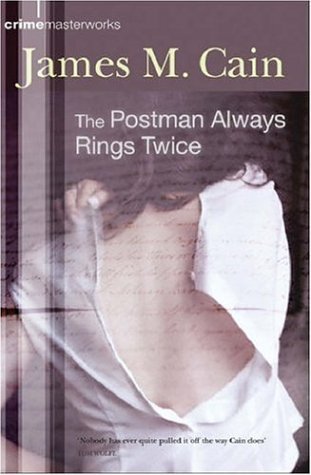
The Postman Always Rings Twice****

thepostmanalwaysringstwiceWell, they do say karma’s a bitch.

I fell heir to a first edition hard cover copy of this classic 1934 crime fiction. It’s too well worn to be a collector’s item, so instead of selling it, I decided to just enjoy holding a book in my hands that could have been held, hypothetically, by my great-grandparents. I think I enjoyed the crispy yellow pages and the old school print more than I enjoyed the story itself.  With wide margins and plenty of dialogue, it was a quick read, and before the weekend was over I’d finished it.

Our protagonist, Frank, is a drifter that does odd jobs and occasional crimes as he travels through Mexico and the Western USA; the story itself is set in California. He comes to an out-of-the-way place where a Greek immigrant and his wife run a small roadside restaurant. The owner is interested in expanding the business to include car repair, and hopes that a free meal and a bed for the night will lure Frank to stick around and work for him. Instead, Frank stays and finds a white-hot attraction to Cora, the owner’s wife. The two of them make love like cats in a pillowcase, snarling and biting and tearing at each other, and they like it so well that they decide to kill the Greek guy so they can do it together forever.

Those that don’t follow history may not know that at the time this story was published, U.S. xenophobia toward immigrants from Eastern and Southern Europe was at its pinnacle. Jim Crow and the Klan had silenced any open dissent from African-Americans with a reign of terror, but it was somewhat commonplace for Caucasians, who were by far the largest group in terms of population and certainly in terms of power and money, to make nasty assumptions and references about people from Greece, Turkey, Italy, and the surrounding area.

So it’s within that context that Cora declares that although her husband Nick loves her and treats her really well, he repulses her because he’s “a little soft greasy guy with kinky hair”. He wants her to have his baby, and she doesn’t want to touch him. She’d hate to go back to turning tricks, but she would far prefer to be with fair, blonde-haired Frank than Nick Papadakis.

The story arc here is flawless, and I can see how it became a classic, but it has many aspects that haven’t aged well. There are nasty remarks about Mexicans; Cora urgently wants Frank to know that she’s white, even though her hair is dark. She isn’t “Mex”. And although I understand that some people do like rough sex, I had to take a deep breath when Frank became aroused and showed it by blacking Cora’s eye for her.

Right. So you see what I mean.

The way the story is plotted is ingenious, and the characters are consistent all the way through; the ending is brilliantly conceived and executed.

For me, though, one reading is enough.

Doctorow: Collected Stories, by EL Doctorow*****

doctorowcollectedEL Doctorow died last year, and the literary world—well, at least the English-speaking part of it—mourned. I know I did. He was one of the finest writers ever to grace the planet, and so when I spotted this collection of stories, even though I understood that I had probably read most or all of them already I snapped it up. Thanks go to Net Galley and Random House for the DRC, which I received free in exchange for this honest review. The collection will be available to the public November 1.

I am bemused by “The Writer in the Family”; I had read it before, but it’s worth reading again. Families are complicated, and Doctorow deftly creates a deeply dysfunctional dynamic with this one. Check out the premise:

“In 1955 my father died with his ancient mother still alive in a nursing home. The old lady was ninety and hadn’t even known he was ill. Thinking the shock might kill her, my aunts told her that he had moved to Arizona for his bronchitis…And so it came about that as we mourned him in our stocking feet, my grandmother was bragging to her cronies about her son’s new life in the dry air of the desert.”

But Grandma can’t understand why her son isn’t writing to her; this will never do. Thus the aunts approach the protagonist. “You’re the writer in the family,” they open, and then present the obligation to him, that he must forge a letter to Grandma from his late father. The aunts will go to the nursing home and read it aloud to her; all he has to do is write something. And of course one letter isn’t enough; there must be more, more, more, and so even as he is grieving his father’s loss, our protagonist, the good son, nephew, grandson that doesn’t make waves, is required to plagiarize one letter after another in his father’s name, until a shift alters the equation.

Because Doctorow wasn’t just any writer, I visited his Wikipedia page before writing this review, and I learned that his first name was Edgar and that he was named for Edgar Allan Poe; he was expected to become a writer. I trust his parents were satisfied. At the same time, I found myself wondering how many times he had been told that since he was the writer in the family, it was up to him to do this, that, the other. All speculation, of course, but they say to write what you know, and perhaps to some extent, he did.

On my actual bookshelves, the ones made with wood and that have books made of cardboard, cloth, and paper on them, I have half a shelf devoted to this writer’s work, and so when I downloaded this DRC, I went and retrieved the collection of his short stories that I already owned (and paid for), All the Time in the World, which was published in 2011. I wanted to see what difference there was. I found that this new collection has two stories I hadn’t read before, and so that was where my focus began. For those that also already have this author’s complete works up to now, the new short stories are “Baby Wilson” and “Child, Dead, in the Rose Garden”. The other difference is that the short story on which his outstanding novel The Waterworks is based is presented here. That one is short indeed, and it’s strong enough that it’s easy to see why he selected it to expand into novel form (which I highly recommend).

Ordinarily I would say that I’d have been annoyed had I paid full jacket price for this one, with a dozen reprinted short stories I already own; the premise for a novel I already own; and two lonely stories that are new to me. But this is Doctorow, and so my rules are different. Were I not a book blogger and able to get a DRC, I would probably wait for this one to turn up in used bookstores so that I could buy it on the cheap, but one way or another, I would have to have it. And to be sure, both stories—though maybe not good choices for the pregnant reader, given that they involve a dead child and an abducted newborn—are absolutely brilliant. Baby Wilson in particular builds irresistibly and is a masterpiece, but the voice in the Rose Garden story is guaranteed to produce chills.

I also reread my old favorites, among them “Walter John Harmond”. Whoa.

As always, Doctorow’s writing is hyper-literate. If you try to read this while doing something else, you will be lost, and I don’t recommend it to anyone for whom English is not the mother tongue unless the reader is so steeped in the language as to be comfortable with heavy literary fiction.

Don’t try to skim; savor it.

Highly recommended to the fluent reader that loves great literary fiction.

Combustion, by Martin J Smith*****

combustionPaul Dwyer is dead, a floater that has only been found because his construction business diverted the water from the place where his body is dumped, and it dries up in the Southwestern desert heat, leaving his body exposed to the world.  I was lucky to be able to read this book early, thanks to an invitation from Net Galley and Diversion Publishing, in exchange for this honest review.  I am overjoyed to rate it five stars. I knew nothing at all about either Smith or Diversion, but it turned out to be a risk that worked out in my favor and the author’s.

Our detective is Ron Starke, a single man whose father has Alzheimer’s. The reader cannot help but warm to him as we see him appear in his father’s room, hamburgers in a paper bag, prepared to patiently have the same conversation with his dad that he had with him several times yesterday and most likely will have tomorrow too.

Shelby Dwyer, the victim’s widow, is a very wealthy woman now. She isn’t sorry that he’s gone, and neither is their teenage daughter Chloe. Dwyer was a violent, ugly man in private, regardless of the shine he demonstrated publicly. Naturally, Shelby is the chief suspect, a thing made more difficult by the fact that she was Starke’s girlfriend a decade ago, when they were in high school.  But it’s a small town, a tiny exurb of Los Angeles, and everyone really does know everyone, aside from Starke’s supervisor, Kerrigan, a recent transplant from the big city. To make matters even more awkward, Starke had been considered a shoo-in for the job Kerrigan now occupies, and Kerrigan knows it.

He has a feeling that his new boss is gunning for him.

The story is told from alternate points of view, and Smith creates whiplash tension by shifting between them at key points.  Character development is solid, and it makes me wonder about the possibility of a series emerging from this debut.

Shelby may be rich now, but she is in tremendous personal jeopardy. All of the lonely nights spent holed up in the study, cruising online for connections she can’t find at home, have led her to expose herself in a horrifying way. And as she is forced to confess to Chloe about the unwise things she has said to another visitor in a chat room, a person using the handle LoveSick, and despite the horror of the moment I had to smile, as the traditional tables are turned and 17 year old Chloe has to tell her mother that you should never, never provide a stranger with personal details.

Smith’s debut is hot as the desert sun, a page turner that will live in your head after the last page has turned. Those that know me are aware I finish an average of three titles weekly for review, and so months or even weeks later if I am contacted by the writer’s publicist, I sometimes have to flip back through my records to remind myself…wait, this what which book again? And this is especially true of mysteries, which no matter how unique, tend to share a certain sameness. But in this case, that didn’t happen. The settings are so resonant, the characters so well sculpted that I felt as if I were an unseen guest among them.

It’s for sale today, and I highly recommend that you read it.