
 Fans of Emerson’s Thomas Black mysteries will be as pleased as I was to see this, the 14th in the series. Black took a very long nap and seemed to have all but disappeared for awhile, but then he was back with Monica’s Sister, followed by this title. There was no DRC for this one, so I picked it up free using my Amazon Prime digital credits. It was a good way to spend them. The book was released in 2015, so of course you can get it also.
We start out with one of my three most tired devices for a mystery novelist: Black and his sidekick, Snake are hogtied in the trunk of a car. I rolled my eyes in the way that made my second grade teacher caution me might make them stick that way forever—an outstanding science lesson that remained with me long after the legitimate curriculum had drifted away—but because I like this series so much, I kept reading anyway. And it was worth it.
Eventually of course Black stops discussing being stuck inside the trunk, and he remembers back, back, back to how all this came about. And that’s the story that is great fun and also well written.
Black grew up in the working class here in Seattle, but his father did errands and handyman work for a wealthy widow that went by the nickname Doda. Dad is long gone, but Doda is still there, and she hires Black to find Pickles, a dog she gave to Mick and Alex Kraft. The Krafts, by peculiar coincidence, had also tried to hire Black recently in order to find out who was harassing them; Mick had experienced a string of terrible luck that he believed was too sudden to be a coincidence. Black told him that sometimes bad luck really is just bad luck, but the next thing you know, they’re both dead. Police are calling it a murder and suicide; Doda just wants the dog back. She’ll pay a pretty penny if Black can find Pickles and bring him safely home.
In this matter, Black’s friend Snake, usually the irresponsible party where the two friends are involved, is the sensible one that points out the truth, a very good reason to turn the dog job down:
“You hate rich people. Think about these guys. The rest of the world works for a living, but these guys have nothing to do all day but drink Mai Tais and sit around the pool waiting for their dividend checks to arrive in the mail. It burns you up. I know it does.”
Snake is right. Black hates the rich, and I have a sneaking hunch that Emerson does too. So in this tale, we have a couple of spoiled men—no longer young enough to be called brats—known as Chad and Binky. One is Doda’s son, and the other is the son’s best buddy. Their massive resources coupled with a life of leisure and surfeit of free time give them the capacity to play elaborate pranks, and both show a solipsistic disregard for the effect their games have upon the lives of others. They fit Snake’s description to a tee.
Nevertheless, Black takes the doggy job, and so we have two mysteries, the official dog-finding mystery, and the unofficial mystery Black’s conscience requires him to tackle regarding the Krafts.
One small fact-checking blooper hit my I-don’t-think-so-button, and that was the widely-believed myth that all juvenile records are sealed once the doer of the crime turns 18. In reality, after a number of years, a hefty filing fee, and a ton of complicated paperwork, the person in question can have the particulars of their crime locked away, but if it was a relatively small offense, that may make matters worse, because anyone running the background check will see that the person did something in their youth that they want concealed. Most juvenile offenders never want to see a courtroom again when they are older, and most don’t have the extra money to throw at a court procedure anyway, so the misdeed stays on the record until they grow old and die. It never vanishes from the record, as some folks, sadly some of them juveniles looking for trouble, believe. At least, that’s the truth in Washington State, and that’s where Emerson lives and where his story is set.
Now back to our story. Emerson is a champ when it comes to pacing, and he’s one of the best there is when it comes to bouncing a straight man off a colorful sidekick like Elmer “Snake” Sleazak. The story would be no fun at all without Snake, but with him, it’s immensely entertaining. The sly banter and the unexpected, off-the-chain behaviors will put a smile on your face; if you don’t find him funny, check your pulse to make sure you aren’t dead. Add another side character, a neighbor kid named Charlie that was friends with Pickles the dog, and there’s charm all over the place. People often underestimate kids, who are often our best observers: “Charlie knew the neighborhood like a cheating husband knew every creaky stair on his front porch.”
This is a page-turner that will make your own troubles seem oh so small, and for those that find themselves with a long weekend at hand, this book will provide the excuse you may need to just chill for awhile. One way or the other, this is a well written story, deftly handle with just the right balance of mirth and suspense. My records tell me I have read over 700 mysteries since 2012, and that doesn’t even take into account most of what I read during the previous decades of adulthood, and so I am picky. I see a device that I’ve grown tired of, and a star falls of my rating. But as for you, if you lean leftward and love a good private eye story, this could well be a five star read.
Recommended to those that lean left and enjoy detective fiction and comic capers.
 James Lee Burke is a legend, a venerable and highly respected writer known for his luminous prose and quirky characters. In this, his second work of historical fiction in a planned trilogy, he demonstrates that he can still work magic better than ever. I received this DRC from Net Galley and Simon and Schuster in exchange for an honest review, but I would have paid full freight if I had to, and I rarely say that about any book anymore.
 Nothing Short of Dying is Storey’s first novel, and it’s full of no-holds-barred action. Despite some inconsistencies, it’s a good read, featuring a protagonist alienated, as so many Americans are, by time spent in prison. In some ways it is very much a tale of 2016 America. I received my DRC free and in advance in exchange for my honest review; thanks go to Net Galley and Scribner.
 Clifford D. Simak wrote fiction, mostly science fiction in the form of short stories, for more than fifty years. Thanks to Net Galley and Open Road Integrated Media, I’ve been binge-reading for the better part of a year. I received this DRC, as I did the others, in exchange for an honest review. This is my fourth Simak collection; most of its stories are brilliant and have stood the test of time, though a couple of them haven’t aged as well as the rest.
 I was originally turned down for a DRC of this novel when I requested it last spring, and I took the unusual step of following up with Atria, more or less begging for it. I’ve been reviewing titles for Net Galley for two years and have received nearly 300 DRCs, so it is a sign of my interest level that I went to this extreme to read this one in advance in exchange for an honest review, and it’s a sign of decency and responsiveness that a representative from Atria Books invited me to review it after all. Although I am grateful , this five star review is not about gratitude, but a measure of the importance I attach to the issues it addresses and the skill with which the story is told.
 Sometimes the truth is stranger than fiction, and the Patty Hearst fiasco was definitely a case in point. This reviewer is old enough to remember the news coverage at the time; here Toobin presents us with what is likely the most objective and well researched account of the kidnapping and subsequent crime spree in which Hearst was a participant. Thanks go to Net Galley and Doubleday for the DRC, which I received in exchange for an honest review. This book was released digitally earlier this month and is available to the public now.
 Shelley Costa is a writer to remember. Her dazzlingly dark humor and her ability to spin a tight original story that builds irresistibly caught my eye with her first Val Cameron mystery, Practical Sins for Cold Climates. I began checking in with Henery Press regularly when I logged onto Net Galley, and my stalking paid off big time. Thanks go to Henery and also to Net Galley, from whom I received a DRC in exchange for an honest review.
 I received a DRC of this memoir from Random House through its First to Read program. I read the book free in exchange for an honest review. Though it wasn’t a good fit for me, I think there are niche readers out there that might enjoy it.
 Doctors tell us that laughter improves our health. Now and then, I go in search of laughter in my favorite medium, between the covers of a good book. Thank you to Net Galley and Doubleday Publishers for this DRC. Not only is The Grand Tour achingly funny, it’s also strong fiction. It is available to the public August 9, 2016, and you ought to read it.
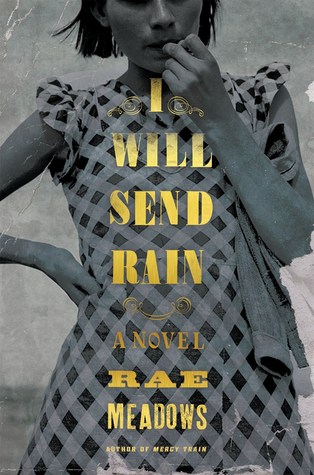 Annie Bell could have chosen to marry a well-to-do member of the gentry in her home town, a man with fine china and a full time kitchen servant. Young and buoyant, she chooses love instead, and moves to Oklahoma with Samuel Bell to start a brand new life on the free land that’s been provided. What could go wrong when two young people are strong and dedicated to one another? Oh, it’s an old, old story in so many ways, but Meadows makes it brand new. Thanks to Net Galley and Henry Holt Publishers, I read it free and in advance in exchange for this honest review. It will be available to the public August 9, 2016.
 Seattle Book Mama