
 Take a former journalist; make him a paramedic in a high-poverty, high-danger area for a decade; then turn him loose again to write about it, and he will play his readers like violins and make us like it. A Thousand Naked Strangers is a high octane, gloriously visceral ride in an ambulance and out of one, through Southeast Atlanta, Georgia. Thank you to Net Galley and to Scribner for the DRC. Since I read multiple galleys at a time and I loved this one best, I tried to feed it to myself in small nibbles, like Mary Ingalls hoarding her Christmas candy, but it was just too riveting and I could not stay away.
At the memoir’s beginning, our guy is just looking for work. With just a few months of training, he can become an EMT. His journalistic career wasn’t working out as he had expected, and he found himself working as a paperboy instead, delivering the newspaper for which he had written. That’s about as rock bottom as it gets.
He becomes an EMT; then he sets out to discover whether he wants to commit to the extra year and a half of schooling required become a medic. Once in, he’s hooked, not so much in spite of the risk and unpredictability of the job, but because of it.
And when you think about it, what other job pays so very little, involves so much danger, and gets so little respect? Teaching comes to mind, but being a rescue worker trumps even that, particularly for the low pay and insane hours–holidays missed–to do it, a person needs to be young, and to be an adrenaline junkie. And for a decade, Hazzard fits that description.
When he starts out, he is callous, as youth often are, speculating with his partner about what constitutes the perfect call. The perfect call, to their way of thinking, has requirements that are measured in the number of dead and wounded, the amount of danger. Does the patient have to survive in order for it to be a perfect call? Nah.
Over the years he matures, and he becomes more respectful of the patients with whom he deals. He talks to addicts, hookers, and children in a way that is forthright and kind. The job takes a lot out of him, but it also gives him a lot. He grows up. He deals with the dead; the nearly dead; those that are feigning death; and those that are just looking for a free ride somewhere. He delivers babies in record numbers, and he transports a guy on a roof down to the ambulance. He sees just about everything, from suicides to homicides, from the domestically abused, to the kid with a roach in her ear. He plays the wildest imaginable pranks, and once in awhile he gets called on the carpet for it.
Some of the incidents described in this memoir are just drop-dead funny, if you’ll pardon the pun, and I laughed out loud more than once. Some are incredibly dark. Some just left me with a feeling of awe. But although the tone changes many times, the pacing is absolutely consistent. Hazzard’s journalistic background shows; every single word is there for a reason. It is tight, taut, and urgently compelling, all the way through.
So it’s entertaining, but it’s also educational. I didn’t know the distinction between an EMT and a paramedic before I read this memoir. I also didn’t know that not a holiday goes by without someone having a heart attack. I didn’t know that just about everyone, regardless of their level of intoxication, says they’ve had two drinks. And I didn’t know about the tension between paramedics and firefighters, between paramedics and cops.
There’s more, but you can’t have it all in this nifty review; I’ve given you enough to move forward. If you want your own job to look easier, get this memoir. If you’re retired and have a little more time to read now, get this memoir. If you are staying home with little kids and wonder when you should call an ambulance and when you should deal with your own mess, get this memoir. And if you are considering going into the field yourself? Get this memoir!
It’s for sale January 5, 2016, but you can order it right this minute.
 Military history and World War II buffs will enjoy this well written third installment in Jackson’s Sergeant George Yeoman series. I hadn’t read any of the others in the series, but it didn’t matter; it serves just fine as a stand-alone novel. Thanks go to Net Galley and Endeavour Press for the DRC, which I received free of charge in exchange for this review.
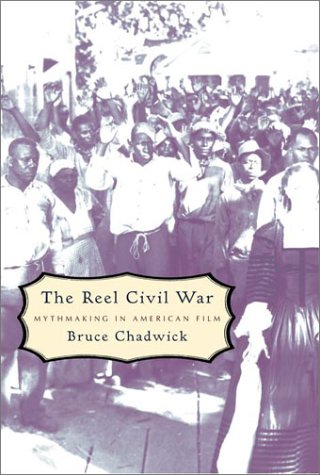 I found this gem at my favorite used bookstore in Seattle, Magus Books, which is just a block from the University of Washington. Its strength, as the title suggests, is in tracing the story of the American Civil War as told by the cinema. Those interested in the way in which movie impacts both culture and education in the USA would do well to find this book and read it.
 Alien Blues, the first in the David Silver series, was originally written in the 90’s, when I was busy returning to school, having my fourth child and raising the first three. I mention this only because I am dumbfounded that I missed this amazing series the first time around, and that’s the only possible reason; I was too busy trying to find a few minutes in which to sleep back then. Thank goodness Open Road Integrated Media has re-published it digitally. After reading and being really impressed by Flashpoint, another of Hightower’s terrific novels, I searched Net Galley for anything else she had written that was available to read and review, and I scored this little treasure. It’s a brave, bold genre cross of detective fiction and science fiction, and if I can read the others in the series, you had best believe I will.
 Chris Pavone is rapidly becoming a huge name in the psychological thriller genre. He is king when it comes to suspense; I was lucky enough to read the DRC for The Accident, his very successful mind-bender that came out in 2013. I was impressed enough by it that I also picked up his first novel, The Expats, on my annual pilgrimage to Powell’s City of Books in Portland. And so when I saw this little gem dangling on Net Galley, I wanted it right away, because Pavone had already shown me twice that he is a strong writer. Thank you Net Galley and Crown for the terrific read; I got this free in exchange for my review.
 Sandy Mulligan is a renowned author, but he’s hit a crisis. He’s left his wife and children for someone else, and it didn’t work out. Now he’s taken to the hinterlands to try to write the book he’s contracted to produce. Meanwhile, he runs across John Salteau, who claims to be an Ojibway storyteller, but it doesn’t ring quite true. Like Mulligan, Salteau is hiding from something. And if that isn’t enough, we have Kat Danhoff, herself a refugee of sorts, and she has landed in the same tiny burg, first to write about Salteau, and then to write about Mulligan interviewing Salteau. And before I can say more, I need to tell you that this clever satirical work was given me free of charge by Net Galley and Simon and Schuster in exchange for this honest review. It goes up for sale on February 9, 2016.
 What a terrific surprise! Shelley Costa is a contender. This is the first of her books that I have read, although she has won the Agatha Award with her first novel, You Cannoli Die Once, which I have to find and read now. For those that love a snarky, spirited female investigator, Practical Sins for Cold Climates is a must-read. Thank you to both Net Galley and Henery Press for the DRC. The title is available for purchase January 26.
 HE Bates wrote these stories during WWII; he served in the British Royal Air Force and received the unusual commission of author. His whole job was to write one short story after another. He was stationed with British pilots from 1941-1942, and he sat with them when they were between flights and listened with a sympathetic ear. He listened well, and the result is a collection of nearly 30 short stories, one of which is novella length, and they are strong, resonant fictional stories whose protagonists were inspired by actual pilots. Thank you twice to Net Galley and to Bloomsbury Publishers for the DRC. This collection is for sale now.
 Coal River is a work of historical fiction set in Coal River, Pennsylvania. A region by that name exists, and was the location of pitched battles between the United Mine Workers of America and local cops, strikebreakers, and company goons. Wiseman does a creditable job in her rendering of the setting in which it all unfolded. Thank you to Kensington Publications and Net Galley for the DRC, which I received in exchange for this honest review. It is now available for purchase.
 Chameleo is a twisted but true story of an addict who unwittingly becomes an experimental subject in a classified government research program, and the bizarre events that took place then and in the aftermath. My thanks go to the author, who provided me with a copy in exchange for an honest review.
