
Autobiography of Mark Twain, Volume I, by Mark Twain*****

automarktwainoneInitially I was surprised not to have seen the autobiography of such a famous individual before. Twain, I learned at the outset, composed his memoir with the stipulation that it not be published until 100 years following his death, because he wanted to be entirely frank about some situations and persons without incurring the displeasure of them, their children, or their grandchildren. Twain died in 1910, and his memoir had been finished just four months. For those of us living now, it was worth the wait. Although I was fortunate enough to snare the DRC for volume 3, I had to go out and hunt down volumes 1 and 2. It’s well worth obtaining and reading for those with the attention span and literacy skills it requires.

There is a lot of material here, and you may be tempted to sample bits here and there using the table of contents. I strongly advise against it. Some of Twain’s most brilliant writing regards things you would not expect to care about. The dispute with a landlord in Italy as his wife lay dying in the villa has the full intensity, concentration, and fire he has to offer. Although I will never know for sure, I suspect that Twain was one of those rare individuals who became even more savagely articulate when angry. The heat of his rage is tremendous and oh so eloquent.

A lot of this writing is gut-bustingly funny, but some of it is also really subtle, and if you rush, you may miss it. I enjoyed reading what he thought of Jay Gould and John Rockefeller; of President Theodore Roosevelt; and of Satan, for whom he confesses that he feels a tremendous sympathy. In other passages he becomes poignant, particularly in speaking of the deaths of his wife and daughter. Nobody but Twain could say it just like this.

Should the reader ignore my advice and choose to jump around, thus missing occasional references to things mentioned earlier in the text, at least do this: be sure to read his remarks about dueling.

The memoir is not linear. He tried several times to sit down and write his life end-to-end, and destroyed some drafts; others he merely abandoned, and they made the assembly of the autobiography, most of which he dictated, all the more complicated as a result. The University of California has done a splendid job of isolating the random repetitious bits at the back of the book in an appendix, while putting the rest of it together in a way that while not linear, makes sense. There are a few interesting photos at the end as well.

Those engaged in the teaching of college level creative writing, of simile, metaphor and other figurative language may indeed want to read this magnificent memoir and pluck some favorite passages for use as examples.

Twain’s life story is not for those with limited focus or who need immediate gratification with minimal effort. This volume, all 738 pages apart from the appendix, kept me company at bedtime when everyone else in our home had the lights turned out and I was the only one still awake. In those small quiet hours I studied the prose of the master, and occasionally had to leave the bedroom in order to laugh out loud, lest I wake my spouse. I would be sorry to have finished, but volumes 2 and 3 still await my attention.

For those that love the English language, and for those with an eye for history, this memoir is not to be missed!

Clawback, by JA Jance*****

clawbackI’m a long time reader of novels by JA Jance, but until I read this new release, I would have told you that her Arizona series are second string efforts compared to the JP Beaumont titles set in Seattle. Not anymore! Thank you to Net Galley and Touchstone Publishers for the DRC, which I read in exchange for an honest review. The book will be available to the public March 8.

Ali Reynolds is our protagonist. Her parents have retired, investing their lifelong savings with a company that turns out to be involved in a Ponzi scheme. Ali’s father goes to see his investment agent, who has also been a close friend for decades, and finds him dying. In attempting to revive him and another person, Dad gets the victims’ blood all over himself, and so he is suspected of murder when he calls 911. In an effort to help clear her father, Ali, along with her parents and those with whom she works at High Noon, unravels one layer after another of deception and danger.

Those that read my reviews know that I am always sensitive to the subtext. In addition to telling a well woven, technically savvy tale of suspense, Jance is brilliant here in the way she crafts her female characters. She takes apart almost every conceivable stereotype without pausing the story’s pace or becoming preachy or conspicuous. As the mother of a half-Asian daughter, I particularly appreciated the development of Cami. But even for those that don’t care much about social issues as reflected in text, it’s a tightly wound tale that will leave any reader leaning forward in their easy chair, straining to get to that last page and the denouement.

Besides enjoying the mystery, I also learned some things. I had never heard of a “clawback”, a terrible law that has to do with penalties that are assessed victims of Ponzi schemes, and I had also never heard of a “Silver alert”. I read a lot of nonfiction, but Jance’s new book is a great reminder that we can learn things from fiction too, and it’s often more fun that way.

Highly recommended to everyone.

Where All Light Tends to Go, by David Joy*****

WhereAllLightTends“Dead men tell no tales, Jacob. The ones left to living are the ones who write the history.”

I received my DRC courtesy of Net Galley and Putnam Penguin publishers in exchange for an honest review. This title is available for purchase.

Jacob McNeely is a teenager in Cashier, North Carolina, a tiny  town deep in the crags and hollows of the Appalachian Mountains. His mother is a crank user recently released against his father’s wishes from a psychiatric hospital. Jacob has always wished she might turn into a real mother, but it isn’t going to happen.

His father is the local drug czar, with cops on his payroll and a wide variety of other employees as well. He uses McNeely’s Auto Garage to launder his drug money. If any clueless tourist should come by, he gives them a quote so outrageous they take their business elsewhere. Locals foolish enough to cross him or get in his way find themselves and their vehicles in a deep, watery grave yard. That’s if the abused, underfed Walker coonhounds that are tied up at intervals throughout his property don’t kill them first.

Jacob walks a careful tight rope just in order to stay alive. He doesn’t like the life he leads, but he doesn’t see a way out. That is, unless he can run away with Maggie, the girl he has loved since childhood. Maggie is cut out for greater things; Maggie should go to college and escape the danger and poverty of Cashier.

If only Jake could go with her.

Joy is a gifted writer. His stark prose is chilling yet poignant, and so arresting that the reader will be hard pressed to set it down once it’s begun. But you may think twice about reading it at bedtime.

Where does all light tend to go? The allegory is heavy but sophisticated. Perhaps all light goes toward heaven, the candle that reminds us of the existence of God.

Or it’s possible that all light just goes out.

Searing, wrenching, and deeply affecting, this is a book to remember long after you’ve forgotten everything else you’ve read. Highly recommended to adults. Definitely not for children or adolescents.

Simply brilliant!


Tuesdays with Morrie, by Mitch Albom*****

tuesdayswithmorrie My older sister gives away most of the books she reads when she is done. She doesn’t have a lot of shelf space, and she likes the idea of other people getting to read something free. So imagine my surprise when, seeing how much I liked Randy Pausch’s The Last Lecture, she gave me this book and said, “You may want to read this.” Almost as an afterthought, I asked, “Do you want it back?” I was amazed when she said, “Yes. Take your time, but I would like it back.”
This was a first!

I did take my time. My sister lives in Portland, and I hadn’t yet drifted into the wonderful world of advance reader’s copies, so I had come home to Seattle with bags and bags of new treasures from Powell’s City of Books. Those I’d been wishing for were the ones I read first, and then I moved into the curiosities. When I started this one, I realized right away that it was an important read.

I’d thought a fair amount about dying lately; we’d lost someone, and my thoughts followed them from time to time. Reading the positive way that Morrie approached death was inspirational to me. Instead of stiffening and pulling away from others when he knew his physical form had become unattractive to people, he took a chance by asking for what he needed, and his wishes were met because of who he had been earlier in life, and because of his mentorship as a younger man.

I loved the little aphorisms, said in the midst of really awful pain, such as “Don’t leave too soon…but don’t stay too long”.

The fact that so many people came from miles and miles away to see him off speaks well of the character of this old man. His willingness to own the self-absorbed person he had been, and to credit the old man’s influence, speaks well of the writer.

And for me…it helped me accept what will happen one day, with a little more grace. That is a life-changing thing. Not many books change my life, but I think that Tuesdays With Morrie has.

Don’t be afraid, as Morrie says. Death isn’t contagious. Even if you are young, well, and fit…don’t be afraid to read about death. It may do you some good.

Far From True, by Linwood Barclay****

farfromtrueBarclay is an established writer, with a number of best sellers to his credit, but he was new to me. My thanks go to Net Galley and Berkley Publishing Group for providing me with a DRC in exchange for an honest review.
And indeed, it does take a pro to weave such an intricate plot so adroitly. But let’s take it from the top and go from there.

The story is set in Promise Falls, an ironically named town that contains more trouble than you can imagine. The initial crisis takes place at the drive-in movie theater, the last showing before the place closes up and the property is sold. But then the unthinkable happens.

Like most disasters, this one triggers a flurry of other emergencies erupt related to the victims of the theater tragedy. There are greedy relatives, heartsick loved ones, and other events and individuals that are just bizarre. And then there are more bodies, and the number “23” appears over and over again, a grim warning.

Some mystery novels are great for the classroom. This one isn’t. In fact, if I were a school librarian I wouldn’t buy it either. Leave this one for consenting adults.

For us, there is more flexibility. There are some parts that are more sexually explicit than your average detective novel, and readers know whether or not they find this appealing. If you have read Barclay’s other mysteries, perhaps you already have some notion of what is in store. But if, like me, you come to this title without having read the first book in the Promise Falls series, you can dive in as if it were a stand-alone mystery. There is no prior knowledge assumed.

I liked the story in spite of the kinky stuff that reached beyond my own perception of what is tasteful. The suspense was so palpable, and the many subplots so well woven throughout the text that I expected to rate this title five stars. I read several books at a time, and for awhile this was my “dessert” mystery, the book I reached for after I had dispatched my obligation to the publisher for a title I had not enjoyed as much. While there were a couple of situations that confused me sometimes—we have two new couples that are starting a relationship while all this unfolds, and I tended to mix them up, and which kid was whose again?—most of the characters were distinct and developed sufficiently that I knew who they were and what they were like when the story bounced back to their point of view. Frequent changes in setting, character, and point of view heightened the suspense.

I was eternally grateful not to have a protagonist agonizing over whether or not to stop at the bar, whether or not to have just one beer. Heaven save me from any more agonized alcoholic main characters. And so this was a relief.

Ultimately though, the ending left me feeling cheated, and that is where the final star fell off my rating. To be sure it was a surprise ending, but it felt dissonant and tacked on. I often can’t tell how much I like a good story until I see the ending, and that was surely true here.

Nevertheless, it’s a solid piece of fiction, and worth your time and dime. Unless you have deep, deep pockets, I don’t think I would go full hard jacket price for this one, but if you can obtain it at a discount, digitally, or in paperback, it’s a fun read for a chilly late winter weekend.

This title will be available for purchase March 8.

Bad News and Trouble, by Maxine O’Callaghan****

badnewsandtrouble.jpgI am always on the lookout for a new, well written female detective series. There are some Grand Masters out there that I adore, but the problem is that I can read faster than they can write. So when I was given the opportunity to check out Delilah West, a sleuth whose stories originated during the latter half of the 20th century, I jumped on it, and I am so glad I did. Thank you, Brash Books Priority Reviewers Circle, for the free DRC. This book is available for sale now.
Delilah West may be cozy at times, but she is never cutesy or smarmy, and “never pert”. She never wonders why she didn’t bring her gun, because she always has the sense to have it with her. In Bad News and Trouble, we are treated to seven short stories, each of which is a separate case that Delilah describes to us. The suspense is thick, but now and then the feverish pace slackens just long enough to bring a good, hearty guffaw from the reader. Each episode is set primarily in California. She is a lone wolf, independent and smart as hell. She knows how to get things done, and she never has to call on a big strong man to save her personal ass. Believe it.

My favorite among the stories is second to the last, “Going to the Dogs”, a case in which a client is convinced that someone out there is trying to steal one of her dogs. I won’t give away the goods, but I will tell you that it kept me on the edge of my seat, made me laugh out loud more than once, and the ending was unusually satisfying.

You’ll have to excuse me now. Brash has more Delilah West stories on tap, and I am going to go find them. You should do the same.

The Passenger, by Lisa Lutz

thepassengerLisa Lutz is best known for her series, The Spellman Files, which I confess I have not read or watched on television. I came to this stand-alone story brand new, and can tell you that it’s fresh and original, a real kick in the pants. Thank you Simon and Schuster, and thank you too, Net Galley, for the DRC. I picked this thing up and then hardly put it down, but my review had to wait awhile in order to be within the courtesy-window of no more than three months from publication. And it gave me some time to think.
Here’s our premise: Tanya Pitts is a married woman until her husband, Frank, falls down the stairs and dies, and then she is a widow. We don’t know if he had a heart attack; if he tripped and hit his head or broke his neck; all we know is that Tanya is innocent of killing him. Yet instead of staying put, phoning 911, and sitting back to collect the life insurance and either keep the house or sell it, she chooses to run. Now why would she do such a thing?

Soon we learn a little more. The problem is that Tanya is not Tanya. She won’t stand up to a thorough vetting, which the police are likely to pursue as due diligence. Soon she becomes Amelia, but that’s not who she is either. We get tantalizing little bursts of memory and the occasional unwise-but-addictive e-mail sent to someone from her real life. As the story progresses, we get the sense that she must have done something pretty horrific in order to be so obsessively unknowable, so carefully, fastidiously disguised.

There were several times when I thought the protagonist did things that were stupid for a woman on the run, but we learn, over the course of time, just how young she really is. By the end of the story, her various dumb mistakes make total sense, because very young people, especially when tossed out into the breeze without much of a parachute, do make a lot of mistakes they won’t repeat when they are older and smarter.

While she is trying to bury herself as Amelia Keen, former-Tanya meets a barkeep who goes by “Blue”. Blue takes her in for awhile; it seems Blue has a secret or two of her own. This section absolutely crackles, and is reminiscent of Thelma and Louise for a time. When she is cornered by a terrifying man referred to as “The Accountant”, a guy with a gun, an equally nasty partner, and a cold hard gaze, Blue comes to the rescue and she wants answers in exchange.

“’You have a few enemies, don’t you?’
‘Guess so.’
‘Considering I just committed a double murder for you, I think an explanation is due.’

Blue gives her a new identity and sends her packing, and so Amelia-now-Debra is on her own again. The plotting is so taut in places that in one place, when she jerks her car back onto the switchback mountain road just before it goes over a cliff, my notes to myself simply say, “Shit!”

The quality of the novel is a trifle uneven, and this is why the fifth star, which looked like a slam-dunk for the first third of the story, is denied. But I loved the start, and I loved the ending. In fact, I loved almost all of it. There were some logistical glitches in the Wyoming portion of the story, in particular with regard to the private school where she passes herself off as a teacher for a time that makes a portion of the story just not work. It’s the writer’s misfortune, perhaps, to be reviewed by a teacher, but there are so many of us out here, and we sure do read.

That said, our protagonist has a tendency to shift her location quickly, and so before long, this problematic passage is in her rearview mirror, like just about everything else. And in no time, the author is back on rock-solid ground.

The ending left me with my jaw on the floor, and it will probably do the same for you. When this nifty psychological thriller hits the shelves March 1, you will want to have your copy already ordered. What a great way to forget the nasty chill of late winter.

Do it.

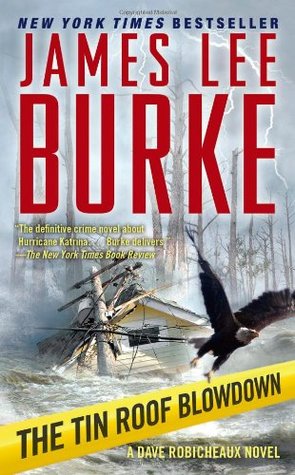
The Tin Roof Blowdown, by James Lee Burke*****

thetinroofblowSometimes people say they “ran across” a book, and that is close to how I came to read James Lee Burke for the first time. I had been tidying up for company, and my daughter had selected this book from the “free” pile at school, then decided she didn’t want it. She is a teenager, so instead of finding our charity box and putting it there, she dropped it on the upstairs banister. I scooped it up in irritation..then looked at it again. Flipped it over…read the blurb about the writer. This man is a rare winner of TWO Edgars. Really? I examined the title again; I hadn’t read any novels based on Hurricane Katrina, so why not give it a shot?

There are about a dozen writers whose novels I will read just because they wrote them. This man is now one of them. I appreciated his ability to develop characters, deal respectfully but realistically with the tragedy and travesty that was Hurricane Katrina (followed by Rita) and recognize it as such; and keep about a million plot threads going without ever dropping anything. In fact, the complexity of the character line-up–somewhere between a dozen and fifteen important people to remember, when I was on the verge of falling asleep for the night–gave me pause, but then this is #6 in a series, so it is possible that if I’d begun with #1, some of them would have been old friends by now, with just a few new ones introduced (and some disposed of before the story was over).

The setting was entirely unfamiliar to me; I have never spent time in the deep southern part of the USA, unless you count a trip with my family to Disney World, and have never set foot in Louisiana. Burke knew it well enough for both of us. His word work was sufficient to lay the canvas before me,and the devastation that was visited upon those who had previously been poor but stable was laid bare:

“They drowned in attics and on the second floors of their houses. They drowned along the edges of Highway 23 when they tried to drive out of Plaquemines Parish. They drowned in retirement homes and in trees and on car tops while they waved frantically at helicopters flying by overhead. They died in hospitals and in nursing homes of dehydration and heat exhaustion, and they died because an attending nurse could not continue to operate a hand ventilator for hours upon hours without rest.”

He gave due credit to those who, in an official capacity or otherwise, worked tirelessly for up to 72 hours on end to save the lives of the vulnerable who had been unable to get out in time, or whose parents had made the wrong choice for them. But he also tells the truth about the condition of the levee that was supposed to protect the residents of New Orleans, and how it had been permitted to deteriorate, when Federal funds were dropped by 50% without a moment’s notice or explanation, and permitted to deteriorate worst in the Black part of town. The narration spills out with disgust the “latent racism…that was already beginning to rear its head.”

Meanwhile, our hero, cop Dave Robicheaux, is trying to find out the whereabouts of a “junkie priest” who perished trying to evacuate his parishioners, but died in the flood waters when criminals stole his boat. He also keeps track of his best friend Clete, a bail bondsman and private detective who will follow him around if he is not included in the search, because some of the people Robicheaux is trying to locate are also bail skippers, and therefore also his bread and butter. Clete is an alcoholic and makes some really bad decisions; Robicheaux tirelessly tries to keep him under his wing and under control, all the while also trying to keep his wife and daughter safe from a local mercenary he’s investigating. The bad guy knows that Robicheaux’s family is his greatest treasure, and threatens them as an attempt to make him back off.

While parts of New Orleans appear untouched by Katrina, others have had their entire infrastructures destroyed, and there are virtually no navigable roads; the waters are treacherous as well, with downed power lines and debris just below the surface. In short, he has his work cut out for him.

Burke’s bad guys are complicated characters. All come from hideous family situations, and childhood has left its unalterable mark on them, but they are layered in the depths to which they will stoop in seeking wealth, power, or simply revenge. One is capable of property crime, violence, even rape, but finds he cannot look an unarmed man in the eye and shoot him; another can do it without a hitch in his heartbeat. The street smart voices I heard within these chapters felt real to me.

But the consistent thread which lies at the core of the story, of the storm, of everything that takes place between its covers, is one which the writer has hold of like a pit bull with a rat. He has his jaws around it and shakes it without ever letting loose of it, whatever other events weave in and out of his pages, the racism that caused the most harm to be brought upon those with the fewest resources, intentionally and maliciously. He will not let go of the racism that rules New Orleans.

“The original sympathy for the evacuees from New Orleans was incurring a strange  transformation. Right wing talk shows abounded with callers viscerally enraged at the fact evacuees were receiving a onetime two-thousand-dollar payment to help them buy food and find lodging. The old southern nemesis was back,naked and raw and dripping–absolute hatred for the poorest of the poor.”

I can see why this guy has a pair of Edgars to bookend his mantel. He spins a compelling, absorbing tale, and the values and priorities that lay at the core of his work are ones I share and appreciate. It was in reading this novel that I became a die-hard James Lee Burke fan. I wrote this review before I had a blog on which to put it, and this book is a must-read for those that love good fiction, good mysteries, or that care about social justice.

The Man Who Cried I Am, by John A. Williams*****

TheManWhoCriedIAmThe Man Who Cried I Am was originally published during the turmoil of the late 1960’s, in the throes of the Civil Rights and antiwar movements, and following the assassinations of President Kennedy, his brother Bobby, Martin Luther King Junior, and Malcolm X. Now we find ourselves in the midst of a long-overdue second civil rights movement, and this title is published again. We can read it digitally thanks to Open Road Integrated Media. I was invited to read it by them and the fine people at Net Galley. I read it free in exchange for an honest review. It is available for purchase now.
The story is a fictionalized account of the life of writer Richard Wright, one of the giants within African-American literature. I am ashamed to say that although I did pick up a copy of both Native Son and Black Boy, his two most famous books, they were still perched on my to-read pile when this invitation rolled in. I found myself perusing this meaty material without knowing anything about Wright himself, apart from his legendary stature and his occupation. I wanted to be able to give my readers a strong critical analysis of this novel, but I have really struggled with it. I found myself having to do a Wiki search in order to figure out whether Max Reddick or Harry Ames was supposed to be Wright. It’s embarrassing. I will read it over again and try to publish something more useful than this review in the future, but I promised to publish my thoughts on the book no later than today—a week following its release—and so I’m going to tell you what I can.

As literary fiction, it’s strong. Ames, who is Wright, as it turns out, and Reddick, who is James Baldwin fictionalized, go on an Odyssey all their own, leaving the USA and its myriad racial issues behind for Europe. A number of other historical luminaries are recognizable in its pages by different names, in addition to those called by their real names, such as Dewy and Truman, and philosopher Camus. The time period spans from post-World War II to the Civil Rights movement.

So many social issues are embraced here that I found myself making far more notes and highlighting more quotes than I can use. The debate unfolds as to how the Communist Party USA treats artists, as opposed to workers, and even touches briefly on the assassination of Trotsky at the hands of a Stalinist agent. Discrimination against African-American (then referred to as Negro) soldiers in the Buffaloes is part of Reddick’s inner narrative. Black Pride had not yet had its day, and Black men often coveted relationships with Caucasian women, partly, as Malcolm X later pointed out, from self-hatred, partly as a social status symbol, and occasionally for the practical material benefits of marrying into, or becoming aligned with, a woman that had access to money. But this was also a double-edged sword, because the women’s movement hadn’t occurred yet either, and women were supposed to stay home and have babies while their men went off to work.

The whole thing is very complicated.

In this time prior to the 1973 Roe vs. Wade decision that made abortion legal for American women, an unwanted pregnancy is dispatched by a doctor who is supposed to be quite good and risk free, but of course, the procedure is not legal, and there are no emergency facilities available. One of the characters loses the woman he loves when she bleeds to death after a back-alley abortion. This is not intended to be the primary focus of the book, but it’s huge to me, and so it stayed with me.

Be aware that there are scores of ugly racist terms, used for the purpose of highlighting racism, as well as sexist terms and references to gay men as the f-word. All references are either there because of the time period in which the story is set or for the purpose of defining the struggle of the Black man in America, but readers have a right to know and to brace themselves. There are descriptions of the atrocities visited upon European Jews during the war, as well as references to their struggle in the USA, primarily New York City; again, there are some ugly terms used.

Should you read this title? Not at the beach. This excellent novel is for the serious student of African-American history and for the history student focused on social justice. It’s more than worth your while, and I will re-read it myself after I have read Wright’s work. Just understand that there are many, many historical references that will make you reach for Google. The story was written during a time when the average reader had most of these things—from clothing styles such as zoot suits and pegged pants, to offhand references to the cigarette jingles that once punctuated our radio and television broadcasts as frequently as Coke and Pepsi do now, to slang terms whose use is either gone or worse, changed to mean something else. For example, if someone is high, they haven’t been using street drugs; they are drunk. None of these things is explained to the reader. We must have them stored in our memories; search for the meanings of unfamiliar references; or attempt to understand the text without knowing them.

I consider this literature to be accessible only to those that read at college level.

Highly recommended for those that take African-American literature and history seriously, and whose reading ability is well above average.

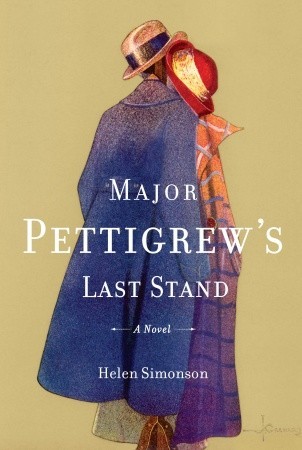
Major Pettigrew’s Last Stand, by Helen Simonson*****

majorpettigrewHad this story not received such wide acclaim and been made into a movie (which I’ve yet to see, but I watched the Oscars), I would probably never have gone near it. I like working class protagonists, and I don’t read many romances, because often as not, they are corny, soft porn, or both. But I saw it at the library and decided to give it a try, and I quickly remembered, upon reading it, that some rules are made to be broken. So even if you usually don’t read romances, and even if a retired British pensioner is not your idea of an interesting protagonist, this should be the exception to the rule.

 I loved this story!

Major Pettigrew has difficulty with some sorts of change. He doesn’t want to see his village built up and the green spaces developed. He has lost his wife and his brother, and loss of any type is very difficult. His solitude is not splendid; he is a lonely, lonely man.

And in some ways, he seems to have lost his son, who has become arrogant, dismissive, and wants nothing more from him than his wallet and his bank card.

On the other hand, he has found something really precious, but what he has found is so controversial that the whole wide world seems to be against him.

Perhaps the hook for me was the interracial marriage, since mine is one also. But on the other hand, maybe the hook is just excellent writing. A really great writer can make us enjoy a genre we didn’t think we cared for; I believe this is one of those.

I hit a certain point in this story and could not go to bed until it was done. I usually read lying down before I go to sleep, but I was literally sitting upright on the edge of my bed leaning forward when this climax broke.

You have to read this story. It’s glorious, and it’s available to the public. Highly recommended!