Truth or Die, by Jack Lynch *****

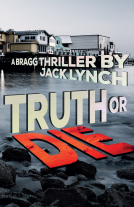
truthordie“These fellows in their cammies offering their guns for hire would know about things like T-ambushes, wind drift and long-range rifle fire, and maybe a boobie trap or two. I knew about close-in fire, street work and fear.”

Originally published under the title “Monterey”, this is the sixth installment in the Peter Bragg series, and the pace is as taut as piano wire. Don’t count on falling asleep just after you finish it; allow time for your heart to stop pounding and your blood pressure to ease up a bit. It’s an outstanding thriller that left me breathless.

It’s a shame the writer is no longer living and can’t write a bazillion more novels for us to enjoy; he could wiggle a finger and I would follow him anywhere. His series does not have to be read in order; this one is great as a stand-alone novel. And by now I am also supposed to have told you that thanks to Net Galley and the lovely fellows at Brash Books, I read this free as a DRC. Had it cost me actual dollars, it would have been well worth it.

Bragg is back in California where he belongs, and he’s spending some time with girlfriend Allison Stone. Whilst on vacation, however, an old friend of Bragg’s is widowed, and is a suspect in her husband’s murder. She’s not a very nice person; in fact, she’s a pain in the ass. But Bragg is convinced of her innocence, and she has even gone to her relatives, hat in hand, in order to come up with his fee. He’s in it now, and Bragg always plays to win.

Though it’s set in the 1980’s, the lack of technology (no satellites; when you are stuck out there alone, you are seriously alone!) and Bragg’s hard-boiled demeanor give this series a strong noir flavor. I appreciate a detective that knows he needs to have his gun handy. This is the USA, for heaven’s sake! Bad guys always pack heat. We retired school teachers can stay inside, lock the door, and let the dog guard our homes, but Bragg is chasing bad guys, and he goes in prepared. It’s a good thing he does.

When things start to heat up, he tells Allison that the situation has become dangerous, and she should hop a plane to San Francisco. He’ll take her to the airport himself. And she says she’s not doing that anymore; she needs to know what it’s like to live with his vocation. They’re getting serious; he wants her to marry him. Let’s find out right now what this whole thing is like.

Turns out, that’s a terrible idea.

Bragg is such a strong protagonist, and the way Lynch bounces his street-smart persona off the smug, wealthy folk that live in Carmel, Bel Sur, and other hoity-toity beauty spots is masterful. The climax made me want to stand up and cheer. What a total bad ass! Way to go.

The best news of all is that this little hummer was released digitally in February, so you can have it right now.

Don’t leave home without it!

The Personal History of Rachel Dupree, by Ann Weisberger *****

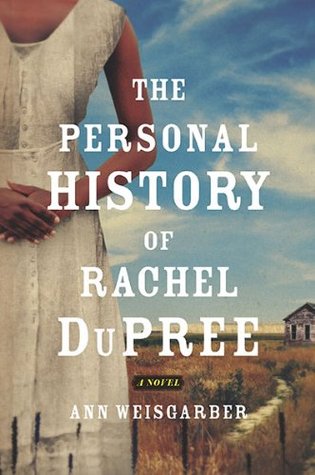
thepersonalhistoryofracheldupreeRachel has married up. She used to be a hired girl working in the kitchen at Mrs. Dupree’s boarding house. Mrs. Dupree was forced into taking in boarders when  she was widowed, but she has done quite nicely for herself. She is among the cream of Chicago’s Negro community, and the women she entertains are light-skinned and at least four generations removed from slavery. Imagine her tremendous dismay when her only son, Isaac, comes home from fighting the Indian wars and announces that he is moving out to the Western territories to stake a claim and become a common farmer. “Rancher,” he reminds her. And if he marries a single woman who has also staked a claim, he will have twice as much land once they marry.

And so he stakes a claim on Rachel’s behalf, and she gets her heart’s desire: she gets to marry that handsome young officer. She becomes Rachel Dupree.

Roll the film forward about 14 years. Rachel is pregnant with her eighth child. The Badlands, “a country so backward and harsh that even Indians didn’t want it”, has had no rain for a long, long time. To get a little water, they have to tie one of their children to a plank and lower her on a rope to the bottom of the well. Liz doesn’t want to do it anymore. She has nightmares. There’s a snake down there, she says.

But their tongues are thick from lack of water. There is grit between their teeth. And they will lose the horses and their only milk cow if they don’t water them.

So at bedtime, Rachel tells her five surviving children to take just one sip of the water Liz brings up.

Are you spellbound, or are you horrified? I confess I was both. I live in the land of water. In Seattle there is moss growing on everyone’s front steps or porch, and if we aren’t careful, it will grow on our fences and our homes! Most of us don’t bother with umbrellas. We’re used to the fine mist that generally falls during the day. Most of the good hard rain falls at night, and it lulls us to sleep better than a lullaby. And yet, we send the kids to school carrying a water bottle anyway, because hydration is so important.

“Only a sip.”

I’m not the only one that doesn’t care for that. Rachel has about had enough of it, too. For one thing, there are no Negro families anywhere nearby. Isaac had told her that plenty of the men with whom he’d been enlisted had filed for homestead claims, but any that may have been nearby have gone on home. They can’t take it here. And actually? The white folk can’t stand it either. Every time someone goes home, Isaac buys their land. Every time there is a spare dollar, it does not go for a coat for the child who’s outgrowing hers; not even for fabric for Rachel to sew some new clothes. Rachel herself has a patched dress and a pair of work boots. What a contrast she makes from the finery she wore on her wedding day! And she is worried about their eldest daughter, Mary, who will be the right age to start dating soon.

The final straw is broken when Isaac buys out yet another departing neighbor–Rachel’s closest friend, too, as luck would have it–and there is no money at all. There is no money for winter provisions, even, and the kitchen garden died when the rain didn’t come. There is nothing, nothing, nothing. And his game plan is to work the gold mine in Lead, South Dakota, which is far enough away that he will be gone all winter, and she and the children will be left with a brand new baby and thousands of miles to ranch unassisted. And no food.

But hey, he believes in her. He’ll go hunting, maybe bag a bear together with his son, and between that and Rachel’s amazing know-how and steely determination, everything will turn out fine!

Not so much.

A strong subplot involves the local American Indian population. Homesteaders who are hungry, thirsty, and have almost nothing but the land on which they live and try to ranch are sometimes resentful of the “reservation Indians”, who have been stripped of their dignity and culture in exchange for free food, rent, and clothing (“free” being a relative term, of course). Isaac was one of the soldiers that subjugated those same Indians; when Rachel is alone on the ranch for days on end and Mrs. Fills the Pipe and her children pass by, Rachel craves company so desperately that she invites them to rest on her porch. She makes the very dead last of her chokeberry tea and serves it to Mrs. Fills the Pipe and her daughter.

“Our water?” said Liz. “You’re giving them our water?”

Liz had a point there; she was the one went down the well to get it. And yet, the good turn, though it upsets Isaac when he hears of it later, is not misplaced, and does not go unrewarded. And eventually Rachel thinks back to the things her hero, Ida B. Wells-Barnett, said in the Negro press (I use the term as the writer does, for historical purposes), she does not regret the gesture, except for the fact that she served them on the front porch when she should have invited them into her precious parlor.

I didn’t read this book as a galley, I got it at the local library. A galley led me to Weisberger, though. I read The Promise a year or two ago and decided that this writer was going on my to-read list. This makes two winners out of the two I have read. And on top of it all, Weisberger is a Caucasian writer (or appears to be; at any rate, she isn’t Black.) This is only the second writer I have encountered that could write a first-person fictional narrative in which she provides the voice of a Black woman, and does it creditably and with great dignity. I bow in awe.

And although I was already sold on the book and its author, the mention of Lead, South Dakota, nearly made me jump out of my skin. That is the tiny town where my late father was born, and its mine (gold but also iron ore) is where my late grandfather contracted the black lung disease that would eventually kill him. For those interested, it is pronounced “leed”. Maybe it’s too embarrassing to admit your home town is named after the mineral it produces, or maybe it’s a positive connotation, like leadership. My only visit there took place when I was a pre-schooler, and I have very few memories of it, all of them related to family rather than place.

Forgive the digression. All told, this is really strong historical fiction. If you want to read something a little different from most of the stuff that’s for sale; if you like stories of the homesteading movement; or if you want a story that features African-Americans in a positive light, this is your book. If you just want a great book to curl up with at night while the spring rains pass, this is your book too.

In short, highly recommended.

The Missing and the Dead, by Jack Lynch *****

themissingandthedeadJerry Lind is missing, which is especially strange, given that he knows he is about to inherit a small fortune. It seems unlikely that he would take off for a long time without letting someone know about it. He ought to be back by now. Moreover, the next people in line to inherit his share are also wondering if he is okay. Not that they hope he isn’t. Of course not! And at this point I have to break my narrative to let you know that I was fortunate enough to get this DRC free, courtesy of Net Galley and Brash Books. It was previously published in the 1980’s and is just now being released digitally.

Back to Jerry. No, never mind, forget him for a minute. Let’s talk about our assassin.

Our assassin is not getting any younger, and his wife is exhausted from all the moves. Every time he carries out a contract, they have to either abandon their stuff or get a truck, and over years and years of professional killing, it wears a woman down. She wants a garden. From now on, he needs to either make do with the significant amount he’s squirreled away from his successful if messy business, or he’s going to have to goddamn hide the bodies.

It’s the least he can do for her.

Peter Bragg is our man. Jerry’s sister hires him to go to Barracks Cove, where Jerry was supposed to be running a professional errand, and see if he can’t track him down. And Bragg goes in prepared. If you are sick of reading wussy narratives that give flimsy reasons for the intrepid sleuth not to carry a gun and make sure he has bullets, this is your guy, and this is your story. Has he ever fired that thing? Oh yes. But not just for practice…in the line of duty? Again, oh hell yes.

And it’s a good thing, as it turns out.

By the time the thing is over, a great deal of action has taken place, and though I am a six-to-eight book-at-a-time reader, the urgent, taut narrative (reminiscent somewhat of the Richard Stark detective novels from about the same period) grabbed me by the front of my shirt and held me there until the last page was turned.

It was nominated for an Edgar, and the clever juggling of setting and character development, along with a plot line that is unbelievably lean and compelling, will probably leave you wondering, as it did me, why he was denied and just who exactly did get it.

The consolation? If you have a kindle, you can read this book right now. Change the window on your screen and order it up. You’ll have an excellent weekend…if you can wait that long!

A Grown-up Kind of Pretty: A Novel, by Joshilyn Jackson ****

agrownupkindofprettyMosey Slocumb’s mother, Liza, has had a stroke. It’s a good thing both of them live with Big. Big is the name given Ginny, mother of Liza, grandmother of Mosey. The ladies in the family tend to give birth early and unexpectedly; both Ginny and Liza had babies at fifteen. In the inner city, this happens so often that most folks don’t care, but in their tiny southern town, the judgments fall hard and fast. They are not welcome in the homes of their other relatives, nor even at church. They are “the ones who had been put out like bad cats. Outside, all Liza and I could hope for was the dark, ass end of Jesus,” according to Ginny.

The town does not only judge sins that have taken place; it also anticipates sin. Mosey is fifteen now. She can feel the eyes of her classmates, her teachers, and even Big and Liza keep her under close scrutiny. Although she is a virgin, she has taken to using home pregnancy tests…just in case.

All of this changes with the discovery of the silver box buried beneath the willow tree.

All that Ginny, Liza, and Mosey have, really, is each other, and when their family is threatened, all of them–even poor, damaged Liza–come out swinging.

This is a fun book once the early part is past, or at least that was my take on it. Jackson is a courageous writer, but some may find her style too abrasive to enjoy. She takes conventional religion apart, no doubt about it, and whereas I was fine with this, those that enjoy a family-like church relationship may easily be offended. So then, this is for the more leftward-leaning among us, yes?

Yes but no. There were several passages at the start of the book that also sounded a lot like life-begins-at-conception, and abortion-is-murder. It wasn’t said, but it was implied strongly enough to raise my hackles. Had I not already really enjoyed this writer’s later work (Between, Georgia), I think I might have slammed the book shut and tossed it onto the yard sale pile.

Even the most brilliant author must make sure that when she takes a stand, or two, or three, she has an audience left after those she has offended fall by the wayside.

That much said, I really enjoyed this story once I was past the initial rough patch. An engaging story, mostly, about three generations of women who stand by one another through whatever comes.

Yesterday Is Dead, by Jack Lynch ****

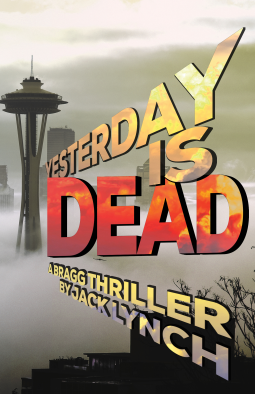
yesterdayisdeadPeter Bragg is a San Francisco private eye. He is originally from Seattle, but he left all that behind: the rain, the grey skies, the depression…and Lorna, his ex-wife. Now a case brings him back. He isn’t eager to make the trip, but an old friend is in a spot and needs his help. And for the reader, it is a trip indeed, since the story is set in the 1980’s, when it was originally published. This established mystery series is now available digitally, and I was lucky enough to jump on Net Galley’s offer to read it free. My thanks go to them, and to Brash Books, for the DRC. What a fun romp!

These are modern times alrighty. There’s a new Interstate connection to Bellingham; a guy can hop on the I-5 and be there in two hours. Neat!

Those that have been to Seattle lately understand how wry this is, since a person can sit that long in gridlock just trying to get to the outermost suburbs now, at least during rush hour.

In addition to a trip back in time, Lynch serves up all sorts of twists and turns that keep the plot moving nicely, but also keep the game fair for the reader.

When all was said and done, I found myself wishing I could read the whole series. Recommended to anyone that enjoys good detective fiction. You can get it for yourself May 5, 2015. And you should!

I See You Made an Effort: Compliments, Indignities, and Survival Stories from the Edge of 50, by Annabelle Gurwitch ***-****

ISeeYouMadeanEffortGurwitch is entering the downhill slope of middle age, and she isn’t going to go gently. In this enjoyable collection of essays, she is sometimes hilarious, and at other moments more philosophical. But she is never dull. Thank you to Penguin Random House for sending me an ARC.

Middle age means a deluge of mail order catalogs that sell products for the incontinent, the arthritic, the retired. Gurwitch doesn’t want them. What she might want is a few intimate moments with her hot yoga instructor—ah, so young!—or maybe even the young man who’s fixing her computer.

Alas, middle age also means caring for parents that are in declining health, and some of us get to raise teenagers at the same time. If you can’t laugh, you might have to cry! And sometimes, being middle aged means a precipitate end to a career, when your old employer sends you packing and those that are hiring want someone younger than you. They don’t say it, but it’s obvious.

And so middle age means you need to buy some really good concealer, because if you have been a sturdy feminist whose self-esteem used to mean that no cosmetics were necessary, guess what? Once you’re old enough, just picking those chin hairs out with tweezers isn’t going to do it. Lose the unibrow; trowel on the concealer and redraw the brows you just removed; cross your fingers that it works. “Facial hair,” she reminds us, “is an equal opportunity offender.”

Gurwitch is an actress, for those that didn’t already know that, and she has some stories to tell that will either make you howl with laughter or moan with pain, depending upon your perspective. Perspective? She has it here in spades. My personal favorite was her piece on petty theft. I hope she can still get a hotel room in her own name!

At times her tone becomes more philosophical, because there’s not much that’s funny about having people close to you die, and unfortunately, that’s one more unwanted surprise Mother Nature pushes at us when we edge our way toward 50 and beyond. And she wants you to remember that you can’t die without telling someone your password. You just can’t.

Many of us swore we wouldn’t sit around and bitch about our physical complaints when we grew old, the way our parents did…but now there’s Google. There’s WEB MD. For every symptom we have, there are at least twenty dread diagnoses possible! Get off the computer! Are you listening?

If you are under 40 and still reading this review, you ought to know by now that this book is not for you. If your mother is still alive, however, you should get this for her. Mother’s Day is coming. And for heaven’s sake get her a dozen red roses to keep it company.

Because you just never know. It could be her last. And really, that’s not so funny.

The Oregon Trail: An American Journey, by Rinker Buck *****

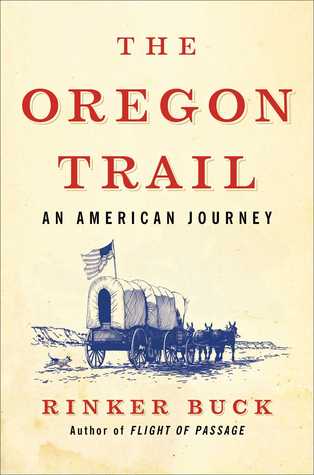
theoregontrailBuck is a journalist and author who replicated (to the extent possible in modern times) the covered wagon crossing of the old Oregon Trail, much of which still contains the original wagon ruts. A creature of the Pacific Northwest myself, I thought I had the whole Oregon Trail story down cold, but I learned a lot from Buck’s wonderful memoir, which threads his own experience with the historical information he gleaned from a variety of sources into a fluent, fascinating, accessible yet hyper-literate narrative. My great thanks go to Simon and Schuster and Net Galley for the ARC. The book will be available to the public in August of this year.

Buck discusses his experience, and the book, here:

The germ of Buck’s idea to travel the old Oregon Trail in a covered wagon came from a favorite childhood experience. Buck’s father took his large family on a covered wagon vacation during the late 1950’s. They traveled in New Jersey and Pennsylvania, and it is one of the author’s fondest memories. His brother Nick, who sounds like a real character, decided to join him on this adventure, and their skills complemented each other wonderfully in most instances, with Rinker having done a great deal of research and put up the considerable sum it took to buy the wagon, the mules, and so forth, and Nick having a wealth of eclectic knowledge about covered wagons and mules as well as tremendous mechanical aptitude in general.

Our author is one hell of a writer. His down to earth metaphors made his story accessible for modern people. For example, he says that the Conestoga wagon was the semi truck of the mid-1800s while the prairie wagon used by most families, which was made by Sears Roebuck, Studebaker, and John Deere, were more like the station wagon. The whole narrative is peppered with this sort of figurative language, and it’s both amusing and helpful. And I loved seeing the ways in which the problems of the early pioneers often became his problems also, sometimes in ways that would have halted an ordinary traveler right then and there. But Rinker and his brother are serious badasses, and they kept on going.

Think for a moment how high up the driver’s seat on a covered wagon is, for example, and how immensely soporific the repetitive clopping of hooves are on a very warm spring day. There is no safety belt; there is nothing whatsoever to keep a man from falling off and being crushed beneath the wagon.

Narcissa Whitman, one of the early settlers who together with her husband, founded the Whitman mission in Eastern Washington (part then of the Oregon Territory) made the trip on horseback. But she had no safety belt either.

The Mormons, or Latter Day Saints, did a whole lot of it on foot and pushing carts; those that lived through the experience populated Utah. But I agree with Buck that Devil’s Gate was not solely part of the Mormon experience, and President Bush had no business turning federal park lands over to the LDS Church. Frankly, it steams my clams all over again just writing about it…moving on.

I also have one small bone to pick with Buck’s research, though it isn’t enough to lop a star off my rating: he says that the 400,000 pioneers that crossed the Oregon Trail was the greatest overland migration in history. To be fair, when he wrote this, it was widely accepted as truth. But in 2010, Isabel Wilkerson documented an overland migration of 6 million African-Americans from the South to Northern Industrial cities and also to California between 1915 and 1970. The Oregon Trail, then, may be the second largest, but not the largest.

I also might have liked to see a citation accompany controversial facts tossed in, such as the claim that it was covered wagon makers, not Henry Ford, who started the mass assembly line. Generally I liked the flow of the text made possible by avoiding footnotes, but if one is going to butcher a sacred cow, one should back the assertion with a source.

But all these things are minor compared to the value, both in education and entertainment provided by the story of the Rinker brothers’ modern day reenactment, which is nothing short of spellbinding. I had just begun it when I came down with a case of flu, and I can’t tell you how comforting it was to curl up under my covers with my glass of orange juice and this book and immerse myself in their journey, which commenced in Missouri and like the original pioneers, continued across six states. And although I have never done the trail itself (and if I were to do so, I’d be one of the Winnebago set that made him half-crazy with their giant rigs that spooked the mules and their never-ending cameras winking at him and blocking his way), I have driven through all of the states he crossed through except Kansas.

It was useful to have traveled through most of the region that Buck described, yet his descriptions were so palpable that I think even if you have never been there and never plan to, you will see much of it in your mind’s eye.

I’m not sure what is the most remarkable part of this wonderful memoir: the novel aspect of the covered wagon trip during the 21st century, or Rinker’s voice, which switches seamlessly from that of historian, to that of family member with family issues, to that of the humorist who can appreciate life’s ironies even in adverse circumstances. All I know is that you don’t want to miss out on this one. What a terrific story!

Boy: A Novel, by James Hanley ***-****

boy3.49 stars, and my thanks go to Net Galley and Open Road Integrated Media for the DRC. The digital version of this story became available yesterday, and you can get a copy of your own if you’d like.

Boy, a tragic story that reads like a hybrid between Dickens and Melville, was originally published in 1930, and ran into all sorts of censorship. There are passages that contain sex that would not even be considered erotica now, since they avoid much specificity, but for the bourgeoisie of that time period, it was way too much. The censorship fight was where my interest came from, because I don’t generally seek out tragedy. I wanted to see what all the fuss was about. Any time anyone tries to keep the printed word from being accessible, my curiosity is piqued.

Arthur Fearon is an academically talented student whose parents make him leave school at thirteen even though at the time, the legal drop-out age in Britain is fourteen. His father has been on strike and had no income for awhile, and is bad at bringing his paycheck home when he has one. An only child, his parents both look to Arthur to become the family bread winner. His father finds him a position on the docks, and Arthur hates it so much that he stows away on board a ship, with the notion that he will emigrate away from England, maybe land in the United States and get a fresh start. Young as he is,it never occurs to him to learn which ship is going where. The ship he hides on isn’t even headed that way.

Issues of child abuse and in particular the way this youngster is turned away by every adult from whom he seeks help are hard on the eyes and hard on the heart.

The writing style is one that may not work for a lot of people in 2015. This was written in more or less the same era as Upton Sinclair’s The Jungle, and it has a lot of stylistic similarities. Inner narratives run on for much longer than one might expect, because the reader of 80 years ago had a much greater attention span. There is a fair amount of repetition that was considered acceptable then but might not be appreciated by today’s readers.

One thing I can tell you for sure: if you are feeling sorry for yourself, this book will make all your own problems look like nothing at all. Just right for the reader that wants a good three-hanky novel.

The Expats, by Chris Pavone *****

theexpatsChris Pavone spins one fine espionage thriller. I was introduced to his work when I read a galley of The Accident, the white-knuckle suspense story that follows this one. I was sufficiently impressed that I checked to see what else he had written. This first effort, which I borrowed from the Seattle Public Library, earned him the Edgar Award and a number of other kudos also. It’s a real page-turner.

Katherine is a mother of two young boys, and although her husband doesn’t know it, she works for the CIA; she has told him she is a government employee, and that she sits around all day writing position papers. She never inquires too closely into the life he led before he met her because she is afraid of the quid pro quo that must surely follow such questioning. The consequence is that she has been married for years to a man she doesn’t really know all that well. But he and the boys are really all she has; she has no other family to speak of.

She’s sitting on a mountain of unspoken experience. She has killed more people than she cares to remember. The reader is fed tiny shards of her memories in gradually increasing tidbits, and it is very effective in building toward the conclusion.

Her spouse Dexter, meanwhile, springs the surprise on her one evening: his work requires him to move from Washington D.C. to the tiny European secret-banking center Luxembourg. He works in I.T. in the banking industry as a security consultant, preventing hackers from thieving the bank’s massive resources. That’s what he tells her, anyway.

Relieved in a way, Katherine quits her job. The CIA doesn’t lift her cover, but they let her go little by little. Now she can finally focus on her sons, on her home, on her marriage…and so she sets up housekeeping in Luxembourg, enrolls the boys in school, enrolls herself in cooking classes during the day…and is bored out of her mind.

It was easy to buy the scenario as Pavone presents it, because it all figures. Who would join the CIA but a real adrenaline junkie? And what woman that has stalked other people, killed people, dodged those that stalked her or that sought retribution…what woman in such circumstances would not be bored out of her mind by cooking classes and shopping for area rugs and shower caddies?

It isn’t made easier by the fact that Dexter is always at work; that’s what he says, anyway. He is at work, on the road, in a meeting all the goddamn time. He spends an awful lot of time with Bill, another American expatriate, whose wife Julia seems a little too friendly to be true.

So is she merely acting like a CIA employee, governed by auto-suspicion? Or are these people setting off her spook-dar for a more substantial reason? And just what the hell is really up with Dexter? You would think the guy could show up for Thanksgiving dinner, for heaven’s sake!

If you have never read anything by Pavone, read this book first, and if you like it as much as I did, get The Accident second. Each is a stand-alone novel; they aren’t a series or sequential. But the second book is just a tiny bit better than this one, and I found myself slightly let down by an ending that seemed slightly too tidy. And in truth, I don’t think I’d have felt that way if I hadn’t already read something of his that is even better. In other words, judged against other thrillers written by other writers, this one is a sure-fire five star novel. Judged against Pavone’s subsequent work, the score shrinks a tiny bit.

The best part of all may have been the afterword. I always wondered about the research that went into writing spy thrillers. How the hell does anyone find out anything about the CIA, unless they are employed there and sworn not to tell? And Pavone tells us how he did it: he made it up. And that’s why it’s called fiction.

Guaranteed to absorb your attention for a long weekend and make all your own troubles look small.

Harvey Kurtzman: The Man Who Created Mad and Revolutionized Humor in America, by Bill Schelly ***-****

HarveykurtzmanKurtzman was a comic genius who was ahead of his time. He created MAD magazine and also left his mark in comic book history and in men’s magazines such as Playboy. My great thanks go to Edelweiss, Above the Treeline and the publishers for the DRC.

Schelly, another MAD alum, has fastidiously documented every aspect of this biography. It begins with Kurtzman’s birth to parents active in the Communist Party USA and the International Workers of the World. Kurtzman himself was not a Communist, but opposed racism and was a progressive thinker. He was educated at a public art school in New York City that was funded by the Works Progress Administration, which is where he learned lettering skills that would stand him in good stead in the comics industry.

MAD was a creature of its time, and Schelly suggests that even comics, which were frowned upon by the older generation, were a tool that young people used to break free of the repressive society of the 1950s. Kurtzman created war comics and horror comics for EC, and maintained a furious work ethic. His humor entries began as “Look Here!”, a single page of filler, and then grew when comics began to wane under the government’s newly devised Comic Code, which was itself a blow to the First Amendment and drove a number of comics out of business. In fact, MAD began as a comic also, but went to magazine format in order to break free of code restrictions. It never applied for code approval, and was a breath of fresh air and gut-splitting humor to those of us that grew up reading it. Unfortunately, he and Bill Gaines, the publisher, came to a parting of the way after the magazine’s first year had ended, so although his signature still graces the cover of every subsequent issue because of the continued use of his cover art, those seeking a biography of MAD Magazine (and I confess I was) are not going to get much of it.

Multiple examples of Kurtzman’s work (signed “Kurtz” with a stick-figure man following) are given full page space in this volume. My advice to you is that if you read it, you don’t buy it digitally. There is so much detail that as the text suggests, one needs a microscope to get it all at full size. Of course, mine was free, and reading it digitally was still a privilege in such a case. If you’re going to pony up the money, try to get it on paper. I think you’ll enjoy it more.

I confess I was personally never interested in comics, and Playboy magazine is a hot-button subject, and so I skimmed that portion of the biography.

Kurtzman was diagnosed with Parkinson’s in his late 50’s and then cancer as well. He died at 68 and was cremated.

Reading Schelly’s biography made me crave a coffee-table volume of MAD Magazine art. I kept a copy of this subversive little periodical tucked inside my biology text book in middle school. I ask you to imagine MAD Magazine and Watergate. I wish I had saved every issue, but I passed them on to friends, which is also a great thing to do.

MAD as we knew it is moribund. It was taken over–if I remember correctly, by the TIME people, but certainly by a big-business press–and it has been shrunk, commercialized and sanitized to where it’s no longer interesting. The work of Kurtzman, Schelly, Jaffee, and the other MAD geniuses was what made it so brilliant.

For those with a strong interest in comic art history, highly recommended. For those interested in MAD history, recommended if you can find it at a discount or in a library.