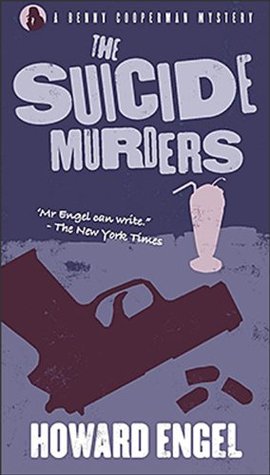
The Suicide Murders, by Howard Engel****

thesuicidemurdersThe cops said Chester killed himself. The gun was there, and he had powder burns on his head, powder on his hand. Everything tested out right. But he’d ordered himself a brand new bicycle just two hours earlier. Does a suicide do that? And then there was the very lovely wife that had been to see Cooperman, our detective protagonist, just before the unfortunate event, concerned that her man had perhaps been unfaithful. She’s caught him lying to her, and that makes a lady suspicious.

These things leave a guy like Cooperman with questions. True, he’s not a cop: “Me? I’m just a peeper. Divorce is my meat and potatoes.” But when something stinks, it’s in Cooperman’s nature to go find the source of the smell and air it out. And when others die after Chester, it makes Cooperman, who’s nobody’s fool, ask even more questions.

I received the DRC for this vintage novel, now available digitally, from Net Galley and Open Road Integrated Media. It became available for sale August 24, so you can get it now.

Engel is an experienced writer, and as he plays the thread out, with murder upon murder integrated deftly into the everyday life of Benny Cooperman, he strikes an excellent balance, building suspense and driving the plot forward with the occasional humorous reflection to keep things from becoming too ugly to be fun for the reader. And his character descriptions are particularly memorable, as with this local politician:

“He was a big man by anybody’s scale. His face looked like a roast beef dinner with all the trimmings, with a huge portion of nose in the middle. “

There were a couple of moments when the predictable occurred, but it wasn’t so dead obvious—excuse the pun—as to be an eye-roller. Rather, I experienced the satisfaction of having seen it coming and been right. And to me, as long as there isn’t too much of it, and there wasn’t, that is a sign that the writer has been fair to his audience. There are no sudden introductions of new characters during the last ten percent of the novel that change the solution in a way impossible to predict, and a lot of us like working the puzzle as we read. There are a couple of sexist references—“the kind of girl”, “bimbo”—that were commonly used in 1980 when this was first published that I didn’t care for, but they were infrequent enough that I was able to make a note to myself, and then continue to read and enjoy the story. In the end, the wry humor and up-tempo plot line makes this one a winner.

Although there are vague sexual references and infidelity is part of the plot, there is no graphic sex that should prevent a parent of a precocious adolescent mystery maven from handing the book down once they have finished it themselves. It’s hard to call any story that contains multiple murders a cozy mystery, but this one is in or near that ballpark.

Altogether a satisfying read.

My Life on the Road, by Gloria Steinem*****


mylifeontheroadI’ve been thinking a lot about Steinem since the recent unfortunate episode on a TV talk show. I was heartsick. What woman gets past 80 without a single regrettable senior moment? But most of us will be fortunate enough to have a spouse, partner, adult child, or other companion who will take us aside and suggest we rethink what we’re doing or saying. “Mom, I’m getting a little worried. Can we check your meds? What do you think?”

But Steinem doesn’t have that sort of support system. The women that were closest to her for a long, long time are already dead.

So I republish this blog post asking you to think, not about the single magic moment, for which she later apologized, but instead, for all the amazing accomplishments and selfless deeds she has done on behalf of women, and for her willingness in a time when most of white America kept to itself, to learn at the feet of women of color.

Because this is her legacy; her real one.

Feminist heroes are everywhere, but if I had to name half a dozen women that were at the core of the feminist movement that followed closely on the heels of the Civil Rights movement and the movement to end the US war in Vietnam, Steinem’s name would be among them. In fact, hers might be the first name out of my mouth. It was she who coined the salutation “Ms”, and who founded Ms. Magazine. When I saw she had written a memoir, I knew I had to have it, and when Net Galley and Random House gave me the DRC, I was delighted. But this is one of the few books that if I’d had to, I’d have been willing to pay full jacket price in order to read. Heroes are thin on the ground these days, and we treasure those that still walk among us.

My reading records reflect over 300 biographies, autobiographies, and memoirs I’ve read, and I didn’t even start listing them until about 3 years ago, so who knows how many? The one thing I know to expect, when someone really famous sits down to tell us about her life, is that the ego will be there. It might be veiled, especially if the person is famous for writing as opposed to something else, or it might be big and bold. Once in awhile it’s been so bald-faced that I came away wishing I hadn’t read the book so I could go on liking the author. So for one of the most famous of living feminists, I was braced and ready.

And this icon’s ego isn’t there. I don’t mean she hides it well; I just don’t find it. And it appears as if large amounts of time spent among Native sisters in struggle—Wilma Mankiller foremost among them—taught her so much about focusing on the circle, rather than a table that has someone at its head, a big-boss type, that she let go of whatever ego she might have been thinking about building. For example, when she works as an organizer, she dreads public speaking, but looks forward to the place at which one part of the auditorium begins to answer the questions from another part, and she knows a circle has formed, one in which she becomes just another person present. I was blown away!

Steinem began her career in journalism, and she is one of the finest writers whose work I have read. For a brief time in years gone by, I dismissed her because of her sometimes-attachment to Democratic party candidates, but the sum of her contributions has been so much more that I missed the forest for the trees during that time of my life. Now I want to read everything she ever wrote.

Travel is a great metaphor, but it’s also a material fact for Steinem. She grew up with a father who was a traveling salesman, and unlike most such men, he took his family with him. For most of her childhood, there was no home, merely a series of stop-overs. This rootless existence would leave some children traumatized. Kids thrive on routine, and not all would be able to translate constant travel into a sense of the usual. But Steinem mostly remembers it as a positive attribute, and credits her parents for their capacity to question social norms during a time most Americans were madly conforming. The fact that she continued to live out of a suitcase once she was grown and on her own is the greatest testament of all to her upbringing, and to her response to it.

There are oh, so many stories, some of which made me laugh out loud, and others that made me think. You can go winnow those out for yourself. And of course, my favorites may not be yours.

But the one thing I can promise you is a really great read, one with depth, yet not difficult to access. It’s friendly and feels as if we are having coffee with an old, dear friend, right at the table with one another. A circular table.

You have to read this book. It will be for sale October 27.

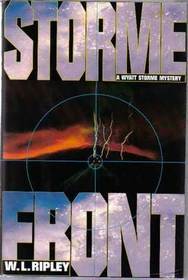
Storme Front: A Wyatt Storme Thriller, by WL Ripley*****

storme frontStorme Front, the second mystery in the series featuring former NFL player Wyatt Storme and his buddy, Chick Easton, is smart and sassy. Ripley proves that an action-packed thriller with a he-man protagonist is stronger, not weaker when it treats women respectfully, as equals to men. Thank you twice, first to Net Galley, and second to Brash Books. I received this DRC from them in exchange for an honest review. This title was released August 4, so you can get it right away.

When someone offers one a thousand dollars to make a single, simple delivery, it’s natural to be suspicious. But when it appears to also involve pulling a good friend’s cojones out of the fire, an experienced badass will sometimes agree, however cautiously, to tag along. So it is here. Drugs, guns, and bodies pile up, and all through it runs some kick-ass banter that made me laugh out loud a number of times. The exchanges are typically between Wyatt and Chick, but there’s some pretty strong humor, at times, in the interactions between Wyatt and his fiancée, Sandra Collingsworth, as well. As well as respect. I like the respect even better.

“No one likes smart, self-assured women, you know.”
“Except you,” she said. “And I’m glad.”

Complicating the picture without making it into a soap opera is the involvement, however peripherally, of an old flame of Wyatt’s. They split up a long time ago, and she married the man whose afore-mentioned cojones Wyatt is trying to salvage.

“His wife?” said Billy, smiling. “Ain’t she a sweet piece of—“
“Her name’s Kelly,” I said, interrupting. “But you can call her Mrs. Jenkins.”

The action is linear in format, so the fairly sizeable number of characters doesn’t create confusion. Then too, Ripley’s memorable character sketches certainly help:

“Snakeskins came around the truck. He had a big face, crooked nose. About thirty. A little overweight. Too many Coors in cowboy bars. Blond mustache, untrimmed, and a diamond stud in one ear. His hands were immense.”

Oh, there are so many more memorable passages, and I highlighted 78 of them, just for giggles. But the fact is, I would just hate to ruin it all for you. All told, the flavor is a bit like Sue Grafton’s, but with male protagonists in Colorado.

The examples I’ve provided show up early on, but the pace never slows till the last page is turned. In the end, I just wanted to read the next book in the series. And so will you.

Highly recommended for mystery and thriller lovers, or for anyone that needs a snappy, amusing beach read.

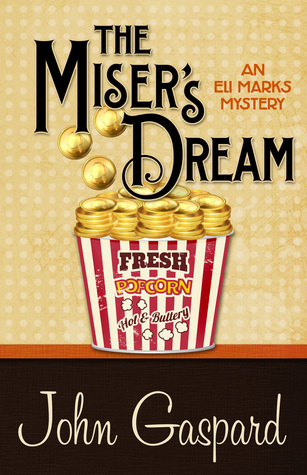
The Miser’s Dream, by John Gaspard*****

themisersdreamThe Miser’s Dream is the third in a series featuring magician Eli Marks. Once I got into it, I did a forehead slap because I could also have read the first two in the series free and reviewed them, had I been paying attention. Thank you to Net Galley and Henery Press for hooking me up with this enormously entertaining novel. It’s billed as a cozy mystery, but were the humor placed around the killer rather than the sleuth, it could have been a comic caper. The title will be for sale October 27.

Marks runs a magic shop and works as a magician locally. He lives over the shop, and the quirky placement of its windows permits him to see into the projection booth of the adjoining theater. Imagine his surprise one fine day when he looks out his window to see a corpse—the projectionist—on the floor of the projection room. It is a locked room mystery, since the man could not have killed himself; the weapon is there in the room; and the door is locked from outside, showing no sign of forced entry.

Just like magic.

Gaspard occupies common country with Grand Master James Lee Burke in his cleverness at choosing engaging, oddball names for his characters. In addition to Detective Sutton-Hutton, we also have the sinister Mr. Lime and his assistant Harpo. The latter two seem to have some inside information. Whereas the character descriptions for these two were a trifle overdrawn, putting me in mind of a Tim Burton animation, the dialogue was sometimes quite splendid, and their role in the story is interesting and well played.

For the first half of the book, I didn’t care at all who the killer was. I was having such a good time with the double features, which I highlighted in my DRC and added to at length, but you’ll have to get the book because I’m not going to post a spoiler. There were other odd bits of hilarious detail in unexpected places, perhaps the best, in my view, being the scene with the flower pot. I had begun to wonder whether there was so much extraneous hilarity here that the murder was becoming obscured, but then it all came into focus just when it needed to, and I didn’t have to retrace the thread to figure things out. The plot is mostly linear and Gaspard has used just the right number of characters, not enough to confuse or clutter.

If you need a good laugh, get this book when it comes out. If you like a good cozy mystery, I likewise recommend it. And for those that have precocious pre-teens and adolescents that sometimes read adult-reading-level material, this one has no explicit sex and relatively clean language, and so it is safe to pass on to your budding bibliophile.

To sum up: this is hands-down the funniest thing I have read in a long time, expertly paced and hilariously detailed. Do it.

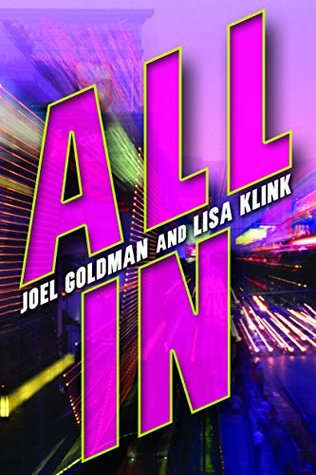
All In, by Joel Goldman and Lisa Klink *****

all inThis one is 4.75 stars, rounded up. Thank you to Net Galley and to Thomas and Mercer for the DRC. This absorbing thriller will be available September 8 for purchase.

Cassie Ireland is an asset recovery specialist; she views herself as a modern-day Robin Hood whose job it is to steal back money, goods, or even really embarrassing videos from those that originally stole them. Her employer is a shadowy individual code-named Prometheus–a moniker chosen because Prometheus was the sneak thief of the gods. Ireland’s nimble, silent in her work, and careful in trusting others. She really can’t be played.

Her job here is to steal select items from the home safe of crooked-wealthy magnate Alan Kendrick. In order to gain access to his treasure trove, she must first make it past a sophisticated security system, to which she gains access by deceiving Kendrick’s wife, Gina. Once Cassie found her way into that safe, I stopped breathing until she was out again. I think my fingertips turned blue. But once she’s been in and out, things once more begin to unspool at a heart-pounding pace.

Jake Carter is a professional gambler, and he too has a grudge to settle with Alan Kendrick. He plans to beat him at poker; he’s fast, smart, and fair. Unfortunately, the last whale he took down has sent goons after him. They want the money he took from Theo at the table, and they also want him dead. Jake’s challenge is to go after Kendrick while dodging Theo’s assassins.

Ultimately, Cassie, Jake, Theo and Kendrick all land on the same enormous floating gambling casino. You can run…but only so far. You can hide, but sooner or later, you’ll be found. On the other hand, you can also turn your stalkers into your prey, if you’re cunning and well organized, and if you can gain the loyalty of others nearby. And then too, you might be able to grab a helicopter!

All In is fast, escapist fun. Ordinarily I would call this a four-star review. Four stars are my default for books that are anywhere from pretty good to really good, but that don’t meet the gold standard of five stars. My four star reviews are big houses with a lot of rooms. If I hate a book but concede that others are likely to enjoy it, I will go with four stars and explain what I didn’t like. I also give four star reviews to books like this one that I like a lot, but can’t see them as the very epitome of their genre. Five stars means excellence that is above and beyond ordinary work.

The tipping point here that knocked this up to five stars is the use of race and gender. Nobody wants to be preached at in the middle of a thriller, and Goldman and Klink don’t do that. Rather, it is by the assumptions that are inherent in their choice of protagonist (Ireland is African-American, female, smart as hell and way more fit than any gum shoe I can recall); the way the plot unfolds, with no helpless damsels waiting for great big men to come save them; and the way secondary characters are handled, the butler foremost among them. It reminded me a bit of Barbara Neely’s writing, and so I wanted to stand up and cheer.

Fall is coming, and whether you are still basking in the sun on weekends or huddled by a fire, it’s a great time to treat yourself to a tightly paced, accessible thriller by authors that show their respect for all people, especially the working class, in the way they sculpt their characters and plot. It looks like a winner to me.

Why not order it while you can?

The “Colored Hero” of Harper’s Ferry: John Anthony Copeland and the War Against Slavery, by Steven Lubet **

thecoloredheroI was really looking forward to this biography, that of one of the Black men that fought alongside John Brown at Harper’s Ferry. It seems to have so many of my favorite elements tied together. There’s John Brown, one of my greatest heroes; the anti-slavery campaign that led up to the American Civil War, which is my field; and then, right as the Black Lives Matter movement has picked up speed, we see focus on one of the African-American fighters that was there. What’s not to love? And I had the chance to read it free, thanks to Net Galley and Cambridge University Press. I was pretty stoked.

But one of the ways in which people are disenfranchised is that their history is not recorded. Lubet has clearly given it his best shot, but there’s so much surmise (with the use of “perhaps”, “may have”, “would probably have”, and so forth) and guess work filling in the narrative, along with common information about the time and period that I already knew, that I finally just skimmed to the last chapters, which is where he seems to have some actual information as opposed to vague contours sustained largely by guesswork.

Whether it’s because of this or in addition to it, the pace is slow, slow, slow.

I can tack on a third star—and if you’ve read my reviews, you know I often do—if I can think of a niche audience that would enjoy the title I am reviewing or to whom it would be useful. Here, not so much, and in fact, at least one factual error leapt out and bit me, and I was not even fact-checking. W.E.B. DuBois claims in his biography of John Brown (which is listed in the works this writer includes in his end notes) that the only reason Harriet Tubman was not there was that she was desperately ill and unable to get out of bed. So this work is not only broader than its stated purpose and lacking in the anticipated focus, it is at least partially incorrect. If I can believe either DuBois or Lubet, I’ll roll with DuBois any day of the week. No third star.

One star reviews are few and far between. I reserve those for works that are either so badly edited and or illiterate (generally self-published works) that I just straight-up can’t read them, or else they are grossly offensive, enough so that I think the public will be offended more often than not.

Given the standards above, this work merits two stars. If you decide to read it, do free or at a deep discount unless you have really deep pockets and spend money fairly randomly. You can do that September 16.

Trust No One, by Paul Cleave *****

trustnooneMany times my daughter has come upon me reading a book and asked, “How is it?” And almost every time I have said, “I don’t know. I haven’t read the end yet.” This is completely true for this one. And oh my my my, what an ending. No, stop worrying, I have no intention of giving away anything.

But I will thank Net Galley and Atria Books. I appreciate the opportunity to read a free DRC in exchange for this honest review.

You can purchase this book Tuesday, August 4, or you could save the hassle and order it now.

Above all…you don’t want to forget. If you forget this, you might be forgetting other things, too. That’s a slippery slope that nobody wants to slide down.

Jerry is just 49 years old, and he has Alzheimer’s. After the diagnosis, he starts a journal, partially with the idea of recording all the things he doesn’t want to forget so that he can come back and find them later. But fate has other ideas for our protagonist, and for his nom de plume, Henry Cutter–a cute play on the actual author’s name…or is it his pen name?

As we find ourselves gradually creeping down that long dark tunnel with poor Jerry, the journal becomes more and more confused. Is he a killer? If so, how many people has he killed? Why can’t he remember doing any of it?

But then, he can’t remember much of anything these days…

Trust No One is a brilliantly paced, tautly written piece of psychological fiction, and it is proof that, contrary to the old saying, not all stories have already been written. And the title answers his question, a very good question: who can he trust?

The problem here is that someone in Jerry’s position has to be able to trust someone. And as the plot moves further along, the reader can’t help wondering whether all of the characters in the story actually exist.

Those searching for an absorbing vacation read—or even one to curl up with at home, hunkered under the air conditioner or fan on a dog-hot day—can’t really ask for anything better than this. Cleave gives the reader every possible frisson in this impossibly complex, yet strangely accessible novel.

Highly recommended.

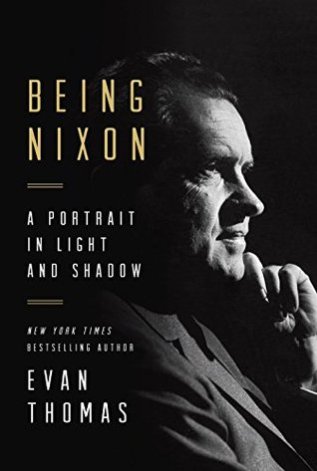
Being Nixon: A Man Divided, by Evan Thomas ****

beingnixonSuddenly, everyone is writing Nixon biographies; it’s a Watergate junkie’s dream come true! Here Thomas does his best to take us inside Nixon’s skin and tell us what motivated some of the decidedly strange things he did. It makes for highly engaging reading. 3.75 stars get rounded up to 4, along with my thanks to Net Galley and Random House for the DRC. This book is available for sale now.

When I signed on for this galley, I imagined that perhaps Thomas had a background in psychology or psychiatry and was going to take a stab at diagnosing a mental illness that might explain what in the world Nixon was thinking when he did the things he did; if he’d had different meds, would things have shaken out differently? But that isn’t what this book is about. Instead, it is a glimpse at Nixon’s life, including his early childhood and adolescence, postulating that childhood experiences may have shaped the politician Nixon became.

To this, I will admit that I said, “Psssh. Right. Whatever.”

Because it’s a plain and simple fact that many presidents had lives that were scarred by events as bad or worse than what Nixon experienced, and most of them still managed to do their jobs without coming within a hair’s breadth of impeachment. So I don’t buy that theory.

Nevertheless, there are so many interesting tidbits and stories in this memoir that even if the reader doesn’t buy the overall thesis, it’s a compelling read. The conversational narrative kept me rolling along, and every time I found an opinion I thought was baloney, I made a note of it and kept going. I would have continued reading even if I didn’t have an obligation to the publisher, because it really is fascinating stuff.

Imagine, for instance, a solitary candidate with a love for classical music, sitting all by himself in his hotel suite, with the 1812 Overture blasting away, with his arms furiously directing an unseen orchestra. Just one aide saw this, and Thomas ferreted the incident out and presented it here. I doubt you’ll find these tidbits anywhere else!

In addition, few other biographers have managed any insights into what went on in the Nixon residence. I often wondered about Pat, Tricia, and Julie. When he showed up to home, did he storm in and turn the coffee table over? Get quietly drunk? Blame his family for all his ills? Drawing heavily on the memoirs written by family members that I am unlikely to ever read, Thomas gives us a little voyeuristic peek behind the curtains, and I found it intriguing indeed.

When it comes to Watergate, Thomas holds Nixon responsible for what he did, for the greater part, but I rolled my eyes at the repeated claim that if he hadn’t been too shy to socialize with the staff, with the Washington socialites who invited him to dinners, and so forth, maybe he would not have become so isolated…if his childhood hadn’t been so poor, and if his father hadn’t kept him home from his Yale scholarship because there was no money for dorm fees…if…if…if…

I felt much more certain that the author’s research, which is mostly done via secondary sources and the Nixon family’s memoirs, including heavy use of Nixon’s own (RN), was based on fact when he dealt directly with Nixon’s personal life. Although various quotes by the Watergate conspirators were interesting, some are more believable than others. I found one fact in this bio that directly conflicts with that of biographer Tim Weiner, and it has to do with the choice of Spiro Agnew as a running mate. Thomas cites reasons personal and political; Weiner documents that the choice was bought and paid for by Greek financial interests. Here, I believe Weiner. It’s just one directly conflicting fact, but when I found it, just as a humble reviewer rather than as a researcher, it called other things into question, which is where ¼ star fell off this review.

The author thanks a number of people in his after-notes. I always read those, because you can pick up little things lost elsewhere. He especially thanks the man that told him to beware the various items found in the prodigious memoirs by “that old thespian”, Richard Nixon, who was a student actor before he went into politics. It was strong advice.

In perusing this biography, I realized two things. The first is that the reason Nixon had so little domestic policy, and the reason the country moved so smoothly without him during the tortuous period prior to his departure, is because he didn’t have much of a tool kit to start with. The author notes that although Nixon has gained a sinister reputation as an evil, sneaking genius, in fact there were areas in which he really wasn’t all that smart, and this was one of them. He focused on three things: foreign policy, in which he was better equipped to carry out the wishes of the bourgeoisie than most presidents have been; running for office again and when that was done, honing his legacy, about which enough has been said; and of course, revenge, revenge, revenge.

The second thing I realized is that the reason he was virtually cast out of office in a situation in which other presidents might have been able to pull their chestnuts out of the fire, had to do with the fact that he believed himself, as US president, to be more powerful than the ruling bourgeoisie. He misjudged the relationship of power between himself and those that rule us quietly, usually in an unseen way. In attempting to yank the broadcasting license of CBS as part of a personal vendetta against the owner of the Washington Post, he took on a sector of the ruling rich, and he made of himself an object lesson.

By my count, this was my twelfth Nixon biography, though I may have read and forgot about some others. It’s neither the best nor the worst, but for those fascinated with Nixon’s rise and fall, and with Watergate, it should go on the to-read list. It’s just too good to miss!

The Eight, by Katherine Neville****

theeight Katherine Neville is one of those people that does everything well. She’s been a model, a computer wiz, a photographer, and she’s also an impressive author. I was lucky enough to read this first in the series since Open Road Integrated Media has just re- published it digitally. Thank you to them, and to Net Galley, for permitting me a free copy in exchange for my review. This book was released Tuesday, and is for sale now.

Our protagonist, Cat Velis, lives in New York; the time is 1970, at the height of the Vietnam War. Cat lives in New York City and works for Con Edison. Since she has refused to do something illegal for her boss, who is engaged in some sidelines back-scratching with a client, she is being shipped off to Algeria. Before she can pack, however, a fortune teller warns her that she is in great danger. She scoffs, but less than a week and two corpses later, her irritation has turned to fear. She calls in her mentor, a mysterious man that seems to travel Gandalf-like, practically appearing in thin air. He comes and talks to her in much the same way as the fortune teller did, but he also tells her that she has to go to Algeria and fulfill her destiny.

Transposed with this story is a tale that takes place around the time of the French Revolution. The Montglane Abbey is closing its doors because of the Bill of Seizure. Buried beneath its floor for centuries was a legendary chess set whose worth is beyond anyone’s wildest dreams. Composed of huge gems, gold, and silver, it is all the more valuable for a formula that its individual parts, when put together, have etched on their undersides. Is it a secret weapon? Is it a supernatural curse that is activated when the pieces are together? The Abbess only knows that she must separate the pieces and get them out of France, along with herself. She takes herself to Russia, to her closest friend, who is Catherine the Great. From there, the parallel story to Cat’s unfurls itself. Eventually the two part of the story come together.

Here’s a clip of the author discussing her novel, and the life experiences that shaped it:

This is ordinarily not the sort of historical fiction that attracts me; there are really well-developed, highly sympathetic royal characters, and then there are the savage, dirty masses. It grates. While it’s true that the French working class and peasantry really did tear royals from their splendid carriages and either kill them on the spot or take them off to the Jacobins to be killed later, Neville paints the royals in such an idealized fashion that the reader, if not already informed, might wonder indeed just why the masses would do such a thing? Unless, of course, it’s in their inferior DNA. I ground my teeth and read on.

Add a reference to the Freemasons and the number 666, and I was ready to hurl my kindle across the room! But I had an obligation to the publisher, and so I persevered, and I am glad I did, because what Neville does with the plot is quite cunning. If one were going to chart the book into a grid, it would correlate with the grid that is part of the story itself. And if this makes no sense whatsoever to you, all I can tell you is that you have to read the book and watch closely. Watch for the patterns; this is actually slick as hell! And so in the end, I was glad I had seen it through. Though maybe more famous people are worked into one novel than is natural, the elegance of the plot itself (and the chess detail), rather than historical veracity or character development, is what sustains this substantial work.

The reader’s understanding of this hyper-literate story will be aided by knowledge of chess. In fact, I found myself taking a few notes, though I haven’t played in years! Those unschooled in chess can also enjoy the book, but I do not recommend this book to anyone for whom English is not the mother tongue. The vocabulary and historical references will be so much work for you that you won’t enjoy it.

But I did.

Recommended to those that appreciate symmetry and precision in a novel.

Unholy Fury: Whitlam and Nixon at War, by James Curran ***-****

unholyfuryAll of a sudden, everybody is writing a book about or featuring Richard Nixon. Having grown up during the Watergate era, I voraciously attack anything and everything apart from the most blatant apologists’ work. This title, in which Nixon’s relationship with the government of Australia and in particular, Gough Whitlam, who became Australian prime minister during the Nixon administration, is examined, seemed like a good diversion from what I usually read. Like many Americans, I tend to focus too exclusively on matters having to do with the USA. It probably has to do with the size of the country and consequently, the sheer weight of available material on matters closest to home. But I knew next to nothing about Australia’s government, apart from their participation as an Allied force in World War II and their status as a friendly government to the US and Britain, so I dove in.

Thank you to Net Galley and Melbourne University Press for the galley, which I received free in exchange for an honest review.

Between the title’s subheading and the book’s cover, which shows Gough speaking and Nixon looking furious, one might almost conclude that the two nations were on the brink of a shooting war with one another. Not so, not so. Yet the antagonism that sprung up between the two nations during a time when both had outspoken and sometimes abrasive leaders is unquestionable. There were two primary realms of disagreement that went beyond mere personality issues. One was the role of Australia in relation to the USA, and the other was the future of Asia in relation to both countries and in general.

Before reading Curran’s biography, I had never thought of Australia as an Asian nation. I sort of considered them to be out there adrift, all by themselves, being kept company just by New Zealand the Pacific Islands. I am aware that they are on the opposite side of the equator from where I am, and so when it’s summer here, it’s winter there. That, cowboy boots, kangaroos, and an unfortunate record for treating indigenous people fairly, one which the US shares, about sum up my knowledge base.

I’m embarrassed to admit that I didn’t know the capital was Canberra.

Nixon was mostly not focused on Australia, and that, it seems, was a part of the problem. Menzies had preceded Whitlam as prime minister, and he too was an old hand who thought largely in Cold War terms. Nixon and Menzies had been fond of one another. But when elections were held and the beleaguered President Lyndon Johnson was due to leave Washington, he told Australia’s representatives, who were opposed to the US intervention in Vietnam, that they “might have one or two problems” with Mr. Nixon. It was a very droll understatement.

First, Nixon was outraged that a nation that looked to the US for security and aid would dare publicly criticize its role in Vietnam, and then—worse—in Cambodia. He regarded the Australians as a satellite that ought to be grateful and not bite the hand, etc.

Gough Whitlam took office with an eye toward creating a more independent Australia. He considered Australia very unlikely to be in danger of external attack for ten or fifteen years at least, and was aghast at Uncle Sam’s ugly doings in Indochina. He was looking for distance, and Nixon, under enough pressure from enemies without getting it from friends, erupted. Eventually Richard Nixon played a dangerous bluff on Moscow by recalling nuclear missiles from nearby Fiji, which involved the use of Australian terrain, without actually notifying the Australians. Visions of a mushroom cloud on home soil didn’t do much to endear President Nixon or the American government to Australians, needless to say.

Whereas Nixon was convinced that communist hoards would continue to advance across Asia unless Vietnam was forced to adopt a parliamentary democracy, Australia felt that it was time for the super powers to quit telling smaller nations what to do and abide by home rule in whatever form its citizens chose.

Though no actual shooting war was ever threatened or contemplated, the US did examine alternate places for its bases—a $5 billion dollar investment in 1970’s dollars—and at one point, Australian dock workers voted not to unload goods from US ships. In turn, US dock workers placed a moratorium on Australian trade, which left a good deal of beef rotting near the dock for days on end. And sometimes, with breathtaking rapidity, trade wars can in fact lead to shooting wars. It wasn’t going to happen this time, though; the USA already had its plate full.

It probably is telling of my own ethnocentrism that I had difficulty focusing on the lengthy passages leading up to the conflict. There’s a fair amount of detail regarding Australian politics that novices like me may find it hard to plow through. On the other hand, the author should have known that communists would never use the term “Vietcong”, which was a pejorative. Vietnamese freedom fighters are referred to as members of the National Liberation Force.

Even if the reader gives in and skims those bits of political nuance that will suit some interest levels but not others, there is a great deal of entertaining dialogue and detail in the meaty center of this work to make it worth reading.